Why are our keyboard not wireless?(zsa.io)
zsa.io
Why are our keyboard not wireless?
https://www.zsa.io/wireless/
116 comments
Same here. My magic keyboard sometimes disconnects from my Mac for mysterious reasons, despite the battery being almost full. And then the idea of needing to periodically charge a stationary object which is never used without another device which gets electricity through a wire is ridiculous.
On the other hand I’ve never had an issue with Magic Keyboard and Magic Trackpad connectivity for over 10 years.
I’ve had a similar experience of weird intermittent jankyness with what seem like missed keystrokes but are just connection issues.
In addition, I also feel a big benefit of wireless keyboards got diminished with usb-c & thunderbolt. I now plug one cable for power/display/keyboard and whatever other peripherals are connected and it’s hassle free.
(Still use wireless mouse though)
In addition, I also feel a big benefit of wireless keyboards got diminished with usb-c & thunderbolt. I now plug one cable for power/display/keyboard and whatever other peripherals are connected and it’s hassle free.
(Still use wireless mouse though)
In 2019 I switched to a wireless headset. This year I switched back to wired. The sound quality is better, the latency is better, the weight is better, and I never need to wonder whether or not the battery is discharged.
Some things just don't need to be wireless.
Some things just don't need to be wireless.
> Some things just don't need to be wireless.
Headsets are the one area I disagree on. :)
Not having to deal with a cord is huge. I've gotten tangled in them so many times and have almost pulled laptops off tables when getting up and walking away. (ADHD means I forever forget there's a cord attached to my head.)
Granted, I'm using Apple AirPods with Apple devices... which makes the wireless experience far better than average.
Headsets are the one area I disagree on. :)
Not having to deal with a cord is huge. I've gotten tangled in them so many times and have almost pulled laptops off tables when getting up and walking away. (ADHD means I forever forget there's a cord attached to my head.)
Granted, I'm using Apple AirPods with Apple devices... which makes the wireless experience far better than average.
> (ADHD means I forever forget there's a cord attached to my head.)
That explains it I guess. Most of us don't have ADHD so it isn't a problem for us
That explains it I guess. Most of us don't have ADHD so it isn't a problem for us
Some of us do have it and also don't have that problem.
Can't figure out how to delete this comment on this mobile client, please ignore
Yup. My ADHD means I'm never sure just how much battery things have
I don't have ADHD. Batteries aren't exactly transparent with this stuff. I never know, either.
Yeah, I just use AirPods these days. I don't like using a big set of headphones and I found that, on a Mac, just using a good mic and speakers usually works fine but every now and then there's echo so it's easier for everyone concerned to use the AirPods.
AirPods give me constant anxiety about losing one or both.
I'm (probably) not going to lose them in my office. I use corded noise cancelling Bose earphones in a plane.
The number of times I’ve yanked them off my head because they’d get tangled on the edge of the table or the chair is too high.
Even airpods with apple devices get no better than 100ms latency, with some (Apple device to Apple device!) combinations easily going over 200ms. It's nigh unusable for anything other than listening to music or recorded video.
> It's nigh unusable for anything other than listening to music or recorded video.
That weird. I use mine for everything with no problems. Am I doing it wrong?
That weird. I use mine for everything with no problems. Am I doing it wrong?
Same. Have perfect video chats with AirPod pros.
How can you tell? Do you have measurements? You are arguing against real, human-perceivable numbers here.
At 200ms interruptions happen more often and the flow of a conversation can't be maintained as well. But you might just chalk that up to "video chats are not very good anyway." Latency punishes the person you're talking to, who sees more interruptions, not necessarily just yourself.
edit: I note you're in Australia. Perhaps your baseline latency is already fairly high. But that should make this issue even more important.
At 200ms interruptions happen more often and the flow of a conversation can't be maintained as well. But you might just chalk that up to "video chats are not very good anyway." Latency punishes the person you're talking to, who sees more interruptions, not necessarily just yourself.
edit: I note you're in Australia. Perhaps your baseline latency is already fairly high. But that should make this issue even more important.
Can’t say I agree. Headset wires are the. worst. wires. Always getting tangled, etc.
As a hard of hearing person, I need the absolute best, fastest audio I can get. After way more research than it should have taken, I ended up with the SteelSeries Arctis Pro Wireless and have been quite happy with it.
Not cheap, but for something in my critical path for literally every minute of my work, totally worth it.
As a hard of hearing person, I need the absolute best, fastest audio I can get. After way more research than it should have taken, I ended up with the SteelSeries Arctis Pro Wireless and have been quite happy with it.
Not cheap, but for something in my critical path for literally every minute of my work, totally worth it.
I use arctis headset at work as well, had my Sony noise cancelling headphones for a while but the mic was horrible so I had work buy me the arctis which I have a set at home and knew they worked great
> the. worst. wires. Always getting tangled
Had the same issue before discovering flat cables (if you don't know what I mean, they look like linguine, not spaghetti).
Had the same issue before discovering flat cables (if you don't know what I mean, they look like linguine, not spaghetti).
I wear mine while working out, walking the dog and doing general chores. Love love love wireless. Cord always got in the way.
Having the DAC in the headset or in another box attached to the headset by a short cable shouldn’t influence the sound quality so much thanks to the recent high quality Bluetooth audio codecs.
I don't know if it's still the case, but a few years ago if your bluetooth headset had a microphone, it switched from 'A2DP' to 'HSP' which has trash audio quality.
And it would happen almost invisibly - there was no indication in the OS of what was going on.
Maybe it's better now?
And it would happen almost invisibly - there was no indication in the OS of what was going on.
Maybe it's better now?
bluetooth codec support is an entire can of worms and you just end up falling back most of the time. The latency of most codecs is also terrible.
Shouldnt, but audio is suprisingly hard to get right.
Opposite for me. After using QC35 4 years ago (now I have QC45 which is the same) every other headphone feels like crap.
I love the idea of wireless, but in practice I always find myself reverting back to wired after a while (for keyboard and mouse, headphones is a different story).
The pain of seeing wires is not as bad as the pain of having the battery run out every once in a while, just when you need it, and having to plug it to charge.
Maybe once batteries last for months instead of weeks I'll change my mind.
The pain of seeing wires is not as bad as the pain of having the battery run out every once in a while, just when you need it, and having to plug it to charge.
Maybe once batteries last for months instead of weeks I'll change my mind.
Not sure about keyboards, but Logitech mx3 mouse is great and only needs to be charged like once a month after using it nearly all day every day. Also super ergonomic and works on any surface
I have the mx 3s along with the mechanic keyboard, one set each for work and one for home... Extremely stable connection with the bolt receiver, also works with well if I take the laptop home or with my phone if I connect it to my monitor (Dex)
I already have USB-C charging cables due to the phone on either desk, so I just connect it to whichever runs low every few weeks (or months) and keep on using them.
It also works just while plugged in so there is no downtime. I feel like I charge it couple times a year by any random usb-c that is on my table at the moment while I keep using it.
Even if it didn't, it takes maybe 1-2 minutes to charge for the rest of the day so there is no disruption.
The only wireless keyboard I have is the one for controlling the media computer from the couch. For everything else, portability is not a benefit, and wireless connection are just another failure mode.
Well, I'm blind and when working from home, wireless keyboards allow for leaving the laptop aside and taking whatever position on the sofa I find the most comfortable at the moment. Not applicable for everyone, ofc.
On the other hand, accessibility sound has very bad latency with all wireless headsets that I've tried so far.
On the other hand, accessibility sound has very bad latency with all wireless headsets that I've tried so far.
Batteries require special effort to recycle, also a chore to replace them every now and then. It just generates waste for no reason.
I know my contribution is negligible, but I still feel better not buying things that work on batteries, when possible. Quite frustratingly, this turns out to be quite hard / very limited in choice of design options. Here are some things that appeared quite hard to find w/o batteries:
* Alarm clock.
* Cooking thermometer.
* Cooking scales.
Eventually, I did find those, but I had to hunt them down, weeding through countless alternatives with batteries.
Things like angle grinder and impact driver also gave me some headache. Oh, and there's also pulseox and sphygmomanometer. You can sort of see how a version that works on batteries would be useful... but for a lot of people there's no need for the battery-powered version. But those become increasingly hard to find.
I know my contribution is negligible, but I still feel better not buying things that work on batteries, when possible. Quite frustratingly, this turns out to be quite hard / very limited in choice of design options. Here are some things that appeared quite hard to find w/o batteries:
* Alarm clock.
* Cooking thermometer.
* Cooking scales.
Eventually, I did find those, but I had to hunt them down, weeding through countless alternatives with batteries.
Things like angle grinder and impact driver also gave me some headache. Oh, and there's also pulseox and sphygmomanometer. You can sort of see how a version that works on batteries would be useful... but for a lot of people there's no need for the battery-powered version. But those become increasingly hard to find.
For disposable batteries (AA, AAA, etc) I use rechargeable non-Lithium batteries and they’ve lasted over a full decade. Found some that I had lost years ago; recharged them back to full and they worked fine. Can’t say whether they lost any capacity yet, but it’s nice to know I can reduce so much waste without limiting my purchasing as much.
>* Alarm clock.
Are you talking about a device that is powered by the wall outlet but has a backup battery that is only used to preserve the time setting in case of a power outage?
Are you talking about a device that is powered by the wall outlet but has a backup battery that is only used to preserve the time setting in case of a power outage?
Nah. I wanted a mechanical one. The one you have to wind by hand.
But, yeah, you reminded me of another thing I forgot to mention: the "hybrids". Devices that can be plugged into the wall and also use battery. A lot of these work by using the battery all the time and charging it while plugged. Which obviously significantly reduces battery life.
My work laptop is like that (some Dell Experion model). After two years I had to throw the battery away (and now only use it when plugged into the wall). A bunch of cell phones are like that too. Bet there's more of that.
But, yeah, you reminded me of another thing I forgot to mention: the "hybrids". Devices that can be plugged into the wall and also use battery. A lot of these work by using the battery all the time and charging it while plugged. Which obviously significantly reduces battery life.
My work laptop is like that (some Dell Experion model). After two years I had to throw the battery away (and now only use it when plugged into the wall). A bunch of cell phones are like that too. Bet there's more of that.
Most of these justifications/complaints against wireless don't resonate with me. My wireless keyboard runs on 2 standard batteries (AA or AAA, I can't remember which and am AFK). I must replace them about every year, it's a very short process, and I use rechargeables. I replaced my keyboard earlier this year due to water damage, so the batteries have outlasted the keyboard (which was about 7 years old). I admit, I don't use a mechanical keyboard (I use a Microsoft Sculpt Ergonomic) but is all of the above simplicity and commodity battery stuff impossible in the mechanical space? I get the impression they're eminently possible, as long as you don't have to power lots of rgb lights, etc.
As for a negative that specifically resonates, but not fundamentally so: AFAIK, I cannot tinker with the firmware on my wireless keyboard. The real negative IMO, is that rarely, keys become unresponsive for 3 seconds (presumably due to wireless connectivity drop). It's annoying, but losing 3 seconds of work is manageable to say the least, and it's not frustrating as long as it's rare -- and I don't use it for gaming.
On the whole, quite positive for wireless keyboards such as mine. A wireless mouse is a similar story. Wireless headsets/microphones are totally different, as low-latency high-quality audio codecs are relatively new in Bluetooth.
As for a negative that specifically resonates, but not fundamentally so: AFAIK, I cannot tinker with the firmware on my wireless keyboard. The real negative IMO, is that rarely, keys become unresponsive for 3 seconds (presumably due to wireless connectivity drop). It's annoying, but losing 3 seconds of work is manageable to say the least, and it's not frustrating as long as it's rare -- and I don't use it for gaming.
On the whole, quite positive for wireless keyboards such as mine. A wireless mouse is a similar story. Wireless headsets/microphones are totally different, as low-latency high-quality audio codecs are relatively new in Bluetooth.
I loved the Microsoft sculpt until the connection started glitching sporadically. Even if you only lose connection for 10 microseconds every so often, it feels so disruptive to a workflow.
If it was more frequent, I would finally resign myself to spending a ton extra to get the same ergonomics with a wired keyboard -- it just feels like a waste right now, for how rarely and minorly disruptive it is for me, on my unit at least. It's nice to be happy and productive with commodity equipment.
But if my current keyboard had a wired option, I would get it -- not for any of the reasons listed in the article, though. Just to eliminate the already rare connectivity drops.
But if my current keyboard had a wired option, I would get it -- not for any of the reasons listed in the article, though. Just to eliminate the already rare connectivity drops.
> same ergonomics with a wired keyboard
Which keyboard match the MS ergo??
Which keyboard match the MS ergo??
AFAIK, none.
MS makes a wired ergonomic keyboard, but IMO the keypress is much worse.
I tried every wired ergonomic option in the same price range on Amazon. Most of them were the exact same keyboard with miscellaneous different branding. None compared well to the MS sculpt, except for the benefits of being wired.
MS makes a wired ergonomic keyboard, but IMO the keypress is much worse.
I tried every wired ergonomic option in the same price range on Amazon. Most of them were the exact same keyboard with miscellaneous different branding. None compared well to the MS sculpt, except for the benefits of being wired.
Agreed, I’d have to buy something mechanical, probably split, get the lightest switches possible, and modify it for negative tilt. Last I looked, if I spent ~$200 I could probably do such a thing based on Kinesis products, presumably with lots of experimentation required to get it right.
Bluetooth and AAA batteries also are industry standard and user replaceable. The 2nd gen Apple Wireless keyboard had a brilliant design to accomodate them (https://tech-rachat.com/1509-large_default/clavier-apple-mag...), and 15 years later you can still see them in the wild, working like day one.
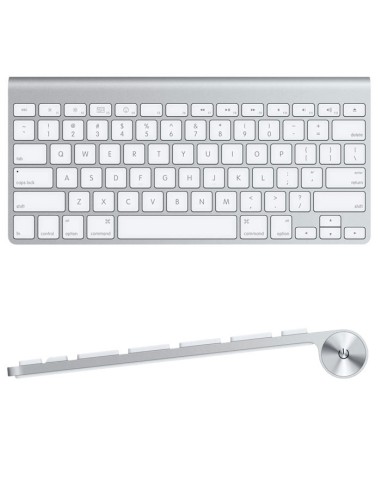
Except if one of those gets left and the battery starts leaking, it gets stuck...
Ha, I still use that as my “backup” keyboard at work. Came with the 21” iMac my parents bought in 2010. Sometimes you just need a break from the key travel of a mechanical.
[deleted]
I use mine every day.
To give a positive response in the sea of negativity, I'm very happy with my all wireless setup. I have a keyboard (Nuphy) and mouse (Razer) that can switch between Bluetooth and 2.4 GHz. I connect to my work laptop via BT and gaming PC via 2.4. No issues with latency for me even in twitchy shooters.
I have a BT headset for work but do wire it in while gaming and have a USB mic.
Really nice to be able to switch between two computers without a KVM.
I have a BT headset for work but do wire it in while gaming and have a USB mic.
Really nice to be able to switch between two computers without a KVM.
I am not as opposed to battery power as many people on this thread, but the batteries need to be easily replaced and a standard size. Any device with a non-replaceable internal battery has an expiration date, and if you're bad about remembering to charge it, that date might come soon. A great example is my portable guitar amp, which wouldn't hold a charge. A new battery was $20 and took minutes to replace with no special tools.
Plus, if a device runs on AA or 18650 batteries, I can keep some spare charged ones in a drawer or bag, effectively providing unlimited usage time.
My wired keyboard will last for decades barring physical damage.
Plus, if a device runs on AA or 18650 batteries, I can keep some spare charged ones in a drawer or bag, effectively providing unlimited usage time.
My wired keyboard will last for decades barring physical damage.
One less thing which needs constant charging. Low battery also results in a state where you think everything is working and blame your typing until you realize not every command is received.
Also:
- less waste / power
- cheaper
- higher security
- compability
Also:
- less waste / power
- cheaper
- higher security
- compability
Why not both, like the Keychron Pro keyboards? You can connect the USB cable, which always works, or use it wirelessly when you want it (or need it).
Furthermore, wouldn't replaceable batteries also fix the durability issue?
Furthermore, wouldn't replaceable batteries also fix the durability issue?
I've both the Moonlander which uses QMK and Kinesis Advantage 360 Pro which uses ZMK. The Advantage 360 Pro occasionally has Bluetooth connection problem that drive me crazy, which often requires unpairing and re-pairing. (I've contacted support and they point out a firmware for you to reset stuck light and another for resetting completely, but it just doesn't solve me problem.)
I often thought ZSA chose to not support wireless because of this.
I chose the wireless version of 360Pro not primarily because of wireless, but because of the use of ZMK (which allows similar level of programming comparing to QMK.) eventually, the way I solve the Bluetooth problem is just to use its USB connection.
P.S. I have 2 360Pro, one at work. On top of the connection problem I mentioned above, there's also another pairing problem which I need to switch between them. Often, but not always, I need to unpair and re-pair again. It seems they aren't expecting people to have multiple 360Pro?
I often thought ZSA chose to not support wireless because of this.
I chose the wireless version of 360Pro not primarily because of wireless, but because of the use of ZMK (which allows similar level of programming comparing to QMK.) eventually, the way I solve the Bluetooth problem is just to use its USB connection.
P.S. I have 2 360Pro, one at work. On top of the connection problem I mentioned above, there's also another pairing problem which I need to switch between them. Often, but not always, I need to unpair and re-pair again. It seems they aren't expecting people to have multiple 360Pro?
Because I found just about the perfect keyboard and it's not wireless:
Steelseries Apex Pro (https://www.amazon.com/SteelSeries-Apex-Mechanical-Gaming-Ke...)
With some lube, this Hall effect keyboard comes as close as I've found since the Tom Knight MIT AI lab Microswitch keyboards of yore. What it still lacks is the perfect "heft" of the TK keyboards, balanced key weight & springs which gave it a certain "je ne sais quoi" I've never found in 40+ years. (And I've tried dozens of mechanical keyboards.) But it's damned close.
I've tried adding weight to the keys with magnetic putty to mimic the original TK "heft," but the switches aren't up to the weight, nor do they have enough throw. So I gave up and am still very very happy with the lubed Apex Pros.
Steelseries Apex Pro (https://www.amazon.com/SteelSeries-Apex-Mechanical-Gaming-Ke...)
With some lube, this Hall effect keyboard comes as close as I've found since the Tom Knight MIT AI lab Microswitch keyboards of yore. What it still lacks is the perfect "heft" of the TK keyboards, balanced key weight & springs which gave it a certain "je ne sais quoi" I've never found in 40+ years. (And I've tried dozens of mechanical keyboards.) But it's damned close.
I've tried adding weight to the keys with magnetic putty to mimic the original TK "heft," but the switches aren't up to the weight, nor do they have enough throw. So I gave up and am still very very happy with the lubed Apex Pros.
My Logitech MX mouse is the best of both worlds: plug it in with a usb to recharge.
The title should really be "Why do ZSA keyboards come with cables", or "Why are your (ZSA keyboards) not wireless?"
The current title sounds like it's encouraging wireless and a lot of comments here appear to be responding to that, but the actual article is explaining why their keyboards are wired.
The current title sounds like it's encouraging wireless and a lot of comments here appear to be responding to that, but the actual article is explaining why their keyboards are wired.
I love my Logitech K380 bluetooth keyboard (https://www.logitech.com/en-us/products/keyboards/k380-multi...) I've had it for years and even though it is of course battery powered, I haven't needed to change the battery yet.
It's small, inexpensive, comfortable, quiet, and it allows me to easily switch between my work and personal laptop. If only those buttons could switch my mouse at the same time, it'd be perfect.
There's a little bit of a connection delay when I start using it after being away for more than an hour or so, but it just takes a second or two to resolve.
It's small, inexpensive, comfortable, quiet, and it allows me to easily switch between my work and personal laptop. If only those buttons could switch my mouse at the same time, it'd be perfect.
There's a little bit of a connection delay when I start using it after being away for more than an hour or so, but it just takes a second or two to resolve.
Never understood wireless keyboards and mice. Checking the battery level would drive me crazy, and you’re next to a power source anyway!
The primary advantage for me is that it alleviates port congestion.
Even when using a dock, I often found myself running out of available ports. Switching two devices to Bluetooth made a notable difference (even if it causes the occasional annoyance).
Even when using a dock, I often found myself running out of available ports. Switching two devices to Bluetooth made a notable difference (even if it causes the occasional annoyance).
Wired keyboards are generally fine. But I generally prefer wireless mice because the wire sometimes gets in the way as I move it around.
As for the battery level, I just plug my mouse in when the LED is red. And plug it out when I have enough charge and the wire becomes annoying. I can use it while charging, like a regular wired mouse, so no big deal.
As for the battery level, I just plug my mouse in when the LED is red. And plug it out when I have enough charge and the wire becomes annoying. I can use it while charging, like a regular wired mouse, so no big deal.
Best wireless keyboard I ever owned is the Logitech solar keyboard. It goes out of stock constantly. It doesn't need direct sunlight at all to keep its charge either. And no perceivable latency (I am quite sensitive to that sort of thing). It lasted me about 5 years before it stopped taking a charge.
The Apple wireless keyboard and mouse will give you a notice in the menubar when the battery starts to get low. Then you just plug it in while on lunch or overnight. When you come back it’s ready to go.
Imagine if typing induced a recharging current.
I don't use wireless keyboards either. You want your keyboard to be 100% reliable, especially at times you're trying to get into the UEFI bios or something right when the computer is first booting.
And while I have a pair of bluetooth earbuds, I only have one use-case for them: the few hours I spend once a week cleaning the house. At my desk, I use wired (sounds better!) and on airplanes I use wired (they don't fall out if I fall asleep and get lost). I know people that blow a couple hundred buck several times/year on lost AirPods Pro!
And while I have a pair of bluetooth earbuds, I only have one use-case for them: the few hours I spend once a week cleaning the house. At my desk, I use wired (sounds better!) and on airplanes I use wired (they don't fall out if I fall asleep and get lost). I know people that blow a couple hundred buck several times/year on lost AirPods Pro!
Over the years I switched to wireless for most of my peripherals, then back to wired.
When I was switching to wireless, there would be pairing and connection problems. I assumed the technology would get better and I am just paying for being an early adopter. Unfortunately, the technology has never become much better. I changed a dozen mice, half a dozen keyboards, and probably two dozen headphones. Not to mention a lot of other types of peripherals.
Honestly, I have never found A SINGLE device that would work problem free.
I am tired of my mice or keyboard suddenly refusing to work while I am presenting. Or discovering another pair of headphones that the manufacturer (Hi Sony!) decided that it will be a good idea to interrupt me while listening to notify that the battery is low while there is still more than 50% of listening time available.
Or a huge number of other, unexplainable problems. Like my headphones drawing charging current but still being low on charge in the morning. Or my bluetooth headphones cutting out whenever I leave the range of my... wifi (Yes! I carry the phone in my pocket while leaving the house and they reliably stop working about 40m from home).
And I am not buying cheap devices, I am almost always buying new, flagship products for top brands.
Now my working environment is back to wired and is much lower on drama. Still not perfect, but at least I can have meetings without worrying about things breaking at random.
When I was switching to wireless, there would be pairing and connection problems. I assumed the technology would get better and I am just paying for being an early adopter. Unfortunately, the technology has never become much better. I changed a dozen mice, half a dozen keyboards, and probably two dozen headphones. Not to mention a lot of other types of peripherals.
Honestly, I have never found A SINGLE device that would work problem free.
I am tired of my mice or keyboard suddenly refusing to work while I am presenting. Or discovering another pair of headphones that the manufacturer (Hi Sony!) decided that it will be a good idea to interrupt me while listening to notify that the battery is low while there is still more than 50% of listening time available.
Or a huge number of other, unexplainable problems. Like my headphones drawing charging current but still being low on charge in the morning. Or my bluetooth headphones cutting out whenever I leave the range of my... wifi (Yes! I carry the phone in my pocket while leaving the house and they reliably stop working about 40m from home).
And I am not buying cheap devices, I am almost always buying new, flagship products for top brands.
Now my working environment is back to wired and is much lower on drama. Still not perfect, but at least I can have meetings without worrying about things breaking at random.
Security and having a fixed location on your desk ;)
I currently use the wireless ThinkPad TrackPoint Keyboard II at work for a few reasons:
- it's compact, and I can get rid of the mouse since I love using the 'erasehead' pointer (others may disagree with this, of course)
- as a firmware developer, I occasionally have to work on two systems: my work laptop and a Raspberry Pi. Since the keyboard supports using Bluetooth and a Wireless dongle, it's easy for me to connect the keyboard to either by toggling the connection (BT for the laptop, dongle for the RaspPi).
- I love the tactile feedback from the Thinkpad keyboard.
As with other wireless keyboards, I'm getting occasional connection dropouts, but those are fixed by turning the keyboard off and on again. I can live with that, for now.
I recently discovered that Lenovo now also sells the equivalent keyboard with a wired USB connector. I may get that in the future to connect to my future desktop PCs.
- it's compact, and I can get rid of the mouse since I love using the 'erasehead' pointer (others may disagree with this, of course)
- as a firmware developer, I occasionally have to work on two systems: my work laptop and a Raspberry Pi. Since the keyboard supports using Bluetooth and a Wireless dongle, it's easy for me to connect the keyboard to either by toggling the connection (BT for the laptop, dongle for the RaspPi).
- I love the tactile feedback from the Thinkpad keyboard.
As with other wireless keyboards, I'm getting occasional connection dropouts, but those are fixed by turning the keyboard off and on again. I can live with that, for now.
I recently discovered that Lenovo now also sells the equivalent keyboard with a wired USB connector. I may get that in the future to connect to my future desktop PCs.
There must be more to it (even if just he is 'anti-wireless' despite what he writes) - the points in the article would be trivially addressed by a cable fallback option.
Less trivially by using Bluetooth (so standard and built in to many computers, esp. laptops) and AAs (so the optionally rechargeable batteries or also standard and purchasable from 'anyone').
Not that I'm bothered, the keyboard is probably the last thing on my desk besides my monitor that I'd try to ditch the cable from. On the whole I think I prefer them to faffing with Bluetooth, and easier to KVM. (For stuff that's on my desk I mean - I have AirPod-like earphones from Anker (about ⅒ price for no discernible disadvantage) that I wouldn't go back from, and used a Bluetooth receiver with 3.5mm jack before that, in particular to decouple my ears from my legs while cycling.)
Less trivially by using Bluetooth (so standard and built in to many computers, esp. laptops) and AAs (so the optionally rechargeable batteries or also standard and purchasable from 'anyone').
Not that I'm bothered, the keyboard is probably the last thing on my desk besides my monitor that I'd try to ditch the cable from. On the whole I think I prefer them to faffing with Bluetooth, and easier to KVM. (For stuff that's on my desk I mean - I have AirPod-like earphones from Anker (about ⅒ price for no discernible disadvantage) that I wouldn't go back from, and used a Bluetooth receiver with 3.5mm jack before that, in particular to decouple my ears from my legs while cycling.)
Because it makes no sense? That keyboard is in front of a monitor and having it anywhere else would be uncomfortable and unproductive. So because the keyboard is in one place, there is no reason to have it wireless and be exposed to possible loss of functionality at the stupidest time.
Both/and and repairable. I want wireless because of my portable setup, and wired so the thing still works when the battery dies and when Bluetooth doesn't work (e.g. the bios screen).
Ideally it should also use an easy to replace battery.
I've used the Nuphy F1 in my setup for this. It isn't ergonomic but satisfied the wired and wireless desire: https://www.reddit.com/r/ErgoMobileComputers/comments/vzs8mm...
A similar device is the apple magic Trackpad - it works in both wired & wireless which has been helpful when using on test devices and my use case with a portable tablet.
Ideally it should also use an easy to replace battery.
I've used the Nuphy F1 in my setup for this. It isn't ergonomic but satisfied the wired and wireless desire: https://www.reddit.com/r/ErgoMobileComputers/comments/vzs8mm...
A similar device is the apple magic Trackpad - it works in both wired & wireless which has been helpful when using on test devices and my use case with a portable tablet.
Realistically, my keyboards are not wireless because my rig is not built for BT-enabled devices. However even if I had the option, the only peripheral I can imagine using wirelessly is my gamepad, and that would be rather rare currently.
I prefer PS/2 keyboards and mice, I am unwilling to sacrifice audio input and output quality on my main PC, and unlike a wired port Bluetooth is inconvenient even on Apple devices with AirPods. Not to mention my anxiety of losing track of peripherals is worsened by things that are as small as wireless mice and my AirPods.
However, for maintaining range of motion, and in fields where I am willing to compromise on quality, things like wireless headphones/earbuds make sense. Like my father, who enjoys his wireless headphones as he works outside.
I prefer PS/2 keyboards and mice, I am unwilling to sacrifice audio input and output quality on my main PC, and unlike a wired port Bluetooth is inconvenient even on Apple devices with AirPods. Not to mention my anxiety of losing track of peripherals is worsened by things that are as small as wireless mice and my AirPods.
However, for maintaining range of motion, and in fields where I am willing to compromise on quality, things like wireless headphones/earbuds make sense. Like my father, who enjoys his wireless headphones as he works outside.
I've got a Moonlander, which I love. But I really do wish it was wireless, the cable the joins the two halves in particular gets in the way and makes it painful to use the space between the halves for a notebook.
I'm kinda hoping that someone will figure out how to jury rig a ESP32 into one of these boards, so it's possible to add wireless capabilities using a screwdriver and a soldering iron. Even better would be is ZSA provided headers (even unpopulated headers) on the boards so that you could strap a co-processor like an ESP32 to it, without having the mess too much with the PCB.
I imagine, with some work and custom firmware, it would be possible to get the power consumption to Logitech levels of efficiency. One AA in each side lasting a year, that would be ideal.
I'm kinda hoping that someone will figure out how to jury rig a ESP32 into one of these boards, so it's possible to add wireless capabilities using a screwdriver and a soldering iron. Even better would be is ZSA provided headers (even unpopulated headers) on the boards so that you could strap a co-processor like an ESP32 to it, without having the mess too much with the PCB.
I imagine, with some work and custom firmware, it would be possible to get the power consumption to Logitech levels of efficiency. One AA in each side lasting a year, that would be ideal.
I use a split keyboard (UHK) with the two halves on either side of a notebook. FWIW I have a mousepad/deskmat that sits between the halves and allows me to tuck the cord under it. This keeps it from moving around, with an added bonus of keeping my cats from playing with it. It also serves to align the two keyboard halves and keep them from moving around at all.
Might be worth looking in to, was a pretty major QOL improvement for me! Mine is some gaming mouse pad to get the XL size, but I got it specifically for the exact width I needed.
Might be worth looking in to, was a pretty major QOL improvement for me! Mine is some gaming mouse pad to get the XL size, but I got it specifically for the exact width I needed.
I have an Apple keyboard, which is wireless. Whenever I connect to a Zoom call, which is to say four or five times a day, the keyboard stops working until I reconnect it to a cable. "Stops working" is a euphemism for "freaks the fuck out and starts pressing keys randomly". I can then disconnect it from the cable again and it'll work, but slowly I've been trained to just keep the stupid thing plugged in all the time. Even under ideal circumstances—hardware made to work with well supported software running on an OS made by the keyboard OEM—Wireless keyboards are not a solved problem in 2023, it seems.
The 'battery degrades and you have to throw your keyboard away' argument is poor, but unfortunately all too true these days.
Just make the battery easily replaceable.
The real reason is just that wireless is not that necessary for desktops - the keyboard is always just there. Why bother with flaky wireless, battery anxiety and charging etc, when you can just leave it wired.
Personally I have a wireless keyboard because I use it with my laptop, and I move from place to place with them - having to plug/unplug each time would be even more a pain than the occasional recharging.
Just make the battery easily replaceable.
The real reason is just that wireless is not that necessary for desktops - the keyboard is always just there. Why bother with flaky wireless, battery anxiety and charging etc, when you can just leave it wired.
Personally I have a wireless keyboard because I use it with my laptop, and I move from place to place with them - having to plug/unplug each time would be even more a pain than the occasional recharging.
I bought a new Kinesis Advantage 360 with wireless because I wanted ZMK.
I freakin HATE it.
I freakin HATE it.
The most convenient wireless keyboard I had was a Logitech one with solar panel recharging that would run on office lighting (or ambient light through windows). Eventually the rechargeable cell stopped charging and it's user-replaceable but I hadn't replaced it yet. It also has an HID USB adapter which is great that it kicks in before a bluetooth one which is helpful for doing PC BIOS/CMOS setup on boot or easily catching BIOS boot menu options.
Wireless keyboards solve exactly one problem: needing to type far away from a machine. That problem is extremely narrow and doesn't apply to 99% of cases where you need a keyboard.
My keyboard doesn't move often, and only a few inches across the desk. The wire isn't a problem.
Mice, however, I will always take wireless. You have to drag a wire around, and it always gets snagged on the crap on my desk. Wireless mouse actually solves a real problem you see in most setups.
My keyboard doesn't move often, and only a few inches across the desk. The wire isn't a problem.
Mice, however, I will always take wireless. You have to drag a wire around, and it always gets snagged on the crap on my desk. Wireless mouse actually solves a real problem you see in most setups.
Bluetooth ususally works pretty reliably for me these days. However, if you connect a larger number of bluetooth devices (headphones, mouse, keyboard, trackpad, etc.) it can become a bit flaky.
Since you don't move keyboards like a mouse or headphones, it helps reduce the number of peripheries connected to your computer, which in turn helps with bluetooth connectivity issues if you have a lot of devices connected.
Oh, and it's one fewer thing to charge.
Since you don't move keyboards like a mouse or headphones, it helps reduce the number of peripheries connected to your computer, which in turn helps with bluetooth connectivity issues if you have a lot of devices connected.
Oh, and it's one fewer thing to charge.
I've found it much nicer to use a dongled device than a bluetooth device.
With bluetooth, it's super easy to have some combination of devices where something doesn't work. (e.g. with a macbook, leave the bluetooth on & put the laptop away in your bag. Hours later, try and turn on your bluetooth headset, then wonder why the headset won't connect to anything).
Though, I think peripherals should be able to be used with a wired cable.
With bluetooth, it's super easy to have some combination of devices where something doesn't work. (e.g. with a macbook, leave the bluetooth on & put the laptop away in your bag. Hours later, try and turn on your bluetooth headset, then wonder why the headset won't connect to anything).
Though, I think peripherals should be able to be used with a wired cable.
Bluesnooze is a must on a macbook as it disconnects bt when you close your laptop. (yes it is lame to need 3rd party sw to address apple’s terrible bluetooth issues).
Neat keyboard. Going through the marketing materials on this site I noticed what appears to be a coffee shop example. I’ve started seeing this type of thing in coffee shops recently along with laptop stands and once even a full monitor setup. This strikes me as incredibly bizarre in what is often an actual restaurant. I have very clicks keys at my desk but that’s in a private office with no one in earshot.
I used to use wireless keyboard/mouse. I switched back to wired for both. Charging them became annoying and wireless offered no effective benefit.
Why would I increase signal congestion the room with a device that is almost never moved? Why would I switch a device that has potentially decades of lifetime to a device that has a soldered battery and thus could die within years because of it (big quality keyboards rarely come with standard tubular batteries). Which on top of that has worse latency and more potential (connection) issues?
This whole article feels very shallow to me. All wireless mechanical keyboards I know of can also work in wired mode, so it negates his entire argument which seems to be longevity...
Just to be clear I'm not arguing for wireless keyboards, just that it feels very forced and they should just say "wireless doesn't fit our vision".
Just to be clear I'm not arguing for wireless keyboards, just that it feels very forced and they should just say "wireless doesn't fit our vision".
Naive question: does the Logitech MX Keys keyboard count as mechanical?
Because it's wireless only; the USB connection is only for charging.
I'd love to have a keyboard with exactly the same feel and key caps, but with wired connectivity.
Because it's wireless only; the USB connection is only for charging.
I'd love to have a keyboard with exactly the same feel and key caps, but with wired connectivity.
Careful; there's the MX Keys keyboard, which is not a mechanical keyboard, and the MX keys mechanical keyboard, which IS a mechanical keyboard...
I have the latter, and as far as I know, it only works wirelessly via receiver or BT.
I love my ErgoDox EZ. But I’ve purchased a Dygma Defy in part because I want wireless. It would be so nice to have wireless power built in to my desk so the keyboard could make us of it. But I agree with all the points in the article. Except I still want wireless. If only batteries were still removable like the good ol days…
My MKII Das Keyboard I bought in 2008 is still my daily driver.. It works flawlessly so why would I replace it?
In the same neighborhood, my daily headphones are the wired Beyerdynamic DT770 Pros I bought as a graduation gift to myself from high school.. That was 20 years ago. Again, not broken. Work great. Why do I need anything else?
In the same neighborhood, my daily headphones are the wired Beyerdynamic DT770 Pros I bought as a graduation gift to myself from high school.. That was 20 years ago. Again, not broken. Work great. Why do I need anything else?
Mike is. Why isn't yours?
To be fair it is wired to one computer and wireless to another. It is wired because it really has no battery life. Unlike my mouse that can last a year or two. The battery life on the keyboard is like one day.
The one time I'll discover a wireless keyboard is out of battery is when I want to use it.
That's the only time this is going to happen to me, and everytime it happens I'll be sitting centimetres away from grid-supplied electricity powering the thing I want to use.
That's the only time this is going to happen to me, and everytime it happens I'll be sitting centimetres away from grid-supplied electricity powering the thing I want to use.
I don't have to change any kind of batteries, charge and they also work flawlessly, as well as weigh less. I get why a wireless mouse is such a great thing, they are fantastic to control, but for a keyboard a thin USB-C wire isn't big of a deal.
I don't care for wireless keyboards, personally, but the idea of a pair of dongles that could make any USB HID device wireless sounds like it would be a fun project to build. I don't know if there would be a market for such a silly thing.
Wired is always more reliable and lower latency than wireless. And not having to deal with batteries is great.
There are some applications where wireless is so much more convenient that it overcomes those trade offs, but a keyboard isn’t one of them.
There are some applications where wireless is so much more convenient that it overcomes those trade offs, but a keyboard isn’t one of them.
Why would they be wireless? For a device that stays in one position on my desk all the time that's utterly pointless. There are only downsides - having to charge it, signal issues, potentially lower security.
I have a bluetooth keyboard and I usually use the cabled option. Bluetooth is definitely handy sometimes, but generally cabled is better. Bluetooth has a lag when it's been dormant and you start typing.
Having to recharge batteries is a hassle. The wire never needs recharging.
And in typical HN fasion, the comments are mostly about wireless headsets when the article was specifically about wrireless keyboards.
And in typical HN fasion, the comments are mostly about wireless headsets when the article was specifically about wrireless keyboards.
[deleted]
My keyboard takes two AAA batteries. They need replacing maybe once a year. A keyboard is a large device, space is not at a premium.
I would try wireless, but I switched to tenkeyless a few years ago, and there are no descent tenkeyless wireless keyboards.
WHat a crock.
Wires are a messy, pain in the ass. I switched to a bluetooth keyboard as soon as I could and have never looked back.
Wires are a messy, pain in the ass. I switched to a bluetooth keyboard as soon as I could and have never looked back.
Delay. I use the same keyboard for gaming as I do for work, and the wireless keyboards lag too much for me.
Has anyone figured out yet how to get a Bluetooth keyboard to autoconnect on boot with Linux?
I'm on both sides of this fence. I'm currently typing from a wired keyboard connected to my daily driver laptop. In my living room I have a full media PC where a wireless mouse and keyboard make more sense sitting on the couch.
The big reason? I have a love/hate relationship with wires. Wires are simple and work beautifully, but as the number goes up their management becomes necessary. Wireless can free me from this nest, but then it dumps me into managing pairing issues and sometimes sub-par electronics/software to translate between the two devices. In both cases I have to manage something I really don't care much about and would rather forget.
Regarding the article, I also have a suspicious attitude towards storing batteries. I keep all kinds of old electronics around because they come in handy every blue moon. It's much harder to keep batteries stored and useful long term, and many devices don't let you remove or replace the battery. I don't like fire risks in my cabinets.
For now I prefer wires because cable management is (usually) a one-time affair, where it seems wireless requires constant babysitting.
The big reason? I have a love/hate relationship with wires. Wires are simple and work beautifully, but as the number goes up their management becomes necessary. Wireless can free me from this nest, but then it dumps me into managing pairing issues and sometimes sub-par electronics/software to translate between the two devices. In both cases I have to manage something I really don't care much about and would rather forget.
Regarding the article, I also have a suspicious attitude towards storing batteries. I keep all kinds of old electronics around because they come in handy every blue moon. It's much harder to keep batteries stored and useful long term, and many devices don't let you remove or replace the battery. I don't like fire risks in my cabinets.
For now I prefer wires because cable management is (usually) a one-time affair, where it seems wireless requires constant babysitting.
Not to mention eavesdrop risk.
I light bright led keyboards that don't need batteries ;)
Theres a bug in MacOS that sometimes causes delayed input.
Power and latency.
Batteries go bad.
Lag
They seem flaky.
Same for mouse
Same for mouse
Wired keyboards are also harder to spy on, and much harder to interfere with.
because its cheap, uncomplicated and reliable.
I never need my keyboard more than 1m away from my monitor anyway, so the upside is limited.
And I had a succession of mysterious, intermittent, difficult to diagnose problems. OK, so I think I'm getting lag and dropped keystrokes. Is it RF interference on a crowded 2.4GHz band? Is plugging the dongle into the back of my PC's metal case just too challenging? Are the batteries low? Is everything fine, and I was just miskeying my password? Oh, for some reason the problem's gone away... for a few hours.
Switching back to my wired keyboard made the problems disappear.