I don't mind that contrarians like Seyfried exist and ask questions. They appeal to my contrarian and skeptic nature.
What I have an issue with is a medical doctor/researcher like Seyfried stating that cancer is a solved problem but the medical establishment prefers to keep patients sick in order to sell ineffective/toxic chemotherapy. (Yes, he has said this many times.)
I also erase the credibility of a doctor asked publicly (on Twitter) if his "successful" patients are still in remission, he says "Yes", but then you look them up online to discover they are in fact deceased. (True story.)
Any doctor who acts like this has zero credibility, no business being in the medical profession, and can eat sh*t as far as I'm concerned.
Anyway, I don't mean to take you to task over this guy's lack of ethics and poor commitment to science. I'd rather not see someone like that boosted -- i.e., someone who appeals to cancer patients preemptively on social media to talk them out of SOC treatment.
That doctor (Seyfried) is not a great doctor either. He is an antiestablishment, contrarian ideologue who omits data and arranges his facts to fit his hypothesis.
Sure, cancer might be a metabolic disease to some varying degree (depending on the cancer), but it is not exclusively metabolic. It is a very complex disease. biased researchers like Seyfried do a disservice by acting as though they have single-handedly solved the problem of cancer mortality (yet curiously are never able to provide conclusive evidence).
I think this is a solid take.
Not a hater of Elon, but the last year has made it difficult to remain impartial on anything about him.
Billionaires, you're not sending your best.
Maybe you missed the part where I did not dismiss the results of the study.
I simply took the next logical step and pointed out that vitamin D has not been proven as a preventative or cure for COVID.
That's right. Vitamins don't prevent or cure COVID.
Really? We're arguing this in 2022? Cartoonist Scott Adams, and 1991 relevant music artist Right Said Fred tweet this study and we think we've got the secret to free, cheap COVID antivirals?
I think that full vaccination and reasonable measures for masks/social-distancing are still the best approach for trying to halt the spread/damage of covid.
Realistically, I can't argue with your point. It's like giving up. It's sad that many people won't take basic steps to help protect others (including themselves), but I guess that's a reality-check.
Those who are older, with multiple comorbidities, or are immune-compromised, listen-up: More than enough people don't a shit if anyone other than themselves lives or dies that you should probably just isolate yourselves from society indefinitely.
All the more reason to strongly urge people to get vaccinated. Clearly one can't count on neighbors, the community or broader society to take minimumal steps to help protect themselves and others.
So you're on your own, living life at your own risk. There is no "society", just you. Protect yourself and get the shots.
This is a strange way of titling that article, I think. Not very responsible journalism, but I get that this is the kind of title that generates clicks. Vitamin D doesn't "fight" COVID directly. Vitamin D plays a critical role in the body's immune system. So the immune system is what is important, and vitamin D in theory is a kind of loose proxy for how well your immune system might mount a response.
The study itself is a correlation study with a relatively small number of patients... (not that I'm dismissing these types of studies, they have value), and it is in line with what I described above. If you have low vit D levels (for various reasons), your risk of severe covid increases.
That's kind of where the study ends. The study is basic and observational-- it does not show that supplementing with vit D (or consuming foods high in vit D) prevents COVID or improves health outcomes. You'd need a different kind of study for that-- a far more rigorous one. It's probably ok to speculate that normal/healthy vit D levels might indicate better immune resiliance vs covid, given that moderate amounts of supplementation are shown to safely increase serum levels (to a point). But this particular study isn't medical evidence that vit D supplements "fight" covid like a medicine (e.g., Remdesivir) or that vit D is an effective covid strategy worthy of higher prioritization versus other recommendations.
Certainly far and away Step #1 is to get vaccinated and boosted. Period. Step #2 is to practice appropriate social distancing/masking, avoiding infected people and crowds.
In parallel, over the medium and long term it would be beneficial to improve your health lifestyle factors - diet/weight (including getting all essential nutrients such as vit D), sleep, stress, exercise, avoid smoking/excess alcohol etc. These things take quite a bit of time to reap benefits, a few months at minimum. It's not something you'll achieve rapidly and certainly not once you're infected with covid.
But getting these under control will improve your health almost across-the-board. You'll help lower the risk/impact of chronic diseases, improve aging/longevity, improve your immune system, and even lower the risk of serious COVID.
But these are things which should be pursued in parallel to and in addition to Steps 1 and 2. Independently it is not likely to save you from covid if you're in a higher risk category (e.g., over 40 years old especially).
And coming back to the misleading title of the article, certainly consuming vitamin D is no covid prophylactic on its own. If you think popping vitamin D or fish oil pills is going to save your ass once you get covid... well you'll likely get about as much benefit from that as you would from thoughts and prayers.
Bottom line: For now, embracing vitamins or common-sense lifestyle/wellness tips as a primary covid prevention strategy is at best foolhardy and at worst dangerous and delusional.
Perhaps better than the current labeling system, but I think there are a wide range of foods where whether or not they are good for you depends largely on your specific health and nutrient status.
Examples:
Cheese (generic), for the average person, i.e., overweight pre-diabetic or factors for heart disease: Bad!
But: Cheese for a person who is low/deficient in calcium (a very important nutrient) and or at a healthy BMI? Quite likely good -- dairy in general is associated with health benefits.
Sardines (canned, in olive oil), for the average person? Probably a poor score here.
But: A person with a healthy body weight who needs omega-3 fatty acids (correlated with 15%-18% lower all-cause mortality!! https://www.nature.com/articles/s41467-021-22370-2), sardines are very healthy option.
Potatoes, baked. For the average person these are probably iffy; the avg overweight person may struggle to achieve a healthy weight if eating these to caloric excess, with butter/cheese/bacon etc. But this food will likely be labeled as a "vegetable" with a good score.
For a healthy/active person with a healthy BMI, potatoes are fine, esp if the person gets exercise. (Low carb dieters may disagree, but baked potatoes in moderation for a healthy person should not be controversial.)
I found this article to be unnecessarily complex. Can banks and lending institutions create money out of thin air? Contrary to the title of this article, in the US the answer is yes. Money is created by the "stroke of a pen" on the ledgers of accredited/regulated banks in the US banking system. In fact, that's primarily where "money" is created, and not on printing presses at Federal mint buildings.
Shouldn't be difficult to get a long gun you have valid ID, no felonies, no history of violent use of firearms (or threatening display), no sex offenses, no misdemeanors and don't admit to marijuana use.
If you want to get a (long) gun or guns quickly, yeah, I can see where that would be a hassle.
California has hurdles to clear (universal background check law, a 10-day waiting period, limits on handgun purchases, a microtracking system, a personal safety test, a ban on assault weapons, a minimum age to purchase of shotguns/rifles, red-flag laws allowing police to confiscate guns). I guess it's subjective, but I think these laws are fairly lax. Given those laws, how hard is it to actually obtain a firearm? It's pretty easy! So I'm not sure what kind of effect you're expecting from these laws...
Also, whenever a mass shooting occurs, by definition the currently enacted laws failed to prevent it. The same can be said anytime there's murder, theft, rape, terrorism and so on.
Although beef and other animal ruminants have always been part of the planet's carbon cycle where carbon sources are kept in balance by carbon sinks. What knocks us out of balance is extracting carbon sources (ancient forests) from underground and burning them rapidly within a century-- much faster than any natural carbon sink can absorb.
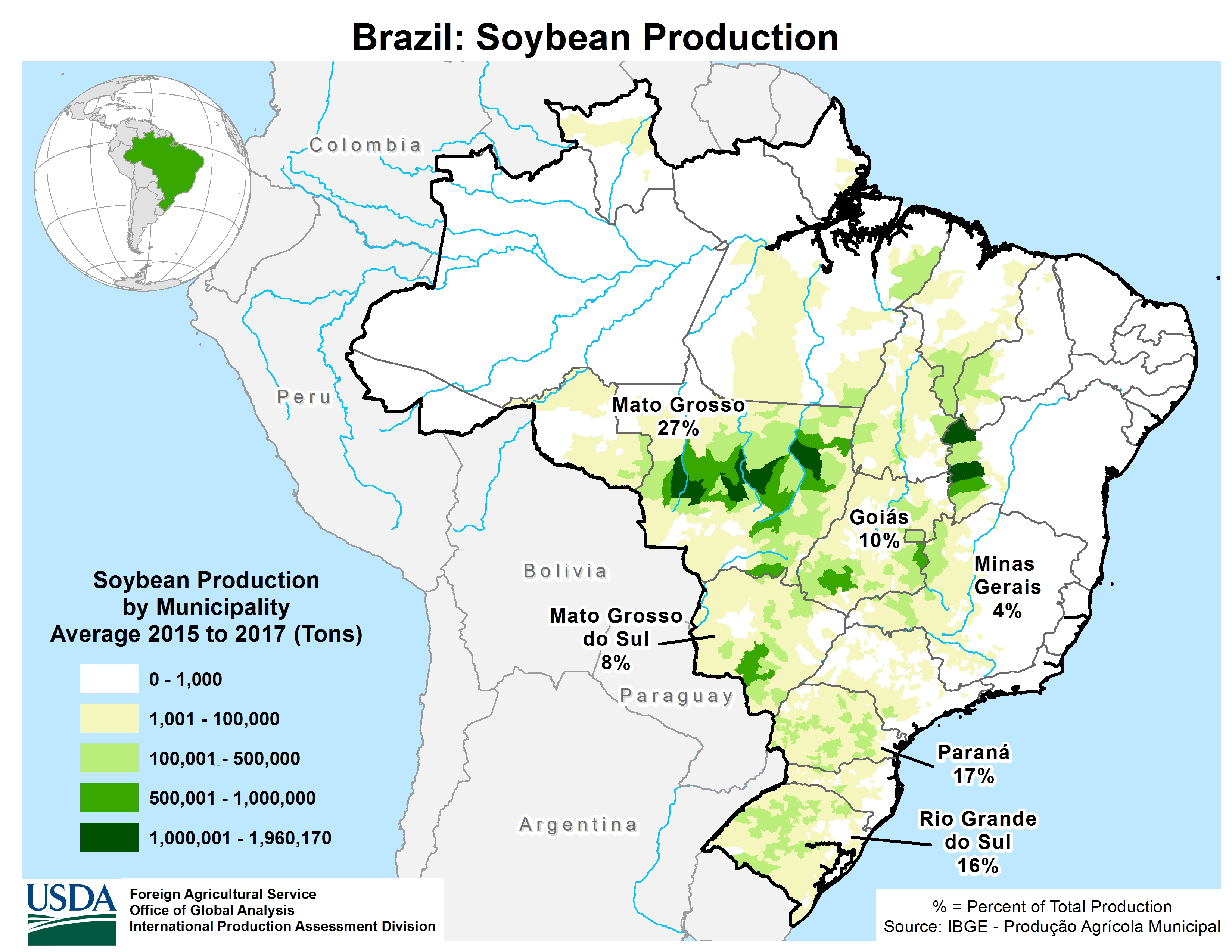
Brazil is the dominant food producer in the Western Hemisphere. I didn't mean to bring up soybeans with regard to deforestation (although it is a factor), I used the soybeans example to illustrate that livestock, agriculture and global demand are highly interconnected. There is very little that anyone outside of Brazil can do to tell Brazil how it should manage its land and resources.
This is true. Many people think that you can just get rid of livestock and grow kale. It doesn't work like that.
Still others think you can get rid of livestock, which eliminates the need for feed crops, which then allows you to grow kale. That isn't reality either. Land with low-quality soils used to grow crappy field corn (which is not suitable for humans) cannot simply be converted to grow kale for humans.
Livestock are part of an integrated agriculture system. Livestock and agriculture depend on one another. Cattle and ruminants, for example, convert low quality wild scrub, fescue and leftover agricultural byprods into high quality human-edible meat and nutrients.
About 50% of the corn in the US is grown not for humans or animal feed, but to produce ethanol fuel. The residual of that ethanol process is then processed into feed for livestock.
Quite a bit of the Amazon region is used to grow soybeans. The soybeans are shipped to Asian countries where they make soybean oil out of it for cooking. The residual soy byproducts from that process is then turned into feed which goes to pigs and chickens in that region.
Also mentioned in an earlier reply that about 50% of all fertilizer needed for crop cultivation comes from animal manure and byproducts. The remainder (and alternative approach) is to synthesize the fertilizer from fossil fuels.
It's important to realize that livestock aren't simply a standalone component in the food system. They are a key part of the total agriculture picture.
Food also isn't simply calories, it's about nutrition-- getting absorbable animal-format vitamins, minerals, amino acids and other key nutrients. There are quite a few nutrients which are essential to the human body and yet are very difficult (some virtually impossible) to obtain from plant-only sources. So reducing meat does come with costs/risks in terms of nutrition, I think that shouldn't be overlooked.
What is a net positive about "stop eating meat" unless you're livestock? From a nutrition perspective it's not a positive thing to "stop eating meat".
Besides changing your diet there are hundreds of other net positive (yet virtually inconsequenial) steps you can take to reduce your carbon footprint.
- Wash laundry with cold water
- Hang your laundry on a clothes line to dry
- Not manage and maintain a grass lawn
- Get healthy enough to get off/reduce perscription meds
- Drive a hybrid or an EV
- Have no/fewer offspring
- Don't have pets
- Don't work out or exercise (you'll expend more energy, eat more and breathe more co2)
- Don't drink alcohol (wine, beer, spirits)
- Don't eat chocolate (if meat is somehow uneccessary, certainly chocolate, wine, palm oil and tons of other nutritionally high GHG foods)
- Don't play or support activities which waste land, e.g., golf, football, soccer, graveyards, etc.
https://rationalwiki.org/wiki/Zo%C3%AB_Harcombe