> So imo you have to accept you’ll always be ignorant of most topics and get comfortable with thinking “I don’t know”.
Ok but I have to (or rather - I am expected to) vote on those topics. And not just during the elections or referendums, but also figuratively with my wallet and attention. In other words, my actions will be driven by how (mis)informed I am.
And even though I am comfortable with being ignorant, from my experience other people aren't comfortable with me being ignorant. Saying "I don't know, I haven't thought about it" is often met with shock if not anger. I don't have the luxury of dropping those people from my life either.
As for the travel, the perspective of a tourist is different from a person who lives there even for a few months, much less a few years. I agree it beats reading third-party summaries, but I don't think it gives you a much better clarity.
If the SaaS provider goes down or decides to discontinue a product, then yeah, ideally I should be able to install it somewhere and self-host it. It might not be easy but should be doable. If I want to modify it to fix a bug, I should do so - or take it to a third-party software shop/consultancy. The same way I can take my car or my fridge to a repair shop after the warranty runs out.
I'd like to highlight a different part of the article:
> In general, when I talk to software folks about testing, I'm coming from such a different place that they immediately look at me like I'm an alien, so let's talk about how we tested at this hardware company I worked for, Centaur, which informs my biases about how I like to work. Some of the things that we did that were or are unorthodox in the software world are:
> Hired dedicated QA / test engineers, with testing being a first-class career path on par with being a developer - No code review by default - Virtually no hand-written tests - Constant testing via what programmers sometimes called property based testing, randomized testing, fuzzing, etc., although we just called those tests (hand-written tests were called "hand tests"). - Large regeression test suite (3 months wall clock to execute on compute farm) - No unit tests
Anybody here tried that (or a similar) approach? Especially going all-in on property based testing and fuzzing with no unit tests.
I tried that approach somewhere before and the initial results were promising, but ran into political issues so the idea was canned.
No doubt that computers enabled a lot of automation. We can both agree with that.
The context was that technology should evolve to fit the humans [not the other way around]. And if contemporary technology didn't have limitations, it would be correct.
But it did and humans had to adapt to the computers. Humans had to develop and learn special languages so they could communicate with computers to do all those useful things you mentioned. Why? They were limited in understanding (or parsing) human languages. It took us decades before we could talk to computers in human languages. We're getting pretty close - especially in the past few years - but there's still some friction.
I'd argue the opposite. Technology in the past few decades was (is) limited and humans had to adapt to it.
We communicate with other humans using voice and three dimensional hand gestures. To use computers and early phones we had to learn to operate new input devices: keyboards and mice. Later with touchscreens we moved to two dimensional hand (finger) gestures. We're barely making voice commands work with our devices just recently.
Then, a large number of humans are figuratively tethered to their desks because the devices need power and stable internet connection. Mobile devices break this relationship a bit but you still need to charge them and be close to some sort of access point. In any case, the devices encourage sitting in one place for hours at time.
And this is just computers and smartphones. Humans adapted their entire lifestyles and transformed the landscape to cater to cars.
If the NYT subscription indeed has a tremendous value, surely it can attract and retain the subscribers without resorting to dark patterns in their products.
I moved from stored procedures to dbt. I find it easier to maintain and it helps me with version control, testing, and docs. Plus, since I deal with data pipelines a lot it get other goodies like lineage and auto DDL.
Not sure if you can still read my late reply, but Black has a `--skip-magic-trailing-comma` flag:
> By default, Black uses existing trailing commas as an indication that short lines should be left separate, as described in the style documentation. If this option is given, the magic trailing comma is ignored.
You don't need to exploit sensors. If a compromised device is connected to the internet (because the vendor app requires it to set up and control), you can use it as a part of botnet with a nice residential IP address.
Does this use levels from the original game or some custom ones? The solutions to the original levels should be in the training data, be it blogs, reddit comments, or wikis.
Unless the goal was to test how well do the large language models translate solutions in prose to actionable keyboard inputs, which is pretty interesting in itself.
A code formatter like Black can handle that. It's there to enforce a single code style no matter what the contributors use, whether they are human or AI.
That's a very cool site! I enjoyed the hand-drawn graphs.
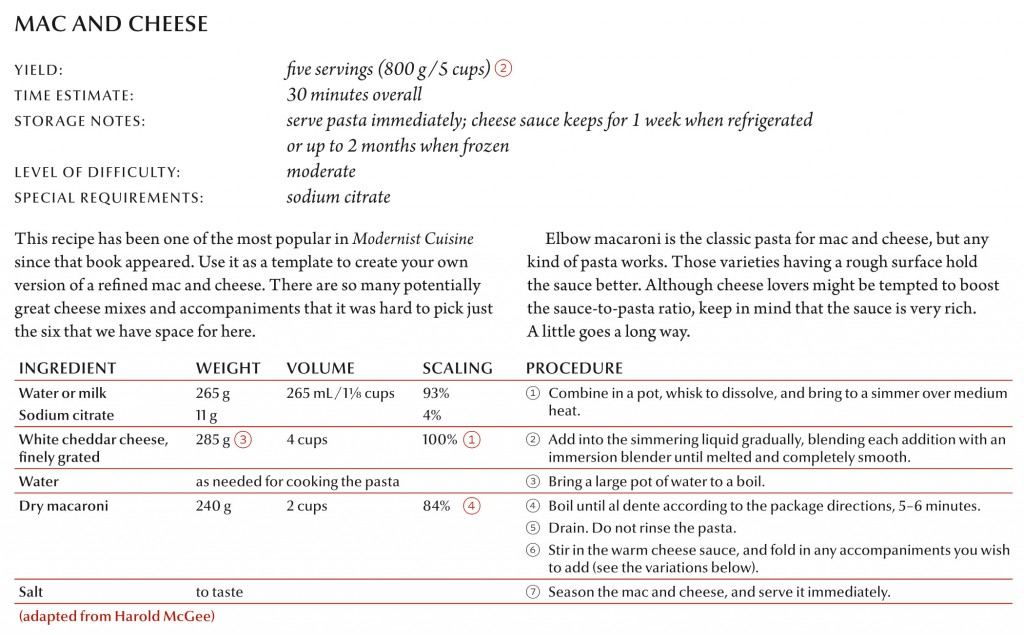
Your tables remind me of recipes in Modernist Cuisine. They all have ingredients grouped by the procedures together with weight, sometimes volume, and ratio.
In any activity you can take shortcuts that makes it easier. It's up to you how many (if any) you want.
Take woodworking for example. When I build a kitchen cabinet, I can get lumber that's already smooth and treated, I can buy drawer tracks, I can use power tools instead of a handsaw and a screwdriver, I can use a pocket hole jig to make joints easier. I still have to do more planning and assembling than with the Ikea cabinet, which also takes more work than having a contractor do everything for me.
I'm doing it my way because it's fun for me. Other people might enjoy other parts of the process - or different things altogether.
There's a whole spectrum between doing everything from scratch and paying someone to have it done for you.
Ok but I have to (or rather - I am expected to) vote on those topics. And not just during the elections or referendums, but also figuratively with my wallet and attention. In other words, my actions will be driven by how (mis)informed I am.
And even though I am comfortable with being ignorant, from my experience other people aren't comfortable with me being ignorant. Saying "I don't know, I haven't thought about it" is often met with shock if not anger. I don't have the luxury of dropping those people from my life either.
As for the travel, the perspective of a tourist is different from a person who lives there even for a few months, much less a few years. I agree it beats reading third-party summaries, but I don't think it gives you a much better clarity.