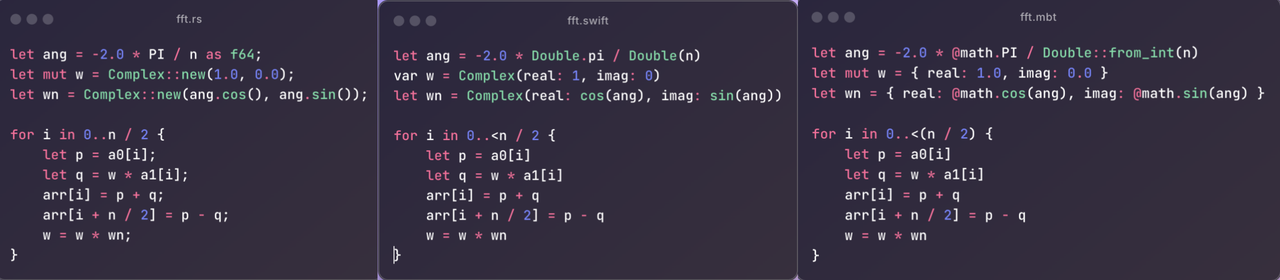
Please distinguish between "using LLMs to assist coding" and "vibe-coding entirely unusable software", abusing the latter accusation is just a form of witch-hunt. I've be using copilot since 2022 and I think it's totally fine. The only problem is large companies are trying to deceive inexperienced people into believing they can become experts by vibe-coding, but I don't think it's a problem for people knowing what they are doing.
In this article the problem seems to be you are trying to run a project under an unsupported environment and encounter some problem, which feels just... natural. However I think instead of writing an attack manifesto the more constructive thing you can do is to send a fix PR.
> Today, many friends pinged me saying Cloudflare was down. As a core developer of the first generation of Cloudflare FL, I'd like to share some thoughts.
> This wasn't an attack, but a classic chain reaction triggered by “hidden assumptions + configuration chains” — permission changes exposed underlying tables, doubling the number of lines in the generated feature file. This exceeded FL2's memory preset, ultimately pushing the core proxy into panic.
> Rust mitigates certain errors, but the complexity in boundary layers, data flows, and configuration pipelines remains beyond the language's scope. The real challenge lies in designing robust system contracts, isolation layers, and fail-safe mechanisms.
> Hats off to Cloudflare's engineers—those on the front lines putting out fires bear the brunt of such incidents.
> Technical details: Even handling the unwrap correctly, an OOM would still occur. The primary issue was the lack of contract validation in feature ingest. The configuration system requires “bad → reject, keep last-known-good” logic.
> Why did it persist so long? The global kill switch was inadequate, preventing rapid circuit-breaking. Early suspicion of an attack also caused delays.
> Why not roll back software versions or restart?
> Rollback isn't feasible because this isn't a code issue—it's a continuously propagating bad configuration. Without version control or a kill switch, restarting would only cause all nodes to load the bad config faster and accelerate crashes.
> Why not roll back the configuration?
> Configuration lacks versioning and functions more like a continuously updated feed. As long as the ClickHouse pipeline remains active, manually rolling back would result in new corrupted files being regenerated within minutes, overwriting any fixes.
> then his beef with Christoph about wanting to "mix languages" (C and Rust, of course) and Christoph said "I'm maintaining it and I'm not doing it, it's like a cancer"
You don't even take time to figure out who's the commit author.
> Every additional bit that the another language creeps in drastically reduces the maintainability of the kernel as an integrated project. The only reason Linux managed to survive so long is by not having internal boundaries, and adding another language complely breaks this. You might not like my answer, but I will do
everything I can do to stop this.
> Every additional bit that the another language creeps in drastically reduces the maintainability of the kernel as an integrated project. The only reason Linux managed to survive so long is by not having internal boundaries, and adding another language complely breaks this. You might not like my answer, but I will do
everything I can do to stop this.