> There is a theory which states that if ever anyone discovers exactly what U+237C is for and why it is here, it will instantly disappear and be replaced by something even more bizarre and inexplicable.
There is another theory which states that this has already happened.
-- Paraphrased from The Restaurant at the End of the Universe by Douglas Adams
I was recently at the kiosk at an Odeon cinema in Norway and I noticed that their popcorn buckets were helpfully labeled S, M, and L. Stor, Middels, Liten. No X-sizes in that case though. At least with popcorn you can plainly see that S is much bigger than L is when you pick it up yourself.
It's a fun read in a fan-fiction sense, but when you look at the out-of-universe story of the events of Tolkien's life and his writing process it becomes clear that Tom is not meant to be any kind of evil.
Tolkien wrote a silly whimsical poem about one of his children's toys that they had named Tom Bombadil. In this tale he lives in a dangerous environment, but he is able to overcome the dangers and get his happy ending.
When Tolkien later was writing LotR, he drew upon his former work and put in the silly whimsical Tom as an early encounter for the Hobbits just as they are leaving the Shire and starting their adventure. This story arc delivers some early exposition about the world in his dialogue, it shows that the Hobbits are hopelessly unprepared to stand up against any foe such as Old Man Willow or the Barrow-Wight and need rescue (this way they can have character growth and become Heroes by the time they return to the Shire) and it gets the Hobbits armed for their quest towards Rivendell (and most importantly to put the right kind of blade into Pippin's hands for later).
In a more thematic sense he is just part of nature, not evil but also not actively looking to do good, just existing. He is master of his domain in the same sense a big moose might be the "master" of his local forest, he's the biggest around and isn't threatened by anything else, but he has no human desire for expansion and doesn't push back when civilization comes around to turn the land nearby into farmland either, just keeps to himself. He doesn't try to tame the angry trees because it's just protecting it's territory, as is natural, nor does he try to "exorcise" the barrows because nature doesn't actively go about trying to undo the evils created by man.
[1] is a video from a couple decades later (1914) that shows more of the urban middle or lower class folks of Kristiania (it wouldn't be called Oslo until 1925).
That's a neat observation, the cities do have a similar history.
The medieval town called Oslo burned down in 1624, and a new city was founded on the other side of the bay. It was named Christiania after the monarch Christian. It kept that name until 1925 when they changed it back to the old historical name Oslo.
Some decades later, the Russian monarch Peter would also found a new city, which happened to have his name in it. So these two cities were being constructed at around the same time and taking design and architectural inspirations from the same places I would imagine.
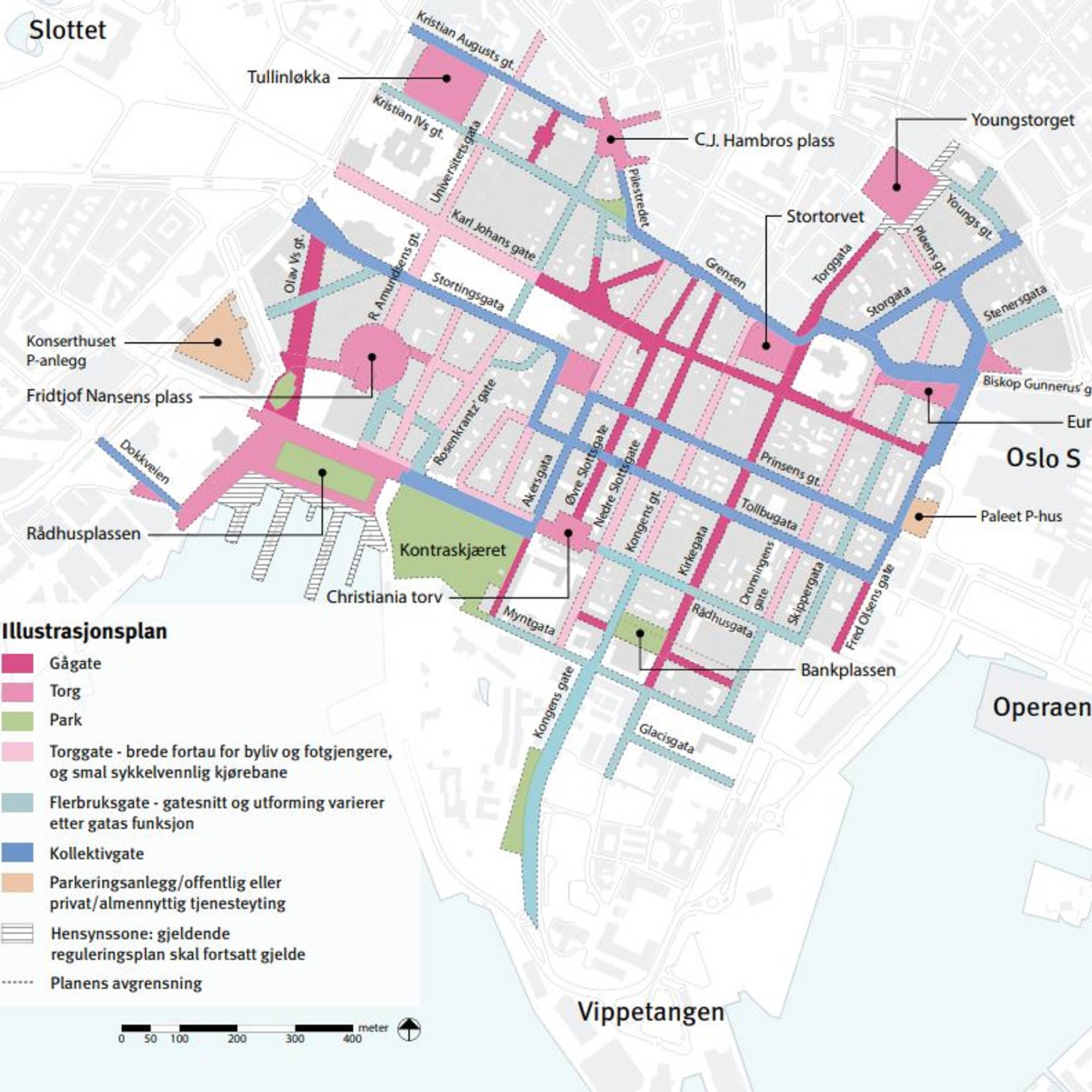
That street in particular has been closed for all traffic except buses and trams (and necessary service cars I guess, like the parked van on street view). On [1] you can see Stortingsgata labeled in blue as "kolletivgate" (collective street). As the graphic shows most streets at the very core of the city have been closed to general traffic, the bluish streets are mostly only public transportation and the pinkish streets are mostly pedestrian and bike lanes. Outside the core you see more cars on the roads.
One time I was using my laptop to remote desktop into a computer I was hundreds of km away from physically, I discovered that if I hit the power key on the laptop (yes, the laptop had a key on the keyboard for power, not a separate power button) while having the remote session window focused, it sent the signal over the wire and put the remote host to sleep instead. Whoops.
After that I looked up how to enable wake-on-lan and open up a port to be able to do that remotely.
I rediscovered the joy of working with databases while working on an Elixir application with a Postgres/Timescale DB.
Elixir's Ecto library (doesn't really fit the definition of an ORM) lets me compose queries in a functional syntax that then get compiled to SQL before execution. This both enables me to be more productive and results in more readable code that can be reasoned about and be tested easily. Sometimes I still have to dive into "raw" SQL to write e.g. a procedure or a view definition (like Timescale's continuous aggregates), and I definitely miss the pipeline operator when those expressions get complex. SQL is a powerful tool, but it gets clunky and has strange footguns. A feature like what this post describes is definitely a step in the right direction for Postgres. Looking forward to try it out.
This looks very interesting! I only skimmed the abstract now, but I will look more closely tomorrow. Back in 2016-17 I did a master's thesis on a combination of (much simpler) cellular automata and neuroevolution, and had some thoughts about how other neural "paradigms" like backpropagated deep nets and indeed, adversarial training could be used with CAs. It's great to see that it's an ongoing topic of research.
Something that makes this extra interesting is that two of the major telcos of Myanmar are subsidiaries of companies from other countries: Telenor from Norway and Ooredoo from Qatar. Both of which are majority owned by their respective governments. According to [1] they account for 28 of 54 million subscriptions.
It will be interesting to watch how these two companies continue to comply with such orders. These events are making the news in Norway with a Telenor angle. If things keep escalating and Telenor is shown to be in any way complicit in any human rights abuses, it will be a scandal in Norway, and the Telenor leadership will have to answer to the government. Norway has cultivated an image as a human rights champion of sorts on the international stage, and is expected to take this sort of development very seriously. There is precedent in the VimpelCom case [2] where the financial crime police, parliament and the ministry of commerce got involved. Senior leadership had to testify before parliament committees, the police made corruption charges, and the chairman of the board resigned after the minister of commerce indicated she did not have confidence in him. So Telenor Myanmar and it's Norwegian leadership is now under pressure from the government of Myanmar to comply, while also being answerable to the government of Norway for the possible consequences of doing so.
Meanwhile, Qatar is under international pressure because of human rights issues on their own turf, and the international eye turned on them because of the upcoming FIFA World Cup. In fact, Norway's national team has been calling them out recently [3]. They might also want to tread very carefully around this issue.
This is a difficult problem indeed, but thankfully it is just as difficult for the malicious actors as it is for the "good guys". Since various bad guys have presumably been scanning public repos for years already, Github and PyPa adding this feature is leveling the playing field, even if it is not a 100% accurate search algorithm.
I'd say it's not a very useful model on it's own, but it's a great teaching tool that illustrates emergence [1] well. It's easy to get started and it gets you into a mindset that you can then bring along to other models that you might do something slightly more useful with.
-- Paraphrased from The Restaurant at the End of the Universe by Douglas Adams