Not professionals. For example, we don't call a fast food server a professional, yet he is trained.
Yes, a mother is constrained by having to look after her other children and the household, but it is an organic set of constraints which is customised to the particular family and has arisen in part out of their previous interactions and out of her family traditions. Furthermore it can be altered (by her). It's not a bureaucratic scheme designed to maximise the convenience and minimise the legal/financial risk to the daycare and its staff.
Yes, there are horrific families and there are no doubt daycare workers who are more affectionate than others. But this doesn't affect the argument.
>And who are you to tell people who they do or do not love?
Who do I have to be? I've merely claimed that daycarers don't love the kids in their charge. I think our great-grandmothers would have known this instinctively and would be horrified at the direction we have taken as a society in this regard.
(1) There's no such thing as a professional parent. It's a relationship.
(2) Professionals have expertise in some domain, e.g. heart surgery, but as the article shows, there's no expert knowledge of childcare. There's no prevailing child-rearing philosophy.
(3) Professionals are paid significantly above the minimum wage.
>know how to provide the love
No. A mother loves her child, but love can't be provided as a commodity, like complimentary chocolates. Even if a carer tries her hardest, this will fall short, because she doesn't love the child. She's also heavily constrained by having to follow procedures, timetables, attend to other children, and so on.
>Yes, being abandoned by your parents can be traumatic, but that's not what daycare is.
That's exactly what it is: somewhere to put your toddler while you head off to work. Or it's a convenience. But in reality small children need someone they trust and are close to available at all times.
Don't forget that those circumstances include the decision of whether or not to have children in the first place.
>But please keep those opinions to yourself
That's silly. This is a discussion which you're not obliged to read and I'm not a best-selling author or anything like that. More importantly, in response to lovemenot's request I tried to move beyond opinion and give an explanation. You're free to criticise it on its own merits if you don't like it.
>or at least recognise that blanket advice to all parents in all circumstances in all countries at all times is going to be worthless and probably wrong.
But I did recognise it: 'I'm not arguing that one-size-fits-all; there are many legitimate parenting styles'. Also 'Yes' at the very start.
Btw, using one's own child as an example in a discussion like this increases emotional investment and then it's harder to determine what's true. Better to argue abstractly I think.
Nah, everybody used to think slavery was OK. Yet it wasn't. Plenty of people know they shouldn't smoke. Yet they do. Evolution is 'red in tooth and claw'.
Let me re-formulate my explanation of why daycare is bad:
(1) Small children need love and attention; they also need adult help available; they need to feel secure.
(2) Love, attention and help aren't raw undifferentiated qualities. The quality depends on the source. A familiar source which knows the child is required.
(3) The anxiety induced by an early childhood separation from such sources is potentially traumatic and long-term.
Therefore, young children shouldn't be separated from their mothers and/or close relatives.
I'm not arguing that one-size-fits-all; there are many legitimate parenting styles. The books argue about these, and the article is right, we shouldn't worry. But daycare just isn't one of them, as I've explained. It's the opposite of parenting.
>I believe this must be correct in the majority of cases.
'At least you should indicate why you believe those millions are being raised [rightly] rather than merely assert it as fact.'
Good people already know that daycare is bad, even those who use it, even though they can't explain. So yeah, it's axiomatic.
>however, the second is not in the general sense
Au contraire, it's a perfectly true general statement that children can't get love and attention at daycare. From minimum wage, high-turnover staff looking after a large number of kids in a bureaucratically-controlled environment? No way.
Actually I guess most people wouldn't want or expect employees to love their charges anyhow. It would likely be construed as 'inappropriate', as when a teacher hugs a pupil.
No, that's what I'm arguing against. Parenting manuals are arguing minutiae while children are increasingly being brought up by strangers who don't love them. Of course there are exceptions. So what?
'Uncontroversial statement' if they prefer. I'd be happy to nitpick with them provided they aren't murdering people or sending their babies to preschool.
Empirical evidence can't decide on moral issues. To complicate matters further most moral stuff can't be explained very well. For example, 'murder is wrong' is an uncontroversial moral fact which is both unfalsifiable and hard to explain.
In simple everyday terms I'd say small children need love and attention like a plant needs water. They can't get these reliably at day care. But most of us already know this.
>It's impossible for any scientific study to address all possible outcomes and the relationships between them
Yes and even if there somehow were credible, reproducible studies that addressed all aspects of parenting and all childhood outcomes then these still couldn't tell one how to parent because there's a moral component.
Credentials and prizes are heading the way of the dodo because we're slowly realising that while neither knowledge nor significance can be measured our opinions can be swayed by prestige and politics.
>We know how human beings are supposed to live to be happy: small communities of stable relationships, with a lot of face to face time, ideally spending some of it outside doing some sort of physical activity.
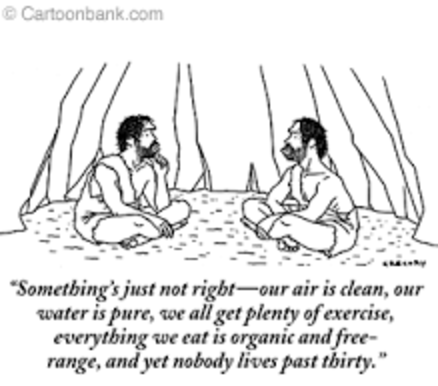
That's how we used to live, in small roving bands where all males are close relatives. Total lack of privacy. No dentists. Parasites. Obsession with the spirits that apparently lived in trees and rocks, also the evil spirits which brought disease and thunderstorms (cholera not having been identified). Endless wars with other tribes...
Now, obesity has replaced malnutrition. Distraction has replaced boredom. Social media has replaced gossip. These are better problems to have and they're solvable in turn. Then we'll see what the next problems are.
One problem that all cultures face is that of pecking order. Respecting the pecking order as animals gave us a lesser chance of death by violence within the species. But we've inherited the desire to rise up the status hierarchy and one of the commonest means of doing so is by trying to emulate the most successful. Unfortunately a high proportion of the most successful people appear to be sociopaths who seem to feed off of finding new ways to subtly weaken the culture as a whole.
I'd rather live with the Amish or with John Plant than potentially be arrested by my own house or car. The house would merely lock me in but the car would no doubt drive me to the police station also.
I'd also rather get up to switch the lights on. Moving about periodically is healthy, right?
Small reward now or larger reward later? In real life we might think: why can't I just have both?
Yet it frequently is a matter of 'either or' since the smaller reward robs me of the mental resources required to create or bring about the larger reward. For example if I party now I won't get the new job later on because I won't have the energy to learn the relevant skills.
Yes, a mother is constrained by having to look after her other children and the household, but it is an organic set of constraints which is customised to the particular family and has arisen in part out of their previous interactions and out of her family traditions. Furthermore it can be altered (by her). It's not a bureaucratic scheme designed to maximise the convenience and minimise the legal/financial risk to the daycare and its staff.
Yes, there are horrific families and there are no doubt daycare workers who are more affectionate than others. But this doesn't affect the argument.
>And who are you to tell people who they do or do not love?
Who do I have to be? I've merely claimed that daycarers don't love the kids in their charge. I think our great-grandmothers would have known this instinctively and would be horrified at the direction we have taken as a society in this regard.