The article actually presents strategies for shipping, not changing the hearts and minds of management, or making great products. Shipping implies neither of those things.
> If you ship something users hate and makes no money, but your leadership team is happy, you still shipped. You can feel any way you like about that, but it’s true. If you don’t like it, you should probably go work for companies that really care how happy their users are.
To be fair, only one other phone had a capacitive touchscreen, and Apple provided the first OS that could really leverage it. The situation between Apple Vision and the numerous long-running incumbents with similar technology is very different to the unveiling of the iPhone.
That and consoles are basically monster DSPs, benefiting from high-throughput buses and parallel processing in a way that general purpose computers do not. Architecting from the ground up with this in mind means you can build something with cheaper silicon that performs much better for video games
> One can project from SpaceX's launch history that as the commercialization of space intensifies, this figure is going to continue to grow exponentially
I have made further arguments, but this is the one that is downvoted. I imagine most of the people that downvoted were Elon stans, but what's funny is that I doubt Elon himself would disagree with this statement. He has made exactly this kind of superlinear growth with Tesla, his battery production, and I'm certain he has the same ambition for SpaceX.
> You seem to be arguing that space flight will continue to grow exponentially, consuming all the resources required to sustain that growth, unless we stop it right now, or very soon, unless we stop it right now, or very soon
Once again, I have never made this point. I am in sympathy with directing attention and capital to problems with earth, but I reserve that as my opinion and beyond this discussion.
Allow me to restate my claim so that we're both certain:
The estimate that capital expenditure for SpaceX's space projects is 2 billion per year is short-sighted, and maybe a little disingenuous, given that that figure will grow exponentially in the longer term.
It's this exponential growth we're arguing about, whether it will be 'eventually drawing from other, more worthy projects' is a morality question I did not pose. Agreed?
> It is limited by the available resources
Err, yes. I'm not saying growth goes forever, obviously, but by the time the space industry (on earth) saturates, spending on space will be many orders of magnitude more. Let alone that acquisition of raw materials and manufacturing for space can continue off earth, so I don't think depletion of resources are a problem in the very long term.
> but why not consider processor transistor density?
Because it's completely orthogonal to my point. I'm not talking about efficiencies, I'm talking about gross spending on the technology. Full stop.
> we don't seem to be increasing our spending on it
But we will be increasing this spending year-on-year, likely at an exponential rate. You disagree with this, but it seems we're both speculating. Though for at least my speculation, the current trend, and history, broadly agrees.
> I think that looking at the profitability of use cases of space flight really only strengthens my argument, and weakens the one I think you're making.
The one I wasn't making. But I'm not sure about the argument you're making? If SpaceX is making exponentially more profit, capital expenditure on commercial space ventures must be increasing. If there's more profit, it's because someone, somewhere, is fronting up the cash.
Could this money be better allocated in order to solve Earth's problems? Probably. Might space tech in some way help Earth anyway? Maybe. But will the spending for a new frontier of wealth increase exponentially in the medium to long term? Barring some major catastrophe or extinction event, it's inevitable.
> soon we won't be pushing the planet's limits any longer
What constitutes as 'pushing limits' depends on the kind of planet that is considered tolerable. For many conservation-minded people, pushing the limits happened well before 7 billion.
A population shrinking to a quarter of it's size is only considered undesirable to some because the economy doesn't factor in the externalities of having a large population - e.g., climate change, reduced access to nature, increased stress, polluted environment, species loss, food chain collapse. The solution is to no longer permit these to be externalities, and I don't see that happening without government intervention on a global scale.
As for anyone concerned about an ageing population, within the next few decades human labor shortages will be solved with automation - to the point that there will be a shrinking job market. As for caring for the elderly, they will have access to new mobility technology, and life extension - at first expensive, but then trickling down to poorer people before 2 generations.
Well, I made no such argument, the GGP did, and I'll quote:
> Look at the numbers. SpaceX is doing it’s thing for a few billion a year. That’s chump change compared to the money being spent on, let’s say professional basketball.
... but I think if the poster wants to make the argument about relative costs they should at least make a fair assessment.
> First of all, just because the trend is exponential now doesn't mean it always will be. That's silly.
Silly why? Silly as the amount of processors that are sold every year?[0] How would a 'wealth creating' technology reaching economies of scale with a variety of use-cases not continue to grow? It is possible there's some sort of saturation point... but I can only see space industry as something that will spur it's own demand by creating industries that never existed before.
> Second of all, the number of launches may be increasing at that rate because the launches have been made exponentially cheaper - why don't we look at % of GDP being put into space flight? I bet it would be flat or trending down.
And I was wondering if someone would make this argument, because it is flawed. Even if costs do 'reduce exponentially' they are reducing towards a lower limit, not to zero. At some point the cost reductions per year will start to become insignificant, much in the same way that regular flight isn't becoming exponentially more economical every year. So after the low-hanging fruit has been tackled (e.g., rocket re-use, mass production), the number of launches will correlate pretty well with costs, especially now that a whole bunch of use cases now become profitable.
I've seen it before, and I've a basic understanding of GANs, I just don't see it being overly useful. This technique can make a really blurry simulacrum of an actual game, and that's really cool, but I'm not sure how it could be used to make a something both truly novel and coherent. There's plenty of low hanging fruit for AI within an engine, whereas using AI to be the entire engine is somewhat infeasible
Predicting the next frame from previous frames and learnt sequences is a neat trick, but I think automated game development is already very possible with simple techniques like genetic algorithms, or even a PRNG. I mean Rogue and it's descendants are very much automated game development, but GPT-3 could be useful for something like dynamic quest generation, world-building, narrative, adaptive NPCs (including dialogue) etc.
And this is where I think of the game-side of games programming to be more an art form (I say this as an ex-professional game developer). GPT-3 could be used for narrative generation, environment generation, and adaptive AI, and these are all exciting areas for research and experimentation. But as you say, underneath is a solid engine, and one day an AI could feasibly build an engine from scratch, but I think that day is decades away. The AI that we have today are just toys.
> We are already starting to see automated programming moving out of the research lab and into the commercial realm, e.g. GitHub copilot.
As soon as GitHub was acquired by Microsoft I knew their intentions were for automated coding tools. I wasn't concerned about this affecting my livelihood in the short to medium term, because state-of-the-art ANNs won't be able to grasp the context of business requirements without developing adult human level intelligence. Thus, even a full program built by such a system would need to be verified by a human to be sure it will behave as desired, obviating any gain in terms of automation. Even the rudimentary boilerplate that copilot spits out suffers from this problem.
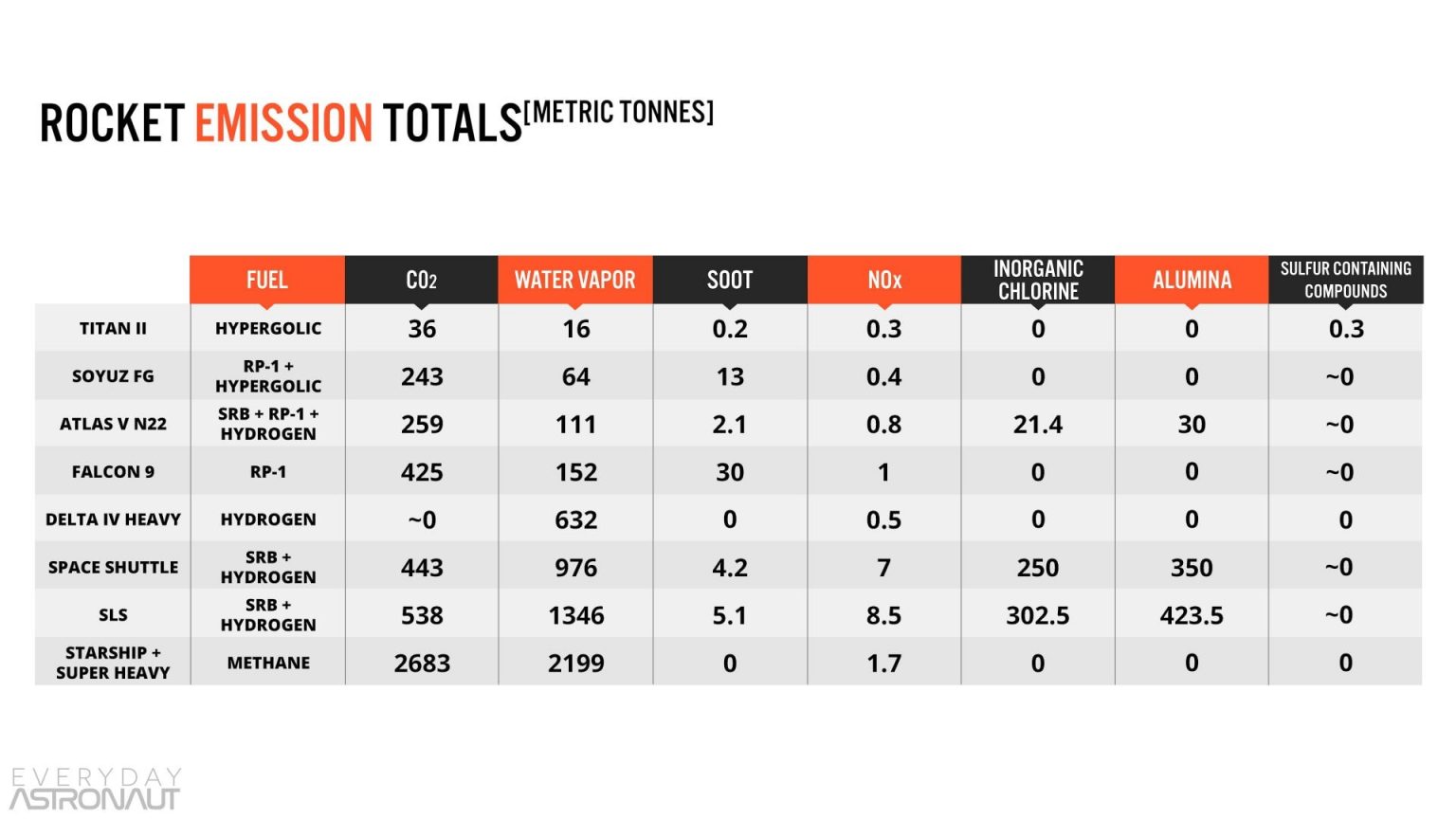
It's a much better outcome, but remains to be seen whether it goes beyond a talking point and can scale to meet future demand. Also, depositing GHGs like water vapor and CO2 in the upper atmosphere is a somewhat worse proposition than ground level emissions
And yet nothing in any response so far counters my claim that capital expenditure on space projects will likely increase exponentially. The only claim I made, and the one I was downvoted for.
> I would argue that Starship is even more ecological than the other rockets
Methalox combusts to CO2. As the burgeoning space industry scales up exponentially, so will the emissions.
> If we manage to bootstrap space manufacturing, benefits for ecology, biology and material science are also self-evident.
Not 100% self-evident. Apart from how infeasible this is from the outset, once deployed at scale it would require transporting millions of tons of goods and raw materials back and forth against the gravity of the earth.
Not my domain, but I'm not sure there's a combustible fuel that could have the energy density to do this and not pollute the atmosphere (happy to be corrected on this). It seems we need to find a completely new means of propulsion (or offsetting with carbon capture) before we could have a green space industry.
> The fact that a company makes a lot of money isn’t an argument against them
I wasn't making an argument against companies making a lot of money. I was merely pointing out that the commercialization will be sinking capital investment far greater than just 2 billion, contrary to the poster's claim. I don't speak of the counterfactual, i.e., where that excess money would go otherwise, but I do share the OP's lament that we should be trying to fix problems on Earth. If Space tech can help in some way, I'm all for that.
> spending more on something that drives technological advancement is a good thing
Technologies are amoral. Whether or not the advancement or deployment of any particular technology is a 'good thing' is a matter of subjectivity.
> SpaceX is doing it’s thing for a few billion a year
One can project from SpaceX's launch history that as the commercialization of space intensifies, this figure is going to continue to grow exponentially
> If you ship something users hate and makes no money, but your leadership team is happy, you still shipped. You can feel any way you like about that, but it’s true. If you don’t like it, you should probably go work for companies that really care how happy their users are.