Beware of 'shrinkflation,' inflation's devious cousin(npr.org)
npr.org
Beware of 'shrinkflation,' inflation's devious cousin
https://www.npr.org/sections/money/2021/07/06/1012409112/beware-of-shrinkflation-inflations-devious-cousin
319 comments
Not sure if it's only in Great Britain where this occurs, but the food manufacturers have taken the acronym WYSIWYG to heart.
Don't expect anything more than what is visible in the food packaging.
The little plastic window in the packaging shows lots of pepperoni?
Don't assume the whole pizza is uniformly covered in pepperoni.
You'll just make an ass out of yourself.
see https://www.dailymail.co.uk/femail/food/article-5274153/Phot...
I've seen pix of sandwiches where the packaging looks like there's tons of filling only to reveal that all the fillings have been jammed to the front of the package window.
Don't expect anything more than what is visible in the food packaging.
The little plastic window in the packaging shows lots of pepperoni?
Don't assume the whole pizza is uniformly covered in pepperoni.
You'll just make an ass out of yourself.
see https://www.dailymail.co.uk/femail/food/article-5274153/Phot...
I've seen pix of sandwiches where the packaging looks like there's tons of filling only to reveal that all the fillings have been jammed to the front of the package window.
Is that actually intentional? i.e. if you bought a bunch of them would they all be like that?
It could just be that they have machines that try to randomly scatter pepperoni (or whatever) and then the ones where none of the pepperoni ends up visible fail QA. I think that's happening with at least the waitrose smoked salmon in that article, because I have had that before and it definitely wasn't misleading.
It could just be that they have machines that try to randomly scatter pepperoni (or whatever) and then the ones where none of the pepperoni ends up visible fail QA. I think that's happening with at least the waitrose smoked salmon in that article, because I have had that before and it definitely wasn't misleading.
Some of it is completely intentional - some cakes and chocolates literally come with a vacuum-formed tray that takes up 80% of the volume of the package. And of course, many brands of crisps/chips come with enormous bags that are almost empty.
Of course, I'm sure the corporations would say it's "to stop the product getting damaged"
Of course, I'm sure the corporations would say it's "to stop the product getting damaged"
> Of course, I'm sure the corporations would say it's "to stop the product getting damaged"
It's marketing meant to grab the consumer's attention on a competitive shelf. If you look at the box of chocolates, for example, it's space meant to balance required flashiness (graphics + window to see chocolates) with their target price point. Companies do this all the time when selling tech gear that isn't measured in weight or volume. Small stuff like webcams will often have giant mostly empty boxes so they have room for graphics and copy. Shaving and perfume sets also do this all the time too.
It's marketing meant to grab the consumer's attention on a competitive shelf. If you look at the box of chocolates, for example, it's space meant to balance required flashiness (graphics + window to see chocolates) with their target price point. Companies do this all the time when selling tech gear that isn't measured in weight or volume. Small stuff like webcams will often have giant mostly empty boxes so they have room for graphics and copy. Shaving and perfume sets also do this all the time too.
Most recent example of empty bags I have encountered is salads/greens. The same bag size used to contain twice as much salad by volume just a year or two ago.
Yes, totally intentional. There are many clever tricks being played. 'michaelt mentioned trays taking most of the volume. I've also seen spacers added to the package to fill the area not visible through the little window, glass jars with very thick bottoms (covered by the label), and glass jars with double-layered bottom where the top layer is strongly convex - making the jar 10%+ smaller on the inside than it looks from the outside.
The toppings can slide around during shipping. If someone turns a box of pizzas on its side, the pepperoni slices will tend to slide to the low spot. When I make a frozen or take-and-bake pizza I almost always have to redistribute the toppings before I put it in the oven.
It's weird that they wind up in the transparent portion of the packaging so often, though.
> © REDDITT/IMGUR
ah, daily mail...
ah, daily mail...
My favorite are the photoshopped images where the sizing is completely off.
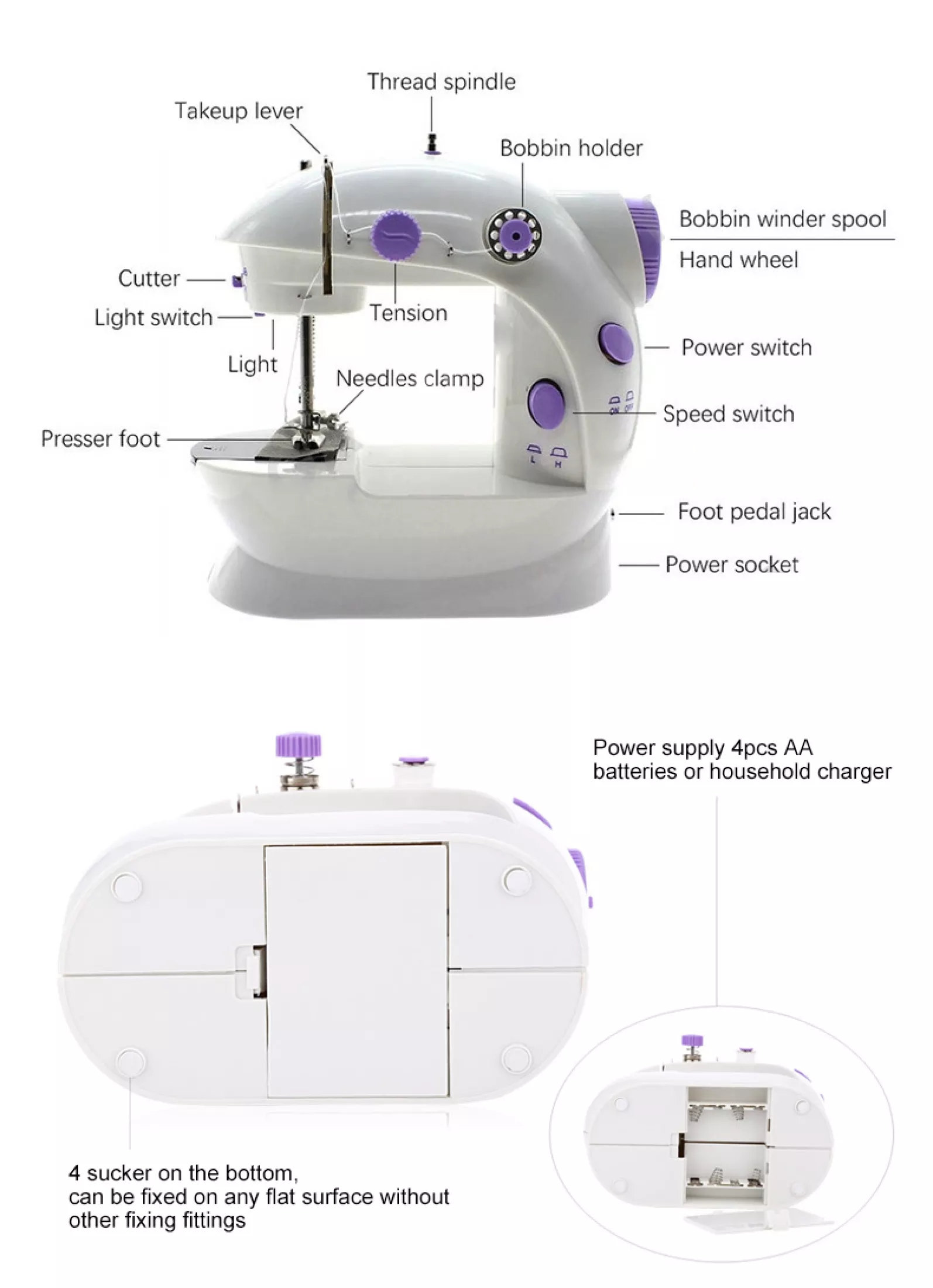
This sewing machine's image[0] looks huge! When in reality, it's $20 and mostly a "toy" machine; not much bigger than 4AA batteries[1]. Or maybe the dude is just really small.
More hilarious than nefarious as in your case.
[0] https://my-test-11.slatic.net/original/8dcf4c63812b0453fc3ed...
[1] https://laz-img-sg.alicdn.com/p/3126136a068a0eca84086249126b...
This sewing machine's image[0] looks huge! When in reality, it's $20 and mostly a "toy" machine; not much bigger than 4AA batteries[1]. Or maybe the dude is just really small.
More hilarious than nefarious as in your case.
[0] https://my-test-11.slatic.net/original/8dcf4c63812b0453fc3ed...

[1] https://laz-img-sg.alicdn.com/p/3126136a068a0eca84086249126b...
inflatable pool/yard toys are for some reason extremely susceptible to this. Like those paddling pools where the image shows a whole family playing in it, when in reality your kid can maybe fit a single ankle in there.
Reminds me of this classic scene from Top Secret: https://www.youtube.com/watch?v=QJoTBlDfVhk :)
I have the plug in version of this sewing machine. Yup, it’s is pretty small in real life.
That one actually seems straight up manipulated rather than just deceptively presented to me. That guy's entire arm is somehow fitting inside of a machine which could barely fit his finger in actuality!
Also the machine image is mirrored, controls are on the wrong side.
> make products look bigger than they really are, especially in online photos
I've noticed that tiny condos and apartments in real estate photos look enormous. I'm undecided on whether this is a deliberate attempt to mislead or an artifact of having to use a wide angle lens to capture the whole room (but an artifact that the seller and real estate agent like).
I've noticed that tiny condos and apartments in real estate photos look enormous. I'm undecided on whether this is a deliberate attempt to mislead or an artifact of having to use a wide angle lens to capture the whole room (but an artifact that the seller and real estate agent like).
Real estate photos are so bad. When I sold my last house, I almost regretted it when I got the listing photos back. I never knew I lived in such a clean and enormous house!
Three things:
1. I get that interior shots need a wide angle to capture the boundaries of a room in a single photo. But there's a limit. Most pictures I see dial it up to those crazy levels where obviously square or circular items become rectangles and ovals. Here are 2 images I just now randomly picked:
This kitchen is long! https://i.imgur.com/YxrRMSy.jpg
Nope, just small: https://i.imgur.com/rPCSMUT.jpg
(But, the rise of 3D walkthroughs is a good antidote for this, so credit where it's due on that front.)
2. Saturation! Please, stop maxing out that slider. Sometimes it's just vivid blue sky and greenest green grass, but other times they go so far that the highlights are all blown out and everything just looks weird.
3. Fake fireplace fires, sunny weather, etc. A lot of photos have a fake sunny sky inserted into window openings, or a "fire" in the fireplace that's obviously been pasted in. Different random listing shows 2 photos with incredible luck—the flames are identical.
https://i.imgur.com/jhnwvAv.jpg and https://i.imgur.com/Ut1aTdl.jpg
Three things:
1. I get that interior shots need a wide angle to capture the boundaries of a room in a single photo. But there's a limit. Most pictures I see dial it up to those crazy levels where obviously square or circular items become rectangles and ovals. Here are 2 images I just now randomly picked:
This kitchen is long! https://i.imgur.com/YxrRMSy.jpg

Nope, just small: https://i.imgur.com/rPCSMUT.jpg

(But, the rise of 3D walkthroughs is a good antidote for this, so credit where it's due on that front.)
2. Saturation! Please, stop maxing out that slider. Sometimes it's just vivid blue sky and greenest green grass, but other times they go so far that the highlights are all blown out and everything just looks weird.
3. Fake fireplace fires, sunny weather, etc. A lot of photos have a fake sunny sky inserted into window openings, or a "fire" in the fireplace that's obviously been pasted in. Different random listing shows 2 photos with incredible luck—the flames are identical.
https://i.imgur.com/jhnwvAv.jpg and https://i.imgur.com/Ut1aTdl.jpg


My in-laws put their house on the market, and the Real Estate agent produced a walk-through video.
My wife and I couldn't stop laughing because the agent photoshopped a view into the kitchen window, but even in the context of the video it's clearly a plane with a texture on it just outside the window. It looks like a low-res poster of the Himalayas hung outside their kitchen window; it's not a convincing fake view in the slightest.
Don't know what the agent was thinking, the actual view out the window is better than that.
My wife and I couldn't stop laughing because the agent photoshopped a view into the kitchen window, but even in the context of the video it's clearly a plane with a texture on it just outside the window. It looks like a low-res poster of the Himalayas hung outside their kitchen window; it's not a convincing fake view in the slightest.
Don't know what the agent was thinking, the actual view out the window is better than that.
There’s actually a good reason for photoshopping in a fire in the fireplace. When doing real estate photography you generally want to do something to ensure that the windows aren’t overexposed and blown out. The two options are to light the interior with some flashes to balance the exposure (the better way), or use multiple exposures and do HDR.
If you use flashes, the fire will be too dark and won’t really show in the exposure. Moving flames will also screw up HDR.
I still think it’s stupid and only did it once at a realtor’s request.
If you use flashes, the fire will be too dark and won’t really show in the exposure. Moving flames will also screw up HDR.
I still think it’s stupid and only did it once at a realtor’s request.
The easiest trick is to blast a flash off white ceilings which then makes any other white walls look bright and clean
> Different random listing shows 2 photos with incredible luck—the flames are identical.
Ah yes, the old roaring fire directly below a window :)
Ah yes, the old roaring fire directly below a window :)
I can confirm real estate agents in the Bay Area are notorious for the first one you listed. They can make a shoebox look like a palace.
I have been house shopping for about a year now (with no real urgency) and ALL real estate agents will do this. We saw a house where a real estate agent only used their cellphone for photos and the house had the lowest number of views. We went to see the house and it was a m a z i n g. You may joke about these photos, but people want to imagine the room. When you have spent some time looking at houses, your brain is able to convert from the wide angle deception to what it should probably look like.
It’s a bit of both. I’ve done some real estate photography, and realtors get stupid excited about ultra wide angle shots.
Me? I tried to stay as tight as I could. I think it looks…classier? One other thing to keep in mind is that lenses aren’t especially cheap, and in this case you’d rather have too wide of a lens rather than something too tight, so people might go for the 16mm instead of the 20mm. If you’re doing it right (most don’t) you should be using a tilt-shift lens, and they’re usually $2,500+.
Anything is better than realtor cell phone pictures. I had a couple hire me independently because their realtor just quickly bopped around their house taking pictures on her phone…vertically. Yeah.
Anything is better than realtor cell phone pictures. I had a couple hire me independently because their realtor just quickly bopped around their house taking pictures on her phone…vertically. Yeah.
Why are tilt shift lenses right for this?
You want to keep "verticals," as in walls, straight - but usually you'd rather show more of the floor than the ceiling. Being able to shift the lens up or down while keeping it level lets you do this.
You can just tilt the camera and fix the verticals in post, but then your composition will be thrown off as some of the image will need to be cropped.
You can just tilt the camera and fix the verticals in post, but then your composition will be thrown off as some of the image will need to be cropped.
You can capture more of the room without the fish eye distortion.
Another one that's even worse than cell-phone pictures: Scans of pictures in newspaper listings!
> One other thing to keep in mind is that lenses aren’t especially cheap, and in this case you’d rather have too wide of a lens rather than something too tight, so people might go for the 16mm instead of the 20mm.
If that's the issue then you can shoot the image with the 16mm and then crop to get exactly the same image (other than resolution) as you would have shot with the 20mm lens. For example, here[0] I have an image shot with a Samyang 14mm rectilinear lens, distortion-corrected and exported to JPG with UFraw. I then loaded that image into Hugin, set the input crop factor to 1 (full frame), and re-exported with a 84x61.9 degree field of view based on some online FOV tables[2] for a 20mm lens in a full-frame camera. As you can see, the resulting image[1] is what you would expect from a 20mm rectilinear lens. Hugin can also translate from a fisheye lens to rectilinear if that is the type of lens you happened to have on hand.
The trade-off is that you're losing some resolution, but you would usually be downscaling from the raw image anyway for the online listings.
[0] https://imgur.com/d0SumPb
[1] https://imgur.com/gbz6mys
[2] https://www.nikonians.org/reviews/fov-tables
If that's the issue then you can shoot the image with the 16mm and then crop to get exactly the same image (other than resolution) as you would have shot with the 20mm lens. For example, here[0] I have an image shot with a Samyang 14mm rectilinear lens, distortion-corrected and exported to JPG with UFraw. I then loaded that image into Hugin, set the input crop factor to 1 (full frame), and re-exported with a 84x61.9 degree field of view based on some online FOV tables[2] for a 20mm lens in a full-frame camera. As you can see, the resulting image[1] is what you would expect from a 20mm rectilinear lens. Hugin can also translate from a fisheye lens to rectilinear if that is the type of lens you happened to have on hand.
The trade-off is that you're losing some resolution, but you would usually be downscaling from the raw image anyway for the online listings.
[0] https://imgur.com/d0SumPb
[1] https://imgur.com/gbz6mys
[2] https://www.nikonians.org/reviews/fov-tables
They are deliberate in that they know how to take a photograph which maximizes the attractiveness of a space.
The same tradition occurs in filling the written description of a place with no amenities. “Walking distance to schools & churches” is a popular filler. Τhe facility could be 50 feet away or it could be a 5 mile walk; anything short of walking alongside the freeway is fair game to describe in this fashion.
The same tradition occurs in filling the written description of a place with no amenities. “Walking distance to schools & churches” is a popular filler. Τhe facility could be 50 feet away or it could be a 5 mile walk; anything short of walking alongside the freeway is fair game to describe in this fashion.
"Τhe facility could be 50 feet away or it could be a 5 mile walk"
Realtor associations at least in the Netherlands have guidelines (e.g. on what distances amounts to 'walkable') that prevent this sort of thing, I see no reaons our country would be unique; that said, do you have any specific examples of ads like this? It's not that I'm that fond of realtors, but some of the over the top claims in this thread are really exaggerations. Will you find examples of exaggerated claims? Of course. The question is, is it 'common'? I'd say no.
Realtor associations at least in the Netherlands have guidelines (e.g. on what distances amounts to 'walkable') that prevent this sort of thing, I see no reaons our country would be unique; that said, do you have any specific examples of ads like this? It's not that I'm that fond of realtors, but some of the over the top claims in this thread are really exaggerations. Will you find examples of exaggerated claims? Of course. The question is, is it 'common'? I'd say no.
I would clarify that it is common in the US. Every state has an association but they are ‘lightly’ regulated at best. [Edit: except in the area of racial discrimination — the Federal government is keen to prevent realtors from racial profiling, and with good cause.]
My father worked as a realtor for some years so he taught me how to parse listings (and photographs) for the reality behind them.
My father worked as a realtor for some years so he taught me how to parse listings (and photographs) for the reality behind them.
Of course, in the Netherlands you'd just say "cyclable", and almost everything in almost every city is.
"Walking distance to schools" seems very at odd with the 'helicopter parent / pre-arrange play-dates / driving kids everywhere all the time' style of child rearing I see with many of my peers. The notion of being within walking distance to a school and actually have the kid walk... seems antiquated. I did it, in the 70s and 80s, but it seems to be a thing of the past in many areas.
>but it seems to be a thing of the past in many areas.
Varies greatly by income (which is why HN thinks it's extinct).
Varies greatly by income (which is why HN thinks it's extinct).
Parents walk with their kids. It's still nice to walk and not have to drive.
I happen to live within a few blocks of two elementary schools (one public, one private) in urban Seattle. Tons and tons of kids walk to and from school in groups without parents. Every day at 2:30 or whatever the streets around my house are filled with kids laughing and playing and doing kid stuff. Not a parent in sight.
Sometimes a narrative is just that.
Sometimes a narrative is just that.
Well, if everyone else is doing it, you're kind of forced to do the same.
Manipulated photos to make products look smaller or larger than they really are everywhere on eBay. You have to find the dimensions of the product to find out how big it really is. The use of small/large people and small/large hands is widely abused to affect perception of product size as well.
Deliberate and a well known practice. Sometimes it's done poorly and leads to hilariously bad photos (e.g. a fridge as wide as a 72 inch TV).
I bought some squid at an Asian grocer that was wrapped in a cellophane kind of plastic, with a little "window" showing you one full piece and the tips of two more pieces in other flavors. Imagine my surprise when I opened it and the the "tips" of the other pieces were the whole thing.
This happened a whole bunch to us recently. We even made a little display out of our online purchases gone wrong. Tiny hand creams, doll-sized post-it notes, itty-bitty padlocks, and more, all due to deceiving photos and prices. It became a joke whenever we ordered something new on Amazon to ask if it was going to be lilliputian or regular. It's clearly not an accident and has only been happening recently after 20 years of ordering regular sized things online.
Both photos clearly have the contents (in oz/gr) on them, and they appear perfectly standardized amounts. I don't think there's any conspiracy going on here. As to the conditioner, I quite like the trend of having multiple sizes of things (e.g. for travelling) and I'd hate the branding to be different depending on an implementation detail like the amount of product I'm buying.
I mean, you can see conspiracies everywhere if you look for them, but the examples you're showing don't convince me in the least.
I mean, you can see conspiracies everywhere if you look for them, but the examples you're showing don't convince me in the least.
Yes, I knew someone would say this. But in the context of putting together a 60 item grocery order in 30 minutes, it’s easy to miss some data points. I would imagine a large number of people would be occasionally misled by things like this unless they’re paying close attention.
Every scam in the world can be avoided if the customer pays enough attention. One can always say - pay more attention and you won't get scammed. This doesn't make the practice any less scummy.
But the question is - is there any indication of intent to mislead. They just don't pay much attention to how things look when photographed for online shopping, it seems to me.
This is one of the situations that should be approached with Hanlon's handgun, not Hanlon's razor.
"Never attribute to stupidity that which can be adequately explained by systemic incentives promoting malice."
C.f. https://news.ycombinator.com/item?id=21691282
"Never attribute to stupidity that which can be adequately explained by systemic incentives promoting malice."
C.f. https://news.ycombinator.com/item?id=21691282
Of course they say the amounts—I believe that's regulated by the FDA for such products.
That does not in any way mean they aren't deliberately making their smaller products look larger by proportionally shrinking down the font sizes.
That does not in any way mean they aren't deliberately making their smaller products look larger by proportionally shrinking down the font sizes.
Yep, came here to say this. We buy looking at the grams, not the jar or tube.
Manufacturers actually pay for the volume of space used in stores. The more efficiently they use the space, the better. Having smaller jars or tubes for the same grams is a good thing!
Manufacturers actually pay for the volume of space used in stores. The more efficiently they use the space, the better. Having smaller jars or tubes for the same grams is a good thing!
The other trick you see often is increasing the size of the concavity on the bottom of the package. Two items can look identical on the shelf but have dramatically different volumes.
People also noticed slight changes in food content, playing on volume scale iirc. Box looks only slightly thinner, content quite less, price a little below. Naively you think you bought the same at a discount.
This is among the many reasons why I shifted to purchasing as much as I can from zero-waste groceries, bulk ingredients buying using my own containers, and preparing meals from scratch. Packaged products' value proposition used to be predicated primarily upon convenience. If I find myself having to spend time and cognitive load to evaluate and vet a type/brand of packaged product due to obfuscations and distortions, then I immediately stop buying from them altogether, find DIY options and bulk prepare them, or do without.
[deleted]
> It's not necessarily a new thing, but the online photo aspect is somewhat novel because you don't get to see the product in context.
For example, a jar of Jalapenos
Nutella has been doing that for decades.
Nutella has been doing that for decades.
Another similar problem is hot sauce sizing, and whether "X oz (2 pack)" means two bottles of X or two bottles of X/2 for a total of X oz.
Btw, with those jalapenos... not only is the jar misleading, but I found those jalapenos to be mushy and bland. I found this brand afterwards that was much better: https://www.mezzetta.com/products/deli-sliced-hot-jalapea-o-...
Btw, with those jalapenos... not only is the jar misleading, but I found those jalapenos to be mushy and bland. I found this brand afterwards that was much better: https://www.mezzetta.com/products/deli-sliced-hot-jalapea-o-...
Buy nice looking jalapeños at your grocery store; slice them into a glass or plastic container; fill half-way with white vinegar; add salt; fill the rest of the way with water. Put them in the fridge.
They'll be ready to eat the next day and last a couple of weeks.
I like adding garlic and dill.
They'll be ready to eat the next day and last a couple of weeks.
I like adding garlic and dill.
In cases where online sales outpace in-store sales, the labeling is more designed for the online product photo than for reality.
My Aldis and Homeland frozen blueberries have gone from 12oz to 10oz. Walmart is still 12.
This is EXACTLY what I noticed when strolling the aisles of 5 Below for the first time.
I can't even really tell for the shampoo except for the listed ounces.
> A study [1] by John T. Gourville and Jonathan J. Koehler analyzed data from the market for cereal and other sectors and found that consumers are much more gullible than classic theory predicts. They are more sensitive to changes in price than to changes in quantity. Companies, of course, have known this for years.
[1]: Gourville, John T., and Jonathan J. Koehler. "Downsizing Price Increases: A Greater Sensitivity to Price Than Quantity in Consumer Markets." Harvard Business School Working Paper, No. 04-042, March 2004.
Get the full text at https://papers.ssrn.com/sol3/papers.cfm?abstract_id=559482
NPR only linked to a citation page :(
https://www.hbs.edu/faculty/Pages/item.aspx?num=15756
[1]: Gourville, John T., and Jonathan J. Koehler. "Downsizing Price Increases: A Greater Sensitivity to Price Than Quantity in Consumer Markets." Harvard Business School Working Paper, No. 04-042, March 2004.
Get the full text at https://papers.ssrn.com/sol3/papers.cfm?abstract_id=559482
NPR only linked to a citation page :(
https://www.hbs.edu/faculty/Pages/item.aspx?num=15756
They sell Cheerios in 260g and 350g sizes where I live. The boxes are literally identical except in the corner where they print the weight. Same exact dimensions, look, writing etc. except that weight. The 260g box costs 12% less for 3/4s as much. The 350g box goes on sale more often too and is often cheaper. I have no idea what the point of the 260g SKU is except to trick people. It's not like Cheerios spoil easily. I have to pay extra attention when buying them. It's complete utter bullshit.
I have learned to ignore the boxes and only look at the price per weight when buying cereal etc. Paying attention to the weight still works, but it’s hard to tell with cereal.
Stuff like Cheerios is a huge rip-off anyway. Get bulk oatmeal: Quaker "traditional" is about $1 a pound at Costco. Cook for 4 minutes in an instant pot (no need for a half hour on a stovetop). Much more nourishing and filling than Cheerios, besides having no added sugar or other crap, and being cheaper.
Cheerios is different product. It's not oatmeal.
I buy both oatmeal and cheerios.
You can find generics that cost much less though and are pretty much the same thing.
I tried in the UK a bunch of Tesco/Sainsbury cereal clones and they're as good as the branded ones, while costing 1/3 (which surprised me, my experience 10 years ago was that generics were significantly worse than the original).
You can find generics that cost much less though and are pretty much the same thing.
I tried in the UK a bunch of Tesco/Sainsbury cereal clones and they're as good as the branded ones, while costing 1/3 (which surprised me, my experience 10 years ago was that generics were significantly worse than the original).
Dude, why are you eating Cheerios? I thought you were worried about Covid?
This is something that would be improved by something common in the eu. Price /weight or volume on labels.
We have that in supermarkets in the northeastern US. It's great about half the time. The other half, they make you bust out the calculator unless you really trust your mental arithmetic. The small one is priced per liter, but the big one is priced per gallon. The big one is priced per pound, the small one is priced per ounce.
I really wish more people cared about this, because the obvious solution (mandating SI units) would help finally move us toward metric...
I really wish more people cared about this, because the obvious solution (mandating SI units) would help finally move us toward metric...
You'd think so, but here in Canada the groceries play the same games by changing the definition of 'per unit' in different ways, for example price per 100g vs. price per kg vs. price per serving/capsule/sub-pack.
There used to be rules per product/category, specifying certain sizes and prohibiting all others. So sugar was always 500g, never 460g or whatever.
I’m fine with the standardized prices now, and that seems to work for most customers.
I’m fine with the standardized prices now, and that seems to work for most customers.
I appreciate that all prices in shops here also show the price per kg/liter or per individual unit in case of things like eggs.
As a downside, it does lead to "crafty consumers" using the unit price as their highest priority criteria for selecting products, and disregarding factors like quality and nutrition. This leads to way too many products in the ultra low price segment, and a hard time for makers of higher quality products.
It's a race to the bottom, and shrinkflation still happens.
As a downside, it does lead to "crafty consumers" using the unit price as their highest priority criteria for selecting products, and disregarding factors like quality and nutrition. This leads to way too many products in the ultra low price segment, and a hard time for makers of higher quality products.
It's a race to the bottom, and shrinkflation still happens.
> it does lead to "crafty consumers" using the unit price as their highest priority criteria for selecting products, and disregarding factors like quality and nutrition.
That will happen no matter what. If you are poor you pay attention to price of the things you buy more then quality.
I know it from practice, only when you have some financial stability you can educate yourself to pick the best product and not just kg/$.
> This leads to way too many products in the ultra low price segment, and a hard time for makers of higher quality products.
I don't think there is any kind of competition between quality product vs cheap products. Be it food or tools or etc. Both cater to different segment. Its like saying that if ford or fiat slash their prices by half, mercedes will loose some of the customers.
Poorer people don't have much choice but to settle for cheaper options. When you have more money you will not buy processed food etc even though its cheap then quality unprocessed food because its hidden cost of health damage is too high.
That will happen no matter what. If you are poor you pay attention to price of the things you buy more then quality.
I know it from practice, only when you have some financial stability you can educate yourself to pick the best product and not just kg/$.
> This leads to way too many products in the ultra low price segment, and a hard time for makers of higher quality products.
I don't think there is any kind of competition between quality product vs cheap products. Be it food or tools or etc. Both cater to different segment. Its like saying that if ford or fiat slash their prices by half, mercedes will loose some of the customers.
Poorer people don't have much choice but to settle for cheaper options. When you have more money you will not buy processed food etc even though its cheap then quality unprocessed food because its hidden cost of health damage is too high.
Going by price/kg is the best way to get around it. One still has to avoid low-quality products but that would apply if you looked at nothing but the packaging as well.
>As a downside, it does lead to "crafty consumers" using the unit price as their highest priority criteria for selecting products
Literally nobody shops by trying to buy the cheapest calories per unit. Calories are simply too easy to come by for that to matter. What people do is they make a menu (not necessarily before they go to the store) for the next 1-N meals then they choose brands or products that will accomplish that in the cheapest manner possible. This means they see the numbers and buy house brand butter. Where you get into issues is stuff like eggs where it's kind of hard to tell if the increase in size by buying large outweighs the savings per dozen by buying medium or where substitute products are not sold in easily convertible units and you have to do much more math in your head.
Literally nobody shops by trying to buy the cheapest calories per unit. Calories are simply too easy to come by for that to matter. What people do is they make a menu (not necessarily before they go to the store) for the next 1-N meals then they choose brands or products that will accomplish that in the cheapest manner possible. This means they see the numbers and buy house brand butter. Where you get into issues is stuff like eggs where it's kind of hard to tell if the increase in size by buying large outweighs the savings per dozen by buying medium or where substitute products are not sold in easily convertible units and you have to do much more math in your head.
Ah, you must not be friends with some of my friends then.
I know at least 2 people who have min/max'd their calories/dollar to peanut butter and rice and beans.
I know at least 2 people who have min/max'd their calories/dollar to peanut butter and rice and beans.
The race to the bottom is happening because of inflation.
Prices rise but not all salaries do, people have less money and they care more about the price.
>Price /weight or volume on labels.
That's already a thing in the supermarkets I go to
That's already a thing in the supermarkets I go to
This happens even in non packages products, aka services.
I play rec. soccer, and have signed up for different leagues over the time.
Back in 2013-2015 for each game, the usual time was about 60 mins slot, with few minutes given for a mid game break and in between games team switch.
So, about 27 mins for a half, 5 mins a half game break, and a bit of a margin.
Over time this has been shrinking when it became 55mins, then 50, and now a partly 40mins for a whole game. You basically get 18 mins half.
To add to the injury each team now is stuffed with more players, so you have more subs and less play. it is annoying.
Usually it was only one crappy league doing this, but now the other ones are started to shrink game times, raise prices and so profits. So.... yeah, shrinkflation even in soccer games.
I play rec. soccer, and have signed up for different leagues over the time.
Back in 2013-2015 for each game, the usual time was about 60 mins slot, with few minutes given for a mid game break and in between games team switch.
So, about 27 mins for a half, 5 mins a half game break, and a bit of a margin.
Over time this has been shrinking when it became 55mins, then 50, and now a partly 40mins for a whole game. You basically get 18 mins half.
To add to the injury each team now is stuffed with more players, so you have more subs and less play. it is annoying.
Usually it was only one crappy league doing this, but now the other ones are started to shrink game times, raise prices and so profits. So.... yeah, shrinkflation even in soccer games.
Not as flabbergasted by the shrinkflation as by finding out that you need to pay to play recreational soccer in the US and there is someone profiting from it. I've always seen that as something ran by volunteers. After all, contrary to other sports, the resources needed to play soccer are minimal (a ball, a field and two goals), why do you need for-profit companies at all?
One thing is the assurance that the field will be available when you want to play.
They will have jerseys, available we'll maintained field, and usually one kind of end season celebration and trophys
Wow. I play in Dallas’s men’s adult soccer league, the NTPSA. Roster size is controlled by the team captain, with a max of 25, and we get 45 minute halves.
Maybe the main shrink is deteriorating field conditions as cities decline to maintain them properly? But the NTPSA can’t really control that.
Maybe the main shrink is deteriorating field conditions as cities decline to maintain them properly? But the NTPSA can’t really control that.
This are 7vs7, so it is super casual co-ed leagues and in NYC.
Something you play after work. There was only one or two, leagues doing this (the shrinking of times and packing) now it is most of them. 22 to 25 mins halves, are a luxury right now.
It sucks...
Ps. There are more serious leagues, but they tend to play in fields further away from Manhattan. And the current leagues profit out of the 'there is always newbies moving into nyc every year', mantra.
It sucks...
Ps. There are more serious leagues, but they tend to play in fields further away from Manhattan. And the current leagues profit out of the 'there is always newbies moving into nyc every year', mantra.
Because of the lack of true economic growth the central banks keep printing a copious amount of money and the market does everything it can to hide the inflation. Everything is becoming more expensive or worse in quality or amount. Everybody is richer but what the market is offering just keeps getting worse and its hiding the inflation.
It has become so endemic in society; the money supply is controlled under the assumption that innovators and managers will somehow be able to keep finding efficiencies and improvements that manage to reduce the costs of production by X% per year in order to obscure the currency's diminishing value and hide the actual level of inflation. It's a really insidious form of taxation used by central planners, and societies have become completely addicted to it in a way that they're never going to be able to outrun it long enough to escape it.
It's really good for debters though, which is pretty much everybody these days. That 30 year mortgage you just got will mostly be inflated away.
not if your wages don't rise proportionally to inflation
Whoever gave you the loan knew that, and they adjusted the interest rate and conditions to still make it a good deal for them. If inflation had been lower, the loan's interest would have been too.
These aren’t independent variables as people on average can only pay so much for housing per month.
High interest rates lower the value of properties to keep things sufficiently affordable. Thus low inflation is actually really bad for first time home buyers who can a just afford the mortgage in year 1 and likely still just afford the mortgage in year 15.
High interest rates lower the value of properties to keep things sufficiently affordable. Thus low inflation is actually really bad for first time home buyers who can a just afford the mortgage in year 1 and likely still just afford the mortgage in year 15.
I always price-compare on $/oz or whatever other unit makes sense. Often this is even included on the shelf tag, but it's easily calculated if not.
There's often quite a difference depending on which container size you buy, and it's not always the case that the largest container is the best value.
But would I notice that last week I was getting a 20oz package and this week it is a 19oz package? Not sure. I do remember this happening with candy bars as a kid. The price would be the same, but the bars would get smaller and smaller. Then suddenly the price would go up, the bar would be bigger, and the cycle would repeat.
There's often quite a difference depending on which container size you buy, and it's not always the case that the largest container is the best value.
But would I notice that last week I was getting a 20oz package and this week it is a 19oz package? Not sure. I do remember this happening with candy bars as a kid. The price would be the same, but the bars would get smaller and smaller. Then suddenly the price would go up, the bar would be bigger, and the cycle would repeat.
Have you noticed how the grocery store almost always used different units for comparable products? For example, the tag might be $/oz for Kellogg's but $/lb for General Mills. And that is sometimes with tiny products that have no business being in dollars per pound.
I think they are purposely trying to make it more difficult to compare.
I think they are purposely trying to make it more difficult to compare.
Same with the energy label of food. In the metric system:
Portion sizes of 65 gram in a 90 gram container. Then the label shows for 10 gram, portion size, and 100 grams. But not the actual weight of the container!
I mean, what 'portion' consists of 65/90th of a container? They know full well that the actual portion people consume $PRODUCT in is what is in the box.
Portion sizes of 65 gram in a 90 gram container. Then the label shows for 10 gram, portion size, and 100 grams. But not the actual weight of the container!
I mean, what 'portion' consists of 65/90th of a container? They know full well that the actual portion people consume $PRODUCT in is what is in the box.
A recent change in US nutrition labels is the serving size should be more realistic so they update the numbers to match consumer behavior. The other thing is consumption is influenced by container size. People tend to drink entire bottles of soda regardless of size so labeling should reflect that.
https://www.fda.gov/food/food-labeling-nutrition/changes-nut...
https://www.fda.gov/food/food-labeling-nutrition/changes-nut...
Still not great leaving it up to manufacturers. Would have loved if it was a flat XX/100grams plus an additional column of XX/package.
I mean, obviously the best thing is:
1gram, 100gram, container size.
That way: you always know the exact amount you're actually buying, + it's easy to calculate if you consume less than the container, either by nx the amount of 1gram or nx100 gram of the product. Nothing else really makes sense, for any reason.
1gram, 100gram, container size.
That way: you always know the exact amount you're actually buying, + it's easy to calculate if you consume less than the container, either by nx the amount of 1gram or nx100 gram of the product. Nothing else really makes sense, for any reason.
I don't have a specific example handy, but some appliance manufacturers will adjust the model number per-store (a washing machine will be model XYZ at Home Depot, model ABC at Best Buy) to make it more difficult to compare.
I see this most commonly with fruit:
  Blueberries, $j/lb
  Organic Blueberries, $k/pint
Hm, no not I have not seen that, at least not that I can remember. Fortunately since I carry a computer in my pocket I can easily calculate it as needed.
This is one of the reasons I love Trader Joe’s. No comparison shopping. If you want granola just pick the flavor that looks best.
General question, can the concentration of items like dish soap/shampoo change?
There are times I feel like I can wash a lot more with less soap using the same brand, size, etc.
How would we as the consumer be able to detect if products get diluted, when it's sold in the same packaging. The $/oz remains the same, but the product is inferior than previously.
I don't know the answer to your question, but consider this related question. "Do some companies feel financially incentivised to do exactly this?".
I bought a jar of marinara sauce a couple weeks ago. I just opened it and used some of it. Much more watery than I'm used to. I didn't check the nutritional label but marinara sauce is a mix of solids and water. So it seems like they've lowered costs by decreasing the solids.
Same thing sometimes happen when you buy uncooked ham or turkey: they often inject it with a lot of salt water ("up to 8% brine solution") to increase the weight without increasing the actual product.
Same thing sometimes happen when you buy uncooked ham or turkey: they often inject it with a lot of salt water ("up to 8% brine solution") to increase the weight without increasing the actual product.
[deleted]
I try to do this as well but I still have no idea how to shop for pickles. They're sold by the fluid ounce but it's not clear how much of that weight is pickling liquid and how much is the pickles.
Buy the ones that taste better (to you).
20 years ago in Germany, many groceries were required to be sold in specific amounts (e.g. 500g or 1000g of cereals). This requirement was eventually lifted, probably all due to lobbying from the producers. Now you have 20 kinds of cereals on the shelf and they all cost the same, but if you look closely every one has a different weight (375g, 500g, 650g, ...). It's crazy. In the end it just means that I need to buy two packages of one kind of cereal because there's less in the package.
In Australia, supermarkets display the unit normalised price on the shelf tag (they do this to highlight the value of their own brand of items).
Eg https://imgur.com/a/fjrIECU
Eg https://imgur.com/a/fjrIECU
Yeah, they have to do that here as well, and I'm sure without that requirement it wouldn't have been possible to lift the restrictions on packaging sizes. While you could argue that it's still all transparent and everything, I'd say it leads to the wrong incentives: Trying to sell all types of cereal for the same price now implies that one package of cereal might last for 5 days, but another one just for 3 days (just becauses it contains pricier ingredients). I personally find that rather annoying, and it applies to other types of food as well.
This is also true in Germany, they always display the cost/kg
I believe it's mandated in the EU/EEC?
common in the US as well
However in US, units themselves are not normalized.
Some things are per $/oz, others per $/lb, or $/unit, sill others within a same category go by volume ($/floz, $/qt, $/gal...). It makes comparison a pain: I end up looking at the metric unit on the packaging and doing the mental calculation myself.
Some things are per $/oz, others per $/lb, or $/unit, sill others within a same category go by volume ($/floz, $/qt, $/gal...). It makes comparison a pain: I end up looking at the metric unit on the packaging and doing the mental calculation myself.
Even in Germany it may vary between €/kg and €/100g for the same type of product. But at least that's easy to convert (just append/remove a 0) compared to switching between imperial units.
> The original Charmin roll of toilet paper, he says, had 650 sheets.
In Soviet Russia... (it is a kind of legend, I would not vouch for its truth value)
A roll of toilet paper was of 52 meters length. It was because the standard caliber in artillery was 120 mm, so in case of war the industry can be reoriented to fill cartridge case with a powder. When artillery moved to a 125 mm caliber the length of a roll of toiler paper increased to 54 meters.
In Soviet Russia... (it is a kind of legend, I would not vouch for its truth value)
A roll of toilet paper was of 52 meters length. It was because the standard caliber in artillery was 120 mm, so in case of war the industry can be reoriented to fill cartridge case with a powder. When artillery moved to a 125 mm caliber the length of a roll of toiler paper increased to 54 meters.
In opposite direction: after WW2, Grumman and other airplane manufacturers had a bunch of manufacturing capacity with little/nothing to make. This is why there is a large stock of aluminum canoes all around the country where there had been none previously.
They also make the US post home delivery trucks and other government vehicles.
I remember there was a brand of toilet paper that was literally "54 meters".
Inflation measures aren’t stupid, they measure this too. If you sell a 15oz box for the same price you sold a 16oz box that will show up in the inflation numbers
They kinda measure it, through heuristics. But it's like the heuristics for the price of a house (which is considered an investment and not included directly in CPI): you can't capture it very well.
For example, lets say a chocolate bar contains 80% chocolate and 20% food wax. A year later it contains 70% chocolate and 30% food wax. No inflation measure in the world accurately measures that. You can't measure for it because there's too many judgement calls if you do.
Also, there are goods/services whose quantities are not well measured. Another commenter wrote about his soccer league lowering the amount of pitch time a "session" takes while increasing the players - both diminishing his play time. That's not getting captured at all.
For example, lets say a chocolate bar contains 80% chocolate and 20% food wax. A year later it contains 70% chocolate and 30% food wax. No inflation measure in the world accurately measures that. You can't measure for it because there's too many judgement calls if you do.
Also, there are goods/services whose quantities are not well measured. Another commenter wrote about his soccer league lowering the amount of pitch time a "session" takes while increasing the players - both diminishing his play time. That's not getting captured at all.
> say a chocolate bar contains 80% chocolate and 20% food wax. A year later it contains 70% chocolate and 30% food wax. No inflation measure in the world accurately measures that. You can't measure for it because there's too many judgement calls if you do.
I think the bigger problem is that it's difficult to tell when this happens. There are judgment calls you need to make to adjust for this, but it's not an intractable problem. Official data sources have to make more subjective judgment calls than this constantly.
I think the bigger problem is that it's difficult to tell when this happens. There are judgment calls you need to make to adjust for this, but it's not an intractable problem. Official data sources have to make more subjective judgment calls than this constantly.
This is a huge problem, thank you for writing it down.
Grab a Hershey chocolate bar. How much chocolate is in there? Who knows?
Grab a Hershey chocolate bar. How much chocolate is in there? Who knows?
It's somewhat easier to measure if you ignore brands and look at commodity prices instead. Whole chicken (price per kg) instead of Big Mac, 100% cocoa instead of some random chocolate bar, etc. Of course, for many (most?) people, that will be even less relevant than the current consumer basket.
But that skips all the processing steps whose price can increase before it makes it to my plate.
For example, tracking bulk beef prices won't capture the labor costs of the would-be-butcher COSTCO can't hire.
For example, tracking bulk beef prices won't capture the labor costs of the would-be-butcher COSTCO can't hire.
I don't see why not? It just has to be more specific -- chicken breast requires processing, but one is pretty much like another, unlike say, some morning cereal from TV ads.
Actually that might be a good heuristic, I don't remember the last time I bought food that even has ads. The store itself does have some ads that feature some of the items, I guess.
Actually that might be a good heuristic, I don't remember the last time I bought food that even has ads. The store itself does have some ads that feature some of the items, I guess.
> lets say a chocolate bar contains 80% chocolate and 20% food wax. A year later it contains 70% chocolate and 30% food wax
Is there any evidence that this happens often enough to affect CPI?
btw in the few cases where I've seen the concentration of tasty ingredients go down, it was clearly done so they could advertise the new version as "low-calorie" or "healthy". Consumers get what they demand.
Is there any evidence that this happens often enough to affect CPI?
btw in the few cases where I've seen the concentration of tasty ingredients go down, it was clearly done so they could advertise the new version as "low-calorie" or "healthy". Consumers get what they demand.
Food wax? What is this, and what's it doing in chocolate?
Consider seeking out European chocolate. There's no provisiion in the regulations for "wax", and fat not from cocoa-butter is restricted to 5%. And if it uses any non-cocoa fat, that has to be stated on the label, thus: 'contains vegetable fats in addition to cocoa butter'.
The 5% allowance was introduced at the urging of the UK, in the face of opposition from countries like France, that don't allow non-cocoa fats at all. Brands like Cadbury (now US-owned) have long used non-cocoa fats (non-milk fats in milk chocolate), and risked being banned from calling the resulting product "chocolate".
It seems that importing Cadbury's chocolate from the UK to the US is a trademark infringement; the US (Hershey's) version of Cadbury's is lower quality. Lower than the UK product - and the UK product doesn't meet the highest EU standards.
I understand that many USAians actually prefer Hershey's to european-style chocolate; that's OK, I'm sure it's partly just what you're used to. But if you do buy imported european chocolate, the proportion of cocoa solids is at least 20%, and the proportion of non-cocoa fat is restricted to 5% - except in the case of milk chocolate, which can contain milk fat, in which case the product must be named "Family Milk Chocolate".
Perhaps one might call this tinkering with composition to save money "composition-flation"? No, I guess not, it doesn't exactly trip off the tongue.
Consider seeking out European chocolate. There's no provisiion in the regulations for "wax", and fat not from cocoa-butter is restricted to 5%. And if it uses any non-cocoa fat, that has to be stated on the label, thus: 'contains vegetable fats in addition to cocoa butter'.
The 5% allowance was introduced at the urging of the UK, in the face of opposition from countries like France, that don't allow non-cocoa fats at all. Brands like Cadbury (now US-owned) have long used non-cocoa fats (non-milk fats in milk chocolate), and risked being banned from calling the resulting product "chocolate".
It seems that importing Cadbury's chocolate from the UK to the US is a trademark infringement; the US (Hershey's) version of Cadbury's is lower quality. Lower than the UK product - and the UK product doesn't meet the highest EU standards.
I understand that many USAians actually prefer Hershey's to european-style chocolate; that's OK, I'm sure it's partly just what you're used to. But if you do buy imported european chocolate, the proportion of cocoa solids is at least 20%, and the proportion of non-cocoa fat is restricted to 5% - except in the case of milk chocolate, which can contain milk fat, in which case the product must be named "Family Milk Chocolate".
Perhaps one might call this tinkering with composition to save money "composition-flation"? No, I guess not, it doesn't exactly trip off the tongue.
Hersey’s is the lowest tier chocolate one could buy beside some off brand imitation or store branded.
Godiva (Belgian but owned by a Turkish company) is usually what I see people buy for gifts. It looks like they closed all the US stores this year.
Aldi and Trader Joe’s sell great European chocolate. I know the house brands are relabeled but I’m sure they sell other European brands.
Godiva (Belgian but owned by a Turkish company) is usually what I see people buy for gifts. It looks like they closed all the US stores this year.
Aldi and Trader Joe’s sell great European chocolate. I know the house brands are relabeled but I’m sure they sell other European brands.
Whole Foods has a variety of international and somewhat better domestic chocolates, but don't use price as any kind of proxy for quality when you're looking at them.
I recently ran a dark chocolate tournament for my brother-in-law's birthday, and the two most expensive chocolate won exactly zero one-on-one contests.
I recently ran a dark chocolate tournament for my brother-in-law's birthday, and the two most expensive chocolate won exactly zero one-on-one contests.
Good chocolate is much like good wine. Unless you have taste for some of these expensive chocolates, you either won't notice a difference or even often prefer the cheaper ones. The expense is in meeting a particular taste and texture profile, not in being universally "better" than anything else. Of course, like any luxury goods, there are plenty of expensive brands that aren't expensive for much reason other than that they are marketed to be glitzy and/or boutique.
I typically like to eat single estate chocolate. Not that there aren't good blends (I even honestly like Hershey's as a nostalgia thing, though its too cloyingly sweet and full of flavor dulling diary product) but the variety you can get from single estates is noticeable. You can explore lots of different variations within the kinds of flavors you enjoy, and weed out the flavor profiles you don't like as much. I prefer leather and tobacco flavors, my wife prefers fruity, brighter flavors. Lots and lots of small single estate chocolates to explore in both those areas, and even some of them with multiple chocolateers giving their own directions from the same raw chocolate.
I typically like to eat single estate chocolate. Not that there aren't good blends (I even honestly like Hershey's as a nostalgia thing, though its too cloyingly sweet and full of flavor dulling diary product) but the variety you can get from single estates is noticeable. You can explore lots of different variations within the kinds of flavors you enjoy, and weed out the flavor profiles you don't like as much. I prefer leather and tobacco flavors, my wife prefers fruity, brighter flavors. Lots and lots of small single estate chocolates to explore in both those areas, and even some of them with multiple chocolateers giving their own directions from the same raw chocolate.
There are several known flaws in CPI calculation like this, but not all of the ones being touted in this discussion:
First of all CPI only tracks basic commodity goods like bread, milk, coffee, etc as a proxy for the basic cost of living. It doesn't track complex or premium products like frozen burritos.
It tracks the quantity of these products people actually buy and their cost per quantity, so reductions in the size of chocolate bars or amount of cereal in packets will not fool the CPI.
It does not take into account the quality of these products. If people start buying less premium coffee and more store brand coffee, or if manufacturers start putting less cocoa and more fat in chocolate this will not show up in the CPI.
The CPI is just one statistic, and should be considered alongside other measures such as consumer buying power and cost of living calculations.
First of all CPI only tracks basic commodity goods like bread, milk, coffee, etc as a proxy for the basic cost of living. It doesn't track complex or premium products like frozen burritos.
It tracks the quantity of these products people actually buy and their cost per quantity, so reductions in the size of chocolate bars or amount of cereal in packets will not fool the CPI.
It does not take into account the quality of these products. If people start buying less premium coffee and more store brand coffee, or if manufacturers start putting less cocoa and more fat in chocolate this will not show up in the CPI.
The CPI is just one statistic, and should be considered alongside other measures such as consumer buying power and cost of living calculations.
If it compares things that are not comparable, it's worse than nothing though. I'm pretty sure, for example, that what's considered normal bread in the US or the UK is completely different from continental Europe. Not a difference in quality, it's literally a different product. Same with yogurt, etc.
Thank you for your comment. I have a follow up question, if you don't mind.
I'm not an expert, so is my comment mostly correct? I only brought up CPI to illustrate an example of a widely purchased thing not being included in that particular metric. The rest of the comment, I think, was agnostic to the particular metric used. The point being that what the economic situation an individual or family faces is far more complex than any one metric and the people of a country can become less well off than the metrics reflect.
I'm not an expert, so is my comment mostly correct? I only brought up CPI to illustrate an example of a widely purchased thing not being included in that particular metric. The rest of the comment, I think, was agnostic to the particular metric used. The point being that what the economic situation an individual or family faces is far more complex than any one metric and the people of a country can become less well off than the metrics reflect.
The most blatant example I've seen of this was canned coconut milk.
The standard product was 70% coconut and 30% water, the "light" and "calorie reduced" version right next to it was literally just 50/50 coconut/water, at the same price.
Why yes, please sell me water at coconut prices! /s
The standard product was 70% coconut and 30% water, the "light" and "calorie reduced" version right next to it was literally just 50/50 coconut/water, at the same price.
Why yes, please sell me water at coconut prices! /s
> Is there any evidence that this happens often enough to affect CPI?
Systematised evidence? No, but that's the complaint. It's a reasonable enough idea, so it's reasonable to expect a professional, funded body to do the accounting.
Systematised evidence? No, but that's the complaint. It's a reasonable enough idea, so it's reasonable to expect a professional, funded body to do the accounting.
Let's say a chocolate bar is shaped like a row of mountains.
And then in 2016, some of the mountains are removed. And/or made shorter.
Also not captured in inflation, though the press seemed to pick up on it (hint: toblerone)
And then in 2016, some of the mountains are removed. And/or made shorter.
Also not captured in inflation, though the press seemed to pick up on it (hint: toblerone)
That would be picked up because the weight of the bar would be less. CPI is susceptible to changes in the quality of products but not their quantity which is accounted for.
For chocolate, I’m fairly certain the consumer basket specifies a specific chocolate content. It’s the one product where that’s a widely known attribute. Well, maybe juices, as well.
Sure, mine was an example of a product I despise that Americans cherish (Hershey's) to point out the difficulty in getting a good measure of inflation.
Whether or not chocolate, in particular, is tracked more closely is not my point. My point is that quality, not just quantity, is very difficult to track. I could have said that lawnmowers' decks are getting thinner using the same steel, but that more removed for most people.
Whether or not chocolate, in particular, is tracked more closely is not my point. My point is that quality, not just quantity, is very difficult to track. I could have said that lawnmowers' decks are getting thinner using the same steel, but that more removed for most people.
-- (which is considered an investment and not included directly in CPI
That's really weird ... because it's an investment, yes, but not for the renter paying the increasing price. I don't understand how they allow for that.
That's really weird ... because it's an investment, yes, but not for the renter paying the increasing price. I don't understand how they allow for that.
There are (very) good arguments for it, too long for me to type right now (HN search it, they're there). But I disagree with the arguments, I think it should be included.
That being said I think there is also a measure called "asset inflation" that I think tries to measure things like the cost of investment goods where you'd find houses included. The idea being that inflation is a tide that rises all costs, including stocks. You can't really say the market or a security is doing well or not if the underlying unit of measure (the dollar) is being debased.
That being said I think there is also a measure called "asset inflation" that I think tries to measure things like the cost of investment goods where you'd find houses included. The idea being that inflation is a tide that rises all costs, including stocks. You can't really say the market or a security is doing well or not if the underlying unit of measure (the dollar) is being debased.
AFAIR, "cost of housing" is something that is included as a factor in CPI. From what I recall, renters are surveyed for their actual rents, and homeowners are asked to estimate what their house might rent for, and those numbers are taken in to account in CPI. It's included, just perhaps not as much as might be expected by some folks. This was my understanding from a recent episode of https://moneyfortherestofus.com/episodes/ (not affiliated, just a regular listener).
" From what I recall, renters are surveyed for their actual rents, and homeowners are asked to estimate what their house might rent for, and those numbers are taken in to account in CPI."
Hence my original point that housing costs are included through a heuristic. The point being that a survey asking "how much do you think you could rent your house for" is really un-scientific. If I'm not participating in the market, there is no market, and the price is a guess.
Is that guess good within an order of magnitude? Sure. Is it good within 5%? No.
Hence my original point that housing costs are included through a heuristic. The point being that a survey asking "how much do you think you could rent your house for" is really un-scientific. If I'm not participating in the market, there is no market, and the price is a guess.
Is that guess good within an order of magnitude? Sure. Is it good within 5%? No.
Housing costs are dragging up the CPI inflation rate while consumer goods are dragging it down. I don't know why people keep voicing this complaint. CPI is what consumers spend their money on, not what your bank spends money on. When people keep taking on longer and longer mortgages their cost per month stays the same but the cost of the house itself is going up. Spending hasn't increased as quickly as the price of the house, leverage has.
For straight-up size changes, sure.
Here's one that got me recently. The El Monterey frozen burrito, Steak & 3-Cheese version. It used to be just steak and cheese as the filling. And some chilies. https://i.imgur.com/os3RK8y.png
They swapped that out for one with rice included. It tastes worse, has less protein, almost certainly less cheese, but still sells for the same price. https://i.imgur.com/hgGTNVI.png
No mention on their website of this at all. If it were an improvement, I'd expect the marketing department to tout it. But it's not. Instead of raising the frozen burrito price from $1 to $1.19 or whatever, they replaced expensive ingredients with rice.
It's still the same SKU, weighs the same, and sells for the same price. I'm sure the CPI impact is 0.
Here's one that got me recently. The El Monterey frozen burrito, Steak & 3-Cheese version. It used to be just steak and cheese as the filling. And some chilies. https://i.imgur.com/os3RK8y.png

They swapped that out for one with rice included. It tastes worse, has less protein, almost certainly less cheese, but still sells for the same price. https://i.imgur.com/hgGTNVI.png

No mention on their website of this at all. If it were an improvement, I'd expect the marketing department to tout it. But it's not. Instead of raising the frozen burrito price from $1 to $1.19 or whatever, they replaced expensive ingredients with rice.
It's still the same SKU, weighs the same, and sells for the same price. I'm sure the CPI impact is 0.
I've noticed over the last couple of years that frozen meals, especially pasta or anything with sauce, has had their sauce slowly replaced with water. Now there's usually not even enough sauce to cover all the noodles. I went through a phase where I basically wasn't cooking ever so I ate a lot of them. I'm actually thankful though, the fact that they became pretty gross made me finally decide that I needed to start cooking again.
Because we use inflation (and unemployment) numbers as bellwethers and markers for policy, we have changed how they are calculated over time. If you look at the formulas used in the 70s, 80s and now you'll find that they are not the same.
As Goodhart's Law says, “When a measure becomes a target, it ceases to be a good measure.” Note: we do this with all kinds of statistics, just look at police reporting on felonies. Too many? Just charge misdemeanors for the least violent crimes and all of a sudden you have reduced violent felonies by 20% in just one year!!!!
We've been having inflation for years but we just don't measure it in a way to see it. Take average household spend on healthcare, education, housing, food in 2010 and in 2020 and there will it is pretty hard to argue inflation wasn't already here. Now, we've dumped trillions to prop up the markets and inflation is starting to "officially" appear despite the new calculations. What's worse, is that the trillions aren't even being used to increase GDP or build infrastructure for future growth. It is only gone to create even bigger asset bubbles in housing and equities. I don't think the Fed can unroll this money and actually I think they have decided that they won't even bother to try. We are living in a monetary experiment and we'll find out in the next few years if MMT can really save us or not.
As Goodhart's Law says, “When a measure becomes a target, it ceases to be a good measure.” Note: we do this with all kinds of statistics, just look at police reporting on felonies. Too many? Just charge misdemeanors for the least violent crimes and all of a sudden you have reduced violent felonies by 20% in just one year!!!!
We've been having inflation for years but we just don't measure it in a way to see it. Take average household spend on healthcare, education, housing, food in 2010 and in 2020 and there will it is pretty hard to argue inflation wasn't already here. Now, we've dumped trillions to prop up the markets and inflation is starting to "officially" appear despite the new calculations. What's worse, is that the trillions aren't even being used to increase GDP or build infrastructure for future growth. It is only gone to create even bigger asset bubbles in housing and equities. I don't think the Fed can unroll this money and actually I think they have decided that they won't even bother to try. We are living in a monetary experiment and we'll find out in the next few years if MMT can really save us or not.
We are going to have another 10 boring years with low inflation and low interest rates because people are getting old and inequality going up.
The only people who think that inflation is higher than the official statistics don't know the impact of inflation. Most of the time inflation is reality giving you a punch in the face. If inflation really happened between 2010 and 2020 where is the punch? If anything I feel we spent that time running away from reality and no, the problem isn't whatever the central bank is doing because it is acting as the last line of defense. Most of the time it is responding to political failures, which is why central banks are independent in the first place. If the central bank were democratized it would be unable to perform its function as people will abuse it to refuse reality even more. Just read up on what Erdogan did.
The only people who think that inflation is higher than the official statistics don't know the impact of inflation. Most of the time inflation is reality giving you a punch in the face. If inflation really happened between 2010 and 2020 where is the punch? If anything I feel we spent that time running away from reality and no, the problem isn't whatever the central bank is doing because it is acting as the last line of defense. Most of the time it is responding to political failures, which is why central banks are independent in the first place. If the central bank were democratized it would be unable to perform its function as people will abuse it to refuse reality even more. Just read up on what Erdogan did.
"If inflation really happened between 2010 and 2020 where is the punch? "
Housing
Health care
College
Decreased quality of goods (aka, fake stuff on Amazon)
Housing
Health care
College
Decreased quality of goods (aka, fake stuff on Amazon)
Cool. Now how do they catch reformulations of the product to have more filler or lower quality ingredients?
I was pretty sure that food was not included in official inflation statistics.
> If consumers were the rational creatures depicted in classic economic theory, they would notice shrinkflation. They would keep their eyes on the price per Cocoa Puff and not fall for gimmicks in how companies package those Cocoa Puffs.
Certainly people with limited budgets or fixed incomes might notice the change and adjust.
However if you are running to the store after dropping you kid off at soccer practice and only have 30 min to shop you care more about time than the small amount of money they are “up charging”.
Besides, people might be in-elastic with regards to their brands. Certainly I could switch to another cereal but if I want coco puffs I’ll pay the premium because lucky charms won’t substitute.
>They would keep their eyes on the price per Cocoa Puff and not fall for gimmicks in how companies package those Cocoa Puffs.
In the EU there is a problem where even this is subject to shrinkflation.
e.g. a jar in Nutella bought in Germany will taste better than a jar of Nutella bought in Poland. Even though the grams of Nutella per Euro is the same.
https://www.dw.com/en/is-eastern-european-nutella-worse/a-39...
In the EU there is a problem where even this is subject to shrinkflation.
e.g. a jar in Nutella bought in Germany will taste better than a jar of Nutella bought in Poland. Even though the grams of Nutella per Euro is the same.
https://www.dw.com/en/is-eastern-european-nutella-worse/a-39...
That's not shrinkflation, as you can still go to Germany and get the real product. It might be false advertising or something.
A similar thing happens with 3rd world cars doing worse in crash tests than the equivalent US or European models.
A similar thing happens with 3rd world cars doing worse in crash tests than the equivalent US or European models.
but malt-o-meals bags probably would. (cursory check shows that ~60oz bags at walmart online for approximately ~$6)
I stopped buying the best named brands and switched most of my cereal buying to malt o meal brands, didn't really notice a difference.
I stopped buying the best named brands and switched most of my cereal buying to malt o meal brands, didn't really notice a difference.
That’s exactly the point. Elastic consumers would have likely already switched long before a 1oz change in the box.
But if malt o meal went from a 60oz bag to a 55oz one you’d probably still continue buying it rather than switching to something else.
It’s OK to be elastic for some purchases and in-elastic for others. Very rarely is price per unit the sole criteria for a consumers choice.
But if malt o meal went from a 60oz bag to a 55oz one you’d probably still continue buying it rather than switching to something else.
It’s OK to be elastic for some purchases and in-elastic for others. Very rarely is price per unit the sole criteria for a consumers choice.
There’s more customers to lose on the margin.
My grocery budget is $100/week, which I break into two $50 shopping trips. I will swap to cheaper brands than I am accustomed to in order to or remove unnecessary items all together in order to fit my budget.
My grocery budget is $100/week, which I break into two $50 shopping trips. I will swap to cheaper brands than I am accustomed to in order to or remove unnecessary items all together in order to fit my budget.
I commented similar before. Starting a couple of months ago, I noticed that four slices of the bread, which I buy every week and used to overflow an IKEA FÄRGKLAR plate, now fits perfectly within the circumference of the plate.
I also bought some Nongshim’s Neoguri ramen packets from Amazon a few days ago and received it yesterday. I paid slightly higher than I used to, but more importantly, I can tell that the size of the noodle in each pack has shrunk because I have left over packets that I bought from last year.
I also bought some Nongshim’s Neoguri ramen packets from Amazon a few days ago and received it yesterday. I paid slightly higher than I used to, but more importantly, I can tell that the size of the noodle in each pack has shrunk because I have left over packets that I bought from last year.
A “pint” of ice cream is only 14 oz now. A package of bacon used to be 16 oz but now it’s 9-12 oz. But in order to make it seem like a lot, they slice the bacon so thin, the pieces stretch and get ruined as you pull them from the package. Same goes for OJ.
For those things you can’t shrink, like eggs, they are over $6/dozen in San Fran, I’ve seen some for $10/dozen.
For those things you can’t shrink, like eggs, they are over $6/dozen in San Fran, I’ve seen some for $10/dozen.
The bacon thing really frustrates me. Bacon slices are getting way too dang thin, I need to go to the butcher counter for the fresh sliced bacon to get actual thick cuts again.
idk about what's available in your area, but are a variety of brands that sell "Thick(er)" cut bacon. They're often a better buy per-pound in my area (NJ) than the equivalent "regular" sliced bacon.
That's not even getting into the insanity that is Peter Luger's bacon.
That's not even getting into the insanity that is Peter Luger's bacon.
Costco has great bacon, sliced fairly thick (though not as thick as you'd get from a butcher)
And you have to look out for ones pumped full of lots of water.
In NYC last year eggs were like 2.50-3.00/dozen on a bad day. Are you shopping somewhere crazy or are nyc and sf that disconnected?
I mean, I have seen $10/dozen but they were some premium organic (not kidding) imported from Japan eggs in the Japanese mart.
I mean, I have seen $10/dozen but they were some premium organic (not kidding) imported from Japan eggs in the Japanese mart.
I buy $7/dozen eggs in NYC, but they are from hens pasture raised on an all natural diet by Amish farms. However, there are still plenty of cheap eggs in NYC too. You can get $3/dozen eggs easy.
Eggs are one of the types of food where you can observe a massive difference in quality based on price. The $3/dozen eggs have extremely thin white shells that crack almost too easily. The yolks are pale yellow, and runny, and burst just from falling into the pan.
The $7/dozen eggs have brown shells that are very thick and take a few hard whacks to break. The yolks are a rich orange color and thick. It takes a few pokes to break the yolk in the pan. And that's just the appearance. Taste and smell are totally different too, with the $7/dozen of eggs being much more flavorful, and frying better.
On the topic of shrinkflation I think eggs are actually a great example. You now have to pay $7/dozen to get high quality eggs. If you buy the cheap eggs you are getting an extremely subpar egg from what must have been an extremely sickly chicken. The egg itself hasn't shrunk, but the quality has certainly declined.
Eggs are one of the types of food where you can observe a massive difference in quality based on price. The $3/dozen eggs have extremely thin white shells that crack almost too easily. The yolks are pale yellow, and runny, and burst just from falling into the pan.
The $7/dozen eggs have brown shells that are very thick and take a few hard whacks to break. The yolks are a rich orange color and thick. It takes a few pokes to break the yolk in the pan. And that's just the appearance. Taste and smell are totally different too, with the $7/dozen of eggs being much more flavorful, and frying better.
On the topic of shrinkflation I think eggs are actually a great example. You now have to pay $7/dozen to get high quality eggs. If you buy the cheap eggs you are getting an extremely subpar egg from what must have been an extremely sickly chicken. The egg itself hasn't shrunk, but the quality has certainly declined.
This is Safeway. Prices of eggs at least in the SF Bay Area are insane. I will try to take a pic for non-believers.
That's insane - I can get 10 eggs in Berlin for less than 2 euros
Beware of such eggs. They could be from a good producer but most likely not. If you buy eggs from reasonably happy animals you should be paying at least .50€ a piece.
Same with pork. If you buy stuff without any (growth-)antibiotics and other nasty stuff you’ll pay a bit more. Crappy pork chops can be €5-10/kg but if you want to avoid the worst origin countries you need to pay 2-3x that.
Yeah that must be for true free-range eggs (note that free-range and cage-free are not the same thing).
Around here eggs are often a loss-leader promotional item. $0.99/doz is not uncommon to see.
Around here eggs are often a loss-leader promotional item. $0.99/doz is not uncommon to see.
>Same goes for OJ.
My favorite with the OJ is the '50% less sugar' OJ.[0]
It's just half OJ at normal concentration, half water!
[0]https://www.tropicana.com/products/trop50/no-pulp-trop-50
My favorite with the OJ is the '50% less sugar' OJ.[0]
It's just half OJ at normal concentration, half water!
[0]https://www.tropicana.com/products/trop50/no-pulp-trop-50
Buy your OJ as frozen concentrate. It's cheaper (you're not paying for the water) and you can mix it to whatever strength/flavor you like.
It’s harder to find frozen concentrate now. One of my pet peeves is that my Costco won’t carry it.
I’ve coined a term that describes a new form of inflation that I call “crapflation.” If you buy things on Amazon you often now pay the same (or even more) for the cheapest import garbage. Essentially stuff that would be in a dollar store.
Part of the problem is fake reviews. Normally crap products have shit reviews, but this becomes unreliable when fake reviews boost crap products to 5 stars.
There is going to be a class action lawsuit on this eventually but it currently benefits Amazon so they don’t fix it meaning I cannot trust the reviews on anything anymore.
Great thing for people to be aware of, but NPR didn't mention the Fed and the policy of targeting inflation a single time, which is a shame.
For fans of shrinkflation, you should also enjoy /r/shrinkflation on Reddit.
For fans of shrinkflation, you should also enjoy /r/shrinkflation on Reddit.
This is from the show Planet Money. While they might not have talked about it in this particular episode, they do talk about both the Fed’s inflation target and also inflation itself quite a bit. As does their sibling show, The Indicator by Planet Money.
I’m not sure if they’re agreeable to your point of view, but both programs are well produced and I enjoy them.
I’m not sure if they’re agreeable to your point of view, but both programs are well produced and I enjoy them.
Whenever I see "new look, same great taste", it makes me wary of this. Perhaps the package was redesigned for purely aesthetic reasons, but in many cases it's to cover for the fact that they shrunk the package.
I've noticed this happening to potato chips, but I can't really complain since they're garbage anyway. :)
view-source:https://www.mouseprint.org/2020/08/03/here-we-downsize-again...
view-source:https://www.mouseprint.org/2020/08/03/here-we-downsize-again...
Apparently toothpaste used to be made with silver fluoride (obviously expensive or at least so after the fall of the gold standard).
When they switched to tin fluoride, it was “new and improved” too.
Source: cranky old chemistry professor that’s probably deceased now
When they switched to tin fluoride, it was “new and improved” too.
Source: cranky old chemistry professor that’s probably deceased now
They never used silver fluoride in toothpaste. They used sodium fluoride in toothpaste before tin fluoride, and the tin fluoride is, in fact, "new and improved" since it also kills the bacteria that causes gingivitis. You can get silver fluoride drops but it's pretty damaging shit for anything that isn't teeth.
Well it did improve the manufacturer's bottom line.
This is a textbook example of short-term business thinking, and it's especially dumb; besides using up packaging for no good reason, there's a natural limit to how small you can make your packages for any product. Your customers might be idiots, but they're not infinitely idiots.
Not if they do it like this:
Step 1: Shrink existing packages but keep the same price
Step 2: Introduce a new package with a catchy name like "mega-sized" that is equivalent to the older normal size but now for a higher price
Step 3: Discontinue the smaller package
Step 4: Rinse and repeat
Step 1: Shrink existing packages but keep the same price
Step 2: Introduce a new package with a catchy name like "mega-sized" that is equivalent to the older normal size but now for a higher price
Step 3: Discontinue the smaller package
Step 4: Rinse and repeat
They can also keep the box size the same, but put less stuff in the box.
Back in the day, ~50+ years ago, we used to have stores like this [1] and you'd buy most items based on how much it weighs. I wish we would buy things not as a "package", but loose. Some countries in Asia still have stores that sell stuff by the kilogram. There are also grocery stores in US like Sprouts that have dispensers for dry fruits, nuts, grains, cereal, etc. which is sold by weight. Everytime I see one, I ditch the brand name packages and opt for it.
[1] https://dustyoldthing.com/15-photos-old-general-stores/
Back in the day, ~50+ years ago, we used to have stores like this [1] and you'd buy most items based on how much it weighs. I wish we would buy things not as a "package", but loose. Some countries in Asia still have stores that sell stuff by the kilogram. There are also grocery stores in US like Sprouts that have dispensers for dry fruits, nuts, grains, cereal, etc. which is sold by weight. Everytime I see one, I ditch the brand name packages and opt for it.
[1] https://dustyoldthing.com/15-photos-old-general-stores/
I have seen Walmart and the supermarket offer the bigger family size box which cost more per oz than the smaller box. Maybe this is the short time where they offer both sizes and faze the other out but it sure makes me think people don't pay attention. People can't seem to do simple math based on how sales prices are consistently implemented. Coke and Pepsi sales alone is a good example. Calculating the cost of a 24 pack as cheaper than a 12 is a mystery to the average consumer.
Here in Australia they put the price per unit on the shelf sticker!
Like for Pepsi it will show $1.67/per litre, for instance.
Then you can easily shop all the 24 or 30 multipacks.
Also, like other countries the actual weight inside the same packaging are shrinking. Chocolate Bars are a good example.
They've tried pushing the smaller than 350ml can size, but it hasnt stuck. In the UK they have a 330ml can size.
Source: I work in Marketing and currently am working for retail FMCG and F&B clients, so research things on shelves more than your average human :-)
Like for Pepsi it will show $1.67/per litre, for instance.
Then you can easily shop all the 24 or 30 multipacks.
Also, like other countries the actual weight inside the same packaging are shrinking. Chocolate Bars are a good example.
They've tried pushing the smaller than 350ml can size, but it hasnt stuck. In the UK they have a 330ml can size.
Source: I work in Marketing and currently am working for retail FMCG and F&B clients, so research things on shelves more than your average human :-)
330ml is a standard size in Europe, both for cans and bottles. Next step is 500ml. So wasn't due to shrinkage.
> In the UK they have a 330ml can size.
Well there are the new taller cans that look 'bigger'. even though it probably costs more to make those in terms of aluminium ammounts.
Well there are the new taller cans that look 'bigger'. even though it probably costs more to make those in terms of aluminium ammounts.
They do in the US, at least at the major grocery stores. Not always for sale items though.
I disagree that people are incapable, I think a large portion just don't care all that much. Frankly I certainly fall into that category for lots of things - I'm more concerned with getting a reasonable amount (and not wasting tons of time in the store) than the exact cheapest price, especially when the difference usually isn't that drastic in the end. Going with your example, I buy a 12 pack because I don't drink pop that often and really don't have room to store a 24 pack, so saving a dollar or two just doesn't justify it for me. Where-as for other products that I do get a lot of I take the time to make sure I'm getting a good deal.
I will readily say that the above is a luxury that not everybody has, but then buying the best per oz price is a luxury not everybody has either. Certainly there are oddball cases like you pointed out, but typically the larger items have a better per oz pricing and not everybody can afford the higher upfront price even if the per item price is less.
I will readily say that the above is a luxury that not everybody has, but then buying the best per oz price is a luxury not everybody has either. Certainly there are oddball cases like you pointed out, but typically the larger items have a better per oz pricing and not everybody can afford the higher upfront price even if the per item price is less.
Sometimes I wonder how much wealth transfer there is based on people who were never taught how to avoid this kind of trickery being duped.
The person that buys the overpriced "value" pack is basically giving money to PepsiCo or whatever, but in effect that subsidizes the conscientious consumer.
The person that buys the overpriced "value" pack is basically giving money to PepsiCo or whatever, but in effect that subsidizes the conscientious consumer.
Cost per unit is present on the price tags in every grocery that I've been to. Certainly Walmart does it.
Right, but clearly people just ignore those, otherwise shrinkflation wouldn't be worth doing.
This is the answer. Shrinkflation happens all the time, with bigger sizes being reintroduced at the top, and apparently it's executed well enough for people not to notice, since this is the first comment I've seen that acknowledges it.
There is a great analog in sound: the Shepard tone, a.k.a. the "sonic barber pole": https://www.youtube.com/watch?v=u9VMfdG873E
To your ear, the pitch constantly descends, yet it can go on infinitely without ever actually getting "low".
There is a great analog in sound: the Shepard tone, a.k.a. the "sonic barber pole": https://www.youtube.com/watch?v=u9VMfdG873E
To your ear, the pitch constantly descends, yet it can go on infinitely without ever actually getting "low".
It's not necessarily dumb. It might be a short-term solution to a short-term problem. If the cost of wheat goes up, they shrink the size of the shredded wheat box. When the cost goes down, they may increase the size. It depends on logistics.
Part of the calculation of the size of the box and its associated cost is a logistical calculation which includes both manufacturing and transportation costs. From the article:
"This change also allows more efficient truck loading leading to fewer trucks on the road and fewer gallons of fuel used, which is important in both reducing global emissions as well as offsetting increased costs associated with inflation."
Depending on the trucks they have, the number of trips they need to make, the size of the boxes, and how much the boxes cost, a change in size (either larger or smaller) can affect manufacturing & transportation cost, which affects profits. If the cost of wheat goes up, the calculation changes, and they may need to change the box size in order to reconfigure their transportation - until the cost of wheat goes down again, when they will re-calculate and potentially resize again.
Also it's worth noting that "reducing global emissions" is not a lie or excuse. These companies really are making changes directly due to their new goals of reducing emissions. Sometimes that will result in less-than-stellar changes, like smaller boxes, or crappier packaging, or something else. It can be very hard to separate "consumer exploitation" from the externalities of competing goals.
Part of the calculation of the size of the box and its associated cost is a logistical calculation which includes both manufacturing and transportation costs. From the article:
"This change also allows more efficient truck loading leading to fewer trucks on the road and fewer gallons of fuel used, which is important in both reducing global emissions as well as offsetting increased costs associated with inflation."
Depending on the trucks they have, the number of trips they need to make, the size of the boxes, and how much the boxes cost, a change in size (either larger or smaller) can affect manufacturing & transportation cost, which affects profits. If the cost of wheat goes up, the calculation changes, and they may need to change the box size in order to reconfigure their transportation - until the cost of wheat goes down again, when they will re-calculate and potentially resize again.
Also it's worth noting that "reducing global emissions" is not a lie or excuse. These companies really are making changes directly due to their new goals of reducing emissions. Sometimes that will result in less-than-stellar changes, like smaller boxes, or crappier packaging, or something else. It can be very hard to separate "consumer exploitation" from the externalities of competing goals.
> If the cost of wheat goes up, they shrink the size of the shredded wheat box. When the cost goes down, they may increase the size.
More likely if the cost of wheat goes up, they shrink the size of the box, and when the cost goes back down, they increase their profit margin.
More likely if the cost of wheat goes up, they shrink the size of the box, and when the cost goes back down, they increase their profit margin.
Only if that configuration continues to be profitable. It may later become more profitable to increase the box size, or like they mentioned in the article, to standardize box sizes.
The costs of cereals vary widely, which leads to fragmentation, which leads to logistical and operational inefficiency. They may even prefer to take a loss on this cereal to increase size if it affords them efficiencies across their whole product line.
The costs of cereals vary widely, which leads to fragmentation, which leads to logistical and operational inefficiency. They may even prefer to take a loss on this cereal to increase size if it affords them efficiencies across their whole product line.
It must work well enough since this is not a new phenomena. People may be discussing it more now with the rising concern about inflation, but it is something that my family taught me to watch out for in the 80's and I very much doubt that it was a new business tactic then.
If you haven't noticed it in the past, try thinking about the opposite effect: all of those temporary labels claiming "20% more". Quite often, that is the company restoring the package size in order to avoid them becoming noticeably smaller with time.
If you haven't noticed it in the past, try thinking about the opposite effect: all of those temporary labels claiming "20% more". Quite often, that is the company restoring the package size in order to avoid them becoming noticeably smaller with time.
I think Consumer Reports back in the 1980s would print examples.
FWIW, Consumerist called it the "grocery shrink ray". https://en.wikipedia.org/wiki/Consumerist#grocery_shrink_ray attributes is to Meghann Marco in 2008.
FWIW, Consumerist called it the "grocery shrink ray". https://en.wikipedia.org/wiki/Consumerist#grocery_shrink_ray attributes is to Meghann Marco in 2008.
Oh, and in 1983 Stephen J. Gould in "Hen's teeth and horse's toes" wrote the essay "Phyletic Size Decrease in Hershey Bars" about the diminishing size of Hershey bars between 1949 to 1979.
Here's a link to one copy at archive.org: https://archive.org/details/hensteethhorsest00goulrich/page/... .
Here's a link to one copy at archive.org: https://archive.org/details/hensteethhorsest00goulrich/page/... .
Eventually you introduce a new larger sized product and can charge more for it without the wrath of “raising prices”
This works for packaged dry foods.
What can they do about standardized beverages sizes and such? You can't go around calling something a 12oz can and only put in 10 or 11.
On the other hand they have high margins on this, so it's not like they'd save a lot on water.
What can they do about standardized beverages sizes and such? You can't go around calling something a 12oz can and only put in 10 or 11.
On the other hand they have high margins on this, so it's not like they'd save a lot on water.
Coke has played around with various "slim" or smaller 7.5oz or 8oz cans/aluminum bottles that are a higher cost per oz, though they don't seem to have caught on too much. Or with (somewhat questionable) alternative products, like the somewhat new 8oz coke with coffee.
Tall skinny cans are a waste of pkging material. An optimal cylinder is double the diameter in height.
Drives me nuts.
I think they’re trying to avoid a tobacco style lawsuit for the sugar content in a decade or two because we all know the hazards of sugar.
The Canadian coke formula used to have more sugar and they’ve reduced it. I think this is why.
Drives me nuts.
I think they’re trying to avoid a tobacco style lawsuit for the sugar content in a decade or two because we all know the hazards of sugar.
The Canadian coke formula used to have more sugar and they’ve reduced it. I think this is why.
IIR, that optimal cylinder assumes that the cost per unit area of the sides is the same as the top & bottom. A can of coke - or beer, or other carbonated & pressurized beverage - breaks that assumption. The curved sides are mostly supported by the pressure of the contents, and can be far thinner than the top and bottom.
But commercial success is much more driven by consumer preferences than by optimized packaging. So don't expect to see many tall, thin coke cans. (Which may tip over too easily, feel odd in the hand, slosh when one takes a quick drink, etc.)
But commercial success is much more driven by consumer preferences than by optimized packaging. So don't expect to see many tall, thin coke cans. (Which may tip over too easily, feel odd in the hand, slosh when one takes a quick drink, etc.)
This stack exchange question says that the optimal cylinder is one with a height twice the radius, not diameter
https://math.stackexchange.com/questions/1449563/height-radi...
https://math.stackexchange.com/questions/1449563/height-radi...
>Coke has played around with various "slim" or smaller 7.5oz or 8oz cans/aluminum bottles that are a higher cost per oz, though they don't seem to have caught on too much.
Probably because in my area the slim/mini cans tend to be more expensive than the regularly sized cans.
Probably because in my area the slim/mini cans tend to be more expensive than the regularly sized cans.
Bought some Asahi beer recently. I drink canned beer from an insulated thermos holder. After finishing my first beer I thought “I’ll have a nice cold Asahi”. I took out the old can and put in the new one, it didn’t fit the holder the same way, it was smaller!
If you got imported Asahi, it likely is 330ml instead of 12oz. This is standard throughout Europe and Asia. They lose on their little cans (330ml vs 354ml/12oz) but win on their big cans (500ml vs 473ml/16oz). Blame customary measurements, not "shrinkflation".
The can holder is from Japan. It’s designed to work with 350ml cans and works fine with both domestic Japanese beer and chihai as well as American cans. That said, it is indeed a 330ml can.
https://www.thermos.jp/product/detail/jcb-352.html?color=BK
https://www.thermos.jp/product/detail/jcb-352.html?color=BK
You certainly can (heh)...I've seen containers with 10.9 and 11.2 oz of fluid in them.
One example is raising the base of the coffee cup.
I think that the pollution aspect needs to be considered: deceptively packaged products produce more disposable waste than products that are not deceptively packaged. Unfortunately, nobody that creates consumer products has to worry about the cost to the environment of discarding those products. That should change.
It's a shame this doesn't happen with cars.
There were price controls in the 1980s in Brazil, so producers changed their products so as to introduce a "new" product.
This never went away and now we have 90g chocolate bars (down from 200g) and you can find toilet paper rolls with as little as 10m.
Some supermarkets will give you the unit price to help you compare.
This never went away and now we have 90g chocolate bars (down from 200g) and you can find toilet paper rolls with as little as 10m.
Some supermarkets will give you the unit price to help you compare.
> Some supermarkets will give you the unit price to help you compare.
I believe they are all required by law to do that. (What, of course, doesn't mean that they all do, but you should be able to get them a fine if you call your local PROCOM.)
I believe they are all required by law to do that. (What, of course, doesn't mean that they all do, but you should be able to get them a fine if you call your local PROCOM.)
This was a huge PITA in Hungary too, until they had to display unit price on each price tag. I'm thankful for that every time I shop.
That evil EU goes after poor shady business' practices again. \s
I also love this, you can actually quickly make a better decision on what is worth.
It would be interesting to see if UK decides to drop this law as result of brexit.
I also love this, you can actually quickly make a better decision on what is worth.
It would be interesting to see if UK decides to drop this law as result of brexit.
Not sure if this was UK specific, but I distinctly remember UK stores full of signs like "7 for the price of 4", "11 for the price of 8", etc, probably to get around this. This was back when UK was still in the EU.
I love the EU for things like this. We're bombarded with anti-EU sentiments, like how the evil Brussels is forcing their overreaching rules on us, but frankly we're just so much ahead especially because of these rules. Go EU!
I'm waiting to see us come up with clever ways to shrinkflate food that is priced in weight (e.g. $6.99/lb).
Perhaps we can create some new, arbitrary unit of weight will be created, like ib, Ib, llb, ld, etc. that looks like a typo and tricks my mind into thinking I am getting a deal on a pound (lb) of ground beef when I am actually buying less of it. Bonus points if the unit of weight is not constant, fluctuating week after week based on market conditions, maybe tied to some new digital currency.
Perhaps we can create some new, arbitrary unit of weight will be created, like ib, Ib, llb, ld, etc. that looks like a typo and tricks my mind into thinking I am getting a deal on a pound (lb) of ground beef when I am actually buying less of it. Bonus points if the unit of weight is not constant, fluctuating week after week based on market conditions, maybe tied to some new digital currency.
That's actually how traditional weights and measures used to work. Tithes and taxes owed to the lord were set out in age-old contracts that even the lord couldn't change, with things like "ten pounds of grain" written in the contract.
But the lord controlled the legal measures and would adjust the length of a foot, volume of a gallon, and weight of a pound as suited the conditions. The measurements would consequently vary between one feudal domain and the next, as well as over time.
This is why the metric system, which promised standardized, invariant, and universal measures, was hailed as a win for the people during the French Revolution.
But the lord controlled the legal measures and would adjust the length of a foot, volume of a gallon, and weight of a pound as suited the conditions. The measurements would consequently vary between one feudal domain and the next, as well as over time.
This is why the metric system, which promised standardized, invariant, and universal measures, was hailed as a win for the people during the French Revolution.
Poultry and fish are often injected with water in the processing chain. You notice it when you want to fry your fish and it quickly turns into cooking/steaming instead.
https://en.wikipedia.org/wiki/Plumping
https://en.wikipedia.org/wiki/Plumping
Similarly, there's a chemical - sodium tripolyphosphate - which some producers add to scallops, that causes them to absorb more moisture so they can sell you fewer at the same price, as they're also sold by weight.
https://www.cooksillustrated.com/articles/1875-why-you-shoul...
https://www.cooksillustrated.com/articles/1875-why-you-shoul...
Chicken too. It often comes to the grocery store "brined."
> us
Please don't conflate us (you, me and most people in general) with those who actually do this. I certainly wouldn't do this and the idea that it's "us" really is kind of insulting.
We might be one humanity, but we're not equally responsible for all the shit, lies and hypocrisy that happens.
Thank you.
Please don't conflate us (you, me and most people in general) with those who actually do this. I certainly wouldn't do this and the idea that it's "us" really is kind of insulting.
We might be one humanity, but we're not equally responsible for all the shit, lies and hypocrisy that happens.
Thank you.
I've seen some delis list prices per half pound instead of per pound
When I can, I don't look at prices, I only look at $/unit.
Some stores (like WalMart and Costco) make this very easy, and I pick the cereal with the best $/unit price.
Some stores (like WalMart and Costco) make this very easy, and I pick the cereal with the best $/unit price.
Pro tip for other readers: often enough, the smaller box that usually has a higher cost/oz will be on sale making it a better deal than a larger/bulk size which isn’t. Reasons for not making both on sale unclear, but I see it all the time.
What I hate is when I'm shopping on Amazon and it's one for $5, or get a pack of fifty for $7. There's no way I'm ever going to buy the one at such a price disparity, so I end up with a house full of 48 unused items.
What I hate is when I'm shopping on Amazon and it's one for $5, or get a pack of fifty for $7. There's no way I'm ever going to buy the one at such a price disparity, so I end up with a house full of 48 unused items.
What I hate is when I'm shopping on Amazon and it's one for $5, or get a pack of fifty for $7.
If the majority of the cost of selling cheap things on Amazon is fixed (Amazon stocking fees, carrier fees, etc) then the actual profit to the seller on the $7 item is probably higher than it is on the $5 item. They know very few people will buy the $5 individual item; it exists to make the higher priced, higher profit item look like a bargain.
If the majority of the cost of selling cheap things on Amazon is fixed (Amazon stocking fees, carrier fees, etc) then the actual profit to the seller on the $7 item is probably higher than it is on the $5 item. They know very few people will buy the $5 individual item; it exists to make the higher priced, higher profit item look like a bargain.
The one I see all the time is something is 10oz and 20oz. If I buy 2 10s it should be about the same price as 1 20. But many times the 20oz is a decent percentage higher. So buy 2 smalls. But that does not always hold true so you have to look every time. No 'sales' price. Just the price will be randomly different.
Coffee is like this a lot. I always check $/oz of the 20oz bag and the 12oz bag, and there's often a 10-20% difference in unit price for the same brand between the two sizes and I'll just buy whichever is cheaper.
Same, and it's really annoying from a waste/hassle perspective. Just last week I was buying dish soap. Something like 32 oz for 6.99, or 16 oz for 2.99 on sale. So here I am stuck buying 2 packages out of spite.
I did that once for a much cheaper dental floss. I ended up with ~120 units of floss I could never use (besides it was not great fit for my teeth).
I ended up giving them all away that year with the Halloween candy. Told every kid to take one along with the candy. Accompanying moms kept giving me a thumbs up.
Likewise, my wife tends to freely give out stuff on our local buy-nothing group (though honestly we don't tend to do mass purchases anymore).
I ended up giving them all away that year with the Halloween candy. Told every kid to take one along with the candy. Accompanying moms kept giving me a thumbs up.
Likewise, my wife tends to freely give out stuff on our local buy-nothing group (though honestly we don't tend to do mass purchases anymore).
If you care about bang for buck at all, Amazon is likely the worst place to do online shopping. Their search is one giant dark pattern. It's good for finding new products if you don't know a good search query (yet). Then you can get the same thing cheaper from China.
If it's something that's nonperishable that you're eventually going to use, like toilet paper or soap, then so long as you have the storage space the fifty pack is a screaming bargain.
The most egregious example of this I’ve ever seen was at a liquor store where a 750ml bottle of Vermouth was double the price of a 1750ml bottle. Not double per ml, double of the absolute price.
Because only a hard core alcoholic would buy 1750ml bottle of Vermouth? For everyone else 750ml is a lifetime amount. My martini recipe started at 3 parts gin, wave uncapped bottle of vermouth, add olive.
Step 2 is now show gin a picture of a Closed bottle of vermouth
Step 2 is now show gin a picture of a Closed bottle of vermouth
But surely that’s a reason for the larger bottle to cost more, not less?
Never understood the fear of vermouth?
Was it in a jurisdiction where there's heavy state control of liquor sales? Those don't behave like usual markets do.
I wound up doing that with dental floss over a decade ago. I'm still working through that haul, and I floss every day. Fortunately, they don't take much space.
Me too, but I'm not savvy enough to track these changes over time. I wouldn't normally remember what the price per 100g was last month, even if it matched this month's sale price.
It's not a sure thing. The other common way to raise prices without raising the per-item price is to use more of a low-cost input and less of a high-cost input. For a fictional example, if Croesus circulated electrum (mixed gold/silver) coins as the internal currency of Lydia, and increasing trade with China then spiked the value of silver, you'd expect to see new coins use more gold and less silver while maintaining the same face value.
I have paid an ever increasing amount of attention to the $/unit price, especially with coffee. It can be surprising.
Good for chocolate as well. I've found chocolate chips are about half the cost of bars at our store for whatever reason. One is the amount is larger.
Gatorade did this a while back, too, going from 32oz to 28oz (IIRC) under the guise of a thinner-at-the-middle bottle that was more sporty looking.
Hmmm, I mean, I've got room for some cereal serving shrinkage. Let's see how this goes.
(Smirks in ginormous 40 oz. bag of Malt-O Meal Cocoa Dyno-Bites)
(Smirks in ginormous 40 oz. bag of Malt-O Meal Cocoa Dyno-Bites)
We’re in a unique position to track this effectively as consumers. We have the tools, the data, etc. It just needs a bit of impetus, which is a big ask, I know. But tracking product price per day unit should be doable as well as standard sold package sizes for brand products.
The BLS does actually track the size of goods as well as the price.
Well, you either have to take care to check each package size or you could, you know, maybe make sure the food chains label the cost of product per standard unit of weight.
But I guess this would be too much - air quotes - re-gyu-lay-tion for the US.
But I guess this would be too much - air quotes - re-gyu-lay-tion for the US.
Several soft drink companies have been trying to do this, with varying levels of success. It's easy to buy a 20oz Coca Cola from a cooler at any grocery or convenience store. On the shelf? They're 16.1 oz. A few years ago they tried to introduce a 1.5 liter bottle for the same price as the 2 liter bottle.
On the flip side, go to a Family Dollar and you'll find tons of items that cost a buck in near-full size packaging with a fraction of the product you would expect from such a package.
On the flip side, go to a Family Dollar and you'll find tons of items that cost a buck in near-full size packaging with a fraction of the product you would expect from such a package.
> Several soft drink companies have been trying to do this, with varying levels of success.
Isn’t this actually a healthy thing? People should drink Coca Cola in more moderate quantities.
Isn’t this actually a healthy thing? People should drink Coca Cola in more moderate quantities.
It's not healthy to drink 200 calories of sugar water as part of your daily diet. It's even less healthy to crush a second bottle because the limited size of the first one didn't quench your thirst.
In a rational society, this practice should be disallowed while keeping the same product name and price.
Either adjust the price accordingly, or be forced to put a big red sign with something like "Now with 10% less content (compared to before DD/MM/YY)".
Even better, products should have their key content-size metric on the box, very visible, normalized by the price. E.g. XX/ounce.
If the retailer makes a discount or changes the price, they should add a label with their changed price YY/ounce.
Either adjust the price accordingly, or be forced to put a big red sign with something like "Now with 10% less content (compared to before DD/MM/YY)".
Even better, products should have their key content-size metric on the box, very visible, normalized by the price. E.g. XX/ounce.
If the retailer makes a discount or changes the price, they should add a label with their changed price YY/ounce.
For a while, Walmart price tags showed $ per unit. I think that helps keep things fair.
Grocery store pricing is messed up to begin with. Anyone who is price-conscious has to evaluate based on price per weight or something similar in the first place.
Which can be difficult / inconvenient!
Sometimes it's the 10-pak that's cheaper per unit. Sometimes it's the 20-pak. Different products may not be directly comparable. Different varieties of the same product category might appear at two or three places in the same store, not counting end-caps.
Which can be difficult / inconvenient!
Sometimes it's the 10-pak that's cheaper per unit. Sometimes it's the 20-pak. Different products may not be directly comparable. Different varieties of the same product category might appear at two or three places in the same store, not counting end-caps.
It might just be my state or store, but most products do, in fact, include a price per item or prize per unit of weight or volume in very small print on the price labels.
I'm guessing this was introduced as a law, in good faith to help consumers make more informed decisions, but I doubt the majority of numerically challenged consumers take advantage of this information.
For example, all pricing labels in-store will have prices like the following, from their weekly ad:
https://ibb.co/187RkPb
I'm guessing this was introduced as a law, in good faith to help consumers make more informed decisions, but I doubt the majority of numerically challenged consumers take advantage of this information.
For example, all pricing labels in-store will have prices like the following, from their weekly ad:
https://ibb.co/187RkPb
I have noticed that a surprising amount of time one product will be in a certain unit while a competitor product will be in a different unit. So one will have the price per pound and one will have the price per ounce, good luck trying to divide by 16 in your head to see if you’re saving a few cents here or there. it’s so common that I have to assume it’s on purpose, probably an instance of complying with the letter of the law but not the spirit.
One more reason to use metric.
Here everything is marked price/Kg, price/L, very hard to imagine a life where people ate battling random units or no marking even.
I mention this because the article seemed to assume that people were buying by the box, and only evaluating price per box, ignoring the weight.
Price per weight only partially solves the problems... lots of products aren't directly comparable in the first place. For example, 100g of product X is not like 100g of product Y. It works well enough with things like raw ingredients (flour, oil, etc) but even once you are talking about things like cereal, jams, mayonnaise, etc. it starts to break down. It also doesn't work well with meat.
Price per weight only partially solves the problems... lots of products aren't directly comparable in the first place. For example, 100g of product X is not like 100g of product Y. It works well enough with things like raw ingredients (flour, oil, etc) but even once you are talking about things like cereal, jams, mayonnaise, etc. it starts to break down. It also doesn't work well with meat.
It always amazes me that some places don't have a comparison price by weight listed in stores.
Small mom and pop kind of stores don't always have it. But a "proper" grocery store will always list per weight here.
Small mom and pop kind of stores don't always have it. But a "proper" grocery store will always list per weight here.
I remember reading and seeing on TV the exact same thing during 2008/9. But back then we had economic deflation, not inflation. Back then, people and business were running out of money.
Today, we have inflation, we have plenty of money, but we're running out of raw materials.
Today, we have inflation, we have plenty of money, but we're running out of raw materials.
" ... I noted this phenomenon in describing how ice cream underwent stealth inflation late in the Bush Administration, when the venerable half-gallon container was disappeared and replaced with 1.5-quart and 1.75-quart lookalikes."
https://reason.com/2012/06/01/more-stealth-inflation-shrinki...
I remember the 1/2 gallon square boxes of ice cream.
The tubs now make it less messy but the point still stands. Secret inflation.
https://reason.com/2012/06/01/more-stealth-inflation-shrinki...
I remember the 1/2 gallon square boxes of ice cream.
The tubs now make it less messy but the point still stands. Secret inflation.
It was widespread in 2009. Every 16-ounce can of beans or whatever turned into a 14.5-ounce can. It was everywhere.
We had a similar process in the Middle Ages - the amount of bread in a loaf would varied while the price remained the same. Of course nowadays the price rises as well as the product shrinking.
In England the Assize of Bread was created in the 13th century. These laws set up price controls for bakers, which would allow someone to buy at least some quantity of bread for a penny. Every year at least the size of this bread would be set according to the price of wheat and other grains – if the grain supply was expensive, your penny would only get you a small amount of bread; if grain was plentiful, than the size of the loaf would increase.
https://sites.google.com/site/atenveldtcooksguild/redactions...
https://sites.google.com/site/atenveldtcooksguild/redactions...
I hesitate to say this, but I thought there was something different about the Charmin that I'd purchased recently.
[deleted]
It's the Seventies all over again. Shrinkflation was rampant.
You can't buy a 5 Pound bag of sugar because of this.
38 ziplock gallon bags on the costco box...used to be 60.
I've appreciated how shrinkflation has brought serving sizes down from 'American' back to 'Reasonable.'
While I understand that most users here are American, this process of "shrinkflation" happens everywhere else to some degree. Tricks of the sales trade are spreading like wildfire these days.
Right - I thought we were pushing for more reasonable portion sizes? Isn’t this what we wanted a few years ago?
That's all well and good except for the "charging the same price as we did when there was 20% more product".
I love the tiny cans of soda now available in US supermarkets. They're all I buy at this point. But if they were being sold for a dollar a can at the 7/11, I would be pissed.
I love the tiny cans of soda now available in US supermarkets. They're all I buy at this point. But if they were being sold for a dollar a can at the 7/11, I would be pissed.
Soemtimes prices for resources and labour go up.
That’s not a big conspiracy, or a trick being played on anyone, it’s just a reality of the economy.
That’s not a big conspiracy, or a trick being played on anyone, it’s just a reality of the economy.
So sell me the same sized thing for the price plus inflated cost.
Of course it’s not a conspiracy, it’s just deceptive marketing. I can accept that a hamburger that cost a dollar 20 years ago shouldn’t still cost a dollar. My preference for how to deal with it is raising the cost, not offering an inferior product. Other people might prefer to just get less for their dollar (or whatever currency they use where you are).
Of course it’s not a conspiracy, it’s just deceptive marketing. I can accept that a hamburger that cost a dollar 20 years ago shouldn’t still cost a dollar. My preference for how to deal with it is raising the cost, not offering an inferior product. Other people might prefer to just get less for their dollar (or whatever currency they use where you are).
But people have fixed incomes. They have the same budget even if your product costs more. Provide them something at the same cost and they can keep buying it. Raise the price and maybe they can't.
> it’s just deceptive marketing
As long as they print the net weight or quantity or whatever on the packaging I'm a-ok with it.
> it’s just deceptive marketing
As long as they print the net weight or quantity or whatever on the packaging I'm a-ok with it.
Great.
but it has brought food prices from 'Reasonable' to 'European.'
The value of money decreases as a designed function of our current economic system. This means companies must increase profits to maintain or stay ahead. This means companies have two options. It does not matter if this is during an increased period of inflation or during more "stable" economic times, profits must always increase because inflation is always there, the difference is the rate at which money inflates.
Option 1: They keep the amount and increase price. This makes consumers mad and prices consumers out of the market.
Option 2: Shrink the amount of product for sale. Consumers are less aware and won't get upset as easily. Consumers get less, but this also ensures that consumers still can get anything at all and not be priced out.
This system is flawed to its core. No form of money has survived it. Thankfully, Bitcoin exists now and is the most sound form of hard money the world has ever seen. This is the system I participate in.
Option 1: They keep the amount and increase price. This makes consumers mad and prices consumers out of the market.
Option 2: Shrink the amount of product for sale. Consumers are less aware and won't get upset as easily. Consumers get less, but this also ensures that consumers still can get anything at all and not be priced out.
This system is flawed to its core. No form of money has survived it. Thankfully, Bitcoin exists now and is the most sound form of hard money the world has ever seen. This is the system I participate in.
How can bitcoin participate in services/goods which have shrunk?
>The value of money decreases as a designed function of our current economic system.
Well, that is because of quite obvious reasons. People write arbitrary conditions into debt contracts like 5% interest just because. When it turns out that those interest rates were unsustainable they have to be lowered or the contract has to be extended. It would be nice if this happened automatically... Well, that is how inflation works.
The only alternative is to pretend that instead of money earning more money it loses you money and the way you protect yourself is by loaning out money to people who use it to purchase durable goods. Instead of being surprised that you lost money you will be surprised that you gained more money than expected.
>This system is flawed to its core. No form of money has survived it. Thankfully, Bitcoin exists now and is the most sound form of hard money the world has ever seen. This is the system I participate in.
And here we replace the flawed system with a system that has the same flaw except this time the decline happened before the system that it replaced declined... Bitcoin as a medium of exchange has already failed, meanwhile the USD and EUR are still chugging along fulfilling their original purpose albeit with less efficiency.
Austrian economists will talk about positive time preference being ingrained into human nature which justifies positive interest but honestly, that's just not the kind of human I am. I have a negative time preference. It really feels like they are trying to force their own world view onto other people to justify questionable practices for the sake of living up to stereotypes. It's almost like an emperor justifying his legitimacy.
Hard money is foolish and extremely short sighted. Money is effectively a promise that someone else will work for you. It is the ultimate durable good in a non durable world. People escape the real world and flee into a fictional balance sheet in the name of economic safety. When Bitcoin goes up in value, who contributed to that success? Of course future participants. Positive time preference means your greatest achievements will always be in the past. Short term thinking no longer becomes detrimental because it is the optimal strategy. As Bitcoin earns positive interest (lets say it is going 20% up in value every year) people will destroy real wealth as early as possible so that they can buy Bitcoin and then earn the 20% interest. The question is, if you are tearing apart real wealth, where are those price increases coming from?
Burning down the rain forest and farming for 3 years becomes optimal and a fruit orchard bearing fruit for decades becomes obviously suboptimal. If it takes 10 years to the first harvest the productivity of your orchard has to be 6 times higher than the rain forest strategy to purchase the same quantity of Bitcoin. Each subsequent harvest becomes less valuable as Bitcoin rises in value.
Of course this is a very contrived example. What's happening today is that students throw their student loans into speculative assets like Bitcoin in the hope that they don't have to finish college and get a job.
What I mean by negative time preference is that I would prefer to be the fool that runs the orchard than be the genius that destroys the rain forest. I would finish my degree, knowing that I would have to work. The reason I have this mindset is that I do not believe that a balance sheet creates value beyond what exists in the real world. The balance sheet is only useful in so far that it helps create value in the real world. Hard money plays into the desire to not have to create real value. It plays into the idea of creating wealth from nothing. Bitcoin is basically monetary alchemy.
Well, that is because of quite obvious reasons. People write arbitrary conditions into debt contracts like 5% interest just because. When it turns out that those interest rates were unsustainable they have to be lowered or the contract has to be extended. It would be nice if this happened automatically... Well, that is how inflation works.
The only alternative is to pretend that instead of money earning more money it loses you money and the way you protect yourself is by loaning out money to people who use it to purchase durable goods. Instead of being surprised that you lost money you will be surprised that you gained more money than expected.
>This system is flawed to its core. No form of money has survived it. Thankfully, Bitcoin exists now and is the most sound form of hard money the world has ever seen. This is the system I participate in.
And here we replace the flawed system with a system that has the same flaw except this time the decline happened before the system that it replaced declined... Bitcoin as a medium of exchange has already failed, meanwhile the USD and EUR are still chugging along fulfilling their original purpose albeit with less efficiency.
Austrian economists will talk about positive time preference being ingrained into human nature which justifies positive interest but honestly, that's just not the kind of human I am. I have a negative time preference. It really feels like they are trying to force their own world view onto other people to justify questionable practices for the sake of living up to stereotypes. It's almost like an emperor justifying his legitimacy.
Hard money is foolish and extremely short sighted. Money is effectively a promise that someone else will work for you. It is the ultimate durable good in a non durable world. People escape the real world and flee into a fictional balance sheet in the name of economic safety. When Bitcoin goes up in value, who contributed to that success? Of course future participants. Positive time preference means your greatest achievements will always be in the past. Short term thinking no longer becomes detrimental because it is the optimal strategy. As Bitcoin earns positive interest (lets say it is going 20% up in value every year) people will destroy real wealth as early as possible so that they can buy Bitcoin and then earn the 20% interest. The question is, if you are tearing apart real wealth, where are those price increases coming from?
Burning down the rain forest and farming for 3 years becomes optimal and a fruit orchard bearing fruit for decades becomes obviously suboptimal. If it takes 10 years to the first harvest the productivity of your orchard has to be 6 times higher than the rain forest strategy to purchase the same quantity of Bitcoin. Each subsequent harvest becomes less valuable as Bitcoin rises in value.
Of course this is a very contrived example. What's happening today is that students throw their student loans into speculative assets like Bitcoin in the hope that they don't have to finish college and get a job.
What I mean by negative time preference is that I would prefer to be the fool that runs the orchard than be the genius that destroys the rain forest. I would finish my degree, knowing that I would have to work. The reason I have this mindset is that I do not believe that a balance sheet creates value beyond what exists in the real world. The balance sheet is only useful in so far that it helps create value in the real world. Hard money plays into the desire to not have to create real value. It plays into the idea of creating wealth from nothing. Bitcoin is basically monetary alchemy.
I wonder if CPI adjusts for this.
I’m betting not.
I’m betting not.
Funny how this is downvoted, but there is no rhyme reason provided.
It's downvoted because it's low effort and adds nothing to the conversation. Other comments throughout the thread that mention CPI are more informative or thought provoking.
It was actually a question. I googled for a few minutes, couldn’t find anything, and threw it out there.
At an even more macro level outside of momentary inflation, this feels like a great averaging of economies.
The US economy led the world in the post war period until the mid-2000s. Our potion sizes were internationally known to be much larger. (We were sometimes derided for the Big Gulp.)
Now we're approaching European and Asian sized cereal boxes. Tiny, less expensive cars are popular. More people are renters...
The wealth and low hanging fruit are draining out of the US and onto the rest of the world.
It's fascinating to watch. A lot of people don't seem to notice.
The US economy led the world in the post war period until the mid-2000s. Our potion sizes were internationally known to be much larger. (We were sometimes derided for the Big Gulp.)
Now we're approaching European and Asian sized cereal boxes. Tiny, less expensive cars are popular. More people are renters...
The wealth and low hanging fruit are draining out of the US and onto the rest of the world.
It's fascinating to watch. A lot of people don't seem to notice.
> Tiny, less expensive cars are popular.
Are you sure? From what I see, SUVs are on the rise, which are anything but tiny and inexpensive.
Are you sure? From what I see, SUVs are on the rise, which are anything but tiny and inexpensive.
You should shop at Costco sometime. Look at the cars in the parking lot, and then check out the sizes of cereal boxes in the store.
> Tiny, less expensive cars are popular.
No idea where you have this idea from - reality is they’re tanking
> Most subcompacts were out of production by the end of [2019]
https://en.m.wikipedia.org/wiki/Subcompact_car
No idea where you have this idea from - reality is they’re tanking
> Most subcompacts were out of production by the end of [2019]
https://en.m.wikipedia.org/wiki/Subcompact_car
Just a joke, but at least General Mills isn't associated with non consensually "shrinking" my penis via unnecessary circumcision...
https://en.m.wikipedia.org/wiki/John_Harvey_Kellogg
https://en.m.wikipedia.org/wiki/John_Harvey_Kellogg
This has also been happening in the iOS ecosystem.
I have had a few iPads over the past 10 years, and most of the usable useful apps that I used to use are now unavailable due to killed backwards compatibility.
Or, if they are usable, most have been replaced by subscription service based versions (which would never make sense to purchase for tasks I do so infrequently).
I miss the early days of iOS and all the simple apps released for a $1 that did one thing well and ignored feature bloat. Those days are gone.
Hopefully we are at a stage now where apps made today will run for a 100 years…
Actually, that would be a good wager: at what year will an iOS version be released wherein apps that are subsequently released will be available to mankind, without update, for 100 years.
I have had a few iPads over the past 10 years, and most of the usable useful apps that I used to use are now unavailable due to killed backwards compatibility.
Or, if they are usable, most have been replaced by subscription service based versions (which would never make sense to purchase for tasks I do so infrequently).
I miss the early days of iOS and all the simple apps released for a $1 that did one thing well and ignored feature bloat. Those days are gone.
Hopefully we are at a stage now where apps made today will run for a 100 years…
Actually, that would be a good wager: at what year will an iOS version be released wherein apps that are subsequently released will be available to mankind, without update, for 100 years.
For example, a jar of Jalapenos, product photo: https://i.imgur.com/mprWr6R.jpg
In reality, the jar's cross-section isn't circular as it appears, it's an ellipse/oval: https://i.imgur.com/dXDUOR9.png
Only the first photo was included in the item listing. When the groceries were delivered and I pulled out the jar, I was so surprised by the odd football-like shape that I couldn’t stop laughing for a few minutes at how well they’d fooled me.
Another common thing to see is familiar product packaging that is just “scaled down”. Everything about the packaging looks the same or very similar, but smaller - especially fonts. This deceives the eye into believing the product is much larger. I recently fell for this when shopping for some conditioner. The packaging is not exactly the same but close enough to fool me at a glance:
What I bought: https://i.imgur.com/MdAuhS0.png
What I expected: https://i.imgur.com/MGxdD0d.png
I'm inclined the believe this is on purpose because in real life, the fonts are way too small to read comfortably. If not trying to mislead, I would expect the packaging to be designed to be legible, right?
It's especially frustrating because I usually would've just paid more for the larger size.