“Kiwix is an offline reader for online content like Wikipedia, Project Gutenberg, or TED Talks. It makes knowledge available to people with no or limited internet access. The software as well as the content is free to use for anyone.”
> It was already a top visited site when its development team consisted of a single person, Brion Vibber. There have been very little significant development since then […].
The second member of the development team was hired in 2006 [0].
In these ~14 years, quite a few things happened.
Three projects joined the Wikimedia galaxy: Wikiversity in 2006, Wikivoyage adopted in 2012, and frickin’ Wikidata [1] in 2012 − which has deeply reshaped many aspects of the other projects, particularly Wikipedias and Commons.
On the multimedia side of things, we got InstantCommons in 2008 [3], thumbnailing infrastructure changes in 2013, various file format support (TIFF in 2010, FLAC and WAV in 2013, WebM, 3D formats in 2018 [4]) new upload wizard in 2011 [5]. The Graph extension [6] and Wikimedia Maps [7] in 2015. Structured Data on Commons in 2019 [8]. New default skin (Vector) in 2010 [9]. Unified login in 2008 [10]. 2013 brought OAuth [11], Echo notifications [12], Lua scripting [13], VisualEditor [14]. iOS and Android apps [15]. The Wikimedia Cloud Services starting 2012 [2].
(And in terms of size: article count went from ~5M to ~50M [16] ; Commons went from 1M files to 50M files [17])
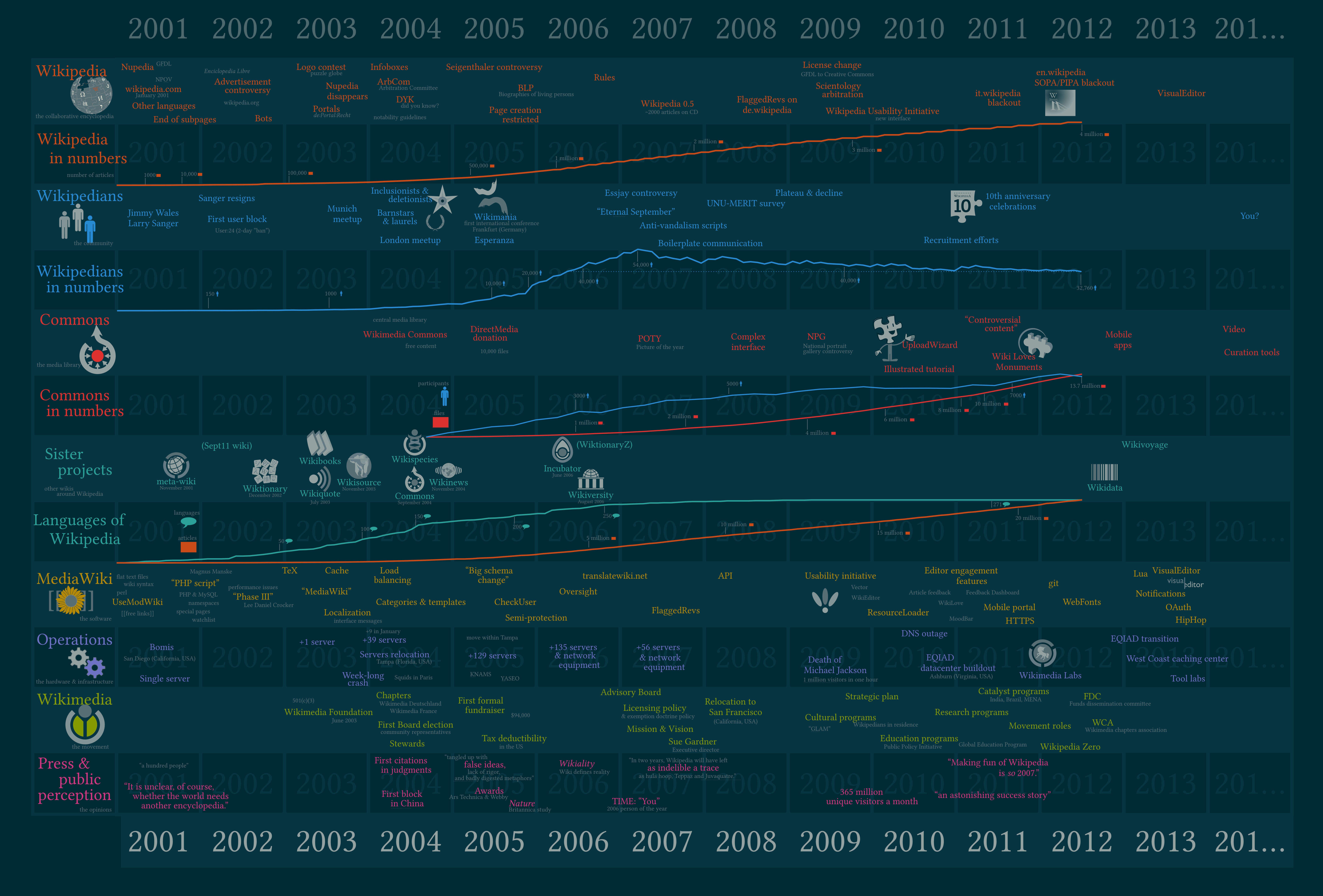
And that’s just what I’m putting together in a few minutes (Besides my own memory, I’m indebted to [18], a curated timeline up until 2013).
Of course, these may or may not justify the staff size in your book ; but I’d say discounting all of that (and the rest) as “very little significant development” is a bit pushing it. :-)
(And fairly sure that “you’d probably notice” if Wikipedia was still using good’old Monobook skin ;-þ).
See also https://enterprise.wikimedia.com/