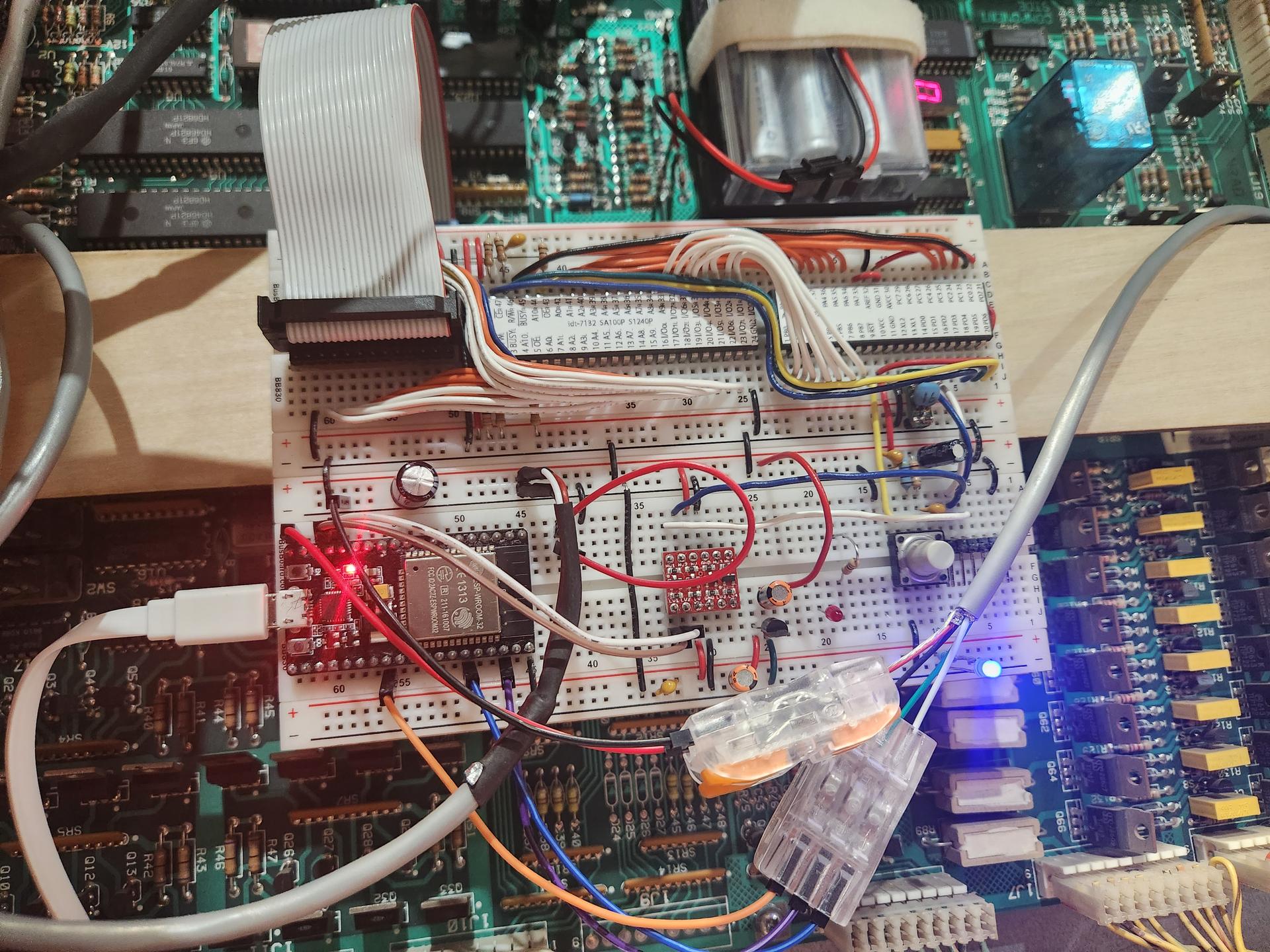
The other port is accessed by an ATmega 1284 to the left of it. Its code responds to simple serial commands and can read and write to the RAM.
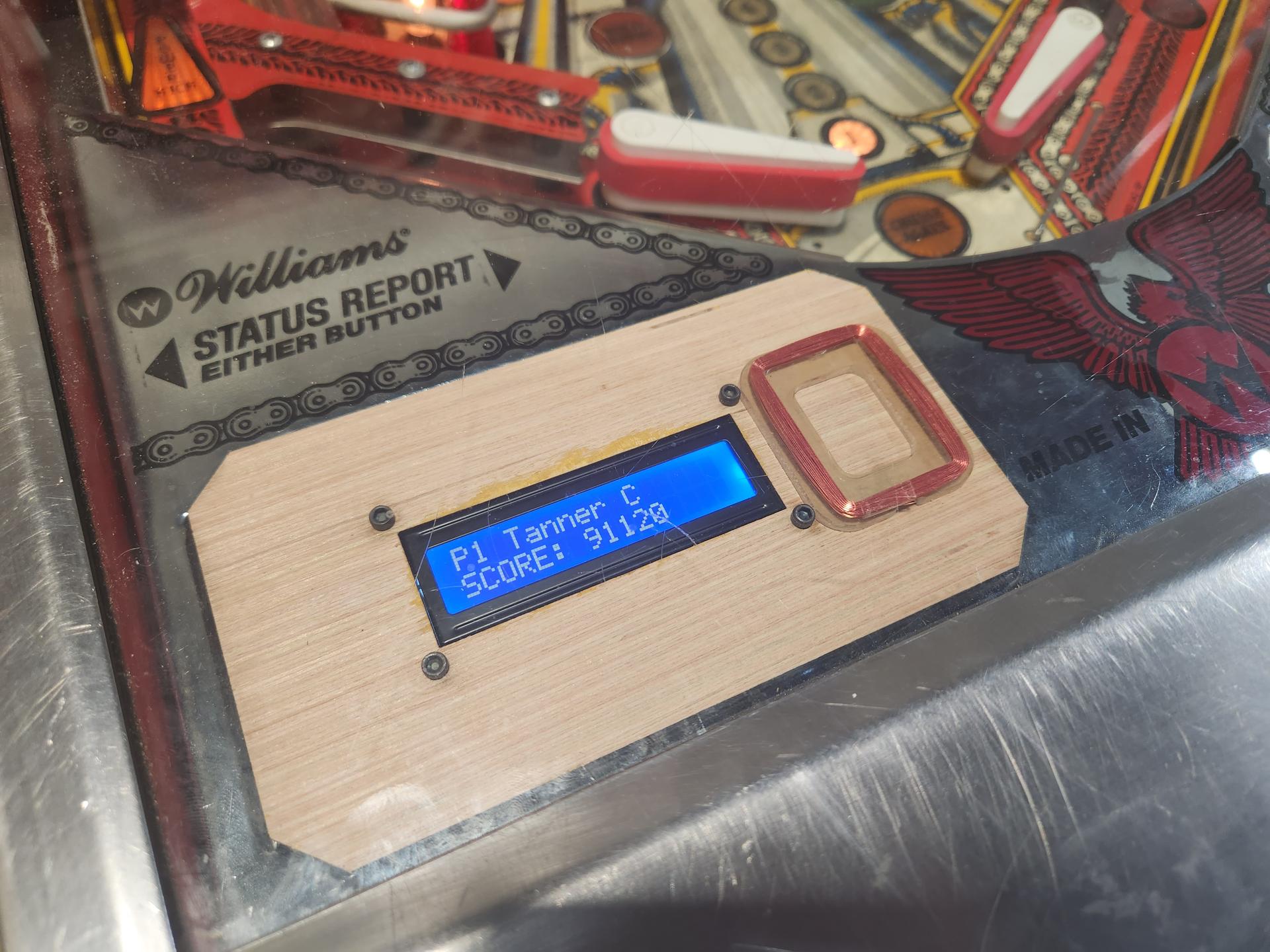
An ESP32 talks to the ATmega over UART and frequently asks it to dump 16 bytes at 0x00A0 to tell the game state and player number, and 0x0100 to get the four player scores. When it detects a new game, it offers the player a chance to scan their RFID member card and keeps track of their score:
We found there were sometimes read collisions and the ATmega would block the pinball machine from writing to RAM which would cause crashes or odd behavior. The latest version uses two RAM chips, one acting as a shadow copy -- similar to yours.
https://github.com/Protospace/spaceport
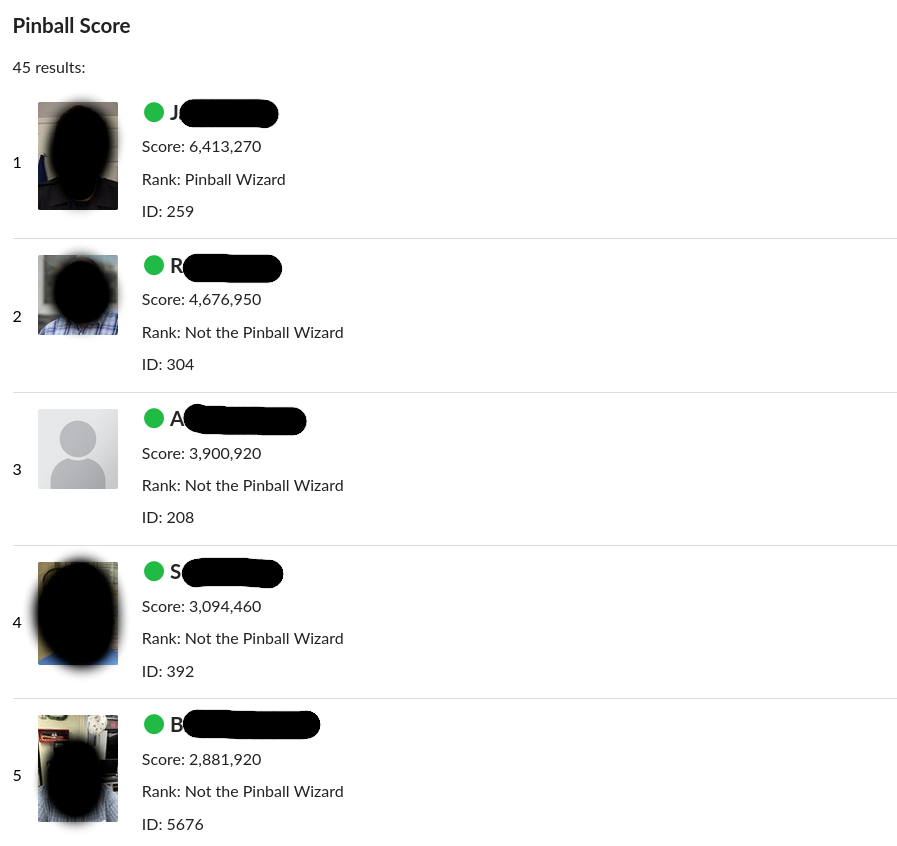
This is a member portal for my local makerspace. Having a knowledge base will help other makerspace members contribute to the code.