HackerTrans
トップ新着トレンドコメント過去質問紹介求人

usagisushi

108 カルマ登録 2 年前

投稿

Llama.cpp b9180: MTP support landed

github.com
2 ポイント·投稿者 usagisushi·2 か月前·0 コメント

コメント

usagisushi
·一昨日·議論
[dead]
usagisushi
·4 日前·議論
Tip: You can see the token usage of MCPs/plugins/skills by using `/context`.

For example, the M$ 365 MCP occupies several thousands of tokens, and there's currently no way to disable it entirely in Claude Code...
usagisushi
·5 日前·議論
For Japanese TTS, AivisSpeech-Engine[1] works really well with mixed Japanese/English text in my experience. They also provide container images on ghcr.io for both CPU and GPU inference.

[1]: https://github.com/aivis-project/AivisSpeech-Engine
usagisushi
·9 日前·議論
[dead]
usagisushi
·16 日前·議論
Not the OP, but their setup must be faster than my 4060 16GB + 3060 12GB setup. Here are my numbers (typical values, N=1):

    Model                         pp (t/s)    tg (t/s)
    Qwen 3.6 27B            900           29
    Qwen 3.6 35B-A3B   2100          85
    Gemma 4 31B            750           28
    Gemma 4 26B-A4B   2500         90
- All models: UD-Q4 w/ MTP. Context size: ~100k (MoE) / ~70k (Dense).

- Layer splitting used. Tensor splitting is ~1.2x faster in TG, but power spikes from 150W to 380W.
usagisushi
·18 日前·議論
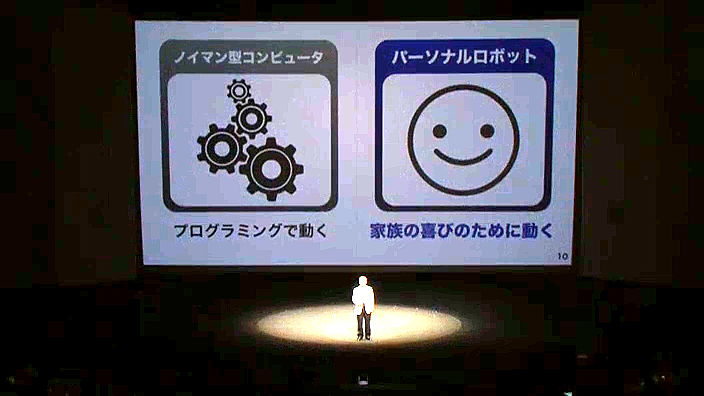
Back in 2014, Son also gave me a good laugh with a slide comparing:

> Von Neumann computer: powered by programming vs. Personal robot: powered by family happiness. https://i.gzn.jp/img/2014/06/05/softbank-conference/snap3014...

His sense of humor has only reached new heights since then.
usagisushi
·25 日前·議論
My grandma had a Paraguayan snuffler (specifically Emunctator sorbens), these parasitoids were his absolute favorite snack.
usagisushi
·2 か月前·議論
Lime-Limiting Machine
usagisushi
·2 か月前·議論
I pretty much agree. While any semblance of a "horizontal" dynamic in Japanese software development was perhaps realized in embedded systems around 40 years ago (e.g., rice cookers with fuzzy logic, or, in a different sense of _lateral_, Gunpei Yokoi’s famous philosophy of "Lateral Thinking with Withered Technology"), software has traditionally been undervalued in Japan. This historical neglect has ultimately contributed to the decline of our consumer electronics industry. (Though personally, I still don’t see why a toaster or a fridge needs to be connected to the internet.)

IMO, the tight-knit division of labor between Toyota and its subcontractors is a slightly different story from the broad diversification within a single corporation. While the latter was historically bolstered by strong industry-academia ties (often driven by university cliques), we rarely see this kind of broad diversification happening in recent years. That said, Japan's traditional "membership-based" employment system, combined with a cultural reluctance to shut down unprofitable business units, is likely what has allowed this diversification to persist for so long.

In any case, Japanese companies are currently struggling with the friction between their traditional corporate culture and the superficial adoption of Western concepts like DX, Agile, meritocracy, job-based employment, and a startup-centric mindset. I suspect Korea might be facing similar structural clashes, though perhaps you are adapting at a much faster pace.
usagisushi
·2 か月前·議論
Practically, it's not limited to GitHub Pages, though.

By the way, even while a custom domain is still pending verification, the GitHub Pages LB will route the request based on the Host header, allowing for the following:

    dig +short github.io | head -1
    185.199.108.153

    curl -H "Host: 42.news.ycombinator.com" 185.199.109.153
    hello
Another fun trick: You can also use wildcard DNS services like nip.io/sslip.io for alias domains, such as `my-page.185.199.108.153.sslip.io`. (Not sure of any practical use cases, though.)
usagisushi
·2 か月前·議論
Yeah, I’ve used a similar technique to build a "pizza clock" before (where the number of slices corresponds to the hours).
usagisushi
·3 か月前·議論
If the "loop" you mean is the infinite reasoning cycle ("Wait, actually... On second thought..."), you might want to try setting a reasoning budget. For llama.cpp, use `--reasoning-budget 1024 --reasoning-budget-message "Proceed to final answer."` to force the model to reach a conclusion.

I admit I sometimes get caught up in the tooling for its own sake, but I find local models useful for specific tasks like migrating configuration schemas, writing homelab scripts, or exploring financial data.

It might sound a bit paranoid, but privacy is another major driver for me. Keeping credentials and private information off cloud services is worth the extra friction.
usagisushi
·3 か月前·議論
Yeah, now it's USB4 Version 2.0 / USB 80Gbps / USB4 Gen4.
usagisushi
·3 か月前·議論
I have a similar setup. It might be worth checking out pi-coding-agent [0].

The system prompt and tools have very little overhead (<2k tokens), making the prefill latency feel noticeably snappier compared to Opencode.

[0] https://www.npmjs.com/package/@mariozechner/pi-coding-agent#...
usagisushi
·3 か月前·議論
For those using PlatformIO, the folks at pioarduino[0] are doing a great job keeping up with Arduino Core 3.x support.

    ```
    # platformio.ini
    platform = https://github.com/pioarduino/platform-espressif32.git#55.03.37
    framework = arduino
    ```
[0]: https://github.com/pioarduino/platform-espressif32
usagisushi
·3 か月前·議論
A bit off-topic but I’m on the legacy Lite plan (now discontinued), and it’s more than enough for hobby projects. The main draw is the generous request-based quota (18k requests/month) rather than a token-based one.

This means a 100k token request counts the same as a 100-token one. I’ve made about 8000 requests in the last two weeks, averaging around 80k tokens per request. It feels like they’re subsidizing this just to gather data on agentic workflows.

On the downside, the speed is mediocre (15–30 tg/s for GLM-5), and I’ve seen the model glitch or produce broken output about 10 times out of those 8k requests.
usagisushi
·4 か月前·議論
Interesting benchmark. It is notable that Gemini-3-Flash outperforms 3.1 Pro. My experience using Flash via Opencode over the past month suggests it is quite underrated.

Needless to say, benchmarks are limited and impressions vary widely by problem domain, harness, written language, and personal preference (simplicity vs detail, tone, etc.). If personal experience is the only true measure, as with wine, solving this discovery gap is an interesting challenge (LLM sommelier!), even if model evolution eventually makes the choice trivial. (I prefer Gemini 3 for its wide knowledge, Sonnet 4.6 for balance, and GLM-5 for simplicity.)
usagisushi
·4 か月前·議論
Native here. I'd say only about 6 out of the 47 listed actually matter (Awasebashi, Urabashi, Kamibashi, Jikabashi, Tatebashi, and Neburibashi).

Most of these are only for formal settings. Honestly, I haven't even heard of some of them. Aside from Tatebashi (sticking chopsticks in rice), they’re mostly avoided for hygiene reasons. As for Nigiribashi (clutching them in a fist), it just looks a bit strange for an adult to do.
usagisushi
·4 か月前·議論
I’ve heard the "S" in IoT stands for Security.
usagisushi
·4 か月前·議論
Qwen 3.5 35B-A3B and 27B have changed the game for me. I expect we'll see something comparable to Sonnet 4.6 running locally sometime this year.