PiDP-10 – a modern replica of the PDP-10(obsolescence.dev)
obsolescence.dev
PiDP-10 – a modern replica of the PDP-10
https://obsolescence.dev/pidp10.html
39 comments
My first experience was when I was a coop student at DEC/Marlboro. First summer, I learned the -10 and wrote sysdpy in BLISS-10. Next summer, I wrote the KL-10 spooler - in assembly language. Folks these days don't appreciate that early OSs were all written in assembler because - efficiency! TOPS-20 was a well-curated set of JRSTs and Macros -- building blocks to build code quickly. Great, well-written assembly is an existential joy to read.
During my 2nd summer, I wrote a memo to Gordon Bell, suggesting we (DEC) not burn effort on the LSI-11; I suggested to him that we build the LSI-10 and take over the 'microcomputer' market since there was so much -10 software. He wrote back "Do it!" but, I had to go back to school in the fall, so I didn't get that done. sorry, everybody, everywhere.
During my 2nd summer, I wrote a memo to Gordon Bell, suggesting we (DEC) not burn effort on the LSI-11; I suggested to him that we build the LSI-10 and take over the 'microcomputer' market since there was so much -10 software. He wrote back "Do it!" but, I had to go back to school in the fall, so I didn't get that done. sorry, everybody, everywhere.
https://news.ycombinator.com/item?id=33356932
I deeply appreciate and am greatly privileged to benefit from the MIT AI Lab's "Tourist Policy" and general openness, generosity, and encouragement of education, which allowed me to use the lab's PDP-10s over the ARPANET as a high school student.
I could connect remotely over the ARPANET by dialing up a local ARPANET TIP and connect to any computer without a password, then apply for a free account on each of the MIT-AI Lab's PDP-10s, by saying that I wanted to learn Lisp or MDL or Macsyma, and use the computers read email (mine and other people -- there was no file security and snooping was encouraged) and play games (like Zork, Adventure, Guess The Animal, and Doctor) after business hours.
As a high school student living in Maryland, I'd occasionally go on a pilgrimage to MIT and visit the MIT-AI Lab at 545 Tech Square, the Media Lab, and other places on campus, including exploring the steam tunnels (like the ones depicted in Real Genius).
They welcomed me to the lab, and I could easily get into the machine room and offices at the AI Lab simply by knocking on the door in the elevator lobby, and somebody using a Lisp Machine would press [Terminal]-D to automatically buzz open the door without getting up from their seat or looking who it was, just to make the knocking stop. (You could also press [Terminal]-E on a Lisp Machine to summon an elevator to your floor.) Then I could walk around the lab, and find a free Lisp Machine, Knight TV, or Ann Arbor Ambassador terminal to log in with, and even sleep on a bean bag chair or couch in an office, if it wasn't already occupied by RMS or some other random tourist or grad student.
Members of the MIT-AI Lab would take the time to help and tutor me with Emacs and Lisp, invite me to go out and eat pot stickers and Suan La Chow Show at Mary Chung's and get ice cream at Toscanini's, encourage me to pick up free papers from the publications department, use the Dover laser printer and Velu Binder to print out and bind my own copies of the online ITS manuals and other documents (long before the consumer laser printers were available), and they'd even let me use the gigantic cappuccino machine (I heard one MIT grad student claim "I had offers from Harvard and Stanford, but I came here because of LCS's cappuccino machine!").
[...]
I deeply appreciate and am greatly privileged to benefit from the MIT AI Lab's "Tourist Policy" and general openness, generosity, and encouragement of education, which allowed me to use the lab's PDP-10s over the ARPANET as a high school student.
I could connect remotely over the ARPANET by dialing up a local ARPANET TIP and connect to any computer without a password, then apply for a free account on each of the MIT-AI Lab's PDP-10s, by saying that I wanted to learn Lisp or MDL or Macsyma, and use the computers read email (mine and other people -- there was no file security and snooping was encouraged) and play games (like Zork, Adventure, Guess The Animal, and Doctor) after business hours.
As a high school student living in Maryland, I'd occasionally go on a pilgrimage to MIT and visit the MIT-AI Lab at 545 Tech Square, the Media Lab, and other places on campus, including exploring the steam tunnels (like the ones depicted in Real Genius).
They welcomed me to the lab, and I could easily get into the machine room and offices at the AI Lab simply by knocking on the door in the elevator lobby, and somebody using a Lisp Machine would press [Terminal]-D to automatically buzz open the door without getting up from their seat or looking who it was, just to make the knocking stop. (You could also press [Terminal]-E on a Lisp Machine to summon an elevator to your floor.) Then I could walk around the lab, and find a free Lisp Machine, Knight TV, or Ann Arbor Ambassador terminal to log in with, and even sleep on a bean bag chair or couch in an office, if it wasn't already occupied by RMS or some other random tourist or grad student.
Members of the MIT-AI Lab would take the time to help and tutor me with Emacs and Lisp, invite me to go out and eat pot stickers and Suan La Chow Show at Mary Chung's and get ice cream at Toscanini's, encourage me to pick up free papers from the publications department, use the Dover laser printer and Velu Binder to print out and bind my own copies of the online ITS manuals and other documents (long before the consumer laser printers were available), and they'd even let me use the gigantic cappuccino machine (I heard one MIT grad student claim "I had offers from Harvard and Stanford, but I came here because of LCS's cappuccino machine!").
[...]
I've written about how the MIT machines were a nerd magnet for kids who had access to the ARPANET, and how I logged in over the ARPANET to play Zork:
https://news.ycombinator.com/item?id=15080221
https://news.ycombinator.com/item?id=23114927
How ITS's open approach to security through obscurity encouraged hacking but discouraged vandalism because it really wasn't much of a challenge to break in or crash the machines:
https://news.ycombinator.com/item?id=22840639
In my exploration of other people's home directories, I ran across an inexplicable (even to the author) TECO implementation of a Universal Turing Machine in Marvin Minsky's home directory "AI:MINSKY;":
https://news.ycombinator.com/item?id=13519471
Once my friend and I were hanging out in Norman Margolus's office with the lights out playing with his CAM-6 cellular automata machine, when his wife opened the door, turned on the light, and was surprised to see us there instead of her husband. She asked if we'd seen Norman, and we answered no, then she politely turned the lights back off and closed the door, leaving us to our fun.
https://news.ycombinator.com/item?id=14469113
Keith F. Lynch wrote up some interesting history of the net and the MIT-AI Lab from his perspective:
http://keithlynch.net/history.net.html
How Jerry Pournelle got kicked off the ARPANET and MIT-AI Lab's computers for being an obnoxious antisocial unappreciative entitled drunken right-wing jackass, taking his unique precious privileges for granted while making impotent threats and accusing the same generous lab members who had welcomed, supported, and mentored him of being "communists":
https://news.ycombinator.com/item?id=17686261
>"One thing that is known about ARPA: you can be heaved off it for supporting the policies of the Department of Defense. Of course that was intended to anger me. If you have an ARPA account, please tell CSTACY that he was successful; now let us see if my Pentagon friends can upset him. Or perhaps some reporter friends. Or both., Or even the House Armed Services Committee." -POURNE (Jerry Pournelle)
>"The man has learned nothing from his presence on MC and sets a bad example of what people might potentially accomplish there. I'd rather recycle his account for some bright 12-yr-old...)" -KMP (Kent Pitman)
At the other end of the politeness spectrum, Rob Griffith's memories of touring the MIT-AI Lab and encountering Zork as a 15-year-old kid:
https://archive.org/details/getlamp-rgriffiths
>"I believe on one trip we were touring the MIT Artificial Intelligence Lab, and we saw some people gathered around this terminal. And we inquired what they were doing, and out of that came this game Zork, and my friend, since he was at MIT, had us get an account, and we were able to log in and figure out what to me looked like an extremely arcane set of commands to actually get this game running. From then on we were pretty much hooked from the first time we actually saw it. I believe we saw it when we were walking through the MIT AI Lab. I was a guest. Even back then there was some pretty amazing stuff in there. To see all these students and professors huddled around this terminal. What are the doing? They had all these incredibly cool Lisp Machines with big gorgeous displays, and a bunch of people were huddled around a machine that's got text. And we were sort of intrigued. I believe that was the first time I actually saw the game, so to speak. You know, I never got names, so I don't know. I was a petrified little 15-year-old kid walking around the MIT lab, so it was a bit of a feeling of "Am I supposed to be here?", and if I am supposed to be here, I'm pretty sure I'm not supposed to talk, so perhaps I'll just be quiet and observe." -ROBG (Rob Griffith)
https://archive.org/details/getlamp-rgriffiths
MIT AI Lab Tourist Policy:
https://donhopkins.medium.com/mit-ai-lab-tourist-policy-f73b...
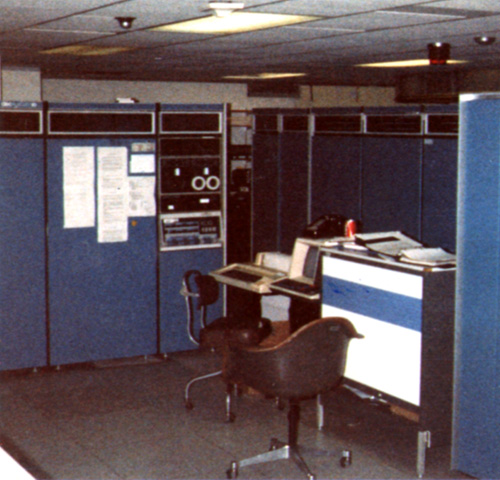
>MIT-MC PDP-10 at the MIT AI Lab:
https://donhopkins.com/home/catalog/images/mc-console.jpg
>Context
>Excerpt from Free as in Freedom, Richard Stallman’s Crusade for Free Software, by Sam Williams, March 2002, Chapter 7:
https://www.oreilly.com/openbook/freedom/ch07.html
>>Cadging passwords and deliberately crashing the system in order to glean evidence from the resulting wreckage, Stallman successfully foiled the system administrators’ attempt to assert control. After one foiled “coup d’etat,” Stallman issued an alert to the entire AI staff.
>>“There has been another attempt to seize power,” Stallman wrote. “So far, the aristocratic forces have been defeated.” To protect his identity, Stallman signed the message “Radio Free OZ.”
>>The disguise was a thin one at best. By 1982, Stallman’s aversion to passwords and secrecy had become so well known that users outside the AI Laboratory were using his account as a stepping stone to the ARPAnet, the research-funded computer network that would serve as a foundation for today’s Internet. One such “tourist” during the early 1980s was Don Hopkins, a California [Maryland at the time, actually] programmer who learned through the hacking grapevine that all an outsider needed to do to gain access to MIT’s vaunted ITS system was to log in under the initials RMS and enter the same three-letter monogram when the system requested a password.
>>“I’m eternally grateful that MIT let me and many other people use their computers for free,” says Hopkins. “It meant a lot to many people.”
>RMS Wondering Why You Wrap a Gerbil in Duct Tape
https://donhopkins.com/home/catalog/images/jsol-rms-gerbil-l...
>>This so-called “tourist” policy, which had been openly tolerated by MIT management during the ITS years, fell by the wayside when Oz became the lab’s primary link to the ARPAnet. At first, Stallman continued his policy of repeating his login ID as a password so outside users could follow in his footsteps. Over time, however, the Oz’s fragility prompted administrators to bar outsiders who, through sheer accident or malicious intent, might bring down the system. When those same administrators eventually demanded that Stallman stop publishing his password, Stallman, citing personal ethics, refused to do so and ceased using the Oz system altogether.
>TOURIST POLICY AND RULES FOR TOURIST USE OF ITS MACHINES
>It has been a long standing tradition at both the Laboratory for Computer Science and the Artificial Intelligence Laboratory at MIT to allow non-laboratory people to use the laboratories’ computers during off hours. During the early days of the laboratories’ existence a non-laboratory person (such people have come to be called tourists) could gain access to one of the computers by direct personal contact with a laboratory member. Furthermore, tourist access was controlled because access to the laboratories’ computers was de facto achieved through on site terminals. A tourist sponsored by a laboratory member would generally receive some guidance and tutelage concerning acceptable behavior, proper design techniques for hardware and software, proper programming techniques, etc. The expectation on the laboratories’ part was that a large percentage would become educated in the use of the advanced computing techniques developed and used in our laboratories and thereby greatly facilitate the technology transfer process. A second expectation was that some percentage would become interested and expert enough to contribute significantly to our research efforts. Tourists in this latter group would at some point in time graduate out of the tourist class and become laboratory members. In actual fact a number of former and present staff members and faculty earned their computational wings in just this fashion.
[...]
https://news.ycombinator.com/item?id=15080221
https://news.ycombinator.com/item?id=23114927
How ITS's open approach to security through obscurity encouraged hacking but discouraged vandalism because it really wasn't much of a challenge to break in or crash the machines:
https://news.ycombinator.com/item?id=22840639
In my exploration of other people's home directories, I ran across an inexplicable (even to the author) TECO implementation of a Universal Turing Machine in Marvin Minsky's home directory "AI:MINSKY;":
https://news.ycombinator.com/item?id=13519471
Once my friend and I were hanging out in Norman Margolus's office with the lights out playing with his CAM-6 cellular automata machine, when his wife opened the door, turned on the light, and was surprised to see us there instead of her husband. She asked if we'd seen Norman, and we answered no, then she politely turned the lights back off and closed the door, leaving us to our fun.
https://news.ycombinator.com/item?id=14469113
Keith F. Lynch wrote up some interesting history of the net and the MIT-AI Lab from his perspective:
http://keithlynch.net/history.net.html
How Jerry Pournelle got kicked off the ARPANET and MIT-AI Lab's computers for being an obnoxious antisocial unappreciative entitled drunken right-wing jackass, taking his unique precious privileges for granted while making impotent threats and accusing the same generous lab members who had welcomed, supported, and mentored him of being "communists":
https://news.ycombinator.com/item?id=17686261
>"One thing that is known about ARPA: you can be heaved off it for supporting the policies of the Department of Defense. Of course that was intended to anger me. If you have an ARPA account, please tell CSTACY that he was successful; now let us see if my Pentagon friends can upset him. Or perhaps some reporter friends. Or both., Or even the House Armed Services Committee." -POURNE (Jerry Pournelle)
>"The man has learned nothing from his presence on MC and sets a bad example of what people might potentially accomplish there. I'd rather recycle his account for some bright 12-yr-old...)" -KMP (Kent Pitman)
At the other end of the politeness spectrum, Rob Griffith's memories of touring the MIT-AI Lab and encountering Zork as a 15-year-old kid:
https://archive.org/details/getlamp-rgriffiths
>"I believe on one trip we were touring the MIT Artificial Intelligence Lab, and we saw some people gathered around this terminal. And we inquired what they were doing, and out of that came this game Zork, and my friend, since he was at MIT, had us get an account, and we were able to log in and figure out what to me looked like an extremely arcane set of commands to actually get this game running. From then on we were pretty much hooked from the first time we actually saw it. I believe we saw it when we were walking through the MIT AI Lab. I was a guest. Even back then there was some pretty amazing stuff in there. To see all these students and professors huddled around this terminal. What are the doing? They had all these incredibly cool Lisp Machines with big gorgeous displays, and a bunch of people were huddled around a machine that's got text. And we were sort of intrigued. I believe that was the first time I actually saw the game, so to speak. You know, I never got names, so I don't know. I was a petrified little 15-year-old kid walking around the MIT lab, so it was a bit of a feeling of "Am I supposed to be here?", and if I am supposed to be here, I'm pretty sure I'm not supposed to talk, so perhaps I'll just be quiet and observe." -ROBG (Rob Griffith)
https://archive.org/details/getlamp-rgriffiths
MIT AI Lab Tourist Policy:
https://donhopkins.medium.com/mit-ai-lab-tourist-policy-f73b...
>MIT-MC PDP-10 at the MIT AI Lab:
https://donhopkins.com/home/catalog/images/mc-console.jpg
>Context
>Excerpt from Free as in Freedom, Richard Stallman’s Crusade for Free Software, by Sam Williams, March 2002, Chapter 7:
https://www.oreilly.com/openbook/freedom/ch07.html
>>Cadging passwords and deliberately crashing the system in order to glean evidence from the resulting wreckage, Stallman successfully foiled the system administrators’ attempt to assert control. After one foiled “coup d’etat,” Stallman issued an alert to the entire AI staff.
>>“There has been another attempt to seize power,” Stallman wrote. “So far, the aristocratic forces have been defeated.” To protect his identity, Stallman signed the message “Radio Free OZ.”
>>The disguise was a thin one at best. By 1982, Stallman’s aversion to passwords and secrecy had become so well known that users outside the AI Laboratory were using his account as a stepping stone to the ARPAnet, the research-funded computer network that would serve as a foundation for today’s Internet. One such “tourist” during the early 1980s was Don Hopkins, a California [Maryland at the time, actually] programmer who learned through the hacking grapevine that all an outsider needed to do to gain access to MIT’s vaunted ITS system was to log in under the initials RMS and enter the same three-letter monogram when the system requested a password.
>>“I’m eternally grateful that MIT let me and many other people use their computers for free,” says Hopkins. “It meant a lot to many people.”
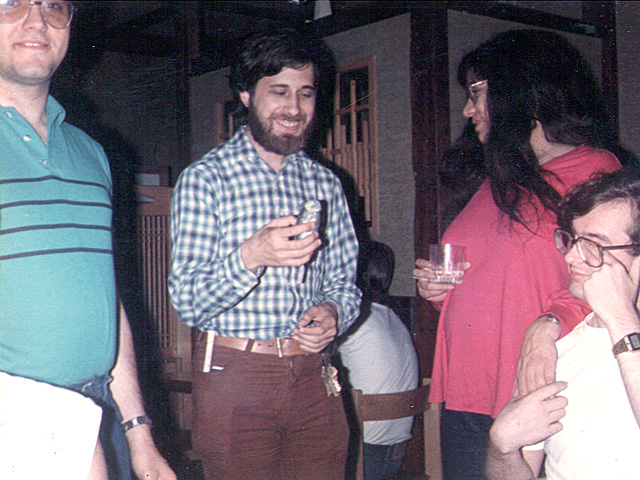
>RMS Wondering Why You Wrap a Gerbil in Duct Tape
https://donhopkins.com/home/catalog/images/jsol-rms-gerbil-l...
>>This so-called “tourist” policy, which had been openly tolerated by MIT management during the ITS years, fell by the wayside when Oz became the lab’s primary link to the ARPAnet. At first, Stallman continued his policy of repeating his login ID as a password so outside users could follow in his footsteps. Over time, however, the Oz’s fragility prompted administrators to bar outsiders who, through sheer accident or malicious intent, might bring down the system. When those same administrators eventually demanded that Stallman stop publishing his password, Stallman, citing personal ethics, refused to do so and ceased using the Oz system altogether.
>TOURIST POLICY AND RULES FOR TOURIST USE OF ITS MACHINES
>It has been a long standing tradition at both the Laboratory for Computer Science and the Artificial Intelligence Laboratory at MIT to allow non-laboratory people to use the laboratories’ computers during off hours. During the early days of the laboratories’ existence a non-laboratory person (such people have come to be called tourists) could gain access to one of the computers by direct personal contact with a laboratory member. Furthermore, tourist access was controlled because access to the laboratories’ computers was de facto achieved through on site terminals. A tourist sponsored by a laboratory member would generally receive some guidance and tutelage concerning acceptable behavior, proper design techniques for hardware and software, proper programming techniques, etc. The expectation on the laboratories’ part was that a large percentage would become educated in the use of the advanced computing techniques developed and used in our laboratories and thereby greatly facilitate the technology transfer process. A second expectation was that some percentage would become interested and expert enough to contribute significantly to our research efforts. Tourists in this latter group would at some point in time graduate out of the tourist class and become laboratory members. In actual fact a number of former and present staff members and faculty earned their computational wings in just this fashion.
[...]
Ohhhhh it's finally out! I know he's been working on it for ages. it looks beautiful.
Not sure if I'll get it though. It costs a lot (I won't call it expensive because I know the quality is worth it). And it takes up a lot of space.
I already have the PiDP-8 and PiDP-11. This PiDP-10 looks like even better quality. Wow.
The attention to detail in these kits is awesome. He spent so much time getting the frontpanel just right, with the multicolour printing, the blur layer etc. I used to have access to a real PDP-11 and I have to say it's really well done.
Not sure if I'll get it though. It costs a lot (I won't call it expensive because I know the quality is worth it). And it takes up a lot of space.
I already have the PiDP-8 and PiDP-11. This PiDP-10 looks like even better quality. Wow.
The attention to detail in these kits is awesome. He spent so much time getting the frontpanel just right, with the multicolour printing, the blur layer etc. I used to have access to a real PDP-11 and I have to say it's really well done.
Empire for the PDP-10 is still available! Fair warning, it can suck up all your free time and then some. People have told me it has caused them to flunk out of college and even resulted in divorces. Use at your own risk!
https://github.com/DigitalMars/Empire-for-PDP-10
https://github.com/DigitalMars/Empire-for-PDP-10
like we need another a low budget civ ripoff
Learn your history before shooting your mouth off. Empire predates Civilization by 14 years. Which you might have realized if you thought about it being PDP-10 software.
"According to Meier, his Civilization actually started as a glorified version of a favorite childhood board game. "It was kind of like Risk brought to life on the computer," muses Meier. "That was the original idea. And then we added the technology and the whole sense of history to it." Meier was also a big fan of an early computer game called Empire, which combined Risk-like world domination with intricate city management. "At one point, [Meier] asked me to make a list of 10 things I would do to Empire to make it a better game," says Shelley. "That was some of his research on Civilization."" - https://www.gamedeveloper.com/design/the-history-of-civiliza...
"According to Meier, his Civilization actually started as a glorified version of a favorite childhood board game. "It was kind of like Risk brought to life on the computer," muses Meier. "That was the original idea. And then we added the technology and the whole sense of history to it." Meier was also a big fan of an early computer game called Empire, which combined Risk-like world domination with intricate city management. "At one point, [Meier] asked me to make a list of 10 things I would do to Empire to make it a better game," says Shelley. "That was some of his research on Civilization."" - https://www.gamedeveloper.com/design/the-history-of-civiliza...
I read that as sarcasm.
The grand-parent of this comment implemented empire on the PC, and is responsible for me getting poor grades in high school biology. I even bought a V20 CPU so my hand-me-down PC (5150) could build empire maps 30 seconds faster...
I've gotten both my kids hooked on civilization but haven't gotten them into empire (or nethack). (yet)
The grand-parent of this comment implemented empire on the PC, and is responsible for me getting poor grades in high school biology. I even bought a V20 CPU so my hand-me-down PC (5150) could build empire maps 30 seconds faster...
I've gotten both my kids hooked on civilization but haven't gotten them into empire (or nethack). (yet)
Yes, but the other 'Empire' was the better game...
https://en.wikipedia.org/wiki/Empire_(1972_video_game)
https://en.wikipedia.org/wiki/Empire_(1972_video_game)
Consolidating everything on VAX might have been logical from a software support standpoint, but I increasingly think it was a serious mistake for DEC to not put out a faster PDP-10 variant in the early 80's. It might not have been hugely profitable, but there was a market -- no less than three separate companies attempted to sell clones.
Quite simply, the VAX group won. Marketing believed two product lines competing in the same space with incompatible software would not be in DEC's best interests.
As I worked in the -10 group as a coop, I was bummed to hear that decision. However, the more I used the VAX, the more I realized it was, in fact, a better foundation for the 80s and beyond. The -10 is cool, tho. Very cool.
As I worked in the -10 group as a coop, I was bummed to hear that decision. However, the more I used the VAX, the more I realized it was, in fact, a better foundation for the 80s and beyond. The -10 is cool, tho. Very cool.
If DEC had decided to keep the PDP-10 alive, it might have hung on for a few more years than it did. But in the longer-run it still would have eventually lost out to Unix systems, due to the later’s greater openness and critical mass
I want one of these but don't have that kind of money to spend on a toy. There's always this:
https://skn.noip.me/pdp10/pdp10.html
https://skn.noip.me/pdp10/pdp10.html
Or a video introduction if you prefer:
https://youtu.be/E0Pp63gsdZI?si=yJCX-CS1T6zsYiLY
I built the PiDP-11 during Covid when stuck at home. I had basically zero soldering experience so I bought a $10 soldering practice kit online first, but other than that it's doable by anyone. It was super fun. I had to take it apart later when I had a set of LEDs that wouldn't work and poked around until I found a solder I had messed up. That was also fun. It sits in my office running blinkenlights most of the time these days - anyway would recommend buying one of these kits!
Edit: I'd guess it took about 6 hours for me to finish over the course of several days, if you are good at soldering it will be cheaper. I stopped a lot to double check stuff like polarity on the LEDs (I think it was LEDs) and what-not.
Edit: I'd guess it took about 6 hours for me to finish over the course of several days, if you are good at soldering it will be cheaper. I stopped a lot to double check stuff like polarity on the LEDs (I think it was LEDs) and what-not.
There was also a microprocessor implementation of the PDP-11.
"T-11 is a microprocessor that implements the PDP-11 instruction set architecture. It was developed for embedded systems and was the first single-chip microprocessor developed by DEC. It was sold on the open market."
https://en.wikipedia.org/wiki/PDP-11#Special-purpose_version...
"T-11 is a microprocessor that implements the PDP-11 instruction set architecture. It was developed for embedded systems and was the first single-chip microprocessor developed by DEC. It was sold on the open market."
https://en.wikipedia.org/wiki/PDP-11#Special-purpose_version...
Also F11 and, not least, J11.
I have a couple of J11 chips and wondering what to do with them. Are they just display pieces now, or can they actually be hooked up to modern MCUs and do some "useful" computing?
I've got to appreciate how much effort must have gone into an injection molded replica case, it looks fantastic.
Rob Griffiths interview from GET LAMP:
GET LAMP: Rob Griffiths
Rob is a perfect example of the benefits of not going just for "names" in a documentary about a wide-ranging subject - nothing on his resume says he was a big text adventure game player or person who was at the beginning of Zork. But there he was, a kid who had gotten into the MIT lab and seen early Zork being played and the effect it was having on the students and computer lab users. He was articulate and provided a wonderful dash of emotion into the descriptions which I used liberally in GET LAMP. He had a number of printouts which I also filmed (but didn't use). Many documentaries wouldn't count "just a player" as worth interviewing - Rob is proof that approach is short-sighted indeed.
https://archive.org/details/getlamp-rgriffiths
"I believe on one trip we were touring the MIT Artificial Intelligence Lab, and we saw some people gathered around this terminal. And we inquired what they were doing, and out of that came this game Zork, and my friend, since he was at MIT, had us get an account, and we were able to log in and figure out what to me looked like an extremely arcane set of commands to actually get this game running. From then on we were pretty much hooked from the first time we actually saw it. I believe we saw it when we were walking through the MIT AI Lab. I was a guest. Even back then there was some pretty amazing stuff in there. To see all these students and professors huddled around this terminal. What are the doing? They had all these incredibly cool Lisp Machines with big gorgeous displays, and a bunch of people were huddled around a machine that's got text. And we were sort of intrigued. I believe that was the first time I actually saw the game, so to speak. You know, I never got names, so I don't know. I was a petrified little 15-year-old kid walking around the MIT lab, so it was a bit of a feeling of "Am I supposed to be here?", and if I am supposed to be here, I'm pretty sure I'm not supposed to talk, so perhaps I'll just be quiet and observe."
GET LAMP: Rob Griffiths
Rob is a perfect example of the benefits of not going just for "names" in a documentary about a wide-ranging subject - nothing on his resume says he was a big text adventure game player or person who was at the beginning of Zork. But there he was, a kid who had gotten into the MIT lab and seen early Zork being played and the effect it was having on the students and computer lab users. He was articulate and provided a wonderful dash of emotion into the descriptions which I used liberally in GET LAMP. He had a number of printouts which I also filmed (but didn't use). Many documentaries wouldn't count "just a player" as worth interviewing - Rob is proof that approach is short-sighted indeed.
https://archive.org/details/getlamp-rgriffiths
"I believe on one trip we were touring the MIT Artificial Intelligence Lab, and we saw some people gathered around this terminal. And we inquired what they were doing, and out of that came this game Zork, and my friend, since he was at MIT, had us get an account, and we were able to log in and figure out what to me looked like an extremely arcane set of commands to actually get this game running. From then on we were pretty much hooked from the first time we actually saw it. I believe we saw it when we were walking through the MIT AI Lab. I was a guest. Even back then there was some pretty amazing stuff in there. To see all these students and professors huddled around this terminal. What are the doing? They had all these incredibly cool Lisp Machines with big gorgeous displays, and a bunch of people were huddled around a machine that's got text. And we were sort of intrigued. I believe that was the first time I actually saw the game, so to speak. You know, I never got names, so I don't know. I was a petrified little 15-year-old kid walking around the MIT lab, so it was a bit of a feeling of "Am I supposed to be here?", and if I am supposed to be here, I'm pretty sure I'm not supposed to talk, so perhaps I'll just be quiet and observe."
That is simply gorgeous. I had considered building the PiDP-11, but the raspberry pi rabbit hole got lost on my hobby list of things to do. I might circle back to it as some point.
For those not close to the PDP family, the numbers don't really mean anything. The 11 is not better than the 10 in any way, they are just the order in which they were released.
The PDP-10 was not a mini-computer for which PDPs are generally associated with, but instead it was a mainframe and had a 36-bit word. The switches were coloured in sets of three to aid in entering octal data (as opposed to hexadecimal).
The PDP-10 was not a mini-computer for which PDPs are generally associated with, but instead it was a mainframe and had a 36-bit word. The switches were coloured in sets of three to aid in entering octal data (as opposed to hexadecimal).
Well...the -11 does have a super-clean assembly language. That machine was a joy to work on.
Used to write MSP430 (a Texas Instruments MCU family that was designed and manufactured in Freising, Germany in ‘90s) assembly language for a while more than two decades ago. It was mentioned with pride that the instruction set is based on PDP-11.
> Well...the -11 does have a super-clean assembly language.
Sorry, I meant objectively better in an absolute sense. Just that it's not like the -11 is a sequel to the -10 like a 486 to a 386 is. But you are absolutely right, there are definite strengths of each platform from an enthusiast perspective.
Sorry, I meant objectively better in an absolute sense. Just that it's not like the -11 is a sequel to the -10 like a 486 to a 386 is. But you are absolutely right, there are definite strengths of each platform from an enthusiast perspective.
Yes but PDP-10 is pretty good: there is only one instruction format, so the instruction set is very uniform.
It's, shall we say, delightfully weird in its support of bytes and half-words (addresses).
Also: having 256K words is much better than 64 KB.
It's, shall we say, delightfully weird in its support of bytes and half-words (addresses).
Also: having 256K words is much better than 64 KB.
Arbitrarily sized bytes from 1 to 36 bits, and sub-word byte pointers, and indirect pointers! (You can do a lot with those extra 18 bits above the address lines, it's not just for consing!)
https://github.com/PDP-10/documents/blob/master/mirror/www.i...
https://github.com/PDP-10/documents/blob/master/mirror/www.i...
  Byte instructions

  In the PDP-10 a "byte" is some number of contiguous bits within one
  word.  A byte pointer is a quantity (which occupies a whole word)
  which describes the location of a byte.  There are three parts to the
  description of a byte: the word (i.e., address) in which the byte
  occurs, the position of the byte within the word, and the length of
  the byte.

  A byte pointer has the following format:

   000000 000011 1 1 1111 112222222222333333
   012345 678901 2 3 4567 890123456789012345
   _________________________________________
  |      |      | | |    |                  |
  | POS  | SIZE |U|I| X  |        Y         |
  |______|______|_|_|____|__________________|

  POS is the byte position: the number of bits from the right end of
  the byte to the right end of the word.

  SIZE is the byte size in bits.

  The U field is ignored by the byte instructions.

  The I, X and Y fields are used, just as in an instruction, to compute
  an effective address which specifies the location of the word
  containing the byte.


  Here are the byte instructions.
  [...] LDB DPB IBP ILDB IDPB [...]

  Text strings are typically stored using seven-bit bytes, five per
  word.  ILDB and IDPB can then be used to step through a string.  The
  byte pointer should be initialized to 440700,,<address of string>.
  Then the first ILDB will increment it to point at the first character
of the string.> For those not close to the PDP family, the numbers don't really mean anything. The 11 is not better than the 10 in any way, they are just the order in which they were released.
Roughly speaking true but not exactly. The PDP-12 and the PDP-14 were both released in 1969 whereas the PDP-11 wasn’t released until 1970. Also, both the PDP-11 and the PDP-15 were released in 1970, but I’m not sure which was released first. Even if it so happens the PDP-11 came out earlier in 1970 than the PDP-15 did, that fact is irrelevant to their numbering.
Roughly speaking true but not exactly. The PDP-12 and the PDP-14 were both released in 1969 whereas the PDP-11 wasn’t released until 1970. Also, both the PDP-11 and the PDP-15 were released in 1970, but I’m not sure which was released first. Even if it so happens the PDP-11 came out earlier in 1970 than the PDP-15 did, that fact is irrelevant to their numbering.
I couldn't find it .. is this running TOPS-10? TOPS-20? Would be nice to have my very own pet TOPS-2060 to use and abuse again! Fond memeories from the early 80s
Richard Cornwell's emulator is implemented within the OpenSimH framework, and forms the basis of PiDP-10:
https://github.com/rcornwell/sims/tree/master?tab=readme-ov-...
From the GitHub entry: The KA10 sim has successfully run Tops 10 4.5, 5.03 and 6.03, ITS and WAITS. The KI10 sim has successfully run Tops 10 6.03 with VMSER. The KL10 sim has successfully run Tops 10 6.03-7.03, ITS and Tops 20 V2-V7. The KS10 sim has successfully run Tops 10, Tops 20 and ITS.
PiDP-10 can run a variety of PDP-10 operating systems, although the front-panel is specific to the early KA10 model.
https://github.com/rcornwell/sims/tree/master?tab=readme-ov-...
From the GitHub entry: The KA10 sim has successfully run Tops 10 4.5, 5.03 and 6.03, ITS and WAITS. The KI10 sim has successfully run Tops 10 6.03 with VMSER. The KL10 sim has successfully run Tops 10 6.03-7.03, ITS and Tops 20 V2-V7. The KS10 sim has successfully run Tops 10, Tops 20 and ITS.
PiDP-10 can run a variety of PDP-10 operating systems, although the front-panel is specific to the early KA10 model.
I've got one of Lars's t-shirts:
"IF YOUR COMPUTER DOES NOT HAVE 36 BITS, YOU'RE NOT PLAYING WITH A FULL DEC..." -- attributed to Doug Humphrey (DIGEX) trolling the 32 bit VAX Weenies at DECUS.
https://techsquare.myspreadshop.com/36-bit+full+dec-A64fef41...
The LMI Lisp Machines Inc. one is quite classy (or rather flavory) too:
https://techsquare.myspreadshop.com/lisp+machine+inc-A6417f5...
And a lot more, including Zork, INTERFACE MESSAGE PROCESSOR, decsystem10, digital PDP-10 (also in tie dye!), digital pdp11, IMLAC, GENERAL TURTLE INC., bbn Bolt Beranek and Newman Inc. TENEX, Multics: IF YOU LIKE IT SO MUCH WHY DON'T YOU PUT EIGHT RINGS ON IT, MUDDLE 39 IN OPERATION. LISTENING-AT-LEVEL 1 PROCESS 1, INTERLISP, FOONLY, X Window System Screen Background + X Cursor [wretch!], and more!
https://techsquare.myspreadshop.com/all
I had an even uglier X-Windows t-shirt that I got at the first X11 conference at MIT. It was simply a black and white screen dump with a bunch of incredibly hideous Athena Widgets apps (aka the Anathema Toolkit) like the original X11 netnews and email readers, the infamous butt-ugly xfontsel font selector (for selecting butt-ugly-fonts-with-butt-ugly-logical-font-description-names), and xterm, xlogo, xclock, xcalc, etc, on an audacious lime green background, and I loved to wear it to show off how terrible X-Windows was, and totally wore it out. If anyone still has one I'd pay good money for it!
https://en.m.wikipedia.org/wiki/File:Xfontsel.png
https://en.m.wikipedia.org/wiki/X_logical_font_description
Here's what happens to xcalc if you stretch it around too much -- its layout manager loses its elasticity and begins to look like Donatella Versace after her 10th botched plastic surgery attempt:
https://www.donhopkins.com/home/catalog/unix-haters/x-window...
To mitigate that problem, I hacked the OLWM window manager so I could run it with a window id parameter to use as the root window, and gave it xcalc's client window id, so it wrapped frames around each of the buttons, and I could drag them around and resize them to repair the damage, make the important ones really big, arrange the digits in any order, and even iconify the buttons I didn't need. But that was even uglier with the OPEN LOOK frames around each button, and was a far cry from HyperCard.
"IF YOUR COMPUTER DOES NOT HAVE 36 BITS, YOU'RE NOT PLAYING WITH A FULL DEC..." -- attributed to Doug Humphrey (DIGEX) trolling the 32 bit VAX Weenies at DECUS.
https://techsquare.myspreadshop.com/36-bit+full+dec-A64fef41...
The LMI Lisp Machines Inc. one is quite classy (or rather flavory) too:
https://techsquare.myspreadshop.com/lisp+machine+inc-A6417f5...
And a lot more, including Zork, INTERFACE MESSAGE PROCESSOR, decsystem10, digital PDP-10 (also in tie dye!), digital pdp11, IMLAC, GENERAL TURTLE INC., bbn Bolt Beranek and Newman Inc. TENEX, Multics: IF YOU LIKE IT SO MUCH WHY DON'T YOU PUT EIGHT RINGS ON IT, MUDDLE 39 IN OPERATION. LISTENING-AT-LEVEL 1 PROCESS 1, INTERLISP, FOONLY, X Window System Screen Background + X Cursor [wretch!], and more!
https://techsquare.myspreadshop.com/all
I had an even uglier X-Windows t-shirt that I got at the first X11 conference at MIT. It was simply a black and white screen dump with a bunch of incredibly hideous Athena Widgets apps (aka the Anathema Toolkit) like the original X11 netnews and email readers, the infamous butt-ugly xfontsel font selector (for selecting butt-ugly-fonts-with-butt-ugly-logical-font-description-names), and xterm, xlogo, xclock, xcalc, etc, on an audacious lime green background, and I loved to wear it to show off how terrible X-Windows was, and totally wore it out. If anyone still has one I'd pay good money for it!
https://en.m.wikipedia.org/wiki/File:Xfontsel.png

https://en.m.wikipedia.org/wiki/X_logical_font_description
Here's what happens to xcalc if you stretch it around too much -- its layout manager loses its elasticity and begins to look like Donatella Versace after her 10th botched plastic surgery attempt:
https://www.donhopkins.com/home/catalog/unix-haters/x-window...
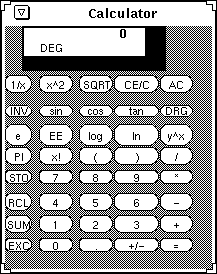
To mitigate that problem, I hacked the OLWM window manager so I could run it with a window id parameter to use as the root window, and gave it xcalc's client window id, so it wrapped frames around each of the buttons, and I could drag them around and resize them to repair the damage, make the important ones really big, arrange the digits in any order, and even iconify the buttons I didn't need. But that was even uglier with the OPEN LOOK frames around each button, and was a far cry from HyperCard.
I love that these sorts of things exist. If I had the room and the time I would buy one without hesitation, but I have neither.
Tell me it can also boot WAITS (ala SAIL) and I'll buy one.
It will run WAITS, but the disk images that are available are not top notch: http://sky-visions.com/dec/waits/ Bruce Baumgart is the keeper of the SAIL backup archives. I'm poking him occasionally to do something about this. I'd say an image with e.g. TeX would be imperative.
Rich and I added support for III and DD displays, so you can edit with E in style.
Rich and I added support for III and DD displays, so you can edit with E in style.
It is claimed that the simulator will run WAITS, though in what condition, is not clear: https://gunkies.org/wiki/WAITS
All these Pi-based replicas look and feel so fake. Same can be achieved cheaper and with less waste just on an emulator on a PC.
It's a little difficult to experience the joy of the system's front panel debugging facilities that way :-)
See also,
https://obsolescence.wixsite.com/obsolescence/pidp10
Relevant links,
PIDP-10 SYSTEMS USER’S GUIDE
https://view.officeapps.live.com/op/view.aspx?src=https%3A%2...
(direct download: https://obsolescence.dev/pidp10-sw/manual.docx)
PiDP-10 system software package (https://github.com/obsolescence/pidp10)
https://obsolescence.wixsite.com/obsolescence/pidp10
Relevant links,
PIDP-10 SYSTEMS USER’S GUIDE
https://view.officeapps.live.com/op/view.aspx?src=https%3A%2...
(direct download: https://obsolescence.dev/pidp10-sw/manual.docx)
PiDP-10 system software package (https://github.com/obsolescence/pidp10)
Having the debugger always available (no need for the old fashioned idea of core dumps) and the tight integration of the the PDP-10 instruction set and MACLISP (the ‘6 and then ‘10 were explicitly designed by Gordon Bell to run Lisp) was the perfect introduction to the power and fun of computing, as was the early state of Emacs.