Problem for our use case is saving on gpus is pointless if we have to keep paying egress fees for our 250 TB training dataset.
The single interface for any cloud GPU is cool, but hard to imagine it taking off without some additional features.
I think for lots of shops the hardest part isn't the compute but moving the data around. Ie for us, we use s3, some lustre caching and spot instance nodegroups. We are a deep learning research team that spends roughly 40-50k/month on aws compute for training jobs. I imagine this is somewhat mid tier, maybe more than some but certainly far less than others.
For inference, data egress costs could be less of an issue, but your service would really need to be almost invisible. It probably would be pretty complicated for a number of reasons, but if you could design a "virtual on-demand nodegroup"™ that I could add to my existing clusters and then map to whatever k8s stuff I want, that would probably be useful. I would need to be able to auto deploy a base image to the machine and then provision the node and register with my cluster.
Just some unorganized thoughts. Good luck and have fun.
Student loans reinforce existing socioeconomic boundaries.
Effectively, if a student can't afford to pay tuition and living expenses upfront then the cost of a college education is 15-50+% more than for a student who comes from a wealthy family. How is this equal opportunity?
Radiant Earth Foundation | DevOps Engineer | Oakland, CA | Onsite
Radiant Earth Foundation's core mission is to make insights from remote sensing data and machine learning an order of magnitude more accessible for global non-profits, humanitarian organizations, emerging economy governments, and others. https://radiant.earth
We provide a free platform that takes care of all of the geospatial processing and machine learning so that users with any level of remote sensing experience, from zero to expert, can use near real-time data to get geospatial insights for their use case.
In addition to our platform, we work with organizations on complex use cases with high-impact outcomes. Since our founding in 2016, we've worked with the Bill and Melinda Gates Foundation (a primary funder), the Omidyar Network (another primary funder), as well as the United Nations Institute for Training and Research, Schmidt Futures, the World Bank and more.
We work with a range of fellows and contractors to support our efforts, but our in-house engineering/ML team is just 2 people :) In addition to being somebody who is excited to be part of a small team working on large-scale problems (right now we're all generalists, to an extent), we're especially interested in applicants who want to help us foster a team culture of respect, inclusion, and diversity.
I see a therapist in the same way that I see a dentist – even if there's no immediate crisis, preventative care is generally much easier than waiting until there is some sort of major issue.
If we have someone check our teeth and gums a couple times a year just to clean out the gunk and make sure everything is ok, why wouldn't we do the same for our (arguably) most important organ?
That's good. Obviously a horrible thing that someone lost their life but there's also the aspect of how rough this must be for engineers that were involved.
Of course there are many scary things happening in China as well (censorship, power consolidation, etc), but all I'm saying is it isn't productive and doesn't make sense to use this news as another reason why the USA is the best ever (or some version of that)
While this is certainly troubling in terms of what it means for our fellow Chinese humans, I'm not sure it makes sense to compare this to the U.S. We have a leader who didn't receive the majority of votes. Our government blatantly disregards what people want in favor of the elite (1 example being net neutrality), we support policies that have been shown to systematically oppress non-wealthy whites ("war" on drugs), millions in our country have no affordable healthcare options, we have more gun violence per capita than any other nation that's not at war, etc. This shouldn't become a China vs America discussion. Both China and America have big things to improve on. At least in China, the quality of life for the average person is increasing. In the U.S. many people can no longer afford to buy a house, have no savings, and are at risk of losing middle-class status.
This is awesome and definitely the future. Anyone know the differences between this and IPFS (https://ipfs.io/)? Anything else out there similar to either of these?
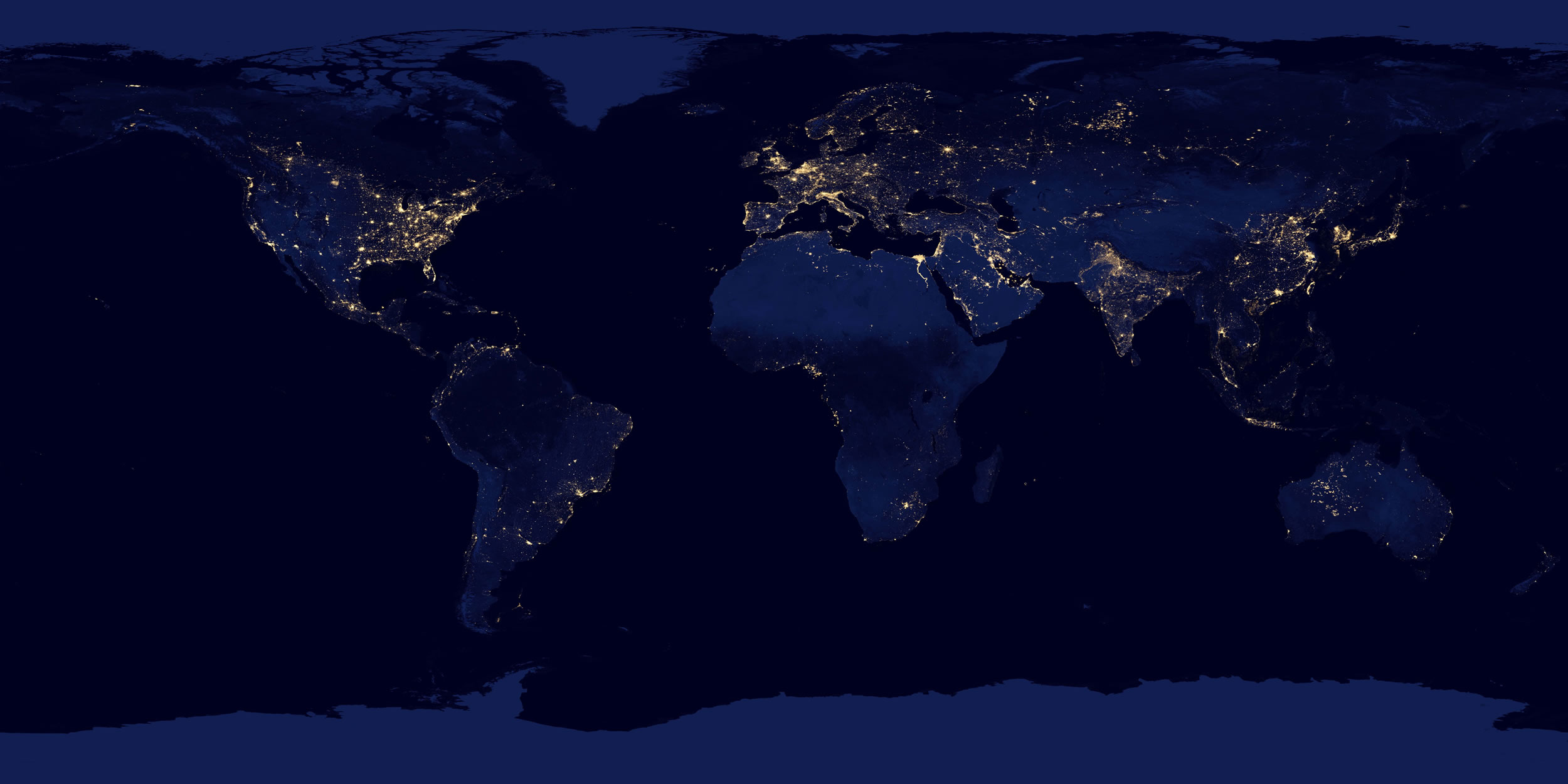
Interesting post. I'd wager that the real barrier isn't getting a high speed signal to everyone, but rather getting electricity so that everyone can charge a high speed device. Check out this pic of the earth at night:
http://geology.com/articles/night-satellite/satellite-view-o...