author here. Please take a look at the solution proposed in this issue https://github.com/draios/sysdig/issues/599. If it doesn't work for you, feel free to comment in the issue.
Yes, this currently emits to file or syslog and you need to take care of the alerting. Of course, this is the very initial release and we plan to improve it. If you have a specific need or idea, feel free to open an issue or let us know on the mailing list.
off topic but I think interesting: Andy Tanenbaum is also the creator and maintainer of http://www.electoral-vote.com/, which I find to be one of best resources on american elections.
by the way, I can find a million alternative cloud based photo services, all with comparable features. On the other hand, there are very few desktop picture managers, especially on windows and linux.
One of the tool authors here. The answer is "it depends". We absolutely designed sysdig and csysdig to work on production systems. They both work by capturing system events, so their cpu usage depends on the number of system calls in the system. On machines with average workloads, I would expect csysdig's CPU usage to be comparable or slighly lower than htop. On machines that do a lot I/O, the CPU will probably be higher. Memeory usage is typically some tens of megabytes.
Yes, I did pre-warm the volumes before using them.
And yes, there are several interesting workloads that I didn't test, including read only and read+write. It's potential material for another blog post.
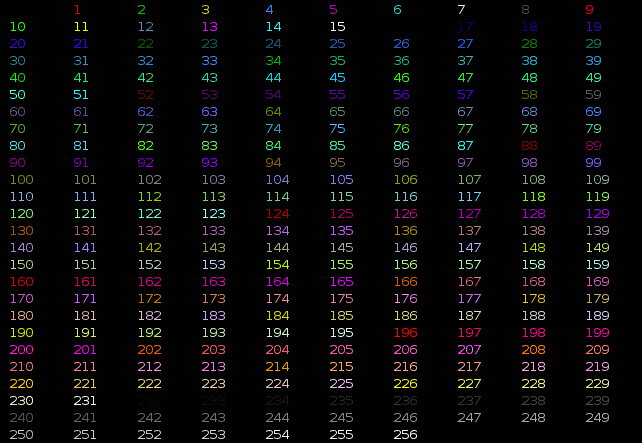
OP here. Unfortunately the ansi palette is pretty limited so I didn't have a lot of flexibility in the color choice. That said, this can definitely be improved. I can work on it if people find it useful.
From one point of view, I'm thinking "why did coreos need to be so aggressive?", and "boy, what a gift Solomon Hykes did to coreos by mismanaging this thing so badly", and "man, all of these guys look sort of immature to me".
From the other point of view, I'm respecting docker and coreos even more, as open source projects and as a companies, because it feels like there are real people behind them.
If this is the new wave of enterprise companies, I really like it. These are people like us, that engage with us and sometimes screw up, without hiding it. They are doing great things, and the fact that they are a bit immature is actually great.
I'm an entrepreneur myself, I've done enterprise software my whole life, and I always thought it's a shame that companies in this space are so distant from their users and have such little humanity.
It's interesting how most of the comments focus on the technical aspects of what the guy built.
What I found interesting and inspiring is the time and passion that he puts in what he does. I really hope to still have something that makes me so passionate when I will be 72. It's a great way to live your life.
I'm one of of the sysdig creators.
Sysdig is a pretty young project (we released it around a month ago), so I can't promise it will be flawless in a production environment. However, we've had many installations under several different environments, and during the month after the release we had extremely few crash reports, which we've worked to fix right away.
No, we don't use kprobes at this point, all of our collection is done through tracepoints. Take a look at https://github.com/draios/sysdig/blob/master/driver/main.c for details. They tend to be very efficient, which is a very important requirement because of our "capture all" approach.
And no urace/uprobes support yet. We're considering it as a feature for the future.