There are so many reasons it's hard to be exhaustive.
Selfishly, nobody will love me like my children, at least in their early years. They're also amazing playmates and students. And they give me social permission to do silly things like climb on playground structures. They're also a great excuse to get out of stuff.
Selflessly, I believe me and the mother of our children are sensible people and the world needs more sensible people. Plus someone needs to maintain the replacement rate. And it's a weird, warm, fuzzy feeling to care for one's children at one's own expense.
In the intersection, it's a fun challenge to try to achieve balance in life, work, and family. I also really appreciate the chance to get a do-over of everything my parents did, keeping the good stuff and improving on the bad.
This can be tricky. I know my mother loves me unconditionally, but I also have strong memories of her shutting herself inside her study to read textbooks and journals, and children were not allowed to disturb unless she was strictly needed to handle an accident.
I have the same need for cognition as my mother, but I opt not to lock myself in my office. Instead I tell my kids, "I'm around if you need me and I'll keep an eye on you but I'm not currently a playmate; I'll be here reading on my phone."
The difference is my mother clearly separated relationship-building from study. I don't. This probably means I'm available more often, but with lower quality? I'm not sure. What is better? No idea.
That's not quite what "skin in the game" means in this context.
The Economist does not need to be right, they only need their readers to believe they are right. That's not quite the same thing, and that small difference is what separates "skin in the game" from not having it.
They can get readers to believe they're right either by being right, or by being ambiguous enough to appear right in multiple futures. Professions where there's skin in the game don't have ambiguity and persuasiveness as an escape to the same degree.
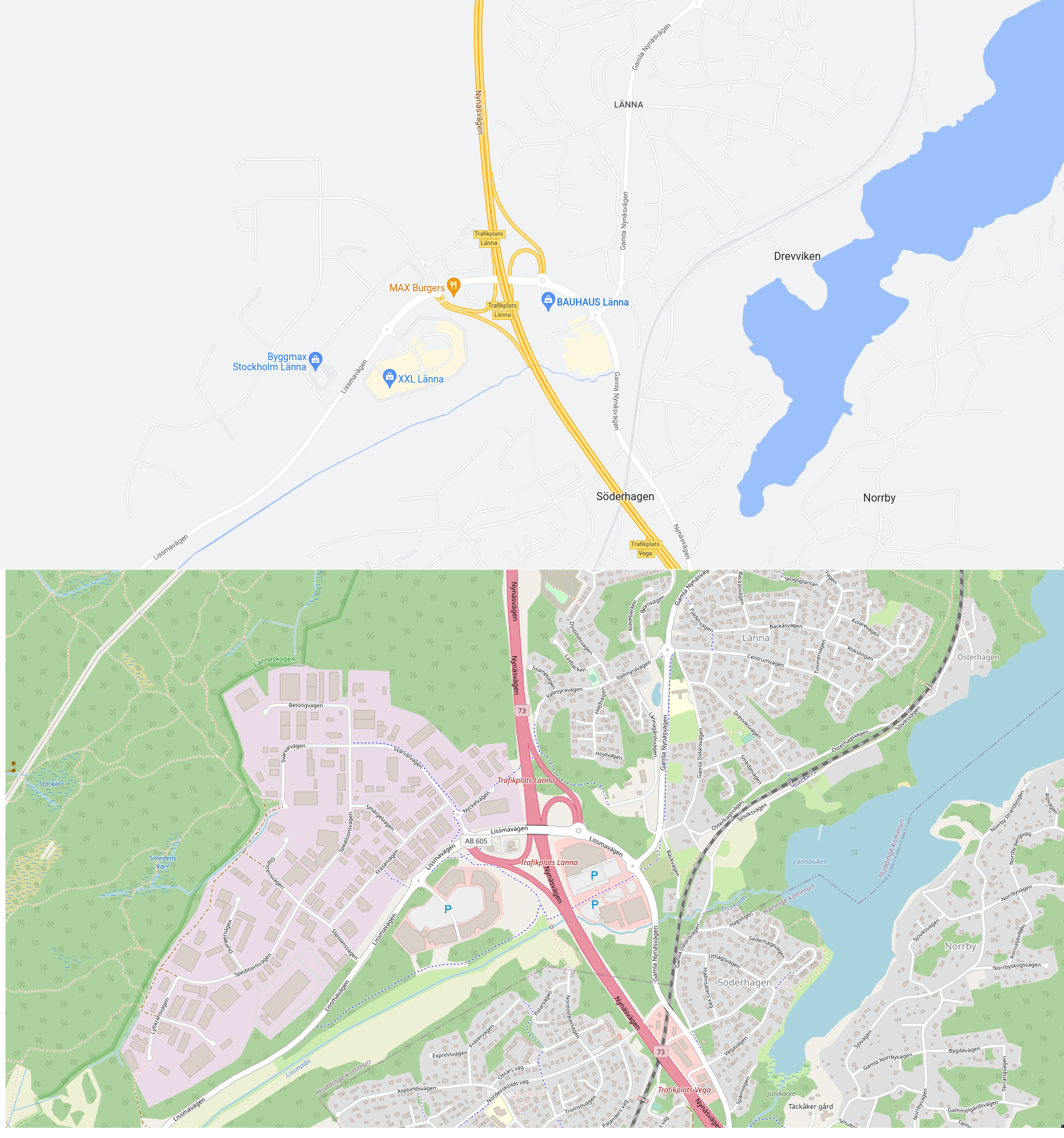
The great thing about OSM is that if an area someone cares about is sparsely covered, that's a self-solving problem. There are parts of the world with great detail in OSM only because I happen to care about them.
I am very impressed by the simulator, and I really wish I could defend taking time to dig into PDP-1 programming. You make it look like an absolute blast!
So far my children have not yet had to repeatedly perform complicated calculations, but I look forward to the day. I will definitely teach them with nomograms before we go on to spreadsheets!
Another type of almost-nomogram that's great and practical is the slide rule. In particular in the kitchen, where it makes it really easy to translate proportions. https://entropicthoughts.com/kitchen-slide-rule
I've had similar thoughts and ended up going with FreeBSD and no network connection for my use case. It's been great. It gives you some of the expected terminal ergonomics (and USB support) without the distractions.
But it's not an additional Steam Machine, it's a potential additional Steam Machine. In expectation, I'm sure it's more like 1/1000th of a Steam Machine.
Mainly that the advice was more structured, maybe?
Note that I was exercising before, only I didn't do it for health. But I also didn't suffer from any obvious problems. What I got out of every medical organisation in the world then is "You're fine. Don't worry about it."
I was probably fine, but I'm even more fine now; I'm capable of doing more of the things I enjoy.
I recently read Attia's Outlive which is about what sort of lifestyle makes one more resilient against diseases of old age.
I'm not in a position to verify more than a few of the factual claims made by the author (and a lot of it sounds like mumbo-jumbo), but it was persuasive enough to get me to exercise for health (instead of performance at a specific event) and my life has gotten much easier since I came to that realisation. Maybe I would have done so eventually without the book, but I'm glad the book sped the process up.
I also recommend this demonstration from 1949, in that excellent style they used back then with large scale physical models and stop-motion: https://www.youtube.com/watch?v=iMW-QWPZEm0
That's sad. Is there a way I can fund them without going through FSF? I tried looking into it before but it seemed like FSF was the only alternative, so I assumed it was well-managed.
I write at https://entropicthoughts.com
My inbox is hn[at]xkqr.org