AMD's first Athlon chips did not run particularily hot. They needed a fan, just like Williamette chips, but actually used less power than the competition. The difference was they had no internal, on-chip diode. If the heatsink and fan fell off, then the chip could cook itself. The boards had a thermal sensor to initiate shutdown if the fan stopped working. But it's debateable if it would detect it quickly enough if the entire cooler fell off.
In that scenario, shutting it off seems better. But it might roast itself on start up anyway.
No, it stems from a lineage of Tegra chips that pre-date the M-Series.
This chip was called GB10. One of its predecessors, GV10 was shipped in 2018.
It was a 256 bit, unified-memory system on a chip with a Volta GPU and 12 ARM Cores. GB10 is a 256 bit, unified-memory system on a chip with a Blackwell GPU and 10+10 ARM cores.
I suspect general attitude to AI will split along those who had to apply for jobs in the post-AI world of automatic resume generation and filtering and those who didn't.
There's little reason at this price. I run both, Plex for people who are already used to it, and Jellyfin for myself and anyone new. At around ~$100 I think the Plex experience was better enough to justify it, personally.
Nethack embeds Lua 5.4.8, so you don't need it installed from a distribution's package manager. As long as your system can build C99* it can build Lua. And given that Nethack 5.0.0 is C99, this dependency is not reducing portability any further.
* Lua has a LUA_USE_C89 flag so it may be more portable than Nethack 5.0.0 at this point.
It does not. For any of the dual CCD parts AMD has ever released for consumers. Even Strix Halo which has higher bandwidth, lower latency interconnect doesn't make a single L3 across CCDs.
It'll probably only happen when they have a singular, large die filled with cache upon which both CCDs are stacked.
Per compute die it functions as one 96M L3 with uniform latency. It is 4 cycles more latency than the configuration with smaller 32M L3. But there are two compute dies, each with their own L3. And like the 9950X coherency between these two L3 is maintained over global memory interconnect to the third (IO) die.
Why didn't a private investment company, even venture capital, extend them a bridge loan? It seems like the type of technology that could have decent returns in licensing fees.
I ask this question because it seems odd to someone in the software world so flooded with startups that the government would be expected to intercede on behalf of a startup.
Unfortunately Apple is learning to be as annoying too. I don't want to upgrade to Tahoe which is inscrutable to me. Maybe remind me next year. But they pop up every week reminding me to "upgrade" even though most the problems are unfixed. They have pushed iCloud in the settings application as if it is an adboard.
Hopefully they stop but I recognize these steps from Windows slippery slope.
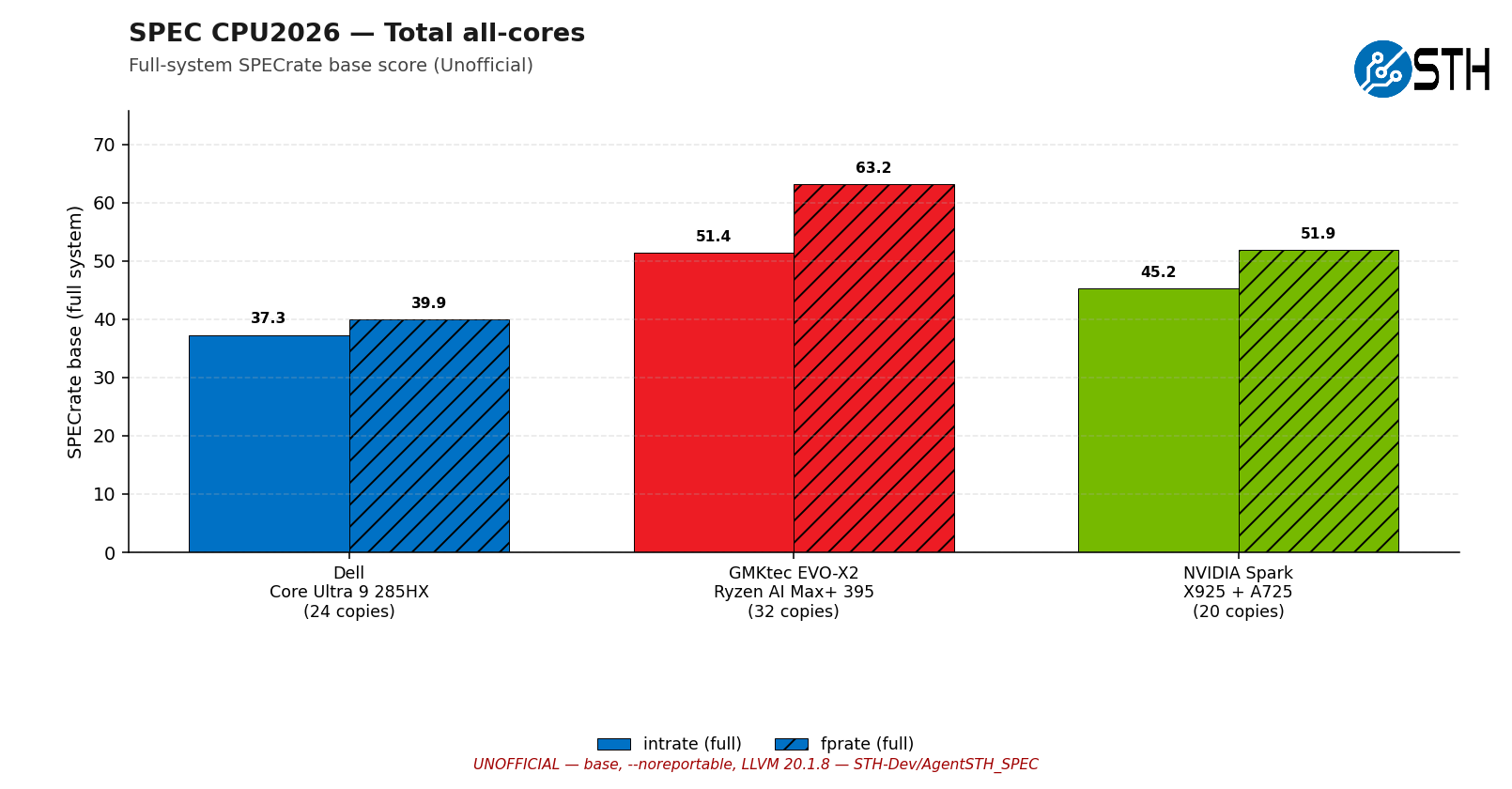
Must be a sampling bias or something.