I agree that if I end up not liking him (as a person) at all, then it won't work out.
I was planning on setting up like a 3-month part-time working relationship where we can work together on some side project to get to know each other better.
A 3-month work commitment is not much, plus if I go into it and 1-month later I decide things dont work out, I can just leave.
But I'm wondering if it's worth investing time for this 3-month work arrangement at all
Thing is, in my experience I have been able to learn to tolerate someone after spending enough time with them.
It's possible I might learn to tolerate this potential cofounder as well, if I spend more time with him.
It's certainly not my first choice but he and I have nearly identical interests in terms of the startup we want to build, as well as perfectly complementing skillsets.
I appreciate the feedback. You're probably right but it gives us something to dream about. But assuming we do have this cap table, how will investors want to purchase preferred shares in the company?
I notice this trend on hacker news where there are so many pessimistic comments. It's like an ocean of pessimist people.
x is dying, y is dying.
FB is not dying. It is literally a money printing machine and will continue to be for many years.
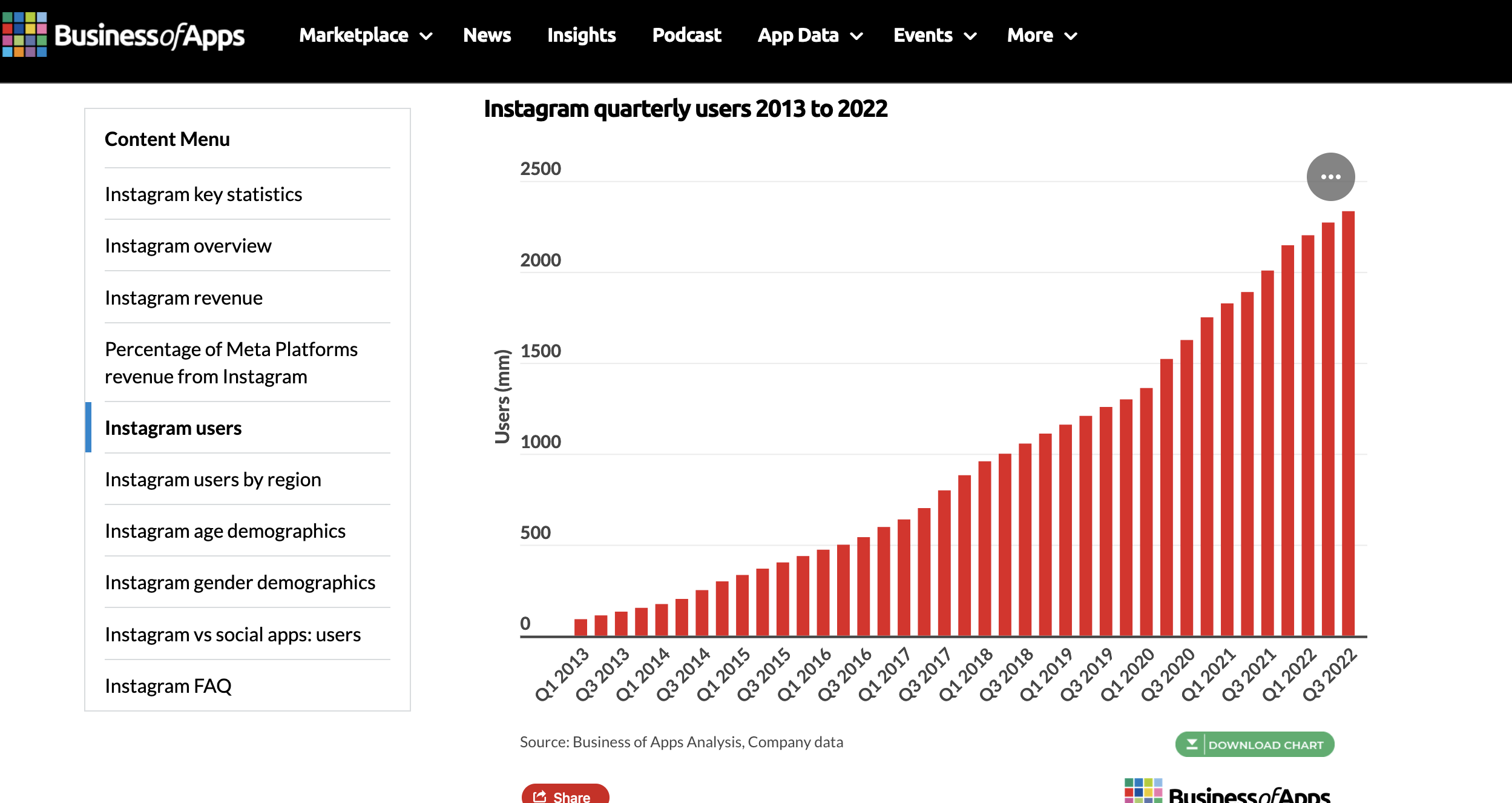
Instagram, despite being over a decade old (very old in the internet world), continues to grow [quarter over quarter](https://i.gyazo.com/aee60a22bcc2757f446340c51a17b3bc.png). Where in that photo do you come to the conclusion "Instagram is slowly dying"?
Metaverse has not been rejected. If you're like me and follow its progress, you can see making significant improvements year over year but it is still in the early adopter phase. Like it or not, humans want more visceral experiences and putting yourself in a 3D virtual environment is a lot more visceral than staring at a 2D screen. Only a tech boomer would say metaverse is rejected when it's still in its infancy.
IBM is a "tech" company that employs 282,000 employees, and when was the last time they invented something? I don't remember the last time I heard IBM in the news about something they made.
The bigger the company, you often times find less innovation and more administration & bureaucracy.
The reason startups can survive is because of its small size that makes it very flexible and adaptable to chaos and change, that gives it the edge over bigger companies.
the power law applies to any big organization. 20% of the people do 80% of the work, whilst 80% of the people are just there for "support".
whatsapp was run by a team of like 20 people or something when they got acquired for $20 billion. for a simple software product, you don't really need that many people. in fact, more people often means bad software. you just need a small group of very talented engineers to run the product and add new features when necessary.
big (and especially public) companies often times need to hire a lot, just to look like a real company.
now that twitter is private, elon has no responsibility to public investors and can focus less on looking like a real company and more on doing what needs to be done to cut bloat/costs and improve product
Artificial intelligence is intelligence created by humans. Artificial means man-made.