> I'd be interested to know if any US cities have deeper tunnels
The downtown portions of Chicago's Blue Line[1] and Red Line[2] were primarily dug using tunnel boring machines in the 1940s. Here's a better view of the tunnels being not square[3].
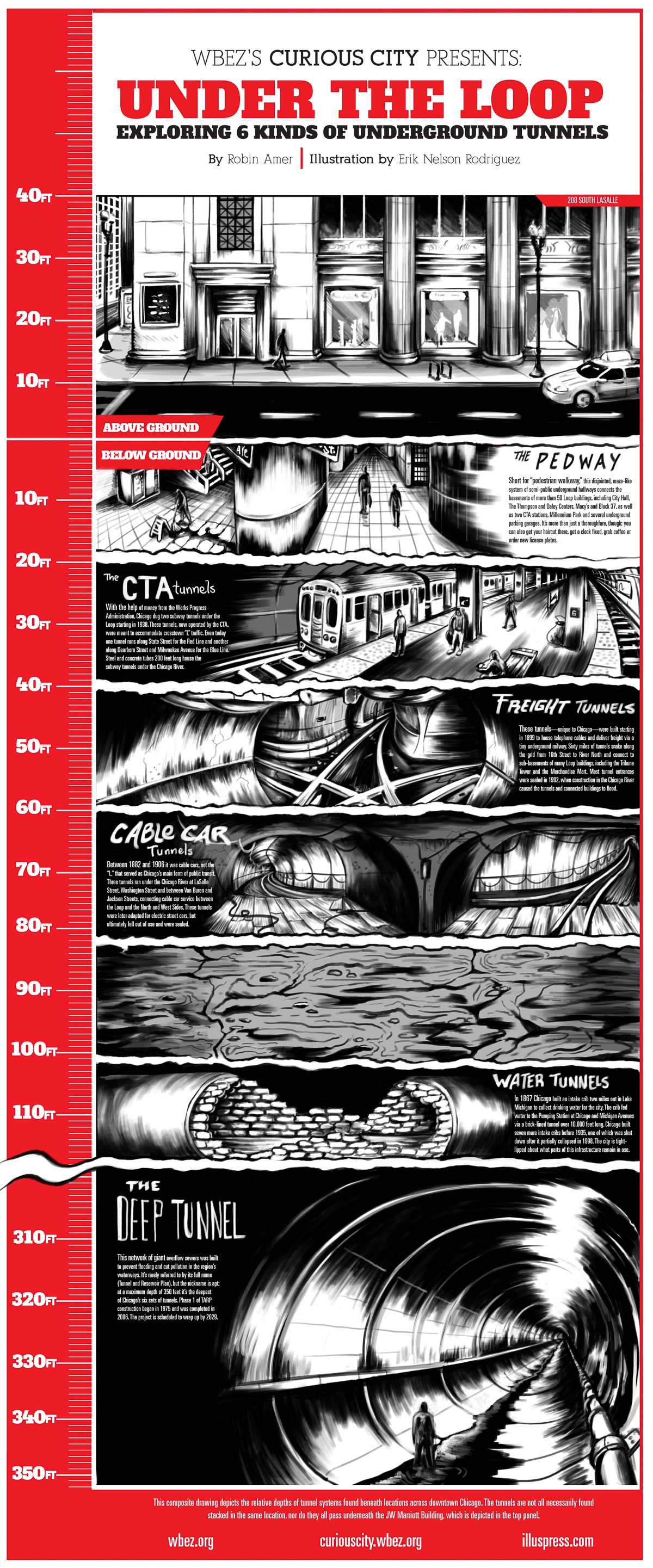
Edit: infographic of various tunnels under Chicago, many of which are even deeper than these bored ones[4]
I used to do this and then stopped once I switched to Linux where selecting text put it on a clipboard automatically.
I suspect it's related to some patterns when reading books, like putting a bookmark below your current line and moving it down, or following your current position with your finger.
Nice find. From some other quick research, if there is a violation, you have to report it to Visa via phone or mail.
Looks like they used to have an online form a several years ago, but it went missing. Various blog/forum posts indicate that most people have had no luck getting any sort of response from Visa via mail.
Got a citation on this? I'd love for it to be true, since it'll save me a lot of effort. But WSJ, for instance, requires you to cancel via phone even if you sign up online.
It's there now (with a timestamp of 2 hours ago), but /r/google isn't what I would consider a good barometer of what's important or popular news. It's larger than I expected at ~77k subscribers, but contrast with /r/android at ~623k subscribers, and it does not show up frequently on the first dozen pages of /r/all in my experience.
Vehicle and person hits cause exceptional delays, but not significantly more so than the string of breakdowns in February. They apologized for this, and seem to have fewer rush hour problems, so maybe this has improved.
They could do more to improve the standing room problem, which adds up quickly. My evening train is now perpetually 3-5 minutes late, which adds 10% to the runtime, due to the train in front being overcrowded. They are putting out new timetables for next month that they claim will improve this. Their fix is to move its departure time closer to the slow train in front, and add 3 minutes to the trip duration. Frustrating.
Faster acceleration. Each stop will cost less time, and Caltrain has a surprising amount of stops between SF-SJ (22 weekday) for its length (47 miles). You can see this effect already with the amount of express schedules that Caltrain has and their varying trip times.
What I perceive as the good bits of BART could be replicated on Caltrain with much less effort than replacing Caltrain with BART: the off-peak timetable. Caltrain does better for longer trips in my (limited to South Bay) experience, which makes sense since Caltrain average trip length is 1.5x to 2x longer than BART's. But overall, getting improvements seems much less technical and more political, and neither system seems to have much luck.
Some don't, and it can make sense. If you rent it out, then you have to be a landlord, which puts you on the hook for repairs, finding tenants, and collecting rent or evicting them. There's always the possibility of tenants trashing the unit to a large degree. Some of these problems become way worse when left untreated for a week, a month, or longer. I can imagine it making sense for foreign investors to leave units empty in these circumstances.
In a similar vein, it's not just foreign investors. It might also make sense to leave the grandparent's house empty while they are in the nursing home if you live further away. If the grandparents don't need to sell the house to pay for retirement, you'd probably come off cheaply enough to leave it empty, pay the property tax and minimal utilities, rather than risk having tenants.
Many of the "baby bullet" trains are slowed down by other trains on a daily basis. Some stations only get one stop per hour, even during rush hour, so those trains are overcrowded and can take minutes to make those stops. It's not uncommon to see a bullet have to come to a complete stop behind one of those trains. More cars should allow the passengers to exit the train faster, so that would counteract the impact of slower acceleration.
There are 4 (edit: looks like 5) unused Metrolink cars sitting in the siding at 4th and King. I don't know why they aren't being used on some of the busier routes.
Burlingame and Menlo Park are both restricted by street crossings on both sides of the station, not to mention that many stops are limited by platform length. I'm not sure if it would make sense to make just a subset of the stops.
An unofficial blog about Caltrain and California HSR talks about one solution to the capacity problem and some non-solutions. I personally take it with a grain of salt, but it's still interesting: http://caltrain-hsr.blogspot.com/2013/02/the-virtues-of-widt...
We did use it for various mechmania sessions as the game communication port. During my time, we also had a running joke that in our "spare time", we would implement a telnet server so you could do maintenance to the soda machine.
Did the soda machine ever use it for anything at all? I never did find a conclusive answer to that.
It does, and feeds into the same stats database. Unfortunately I can't seem to get to caffeine.acm. I'm unsure how that works these days, since a lot of things were redesigned after I left (including retiring AFS).
When I left in 2011, there was a card reader and a touch screen, so you swiped your card, and then selected your choice on the screen. I think it may have also had a random button at one time or another. The intention was to eventually wire up the physical buttons once again to work closer to a regular soda machine.
The only time we exploded cans was by freezing or loading incorrectly. Occasionally we had the solenoids fail to fire, but that was solved easily by sshing into the soda machine and asking it to vend again.
When I was there, the machine controlling the soda machine was a Linux box running some old Debian with a 2.4 kernel, on VIA or some non-Intel/AMD x86 processor, booting from iSCSI. Thankfully, it was upgraded when the machine was rebuilt. How much of this was around in your time there?
Nice work with it. Definitely a staple of the ACM office :)
edit: also, it survived a building move, so that's pretty awesome.
Sadly, the old Dr. Pepper machine bit the dust around Spring 2010. It decided to freeze sodas more often than we liked, so we replaced it with a Coke machine in Fall 2010. It was a pain in the ass to get into Siebel, but it provided a nice capacity upgrade, and we no longer needed to do any tricks when loading to prevent the first few cans from exploding. The story I heard was that the original machine was meant for steel cans, so aluminum ones could explode when being loaded if not loaded gently.