we have an alignment blog post dropping soon! scaling up in the next couple of months, then hopefully opening up an API or licensing it.
Benchmarks are really fun—lots of secret ones. Our main thesis is that you should be using the same benchmarks to measure human ability to use a computer, as you would an AI model. Definitely a suite of continuous long term planning tasks (games) and things such as marking emails as spam etc.
definitely! we are looking into more interp + visualizations in general as we scale up.
thanks! the math and architecture of the FDM (no video encoder) is pretty simple, its a regular transformer with next-token predictions but with frames interleaved.
yeah! i love the BCO paper, i think its extremely intuitive and these methods are really interesting in a time where data without labels is abundant. i especially like the idea of iteratively making the inverse dynamics better—might lean closer to that in the future
thanks! the inverse dynamics model is trained first on 40k hours of data and then frozen to label all 11 million hours. yup! the idea is that it should take a small amount of data to generalize environment dynamics, then you can use a lot of data to understand actions.
no finetuning data for the blender task! we actually think its the opposite, there are a lot of video tutorials for complex tasks like onshape/blender/fusion360 but not as much of people idly browsing.
but also at the 11M hour scales it still sees a substantial amount of data
i actually drove the car (with arrow keys) around south park for around ~45 minutes as finetuning data, no extra labelling other than that. think the car line graph is super cool because you actually see the videegame prior working
the main chain of experiments was trying causal => non-causal => non-causal with ctc and CE. i think a good intuition here is that you need a generative approach fundamentally because there definitely are multiple correct IDM labels.
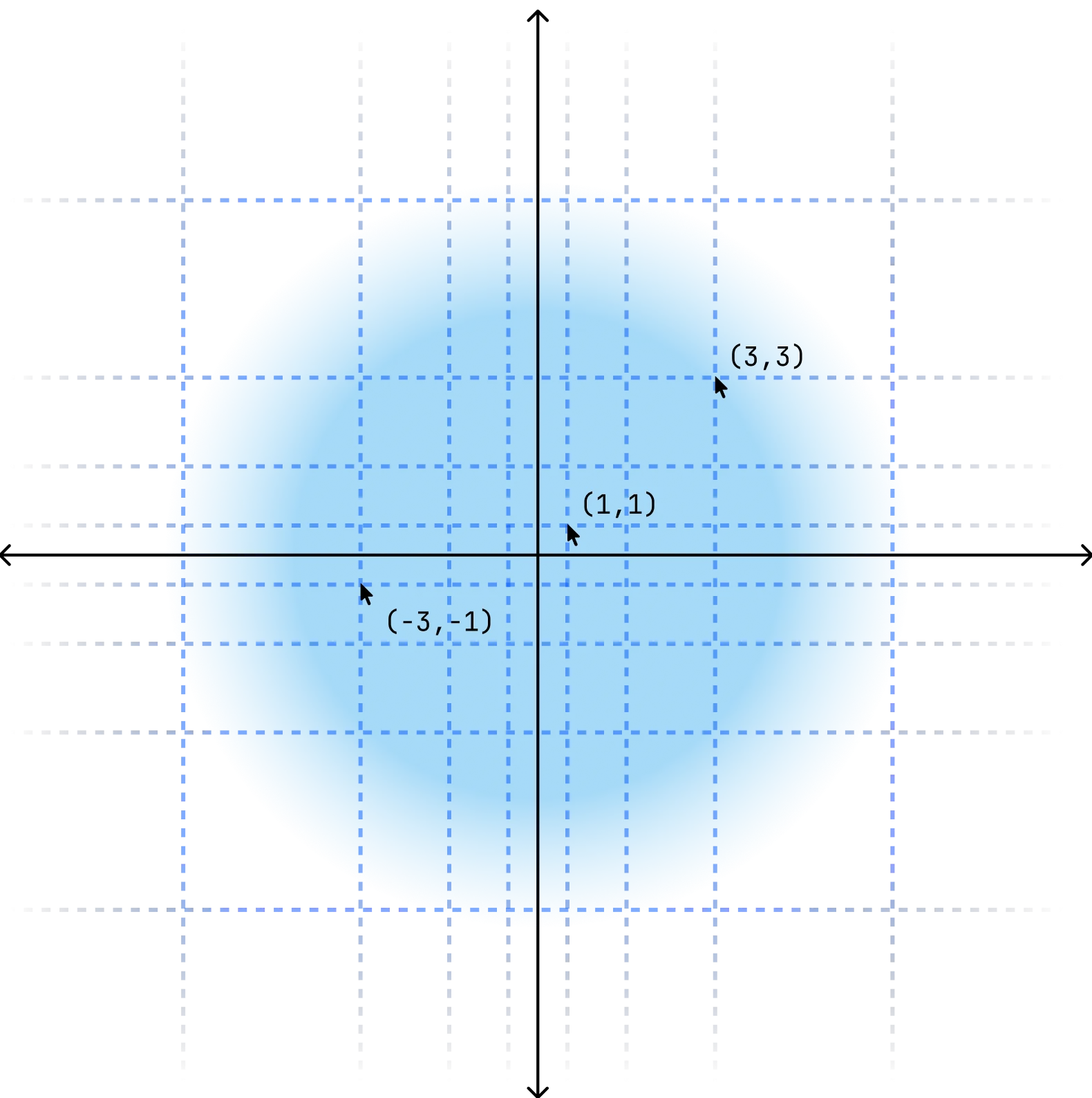
good question! we use exponential binning (map the mouse movements onto a plane with exponentially increasing tick marks https://si.inc/fdm1/exponential_binning.webp) but tried a bunch of other methods (linear creates too many tokens for the model to learn well). Polar coordinates seem like a better solution but empirically didn't work well because the tokens got too coarse too fast.
Hey guys! I’m Neel, been holed up in our south park office for the past year working on model training. excited to share our research!
This is a preview of a very different type of computer use model—we train on the internet. Specifically we have 11 million hours of computer video stored on our storage cluster (previously shared https://news.ycombinator.com/item?id=45438496 !) and the model can work in 30 FPS. Since we match the fundamental form factor of computer-use, we can get our model to do CAD, browse websites, and even drive a car using arrow keys. I’m super excited to see what our model can do as we scale more, it's a fun frontier to work on (not language models :) ).
The team and I will be online responding to the comments, so drop any questions.