I didn't like the blinking at first, so I made it pulse instead (smoother) but was never to the point of headaches. that said, sound should work if you can keep a headset ; )
Try doing one on a physical device too... My settings are just related to fade after reaching target or turn off immediately, Led colour (my ESP32 has a RGB onboard) and blink or pulse. Then there is a Start & Stop rate (150-60) as standard and IF sensor is connected or has data (heart) those values adjust too.
Nice one! I will be curious to learn if that works for others too.
In my case v.1 and 2 were apps with a similar on screen red dot like yours. Much smaller and first placed at the status-bar (like the cock ":" blinking) then floating on screen lower left corner.
Things got interesting and worked best for me after I remove the light from the actual screen I must look at to work. Hence the device use, and then later the heart sensor.
The key (I guess) is to make you brain see it but not you (if that makes sense?). Something like you looking at your screen but can still see if an Ant moves nearby or your phone shows a notification. Near your screen but not on it ; )
In any case, great little test, and eager for any feedback you can get.
My guess is that may be working more like a simple "maestro" telling your brain orchestra and heart drummer to reduce the speed from Heavy metal to Ballad and that somehow makes easy to focus in what's in front of you?
I make no claims here, I did it for me and looks like it works, not scientifically based or proven, not even tested on more than 1. So, no idea if can or will work for you ; )
That said, I'm now curious with so many comments to see how it will perform for those building versions to test. Its a 20min project, free for those already with prototyping board around.
The key for me was to remove to my marginal angle of vision, not on the screen (like an app), the moment I moved outside and wasn't in front of it it work best. If you see it directly it does distract you indeed.
Anything you get aware that goes fast-to-slow in a smooth gradient is the idea.
I tried sound (beats) on a headphone with some tracks, then build a tiny app to show pixels on the screen (blink) and then settled on a LED on a prototyping board type of device (ESP32) as a quick project and that worked.
I only improved by adding the heart sensor months later, now I don't think about it much, Now even If I'm not aware of, every time I turn the iMac it powers the device via the USB and so it starts anyway at 150bpm when the heart sensor is not responding or not detecting anything. After an hour it gets to 60 and the light fades out....
I'm not aware when it goes off, so I guess it is working ; )
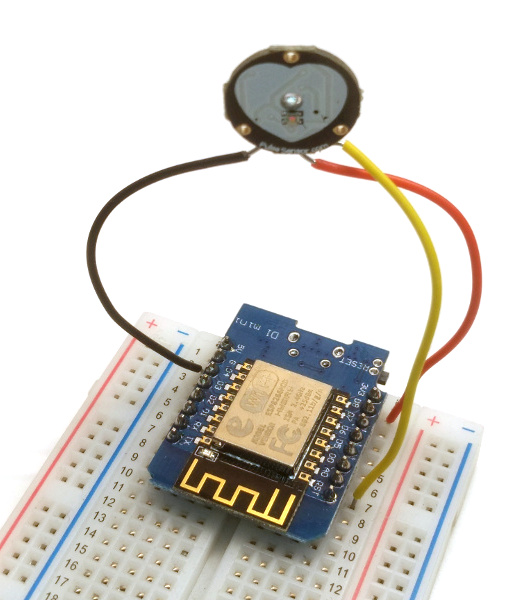
Few people here posted code, ideas and I added the device pic I used (similar) and the sensors... you can buil one with almost anything and try!
We use on video-applications when pre processing them, the idea is to sense stress levels when the applicant is introducing themselves at the start of the video and then not reducing their scores or points when the same person gets shy of being on video or forget something due to stress when talking about something else.
We try estimate a "confidence" level when saying something, but NOT able to guess if a lie. An actor can easily have full confidence in a script, but still be a lie.
We intended for roles that are client facing and where personal skills are key. Things like retail, costumer service, sales.... not technically or education based, temporary work and alike. Not that Orwellian yet ; )
Example: You need 40 people for an event to work a few hours as guides or hosts, from 100 applying the system can suggest a score and list them all in order so you can start watching or calling for interviews from somewhere.
I see, well in that case just search for ESP32 on Amazon and get one for a $5, then look for a few videos on Youtube who to program for a ESP32 board and you will probably learn as a first example something to control the board's LED. From that you will be half way, just modify and try things out ; )