- Network traffic patterns were analysed with Wireshark for Samsung/Tizen, LG/webOS, Google TV, Fire TV, Roku, Vizio, VIDAA, external streaming boxes, and a smart monitor
- ACR traffic could usually be identified, and opting out appears to stop it (it is hard to validate this though due to the encrypted nature of the traffic)
- On some TVs, ACR traffic is hard to seperate from other telemetry making it difficult to selectively block
- it's not just for apps - on one TV ACR traffic could be identified with USB playback, home-screen use, and HDMI sources like a PS5 and laptop
- You can avoid connecting your TV to WiFi, but if you use a streaming stick/NVidia shield/Apple TV instead then you still need to entrust your data to another 3rd party company
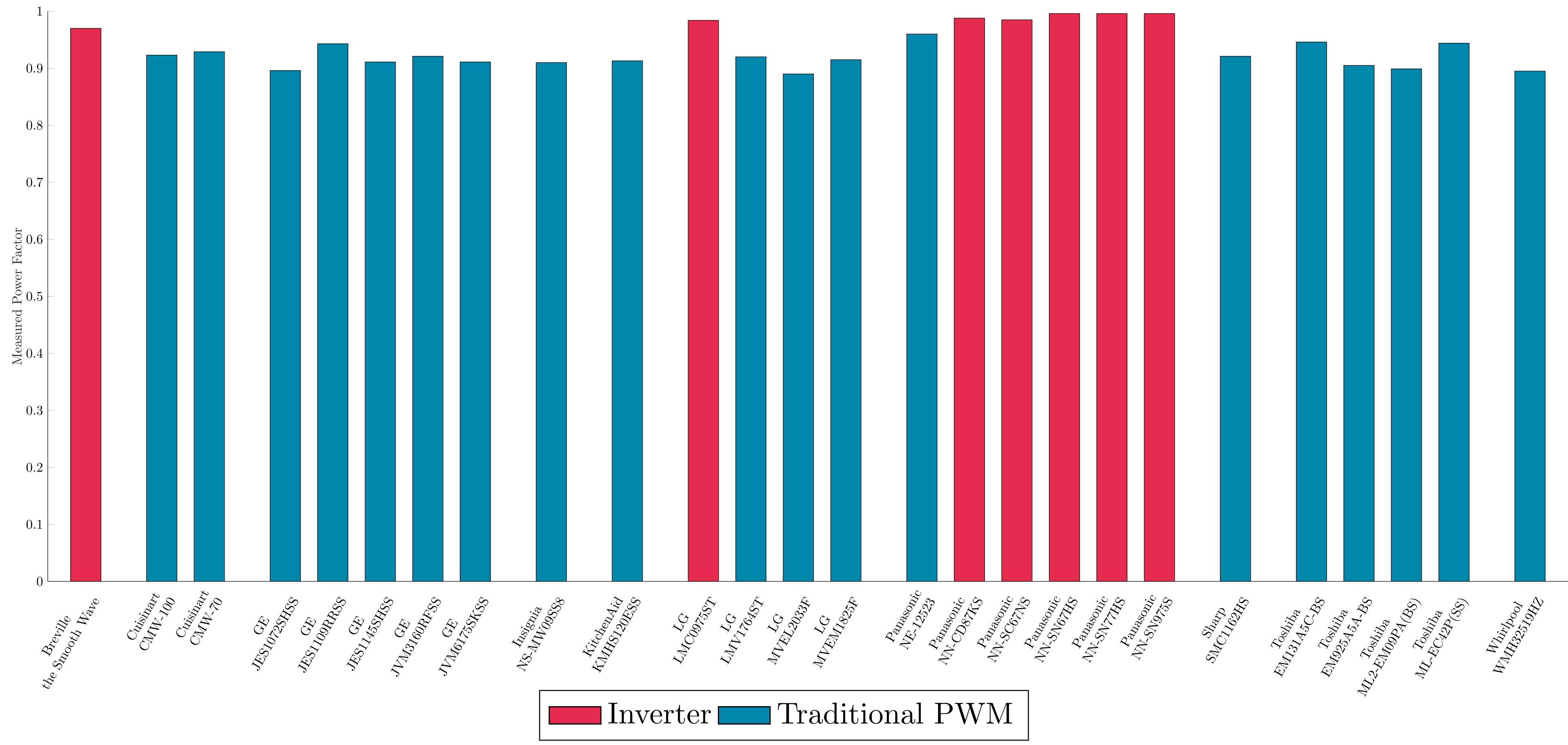
This is referring to active vs reactive power and the concept of power factor [1]. You're still paying for all the real energy consumed (including waste heat).
Inverter microwaves tend to have a higher power factor than traditional models (measured data [2]).
Residential electricity bills are based on active energy (kWh), not apparent power or reactive components, so a better power factor by itself doesn’t lower your bill.
We’ll take a look at the article to clarify it.
The most immediate pattern in the 25 tested Wi-Fi 7 routers is the complete absence of features required for true multi-radio simultaneous MLO. None of the routers support EMLMR, SRS, or STR-MLMR: the core mechanisms that allow multiple radios to operate in parallel. Even the highest-end tri-band systems, such as the nearly $1,000 Asus ZenWiFi BT10, lack the synchronization and scheduling features needed to use the 2.4, 5, and 6GHz bands concurrently as a single unified link. This gap likely reflects the limitations of current hardware, which is not yet capable of achieving the sub-microsecond timing alignment required between independent radios.
- Network traffic patterns were analysed with Wireshark for Samsung/Tizen, LG/webOS, Google TV, Fire TV, Roku, Vizio, VIDAA, external streaming boxes, and a smart monitor
- ACR traffic could usually be identified, and opting out appears to stop it (it is hard to validate this though due to the encrypted nature of the traffic)
- On some TVs, ACR traffic is hard to seperate from other telemetry making it difficult to selectively block
- it's not just for apps - on one TV ACR traffic could be identified with USB playback, home-screen use, and HDMI sources like a PS5 and laptop
- You can avoid connecting your TV to WiFi, but if you use a streaming stick/NVidia shield/Apple TV instead then you still need to entrust your data to another 3rd party company