Rare photographs that changed lives(bbc.co.uk)
bbc.co.uk
Rare photographs that changed lives
http://www.bbc.co.uk/news/in-pictures-43031764
27 comments
Or by this monument?
http://3.bp.blogspot.com/-KZvDYmzdiLQ/VetenUM0abI/AAAAAAABg0...
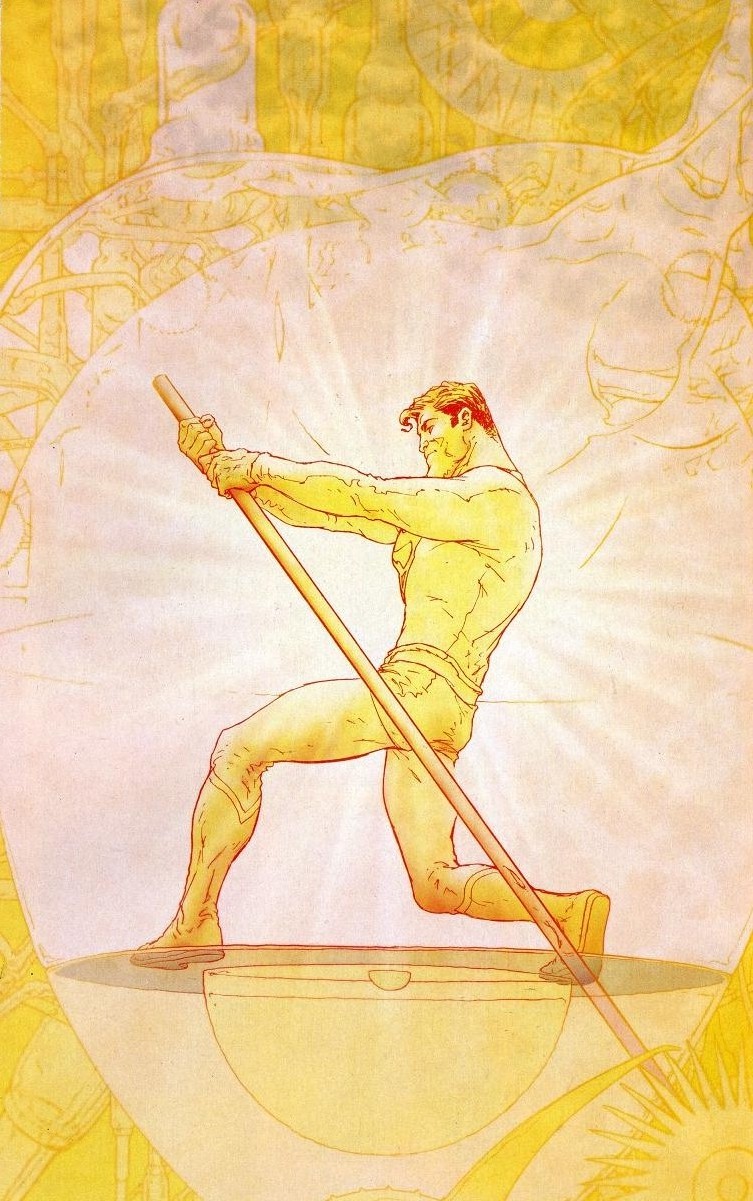
Or by this Superman picture?
http://4.bp.blogspot.com/-OhVeTMXYR9E/ThNZis3eEjI/AAAAAAAAAB...
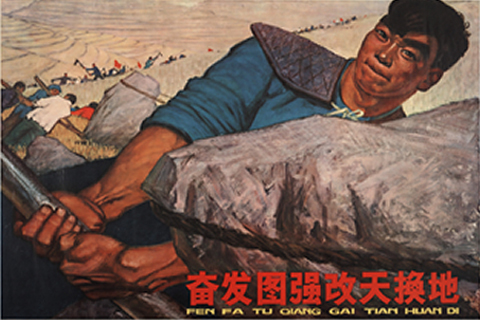
More seriously it is a kind of iconography that was present in many countries in the 1900-1950 period (and even later in URSS and other communist countries) often in the form of propaganda posters, here is a Chinese one:
http://magazine.utoronto.ca/leading-edge/labour-days-chinese...
http://magazine.utoronto.ca/wp-content/gallery/chinese-propa...
Here you can see how another of Hine's photos (the one with the guy on the crane hook) has been used iconographically (maybe):
https://wolfsonianfiulibrary.wordpress.com/2015/04/18/overt-...
Hugo Gellert and William Gropper are good examples of (US) artists that did similar drawing/paintings:
https://commons.wikimedia.org/wiki/File:William_Gropper_-_Co...
http://3.bp.blogspot.com/-KZvDYmzdiLQ/VetenUM0abI/AAAAAAABg0...

Or by this Superman picture?
http://4.bp.blogspot.com/-OhVeTMXYR9E/ThNZis3eEjI/AAAAAAAAAB...
More seriously it is a kind of iconography that was present in many countries in the 1900-1950 period (and even later in URSS and other communist countries) often in the form of propaganda posters, here is a Chinese one:
http://magazine.utoronto.ca/leading-edge/labour-days-chinese...
http://magazine.utoronto.ca/wp-content/gallery/chinese-propa...
Here you can see how another of Hine's photos (the one with the guy on the crane hook) has been used iconographically (maybe):
https://wolfsonianfiulibrary.wordpress.com/2015/04/18/overt-...
Hugo Gellert and William Gropper are good examples of (US) artists that did similar drawing/paintings:
https://commons.wikimedia.org/wiki/File:William_Gropper_-_Co...

On an unrelated note: why does nobody ever scale photos for viewport height? I can never see whole portrait-oriented photos without zooming out.
For those interested, the Library of Congress has a substantial number of Lewis Hine photos available online.
https://www.loc.gov/photos/?fa=contributor:hine,+lewis+wicke...
https://www.loc.gov/photos/?fa=contributor:hine,+lewis+wicke...
in the last photo w/ the coal breakers... does that dude have a sword???
Looks like a stick to me, still gruesome.
Btw. i found some more pictures from those "Breaker Boys" at work, check this out.
https://i.pinimg.com/564x/25/40/25/254025955197cd827816dd9ac...
https://www.mininghistoryassociation.org/Meetings/Scranton/B...
Identical Photos it seems, but one is retouched to remove the beating stick from the guards hands.
Very telling.
https://i.pinimg.com/564x/25/40/25/254025955197cd827816dd9ac...

https://www.mininghistoryassociation.org/Meetings/Scranton/B...

Identical Photos it seems, but one is retouched to remove the beating stick from the guards hands.
Very telling.
Go all the way down. The last photo is one of the most impressive. Children working with "guards" ready to beat them with a truncheon.
Wikipedia has a nice article about "breaker boys": https://en.wikipedia.org/wiki/Breaker_boy
Very nice. Ah! The good days of Capitalism:
Public condemnation of the use of breaker boys was so widespread that in 1885 Pennsylvania enacted a law forbidding the employment of anyone under the age of 12 from working in a coal breaker,[3][13] but the law was poorly enforced; many employers forged proof-of-age documentation, and many families forged birth certificates or other documents so their children could support the family.[3][13] Estimates of the number of breaker boys at work in the anthracite coal fields of Pennsylvania vary widely, and official statistics are generally considered by historians to undercount the numbers significantly.[3] One estimate had 20,000 breaker boys working in the state in 1880,[3] 18,000 working in 1900,[12] 13,133 working in 1902,[3] and 24,000 working in 1907
Public condemnation of the use of breaker boys was so widespread that in 1885 Pennsylvania enacted a law forbidding the employment of anyone under the age of 12 from working in a coal breaker,[3][13] but the law was poorly enforced; many employers forged proof-of-age documentation, and many families forged birth certificates or other documents so their children could support the family.[3][13] Estimates of the number of breaker boys at work in the anthracite coal fields of Pennsylvania vary widely, and official statistics are generally considered by historians to undercount the numbers significantly.[3] One estimate had 20,000 breaker boys working in the state in 1880,[3] 18,000 working in 1900,[12] 13,133 working in 1902,[3] and 24,000 working in 1907
Is that really what's going on in that picture?
Well, on the one hand, I doubt they were using the threat of violence to get them to work. On the other hand, they were probably watching out for theft, and I have little doubt that they would have administered a beating if they caught someone pocketing coal.
The original caption,
> A view of Ewen Breaker of the Pa. [Pennsylvania] Coal Co. The dust was so dense at times as to obscure the view. This dust penetrates the utmost recesses of the boy's lungs. (See labels 1927 to 1930 for names of some of these.) A kind of slave driver sometimes stands over the boys, prodding or kicking them into obedience. Location: South Pittston, Pennsylvania.
via https://www.loc.gov/item/ncl2004002610/PP/
> A view of Ewen Breaker of the Pa. [Pennsylvania] Coal Co. The dust was so dense at times as to obscure the view. This dust penetrates the utmost recesses of the boy's lungs. (See labels 1927 to 1930 for names of some of these.) A kind of slave driver sometimes stands over the boys, prodding or kicking them into obedience. Location: South Pittston, Pennsylvania.
via https://www.loc.gov/item/ncl2004002610/PP/
As a little girl during the Great Depression, my grandmother and her friends used to throw rocks at the engineers on trains, to provoke them into throwing pieces of coal back at them. They'd then take the coal home for warmth.
As of the 1990's, when I last saw it, children were still following coal trains in the poorer parts of West Virginia, picking up what falls off to bring home or sell.
There is some seriously extreme poverty in parts of America that most people don't realize.
There is some seriously extreme poverty in parts of America that most people don't realize.
Wow, I didn't know there was poverty like that still around that recently. I did read about these people recently that went out and scrounged around in the forest to get different kinds of fungus and tree roots, and they'd spend hours and only get $20. We really need universal basic income for those people. It would make a huge difference. I'm convinced, just give everyone 1500 a month. Those kids would be so much better.
That seems like a ton of effort. I know coal burns well but is it really worth that kind of effort in that quantity? (This isn't scrutinizing I'm just curious if this was a practice that was fruitful or if it was just kids thinking they were helping or something?)
Sadly, I don't know (or remember) any more of the story than that, and she's not around anymore to ask... It doesn't seem likely that they would have gotten huge amounts of coal by doing it.
Coal is still a very popular heating method in large swaths of the eastern U.S. If you have a coal stove heating your home, coal is what you need.
You have enough money for food or coal. It's below freezing. Someone is prepared to throw coal at you for yuks. Easy choice.
[deleted]
I believe they just used the bars to break the big coal pieces as they pass through the conveyor.
.
hopefully
.
hopefully
Yes, heartbreaking
And the air, you almost can't see the people in the background.
I wonder if it was, perhaps, inspired by this famous photo?