Australian researchers set record for carbon dioxide capture(phys.org)
phys.org
Australian researchers set record for carbon dioxide capture
https://phys.org/news/2020-06-australian-carbon-dioxide-capture.html
63 comments
Stock markets haven't priced it in simply because people don't want to pay.
Most nations that produce a lot of carbon waste would rather pay 0 for it and the lobbying is very strong to maintain the price of 0.
If you start treating emissions the same way that you treat, say... dumping garbage, by assigning it a starting price, any price, 0.1 cents per ton, then and only then you enable the free market to process waste automatically.
We already have a great system for this, it's very logical and market friendly, there's just no political will to actually implement it. It's called cap and trade.
The problem is psychological, not technological.
If all businesses have to trade pollution then obviously they will figure out how to measure it much more and more accurately. And engineers that work on emission-free solutions will work a lot faster if the market's paying them for each ton of waste they save.
As for which solution will work best it is very hard to predict what the market will come up with, could be algae, chemical capture, genetically modified trees planted en masse, printed solar, miniature reactors or something else entirely. It doesn't even matter frankly, just give it a price and the hivemind of the market will automatically figure out the most competitive way to solve the problem.
Most nations that produce a lot of carbon waste would rather pay 0 for it and the lobbying is very strong to maintain the price of 0.
If you start treating emissions the same way that you treat, say... dumping garbage, by assigning it a starting price, any price, 0.1 cents per ton, then and only then you enable the free market to process waste automatically.
We already have a great system for this, it's very logical and market friendly, there's just no political will to actually implement it. It's called cap and trade.
The problem is psychological, not technological.
If all businesses have to trade pollution then obviously they will figure out how to measure it much more and more accurately. And engineers that work on emission-free solutions will work a lot faster if the market's paying them for each ton of waste they save.
As for which solution will work best it is very hard to predict what the market will come up with, could be algae, chemical capture, genetically modified trees planted en masse, printed solar, miniature reactors or something else entirely. It doesn't even matter frankly, just give it a price and the hivemind of the market will automatically figure out the most competitive way to solve the problem.
The political will for prevention is missing, but the will (and money) for the cure will come quickly. Wall Street will pay once the wet elevators stop working, Presidents, Prime Ministers and politicians will find the will once they spend a summer with heat exhaustion at their vacation homes. We're seeing a lot more acceptance now that the sky is gray with ash.
Fixing the problem is not up for debate, but that will be so only after the problem clearly presents itself, not a minute before. This is same principle as a concrete manufacturer's stock going up after a tsunami – we will need to fix the problem, even if we're too lazy or short-sighted to prevent it.
Fixing the problem is not up for debate, but that will be so only after the problem clearly presents itself, not a minute before. This is same principle as a concrete manufacturer's stock going up after a tsunami – we will need to fix the problem, even if we're too lazy or short-sighted to prevent it.
Agreed.
We'll need carbon capture, even after the economy attains carbon zero, sufficient to counteract the natural processes (thawing tundra, burning forests, ocean acidification).
I'm with Saul Griffith, David Roberts, and others, who advocate a mixed strategy, backed by a New Deal & WWII & Moon Shot style urgency and commitment. (So I'm for all kinds of solar, wind, geothermal, greatly improved building standards, algae farms, reforestation, prop up existing fission, next generation of fission, and maybe some day fusion. I support doing all of it.)
Here's a fairly recent interview with Griffith. https://www.vox.com/podcasts/2019/12/16/21024323/ezra-klein-...
Griffith explains that solely market-based solutions won't be fast enough. We also need policy and investment.
We'll need carbon capture, even after the economy attains carbon zero, sufficient to counteract the natural processes (thawing tundra, burning forests, ocean acidification).
I'm with Saul Griffith, David Roberts, and others, who advocate a mixed strategy, backed by a New Deal & WWII & Moon Shot style urgency and commitment. (So I'm for all kinds of solar, wind, geothermal, greatly improved building standards, algae farms, reforestation, prop up existing fission, next generation of fission, and maybe some day fusion. I support doing all of it.)
Here's a fairly recent interview with Griffith. https://www.vox.com/podcasts/2019/12/16/21024323/ezra-klein-...
Griffith explains that solely market-based solutions won't be fast enough. We also need policy and investment.
You don’t necessarily need fusion or nuclear power to remove carbon dioxide from the atmosphere. At least theoretically, you get more energy from burning hydrocarbons than is necessary to capture the released CO2 from the atmosphere. So you can (in theory) burn hydrocarbons while capturing the emissions and still producing energy.
Yeah, that sort of makes sense. Hydrocarbons are carbon + water + energy package, and burning them gives out the energy which you can use for scrubbing the atmosphere, provided you don't exhaust carbon byproduct into the atmosphere, which is really what got us into this mess in the first place.
I just did the math and you are right: burning enough natural gas to release 1kg of CO2 releases about 20 MJ of energy (but we can't capture all of it because second principle of thermodynamics). Capturing 1kg of CO2 from the atmosphere with this method requires 1.3 MJ, so it's feasible.
But then, what do you do with the captured CO2? We put about 35 gigatons of CO2 in the air every year. Let's say we want to remove 15 of them, to get to the emissions level of 1980. 15 GT is staggering. For comparison, the world dumps about 2 GT of waste per year [1].
[1] https://www.theworldcounts.com/challenges/planet-earth/state...
But then, what do you do with the captured CO2? We put about 35 gigatons of CO2 in the air every year. Let's say we want to remove 15 of them, to get to the emissions level of 1980. 15 GT is staggering. For comparison, the world dumps about 2 GT of waste per year [1].
[1] https://www.theworldcounts.com/challenges/planet-earth/state...
> So you can (in theory) burn hydrocarbons while capturing the emissions and still producing energy.
I like this theory, any example of trying it in practice?
I like this theory, any example of trying it in practice?
Theres working examples, however they use the captured CO2 to get more oil out of nearly exhausted oil wells, so its a bit of a non-solution.
We will probably need to capture carbon but it'll be cheaper to use renewables or nuclear to provide the energy than burn oil.
Even if you use fossil fuels as an input (say because youre capturing methane that would otherwise escape i to the atmosphere), you can do stuff like break them down into grapgite and hydrogen so you getha clean burning fuel and useful material.
We will probably need to capture carbon but it'll be cheaper to use renewables or nuclear to provide the energy than burn oil.
Even if you use fossil fuels as an input (say because youre capturing methane that would otherwise escape i to the atmosphere), you can do stuff like break them down into grapgite and hydrogen so you getha clean burning fuel and useful material.
Aren't we running out of hydrocarbons?
No. At the most trivial level they grow on trees or anything else that grows using photosynthesis. On a more pragmatic level usable reserves is not a fixed description of the world, it depends on technology. Fracking gets oil out of the ground at economic prices from what would have been unusable trash twenty years ago. You see the same thing in many different kinds of mining. There are places where they’re making a profit extracting iron from old tailings now, i.e. the waste from mining iron a hundred years ago is now itself profitable to mine for iron.
As a thought experiment (don't try this at home) it's actually feasible to cut all the trees on earth down, burn them without releasing that CO2 into the air and use that energy to scrub the atmosphere. This is a horrible idea, of course, but the illustrates the point above. All organic life either creates (via photosynthesis) or consumes hydrocarbons, so we have a lot of it to burn – the trick is not to let the gases into the air, which is what we never should have done in the first place.
India is building freight corridors which will be using electricity except for a couple of remote links on hilly areas.
This will bring economics of scale right. When all emision will be in couple of power stations, it can be scrubbed and treated better and cheaper than going after individual diesel engines of trucks and locomotives.
Freight corridors and land ports are going to lower the greenhouse and fog generation drastically.
This will bring economics of scale right. When all emision will be in couple of power stations, it can be scrubbed and treated better and cheaper than going after individual diesel engines of trucks and locomotives.
Freight corridors and land ports are going to lower the greenhouse and fog generation drastically.
I just assumed traders were irrational out of lack of education.
[deleted]
Here's the actual paper which has a lot more information including possibilities for improving the process. https://www.cell.com/cell-reports-physical-science/fulltext/...
Wait a sec.
Coal produces about 24 MJ/kg and this only takes 1.29 MJ/kg of CO2, or 4.73/kg of carbon. Even if coal were pure carbon this means we could burn coal to capture ~5x as much carbon as it generates. That’s amazing!
I’m assuming there are significant energy costs in scaling production of these materials up to any scale at which it could have an environmental impact though.
Coal produces about 24 MJ/kg and this only takes 1.29 MJ/kg of CO2, or 4.73/kg of carbon. Even if coal were pure carbon this means we could burn coal to capture ~5x as much carbon as it generates. That’s amazing!
I’m assuming there are significant energy costs in scaling production of these materials up to any scale at which it could have an environmental impact though.
The efficiency of coal fired power plants is ~40% and there might be further inefficiencies in running this process at industrial scales.
With global CO2 emissions of 36 gigatonnes annually, it would take 1.4 terawatts or about 7% of total annual energy consumption (i.e. not just electricity) to absorb all our emissions. That's a lot but fixing a problem for just 7% of the energy we used to make the problem strikes me as pretty good.
A gallon of gasoline produces 9 kg CO2, requiring 3 kWh to absorb, at a cost of 30 cents. There'd also be capital cost.
Avoiding emissions will often be cheaper, but for many sectors that's not so easy, so direct air capture could end up being an important part of the solution. We've also got a lot of excess CO2 right now that we'd be better off removing.
Sequestering CO2 seems to be a solved problem by injecting into basalt formations, where it turns into rock in about a year.
A gallon of gasoline produces 9 kg CO2, requiring 3 kWh to absorb, at a cost of 30 cents. There'd also be capital cost.
Avoiding emissions will often be cheaper, but for many sectors that's not so easy, so direct air capture could end up being an important part of the solution. We've also got a lot of excess CO2 right now that we'd be better off removing.
Sequestering CO2 seems to be a solved problem by injecting into basalt formations, where it turns into rock in about a year.
Is the problem of injecting CO2 solved to the point where we can do it at a rate of 36 gigaton per year, indefinitely? And how much energy does that cost?
I'm not advocating we do that much, just that we use it for the amount of emissions that's less practical to avoid. There's enough basalt for a very large amount, and energy to pump gas underground wouldn't be a major factor.
Another option though is to turn the CO2 into liquid fuels. That wouldn't reduce ambient CO2 but to whatever extent we keep using liquid fuels (e.g. for airliners), it'd be nice if they were carbon neutral.
Another option though is to turn the CO2 into liquid fuels. That wouldn't reduce ambient CO2 but to whatever extent we keep using liquid fuels (e.g. for airliners), it'd be nice if they were carbon neutral.
I'm amazed to see the organization that invented wifi is still pushing the envelope after suffering so many budget cuts at the hands of the "Liberal" (conservative) government.
In most countries, liberals are considered at least center, if not rightwing and conservative. I don't know about australian politics but it seems like its the same there. By Liberal they mean liberal economically (small government, no regulations) and conservative socially.
In North America, liberal generally means left of centre and conservative means right of centre. Of course, I've never liked the one dimensional left/right political spectrum.
In this case it's literally the name of the party (Liberals and Labor are the two major parties). You're correct on the economic and social axes, but that's become less distinct over the last decade.
> small government, no regulations
looks at the encryption law
looks at the encryption law
As someone coming from a political environment that doesn't use the term, I seem to periodically forget what is meant by liberal. Your concise definition is very useful.
guess there's a lot more hot air to work with
I am not a native English speaker and the article seems to use a decent amount of scientific language.
Therefore I've might have missed it, but what do they do with the captured carbon?
Can it be used for new materials or products, or will it need to be stored indefinitely?
Therefore I've might have missed it, but what do they do with the captured carbon?
Can it be used for new materials or products, or will it need to be stored indefinitely?
Here are relevant links to Wikipedia on CO2 storage:
https://en.wikipedia.org/wiki/Carbon_capture_and_storage#Seq...
https://en.wikipedia.org/wiki/Carbon_sequestration
To curb global warming, the best option is likely to store it underground, e.g. in reservoirs previously used for oil or gas production.
https://en.wikipedia.org/wiki/Carbon_capture_and_storage#Seq...
https://en.wikipedia.org/wiki/Carbon_sequestration
To curb global warming, the best option is likely to store it underground, e.g. in reservoirs previously used for oil or gas production.
[deleted]
A packet of seeds is 5$. I think what is needed is exact monitoring of emissions and policy to replenish it. I'm still not sure how efficient carbon capture technology is in terms of number of trees.
If we go by the most common sci-fi themes, the 0.1% can give little to two shits of the climate, escape to mars and use earth as a mining colony. The military sheep will serve the 0.1% and enforce the apartheid happily. This is exactly how the 1st world uses the third world anyways, earth would just be the third planet.
From a programming perspective ... how costly will it be to get rid of COBOL code ? Well machines that use oil are the same thing.
If we go by the most common sci-fi themes, the 0.1% can give little to two shits of the climate, escape to mars and use earth as a mining colony. The military sheep will serve the 0.1% and enforce the apartheid happily. This is exactly how the 1st world uses the third world anyways, earth would just be the third planet.
From a programming perspective ... how costly will it be to get rid of COBOL code ? Well machines that use oil are the same thing.
Am I reading this right? 1.29 megajoules for one kilo captured? Uh, this doesn't seem feasible at scale.
That comes to 1290 Mj per tonne and the theoretical lower bound for sequestering is something like 450 Mj per tonne. So this is a lot but I don’t think it’s shocking for what is still an early stage technology.
Can you share the source, or the derivation, of the figure for lower bound on extracting CO2? I've had trouble finding the relevant information before. I just searched again and found this:
https://keith.seas.harvard.edu/files/tkg/files/116.cherry.he...
https://keith.seas.harvard.edu/files/tkg/files/116.cherry.he...
1kw of solar panels could do 5 tonnes a year. That seems feasible. 1000kw * 3600 * 5hr/day / 1.29e6 * 365
1.29 MJ/kg * 1kWh/3.6MJ = 0.3612 kWh per kg, or 361kWh per metric ton?
For comparison, you get about 5 tons of CO2 produced driving 12,000 miles in an 22mpg vehicle.
361kWh * 5 = 1,805kWh, so maybe $100 of energy cost? Seems totally economical to offset the CO2 from a full year of driving.
Now what I am wondering is if there’s any reason we won’t see a typical logistics curve / cost reduction pattern like we see with most tech whether it be solar panels, battery cost, etc.
Is there a law of thermodynamics that puts a ceiling on how good this can get, and how close to the theoretical maximum are we currently?
For comparison, you get about 5 tons of CO2 produced driving 12,000 miles in an 22mpg vehicle.
361kWh * 5 = 1,805kWh, so maybe $100 of energy cost? Seems totally economical to offset the CO2 from a full year of driving.
Now what I am wondering is if there’s any reason we won’t see a typical logistics curve / cost reduction pattern like we see with most tech whether it be solar panels, battery cost, etc.
Is there a law of thermodynamics that puts a ceiling on how good this can get, and how close to the theoretical maximum are we currently?
How does this compare with just planting trees?
We would need to replicate the Azolla Event to have any real impact:
https://en.wikipedia.org/wiki/Azolla_event
Otherwise, to take the data of this invention:
1.29 megajoules to scrub 1 kilo of CO2 = 3.58 kWh.
7.7cents/kWh is a recent Chinese electricity price.
$0.2757 to scrub one kilo.
EU carbon price is about $23 per tonne.
1000 x $0.2757 = $275.7 in electricity costs alone, ignoring manufacturing the devices and other overheads.
So all up, we'd need a Carbon Price of roughly $400/tonne to justify this kind of technology.
Its much easier to just keep the fossil fuels in the ground!
https://en.wikipedia.org/wiki/Azolla_event
Otherwise, to take the data of this invention:
1.29 megajoules to scrub 1 kilo of CO2 = 3.58 kWh.
7.7cents/kWh is a recent Chinese electricity price.
$0.2757 to scrub one kilo.
EU carbon price is about $23 per tonne.
1000 x $0.2757 = $275.7 in electricity costs alone, ignoring manufacturing the devices and other overheads.
So all up, we'd need a Carbon Price of roughly $400/tonne to justify this kind of technology.
Its much easier to just keep the fossil fuels in the ground!
>Its much easier to just keep the fossil fuels in the ground!
This is what I have seen every time carbon capture comes up. It takes an insane amount of energy to burn fuels and then unburn them. Its always better to just use the energy to not need to burn the fuel to begin with. Once we have replaced all fossil fuels then it would make sense to start unburning the stuff in the air.
This is what I have seen every time carbon capture comes up. It takes an insane amount of energy to burn fuels and then unburn them. Its always better to just use the energy to not need to burn the fuel to begin with. Once we have replaced all fossil fuels then it would make sense to start unburning the stuff in the air.
To put it even more crudely, Coal is 78% carbon by weight. Its a very effective store of potential CO2, and its already deep and stable underground!
Trees will die, decompose and release the CO2 back into the atmosphere. "Keep it in the ground" will need to become "Put it back in the ground"
By the same token: Power generators (solar panels, wind turbines, coal/nuclear/ whatever) break down, and need replacement.
Trees have other benefits too - potentially very long lifetimes, self-repairing, self-replacing, improving water tables, improving/generating/retaining soil, and can be used for building and in other processes once they reach maturity.
Trees have other benefits too - potentially very long lifetimes, self-repairing, self-replacing, improving water tables, improving/generating/retaining soil, and can be used for building and in other processes once they reach maturity.
You ever eat a pine tree?
https://www.youtube.com/watch?v=qGp7OzTaoe4
https://www.youtube.com/watch?v=qGp7OzTaoe4
Pine nuts a delicious, especially in salads and it's one of the main ingredients in pesto.
One thing that rarely gets mentioned is that trees having a cooling effect. Just stand under a big leafy tree and you feel it directly. Thats one reason Beside co2 to plant at least a gazillion trees.
A single tree, yes, but what about a forest? Haven't done any research on this, but wouldn't a forest as a whole recapture any carbon released by dead trees? Minus the trees used for construction--negative carbon system?
Wood is a fantastic construction material.
My reading of the article is that actual storage of the carbon is not part of this work either.
Wouldn't this captured carbon be a burnable fuel? Surely if you put it back underground a mining company would just dig it up and burn it again.
[deleted]
No, this captures carbon dioxide. Turning carbon dioxide back into carbon is not part of the process. You still need a way to store the CO2 permanently.
We should used the captured carbon to make the fabled nanotubes that we're all going to be using, wearing and living in.
If only there was a way to make more trees that wasn't so labor-intensive...
[deleted]
Tell me why this won't work.
Capturing carbon takes a huge amount of energy. (Plants get it from the sun.)
Its always more efficient to just use the energy generated to replace burning fuel.
Its always more efficient to just use the energy generated to replace burning fuel.
This process doesn't capture carbon, it captures CO2. Splitting CO2 back to Carbon and Oxygen does indeed take a great deal of energy, but if you can efficiently and cheaply store CO2 permanently (underground, in concrete, in greenhouse-grown plants, or wherever) then this can still be a net win.
It may work but it's probably hard to scale because you have to manufacture something.
I think with Australia's vast flat lands we could probably farm algae on seawater and sunlight at scale as a way of scrubbing the atmosphere.
Whilst this chemistry is exciting it seems like it would be of most use in ICE engines and coal fire plants where point source pollution is present. It may not have the impact people dream of like constructing a filter building and hoping all the CO2 floats past.
Whilst this chemistry is exciting it seems like it would be of most use in ICE engines and coal fire plants where point source pollution is present. It may not have the impact people dream of like constructing a filter building and hoping all the CO2 floats past.
Yeah, before reading one of the carbon capture from the atmosphere papers, I hadn’t thought deeply about the challenge. Then I realized “oh, we’re talking about 350-450 ppm” which is less than 1 in 2000. Even though that CO2 is there and it’s damaging, you have to be really good at filtering to focus your energy on anything at a 1/2000 rate.
By contrast, the tailpipe folks (like [1]) or the smokestack ones have >10% of the emissions as CO2! (Figure 3 in the paper, also directly here [2]). It’s literally “1 in 10” versus nearly “1 in 500”. You can be a lot less fancy when the density of your target is nearly 50x higher.
[1] https://www.frontiersin.org/articles/10.3389/fenrg.2019.0014...
[2] https://www.frontiersin.org/files/Articles/465010/fenrg-07-0...
By contrast, the tailpipe folks (like [1]) or the smokestack ones have >10% of the emissions as CO2! (Figure 3 in the paper, also directly here [2]). It’s literally “1 in 10” versus nearly “1 in 500”. You can be a lot less fancy when the density of your target is nearly 50x higher.
[1] https://www.frontiersin.org/articles/10.3389/fenrg.2019.0014...
[2] https://www.frontiersin.org/files/Articles/465010/fenrg-07-0...
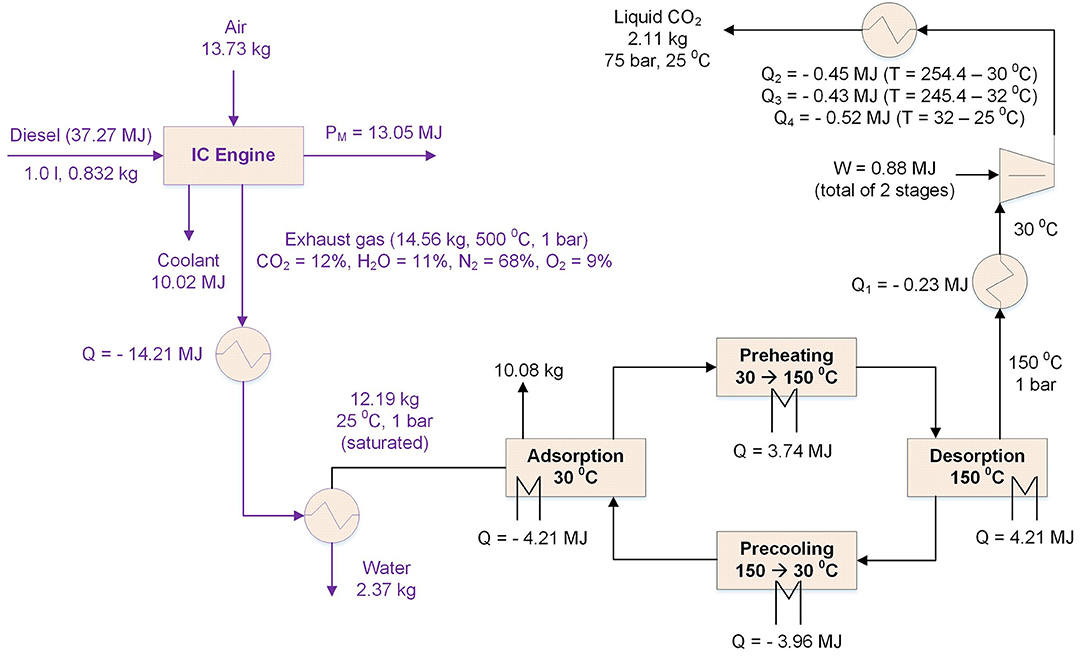
[deleted]
It will never be cheaper than avoiding co2 in the first place (or at least catching at the source) so while it might have applications, it seems impractical for making significant progress towards saving the planet at this point.
What do you mean by "saving the planet"? Do you mean keeping the population numbers and saving the western way of life at the same time? What would make significant progress towards that goal?
I'm planting trees whenever I can, but on a planetary scale I think this is going to be fixed only by manufacturing zero emission transport, and negative emission machines, all of which will increase stock prices of industrial companies with factories.
Fusion will be the ultimate solution to all problems if it happens – we'll have enough effectively free energy to scrub the atmosphere to our exact specifications with this or any other halfway efficient method, and enough cheap energy to flood all land including deserts with desalinated water.
We engineered our way into this problem, I don't think we can kumbayah our way out of it.