Science of Aging Is Focus of New Bakar Research Institute(ucsf.edu)
ucsf.edu
Science of Aging Is Focus of New Bakar Research Institute
https://www.ucsf.edu/news/2021/02/419781/science-aging-focus-new-bakar-research-institute
41 comments
The article is dull, but the fact that the "ball" of aging science is finally starting to roll is interesting and very welcome to me.
We spent too much time thinking that aging is something inevitable, unaddressable and thus not worth studying too much.
Now that many scientists are ready to dive into the topic, some low-hanging fruit is likely to be picked within a decade or so.
We spent too much time thinking that aging is something inevitable, unaddressable and thus not worth studying too much.
Now that many scientists are ready to dive into the topic, some low-hanging fruit is likely to be picked within a decade or so.
>The article is dull, but the fact that the "ball" of aging science is finally starting to roll is interesting and very welcome to me.
I'm also quite keenly interested in not dying, and I'm also sick of people talking about "a cure for cancer" being possible but "a cure for aging" somehow not, let alone a healthy discussion of researching mitigation for aging to keep people alive long enough to receive the cure.
But, I feel like that - the ideology, even if I quite like and agree with said ideology - is the only thing this article has going for it. The article's link could 404 and nothing of value would be lost, as long as nobody touched the title.
I'm also quite keenly interested in not dying, and I'm also sick of people talking about "a cure for cancer" being possible but "a cure for aging" somehow not, let alone a healthy discussion of researching mitigation for aging to keep people alive long enough to receive the cure.
But, I feel like that - the ideology, even if I quite like and agree with said ideology - is the only thing this article has going for it. The article's link could 404 and nothing of value would be lost, as long as nobody touched the title.
> I'm also sick of people talking about "a cure for cancer" being possible but "a cure for aging" somehow not
The scope of these two things is wildly different. To cure aging, we would have to solve seven* or so problems of a similar scope to curing cancer - and one of those problems is, in fact, curing cancer.
* According to the sens foundation:
http://www.longlonglife.org/en/transhumanism-longevity/aging...
The scope of these two things is wildly different. To cure aging, we would have to solve seven* or so problems of a similar scope to curing cancer - and one of those problems is, in fact, curing cancer.
* According to the sens foundation:
http://www.longlonglife.org/en/transhumanism-longevity/aging...
I am not sure if "curing cancer" is the best description of the problem to solve.
A possible answer is "keep the immune system in its youthful state and it will take care of any emerging cancer cells and terminate them with extreme prejudice without you even noticing". Natural killer cells are basically unstoppable once they home in on a target.
E.g. prevention, not a cure.
A possible answer is "keep the immune system in its youthful state and it will take care of any emerging cancer cells and terminate them with extreme prejudice without you even noticing". Natural killer cells are basically unstoppable once they home in on a target.
E.g. prevention, not a cure.
Keeping the immune system working is a viable strategy provided your immune system works properly in the first place. In today's world, that's a big if; autoimmune disorders are surprisingly common.
So with that in mind, another problem that needs solving is "curing autoimmune disorders", a thing about which we currently know sweet fuck all.
I'm sure we'll run into other totally huge, near-intractable problems that we need to solve before curing aging. So if you're in your 40s like me, it's still prudent not to get your hopes too high for a nice long extended life, let alone remaining "forever young".
So with that in mind, another problem that needs solving is "curing autoimmune disorders", a thing about which we currently know sweet fuck all.
I'm sure we'll run into other totally huge, near-intractable problems that we need to solve before curing aging. So if you're in your 40s like me, it's still prudent not to get your hopes too high for a nice long extended life, let alone remaining "forever young".
>A possible answer is "keep the immune system in its youthful state and it will take care of any emerging cancer cells and terminate them with extreme prejudice without you even noticing". Natural killer cells are basically unstoppable once they home in on a target.
So does anyone know what actually happens if the body's neuro-endocrine-immune systems are too damn smart? What is an overly well-regulated body like? Is that medically good or bad?
So does anyone know what actually happens if the body's neuro-endocrine-immune systems are too damn smart? What is an overly well-regulated body like? Is that medically good or bad?
People of every age still get cancer. It’s unclear how much youth is really helping vs cancer simply requiring multiple mutations which become more likely with age.
Not in equal amounts - cancer is highly correlated with senescence.
The requiring multiple mutations bit is correlated with senescence. For the simplest model assume you need 2 mutations each at 1 in 1 billion odds from 1 of 30,000,000,000,000 cells in the human body.
After 1 year, there are 60,000 cells 1 mutation away from cancer. Year N there are N * 60,000 cells. Such a simple model results in linear increases in cancer risks over time without any other effects from age.
More complex models can get very close to the observed annual risk of cancer adjusted for age etc. The question is how much this is just over fitting the data.
After 1 year, there are 60,000 cells 1 mutation away from cancer. Year N there are N * 60,000 cells. Such a simple model results in linear increases in cancer risks over time without any other effects from age.
More complex models can get very close to the observed annual risk of cancer adjusted for age etc. The question is how much this is just over fitting the data.
In a healthy organism, damaged cells may be forced to kill themselves (apoptosis) before they do any harm, or killed outright by NK cells during their surveillance patrols.
There are corrective mechanisms that animals including humans use to control cancer; even if a cell mutates into something dangerous, it does not mean that a malignant tumor follows.
Mice, who have much fewer cells than humans, get cancer much earlier than we do. Elephants and whales, whose cell count exceeds that of humans by several orders of magnitude, seem to be actually less prone to cancer than humans are.
This is all about the ability of the body to squash individual cancerous cells or smallish tumors into nonexistence before they have a chance to take hold. As long as this self-defensive mechanism works, everything is fine.
There are corrective mechanisms that animals including humans use to control cancer; even if a cell mutates into something dangerous, it does not mean that a malignant tumor follows.
Mice, who have much fewer cells than humans, get cancer much earlier than we do. Elephants and whales, whose cell count exceeds that of humans by several orders of magnitude, seem to be actually less prone to cancer than humans are.
This is all about the ability of the body to squash individual cancerous cells or smallish tumors into nonexistence before they have a chance to take hold. As long as this self-defensive mechanism works, everything is fine.
Detecting errors requires cellular machinery to detect them, which are themselves susceptible to mutation. Conceptually, disabling the checksum doesn’t directly cause cancer, you need more mutations after that point.
Thus the multiple mutation model. That said, it’s not like these risks are identical in all species, just that their related. A nematode can spend less energy lowering cancer risks than a blue whale.
Thus the multiple mutation model. That said, it’s not like these risks are identical in all species, just that their related. A nematode can spend less energy lowering cancer risks than a blue whale.
> We spent too much time thinking that aging is something inevitable, unaddressable and thus not worth studying too much.
We have so many more important and urgent problems to take care of. Not even technical ones, but societal ones. Let's not even talk about the fact that any meaningful advances in the field would benefit the top 0.0001% of the world and would never trickle down to the rest of us.
We have so many more important and urgent problems to take care of. Not even technical ones, but societal ones. Let's not even talk about the fact that any meaningful advances in the field would benefit the top 0.0001% of the world and would never trickle down to the rest of us.
The vast majority of healthcare spending and disease burden is made worse by aging. In cases of diseases like cancer, several orders of magnitude worse.
If we could stretch people's healthspan to 90 or even 110, the resulting society would be much happier and could spend more money on the other important urgent problems.
> Let's not even talk about the fact that any meaningful advances in the field would benefit the top 0.0001% of the world and would never trickle down to the rest of us.
You are literally writing this on a device that 50 years ago would cost millions. It somehow trickled down to you and me.
I fail to see why something that would be almost universally demanded could stay outside of common reach forever.
Consider that just the cost of DNA sequencing, arguably an interesting and important biotech, went down six orders of magnitude within 20 years. It is literally 1000000x cheaper than in the mid-90s.
If we could stretch people's healthspan to 90 or even 110, the resulting society would be much happier and could spend more money on the other important urgent problems.
> Let's not even talk about the fact that any meaningful advances in the field would benefit the top 0.0001% of the world and would never trickle down to the rest of us.
You are literally writing this on a device that 50 years ago would cost millions. It somehow trickled down to you and me.
I fail to see why something that would be almost universally demanded could stay outside of common reach forever.
Consider that just the cost of DNA sequencing, arguably an interesting and important biotech, went down six orders of magnitude within 20 years. It is literally 1000000x cheaper than in the mid-90s.
> You are literally writing this on a device that 50 years ago would cost millions. It somehow trickled down to you and me.
Not to disagree with your point, but the performance of Neural Engine in a new iPhone would cost about $200 billion in inflation adjusted 2013 dollars of implement at the prices of even a 37 year old 1984 Cray X-MP.
Not to disagree with your point, but the performance of Neural Engine in a new iPhone would cost about $200 billion in inflation adjusted 2013 dollars of implement at the prices of even a 37 year old 1984 Cray X-MP.
> I fail to see why something that would be almost universally demanded could stay outside of common reach forever.
You fail to see how the elite would keep advances letting them live longer/healthier for them ? You probably don't have a very fruitful imagination then. What about a 250 years old Jeff Bezos ? 250 years old Putin ? The only limit to these people is literally ageing and being mortal
Do you think people who aren't able to live decently and afford food at every meal in 2021's America would be offered a "longer and healthier life" pill ? Do you think people dying in 2021's America of diabetes because they can't afford insulin would be offered a "longer and healthier life" pill ?
> You are literally writing this on a device that 50 years ago would cost millions. It somehow trickled down to you and me.
If you fail to see the moral difference between typing on a computer and "curing ageing"... I don't know what to say to be honest
You fail to see how the elite would keep advances letting them live longer/healthier for them ? You probably don't have a very fruitful imagination then. What about a 250 years old Jeff Bezos ? 250 years old Putin ? The only limit to these people is literally ageing and being mortal
Do you think people who aren't able to live decently and afford food at every meal in 2021's America would be offered a "longer and healthier life" pill ? Do you think people dying in 2021's America of diabetes because they can't afford insulin would be offered a "longer and healthier life" pill ?
> You are literally writing this on a device that 50 years ago would cost millions. It somehow trickled down to you and me.
If you fail to see the moral difference between typing on a computer and "curing ageing"... I don't know what to say to be honest
> If you fail to see the moral difference between typing on a computer and "curing ageing"... I don't know what to say to be honest
GP's not alone, maybe you're not too, but the point is, GP's point of view is not a snowflake. This person sounds mentally able, keeps her tone gentle, and make sensible arguments. Maybe it could be a wise move for you to reassess a logic you seems to adhere to a bit too much, so that there could be room for discussion? Because, liking it or not, anti-ageing medication and aging prevention is already here.
GP's not alone, maybe you're not too, but the point is, GP's point of view is not a snowflake. This person sounds mentally able, keeps her tone gentle, and make sensible arguments. Maybe it could be a wise move for you to reassess a logic you seems to adhere to a bit too much, so that there could be room for discussion? Because, liking it or not, anti-ageing medication and aging prevention is already here.
I have enough imagination to be a professional writer. You still do not convince me. Life extension is desired by too many people to be kept in billionaire's circle forever, or even for too long. As soon as the details of any procedure leak out, you can bet that someone in Brazil or India will set up a clinic to run the treatments for reasonable price.
> What about a 250 years old Jeff Bezos ? 250 years old Putin ? The only limit to these people is literally ageing and being mortal
I can imagine that very well and frankly, this seems to me the only downside to the whole process. Yes, this is troubling.
> Do you think people who aren't able to live decently and afford food at every meal in 2021's America would be offered a "longer and healthier life" pill ? Do you think people dying in 2021's America of diabetes because they can't afford insulin would be offered a "longer and healthier life" pill ?
Not everywhere is America, in fact, 95 per cent of the world is not America. Single payer systems might do just the thing you consider absurd.
How Americans respond to that is up to them. Also, looking at Americans in general, their general problem is not lack of food, but excess thereof. Most American health problems are caused by overeating.
> If you fail to see the moral difference between typing on a computer and "curing ageing"...
This is Hacker news, not Preacher news, and I haven't addressed the morality of the intervention at all. You are shifting the goalposts, it is fairly clear that I addressed your "trickle down" argument in my rebuttal. Technologies that are expensive in the beginning tend to become cheaper over time and "trickle down" to the less wealthy precisely in the way that you denied. Look around the very room you are sitting in, most things there would be way less affordable to your grandfather.
> What about a 250 years old Jeff Bezos ? 250 years old Putin ? The only limit to these people is literally ageing and being mortal
I can imagine that very well and frankly, this seems to me the only downside to the whole process. Yes, this is troubling.
> Do you think people who aren't able to live decently and afford food at every meal in 2021's America would be offered a "longer and healthier life" pill ? Do you think people dying in 2021's America of diabetes because they can't afford insulin would be offered a "longer and healthier life" pill ?
Not everywhere is America, in fact, 95 per cent of the world is not America. Single payer systems might do just the thing you consider absurd.
How Americans respond to that is up to them. Also, looking at Americans in general, their general problem is not lack of food, but excess thereof. Most American health problems are caused by overeating.
> If you fail to see the moral difference between typing on a computer and "curing ageing"...
This is Hacker news, not Preacher news, and I haven't addressed the morality of the intervention at all. You are shifting the goalposts, it is fairly clear that I addressed your "trickle down" argument in my rebuttal. Technologies that are expensive in the beginning tend to become cheaper over time and "trickle down" to the less wealthy precisely in the way that you denied. Look around the very room you are sitting in, most things there would be way less affordable to your grandfather.
> This is Hacker news, not Preacher news
?
> and I haven't addressed the morality of the intervention at all.
This is the root cause of all the troubles we're facing with tech today. Spend everything on the tech, nothing on the morality of it. Break things and think about the consequences when it's too late. I don't believe we should, or even can, discuss these separately, especially for such matters.
"Science sans conscience n'est que ruine de l'âme." Rabelais
?
> and I haven't addressed the morality of the intervention at all.
This is the root cause of all the troubles we're facing with tech today. Spend everything on the tech, nothing on the morality of it. Break things and think about the consequences when it's too late. I don't believe we should, or even can, discuss these separately, especially for such matters.
"Science sans conscience n'est que ruine de l'âme." Rabelais
Aside from that, the whole purpose of medicine is to prevent death and foster health/vitality . It’s literally there for that purpose specifically. Why research medicine at all if we don’t want to actually prevent death?
> It’s literally there for that purpose specifically.
Theoretically. It's also a massive money printing industry full of for profit companies with little to no scruples. The problem, again, isn't "What are the consequences of something in a perfect world, with morally perfect people who only want the best for humanity?", the problem is that every systems are corruptible and most are corrupted, playing god won't do any good in such a framework
> Why research medicine at all if we don’t want to actually prevent death?
Because it makes tons of money. That's why most companies prefer researching and selling symptoms relievers instead of cures. Spend any amount of time to research about the pharma industry and you'll quickly understand that it's not so much about "preventing death" and "foster health/vitality"
Theoretically. It's also a massive money printing industry full of for profit companies with little to no scruples. The problem, again, isn't "What are the consequences of something in a perfect world, with morally perfect people who only want the best for humanity?", the problem is that every systems are corruptible and most are corrupted, playing god won't do any good in such a framework
> Why research medicine at all if we don’t want to actually prevent death?
Because it makes tons of money. That's why most companies prefer researching and selling symptoms relievers instead of cures. Spend any amount of time to research about the pharma industry and you'll quickly understand that it's not so much about "preventing death" and "foster health/vitality"
The point of capitalism is to align the interests of those with no scruples with the interests of everyone else.
How well it does this and what else might do better is a matter for frequent — and loud — debate, but it is certainly better aligned than the feudal setup which preceded it.
Anyway, here is a link to some open-sourced generically engineered spider-silk producing yeast, to demonstrate that advanced cutting-edge biotech is getting to be as accessible as computing was getting in the 80s: https://youtu.be/2hf9yN-oBV4
How well it does this and what else might do better is a matter for frequent — and loud — debate, but it is certainly better aligned than the feudal setup which preceded it.
Anyway, here is a link to some open-sourced generically engineered spider-silk producing yeast, to demonstrate that advanced cutting-edge biotech is getting to be as accessible as computing was getting in the 80s: https://youtu.be/2hf9yN-oBV4
Well maybe people should stop letting the minority push them around and pretending like there’s nothing they can do. Money isn’t even real it’s an idea we use to represent work and debt. It people like Jeff Bezos and Elon Musk are glitches in that system economics nothing more. Putin is another story because he has sole control of a powerful military
> We have so many more important and urgent problems to take care of.
Fortunately, with 7.8 billion people alive today, we have some capacity for multitasking.
Fortunately, with 7.8 billion people alive today, we have some capacity for multitasking.
And with 7.8 billion people alive today, if someone does cure aging, we'll have a new problem: who gets to live forever? It can't be everyone, unless no more children are born.
There might be a huge gap between finding out "how to live to be 120" and "how to live forever". So far, we can only learn about human aging from people who are at most like 117 years old, because there is no one alive now who would be older than that.
So, there is a chance of doing the first steps and finding out that there are other aging-related problems beyond the age of 110-120. Some of them may prove to be unsurmountable.
That would probably mean "just" a much longer generation span. People used to have their first kids at 17, in fact they still do in places like Niger or Chad. But in the rich part of the world, length of a generation is now around 30. I can see it being 60 if people live to be 120.
So, there is a chance of doing the first steps and finding out that there are other aging-related problems beyond the age of 110-120. Some of them may prove to be unsurmountable.
That would probably mean "just" a much longer generation span. People used to have their first kids at 17, in fact they still do in places like Niger or Chad. But in the rich part of the world, length of a generation is now around 30. I can see it being 60 if people live to be 120.
Probably have to leave the planet.
the solar system is pretty big. The galaxy is incredibly large, the universe...
the solar system is pretty big. The galaxy is incredibly large, the universe...
That isn’t as helpful as it might seem. If each person has an average of 2.4 offspring, and reproduction still requires two people, and the generation gap is an average of (say) 50 years, and if the average person has a mass of 70 kg; then after 27,000 years the biomass of humanity exceeds the mass of the universe, and after about 18,000 years you need FTL to reach that mass.
That said, this remains true even if we don’t solve ageing. Exponentials grow faster than polynomials like “volume”.
That said, this remains true even if we don’t solve ageing. Exponentials grow faster than polynomials like “volume”.
It’s already at 1.71 in the United States.
If everyone is immortal but only has 1 child per couple, then the population will eventually cap out at double the current population.
More generally, as long as the average number of children per couple is less than two, then the population will eventually cap out at a finite number.
Not totally true. There's a whole suite of social problems stemming from having a large elderly population in poor health. Insufficient pensions, how to pay for healthcare, staffing in caring professions. If 'studying the science of ageing' translates into 'keep older people healthier for longer', then those problems may be mitigated somewhat.
Also, scientific advances can make treaments cheaper. E.g. modifying bacteria to produce insulin is cheaper than extracting it from pigs.
Also, scientific advances can make treaments cheaper. E.g. modifying bacteria to produce insulin is cheaper than extracting it from pigs.
> 'keep older people healthier for longer', then those problems may be mitigated somewhat.
Do you want to work until your very last breath ? Because this is where we're heading. This is exactly the kind of problem I'm concerned about when people start talking about "curing age".
https://www.liveinhomecare.com/elderly-in-japan-are-wearing-...
> Also, scientific advances can make treaments cheaper. E.g. modifying bacteria to produce insulin is cheaper than extracting it from pigs.
Yes, but again, scientific advances without societal advances = doom. Look at the price of insulin in the US, it's the living proof health is much more complex than "X = Y, hence Z will be cheaper and everyone will live happily ever after"
https://ichef.bbci.co.uk/news/976/cpsprodpb/1431F/production...
Do you want to work until your very last breath ? Because this is where we're heading. This is exactly the kind of problem I'm concerned about when people start talking about "curing age".
https://www.liveinhomecare.com/elderly-in-japan-are-wearing-...
> Also, scientific advances can make treaments cheaper. E.g. modifying bacteria to produce insulin is cheaper than extracting it from pigs.
Yes, but again, scientific advances without societal advances = doom. Look at the price of insulin in the US, it's the living proof health is much more complex than "X = Y, hence Z will be cheaper and everyone will live happily ever after"
https://ichef.bbci.co.uk/news/976/cpsprodpb/1431F/production...
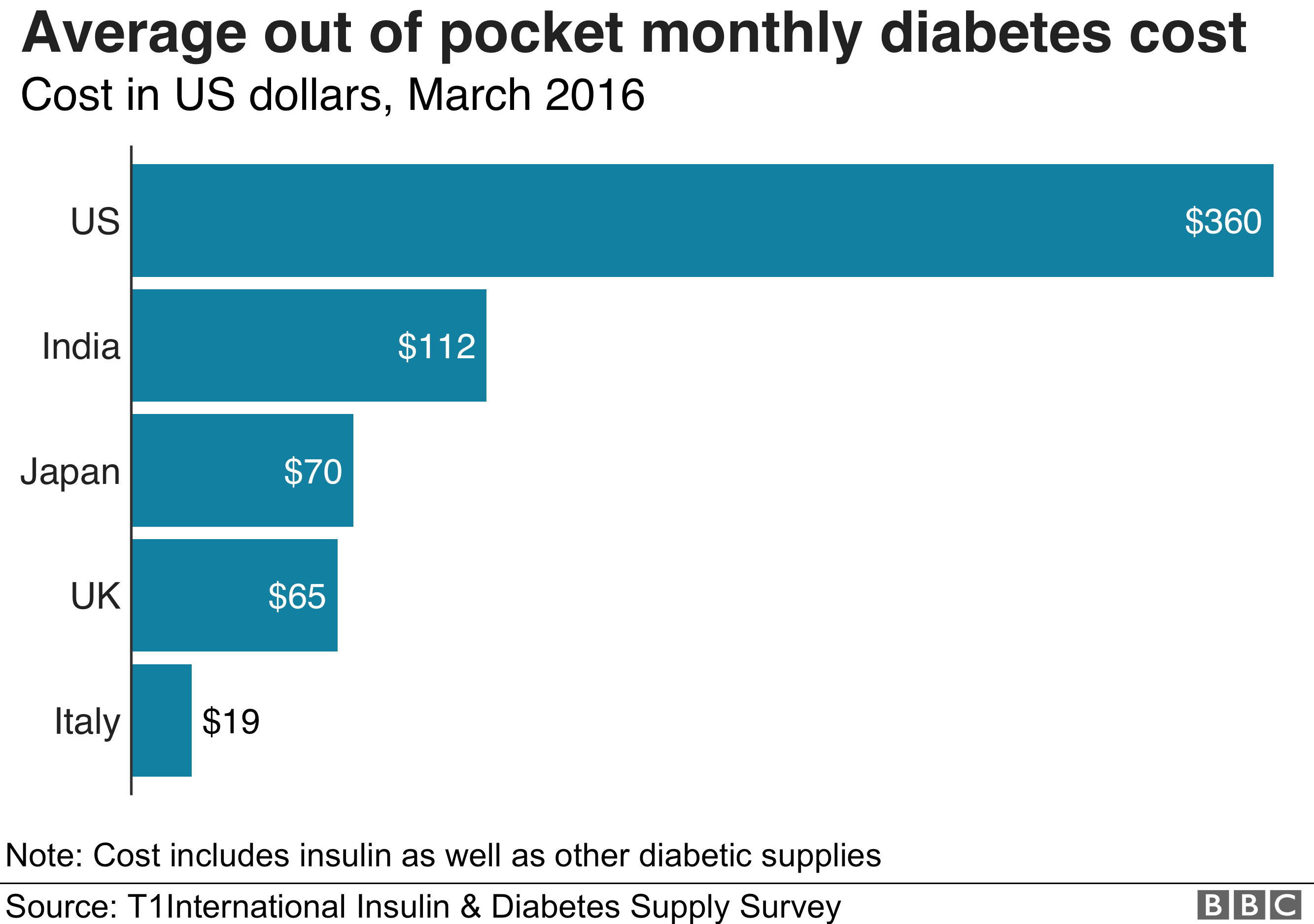
I wouldn’t mind working until the end if it was on something interesting.
How about we all end up as scientists who work on discovery?
How about we all end up as scientists who work on discovery?
Let's keep it real. With automation we should already work less and retire earlier, which was promised by 70s/80s politicians, it's not the case, at all. Working hours and retirement age are going up virtually everywhere, making us live longer won't change any of that in a good way
True, but an ageing cure is also likely to cause a lot of problem around overpopulation.
“For aging research, the Bay Area is one of the best places in the world to be,”
I've been laughing about this fact for years. Give a guy a billion dollars and all of a sudden he wants to live forever.
I've been laughing about this fact for years. Give a guy a billion dollars and all of a sudden he wants to live forever.
[deleted]
> Bakar Aging Research Institute (BARI) members will be drawn from the UCSF Memory and Aging Center, the UCSF Hillblom Center for the Biology of Aging, the Department of Medicine’s Division of Geriatrics, and the UCSF Institute for Health and Aging
This is a great research subject and all but how did UCSF end up with 4 (now 5) institutes related aging in the first place and why isn’t this entirely replacing them?
Is this the excessive administrative bureaucracy in academia I keep hearing about?
This is a great research subject and all but how did UCSF end up with 4 (now 5) institutes related aging in the first place and why isn’t this entirely replacing them?
Is this the excessive administrative bureaucracy in academia I keep hearing about?
I could comb through the article sentence by sentence maybe, looking for something worth discussing, but you could do that with any article.