Georgia’s big new nuclear reactors could be the last built in the US(canarymedia.com)
canarymedia.com
Georgia’s big new nuclear reactors could be the last built in the US
https://www.canarymedia.com/articles/nuclear/georgias-big-new-nuclear-reactors-could-be-the-last-built-in-the-us
228 comments
> There’s a statistic that floats around the internet claiming more radioactivity harm from coal power than from nuclear power, based on the principle that coal power is essentially aerosolizing tons of particles with ever-so-slightly-higher-than-background radioactivity and there’s a lot more coal than nuclear.
Fun fact, it would be a very easy engineering lift to convert coal plants to nuclear (you already have the steam turbines built and ready to go!). However, the moment they switch from a coal plant to a nuclear plant, the existing radioactivity left over from the coal burning operation would immediately get a nuclear plant shut down.
Fun fact, it would be a very easy engineering lift to convert coal plants to nuclear (you already have the steam turbines built and ready to go!). However, the moment they switch from a coal plant to a nuclear plant, the existing radioactivity left over from the coal burning operation would immediately get a nuclear plant shut down.
> One could probably derive a similar statistic for how much harm nuclear over-regulation has caused.
That reminds me of bicycle helmet regulation, which can deter exercising.
the paper that tries to figure out if helmet laws might deter people from exercising, which could inadvertently increase mortality:
https://nacto.org/wp-content/uploads/2015/07/2012_de-Jong_He...
That reminds me of bicycle helmet regulation, which can deter exercising.
the paper that tries to figure out if helmet laws might deter people from exercising, which could inadvertently increase mortality:
https://nacto.org/wp-content/uploads/2015/07/2012_de-Jong_He...
I read the abstract and first part of the introduction. It seems that it is accepted as a foregone conclusion that helmet laws reduce cycling. Is that true? If so, is it because cyclists are less excited about cycling or over worry of the dangers because someone said it's dangerous enough that they need a helmet?
I can't imagine making policy (such as removing helmet laws) due to such flighty sentiments.
As a motorcyclist, bicyclists remain a mystery to me in their approach to safety.
I can't imagine making policy (such as removing helmet laws) due to such flighty sentiments.
As a motorcyclist, bicyclists remain a mystery to me in their approach to safety.
Biking with a helmet can be less convenient.
It’s usually not easy to lock up the helmet along with the bike so you’re left holding the helmet wherever you’re going. Bikeshares usually don’t have helmets and you have to bring your own.
These problems have fixes, but helmet laws generally don’t address them and can just make it easier to drive instead.
It’s usually not easy to lock up the helmet along with the bike so you’re left holding the helmet wherever you’re going. Bikeshares usually don’t have helmets and you have to bring your own.
These problems have fixes, but helmet laws generally don’t address them and can just make it easier to drive instead.
Most people in southern California just hang the helmet on their bike and walk away. There's not a huge black market for stolen bike helmets.
I feel like brain injury or death is also pretty inconvenient.
Many motorcyclists employ helmet locks. I used to use one quite regularly. Why not do the same on a bicycle? In both cases, a thief could easily steal the helmet but only by cutting the straps, but that renders the helmets useless.
Many motorcyclists employ helmet locks. I used to use one quite regularly. Why not do the same on a bicycle? In both cases, a thief could easily steal the helmet but only by cutting the straps, but that renders the helmets useless.
In Germany I have very, very rarely seen a helmet lock. Most of the times motorcyclists put their helmet over their right side mirror and don't walk away too far.
Someone can probably make a similar argument for motorcycle helmets and motorcycle safety. If we didn't pay attention to the motorcycle safety, perhaps many more people would ride motorcycles instead of cars and produce less carbon. You could count the expected death from climate change and make an argument that they are higher than the motorcycle deaths.
I actually don't know how this would turn out, but the common factor is both rely on sketchy models of human behavior and future harm.
It is relatively easy to cherry pick some numbers that it will in your equations to make the result you want. Maybe they're right, maybe they are wrong, but it would take a lot of work with little reward for someone to prove your analysis is bad
I actually don't know how this would turn out, but the common factor is both rely on sketchy models of human behavior and future harm.
It is relatively easy to cherry pick some numbers that it will in your equations to make the result you want. Maybe they're right, maybe they are wrong, but it would take a lot of work with little reward for someone to prove your analysis is bad
It hurts saying this, but motorcycles are actually far worse than cars when it comes to emissions. Despite having MPG (miles per gallon) ranging from 30-100 MPG compared to the more typical car ranges of 20-40 MPG, motorcycles emit far more emissions. This is mainly because adding emission control equipment on motorcycles is expensive, heavy, and takes a lot of room. In fact, there are several motorcycles in recent times that are no longer sold in the U.S. and E.U. because of the E.U.'s stringent motorcycle emissions regulations. When manufacturers stop selling in the E.U., they normally stop selling in the U.S. as well.
Seems strictly impossible on the basis of carbon dioxide. I assume you mean other emissions like particulate?
That's curious, seeing how motorcyclists are much more frequently seriously injured, and more often as the result of their own actions. I'm not sure there is much to emulate here.
I'm thinking in a city environment. Motorcyclists ride in much more varied environments at much higher speeds with the other vehicles at higher speeds. Motorcycling is very dangerous, period.
But in city riding, motorcycles, cars, and bicycles are effectively bound to the same speed limits, such as between 0-45mph. Obviously, bicycles will be slower at the top end, but for the most part in congested city riding, all three vehicles will be within some range of each other.
In my experience and observations, the common motorcyclist will still be far better equipped in safety equipment, including helmets, gloves, jackets, boots, etc. despite having superior protection from the motorcycle itself compared to a bicycle, breaks, and acceleration. And also in my experience, bicyclists are much more willing to break traffic laws in city environments.
Maybe the comparison isn't appropriate or too heavily biased with my own safety approaches and experience, but in my experience with serious motorcyclists, anything less than a full-face helmet is viewed as complete folly. The highest percentage of hit in a motorcycle crash is in the front. (There is a famous safety graphic that shows the percentages of where on the helmet a crash occurs.)
If I decided to start riding bicycles again, on the street or elsewhere, a helmet will absolutely be used, and I would even consider going further than the typical bicycle helmet. My real point is that I find it extremely strange that some bicyclists would choose simply not to ride at all just because a helmet is required.
> and more often as the result of their own actions
That is not a blanket truth.
But in city riding, motorcycles, cars, and bicycles are effectively bound to the same speed limits, such as between 0-45mph. Obviously, bicycles will be slower at the top end, but for the most part in congested city riding, all three vehicles will be within some range of each other.
In my experience and observations, the common motorcyclist will still be far better equipped in safety equipment, including helmets, gloves, jackets, boots, etc. despite having superior protection from the motorcycle itself compared to a bicycle, breaks, and acceleration. And also in my experience, bicyclists are much more willing to break traffic laws in city environments.
Maybe the comparison isn't appropriate or too heavily biased with my own safety approaches and experience, but in my experience with serious motorcyclists, anything less than a full-face helmet is viewed as complete folly. The highest percentage of hit in a motorcycle crash is in the front. (There is a famous safety graphic that shows the percentages of where on the helmet a crash occurs.)
If I decided to start riding bicycles again, on the street or elsewhere, a helmet will absolutely be used, and I would even consider going further than the typical bicycle helmet. My real point is that I find it extremely strange that some bicyclists would choose simply not to ride at all just because a helmet is required.
> and more often as the result of their own actions
That is not a blanket truth.
> My real point is that I find it extremely strange that some bicyclists would choose simply not to ride at all just because a helmet is required.
I certainly wouldn't ride a bike if a helmet would be mandatory. Or I would just ignore the law.
I can't see something like this flying in the Netherlands where I'm from. Most people will feel the same as me. It's not just the inconvenience, it's also a matter of pride.
But in the Netherlands biking is very safe. Bike lanes are everywhere and have separate crossings. Motorists are always blamed even if they didn't cause an accident with a bike (because a cyclist won't have insurance) so I think it's safe enough.
I've fallen many times in single-vehicle accidents due to slippery ice or wet leaves and my arm was always under my head due to my reflexes.
I understand that cycling is not as safe in the US but perhaps making it so would be a better priority.
I certainly wouldn't ride a bike if a helmet would be mandatory. Or I would just ignore the law.
I can't see something like this flying in the Netherlands where I'm from. Most people will feel the same as me. It's not just the inconvenience, it's also a matter of pride.
But in the Netherlands biking is very safe. Bike lanes are everywhere and have separate crossings. Motorists are always blamed even if they didn't cause an accident with a bike (because a cyclist won't have insurance) so I think it's safe enough.
I've fallen many times in single-vehicle accidents due to slippery ice or wet leaves and my arm was always under my head due to my reflexes.
I understand that cycling is not as safe in the US but perhaps making it so would be a better priority.
The majority of head injuries cycling are to the side, from falling at low speed. Certainly if someone is going at 30mph or above they should be wearing a helmet. But only a minority of cyclists will ever get anywhere near that speed.
> I find it extremely strange that some bicyclists would choose simply not to ride at all just because a helmet is required.
It comes down to convenience. Driving has to contend with congestion and parking, public transport with schedules and stops, cycling with bad drivers and maybe weather. Adding one more inconvenience can swing the balance towards another transport mode.
> I find it extremely strange that some bicyclists would choose simply not to ride at all just because a helmet is required.
It comes down to convenience. Driving has to contend with congestion and parking, public transport with schedules and stops, cycling with bad drivers and maybe weather. Adding one more inconvenience can swing the balance towards another transport mode.
I thought it was just logistics: carrying a helmet around is inconvenient, and there is no way to secure it to your bike at lock up (and if not secured, someone will probably snatch it even if just for fun). Don’t motorcycles have a compartment for the helmet? Something like that wouldn’t work for a bike, and even just a thin lockable wire to secure it isn’t really workable.
Although there's a helmet similarity, I think motorcyclists probably have little health upside to riding more often, where bicyclists exercise and stave off diseases of a sedentary lifestyle.
(that said, depending on your throttle hand riding a motocross motorcycle seems like it could be just as cardio-intensive as a bicycle)
(that said, depending on your throttle hand riding a motocross motorcycle seems like it could be just as cardio-intensive as a bicycle)
It's just as well that you aren't making policy, then. People's perceptions make a huge difference to behavior, whether they're well founded or not.
Why use nuclear energy when renewables do it without any radiation or 3rd party hazard for 1/5th the cost? That sounds awfully close to a solution looking for a problem.
https://www.lazard.com/perspective/levelized-cost-of-energy-...
https://www.lazard.com/perspective/levelized-cost-of-energy-...
Since the person you're responding to is talking about the legacy of nuclear protests, it's worth noting that all the time we spent between Chernobyl and today, when renewables are finally starting to become a viable alternative, we could have had cheap, clean energy from nuclear. That absolutely crucial forty year period, when we basically missed our chance to arrest global warming below 2 degrees, we slowed or halted building more, newer, better plants because of protests (and the second order effects of protests, like increased costs due to regulation, and loss of expertise, and so on).
And now we're saying "well heck, gosh, maybe we don't even need nuclear power!" and to me, this sounds like an extension of the same protests, just in another form. But maybe I'm wrong. My view is: why not build both? We can find a use for the extra energy, I'm sure.
At the very least, it would be nice for somebody to say "yeah, we were trying to help the earth by fighting every effort to build nuclear, but we just ended up causing more coal power plants to be built, and now we're all in a lot of trouble, and it's at least partly because of that."
And now we're saying "well heck, gosh, maybe we don't even need nuclear power!" and to me, this sounds like an extension of the same protests, just in another form. But maybe I'm wrong. My view is: why not build both? We can find a use for the extra energy, I'm sure.
At the very least, it would be nice for somebody to say "yeah, we were trying to help the earth by fighting every effort to build nuclear, but we just ended up causing more coal power plants to be built, and now we're all in a lot of trouble, and it's at least partly because of that."
If you have time machine, go back twenty five years, make Al Gore president, and have him build tons of nuclear power plants. Or go forward decades, grab the plans for fusion power and bring them back.
We do need all the energy which is why building something expensive is bad idea. When could build multiple times as much power with renewables. If you want 100§ nuclear, then we can build 500§ wind and solar.
We do need all the energy which is why building something expensive is bad idea. When could build multiple times as much power with renewables. If you want 100§ nuclear, then we can build 500§ wind and solar.
I would like to see country try go the full route of building 500§ wind and solar.
Twenty five years ago we did have a country in EU that started this route. Denmark reached 100% capacity 10 years ago. At that point the interest to build more wind and solar drastically dropped. Imports (which are around 1/3 to 1/2 of consumption) of nuclear and hydro energy is critical to keep their gird operational, and their investments into wind and solar would not function without those imports.
We also have countries like France that relied on their nuclear power plants the last 25 years and are now in dire need to modernize their plants. We have Sweden which heavily relied on their hydro power plants and are now in dire need to replace and repair them unless multiple species end up extinct. We got Germany and others that depended on cheap fossil fuel, primarily with the plan to upgrade into green hydrogen some time in the future.
None of those strategies ended up being a winner and everyone is rushing for new strategies. In 25 years from now we will see which bets won, if any. Maybe it will be that undersea cable from north Africa. We don't know, through I expect all of them to be more expensive than the cheapest option.
Twenty five years ago we did have a country in EU that started this route. Denmark reached 100% capacity 10 years ago. At that point the interest to build more wind and solar drastically dropped. Imports (which are around 1/3 to 1/2 of consumption) of nuclear and hydro energy is critical to keep their gird operational, and their investments into wind and solar would not function without those imports.
We also have countries like France that relied on their nuclear power plants the last 25 years and are now in dire need to modernize their plants. We have Sweden which heavily relied on their hydro power plants and are now in dire need to replace and repair them unless multiple species end up extinct. We got Germany and others that depended on cheap fossil fuel, primarily with the plan to upgrade into green hydrogen some time in the future.
None of those strategies ended up being a winner and everyone is rushing for new strategies. In 25 years from now we will see which bets won, if any. Maybe it will be that undersea cable from north Africa. We don't know, through I expect all of them to be more expensive than the cheapest option.
There is no one-size-fits-all strategy. Energy production is a regional problem with regional solutions. You can't copy a strategy from somewhere else and expect it to work under different conditions without major changes.
In the Nordic countries, clean electricity is essentially a solved problem. The current mix of wind, hydro, and nuclear works well enough for now. Of course, the target is always moving. You can always do something better, and sometimes old solutions become obsolete. But right now, electricity generation is not a pressing issue. Heating, industrial processes, and transportation are more acute problems. Decarbonization of transportation is moving particularly slowly.
In the Nordic countries, clean electricity is essentially a solved problem. The current mix of wind, hydro, and nuclear works well enough for now. Of course, the target is always moving. You can always do something better, and sometimes old solutions become obsolete. But right now, electricity generation is not a pressing issue. Heating, industrial processes, and transportation are more acute problems. Decarbonization of transportation is moving particularly slowly.
But you need 5x as much wind and solar because you will have to store it in the form of hydrogen for 50-80% loss in round-trip back to electricity
There will never be enough batteries and hydro storage in the world.
There will never be enough batteries and hydro storage in the world.
For 5x wind and solar, you don’t need long term storage. Just short term storage for time shifting. It is fine to use gas peaker plants in emergencies and use the extra capacity to pump the carbon out of the air. Hydrogen would also work welll for few times it is needed. The nice thing is that use fuel that already use, but do have to worry about backup plants not being maintained.
Also, nuclear is so slow to build that we don’t know what storage will look like in the future. Nuclear is impeding against the unknown storage tech in 15 years.
Also, nuclear is so slow to build that we don’t know what storage will look like in the future. Nuclear is impeding against the unknown storage tech in 15 years.
In Minnesota solar produces three times as much electricity in the longest days of summer than in the shortest days of winter. So either you need massive overcapacity or lots of long term storage or a massive expansive expansion of the electric grid [which Nimbys will oppose]--and probably all three.
The point is that renewables are cheap enough that can build overcapacity for same price as nuclear capacity. Overcapacity is an advantage since there can be dispatchable users of the free power. We will need to pull carbon from air, make hydrogen, and make carbon fuel. Those could turn out to be long term storage.
Also, we shouldn’t think of power regionally. Minnesota is good at wind, Arizona is good at solar, California and Texas are good at solar and wind. This will require more transmission lines but those are affordable compared to alternatives. We would need more transmission lines in all nuclear world.
Also, we shouldn’t think of power regionally. Minnesota is good at wind, Arizona is good at solar, California and Texas are good at solar and wind. This will require more transmission lines but those are affordable compared to alternatives. We would need more transmission lines in all nuclear world.
Or wind, which is somewhat anticorrelated with solar.
Also, the PV can be arranged at an angle that maximizes production in winter rather than total annual production. This has the added benefit of allowing some sun to hit the ground in summer, so something can be grown there.
Also, the PV can be arranged at an angle that maximizes production in winter rather than total annual production. This has the added benefit of allowing some sun to hit the ground in summer, so something can be grown there.
The levelized cost of wind/solar/storage will likely still end up cheaper, even for the use case of providing synthesized baseload power.
> There will never be enough batteries and hydro storage in the world.
Do you have a source to back that up? An amount of storage that would be needed and what it isn't reachable?
Do you have a source to back that up? An amount of storage that would be needed and what it isn't reachable?
Nuclear 40 years ago was the right choice. France did it not for the environment but for energy security. The Messmer plan today would be renewables.
The problem with nuclear is that it is extremely expensive, 5x the price of renewables, and slow to build. For every dollar spent on nuclear energy today, we are prolonging the climate emergency.
The problem with nuclear is that it is extremely expensive, 5x the price of renewables, and slow to build. For every dollar spent on nuclear energy today, we are prolonging the climate emergency.
Well the raw materials for renewables, like copper and rare earths, are quite dirty to produce, and often done in the global south, and a not insignificant amount was produced in Russia.
So there are a lot of costs that don't show up for the end user, and it's not a given that we'll be able to access the volume of material needed to transition to a clean energy future without nuclear energy in the mix.
So there are a lot of costs that don't show up for the end user, and it's not a given that we'll be able to access the volume of material needed to transition to a clean energy future without nuclear energy in the mix.
> rare earths
This is a common myth that just won't go away.
From 2019:
"A new report by the French Environment and Energy Management Agency (Ademe) shows that rare earth minerals are not widely used in solar energy and battery storage technologies."[0]
> like copper and rare earths, are quite dirty to produce, and often done in the global south
I'm from Australia. You say "Global South" like it's some kind of substitute for "poor countries".
I have very mixed feelings about mining, but it's pretty hard to argue against the idea that mining these exact minerals has made Australia one of the richest counties in the world, and the people working in those mines as some of the best paid "unskilled" labor on Earth[1][2].
[0] https://www.pv-magazine.com/2019/11/28/are-rare-earths-used-...
[1] https://en.wikipedia.org/wiki/List_of_countries_by_average_w...
[2] https://worldpopulationreview.com/country-rankings/median-in...
This is a common myth that just won't go away.
From 2019:
"A new report by the French Environment and Energy Management Agency (Ademe) shows that rare earth minerals are not widely used in solar energy and battery storage technologies."[0]
> like copper and rare earths, are quite dirty to produce, and often done in the global south
I'm from Australia. You say "Global South" like it's some kind of substitute for "poor countries".
I have very mixed feelings about mining, but it's pretty hard to argue against the idea that mining these exact minerals has made Australia one of the richest counties in the world, and the people working in those mines as some of the best paid "unskilled" labor on Earth[1][2].
[0] https://www.pv-magazine.com/2019/11/28/are-rare-earths-used-...
[1] https://en.wikipedia.org/wiki/List_of_countries_by_average_w...
[2] https://worldpopulationreview.com/country-rankings/median-in...
It should also be noted that rare earths for magnets may be going away too! Tesla is saying they'll be moving to RE-free iron nitride magnets (from Niron, I think). If they can, so can wind turbines that use PMs.
Iron nitride, of course, uses elements available in essentially unlimited amounts.
Iron nitride, of course, uses elements available in essentially unlimited amounts.
> I'm from Australia. You say "Global South" like it's some kind of substitute for "poor countries".
“Global South” is the currently used term for what was previously called “Developing Countries” and “Third World Countries” before that.
The global south is not equal to the geographical south, otherwise they could’ve just said the southern hemisphere.
According to Wikipedia[1], Australia is considered part of the “Global North”. It’s an economic label more than a geographic one.
[1] https://en.wikipedia.org/wiki/Global_North_and_Global_South
“Global South” is the currently used term for what was previously called “Developing Countries” and “Third World Countries” before that.
The global south is not equal to the geographical south, otherwise they could’ve just said the southern hemisphere.
According to Wikipedia[1], Australia is considered part of the “Global North”. It’s an economic label more than a geographic one.
[1] https://en.wikipedia.org/wiki/Global_North_and_Global_South
Another Australian here. Hint: nl understands that the so-called "Global South" does not include Australia.
It's not that we don't understand how the term is used. It's that we find the term very distasteful.
It's not that we don't understand how the term is used. It's that we find the term very distasteful.
Yes.
It's non-descriptive (since it really is supposed to be referring to less-economically developed countries) and entirely inaccurate in every way.
China, India, Mexico and all of Africa are considered "Global South" despite being north of the equator.
The only things they are south of are the US and Europe, which really says what this name is about. I think it really shows the US/Euro-centric thought process that came up with this name.
It's non-descriptive (since it really is supposed to be referring to less-economically developed countries) and entirely inaccurate in every way.
China, India, Mexico and all of Africa are considered "Global South" despite being north of the equator.
The only things they are south of are the US and Europe, which really says what this name is about. I think it really shows the US/Euro-centric thought process that came up with this name.
Isn’t every country basically south of Europe except maybe northern Canada? It’s weird that they are so warm. And Harbin is south of Seattle, yet is much much colder in the winter.
> what was previously called “Developing Countries” and “Third World Countries” before that.
I actually think referring the development-challenged countries as “Less Developed Countries” and/or “Developing Countries” started when “Third World” still had its geopolitical alignment meaning (i.e., when “First World” and “Second World” were meaningful, and both also included countries that were behind the curve in economic development but aligned with the respective central power of the respective blocs), rather than the order you suggest.
I actually think referring the development-challenged countries as “Less Developed Countries” and/or “Developing Countries” started when “Third World” still had its geopolitical alignment meaning (i.e., when “First World” and “Second World” were meaningful, and both also included countries that were behind the curve in economic development but aligned with the respective central power of the respective blocs), rather than the order you suggest.
Yes it's true that "Third World" originally was a political term that meant non-aligned.
However it was non-aligned nations that started using the term themselves in conjunction with poverty to highlight the issues they were facing. Although slightly different, Mao's "Three Worlds Theory" included China in the "Third World" as an "exploited nation" (whereas under purely political terms it was a "Second World" nation because of its communist government)
However it was non-aligned nations that started using the term themselves in conjunction with poverty to highlight the issues they were facing. Although slightly different, Mao's "Three Worlds Theory" included China in the "Third World" as an "exploited nation" (whereas under purely political terms it was a "Second World" nation because of its communist government)
After the Sino-Soviet split, China would have been considered third world, like communist Albania was canonically considered. Any country not in the USA or USSRs orbit was technically third world even if communist.
I don't think it was as cut and dried as that.
To quote Wikipedia: By the end of the 1960s, the idea of the Third World came to represent countries in Africa, Asia, and Latin America that were considered underdeveloped by the West based on a variety of characteristics (low economic development, low life expectancy, high rates of poverty and disease, etc.).
For example, I agree China was usually considered Third World but so was Cuba (despite being Soviet aligned).
And as far as I know Yugoslavia was never considered Third World despite it not being Soviet or US aligned.
I guess my argument is that whilst Third World initially was a political label is turned into an economic one so quickly that the political aspects were mostly ignored. Instead terms like "non-aligned block" were mostly used in the political sphere to designate what "Third World" originally meant.
To quote Wikipedia: By the end of the 1960s, the idea of the Third World came to represent countries in Africa, Asia, and Latin America that were considered underdeveloped by the West based on a variety of characteristics (low economic development, low life expectancy, high rates of poverty and disease, etc.).
For example, I agree China was usually considered Third World but so was Cuba (despite being Soviet aligned).
And as far as I know Yugoslavia was never considered Third World despite it not being Soviet or US aligned.
I guess my argument is that whilst Third World initially was a political label is turned into an economic one so quickly that the political aspects were mostly ignored. Instead terms like "non-aligned block" were mostly used in the political sphere to designate what "Third World" originally meant.
> not insignificant amount was produced in Russia.
Probably only Russian planes that are allowed to land in EU are those that transfer nuclear fuel (to countries like Slovakia, Czech Republic or Hungary).
Probably only Russian planes that are allowed to land in EU are those that transfer nuclear fuel (to countries like Slovakia, Czech Republic or Hungary).
All materials for renewables can be recycled. It is not like they are lost. Also, compare the huge exploitation the fossil industry, which we are replacing, is already doing of the earth.
From a total material requirement, nuclear is in line with solar and much worse than wind.
https://www.sciencedirect.com/science/article/pii/S095965262...
From a total material requirement, nuclear is in line with solar and much worse than wind.
https://www.sciencedirect.com/science/article/pii/S095965262...
Pithy answer: You can’t pump solar panels into the gas tank of a 1998 Honda Civic and expect it to run.
Mathematically: 1.44 billion metric tons of coal were shipped by sea in 2019, representing a need for 4.2x10^13 megajoules, or 11,667 terawatt-hours. Total global power output by solar panels in 2019 was 681 terawatt-hours (pg 24 in this pdf https://iea.blob.core.windows.net/assets/52f66a88-0b63-4ad2-...).
So you need to 20x global solar energy output and somehow spread most of that to countries that can’t afford or aren’t interested in building and maintaining huge solar plants. But they already have built and know how to maintain their coal plants. Zero-emission synthetic coal and gasoline are zero-friction drop-in upgrades that obviate the need for probably trillions of international investment and enormous political and diplomatic effort.
Alternatively, you could run the massive carbon capture plants on solar energy instead of nuclear, and still ship these “completely clean conventionals” worldwide. It would mean building 3x as many plants for the same output since they could only run during bright daylight hours. You could bring this 3x number down by instead building (once again commensurately massive) energy storage plants as an intermediary between the solar plants and the carbon capture plants, calculating the impact of all three in order to optimally balance generation, storage, and production.
There’s even a crude political/rhetorical argument: you don’t have to convince redneck hicks to sell their gas guzzling Hummer and buy a Prius. Likewise there’s no need to sanction holdout countries to force them to accept enormous globalist investments in order to build solar power plants in their country.
Finally, I would add this emphatically is a solution looking for a problem. I want to see nuclear power used because I believe it is currently being misrepresented by at least one or two orders magnitude due to regulation and subsidy differentials, and its usage at scale will reveal that discrepancy.
Mathematically: 1.44 billion metric tons of coal were shipped by sea in 2019, representing a need for 4.2x10^13 megajoules, or 11,667 terawatt-hours. Total global power output by solar panels in 2019 was 681 terawatt-hours (pg 24 in this pdf https://iea.blob.core.windows.net/assets/52f66a88-0b63-4ad2-...).
So you need to 20x global solar energy output and somehow spread most of that to countries that can’t afford or aren’t interested in building and maintaining huge solar plants. But they already have built and know how to maintain their coal plants. Zero-emission synthetic coal and gasoline are zero-friction drop-in upgrades that obviate the need for probably trillions of international investment and enormous political and diplomatic effort.
Alternatively, you could run the massive carbon capture plants on solar energy instead of nuclear, and still ship these “completely clean conventionals” worldwide. It would mean building 3x as many plants for the same output since they could only run during bright daylight hours. You could bring this 3x number down by instead building (once again commensurately massive) energy storage plants as an intermediary between the solar plants and the carbon capture plants, calculating the impact of all three in order to optimally balance generation, storage, and production.
There’s even a crude political/rhetorical argument: you don’t have to convince redneck hicks to sell their gas guzzling Hummer and buy a Prius. Likewise there’s no need to sanction holdout countries to force them to accept enormous globalist investments in order to build solar power plants in their country.
Finally, I would add this emphatically is a solution looking for a problem. I want to see nuclear power used because I believe it is currently being misrepresented by at least one or two orders magnitude due to regulation and subsidy differentials, and its usage at scale will reveal that discrepancy.
Now you are conflating primary energy usage and what the consumers need.
Any thermal engine is cooling away 40-80% of the energy. For coal it is about 60% to 70% depending on if the plant uses supercritical steam or not.
Any thermal engine is cooling away 40-80% of the energy. For coal it is about 60% to 70% depending on if the plant uses supercritical steam or not.
I am gesturing at the scale of things using readily available numbers and napkin math. Feel free to shift my conclusions an order of magnitude in your preferred direction.
The scale is quite manageable.
https://assets.weforum.org/editor/t61Gval6jNxKl0xG9POelafG3H...
https://i.imgur.com/JYMNAWR.png
https://assets.weforum.org/editor/t61Gval6jNxKl0xG9POelafG3H...
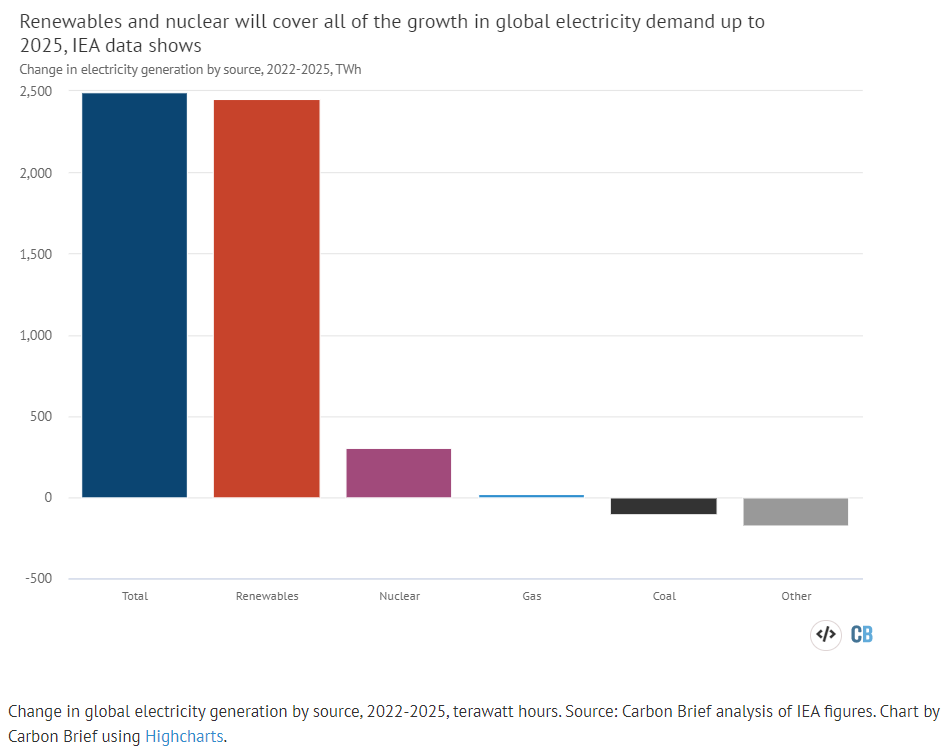
https://i.imgur.com/JYMNAWR.png

Nuclear would take hundreds of times less land area and preserve natural ecosystems. Also, technically it can be built anywhere, and it will be just as efficient, whereas solar is way less efficient outside of certain geographical latitudes. Which means you need to double or triple the use of land to reach the same power generation.
You can't put a nuclear reactor in your gas tank either. Yet this is somehow an argument against solar and for nuclear?
Answered in the comment you’re replying to:
“Alternatively, you could run the massive carbon capture plants on solar energy instead of nuclear, and still ship these “completely clean conventionals” worldwide. It would mean building 3x as many plants for the same output since they could only run during bright daylight hours. You could bring this 3x number down by instead building (once again commensurately massive) energy storage plants as an intermediary”
“Alternatively, you could run the massive carbon capture plants on solar energy instead of nuclear, and still ship these “completely clean conventionals” worldwide. It would mean building 3x as many plants for the same output since they could only run during bright daylight hours. You could bring this 3x number down by instead building (once again commensurately massive) energy storage plants as an intermediary”
Is it still a 1/5th of the cost if you have to factor in storage?
We are approaching the prices where storage is almost as cheap as nuclear power.
More importantly, we don't need to worry about storage now. Gas peaker plants will work until we get rid of all the other fossil fuel power plants. Then, storage should be cheaper since will know how to scale it. There is difference between short-term and long-term storage.
Finally, one solution to storage problem is build more supply. Three times will cover nearly every situation, and we will need extra power for doing hydrogen, carbon removal, and fuel generation. It is possible we won't need long-term storage and can use hydrogen or fuel.
More importantly, we don't need to worry about storage now. Gas peaker plants will work until we get rid of all the other fossil fuel power plants. Then, storage should be cheaper since will know how to scale it. There is difference between short-term and long-term storage.
Finally, one solution to storage problem is build more supply. Three times will cover nearly every situation, and we will need extra power for doing hydrogen, carbon removal, and fuel generation. It is possible we won't need long-term storage and can use hydrogen or fuel.
Okay but what’s the amortized cost of building triple the supply? The chart you linked to only talks about marginal cost.
I don’t think amortized cost matters. The research and development has been done or is included in the unit cost.
Renewables have better unit economics than nuclear since fixed costs are spread over many, many more units. It sounds like better reactors need lots of research. More important is time, it takes ten years to build reactor while can order solar panels now. Probably can build a new solar panel plant and multiple solar installations in decade.
There does need to be economic incentive to over build. Someone, probably the government, will need to pay for carbon capture. May need to encourage hard-to-electrify industries to switch. But we have a while until that happens.
Renewables have better unit economics than nuclear since fixed costs are spread over many, many more units. It sounds like better reactors need lots of research. More important is time, it takes ten years to build reactor while can order solar panels now. Probably can build a new solar panel plant and multiple solar installations in decade.
There does need to be economic incentive to over build. Someone, probably the government, will need to pay for carbon capture. May need to encourage hard-to-electrify industries to switch. But we have a while until that happens.
If you synthesize windgas and burn that for electricity (which is probably the most expensive, inefficient way to store and use that energy) it's still about 4/5ths the cost of nuclear power.
If you combined pumped storage and batteries with solar and wind it's roughly between 2/5ths and 3/5ths.
This ignores taxpayer shouldered insurance for nuclear power. If you price that accurately the cost of nuclear power balloons still further.
It's never been particularly cost effective but compared to dirt cheap renewables it's a veritable financial black hole. This is why EDF is currently imploding. It's why only countries that have nukes or really want the option to have nukes build civilian nuclear power plants.
If you combined pumped storage and batteries with solar and wind it's roughly between 2/5ths and 3/5ths.
This ignores taxpayer shouldered insurance for nuclear power. If you price that accurately the cost of nuclear power balloons still further.
It's never been particularly cost effective but compared to dirt cheap renewables it's a veritable financial black hole. This is why EDF is currently imploding. It's why only countries that have nukes or really want the option to have nukes build civilian nuclear power plants.
windgas? That's not a word I've ever heard or sound like a well established source of energy.
coz it doesnt make economic sense to do it until A) wind and solar energy is routinely producing a lot more energy than can be currently used and stored cheaply B) pumping natural gas becomes prohibited or prohibitively expensive.
Yes. Battery backed solar and wind is still cheaper than nuclear, and mostly cheaper than coal and natural gas in many markets. For seasonality, you can use buried HVDC transmission (which is fairly efficient at moving large amounts of energy vast distances). China moves more power further with HVDC than the US would have to. Burying it gets around NIMBYs and other land issues that slow this infra down.
Commercial nuclear is just ridiculously expensive for the capacity factor and energy produced. It’s not entirely without use, but best suited for where there are no other options (the Arctic, Antarctica, etc). It’s likely cheaper to burn natural gas for the last ~5% of generation needed when the grid is mostly zero carbon in a decade (based on renewables and battery storage ramp rates) and then suck that CO2 into the ground with excess renewables (that otherwise would’ve been curtailed) versus continuing to try to build nuclear (although I haven’t done the math).
https://reneweconomy.com.au/nuclear-inquiry-told-firmed-rene...
https://www.lazard.com/media/451881/lazards-levelized-cost-o...
https://spectrum.ieee.org/chinas-state-grid-corp-crushes-pow...
https://www.power-technology.com/features/chinas-mega-transm...
Commercial nuclear is just ridiculously expensive for the capacity factor and energy produced. It’s not entirely without use, but best suited for where there are no other options (the Arctic, Antarctica, etc). It’s likely cheaper to burn natural gas for the last ~5% of generation needed when the grid is mostly zero carbon in a decade (based on renewables and battery storage ramp rates) and then suck that CO2 into the ground with excess renewables (that otherwise would’ve been curtailed) versus continuing to try to build nuclear (although I haven’t done the math).
https://reneweconomy.com.au/nuclear-inquiry-told-firmed-rene...
https://www.lazard.com/media/451881/lazards-levelized-cost-o...
https://spectrum.ieee.org/chinas-state-grid-corp-crushes-pow...
https://www.power-technology.com/features/chinas-mega-transm...
Looking at subsidized marginal cost of energy tells you pretty much nothing. You need a cost function that considers at least reliability and the cost of energy storage.
What is your comment in reference to? You are replying to a link that has unsubsidized, all-in costs, not marginal costs. And it also has costs for storage, in battery form. (And costs for hydrogen, which might some day be a form of storage, but much more likely will just be used for chemical processes and maybe heat)
From the link:
> When U.S. government subsidies are included, the cost of onshore wind and utility-scale solar continues to be competitive with the marginal cost of coal, nuclear and combined cycle gas generation
> When U.S. government subsidies are included, the cost of onshore wind and utility-scale solar continues to be competitive with the marginal cost of coal, nuclear and combined cycle gas generation
That's saying that capital + operating costs of onshore wind and solar are competitive with the operating costs of fuel-driven electricity.
Which is a statement that it is financially better to build as much wind/solar as one can to replace fuel usage. IE as long as the output doesn't get curtailed, the economically rational decision is to build solar and wind now.
Of course there are some serious caveats as to why utilities do not do this: 1) they are not economically rational, in most markets they do not have greater profits with lower costs, and 2) this report is from 2021 and the cost of capital has risen somewhat due to higher interest rates. Nonetheless, wind, solar, and batteries dominate what is planned to be added to the grid in 2023:
https://www.power-eng.com/solar/eia-solar-to-make-up-more-th...
Which is a statement that it is financially better to build as much wind/solar as one can to replace fuel usage. IE as long as the output doesn't get curtailed, the economically rational decision is to build solar and wind now.
Of course there are some serious caveats as to why utilities do not do this: 1) they are not economically rational, in most markets they do not have greater profits with lower costs, and 2) this report is from 2021 and the cost of capital has risen somewhat due to higher interest rates. Nonetheless, wind, solar, and batteries dominate what is planned to be added to the grid in 2023:
https://www.power-eng.com/solar/eia-solar-to-make-up-more-th...
I understood the GP as focussing more on the missed opportunity. Those cheap renewables didn't exist 40 years in the past. There could've been lots of nuclear energy built since then, a lot of emissions not generated, and those hypothetical decades-old plants would now be considered for decommissioning over the coming decades, just in time to be replaced by the renewables that do exist.
Nuclear power had the distinct advantage of existing 50 years ago. No renewable can match that! I don't think it's entirely useless to study the mistakes of the past, particularly since the same patterns may repeat themselves in the future — see e.g. the rhetoric comparing battery metal mining to the environmental impact of petrochemical extraction.
The past is dead, as the US and French attempts at reviving nuclear power plant construction are showing.
One thing to note is how incredibly dangerous construction was in the past, including during the first nuclear rollout. The rate of deaths among construction workers was something like a factor of 5 higher in the 1960s as it is now. Did construction become more expensive because these deaths were deemed unacceptable? If so, you're not going to see cheaper nuclear without great relaxation of worker safety rules.
One thing to note is how incredibly dangerous construction was in the past, including during the first nuclear rollout. The rate of deaths among construction workers was something like a factor of 5 higher in the 1960s as it is now. Did construction become more expensive because these deaths were deemed unacceptable? If so, you're not going to see cheaper nuclear without great relaxation of worker safety rules.
The renewable hydro existed long before 50 years ago.
As your source shows, solar can be very cheap (utility grade solar providing power when it is sunny) to the most expensive form of electrical power in the world (residential solar on rooftops).
You can also see that if you also want power when it isn't sunny (or windy if using windmills) you need to add in the cost of utility grade storage which noticeably increases the costs.
You can also see that if you also want power when it isn't sunny (or windy if using windmills) you need to add in the cost of utility grade storage which noticeably increases the costs.
Do we actually know that they do it without 3rd party hazard?
There is one industry where the laws limit liability even to enable it to be built. That is nuclear power.
https://en.wikipedia.org/wiki/Price%E2%80%93Anderson_Nuclear...
https://en.wikipedia.org/wiki/Price%E2%80%93Anderson_Nuclear...
Because nuclear doesn’t require the development of extra storage on the grid, so ends up being cheaper in majority of locations.
Lol no. Nuclear usually is used to generate baseload and often loses a fortune.
The amortized capital costs are so high that many of these plants get shut down because they lose money. The HN pro-nuclear response is of course always “well, if we didn’t have [regulation] or could build some new nuclear tech everything would be awesome”.
The amortized capital costs are so high that many of these plants get shut down because they lose money. The HN pro-nuclear response is of course always “well, if we didn’t have [regulation] or could build some new nuclear tech everything would be awesome”.
Yeah my bad, I had a look at my notes and renewables has become a lot cheaper since I looked. I can't find good data on storage but that will have certainly become cheaper too.
They are shut down, but not because the capital cost is so high. They are shut down because the operating cost is too high.
Please cite a study which confirms that. I have not seen it in all my research.
Renewables require storage because they're not always running, the sun isn't always shining, the wind isn't always blowing, but people are always using power. Nuclear only shuts down when someone shuts off the plant, so it provides base load.
Now cite some research showing it is cheaper to build nuclear than manage the variability of renewables. Then try to put that nuclear plant on a marginal price energy market dominated by renewables.
https://ieeexplore.ieee.org/document/9837910
https://ieeexplore.ieee.org/document/9837910
Because peak demand exists.
Renewables are cheaper and safer than nuclear power, that much is undeniable. The problem they do have is that their generation is sporadic. Until we solve the energy storage problem, there has to be something else on the grid that can be always online always delivering enough power to meet peak demand.
Renewables are cheaper and safer than nuclear power, that much is undeniable. The problem they do have is that their generation is sporadic. Until we solve the energy storage problem, there has to be something else on the grid that can be always online always delivering enough power to meet peak demand.
There are many means of storage out there already. There is also spreading out of the grid and diversifying renewables sources. This is not some mysterious magic which needs to be performed here. The tools are out there.
Nuclear is awful for peak demand. The cost model of super expensive CAPEX and low OPEX only lends itself to running at 100% 24/7.
Let us say you run a peaking nuclear plant. It can run for 30% of the time, optimistically. It now costs ~3x the price, so $390 to $600 per MWh. That's insane energy prices. Worse than Europe in a haphazard energy transition from Russian gas due to the largest war in Europe since WW2 breaking out.
Let us say you run a peaking nuclear plant. It can run for 30% of the time, optimistically. It now costs ~3x the price, so $390 to $600 per MWh. That's insane energy prices. Worse than Europe in a haphazard energy transition from Russian gas due to the largest war in Europe since WW2 breaking out.
Point of clarification: nuclear does not have low OPEX. Nuclear operators in the US (Illinois, Ohio, Pennsylvania) have been reporting that their 40 year old nuclear plants were no longer competitive with natural gas (before the Russian invasion of Ukraine drove up prices).
Nuclear has high CAPEX and high OPEX. Nuclear plants have lots of employees and maintenance on an irradiated nuclear reactor is expensive.
What they have is low fuel costs.
Nuclear has high CAPEX and high OPEX. Nuclear plants have lots of employees and maintenance on an irradiated nuclear reactor is expensive.
What they have is low fuel costs.
This is actually the origin of my idea for using nuclear power to produce zero-emission synthetic conventionals. Peak demand is a terrible use-case for nuclear, what you really want for peak demand is rapid-delivery storage like batteries. A Teslawall that charges from the grid during off-peak and discharges to the home during peak, for example. The best use-case for nuclear is, as you say, 100% 24/7, and the best utilization of that I could think of is producing stored energy with maximum compatibility for legacy power infrastructure.
Also, coupling nuclear power plants with pumped storage is a good way to store energy for on demand use. I think that’s what the Washington state nuclear power program was originally planning given grand coulee could pump up (we eventually just got one small commercial reactor).
Wind can probably do the same today, and we have plenty in Washington and adjacent Oregon. Though I’m sure unsure if they are actually storing excess grid capacity via hydro right now.
Wind can probably do the same today, and we have plenty in Washington and adjacent Oregon. Though I’m sure unsure if they are actually storing excess grid capacity via hydro right now.
The major energy consuming step for synfuels is hydrogen production. Electrolysers are getting cheap, so there's not much penalty to having the input energy be intermittent. Nuclear will therefore be competing directly against renewables on a levelized cost basis here. That's a competition it can't win.
If you can yse storage to mamage peak with renewables, you can use smaller amount of storage to manage peak with nuckear and charge at night
Why charge the storage with expensive nuclear when you could charge it with cheap renewables?
The missing competitor is natural gas, which is good at peak demand, and not very good at carbon emissions
Ultimately the rare high price peaks can be shaved with green hydrogen instead of natural gas. Hydrogen can be stored underground, with a cost per unit of energy storage capacity of about $1/kWh, some two orders of magnitude cheaper than batteries. Round trip efficiency sucks, but that's not important for rarely used storage.
In the scenario you are replying to synthesized fuel is the storage solution and there is no peak demand.
Renewables cannot scale. If you want a 20th century level of power production in the 23rd century, renewables are your ticket.
Renewables are scaling at 15% a year, storage is scaling at 20% per year.
Nuclear has not scaled because scaling requires fast iterative development cycles that allow learnings that decrease cost. Because nuclear plants are enormous you can only build a few at a time and design changes are super risky because billions of dollars are at stake.
An R&D line for solar cells is cheap to run and enables rapid cost efficiency.
Batteries are even easier to scale at the moment because we are nowhere near the theoretical limits of those technologies and it's easy for material chemists to experiment with new ideas for only a few thousand dollars.
Today it may seem like there is a case for nuclear, but in ten years even existing nuclear plants will be uneconomical because electricity will be zero cost while the sun is out. Instead of being able to sell their power 24 hours a day they will only make money for a declining part of the day. This profitable period will continue to shrink as batteries get cheaper allowing for the arbitrage of electricity stored while the sun is out. This financial reality is the real reason no one will ever build another nuclear plant in the US.
Nuclear has not scaled because scaling requires fast iterative development cycles that allow learnings that decrease cost. Because nuclear plants are enormous you can only build a few at a time and design changes are super risky because billions of dollars are at stake.
An R&D line for solar cells is cheap to run and enables rapid cost efficiency.
Batteries are even easier to scale at the moment because we are nowhere near the theoretical limits of those technologies and it's easy for material chemists to experiment with new ideas for only a few thousand dollars.
Today it may seem like there is a case for nuclear, but in ten years even existing nuclear plants will be uneconomical because electricity will be zero cost while the sun is out. Instead of being able to sell their power 24 hours a day they will only make money for a declining part of the day. This profitable period will continue to shrink as batteries get cheaper allowing for the arbitrage of electricity stored while the sun is out. This financial reality is the real reason no one will ever build another nuclear plant in the US.
Of course renewables can scale. Why do you think they can't? Be quantitative.
What about everyone killed or exposed to radiation in the process of manufacturing the necessary so-called "renewables", which require an incomparable amount of resources relative to a nuclear power plant of similar output?
Renewables require lots of land. In the United States we have unlimited land. People nostalgically want that land to consist of pretty family farms, but 50 years of policy put them all out of business.
All materials for renewables can be recycled. It is not like they are lost. Also, compare the huge exploitation the fossil industry, which we are replacing, is already doing of the earth.
From a total material requirement, nuclear is in line with solar and much worse than wind.
https://www.sciencedirect.com/science/article/pii/S095965262...
From a total material requirement, nuclear is in line with solar and much worse than wind.
https://www.sciencedirect.com/science/article/pii/S095965262...
I wonder how one measures "over-regulation" in a serious way here.
The examples I've seen either come from opinions of certain individuals and the accompanying lobby groups or by setting it next to other regulations from countries which are famous for infrastructural disasters (see China).
The examples I've seen either come from opinions of certain individuals and the accompanying lobby groups or by setting it next to other regulations from countries which are famous for infrastructural disasters (see China).
It’s extraordinarily hard! Often in trying to analyze some complex system I have found it’s much more tractable to implement the system and analyze the results (e.g. a montecarlo sim of dice-rolling rather than trying to do the math). Likewise, a tractable way to measure over-regulation might be to simply do nuclear in a limited low-regulation area and draw conclusions from that.
Like fwir said, it’s difficult to determine what regulations are and aren’t needed. But one example: in the U.S., automatic load following equipment for nuclear power plants are prohibited, so load following needs to be done manually. Whereas in France, this equipment is allowed, and very important, given nuclear makes up a much larger proportion of their grid (and tends to load follow more).
>Putting synthetic gasoline in a gas station is essentially an over-the-air upgrade to any conventional ICE vehicle making it guaranteed zero emissions.
Prometheus (a startup) promises to deliver exactly on that. I believe something commercially viable should be coming in a year or so.
I like this overall idea of synthesizing coal and fuels out of atmospheric carbon instead of just burying it somewhere. This could be the easiest and even ROI-able way to implement carbon capture globally, without causing much technological friction and disruption to economies in developing countries.
Prometheus (a startup) promises to deliver exactly on that. I believe something commercially viable should be coming in a year or so.
I like this overall idea of synthesizing coal and fuels out of atmospheric carbon instead of just burying it somewhere. This could be the easiest and even ROI-able way to implement carbon capture globally, without causing much technological friction and disruption to economies in developing countries.
Yes. The case for synthesizing carbon fuels from atmospheric carbon is immensely strong - we need to do carbon capture of some kind, and investing in this method will also retrofit the entire world to zero emissions. Other plans for reaching zero emissions worldwide have multi-trillion-dollar price tags and require political pressure on sovereign nations. With this method you can forcibly zero out a recalcitrant country’s emissions by simply subsidising synthetic coal and fuel so that it’s cheaper than regular coal and crude oil, and they will go to zero emissions while getting an economic boost.
Arguably, it’s such a strong case that I’m trying to hitch my pet project of nuclear power to its wagon.
Arguably, it’s such a strong case that I’m trying to hitch my pet project of nuclear power to its wagon.
This is a terrible plan. If you want to subsidize another country's power, far better to price dump solar from $13/MWh to $0 than make synthetic coal from $200/MWh nuclear energy at 50% efficiency with an added overhead of $20/MWh for creating it and another $10/MWh to transport it. Merely matching the price of coal will cost you enough that you could just offer to replace all their gas and coal generation for free with no strings.
It has the added bonus of only needing to subsidize enough solar to send their fossil fuels into a death spiral of lower load factors and higher costs to compensate. After which supplimenting with wind and storage will be far cheaper for them.
It has the added bonus of only needing to subsidize enough solar to send their fossil fuels into a death spiral of lower load factors and higher costs to compensate. After which supplimenting with wind and storage will be far cheaper for them.
> It seems to me that changing over-regulation is nearly impossible, as it requires making suicidally unpopular arguments: “we shouldn’t weigh the risks”, “we should care less about safety”, “don’t think of the children”, etc.
The arguments you list are straw man arguments, but doubtless they would be levied against nuclear energy supporters.
The arguments you list are straw man arguments, but doubtless they would be levied against nuclear energy supporters.
> and then export these “completely clean conventional fuels” to the rest of the world.
...not where I thought you were going with this argument.
Aren't we looking for ways to take the CO2 out of the air? Rather than to sell it so that it gets put back in?
...not where I thought you were going with this argument.
Aren't we looking for ways to take the CO2 out of the air? Rather than to sell it so that it gets put back in?
Using synthetic hydrocarbons for energy storage seems inevitable to me. Can we really electrify all the vehicles on the planet? How many two stroke engines are in use throughout Southeast Asia alone? Batteries and electric motor technology is just so much more complicated than the internal combustion engine. Then you have airplanes, ocean vessels, military and emergency vehicles...
I'm not an expert in this. But swapping fossil fuels for synthetic petroleum made with nuclear or renewable energy seems like the cleanest refactor without rewriting the interface. If feasible. And we'd still want to optimize the whole stack and sequester carbon wherever possible.
I'm not an expert in this. But swapping fossil fuels for synthetic petroleum made with nuclear or renewable energy seems like the cleanest refactor without rewriting the interface. If feasible. And we'd still want to optimize the whole stack and sequester carbon wherever possible.
OK yeah, sounds totally reasonable when you put it that way.
Think of the current coal power industry as essentially “digging a lot of pre-sequestered CO2 out of the ground and putting it into the air”. This plan limits the coal industry to only using what’s already in the air, while we build parallel systems to actively sequester air CO2. Building massive carbon capture plants for this purpose also brings economies of scale to other carbon sequestration projects. Finally, you can imagine making a commitment to permanently burying 5% of the output of the synthetic plants, so every round trip the CO2 makes reduces it by 5%.
Yeah, makes sense.
Burying 5% of the output... maybe that's what some civilization did 60 million years ago?
Burying 5% of the output... maybe that's what some civilization did 60 million years ago?
Nuclear liberates more uranium decay products into the environment than coal does per unit of electrical energy produced, if you include those liberated in uranium mining.
I think you'll find that vast tracts of granite across the planet relese more uranium decay products into the environment by several orders of magnitude than uranium mining does.
You can work this out for yourself by downloading and working through the raw 256 channel data of an entire continent aquired across 40 years and > 600 surveys.
https://www.ga.gov.au/scientific-topics/disciplines/geophysi...
https://www.publish.csiro.au/EG/EG09025
You can work this out for yourself by downloading and working through the raw 256 channel data of an entire continent aquired across 40 years and > 600 surveys.
https://www.ga.gov.au/scientific-topics/disciplines/geophysi...
https://www.publish.csiro.au/EG/EG09025
Which is entirely beside the point, because (1) decay products locked in a rock are not liberated, and (2) we were comparing nuclear and coal, not nuclear and granite.
Of course uranium decay products "locked" in granite are liberated .. that's what's measured 80m above the ground by geophysical survey aircraft - the radiation from liberated decay products of uranium, potassium, and thorium - I'm sure you must have heard of radon gas (if not, go look it up) - it's a by-product of uranium decay products and seeps up out of the ground on a daily basis and "fills" up valleys in granite regions in a measurable way, gets blown away when the wind picks up and then fills them again.
You were comparing nuclear and coal - which is like comparing a pea against a couple of super cargo ships packed with vegetables .. and really should provide a source for your claims.
You were comparing nuclear and coal - which is like comparing a pea against a couple of super cargo ships packed with vegetables .. and really should provide a source for your claims.
Renewables are cheap and pose zero risk of nuclear exposure. We should be looking at 100% renewable solutions.
> nuclear over-regulation
Ah yes, the classic too much regulation.
I'll just leave you with this. There's too much to quote from here, but here's just one excerpt. The post has numerous examples of very concerning issues.
> When valves leaked, more leakage was allowed — up to 20 times the original limit. When rampant cracking caused radioactive leaks from steam generator tubing, an easier test of the tubes was devised, so plants could meet standards.
https://www.nbcnews.com/id/wbna43455859
> The proposal comes as most of the nation’s nuclear power plants, which were designed and built in the 1960s or 1970s, are reaching the end of their original 40- to 50-year operating licenses. Many plant operators have sought licenses to extend the operating life of their plants past the original deadlines, even as experts have warned that aging plants come with heightened concerns about safety.
https://www.nytimes.com/2019/07/17/climate/nrc-nuclear-inspe...
> The nuclear industry is also pushing the NRC to cut down on safety inspections and rely instead on plants to police themselves. The NRC “is listening” to this advice, the Associated Press reported last month. “Annie Caputo, a former nuclear-energy lobbyist now serving as one of four board members appointed or reappointed by President Donald Trump, told an industry meeting this week that she was ‘open to self-assessments’ by nuclear plant operators, who are proposing that self-reporting by operators take the place of some NRC inspections.”
https://newrepublic.com/article/153465/its-not-just-pork-tru...
Ah yes, the classic too much regulation.
I'll just leave you with this. There's too much to quote from here, but here's just one excerpt. The post has numerous examples of very concerning issues.
> When valves leaked, more leakage was allowed — up to 20 times the original limit. When rampant cracking caused radioactive leaks from steam generator tubing, an easier test of the tubes was devised, so plants could meet standards.
https://www.nbcnews.com/id/wbna43455859
> The proposal comes as most of the nation’s nuclear power plants, which were designed and built in the 1960s or 1970s, are reaching the end of their original 40- to 50-year operating licenses. Many plant operators have sought licenses to extend the operating life of their plants past the original deadlines, even as experts have warned that aging plants come with heightened concerns about safety.
https://www.nytimes.com/2019/07/17/climate/nrc-nuclear-inspe...
> The nuclear industry is also pushing the NRC to cut down on safety inspections and rely instead on plants to police themselves. The NRC “is listening” to this advice, the Associated Press reported last month. “Annie Caputo, a former nuclear-energy lobbyist now serving as one of four board members appointed or reappointed by President Donald Trump, told an industry meeting this week that she was ‘open to self-assessments’ by nuclear plant operators, who are proposing that self-reporting by operators take the place of some NRC inspections.”
https://newrepublic.com/article/153465/its-not-just-pork-tru...
De-regulation of existing 1960s era nuclear tech is bad and shouldn’t happen, I agree.
Yeah, except...your Australian idea of putting massive power plants in the Outback and de-carbonizing the atmosphere by shipping fossil fuels into the atmosphere is incredibly inefficient. Just put in small scale nuclear power plants at all the limiting bandwidth areas of every nations' power grids. From there electricity would be essentially be free and you could power cars, trains, buses and everything else from electricity. You could have nuclear powered cargo container vessels. There wouldn't be any need for coal or oil. Why do half measures that would be worse for the environment, when you could just stop using goal and gas entirely? By the time all of the useful plutonium and uranium runs out for making power plants we'll have fusion power (within the next 100-200 years). You're not wrong, and the market may mandate doing this anyway, but if you were going to play benevolent dictator and find the most utilitarian way to maximize the world's happiness you would just make energy free.
Unfortunately we cannot simply play dictator and insist people who don’t like or trust nuclear power must put up with “a Chernobyl next door to every school” (or similar charged rhetoric). The Outback is one of the few places I can imagine just enough people tolerating for it to happen, where there’s also enough infrastructure and capability to keep it running. The fact that Australia also has the largest reserves of nuclear fuel in the world and a significant investment in mining capability certainly doesn’t hurt either.
So that’s kinda where it has to be. Once it’s there, how do you make it affect the rest of the world? The longest HVDC cable in operation is 750km at 1.4GW, and the longest being built is 4 x 3,800km cables at 1.8GW each. The undersea internet cable that connects Australia to America goes through Hawaii and is 14,000km long. And you need to get something like 60GW through to power the western region of the US grid, even assuming big advances it’s still like 12 x 14,000km. Impractical. You need to make it transportable. Batteries don’t have energy density to make it work shipping them en masse, especially since they need a return trip. You know what does have high enough energy density to make it worth transporting? Coal and oil, we already do it. Added benefit: it’s a drop-in replacement for existing power systems, no need to rebuild any power systems anywhere. How can we turn nuclear power into coal and oil? Carbon capture synthesis of hydrocarbons. Another added bonus: fights climate change.
The previous two bonuses synergise immensely well: they take existing ICE engines and coal power plants and make them zero emissions. The drawback of inefficiency sucks, but it’s more than outweighed by all those benefits. I’m not trying to use nuclear as efficiently as possible. I’m trying to find a place for nuclear in the energy economy.
So that’s kinda where it has to be. Once it’s there, how do you make it affect the rest of the world? The longest HVDC cable in operation is 750km at 1.4GW, and the longest being built is 4 x 3,800km cables at 1.8GW each. The undersea internet cable that connects Australia to America goes through Hawaii and is 14,000km long. And you need to get something like 60GW through to power the western region of the US grid, even assuming big advances it’s still like 12 x 14,000km. Impractical. You need to make it transportable. Batteries don’t have energy density to make it work shipping them en masse, especially since they need a return trip. You know what does have high enough energy density to make it worth transporting? Coal and oil, we already do it. Added benefit: it’s a drop-in replacement for existing power systems, no need to rebuild any power systems anywhere. How can we turn nuclear power into coal and oil? Carbon capture synthesis of hydrocarbons. Another added bonus: fights climate change.
The previous two bonuses synergise immensely well: they take existing ICE engines and coal power plants and make them zero emissions. The drawback of inefficiency sucks, but it’s more than outweighed by all those benefits. I’m not trying to use nuclear as efficiently as possible. I’m trying to find a place for nuclear in the energy economy.
If changing over regulation is impossible, our civilization is likely doomed.
> The workable solution is to find or make a receptive regulatory environment (perhaps in a small country with large reserves of nuclear fuel and large unpopulated areas to isolate reactors in, like say Australia), use massive banks of nuclear power to power commensurately massive carbon capture plants that turn airborne CO2 back into synthetic coal and synthetic gasoline, and then export these “completely clean conventional fuels” to the rest of the world.
Any idea how massively inefficient this would be?
> A potent offering and one that’s hopefully hard to regulate against as well.
You don't need to regulate against something that cannot possibly turn a profit.
Any idea how massively inefficient this would be?
> A potent offering and one that’s hopefully hard to regulate against as well.
You don't need to regulate against something that cannot possibly turn a profit.
My nearest nuclear power plant closed. It lasted its full licensed length, plus a 20 year extension. (Due to a problem, they closed 11 days early)
I can't pretend to know why they need to be extended, but it seems like some sort of contract by either the government, the power companies, or some labor problem. I know this plant is in the middle of nowhere + near a lake that is only nice 2 months of the year. I imagine labor was not cheap.
Our governor asked for federal funding, but it doesnt seem like it will happen.
I hope they turn it into a museum, but that is probably too much to ask. I love looking at it from the beach, and I liked seeing the steam coming out of it.
I can't pretend to know why they need to be extended, but it seems like some sort of contract by either the government, the power companies, or some labor problem. I know this plant is in the middle of nowhere + near a lake that is only nice 2 months of the year. I imagine labor was not cheap.
Our governor asked for federal funding, but it doesnt seem like it will happen.
I hope they turn it into a museum, but that is probably too much to ask. I love looking at it from the beach, and I liked seeing the steam coming out of it.
They have an engineered lifespan and things start falling apart and becoming dangerous when you exceed that.
Many should never have been extended. They've had to change safety tests and infrastructure tests so the order plans would pass inspection.
This has always been my concern with nuclear. Yes we can make it safe, but the human greed factor is always the weak point. Regulations weakened, automated systems bypassed, skimping on design decisions, etc.
Many should never have been extended. They've had to change safety tests and infrastructure tests so the order plans would pass inspection.
This has always been my concern with nuclear. Yes we can make it safe, but the human greed factor is always the weak point. Regulations weakened, automated systems bypassed, skimping on design decisions, etc.
> This has always been my concern with nuclear. Yes we can make it safe, but the human greed factor is always the weak point. Regulations weakened, automated systems bypassed, skimping on design decisions, etc.
This is exactly my concern. Fukushima was only a problem because the company didn't want to spend money putting in backup generators in the correct place despite repeated warnings to do so.
This is exactly my concern. Fukushima was only a problem because the company didn't want to spend money putting in backup generators in the correct place despite repeated warnings to do so.
There has been more near misses in the nuclear industry than tsunamis. After Fukushima about all plants in the west had to install independent core cooling because the regulators realized the risk was systemic, even though the cause was special.
A nuclear reactor in Sweden had a severe incident in 2006 when many of the "defense in depth" layers had been accidentally removed through freak occurrences and upgrades.
https://en.wikipedia.org/wiki/Forsmark_Nuclear_Power_Plant#J...
A nuclear reactor in Sweden had a severe incident in 2006 when many of the "defense in depth" layers had been accidentally removed through freak occurrences and upgrades.
https://en.wikipedia.org/wiki/Forsmark_Nuclear_Power_Plant#J...
To expand on this, nuclear risk is significantly underestimated:
> Despite significant reforms following past disasters, we estimate that, with 388 reactors in operation, there is a 50% chance that a Fukushima event (or more costly) occurs every 60–150 years. We also find that the average cost of events per year is around the cost of the construction of a new plant.
https://www.sciencedirect.com/science/article/pii/S221462961...
> Despite significant reforms following past disasters, we estimate that, with 388 reactors in operation, there is a 50% chance that a Fukushima event (or more costly) occurs every 60–150 years. We also find that the average cost of events per year is around the cost of the construction of a new plant.
https://www.sciencedirect.com/science/article/pii/S221462961...
One nuclear accident every 60–150 years seems pretty fine compared to the estimated risk of global warming from fossil fueled power plants. It seems similar to the added risk of battery fire in electric cars compared to continuing using IC cars.
If we can replace existing nuclear plants with exclusively using renewable and storage then that should naturally be considered, but accident rate of nuclear plants should not be considered in places where the current or future alternative is burning fossil fuels.
If we can replace existing nuclear plants with exclusively using renewable and storage then that should naturally be considered, but accident rate of nuclear plants should not be considered in places where the current or future alternative is burning fossil fuels.
> near misses
https://en.wikipedia.org/wiki/Davis%E2%80%93Besse_Nuclear_Po...
And that was just the 5th worst nuclear incident in the US since 1979!
https://en.wikipedia.org/wiki/Davis%E2%80%93Besse_Nuclear_Po...
And that was just the 5th worst nuclear incident in the US since 1979!
Fukushima had trouble with the backup coolant systems. One reactor had the isolation condenser fail. Unlike US plants, where the isolation condenser is regularly tested, they had never tested it so they didn't know what it sounded like when it was in operation (you couldn't miss it!) they didn't realize it wasn't working.
They tried to cool another reactor by pumping in water from fire trucks and found that the water didn't go where it was supposed to go, it took quite a few months of work to really understand the path it went through.
They tried to cool another reactor by pumping in water from fire trucks and found that the water didn't go where it was supposed to go, it took quite a few months of work to really understand the path it went through.
Nuclear feels a bit like having a loaded gun in your home in an unsafe neighbourhood.
You feel safer but there’s a lot of risk - accidental suicide, etc.
You feel safer but there’s a lot of risk - accidental suicide, etc.
Since we're sharing, this first link makes me absolutely furious. There's too much to quote from here, but here's just one excerpt. The post has numerous examples of very concerning issues.
> When valves leaked, more leakage was allowed — up to 20 times the original limit. When rampant cracking caused radioactive leaks from steam generator tubing, an easier test of the tubes was devised, so plants could meet standards.
https://www.nbcnews.com/id/wbna43455859
> The proposal comes as most of the nation’s nuclear power plants, which were designed and built in the 1960s or 1970s, are reaching the end of their original 40- to 50-year operating licenses. Many plant operators have sought licenses to extend the operating life of their plants past the original deadlines, even as experts have warned that aging plants come with heightened concerns about safety.
https://www.nytimes.com/2019/07/17/climate/nrc-nuclear-inspe...
> The nuclear industry is also pushing the NRC to cut down on safety inspections and rely instead on plants to police themselves. The NRC “is listening” to this advice, the Associated Press reported last month. “Annie Caputo, a former nuclear-energy lobbyist now serving as one of four board members appointed or reappointed by President Donald Trump, told an industry meeting this week that she was ‘open to self-assessments’ by nuclear plant operators, who are proposing that self-reporting by operators take the place of some NRC inspections.”
https://newrepublic.com/article/153465/its-not-just-pork-tru...
> When valves leaked, more leakage was allowed — up to 20 times the original limit. When rampant cracking caused radioactive leaks from steam generator tubing, an easier test of the tubes was devised, so plants could meet standards.
https://www.nbcnews.com/id/wbna43455859
> The proposal comes as most of the nation’s nuclear power plants, which were designed and built in the 1960s or 1970s, are reaching the end of their original 40- to 50-year operating licenses. Many plant operators have sought licenses to extend the operating life of their plants past the original deadlines, even as experts have warned that aging plants come with heightened concerns about safety.
https://www.nytimes.com/2019/07/17/climate/nrc-nuclear-inspe...
> The nuclear industry is also pushing the NRC to cut down on safety inspections and rely instead on plants to police themselves. The NRC “is listening” to this advice, the Associated Press reported last month. “Annie Caputo, a former nuclear-energy lobbyist now serving as one of four board members appointed or reappointed by President Donald Trump, told an industry meeting this week that she was ‘open to self-assessments’ by nuclear plant operators, who are proposing that self-reporting by operators take the place of some NRC inspections.”
https://newrepublic.com/article/153465/its-not-just-pork-tru...
> They've had to change safety tests and infrastructure tests so the order plans would pass inspection.
It's interesting to square this sentiment with the people a few comments away claiming that over-regulation is killing this industry.
(Working in nuclear, I find neither sentiment particularly true nor totally false.)
It's interesting to square this sentiment with the people a few comments away claiming that over-regulation is killing this industry.
(Working in nuclear, I find neither sentiment particularly true nor totally false.)
> "Yes we can make it safe, but the human greed factor is always the weak point. Regulations weakened, automated systems bypassed, skimping on design decisions, etc."
This has always been my concern with "civilization" in general, especially now that we've passed the 8 billion people mark… Human greed is a dangerous enough factor on it's own, but at the scale it's practiced today? Just plain terrifying.
This has always been my concern with "civilization" in general, especially now that we've passed the 8 billion people mark… Human greed is a dangerous enough factor on it's own, but at the scale it's practiced today? Just plain terrifying.
The only way I see that the decision to exceed the expected life time was a bad decision is if they could have replaced it with an other non-fossil fuel solution.
The problem is indeed human greed. Even with the accidents that have occurred, I am still glad that people did historically run with the risk over burning even more fossil fuels. My concern over pollution, especially global warming, is far greater than my concerns over nuclear accidents.
The problem is indeed human greed. Even with the accidents that have occurred, I am still glad that people did historically run with the risk over burning even more fossil fuels. My concern over pollution, especially global warming, is far greater than my concerns over nuclear accidents.
> Many should never have been extended.
Which ones.
Which ones.
It shouldn't be surprising that the US can't build nuclear reactors in a reasonable time or budget. We can't do it for subways or high-speed rail either.
Meanwhile, as of May 2022 there were 53 nuclear reactors under construction worldwide.
https://www.statista.com/statistics/513671/number-of-under-c...
Meanwhile, as of May 2022 there were 53 nuclear reactors under construction worldwide.
https://www.statista.com/statistics/513671/number-of-under-c...
Even if all of those reactors were on time and on budget (23 are behind schedule), that's still less net generating capacity each year than just the wind power of just the US (who are almost as bad at building wind as they are nuclear).
It's not a US problem. It's just that nuclear reactors are not a good way of making electricity.
It's not a US problem. It's just that nuclear reactors are not a good way of making electricity.
We can build solar or wind fields just fine though. They typically come in with 10% of the projected cost.
Yes, and we should do a lot of that, though bearing in mind that we're also terrible at building long-distance transmission. Some projects have languished for decades.
For countries with worse wind/solar resources and better ability to build large infrastructure, nuclear is a decent option, which is why 53 reactors are under construction.
For countries with worse wind/solar resources and better ability to build large infrastructure, nuclear is a decent option, which is why 53 reactors are under construction.
*could be the last of its kind built in the US
The article further explains why that may not work out.
To quote:
> the industry is betting on advanced nuclear reactors to save the day.
> It’s a bad bet.
The main points:
> The advanced and small modular reactors (SMRs) under development face a raft of economic, regulatory, technological and temporal risks.
and
> The advanced reactor closest to market in the U.S. is being developed by NuScale, which has a nonbinding agreement to build a first-of-its-kind SMR project in Idaho. The company has already raised its projected power cost from $58 per megawatt-hour to $89, even though it’s still years away from even beginning construction.
and
> Advanced reactors such as TerraPower’s Natrium, which are significantly different in design from existing light-water reactors, face an even steeper regulatory climb. And they’ll have to contend with broken or nonexistent supply chains because the more highly concentrated uranium fuels used by most advanced reactors are currently unavailable in large quantities outside of Russia.
Which leads to this summary at the end:
> Regardless of rosy messaging from DOE and the industry, it’s almost certain that Vogtle 3 and 4 are going to be the last big nuclear reactors coming online in the U.S. for a long time.
To quote:
> the industry is betting on advanced nuclear reactors to save the day.
> It’s a bad bet.
The main points:
> The advanced and small modular reactors (SMRs) under development face a raft of economic, regulatory, technological and temporal risks.
and
> The advanced reactor closest to market in the U.S. is being developed by NuScale, which has a nonbinding agreement to build a first-of-its-kind SMR project in Idaho. The company has already raised its projected power cost from $58 per megawatt-hour to $89, even though it’s still years away from even beginning construction.
and
> Advanced reactors such as TerraPower’s Natrium, which are significantly different in design from existing light-water reactors, face an even steeper regulatory climb. And they’ll have to contend with broken or nonexistent supply chains because the more highly concentrated uranium fuels used by most advanced reactors are currently unavailable in large quantities outside of Russia.
Which leads to this summary at the end:
> Regardless of rosy messaging from DOE and the industry, it’s almost certain that Vogtle 3 and 4 are going to be the last big nuclear reactors coming online in the U.S. for a long time.
Yeah here in Holland they have the same pipe dream. They want to start new reactors rise should come online by 2040, delays obviously not included.
It's a big bullet point for the hard right party VVD that think this way they can continue business as usual. But it'll come way too late for that. All the hard choices will already have been made by that. I'm sure their buddy's corporations will have some nice pork from it though. Such prestige projects always tend to double their budget at least. And then we have the fuel, waste storage and the cleanup which are usually not even factored into the cost but absorbed by society.
It's a big bullet point for the hard right party VVD that think this way they can continue business as usual. But it'll come way too late for that. All the hard choices will already have been made by that. I'm sure their buddy's corporations will have some nice pork from it though. Such prestige projects always tend to double their budget at least. And then we have the fuel, waste storage and the cleanup which are usually not even factored into the cost but absorbed by society.
We will see in 2040 if countries who made a different decision has lower carbon footprint. There is seemingly a lot of countries betting that green hydrogen will become energy storage solution in 20-30-50 years, and thus they can use natural gas/coal while waiting and continue with business as usual.
Only time will tell which bets in the energy grid was good and which was bad for the environment. The last bet that many countries did on buying natural gas from Russia ended up being quite bad for Europe.
Only time will tell which bets in the energy grid was good and which was bad for the environment. The last bet that many countries did on buying natural gas from Russia ended up being quite bad for Europe.
Green hydrogen is a good idea, but it doesn't excuse us from coming up with alternatives. We still want more than one solution to tackle the climate change issue.
Hydrogen is just as much of a pipe dream IMO. Producing, compressing is all very inefficient and it leaks through its tanks quickly. Which is a real big problem not only because of the energy wasted but because it's a much more potent greenhouse gas than CO2 is!
The bet on buying natural gas was a bad one for the environment for the start obviously, no matter whom we bought it from.
The bet on buying natural gas was a bad one for the environment for the start obviously, no matter whom we bought it from.
There's a lot of bad faith pearl clutching over hydrogen, but industry already makes and uses 700 cubic kilometers (if measured at STP) of the gas each year, so obviously the problem of manipulating it is solvable. I read that the cost of a hydrogen pipeline might be about 8% higher than the cost of a natural gas pipeline, per unit of energy transportation capacity.
Most of that gas comes from cracking fossil fuels which is much more efficient. But does contribute to climate change.
I just don't see it really solving anything at a large scale. Perhaps for some applications like perhaps airplanes but for many others just using batteries would be a much better option.
I just don't see it really solving anything at a large scale. Perhaps for some applications like perhaps airplanes but for many others just using batteries would be a much better option.
The point is not where the gas comes from, the point is that we have pipes, valves, compressors, sensors, etc. etc. that can handle it. Hand wringing about how the stuff is impossible to work with is just nonsense. Some care is needed with materials.
Batteries are of course a better option for short term storage and probably most vehicles. But there are storage use cases where hydrogen is far superior to batteries, such as very long term energy storage.
Batteries are of course a better option for short term storage and probably most vehicles. But there are storage use cases where hydrogen is far superior to batteries, such as very long term energy storage.
The situation may be analogous in Sweden. Building nuclear reactors was a huge part of the right-wing parties campaign. They even promised to start construction 100 days after they won the election. Unsurprisingly that promise fell through. No private companies have been willing to invest in nuclear and, thankfully, the government has not yet decided to plow hundreds of billions of taxpayer money into new reactors.
Imo it's all culture war populism. Renewable energy and saving the planet is for little girls, nuclear power and driving fossil fuel cars is for real men or something.
Imo it's all culture war populism. Renewable energy and saving the planet is for little girls, nuclear power and driving fossil fuel cars is for real men or something.
Wishful thinking. The problem with nuclear energy is not is not the risk of meltdown. It is not the waste, not directly. The problem is economics. Light water fission reactors are the least expensive nuclear reactors we know of, and even these can not break even. Every other design is even more expensive. For nuclear energy to work it must be profitable. Economics is nuclear energy's Achilles' heel, and its only hurdle.
That's what people thought in 1980.
A big part of the high cost of the LWR is the cost of the steam turbine and associated heat exchangers (a typical PWR has several of those, each of which is as big as the reactor vessel) These very large systems inflate the balance of system costs such as the size of both the confinement and auxillary buildings.
It's no accident that they stopped building coal burning power plants at the same time they stopped building nuclear plants. Neither one could compete with the low capital cost of gas turbine power plants fueled with methane.
Old literature expected that HTGR power plants with steam turbines might be able to beat the LWR in economics, that fast breeder reactors would be more fuel efficient but have higher capital costs. Today there is some expectation that a fast reactor with a closed cycle gas turbine could undercut the capital cost of an LWR. Now that kind of gas turbine is not a bird in the hand and will take some development, but the potential reward is huge... Such a turbine would almost fit in the employee break room of the turbine house of an LWR.
A big part of the high cost of the LWR is the cost of the steam turbine and associated heat exchangers (a typical PWR has several of those, each of which is as big as the reactor vessel) These very large systems inflate the balance of system costs such as the size of both the confinement and auxillary buildings.
It's no accident that they stopped building coal burning power plants at the same time they stopped building nuclear plants. Neither one could compete with the low capital cost of gas turbine power plants fueled with methane.
Old literature expected that HTGR power plants with steam turbines might be able to beat the LWR in economics, that fast breeder reactors would be more fuel efficient but have higher capital costs. Today there is some expectation that a fast reactor with a closed cycle gas turbine could undercut the capital cost of an LWR. Now that kind of gas turbine is not a bird in the hand and will take some development, but the potential reward is huge... Such a turbine would almost fit in the employee break room of the turbine house of an LWR.
Nuclear plant and coal plant construction didn't really stop at the same time, though. In the early 21st century before the fracking boom took off in the US, natural gas prices were rising. This spurred a small spurt of new coal plant construction in the US. Their operating start dates cluster around 2010 though construction starts were earlier:
https://www.eia.gov/todayinenergy/detail.php?id=30812
The bad news is that coal fired power can be cheaper than gas fired power when gas prices are high. If coal and nuclear alike were dominated by the cost of steam equipment, we should have seen a similar burst of nuclear reactors starting to operate in the US around that time. Nuclear power plants are sadly more expensive to build and operate than coal plants.
The good news is that falling costs for renewables and storage make it very unlikely that the US will build any more coal-fired plants on economic grounds.
https://www.eia.gov/todayinenergy/detail.php?id=30812
The bad news is that coal fired power can be cheaper than gas fired power when gas prices are high. If coal and nuclear alike were dominated by the cost of steam equipment, we should have seen a similar burst of nuclear reactors starting to operate in the US around that time. Nuclear power plants are sadly more expensive to build and operate than coal plants.
The good news is that falling costs for renewables and storage make it very unlikely that the US will build any more coal-fired plants on economic grounds.
The US has not built a new coal fired power plant for ten years now (932 MW Sandy Creek Energy Station in Texas, came online in 2013). Do we even have the industrial infrastructure to build one now?
It no longer makes economic sense to build coal power plants as 99% of US coal plants are more expensive than renewables.[1] This is pretty bad news for nuclear, as nuclear is 5x–6x more expensive to build than a coal plant.
[1] https://www.forbes.com/sites/energyinnovation/2023/01/30/99-...
[1] https://www.forbes.com/sites/energyinnovation/2023/01/30/99-...
> Today there is some expectation that a fast reactor with a closed cycle gas turbine could undercut the capital cost of an LWR.
No there isn't. Check your figures. Breeder reactors literally cost twice as much as light water reactors of comparable power.
No there isn't. Check your figures. Breeder reactors literally cost twice as much as light water reactors of comparable power.
That is the old data from the 1980s. That assumes you have heat exchangers with miles and miles of pipe that will fail annoyingly (but not catastrophically) if a pinhole leak causes water to contact sodium.
If you are working at higher temperatures with printed circuit heat exchangers the whole thing is dramatically smaller.
If you are working at higher temperatures with printed circuit heat exchangers the whole thing is dramatically smaller.
The data is current. It has not and is not possible to build a breeder reactor for less than a water cooled reactor. And breeder reactors are more costly to operate. Nothing has changed.
Make it profitable, and you can have all the breeder reactors you want.
Make it profitable, and you can have all the breeder reactors you want.
>The article further explains why that may not work out.
The article is basically anti-nuclear propaganda, with its conclusions based on the same lack of understanding and fear that's always been the problem.
I wouldn't be surprised to see the US extend the life of existing nuclear plants and potentially even build a few more of the old design when push comes to shove. In time climate change will force the government to act, and if the new reactor types aren't ready and the needed breakthroughs in energy storage plus the needed world wide smart grid to enable renewables, there won't be another choice.
The article is basically anti-nuclear propaganda, with its conclusions based on the same lack of understanding and fear that's always been the problem.
I wouldn't be surprised to see the US extend the life of existing nuclear plants and potentially even build a few more of the old design when push comes to shove. In time climate change will force the government to act, and if the new reactor types aren't ready and the needed breakthroughs in energy storage plus the needed world wide smart grid to enable renewables, there won't be another choice.
I'm going to come out and say, not even the last of its kind. Support for nuclear power is directly proportional to real, intellectually motivated support for clean energy (this is not related to the people that make dumb protests). And as that continues, we will see more conventional nuclear reactors being built.
Nuclear is catastrophically expensive. Nuclear stagnated not because of those "dumb protests", but because economically it turned out that they made very little sense. Projects always went massively over budget, and then had a lifespan cost multiples idealist notions.
Are they expensive because of overbearing safety requirements? Partly, sure. On the flip side, Fukushima has now cost hundreds and hundreds of billions in direct costs. If nuclear power plants didn't have a civil exemption where governments bore the potential liability of damage (which is almost infinite), they would be unbuildable.
Are they expensive because of overbearing safety requirements? Partly, sure. On the flip side, Fukushima has now cost hundreds and hundreds of billions in direct costs. If nuclear power plants didn't have a civil exemption where governments bore the potential liability of damage (which is almost infinite), they would be unbuildable.
And yet still cheaper than doing nothing. Same is true of half-solutions or pretend solutions. In reality nuclear is more than cheap enough to do the job. If upfront costs is really an issue, then we should subsidize it.
And even with all nuclear disasters included, it is still cheap enough to do the job. If it is uninsurable, then government should insure it. Again, still cheaper than anything else.
And even with all nuclear disasters included, it is still cheap enough to do the job. If it is uninsurable, then government should insure it. Again, still cheaper than anything else.
i recently had a VC in a couple new gen reactor companies call me a Negative Nancy. I'm not. I follow the developments. There is one venture, TerraPower that isn't just making another run at fast or pebble bed reactors, generally at a smaller scale. Only TerraPower has the vast risk capital backing needed to try what they are doing, but even they might license a technology to get to market sooner than they can by developing their TWR.
It seems like PBRs have the most readily fixable problems, but even those are probably decades away from putting power on the grid.
I would bet a number of the venture funded reactors will die of a "liquidity mismatch" with their investors. Some appear to be leaning on developing technologies and patents in anticipation of encountering that problem.
It seems like PBRs have the most readily fixable problems, but even those are probably decades away from putting power on the grid.
I would bet a number of the venture funded reactors will die of a "liquidity mismatch" with their investors. Some appear to be leaning on developing technologies and patents in anticipation of encountering that problem.
Yes, next comes Gen-4 reactors
https://en.m.wikipedia.org/wiki/Generation_IV_reactor
https://en.m.wikipedia.org/wiki/Generation_IV_reactor
2040? 2050? Which problem are we solving?
From the SAME sentence: “suggested that some might enter commercial operation before 2030”
Why did you skip half the sentance?
> The first commercial plants are not expected before 2040–2050,[3] although the World Nuclear Association in 2015 suggested that some might enter commercial operation before 2030.[4]
An optimistic 2030 from 8 years ago, with about zero progress to date.
> The first commercial plants are not expected before 2040–2050,[3] although the World Nuclear Association in 2015 suggested that some might enter commercial operation before 2030.[4]
An optimistic 2030 from 8 years ago, with about zero progress to date.
I skipped it because you mentioned that part. I was merely trying to complete it.
The United States went to the moon in 8 years.
Where does “zero progress” come from?
The same article lists projects.
We’ve all heard of TerraPower, for example?
https://en.m.wikipedia.org/wiki/TerraPower
The United States went to the moon in 8 years.
Where does “zero progress” come from?
The same article lists projects.
We’ve all heard of TerraPower, for example?
https://en.m.wikipedia.org/wiki/TerraPower
I read the World Nuclear Association's "Small Reactor Dashboard"[1] (worst dashboard ever: it's 70+ page embedded PDF).
There's only one 4th generation nuclear reactor actually producing power anywhere that I could find on the list, the HTR-PM in China which was connected to the grid in 2022.
Terrapower is one of many companies that have some funding but nothing produced. To quote the Wikipedia link you posted:
> [in 2022] DOE gave TerraPower cost-share funding through the Advanced Reactor Demonstration Program (ARDP) to test, license and build an advanced reactor within seven years.
Let's see where they are in 7 years...
[1] https://www.oecd-nea.org/jcms/pl_78743/the-nea-small-modular...
[2] https://www.powermag.com/china-starts-up-first-fourth-genera...
There's only one 4th generation nuclear reactor actually producing power anywhere that I could find on the list, the HTR-PM in China which was connected to the grid in 2022.
Terrapower is one of many companies that have some funding but nothing produced. To quote the Wikipedia link you posted:
> [in 2022] DOE gave TerraPower cost-share funding through the Advanced Reactor Demonstration Program (ARDP) to test, license and build an advanced reactor within seven years.
Let's see where they are in 7 years...
[1] https://www.oecd-nea.org/jcms/pl_78743/the-nea-small-modular...
[2] https://www.powermag.com/china-starts-up-first-fourth-genera...
8 years is probably the maximum length of time a project can live, given the political cycle.
I had a friend who worked in nuclear, and progress was dictated by changes in washington every 4 or sometimes 8 years.
I had a friend who worked in nuclear, and progress was dictated by changes in washington every 4 or sometimes 8 years.
The US shouldn't have shut down the FFTF. Had we not shut down advanced reactor development we could be 15-20 years ahead of where we are.
Talk about Gen 4 reactors started around 2000, test reactors and development projects for Gen 4 reactors are going into high gear.
https://www.world-nuclear-news.org/Articles/Chinese-molten-s...
It would be nice if these were coming online in the next 10 years but don't think our need for energy suddenly expires in 2030 or that we'll be completely happy with renewables by 2040.
Talk about Gen 4 reactors started around 2000, test reactors and development projects for Gen 4 reactors are going into high gear.
https://www.world-nuclear-news.org/Articles/Chinese-molten-s...
It would be nice if these were coming online in the next 10 years but don't think our need for energy suddenly expires in 2030 or that we'll be completely happy with renewables by 2040.
We'd be 15-20 years further down a dead-end, possibly.
[deleted]
Thanks. Saved me a click.
It could easily be the last of its generation and its size built in the US. Is there any non-SMR on the horizon?
What's funny about it is that a lot of delay was because it was one of the first AP1000 reactors and had to wait in line for the first AP1000 to get built in China and, thus, for a factory in China to figure out how to build a main coolant pump that was supposed to be easier to build.
It's not so clear that more AP1000's would be delayed so long but China has definitely moved on to the Hualong One.
It's not so clear that more AP1000's would be delayed so long but China has definitely moved on to the Hualong One.
The article mentions SMRs and other advanced nuclear power reactor designs that are still ridiculously far from commercial reality:
> The advanced reactor closest to market in the U.S. is being developed by NuScale, which has a nonbinding agreement to build a first-of-its-kind SMR project in Idaho. The company has already raised its projected power cost from $58 per megawatt-hour to $89, even though it’s still years away from even beginning construction. The first module at the plant is set to begin commercial operation in December 2029, NuScale says, but nuclear project timelines are inevitably Pollyannaish and wildly off-base.
Compare the $/MWh costs to other power sources [1].
I am not yet convinced nuclear power will ever be economic but I'd like to be wrong.
For fission power in particular, I will point to one fact that turns me against it. And that is the Price-Anderson Act [2]. This is a Congressional limit on absolute liability (per-plant and total). It's a complex system of industry insurance not too dissimilar to the FDIC insurance premiums. Ultimately though the government limits liability and would ultimately have to pay anything in excess of that anyway.
And the more plants you have the more pressure and lobbying you'll get to further limit that liability and shift all potential accident costs to the taxpayer.
Companies are just terrible at managing long-term low-probability risk. We see this time and time again.
[1]: https://en.wikipedia.org/wiki/Cost_of_electricity_by_source
[2]: https://crsreports.congress.gov/product/pdf/IF/IF10821#:~:te....).
> The advanced reactor closest to market in the U.S. is being developed by NuScale, which has a nonbinding agreement to build a first-of-its-kind SMR project in Idaho. The company has already raised its projected power cost from $58 per megawatt-hour to $89, even though it’s still years away from even beginning construction. The first module at the plant is set to begin commercial operation in December 2029, NuScale says, but nuclear project timelines are inevitably Pollyannaish and wildly off-base.
Compare the $/MWh costs to other power sources [1].
I am not yet convinced nuclear power will ever be economic but I'd like to be wrong.
For fission power in particular, I will point to one fact that turns me against it. And that is the Price-Anderson Act [2]. This is a Congressional limit on absolute liability (per-plant and total). It's a complex system of industry insurance not too dissimilar to the FDIC insurance premiums. Ultimately though the government limits liability and would ultimately have to pay anything in excess of that anyway.
And the more plants you have the more pressure and lobbying you'll get to further limit that liability and shift all potential accident costs to the taxpayer.
Companies are just terrible at managing long-term low-probability risk. We see this time and time again.
[1]: https://en.wikipedia.org/wiki/Cost_of_electricity_by_source
[2]: https://crsreports.congress.gov/product/pdf/IF/IF10821#:~:te....).
The best way to eliminate the Price-Anderson Act is to design reactors that are orders of magnitude safer, so the insurance never needs to pay out. Some of the proposed SMRs seem in line with this goal.
The nuclear project for UAMPS is particularly absurd when you realize how enormous the potential for off river pumped hydro storage is in that area (Idaho and Utah). The west should be going with renewables, period.
The "I am not yet convinced nuclear power will ever be economic but I'd like to be wrong." is the elephant in the room.
Renewables used to be exotic, expensive, and did not scale-up. Now they are the shortest distance from capital in to ROI out. They scale up and down. They are insurable. That last bit: insurability, deserves a lot more attention than it gets.
Renewables used to be exotic, expensive, and did not scale-up. Now they are the shortest distance from capital in to ROI out. They scale up and down. They are insurable. That last bit: insurability, deserves a lot more attention than it gets.
What was the last commercial power reactor that was built in the US that didn't result in a bankruptcy of some kind? I think Westinghouse and Toshiba have been through bankruptcy court enough times they have their own wing at the courthouse
Not to be ad hominem or anything, but I think it's useful context to point out that the author of this is a long-time anti-nuclear campaigner.
Regulations have killed the nuclear industry, which I think is a direct results of environmentalists and carbon energy producers. We know we can make safer reactors but like high speed rail, more housing, and pretty much every major infrastructure project, red tape will stop it every time.
What regulations have killed the nuclear industry? Because every US administration since George W. Bush have supported and promised subsidies to the nuclear industry. For example, construction of Vogtle 3 and 4 only began after Obama promised federal loan guarantees.
The NRC's entire function is to kill the nuclear industry.
Yeah. Free unlimited insurance, government backed loans, and being allowed to charge ratepayers whatever you want for reactors no matter whether they are built are real industry killers.
Nuclear isn't succeeding, therefore by definition it's the government's fault. Because axiomatically nuclear is the best.
It's conspiracy theoretic cognition, what you get when someone firmly believes a falsehood.
It's conspiracy theoretic cognition, what you get when someone firmly believes a falsehood.
Everybody is talking about how expensive nuclear is, and how wind and solar is a much better option.
But that assumes we can actually mine all the copper, nickel, etc that we need. And do so without destroying fragile ecosystems and polluting regions where the mining is being done.
This was a great video about how dirty the copper mining in Chile is: https://www.youtube.com/watch?v=jNUbroQ2XZ4.
All I'm saying is, I don't think there are any free lunches to be had. To get off fossil fuels is going to be expensive whatever our energy mix is.
But that assumes we can actually mine all the copper, nickel, etc that we need. And do so without destroying fragile ecosystems and polluting regions where the mining is being done.
This was a great video about how dirty the copper mining in Chile is: https://www.youtube.com/watch?v=jNUbroQ2XZ4.
All I'm saying is, I don't think there are any free lunches to be had. To get off fossil fuels is going to be expensive whatever our energy mix is.
This is some extremely muddled thinking. If, at some point, we run out of a mineral to mine, it's not like all our existing turbines stop working. They keep on working! And as they age out, critical materials can be recycled, because they don't consume fuel.
As for copper mining being dirty, you has best stop participating in any part of modern society if a dirty mine means a tech isn't acceptable, because guess what your entire life is built upon? Which is your choice, please check out and join a commune if you prefer to! But the damage there is not permanent destruction of species, it's a transformation of some finite amount of land, excluding native species, which is what communes and suburban homes and cities also do.
There is no free lunch, but there are economics lunches and there are wasteful lunches, and we should at least think clearly about these things rather than trying to make up arguments against choosing a cheaper lunch.
As for copper mining being dirty, you has best stop participating in any part of modern society if a dirty mine means a tech isn't acceptable, because guess what your entire life is built upon? Which is your choice, please check out and join a commune if you prefer to! But the damage there is not permanent destruction of species, it's a transformation of some finite amount of land, excluding native species, which is what communes and suburban homes and cities also do.
There is no free lunch, but there are economics lunches and there are wasteful lunches, and we should at least think clearly about these things rather than trying to make up arguments against choosing a cheaper lunch.
Grid energy storage doesn't require nickel at all. Lithium iron phosphate batteries produced at scale today do away with nickel, but they just aren't ideal for cars. There are technologies that do away with the lithium part too, but it seems like there's a new lithium discovery every few months now that we're looking, so the future is uncertain.
Copper, sure. You need copper for practically everything, though. The world has run on copper since the dawn of power generation. We may see more aluminum in power transmission at some point, but barring a breakthrough in graphene composites [1], copper will be central to the electricity sector and widely extracted regardless of technology choice.
1: https://onlinelibrary.wiley.com/doi/abs/10.1002/admi.2019004...
Copper, sure. You need copper for practically everything, though. The world has run on copper since the dawn of power generation. We may see more aluminum in power transmission at some point, but barring a breakthrough in graphene composites [1], copper will be central to the electricity sector and widely extracted regardless of technology choice.
1: https://onlinelibrary.wiley.com/doi/abs/10.1002/admi.2019004...
Good thing wind and solar needs no more mining than nuclear then.
https://www.anthropocenemagazine.org/2022/07/the-material-fo...
We could also massively reduce energy consumption, most of the same people who like wind and solar are for that too.
https://www.anthropocenemagazine.org/2022/07/the-material-fo...
We could also massively reduce energy consumption, most of the same people who like wind and solar are for that too.
Will be. Wind is the future of American energy. Every year it pulls farther ahead.
What's the American plan for baseline energy generation?
In the immediate term? 70-80% wind/solar works just great. Fill the remainder with gas plants or whatever else you got. Pick the high hanging fruit once that's done. If nuclear wants to bid for that, then great. But it's gotta be an order of magnitude cheaper if it wants a piece. Right now, quite frankly, it's looking like it's going to be cheaper to store the wind in batteries and pumped hydro than it will be to break nuclei for that energy.
Everyone wants to have this fight on the fundamentals, but everything is about tradeoffs. Nuclear isn't losing because of out of control woke hippies or authoritarian regulators, it's losing because it costs too damn much.
Everyone wants to have this fight on the fundamentals, but everything is about tradeoffs. Nuclear isn't losing because of out of control woke hippies or authoritarian regulators, it's losing because it costs too damn much.
It costs too damn much _because_ of woke hippies and authoritarian regulators.
What is the plan to deal with nuclear plants going bankrupt? These reactors will likely go bust trying to pay off their loans. The government will need to bail them out and run the reactors.
Solar makes baseline generation unprofitable. Baseline depends on making money during the daytime when there is high demand, but solar is cheaper and takes the load. Baseline is left with the evening peak and storage is going to wipe that out. Baseline is left with the off peak hours which isn't enough profit to survive.
That is why coal power plants keep closing. Nuclear doesn't have the fuel costs but has expensive maintenance. If solar keeps dropping, it will be cheaper than paid-off nuclear power plants.
Solar makes baseline generation unprofitable. Baseline depends on making money during the daytime when there is high demand, but solar is cheaper and takes the load. Baseline is left with the evening peak and storage is going to wipe that out. Baseline is left with the off peak hours which isn't enough profit to survive.
That is why coal power plants keep closing. Nuclear doesn't have the fuel costs but has expensive maintenance. If solar keeps dropping, it will be cheaper than paid-off nuclear power plants.
You can do it with renewables + storage, and not expensively compared to nuclear.
https://model.energy/
https://model.energy/
parent would probably say, "grid-scale battery storage". or natural gas.
Two very large grids. The wind is always blowing somewhere
I advise caution when claiming that the wind is always blowing somewhere. One does not hear a lot of discussion from the wind energy industry about the wind drought of 2015 in the USA and Canada. The 2015 event caused some of the lowest average wind speeds in fifty years.
https://www.newscientist.com/article/2078374-mystery-wind-dr...
Climate change has proven time and again that these events will be more likely. What then?
https://www.newscientist.com/article/2078374-mystery-wind-dr...
Climate change has proven time and again that these events will be more likely. What then?
Your link says that that lack of wind caused a loss of 14% of average generation (capacity +9%, generation -6%.) Overbuilding by 16% is a pretty easy task.
Uh... grid-scale failures of some kind happen in the existing fossil-based infrastructure far (far) more often than once every fifty years. That sounds like a solid numerate argument FOR wind to me.
Grid scale failures of some kind happen in existing fossil based infrastructure more often, but they are usually far less serious, outside of the nonsense which happened in Texas at least, you don't hear about people being without heating for weeks. If you do not have a backup for all that wind then you could have periods of weeks or months with not enough power.
> don't hear about people being without heating for weeks.
The linked article doesn't substantiate "without heading for weeks" either, where are you getting that frmo?
> If you do not have a backup for all that wind then you could have periods of weeks or months with not enough power.
Yeah, you're just making that up. Wind shortfalls are weather events. Weather events last days, not "weeks or months". And needless to say, no one anywhere except in your head is imagining a wind-only power grid.
The linked article doesn't substantiate "without heading for weeks" either, where are you getting that frmo?
> If you do not have a backup for all that wind then you could have periods of weeks or months with not enough power.
Yeah, you're just making that up. Wind shortfalls are weather events. Weather events last days, not "weeks or months". And needless to say, no one anywhere except in your head is imagining a wind-only power grid.
> The linked article doesn't substantiate "without heading for weeks" either, where are you getting that frmo?
The hypothetical world you are putting forward where we get most of our generation from renewables with wind being a key factor.
> Weather events last days
Maybe if you live under a rock.
> And needless to say, no one anywhere except in your head is imagining a wind-only power grid.
Plenty of people are imagining power grids which heavily rely on renewables with only short term power storage capacity to smooth out problems and almost no natural gas/nuclear based power generation capacity.
The hypothetical world you are putting forward where we get most of our generation from renewables with wind being a key factor.
> Weather events last days
Maybe if you live under a rock.
> And needless to say, no one anywhere except in your head is imagining a wind-only power grid.
Plenty of people are imagining power grids which heavily rely on renewables with only short term power storage capacity to smooth out problems and almost no natural gas/nuclear based power generation capacity.
Entire industrialized European countries are running on pure wind for days at a time. In the renewable energy space it feels like wind is not getting enough attention and solar is getting too much attention.
Wind combined with a long-range continent scale HVDC grid and effective energy storage could be enough to solve the modern energy demand.
Wind combined with a long-range continent scale HVDC grid and effective energy storage could be enough to solve the modern energy demand.
Agreed. Solar takes up too much land, is more fickle than wind, and the economies of scale seem to be tapering off. Wind is at the _beginning_ of the cost curve, requires much less land/kw, and can be installed offshore. It's also less susceptible to damage categories like hail, and can be installed close to large consumers like NYC or SF in a way that solar cannot.
Massive overprovisioning of wind + grid scale storage + hydro will get us to 100% renewable. Solar will likely remain the domain of off grid houses, campers, etc. Maybe it will be a bigger deal in MENA than the USA.
People should go to Coastal New England and Kansas if they want to see extremely strong, consistent wind.
Massive overprovisioning of wind + grid scale storage + hydro will get us to 100% renewable. Solar will likely remain the domain of off grid houses, campers, etc. Maybe it will be a bigger deal in MENA than the USA.
People should go to Coastal New England and Kansas if they want to see extremely strong, consistent wind.
Once home batteries come down in price, rooftop solar will be a no-brainer for most households (especially when building new ones or when the roof needs replacing anyway). Payback times for rooftop solar are already around the 10 year mark, and that's in the UK where it's not that sunny.
Why pay for electricity when you can get it for free?
Why pay for electricity when you can get it for free?
That's assuming we can keep up production in key materials, like copper, nickel, etc.
It takes a shit ton of water to process copper, often in places that don't have a lot of it like the Atacama region in Chile. To say nothing of the pollution that local residents face because of it.
It takes a shit ton of water to process copper, often in places that don't have a lot of it like the Atacama region in Chile. To say nothing of the pollution that local residents face because of it.
Wind will never meet all of America's energy needs.
This is frustrating.
ChatGPT that everyone is so fond of is run with electricity. So are cryptocurrencies. So is <insert new toy>. Passively safe nuclear power plants!
From a note I sent to another person
I would like us to have free energy though. I think that perhaps the point of life is to make the necessities of life so cheap as to be free so we can all sit around thinking deep thoughts and staring at the clouds. If you have any pull with the NRC I might mention (https://www.nuscalepower.com/en), base grid load capacity (https://energyeducation.ca/encyclopedia/Baseload_power), this (https://archy.deberker.com/the-uk-is-wasting-a-lot-of-wind-p...), and Djikstra's algorithm.
In essence, each small scale passive power plant reactor, if optimally placed along the power grid, would produce much higher returns of energy to the grid than just their energy production rating.
You can also make nuclear power plants shippable around the world by putting small charges around the core that would fragment the radioactive material and release a mixture of boron and concrete if the containment unit is opened. Which means that third world countries could have energy independence. The geometries and physics involved is a minor engineering problem, as opposed to fusion reactors that require theoretical physics.
And people think that a search box that talks to you like the person sitting next to you on the subway (who you'd like to interact with as little as possible) does is important.
Free energy is both possible and necessary and we're not building it.
ChatGPT that everyone is so fond of is run with electricity. So are cryptocurrencies. So is <insert new toy>. Passively safe nuclear power plants!
From a note I sent to another person
I would like us to have free energy though. I think that perhaps the point of life is to make the necessities of life so cheap as to be free so we can all sit around thinking deep thoughts and staring at the clouds. If you have any pull with the NRC I might mention (https://www.nuscalepower.com/en), base grid load capacity (https://energyeducation.ca/encyclopedia/Baseload_power), this (https://archy.deberker.com/the-uk-is-wasting-a-lot-of-wind-p...), and Djikstra's algorithm.
In essence, each small scale passive power plant reactor, if optimally placed along the power grid, would produce much higher returns of energy to the grid than just their energy production rating.
You can also make nuclear power plants shippable around the world by putting small charges around the core that would fragment the radioactive material and release a mixture of boron and concrete if the containment unit is opened. Which means that third world countries could have energy independence. The geometries and physics involved is a minor engineering problem, as opposed to fusion reactors that require theoretical physics.
And people think that a search box that talks to you like the person sitting next to you on the subway (who you'd like to interact with as little as possible) does is important.
Free energy is both possible and necessary and we're not building it.
Second law says no.
Work out the waste heat budget.
First law says no.
Work out the U235 budget.
Not having cancer says no.
Work out the Kr-85 budget.
The closest thing to free energy is solar, but even then this exponential growth nonsense needs to stop.
Work out the waste heat budget.
First law says no.
Work out the U235 budget.
Not having cancer says no.
Work out the Kr-85 budget.
The closest thing to free energy is solar, but even then this exponential growth nonsense needs to stop.
That's fine, China can lead the world in nuclear power.
I only hear about NuScale doing anything new in this space. Is there anyone else or the US is entirely dependent on one "startup" for it's energy future?
There are plenty of other startups and established players pursuing NRC approvals for other reactor types. Here's [1] a list put of reactors that the DoE is working on (together with private partners)
[1] https://www.energy.gov/ne/articles/infographic-advanced-reac...
[1] https://www.energy.gov/ne/articles/infographic-advanced-reac...
I don’t follow the industry that closely, but I know TerraPower (a Bill Gates vehicle) is actively doing things, including building out molten salt reactors.
nope. royce rolls SMR, Toshiba. Pretty much everybody invests in it.
There are others in US, but NuScale is the closest to a product.
There are others in US, but NuScale is the closest to a product.
TerraPower which is funded by Bill Gates.
Hope it wasn't keeping its payroll money in SVB.
The FDIC announced 100 cents on the dollar for depositors fully 48+ hours ago.
Title's lacking "because the US wants to go back to living in the 20th century, until the current generation of wealthy white men are all dead".
One could probably derive a similar statistic for how much harm nuclear over-regulation has caused. Perhaps of the form “Chernobyl killed 60 people directly through acute radiation, killed 60,000 indirectly through elevated cancer rates due to spread of radioactive material, and killed 6,000,000* with its second-order effects of supporting nuclear over-regulation that caused increased use of coal and gas energy”. (* This number is completely made up)
It seems to me that changing over-regulation is nearly impossible, as it requires making suicidally unpopular arguments: “we shouldn’t weigh the risks”, “we should care less about safety”, “don’t think of the children”, etc. The workable solution is to find or make a receptive regulatory environment (perhaps in a small country with large reserves of nuclear fuel and large unpopulated areas to isolate reactors in, like say Australia), use massive banks of nuclear power to power commensurately massive carbon capture plants that turn airborne CO2 back into synthetic coal and synthetic gasoline, and then export these “completely clean conventional fuels” to the rest of the world.
Using synthetic coal to run a coal power plant is essentially a zero-capital plant retrofit achieving guaranteed zero emissions. Putting synthetic gasoline in a gas station is essentially an over-the-air upgrade to any conventional ICE vehicle making it guaranteed zero emissions. It’s sort of like carbon offset credits except it bakes the carbon offset directly into the product instead of relying on fragile and game-able links like “we planted a tree to offset this pound of coal”. A potent offering and one that’s hopefully hard to regulate against as well.