If performance per watt is 100x better than GPUs (as GP link claims) then I don't think it's a hard sell at all. That's actually a cost reduction that matters.
> But if the growth requires capital (an investment, a loan, or the wealth the founders already have), the situation becomes less clear. How much of the success can be attributed to the contributions of the founders and how much is based on arbitrary choices made by wealthy people?
I don't get it. If I need to raise money to fund my startup, how are my profits more "earned" if I crowd fund $10m by finding 10,000 wage earners who will lend me $1000 each than if I borrow $10m from a billionaire?
> [...] but their coils get saturated at higher RPMs meaning they lose efficiency at highway speeds (which actually affect the range number people car about).
This seems like a big disadvantage. Highway is exactly where EVs fare worst compared to ICE cars.
I wonder if this could be solved by introducing a gearbox?
I know the new Mercedes CLA (EV) has two gears, the second gear being optimized for highway speeds. But I don't know whether it's related to this.
> We literally spend almost all day, every day, thinking about ourselves, in terms of our inner self.
> That is consciousness.
So thinking is consciousness?
Can there be consciousness without content? E.g. can I just be conscious of being conscious? If so, consciousness cannot be defined as the thing(s) we're conscious of.
> Efficiency is about using minimum cpu cycles or minimum memory or minimum network round trip or more generically using minimum/optimum resources to get something done.
No profitable business wants to pay you for writing code that uses "a minimum" of a resource. It wants to pay you to find the right balance between resource usage, time-to-market, operating cost, code complexity and probably several other factors.
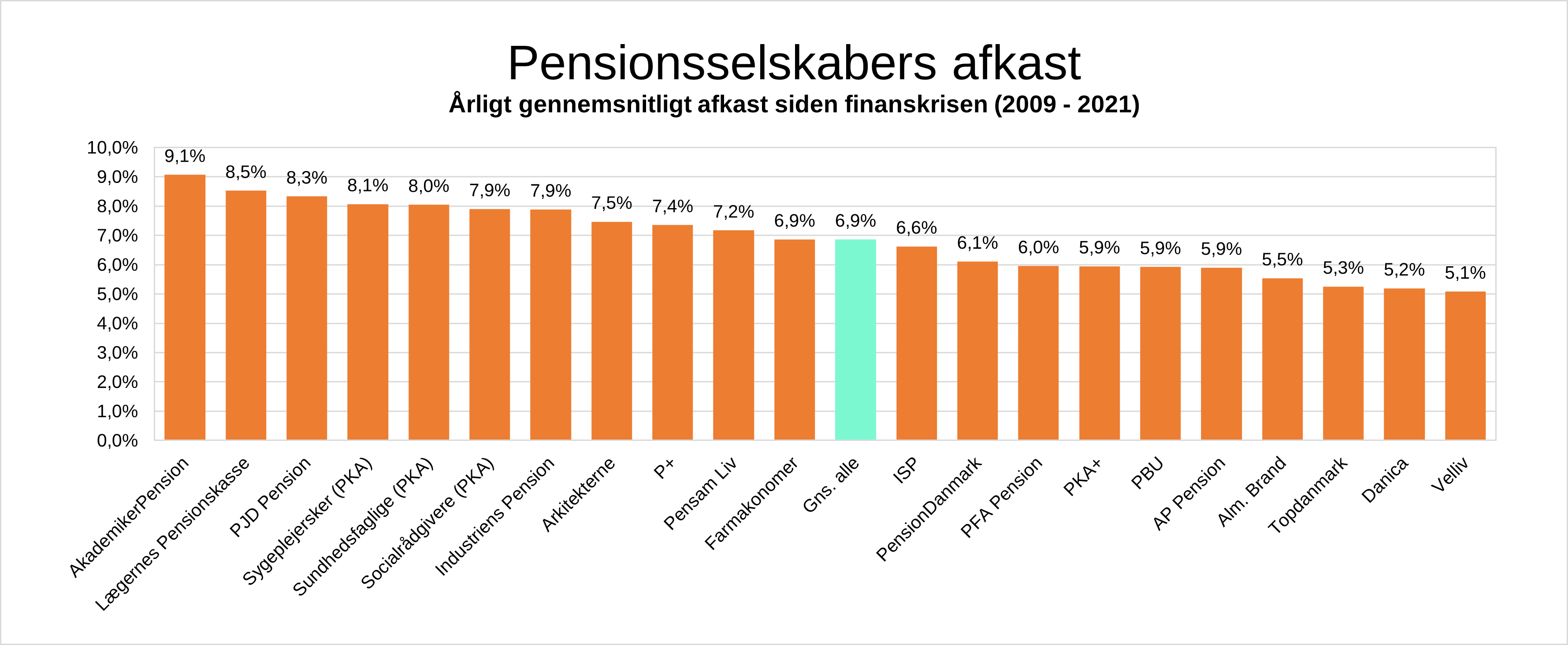
I wanted to see how well Akademikerpension has done wrt. returns. This graph shows average yearly return from the financial crisis 2009 until 2021 and they are actually the best performing among other Danish pension funds [1].
Why does everyone seem to assume that there is a finite amount of work available?
If all of the sudden it becomes possible to build a B2B company at 10x less cost which can save its customer, say, $1m per year and before this company cost $2m per year to run and now costs $200k, then it means before this was unviable and now it is viable — up to $800k profit a year now versus $1m loss per year before — then this increase in productivity has caused an increase in the number of available jobs.
Our economy would have collapsed a long time ago if an increase in productivity resulted in a decrease in employment.
> No-one is sitting around going "you know what I need? More software"
I disagree. Every company goes "I need more software — iff its TCO is less than the savings it produces". So if the cost of producing a piece of software, which can save a company $1m per month, now costs $500k per month to develop instead of $5m per month, then demand for that piece of software will absolute go from zero to greater-than-zero.
> What Jevons paradox actually describes is the situation where usage of a resource becomes more efficient (which means less of it is needed for a given task), but still the total usage of that resource increases.
Why is this stated as a paradox? One simple cause is the given task being performed more than it was before because it is now cheaper (since it uses fewer resources).