What Are Spomeniks?(spomenikdatabase.org)
spomenikdatabase.org
What Are Spomeniks?
https://www.spomenikdatabase.org/what-are-spomeniks
59 comments
Although it's a very unpopular sentiment these days, I also want to go back in time to Old Yugoslavia. I still remember reading "Moj Mikro" and "Svet Kompjutera", attending JUDEF in Šibenik and making friends with kids from all over Yugoslavia. My generation, at least, believed in brotherhood and unity.
Australian here - I too want to go back to old Yugoslavia and see what it was like. I recently had some time in Serbia and Kosovo, and it was eye-opening to say the least - the differences and the similarities between the cultures don't make a lot of sense to the milquetoast mentality inculcated into me by my Aussie upbringing. It is a very fascinating region of the world and I can only say that having spent time in both Belgrade and Pristina, there is a little bit of hope that the new generation will rise from the turmoil of their parents past. Slowly, bit by bit, the prejudice and distrust is eroding.
Hate those border crossings, though. The drive from Vienna to Pristina was something I'll never forget.
Hate those border crossings, though. The drive from Vienna to Pristina was something I'll never forget.
Oh yes. My father had a massive collection of those magazines. He was a hobbyist programmer at that time and I think in one of Svet Kompjutera, he got a review of his software: https://www.worldofspectrum.org/infoseekid.cgi?id=0008074
I'm not so sure how unpopular it is.
I have a friend who steadfastly still calls himself Yugoslavian, rather than Macedonian.
Haven't really talked to him about why, and that's a sample size of 1, but there's others out there who at least look back fondly on Yugoslavia.
I have a friend who steadfastly still calls himself Yugoslavian, rather than Macedonian.
Haven't really talked to him about why, and that's a sample size of 1, but there's others out there who at least look back fondly on Yugoslavia.
Croatian here, although I was a child when Yugoslavia fell apart (born in 1982.), I remember many details about life back then - and in certain aspects, it was better.
I had no notion of Croatians, Serbians, Slovenians, Macedonians.. we were all Yugoslavian, with slightly different accents. To this day, I've friends in all ex-yugoslavian countries and the feeling I get about them is that of brotherhood, not friendship.
We could go to seaside at any point for free or enjoy national parks.
Nowadays, it's cheaper if I fly to Thailand for 2 weeks. It costs me less than a week at my own country's seaside. National parks are overcrowded and deteriorating, and rightist-nationalism ruins the interaction for people like us - who don't hate and just want to get along and enjoy life together.
There was plenty of food and I particularly remember comics, especially characters called Raja, Gaja and Vlaja :)
The only thing I feel sorry for is the animosity that was stirred up because of selfish reasons, the feeling of brotherhood and ability to enjoy the land's natural beauties was something special. I hope that one day we can have all the good back without the negatives.
Stay safe brothers and take care!
I had no notion of Croatians, Serbians, Slovenians, Macedonians.. we were all Yugoslavian, with slightly different accents. To this day, I've friends in all ex-yugoslavian countries and the feeling I get about them is that of brotherhood, not friendship.
We could go to seaside at any point for free or enjoy national parks.
Nowadays, it's cheaper if I fly to Thailand for 2 weeks. It costs me less than a week at my own country's seaside. National parks are overcrowded and deteriorating, and rightist-nationalism ruins the interaction for people like us - who don't hate and just want to get along and enjoy life together.
There was plenty of food and I particularly remember comics, especially characters called Raja, Gaja and Vlaja :)
The only thing I feel sorry for is the animosity that was stirred up because of selfish reasons, the feeling of brotherhood and ability to enjoy the land's natural beauties was something special. I hope that one day we can have all the good back without the negatives.
Stay safe brothers and take care!
Unless i know you, you can add another to your sample. I’m exactly like your friend. I grew up in Yugoslavia and likewise, i find it hard to identify as (north) Macedonian. It was, at least for some of us a really great society to grow up in. I miss it many aspects of that life.
HN is the last place I expected to find this, but thanks! The anglicised use of the word "spomenik" really caught me off guard (I'm from Slovenia), but it makes enough sense after reading the article. I'll definitely try to check this map whenever I travel around the region - the design and sheer scale of some of these was always fascinating to me and I'd love to see more if I happen to be around.
Is it Anglicized, or is it just using that Latin alphabet that some parts of former Yugoslavia employ (including Serbia and Croatia)?
It's anglicised as it's using the English pluralization. In Slovene, the plural of "spomenik" is "spomeniki", here it's "spomeniks". It's even explained at the bottom of the post.
Straight to the photos. They are beautiful!
https://www.spomenikdatabase.org/photo-directory
Thank you for taking the time to post the link. I would have moved on and missed them otherwise. They are truly beautiful indeed!
They are so strange and lovely. A symbol of another era. There are many of these spomeniks / pametniks in Bulgaria too, though it seems Yugoslavia really took it to the next level!
I fell in love with one particular spomenik so hard I decided to make a small replica from concrete: https://www.etsy.com/listing/728310082/concrete-brutalist-ww...
See, without caring about its looks, I like this website.
It gives some context, some explanations and helps me to know why I should care about this.
It also provides some nice content to explore, some pointers to find out more. I just love it and I wish there were more websites with content like this.
Bosnian here. I would never call spomeniks spomeniks in English. I would call them monuments and spomenik in Bosnian. Besides nostalgia that they cause in yugo nostalgic people - I don't see how they are special in any way
To really understand many of these sculptures/monuments it's important to familiarize with the background stories of events that they were built to mark - mostly WWII battles and places of horrible pogroms.
A few links to add more context to some of the best known monuments:
Jasenovac https://www.yadvashem.org/odot_pdf/Microsoft%20Word%20-%2063... , https://en.wikipedia.org/wiki/Jasenovac_concentration_camp
Bubanj Memorial park https://en.wikipedia.org/wiki/Bubanj_Memorial_Park
Battle of Sutjeska (aka Tjentište) https://en.wikipedia.org/wiki/Case_Black
A few links to add more context to some of the best known monuments:
Jasenovac https://www.yadvashem.org/odot_pdf/Microsoft%20Word%20-%2063... , https://en.wikipedia.org/wiki/Jasenovac_concentration_camp
Bubanj Memorial park https://en.wikipedia.org/wiki/Bubanj_Memorial_Park
Battle of Sutjeska (aka Tjentište) https://en.wikipedia.org/wiki/Case_Black
Is there not a perfectly fine English translation, "Memorial"?
Of course, but it's a cool word and it's being used in this context to indicate a specific kind of a memorial from a specific part of the world, which is what makes this post interesting. "Memorials" generically wouldn't make as interesting a topic.
Generic words are often adopted into other languages to carry a more specific meaning, though damned if I can think of an example right now.
I'm sure the title "What Are Spomeniks?" doesn't help because it's basically trolling everyone who speaks a Slavic language, but it's also kind of a cool-looking title and I'd be sad to change it. (How about this? Think of it as ostranenie: https://en.wikipedia.org/wiki/Defamiliarization)
Generic words are often adopted into other languages to carry a more specific meaning, though damned if I can think of an example right now.
I'm sure the title "What Are Spomeniks?" doesn't help because it's basically trolling everyone who speaks a Slavic language, but it's also kind of a cool-looking title and I'd be sad to change it. (How about this? Think of it as ostranenie: https://en.wikipedia.org/wiki/Defamiliarization)
No.
The locally-used name here, "Spomeniks", more precisely groups and identifies these structures than the foreign word "Memorial" would. Calling them by another name would make it difficult to communicate usefully about them, while simultaneously stripping away a piece of their cultural heritage: their native-language name.
Additionally, as the article notes, Spomenik translates to Monument in english, not Memorial. They may be both "Spomeniks" and "Monuments", but the more precise name "Spomeniks" uniquely refers to them, while the less precise name "Monuments" refers to millions of other objects not associated with this Yugoslavian cultural effort as well. Prior argument applies.
For example, we call "Stonehenge" and "Moai" by their locally-used names. They may also be "Monuments", but they have more precise names available, which are widely used.
The locally-used name here, "Spomeniks", more precisely groups and identifies these structures than the foreign word "Memorial" would. Calling them by another name would make it difficult to communicate usefully about them, while simultaneously stripping away a piece of their cultural heritage: their native-language name.
Additionally, as the article notes, Spomenik translates to Monument in english, not Memorial. They may be both "Spomeniks" and "Monuments", but the more precise name "Spomeniks" uniquely refers to them, while the less precise name "Monuments" refers to millions of other objects not associated with this Yugoslavian cultural effort as well. Prior argument applies.
For example, we call "Stonehenge" and "Moai" by their locally-used names. They may also be "Monuments", but they have more precise names available, which are widely used.
"Spomenik" is literally the word for "monument", right? Here's an article from 1849 mentioning building a Napoleonic monument, calling it a spomenik:
https://books.google.co.uk/books?id=rz8_AQAAMAAJ&dq=%22spome...
If you mentioned to another former Yugoslavian that you had drawn a picture of a spomenik, would it be implicitly clear that you meant one of these postwar memorials, or could they reasonably assume you meant, say, the statue of Bruce Lee in Mostar?
https://books.google.co.uk/books?id=rz8_AQAAMAAJ&dq=%22spome...
If you mentioned to another former Yugoslavian that you had drawn a picture of a spomenik, would it be implicitly clear that you meant one of these postwar memorials, or could they reasonably assume you meant, say, the statue of Bruce Lee in Mostar?
[deleted]
Croatian here. You're correct, if you only said the word "spomenik" to anybody from former Yugoslavia, they wouldn't be able to distinguish whether you're talking about precisely those monuments built after WW2, or any other monument built before or after the communist era. Or even, say, Washington monument (In Croatian it's literally called "Washingtonov spomenik"). The word "spomenik" means "a monument" and just that. I was actually surprised to learn that in English the word refers to monuments from a particular location and particular era.
Well, there are other examples - to me, Bohemians are my nation, to English people, "bohemian" describes behavior that used to be seen here (and way overblown in catholic-driven news sources at the time - Prague people were protestant) during the Middle Ages
That's a neat statue, but I'm not qualified to answer otherwise, sorry.
Yes.
As someone who at one time spoke fluent Bosnian/Croatian/Serbian, I can confirm that "spomenik" can be (and sometimes is!) translated as "memorial". Indeed, the root of the word is a verb that in its archaic sense can mean "to remember", as does the verbal root of "memorial". Furthermore, "spomenik" can also be translated as "monument".
So while the word often is used in the context of the WWII socialist memorials, the word in fact just means "monument" or "memorial". For example, here's an article using the term for a memorial to veterans ("defenders"), specifically those who died, from the 1991-1995 Croatian War for Independence: https://pakrackilist.hr/spomenik-hrvatskim-braniteljima-dovr...
I don't completely disagree with the author's idea to use the original term to add some local color, but it's not a special term, just one of the general terms used for memorials and monuments. A related term, "spomenica", is also frequently used, but I'm not sure about the nuances between these two terms.
I'm sure a native speaker could fill us in.
As someone who at one time spoke fluent Bosnian/Croatian/Serbian, I can confirm that "spomenik" can be (and sometimes is!) translated as "memorial". Indeed, the root of the word is a verb that in its archaic sense can mean "to remember", as does the verbal root of "memorial". Furthermore, "spomenik" can also be translated as "monument".
So while the word often is used in the context of the WWII socialist memorials, the word in fact just means "monument" or "memorial". For example, here's an article using the term for a memorial to veterans ("defenders"), specifically those who died, from the 1991-1995 Croatian War for Independence: https://pakrackilist.hr/spomenik-hrvatskim-braniteljima-dovr...
I don't completely disagree with the author's idea to use the original term to add some local color, but it's not a special term, just one of the general terms used for memorials and monuments. A related term, "spomenica", is also frequently used, but I'm not sure about the nuances between these two terms.
I'm sure a native speaker could fill us in.
"Spomenik" definitely means "monument" or "memorial". In a specific context, it also means "tombstone".
"Spomenica" is much less used. I'm a native speaker -- born and raised in Belgrade -- and I've only heard it in very specialized and rare occasions, so I'm having a hard time translating it correctly. In the context I've heard it used, it's an award or recognition, usually in the form of a scroll or a medal.
I like the authors use of the native word "spomenik" to talk about this specific style, but it's definitely just the author's artistic choice.
"Spomenica" is much less used. I'm a native speaker -- born and raised in Belgrade -- and I've only heard it in very specialized and rare occasions, so I'm having a hard time translating it correctly. In the context I've heard it used, it's an award or recognition, usually in the form of a scroll or a medal.
I like the authors use of the native word "spomenik" to talk about this specific style, but it's definitely just the author's artistic choice.
[deleted]
Native speaker here.
Spomenik comes from "spomen", which translates to "recalling /remembering someone dead or some event from the past". It's basically a memorial that should invoke the viewer to recall the events past and/or people who were involved.
While spomenik is used for all monuments around the world, when someone just says "spomenik" the first thing that comes to my mind are those post-WWII spomeniks - probably because there's so many of them.
I feel like monument isn't a right translation. Do you call Eiffel Tower a monument? If yes, I can tell you that Eiffel Tower is definitely not a spomenik. If that is the case, "memorial" is the proper translation for spomenik.
Spomenik comes from "spomen", which translates to "recalling /remembering someone dead or some event from the past". It's basically a memorial that should invoke the viewer to recall the events past and/or people who were involved.
While spomenik is used for all monuments around the world, when someone just says "spomenik" the first thing that comes to my mind are those post-WWII spomeniks - probably because there's so many of them.
I feel like monument isn't a right translation. Do you call Eiffel Tower a monument? If yes, I can tell you that Eiffel Tower is definitely not a spomenik. If that is the case, "memorial" is the proper translation for spomenik.
[deleted]
In England, we call Stonehenge a monument:
https://heritagecalling.com/2016/10/10/im-sorry-but-what-is-...
https://heritagecalling.com/2016/10/10/im-sorry-but-what-is-...
If there were hundreds or thousands of very closely related in time and purpose monuments all over England, there would be a more specific name to group those, too. Calling Spomeniki "monuments" is like calling a tractor a "vehicle" -- it's correct, but it's a loss of useful grouping information.
"very closely related in time and purpose"
One example of this are "war memorials" - of which there are about 80 thousand in the UK (villages, towns, districts in cities, some schools).
https://www.iwm.org.uk/memorials
One example of this are "war memorials" - of which there are about 80 thousand in the UK (villages, towns, districts in cities, some schools).
https://www.iwm.org.uk/memorials
Huh! As i was pondering this after posting, war memorials were exactly the example i thought of.
It's an interesting comparison, because the simple meaning of the phrase is just a memorial to people who died in war. So, for example, the bomber command memorial [1] is, in that sense, a war memorial.
But if you say "war memorial" to a British person, it means something much more specific: a pillar, cross, or obelisk, about ten to twenty feet tall, located at a road junction near the centre of a village or small town, erected after the first or second world war:
https://www.wivenhoehistory.org.uk/wp-content/uploads/2018/1...
[1] https://en.wikipedia.org/wiki/RAF_Bomber_Command_Memorial
It's an interesting comparison, because the simple meaning of the phrase is just a memorial to people who died in war. So, for example, the bomber command memorial [1] is, in that sense, a war memorial.
But if you say "war memorial" to a British person, it means something much more specific: a pillar, cross, or obelisk, about ten to twenty feet tall, located at a road junction near the centre of a village or small town, erected after the first or second world war:
https://www.wivenhoehistory.org.uk/wp-content/uploads/2018/1...
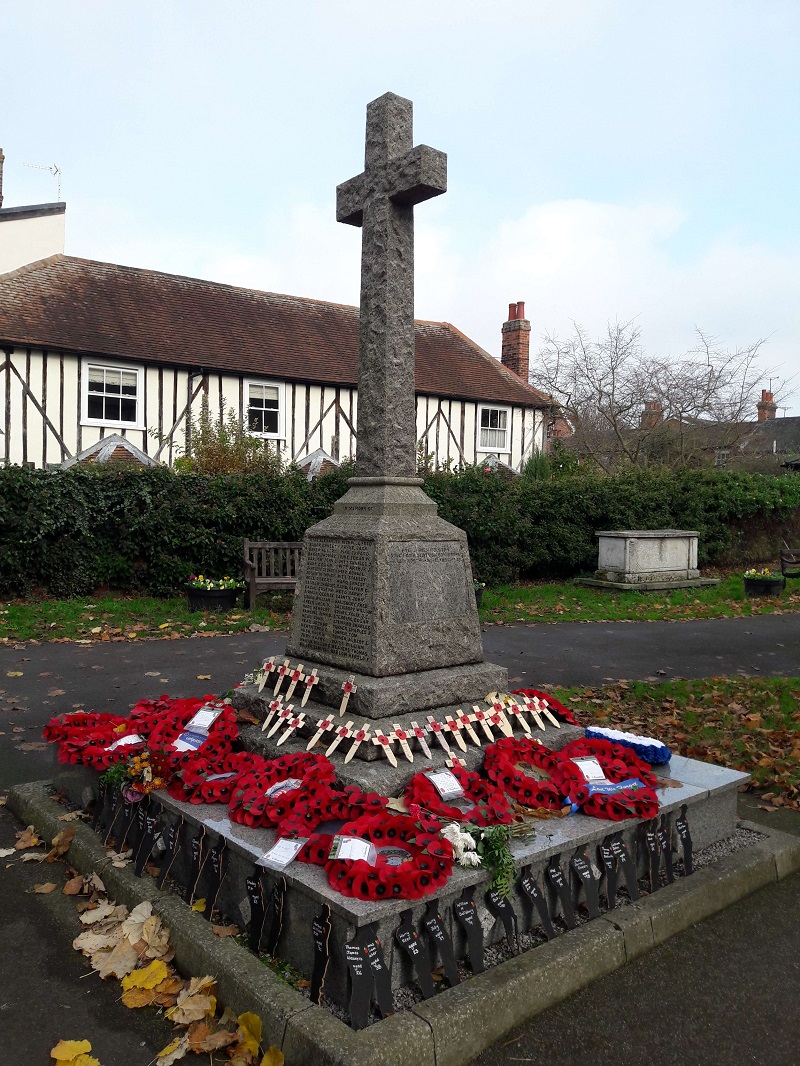
[1] https://en.wikipedia.org/wiki/RAF_Bomber_Command_Memorial
Yeah - did wonder about that very precise meaning - there are quite a few other memorials to wars but they are usually qualified in some way "Korean War Memorial" or even for particular units in WW2 such as the superb Commando Memorial near Spean Bridge in the Highlands:
https://en.wikipedia.org/wiki/Commando_Memorial
https://en.wikipedia.org/wiki/Commando_Memorial
There are, and they're called henges.
> the more precise name "Spomeniks" uniquely refers to them
This is wrong. As a native Slovenian speaker and fluent in English I can say that "spomenik" is as specific in our language as "monument" is in English. This page is the first time I ever saw anybody attribute the word to specifically mean these old socialist monuments.
This is wrong. As a native Slovenian speaker and fluent in English I can say that "spomenik" is as specific in our language as "monument" is in English. This page is the first time I ever saw anybody attribute the word to specifically mean these old socialist monuments.
I think his invented English word "Spomeniks" is supposed to uniquely refer to the particular monuments, not our general word "spomenik".
But similar monuments exist in lots of post communist countries and are called differently based on local languages, so you would need to use different names for these monuments in each country which kind of defeats the purpose of language translation... we need to accept that words don't have 1:1 mapping.
yeah it's kind of weird
There are lots of monuments of this nature across eastern Europe and the old Soviet republics. I watch a popular YouTube channel where a British guy seemingly spends most of his time traveling around old Soviet places and visits lots of these monoliths (also bus stations, railway stations, anything that acted as a sort of 'monument' in Soviet times): https://www.youtube.com/playlist?list=PLqWdYjn21PdH_SfBbtj7Y...
I prefer the big monuments like spomeniks myself, but mosaics seem to be a particularly popular form of monument too, especially in Ukraine: https://www.kathmanduandbeyond.com/photos-soviet-mosaics-for...
I prefer the big monuments like spomeniks myself, but mosaics seem to be a particularly popular form of monument too, especially in Ukraine: https://www.kathmanduandbeyond.com/photos-soviet-mosaics-for...
Funny trivia guitarists Vlatko Stefanovski and Miroslav Tadic recorded the album Krushevo in one of the monuments. Check it out, album and the monument, both are great!
I am trying to visit them all through time...
I am trying to visit them all through time...
Just like you have "chai" tea, or "naan" bread, so you now have "spomeniks" monuments.
What you have to remember is that these structures were erected to commemorate sacrifices that communists wished to be seen, but from a skewed, one sided perspective.
For example, during the WWII, in the whole of Germany occupied Europe, all the concentration camps were opened at the behest of of Germany. But not so in the Independent State of Croatia, which covered most of the territory of Croatia, Bosnia and Herzegovina, parts of Serbia and Slovenia. The monuments commemorating the camps are done in such a generic manner that you wouldn't know the victims from the perpetrators.
And while in Germany you have sites like Yolocaust[1] which ridicule those who don't know what the Holocaust was. You have companies like Valley Eyewear making their marketing campaigns using the Holocaust monuments.
1. https://www.bbc.co.uk/news/world-europe-38675835 2. https://www.smh.com.au/business/companies/australian-sunglas...
What you have to remember is that these structures were erected to commemorate sacrifices that communists wished to be seen, but from a skewed, one sided perspective.
For example, during the WWII, in the whole of Germany occupied Europe, all the concentration camps were opened at the behest of of Germany. But not so in the Independent State of Croatia, which covered most of the territory of Croatia, Bosnia and Herzegovina, parts of Serbia and Slovenia. The monuments commemorating the camps are done in such a generic manner that you wouldn't know the victims from the perpetrators.
And while in Germany you have sites like Yolocaust[1] which ridicule those who don't know what the Holocaust was. You have companies like Valley Eyewear making their marketing campaigns using the Holocaust monuments.
1. https://www.bbc.co.uk/news/world-europe-38675835 2. https://www.smh.com.au/business/companies/australian-sunglas...
It's almost impossible to comprehend now that the communist revolution was, at one time, a highly progressive Utopian fantasy materialized. That for a short time it inspired works of art like this and was a source of optimism for millions of people before descending into the darkness of the cold war. It gives serious pause to the alluring ideal of socialism in this country. Everyone always thinks that their time will be different and that they have it all figured out. But the insidious side of human nature that always thwarts such ideals and reduces to authoritarianism is a constantly insurmountable baseline of what we are.
Please don't take HN threads on generic ideological tangents. They lead to the same few predictable themes, repeated over and over, usually nastily. They're a sort of recitation, which is the opposite of the curious discussion this site is for. One is about repeating things, the other is about saying new things.
https://news.ycombinator.com/newsguidelines.html
https://hn.algolia.com/?dateRange=all&page=0&prefix=false&qu...
https://news.ycombinator.com/newsguidelines.html
https://hn.algolia.com/?dateRange=all&page=0&prefix=false&qu...
Keep in mind that Yugoslavia was a completely different thing during the cold war. It was a communist country that was not part of the Comintern, or the Warsaw pact. It, in fact, had open borders with the west.
This caused it to be in a much better place economically than the rest of the communist world.
There's an old nostalgic american tourist piece about it: https://www.youtube.com/watch?v=0RRnCnO1Y2c&has_verified=1
This caused it to be in a much better place economically than the rest of the communist world.
There's an old nostalgic american tourist piece about it: https://www.youtube.com/watch?v=0RRnCnO1Y2c&has_verified=1
I travelled from Italy into Yugoslavia in 1988 by train and I wouldn't exactly describe it as a pleasant experience - train stopped in the middle of nowhere and was surrounded by soldiers and everyone had to endure a very thorough check of our travel documents. Travelling from Yugoslavia into Hungary on the same trip I don't think the train even stopped.
Interesting. I have no way of knowing, but my guess would be that your experience is a consequence of Yugoslavia starting to break apart. All out war started just 2 years after your trip.
A big part of Yugoslavia's budget came from tourism, so I don't think your experience was common in the years before the breakup.
Thanks for sharing though. I love hearing stories from Yugo history.
A big part of Yugoslavia's budget came from tourism, so I don't think your experience was common in the years before the breakup.
Thanks for sharing though. I love hearing stories from Yugo history.
It would have been impossible for the train not to have stopped between Hungary and Yugoslavia — the two countries were not at particularly friendly terms.
Other than the border check (which might have been a more stringent random check), was your visit otherwise unpleasant?
Other than the border check (which might have been a more stringent random check), was your visit otherwise unpleasant?
Oh wow. Currently in Bosnia & Hercegovina, did not expect to see this on the front page of HN. There are so many here. They are impressive to see in person. The one in Sarajevo is a monument to WWII soldiers: https://www.spomenikdatabase.org/sarajevo
Also, Stećak, the medieval version: https://bazerdzan.ba/blogs/blog/stecak-the-true-bosnian-trea...
Also, Stećak, the medieval version: https://bazerdzan.ba/blogs/blog/stecak-the-true-bosnian-trea...
I was there as well a couple years ago and purposely sought a few out just to see them in person! Very imposing and interesting monuments indeed. Memorable, too.
There is a great book out with lots of pictures of these I'd recommend: https://www.amazon.com/gp/product/0995745536/
Also for trivia, there is a Spomenik in the new Warzone mode in Call of Duty.
https://www.callofduty.com/warzone/strategyguide/tac-map-atl...
Also for trivia, there is a Spomenik in the new Warzone mode in Call of Duty.
https://www.callofduty.com/warzone/strategyguide/tac-map-atl...
[deleted]
Damn it. I want to go back in time, and back to Sarajevo.