Why is simple decoration so rare in recent work?(benlandautaylor.com)
benlandautaylor.com
Why is simple decoration so rare in recent work?
https://www.benlandautaylor.com/p/why-we-cant-have-nice-things
95 comments
> If you built the ornate street lamps today, even if it was in style, it would likely be decried as "unnessecary spending".
I think this is one of the author's weaker points because ornate street lamps are still built and installed pretty regularly today. They're pretty common in the more pedestrian-focused parts of cities where people are actually looking at the street lamps, while the purely functional ones go in car-centric spaces.
I think this is one of the author's weaker points because ornate street lamps are still built and installed pretty regularly today. They're pretty common in the more pedestrian-focused parts of cities where people are actually looking at the street lamps, while the purely functional ones go in car-centric spaces.
Yes, I've seen some brand new ornate/decorative lighting, usually on pedestrian- and bicycle-focused construction projects with grant funding, as it's expensive.
Without those grants from regional/state agencies, a cash-strapped town could otherwise use the cheapest available option for lighting..
Without those grants from regional/state agencies, a cash-strapped town could otherwise use the cheapest available option for lighting..
My part of London has an interesting solution to this problem - the government will install new "normal" streetlights unless the residents of the street want to pay for ornate Victorian street lights. The street can vote and pay for it however they want.
https://www.richmond.gov.uk/services/roads_and_transport/str...
https://www.richmond.gov.uk/services/roads_and_transport/str...
The built environment is a bad example. Because Victorians are cute and twee, you can't renovate or demolish them without exorbitant costs and delays. Because brutalist structures are not cute twee, despite being more rare and historically important, you can do whatever the fuck you want to them. So if I were building a home today, and I wanted to ensure that the buyer of this land would get the most value of it, I'd hope that the architecture of my home is just interesting enough to bring me and my community joy, but not so distinct that someone new coming into the community isn't bogged down by B.S.
If the author was more serious about this thread, maybe investigate why people don't have as many pictures of their family hanging on the walls as they used to. Sentimentality, not "decoration," is the thing we lost.
If the author was more serious about this thread, maybe investigate why people don't have as many pictures of their family hanging on the walls as they used to. Sentimentality, not "decoration," is the thing we lost.
My reading of the article was that the defence for why there aren’t more intricate details is because people think it’s more expensive due to complexity of production. He then went on to broadly say that shouldn’t be the case due to scale economy etc.
He actually also did mention that some things are simple yet still ugly.
The patterned china case though was precisely for arguing the more complex manufactured piece product being cheap AF.
I don’t think the author claimed it was bad to prefer simple, just that lots of public goods stuff are boring looking these days. I feel that way about a lot of concrete I see.
I would push back on “single most mainstream”. These decisions are not made by some voting mechanism. Many times it’s a local optima of loud complainers and opinionated decision makers. The most mainstream people actually can’t be bothered by most things, but would appreciate (IMHO) some intrigue from time to time.
Another related thing: HGTV disease. Where the house is all white everything…which I have a preference to now…but I do wonder if it’s just memetic influence of what people say looks nice.
He actually also did mention that some things are simple yet still ugly.
The patterned china case though was precisely for arguing the more complex manufactured piece product being cheap AF.
I don’t think the author claimed it was bad to prefer simple, just that lots of public goods stuff are boring looking these days. I feel that way about a lot of concrete I see.
I would push back on “single most mainstream”. These decisions are not made by some voting mechanism. Many times it’s a local optima of loud complainers and opinionated decision makers. The most mainstream people actually can’t be bothered by most things, but would appreciate (IMHO) some intrigue from time to time.
Another related thing: HGTV disease. Where the house is all white everything…which I have a preference to now…but I do wonder if it’s just memetic influence of what people say looks nice.
I think it's still a large degree of fashion. In 2024 we spot the lone ornamented streetlamp that survived and think it looks nice or appreciate that its still standing, or walk past the an old decorated building that was maintained all these years think it looks elegant, but if you travelled back to 1920 when your entire environment was filled with cheaply manufactured fake ornamentation then the new simplistic modern designs would have been the things that demanded notice and been associated as the new hotness and an ornamented cast iron product would have carried an association as old and dated. For the same reason if you sold an avocado green kitchen appliance in 1988 you'd be viewed as out of fashion and still too early to be retro-cool. Not everything gets a retro-resurgence, but everything gets old.
Case in point: Eichler houses.
When I was young, they were cheap and cheerful and derided as "little boxes made of ticky-tacky".
Now that they're going for a million+, they are "mid century modern" and cool.
https://en.wikipedia.org/wiki/Joseph_Eichler#Eichler_Homes
When I was young, they were cheap and cheerful and derided as "little boxes made of ticky-tacky".
Now that they're going for a million+, they are "mid century modern" and cool.
https://en.wikipedia.org/wiki/Joseph_Eichler#Eichler_Homes
Some of that perceived value is the (wonderful) original Modernist attributes of simplicity, manufacturability, and form-follows-function, which are integral to the design philosophy of those homes.
The design work of the Eamses is another case: https://www.vitra.com/en-me/magazine/details/eames-potato-ch..., it’s just a magnificent use of the material.
Even the original Case Study homes were intended to be affordable, not made as mansions: https://en.wikipedia.org/wiki/Case_Study_Houses (https://en.wikipedia.org/wiki/Bailey_House_(Los_Angeles)#Des...)
Needless to say, I think OP is just not well informed about design.
Just as it might have been hard to make an ornate street lamp, it’s also hard to make a clean modernist home. There are reasons (personal, practical, philosophical) to prefer one or the other for a given use, but the author isn’t seeing those nuances.
The design work of the Eamses is another case: https://www.vitra.com/en-me/magazine/details/eames-potato-ch..., it’s just a magnificent use of the material.
Even the original Case Study homes were intended to be affordable, not made as mansions: https://en.wikipedia.org/wiki/Case_Study_Houses (https://en.wikipedia.org/wiki/Bailey_House_(Los_Angeles)#Des...)
Needless to say, I think OP is just not well informed about design.
Just as it might have been hard to make an ornate street lamp, it’s also hard to make a clean modernist home. There are reasons (personal, practical, philosophical) to prefer one or the other for a given use, but the author isn’t seeing those nuances.
I think the pattenrned china is not machine washable. Such concerns play in.
The author sort of brushes aside the idea that it became unfashionable due to it no longer being a status symbol in the footnotes, but I think that is basically the answer, but with another step in between.
When ornamentation became cheap and mass producible, it also frequently became _ugly_. Tacky knockoffs of appealing designs became far more common than the original decorations. So much more so common in fact that it became the default association people have with decorative ornamentation. A plain white plate is making no pretensions and is exactly what it appears to be, but the same plate stamped with a pattern is something that's trying and failing to appear fancier than it is. Worse, a hand-painted plate will be assumed to be a cheap stamped plate.
When ornamentation became cheap and mass producible, it also frequently became _ugly_. Tacky knockoffs of appealing designs became far more common than the original decorations. So much more so common in fact that it became the default association people have with decorative ornamentation. A plain white plate is making no pretensions and is exactly what it appears to be, but the same plate stamped with a pattern is something that's trying and failing to appear fancier than it is. Worse, a hand-painted plate will be assumed to be a cheap stamped plate.
> When ornamentation became cheap and mass producible, it also frequently became _ugly_. Tacky knockoffs of appealing designs became far more common than the original decorations.
My observation of taste has been that most people have little.
Consequently, they'd just as soon buy an imitation of the thing they think they need rather than the real thing, if they can save a buck. (See: vanilla, modern McDonald's)
As a result, there's a race to the bottom as soon as a thing is being sold in mass quantities. Because there is little quality differentiation, it's mostly judged on price.
Consequently, you get Amazon-fancy.
Which is some cost-optimized pastiche of what a tasteless manufacturer perceives historical luxury to be.
Exhibit A: https://www.amazon.com/s?k=decorative+books
My observation of taste has been that most people have little.
Consequently, they'd just as soon buy an imitation of the thing they think they need rather than the real thing, if they can save a buck. (See: vanilla, modern McDonald's)
As a result, there's a race to the bottom as soon as a thing is being sold in mass quantities. Because there is little quality differentiation, it's mostly judged on price.
Consequently, you get Amazon-fancy.
Which is some cost-optimized pastiche of what a tasteless manufacturer perceives historical luxury to be.
Exhibit A: https://www.amazon.com/s?k=decorative+books
> unfashionable due to it no longer being a status symbol
One of my favorite examples of this involves printing fancy invitations or business cards.
Back when printing involved actual lead type, it was normal for the printed text to be ridged because it was an unavoidable part of the process of slamming metal onto it. It was more-expensive and difficult to make prints where the paper remained flat, so that was used to indicate a fancy/expensive product.
With modern printing technology, anyone can make flat business-cards and RSVPs for pennies, so it's reversed, and it's a sign of fancy/expense to produce things where the text is embossed/debossed just like the old days.
One of my favorite examples of this involves printing fancy invitations or business cards.
Back when printing involved actual lead type, it was normal for the printed text to be ridged because it was an unavoidable part of the process of slamming metal onto it. It was more-expensive and difficult to make prints where the paper remained flat, so that was used to indicate a fancy/expensive product.
With modern printing technology, anyone can make flat business-cards and RSVPs for pennies, so it's reversed, and it's a sign of fancy/expense to produce things where the text is embossed/debossed just like the old days.
Same thing happened with carpeting vs. wood flooring.
The more expensive to produce/costlier to maintain stuff tends to be more fashionable.
The more expensive to produce/costlier to maintain stuff tends to be more fashionable.
> Tacky knockoffs of appealing designs became far more common than the original decorations.
Making me think of my mom and grandma's kitchens with their farm animal themes. It's like we're in a generational cycle of ornamentation > tacky > minimalism > REPEAT.
Making me think of my mom and grandma's kitchens with their farm animal themes. It's like we're in a generational cycle of ornamentation > tacky > minimalism > REPEAT.
A classic case of supply exceeding demand, cratering value
I think that’s a bit simplistic. There are still a lot of plates, some of them go for $20 a piece are on people’s wedding registries. They’re “artisanal”. They’re what the fancy restaurants serve your food on. They might even be mass produced. They’re in the Williams Sonoma catalog. But they certainly aren’t decorated like old plates were.
There’s a lot of art-historical and economics and social factors that shape these kinds of things. While I think the author is right to look at consumer capitalism, I don’t think aesthetics can be so neatly boiled down in the way that he tries to.
There’s a lot of art-historical and economics and social factors that shape these kinds of things. While I think the author is right to look at consumer capitalism, I don’t think aesthetics can be so neatly boiled down in the way that he tries to.
Bit of a selection bias here. Why are all the things we bothered keeping around for 100 years so durable and fancy?
There's definitely selection bias in play, but I think for household objects (such as you may find in a junk/antique store) material science plays a role.
Two things come into vogue in the mid 20th century; plastic and electricity.
Plastic does not age well. It decomposes with exposure to light, so pretty much all old plastic looks pretty bad. Personally I never buy old plastic even if it looks good, because, well, plastic.
Secondly electricity. Electricity things again do not have good longevity. (In the shop were a few old-style hand cranked cast-iron meat grinders. They'll still work perfectly 200 years from now. The plastic attachment to my Kenwood mixer; not do much.)
For furniture, material again comes into play. Solid (hard) wood new furniture is very expensive. (As it should be.) So most wooden furniture made now is either soft-wood, or manufactured wood, or both.
I buy old furniture from time to time, but I also do what I think lots of people did in the past (and which has not survived) recycle wood i have to hand for practical purposes. I don't expect these to live beyond the room I'm making them for.
Two things come into vogue in the mid 20th century; plastic and electricity.
Plastic does not age well. It decomposes with exposure to light, so pretty much all old plastic looks pretty bad. Personally I never buy old plastic even if it looks good, because, well, plastic.
Secondly electricity. Electricity things again do not have good longevity. (In the shop were a few old-style hand cranked cast-iron meat grinders. They'll still work perfectly 200 years from now. The plastic attachment to my Kenwood mixer; not do much.)
For furniture, material again comes into play. Solid (hard) wood new furniture is very expensive. (As it should be.) So most wooden furniture made now is either soft-wood, or manufactured wood, or both.
I buy old furniture from time to time, but I also do what I think lots of people did in the past (and which has not survived) recycle wood i have to hand for practical purposes. I don't expect these to live beyond the room I'm making them for.
I intentionally buy non structural/utility things to be ephemeral.
First, tastes and circumstances change, so it does not benefit me to spend extra on furniture/decorations/etc that last decades. Second, the prices increase drastically and disproportionately at the high “quality” end of the curve.
For example, I want to spend for the best on the bones of whatever I’m buying. The foundation, plumbing, electrical, that stuff is there forever, no one wants to open up walls and dig to fix things.
But furniture, decor, fixtures, finishes might want to be redone in 10 or 20 years. Plus it’s much cheaper so that you can afford doing it every 10 years rather than buy something that lasts 100 years.
In business, customers respond to the same. They react positively to design changes every decade or so. That’s why hotels/restaurants/stores/etc go through a property improvement plan regularly. It makes people feel like the property is being renewed or invested in.
First, tastes and circumstances change, so it does not benefit me to spend extra on furniture/decorations/etc that last decades. Second, the prices increase drastically and disproportionately at the high “quality” end of the curve.
For example, I want to spend for the best on the bones of whatever I’m buying. The foundation, plumbing, electrical, that stuff is there forever, no one wants to open up walls and dig to fix things.
But furniture, decor, fixtures, finishes might want to be redone in 10 or 20 years. Plus it’s much cheaper so that you can afford doing it every 10 years rather than buy something that lasts 100 years.
In business, customers respond to the same. They react positively to design changes every decade or so. That’s why hotels/restaurants/stores/etc go through a property improvement plan regularly. It makes people feel like the property is being renewed or invested in.
[deleted]
There are maybe a few hundred thousand violins from Germany circulating in the United States that are between 100 and 300 years old. In my high school, nearly every violinist was using an instrument that was affordable and older than 100 years. These are still delicate. It's a weird piece of insight porn to always point to selection bias, I mean it's very well possible that as long as it weren't destroyed by some big trauma like a fire, maybe every old violin has pretty much survived.
Is it a selection bias, a survival bias, that says that violins are particularly durable and fancy if they didn't accidentally light on fire? No. I think the author is completely right that it has to do with functionality and taste.
Is it a selection bias, a survival bias, that says that violins are particularly durable and fancy if they didn't accidentally light on fire? No. I think the author is completely right that it has to do with functionality and taste.
Because we already disposed of the more-plain, less-durable stuff that didn't survive the cut between "Keep," and "Trash heap"?
(Yes, it is perhaps the case that this all conspires to form a bit of circular logic. It happens sometimes.)
(Yes, it is perhaps the case that this all conspires to form a bit of circular logic. It happens sometimes.)
I guess because businesscosts weren't calculated to be as competitive as possible and labour was far cheaper, so it wasn't a problem for people to take their time and build solid things. Now we just want super fast machines that produce as much as possible with the least amount of humans involved.
I think what they're getting at is that for something low quality is less likely to have survived for a hundred years to even be a contender in this race.
This topic shows up every month,l. People surround themselves with different objects of different aesthetics for different reasons. Ornament is beautiful, ornament is noise, its just relative. I think the author admires either specific aesthetics or the value craftsmanship, which might be easier to spot in highly decorated objects, but it's arguably subjective!
Right? So like in the late 1700's, in the "Rococo" period, we had lighting like this:
https://upload.wikimedia.org/wikipedia/commons/8/8a/Palazzo_...
then by the time we get to the "Edo" period of the 1600's, it got reduced to almost bare pragmatism, along the lines of something very similar to this modern reproduction:
https://commons.wikimedia.org/wiki/File:Old_Toshima_House07s...
https://upload.wikimedia.org/wikipedia/commons/8/8a/Palazzo_...

then by the time we get to the "Edo" period of the 1600's, it got reduced to almost bare pragmatism, along the lines of something very similar to this modern reproduction:
https://commons.wikimedia.org/wiki/File:Old_Toshima_House07s...

The simple fact of the matter is that people have essentially zero expectations when it comes to aesthetics in the public realm. This lack of expectations also comes with a lack of education, which means that they both lack aesthetic literacy and don’t care about correcting it.
Hence you get hoodies and sweatpants as the default fashion and boxes as the default building style. It has very little to do with actual cost of making the items. None of this will change until it becomes socially unacceptable to dress poorly or build an ugly house. And considering that H. L. Mencken commented on the “American lust for the hideous” a century ago, it’s probably never going to get better.
Hence you get hoodies and sweatpants as the default fashion and boxes as the default building style. It has very little to do with actual cost of making the items. None of this will change until it becomes socially unacceptable to dress poorly or build an ugly house. And considering that H. L. Mencken commented on the “American lust for the hideous” a century ago, it’s probably never going to get better.
Had to check it out for myself. "The American Libido for the Ugly" https://www.thoughtco.com/libido-for-the-ugly-by-mencken-169...
Yeah he employed a few versions of that phrase. I heard him use it in this (excellent) interview, which is the only recording of his voice.
https://youtu.be/QpGzpqU-b04?si=Lhpsz4N30zV1Hqi0
https://youtu.be/QpGzpqU-b04?si=Lhpsz4N30zV1Hqi0
Craftsmanship. You can have it with elaborate roman or colonial architecture or minimalist design.
It needs to be present every step along the way from design, to building, to installation. But it starts with design and needs to be intentional. I think this has become rare for the general public.
It needs to be present every step along the way from design, to building, to installation. But it starts with design and needs to be intentional. I think this has become rare for the general public.
There are plenty of places that are installing nice streetlights. For example, in Berkeley when they underground utilities they install nice old-school lighting fixtures.
This is very much a "these things are true and terrible" essay when it should be "I'm seeing a lot of these things that I don't like." Don't assert as facts things that you do not know to be facts.
And like most things that try to invoke authority by mentioning Jobs or Apple, this essay is entirely wrong about the invocation. A style for the case of an extremely functional device should not detract from the device, but streetlights aren't "extremely" functional devices that do a lot of things.
This is very much a "these things are true and terrible" essay when it should be "I'm seeing a lot of these things that I don't like." Don't assert as facts things that you do not know to be facts.
And like most things that try to invoke authority by mentioning Jobs or Apple, this essay is entirely wrong about the invocation. A style for the case of an extremely functional device should not detract from the device, but streetlights aren't "extremely" functional devices that do a lot of things.
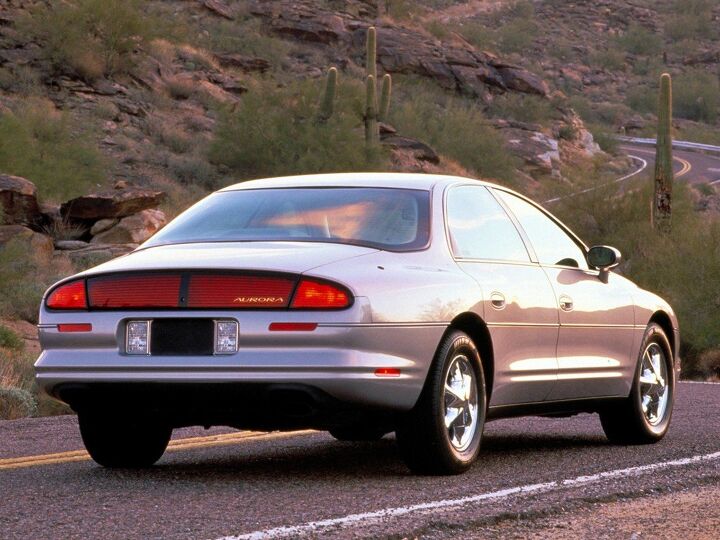
I had wondered why cars often had so original design character, which I can explain with this example. I was at an auto show where a couple was looking at an Oldsmobile Aurora (pictured [0]). It's an innocuous design with the rear lights being the distinctive/only stand-out styling feature. I could overhear them both going back and forth, "I like the car... but those rear lights..."--a lost sale. Later model years appear to use split rear lights.
That's when I realized how industrial design has to eliminate "reasons not to buy" often much more so than generate "reasons to buy". A bland design offends everyone about the same amount or less, an opinionated/ornate design offends some much more than that base amount. So in the end, with mass manufacturing and globalization, it means needing to appeal to greater masses and less ornamentation. I mean if it was my job to draft the streetlights, I wouldn't want to deal with a redesign because of pushback on artistic choices. I probably just want to get done on designing more resilient city garbage bins, etc.
[0] https://cdn-fastly.thetruthaboutcars.com/media/2023/12/20/15...
That's when I realized how industrial design has to eliminate "reasons not to buy" often much more so than generate "reasons to buy". A bland design offends everyone about the same amount or less, an opinionated/ornate design offends some much more than that base amount. So in the end, with mass manufacturing and globalization, it means needing to appeal to greater masses and less ornamentation. I mean if it was my job to draft the streetlights, I wouldn't want to deal with a redesign because of pushback on artistic choices. I probably just want to get done on designing more resilient city garbage bins, etc.
[0] https://cdn-fastly.thetruthaboutcars.com/media/2023/12/20/15...
My ex recently picked an apartment to rent. She's rich and they rent fancy places in $5000-$7000 range that's like 5x median rent in their city in Greece so can afford just about any place. She consistently rejected anything that had any sign of decor. "They have a goddamn Roman column in the house - what are you, an emperor? this is ridiculous!". Resulting place was high-tech minimalistic - basically a large empty space with nothing to catch the eye and very mild, bland colour scheme.
I think it is because ornamentation feels out of place quickly in a world where ornamentation is scarce. If there is ornamentation everywhere, the ornamentation is natural. Like in a church. In a church the plain post modern clean design would look out of place. It would be shouting for attention.
In some European churches you see this happening. Where you have a modern glass or minimalist pulpit. It just looks so out of place.
I think many people dont understand this dynamic. It is about overal design. It is about attention attenuation. Its not that people think the lush baroque or a art deco designs are ugly as an individual piece. Its that they associate it with a certain aesthetic (that has also been butchered by tasteless people), then even when they see a beautiful piece of furniture or decoration. It seems out of place.
I think many people dont understand this dynamic. It is about overal design. It is about attention attenuation. Its not that people think the lush baroque or a art deco designs are ugly as an individual piece. Its that they associate it with a certain aesthetic (that has also been butchered by tasteless people), then even when they see a beautiful piece of furniture or decoration. It seems out of place.
My house was built recently, and the modern aesthetic that builders are producing in my part of the country is very sterile, spare/spartan, gray, and open-concept. I currently intend to stay in this house until my kids are off, but I still have real estate searches going for the older neighborhoods a town over, because those houses have more character.
What do I mean by "character"? I don't really know, I'm not a designer or architect, but I know what I like. They have wood flooring, but not the modern wood flooring with just identical 4" wide planks (and usually not even actual wood), I'm talking craftsmanship with patterns of different types and colors of wood. They have wood moulding, trim, and millwork around windows, doors, ceilings, and fireplaces. There are trees in those neighborhoods older than my parents.
I sometimes think that I'd like to design some of those elements as upgrades to this house, but even if I had the money, time, and patience for the task, I don't have the mind for it. It would need to be a complete overhaul, because:
> If there is ornamentation everywhere, the ornamentation is natural. Like in a church.
> Where you have a modern glass or minimalist pulpit. It just looks so out of place.
Even if I tried, I'm fairly sure the result would end up obviously-tacked-on (and thus tacky), looking like a dignified, stately older house in the same way the cybertruck looks like a pickup truck.
What do I mean by "character"? I don't really know, I'm not a designer or architect, but I know what I like. They have wood flooring, but not the modern wood flooring with just identical 4" wide planks (and usually not even actual wood), I'm talking craftsmanship with patterns of different types and colors of wood. They have wood moulding, trim, and millwork around windows, doors, ceilings, and fireplaces. There are trees in those neighborhoods older than my parents.
I sometimes think that I'd like to design some of those elements as upgrades to this house, but even if I had the money, time, and patience for the task, I don't have the mind for it. It would need to be a complete overhaul, because:
> If there is ornamentation everywhere, the ornamentation is natural. Like in a church.
> Where you have a modern glass or minimalist pulpit. It just looks so out of place.
Even if I tried, I'm fairly sure the result would end up obviously-tacked-on (and thus tacky), looking like a dignified, stately older house in the same way the cybertruck looks like a pickup truck.
Performative austerity.
As Paul Fussell puts it in his book on class, the lower classes love "goop".
Decoration got displaced by design.
Dieter Rams to teenage engineering... There are ascetic elements all over, but they are those of industry.
Eames Chair's aren't embellished, they are the embellishment in the room. With a flood of space in the modern era a plain room becomes a blank canvas that you fill with "Stuff" to make a statement.
This goes for clothing as well. WE have gone from "look that the dress I got that I will wear for 2 years" to "look at the shoes I got that will wear for two months".
Dieter Rams to teenage engineering... There are ascetic elements all over, but they are those of industry.
Eames Chair's aren't embellished, they are the embellishment in the room. With a flood of space in the modern era a plain room becomes a blank canvas that you fill with "Stuff" to make a statement.
This goes for clothing as well. WE have gone from "look that the dress I got that I will wear for 2 years" to "look at the shoes I got that will wear for two months".
> Dieter Rams to teenage engineering...
The intention against ornamets started way ealier with Adolf Loos[0] and the design at Bauhaus. It's somehow the result of what modernism did to arts/design and what two world wars did to society as a whole.
[0]: https://en.wikipedia.org/wiki/Ornament_and_Crime
The intention against ornamets started way ealier with Adolf Loos[0] and the design at Bauhaus. It's somehow the result of what modernism did to arts/design and what two world wars did to society as a whole.
[0]: https://en.wikipedia.org/wiki/Ornament_and_Crime
Is this a weird thread to bring up tattoos? Those are certainly often ornamental and have become much more common than in the days of that streetlamp he describes. Also, they are lasting and very personal. They buck the trend the author describes. Why?
I dont have tattoos, but I would suggest that it's a way of expressing individuality in a world where the people all around me are increasingly homogeneous.
Our living spaces, work spaces, and public spaces seem less able to express our individuality, but our body space remains our own.
Ironically when they become ubiquitous their value and interest diminishes. In a recent visit to Florida the number of folk with visible tattoos was -much- higher than I'm used to at home. Here visible tattoos aren't "rare" but uncommon. In Florida I could see 10 people with tattoos just by swivling my head.
Our living spaces, work spaces, and public spaces seem less able to express our individuality, but our body space remains our own.
Ironically when they become ubiquitous their value and interest diminishes. In a recent visit to Florida the number of folk with visible tattoos was -much- higher than I'm used to at home. Here visible tattoos aren't "rare" but uncommon. In Florida I could see 10 people with tattoos just by swivling my head.
With tattoos that they can't even appreciate? https://www.youtube.com/watch?v=H2lmojePnA0&t=71s
(chicas, he's not into the botox; dudes, she's not into the glasspacks)
[yes, I'm too old; I'm sure you all can properly update the observation for me]
(chicas, he's not into the botox; dudes, she's not into the glasspacks)
[yes, I'm too old; I'm sure you all can properly update the observation for me]
I wonder if at least part of it is a reaction to the pervasive overstimulation present in our modern lifestyles.
I think this is a good point.
The complementary expression being: part of the ornamentation of the past was in reaction to the pervasive under stimulation of people in urban areas 150+ years ago.
There was less going on - less connectedness — and discussing the design and position and prestige of the new street lamps might’ve been the most interesting development in a town all month.
The gigantic population shift from rural to urban settings caused all sorts of strange effects, existential angsts, new art forms, massive complexification of everything… and much much more.
And it’s a bi-directional event-horizon:
We live in an era they could never imagine. And we, now, can never truly appreciate how they lived then.
The complementary expression being: part of the ornamentation of the past was in reaction to the pervasive under stimulation of people in urban areas 150+ years ago.
There was less going on - less connectedness — and discussing the design and position and prestige of the new street lamps might’ve been the most interesting development in a town all month.
The gigantic population shift from rural to urban settings caused all sorts of strange effects, existential angsts, new art forms, massive complexification of everything… and much much more.
And it’s a bi-directional event-horizon:
We live in an era they could never imagine. And we, now, can never truly appreciate how they lived then.
Decorated objects run the risk of falling foul of taste. Some percentage of the population may simply not like it. Or tastes may change.
But simple, functional objects are timeless. There's nothing to dislike, as long as they remain functional.
But simple, functional objects are timeless. There's nothing to dislike, as long as they remain functional.
I agree in the sense that decorated objects "evoke a response" whereas "bland" becomes invisible. There's nothing to dislike, equally nothing to like.
Catering for a big event? Pretty sure the food will be bland. Can be too spicy, or use "strange" ingredients. When did you last see duck or venison as the options?
As individuals we can un-bland our spaces and some do. But public spaces are designed by committee so always revert to blandness.
(In an effort to combat this some public spaces commission sculptures from artists. When unveiled there's always bad press, because finding people who don't like it is easy. 10 years later it's "part of our heritage".)
Creative things evoke a response , and in governance responses are to be avoided.
Catering for a big event? Pretty sure the food will be bland. Can be too spicy, or use "strange" ingredients. When did you last see duck or venison as the options?
As individuals we can un-bland our spaces and some do. But public spaces are designed by committee so always revert to blandness.
(In an effort to combat this some public spaces commission sculptures from artists. When unveiled there's always bad press, because finding people who don't like it is easy. 10 years later it's "part of our heritage".)
Creative things evoke a response , and in governance responses are to be avoided.
This also extends to the web.
Make a beautiful website and you'll attract a crowd of detractors lamenting your use of custom web fonts and JavaScript animations. Only a plain website with minimal styling is allowed. These detractors will make quite sensible arguments about how you're wasting precious bandwidth and opening users up to security vulnerabilities with your divergence from a stock-standard HTML file, but I think there's something more at play here -- a kind of aesthetic tribalism. A religion that states that there's only one way to build for the web, and that's with a payload of less than 1kb. Developers who care about beauty have become the enemy of our people, and they must not be allowed to take any ground.
Make a beautiful website and you'll attract a crowd of detractors lamenting your use of custom web fonts and JavaScript animations. Only a plain website with minimal styling is allowed. These detractors will make quite sensible arguments about how you're wasting precious bandwidth and opening users up to security vulnerabilities with your divergence from a stock-standard HTML file, but I think there's something more at play here -- a kind of aesthetic tribalism. A religion that states that there's only one way to build for the web, and that's with a payload of less than 1kb. Developers who care about beauty have become the enemy of our people, and they must not be allowed to take any ground.
99.9% of the time, attempts to make a website an aesthetic experience are actually just buggy and slow accessibility nightmares when all I’m trying to do is read a brownie recipe.
If I’m choosing to visit a website that is specifically about aesthetics and design then use JavaScript to force awkward scroll smoothing to your hearts content. Otherwise please leave me and my browser alone
If I’m choosing to visit a website that is specifically about aesthetics and design then use JavaScript to force awkward scroll smoothing to your hearts content. Otherwise please leave me and my browser alone
Here is my attempt to explain it...
Stylish design and appreciation thereof requires having some well-developed taste and also requires that most or almost all users belong to the same cultural tradition. Otherwise it will produce interiors or worse, cities that are a hodgepodge of kitsch creations. There has to be a lowest common denominator of "good ornament" that nearly everyone accepts as such.
With mass urbanisation resulting in majority of city population being low class, and with multiculturalism resulting in a large fraction of city population belonging to different cultures, the lowest common denominator has become, well, really low. Ah, there's also that desegregation thing.
Stylish design and appreciation thereof requires having some well-developed taste and also requires that most or almost all users belong to the same cultural tradition. Otherwise it will produce interiors or worse, cities that are a hodgepodge of kitsch creations. There has to be a lowest common denominator of "good ornament" that nearly everyone accepts as such.
With mass urbanisation resulting in majority of city population being low class, and with multiculturalism resulting in a large fraction of city population belonging to different cultures, the lowest common denominator has become, well, really low. Ah, there's also that desegregation thing.
My hypothesis as to why this is relates to how products over time seem to all converge on inoffensive sensibility and mediocre homogeneity.
The more mass-produced something is or generalized use-case something has, the more important it is for the item to meet every single need. Of course, one of those needs is that the physical appearance of the item needs to match or blend in with the aesthetic of its final location. Not all older, crafted pieces match, and to choose one commits you a particular style. Once you’ve decided on that, the cost to change is significant.
So how do you meet all needs? Design something inoffensive, bland, and sensible.
The more mass-produced something is or generalized use-case something has, the more important it is for the item to meet every single need. Of course, one of those needs is that the physical appearance of the item needs to match or blend in with the aesthetic of its final location. Not all older, crafted pieces match, and to choose one commits you a particular style. Once you’ve decided on that, the cost to change is significant.
So how do you meet all needs? Design something inoffensive, bland, and sensible.
Yeah, the IKEA model makes sense for a lot of reasons. But I think the broader aesthetic landscape draws that into question too - I can understand bland architecture or interior design, I have trouble understanding the relative simplicity of music, fine art, or fiction from the past 20 years along those lines.
I think it’s clearly related to the demise of postmodern aesthetics - the intentional gaudiness/kitsch of the 60’s-90’s has kind of fallen away to a reinvention of MCM aesthetics: vaguely space-age, sleek and refined, high class, rather than the scattershot pastiche of postmodernism.
I think it’s clearly related to the demise of postmodern aesthetics - the intentional gaudiness/kitsch of the 60’s-90’s has kind of fallen away to a reinvention of MCM aesthetics: vaguely space-age, sleek and refined, high class, rather than the scattershot pastiche of postmodernism.
Author seems to ignore the point regarding effect of industrialization. Industrialization did lower cost of goods and services all together but the relative cost depends on buying power.
Perhaps a simple explanation comes from looking at this from the eye of the producer and seller of such objects. They produce plates in 20 different patterns for example, and find some sell out, some sell half, some don't sell at all. So the producer is now out the cost of the ones that don't sell. They can concentrate on the patterns that sell better, but there is probably always some uncertainty in which patterns will sell the best. If they produce one reasonable unpatterned plate no one will reject it because of the pattern, so perhaps patternless or extremely simple-patterned objects result in more profit. If you're in the fashion or a fad-linked business then patterns matter, but otherwise complexity would seem to invite rejection since personal tastes vary widely and probably become more finicky as patterns get more elaborate. There is a lot of clothing in the US that is simply destroyed every year when it doesn't sell. It takes time and effort to find out which patterns people like each year.
I would posit another option: mass manufacture improved the profitability of things manufactured at scale. The bigger the scale, the lower the cost.
As such, the least expensive things will always appeal to the greatest number of people.
Plain things are things that most people find acceptable. Ornate (or even just highly stylised) things are things that some will love and some will hate. It's just things being made that are "least polarising".
As such, the least expensive things will always appeal to the greatest number of people.
Plain things are things that most people find acceptable. Ornate (or even just highly stylised) things are things that some will love and some will hate. It's just things being made that are "least polarising".
> 1916 [...] 1800s [...] 1910
Two ideas to consider or at least try to rule-out:
1. Some of the outdoor decor level may depend on transportation patterns. The more people are driving themselves, the less they can notice or appreciate nice lamp-posts etc.
2. A "luxurious" pattern only works when it's hard to make. When it's easy to make, it loses the cachet and then nobody wants it.
Two ideas to consider or at least try to rule-out:
1. Some of the outdoor decor level may depend on transportation patterns. The more people are driving themselves, the less they can notice or appreciate nice lamp-posts etc.
2. A "luxurious" pattern only works when it's hard to make. When it's easy to make, it loses the cachet and then nobody wants it.
That is not the case everywhere, in some countries they are well designed as is the case in Denmark, I was in a short visit but I liked them and took several photos of the way they embedded solar into new ones, older ones are also classic in function and design
https://www.flickr.com/photos/scotialight/4131556661
and here
https://www.nytimes.com/2014/12/09/business/energy-environme...
The legendary industrial designer Raymond Loewy stated this same problem in reverse at the beginning of his career in the 1920s (from his auto Never Leave We'll Enough Alone):
> Ugliness of color, of mass, of detail. Spoiled by a lot of applied "art" .. it used to be called gingerbread (now we call it schmaltz.) What's more, all this corn was expensive ...
> Why couldn't what used to be called the "machine age" generate simple, straightforward products and contribute a little beauty to the world?
He goes on to state in his opinion modern Euorpean car design and "motormania" effectively destroyed the industrial ornamentation pastiche he called "decalcomania."
Whole book is delightful.
> Ugliness of color, of mass, of detail. Spoiled by a lot of applied "art" .. it used to be called gingerbread (now we call it schmaltz.) What's more, all this corn was expensive ...
> Why couldn't what used to be called the "machine age" generate simple, straightforward products and contribute a little beauty to the world?
He goes on to state in his opinion modern Euorpean car design and "motormania" effectively destroyed the industrial ornamentation pastiche he called "decalcomania."
Whole book is delightful.
As for the office? That's an easy one.
Yes, looking at that office building from 1910 is pleasurable.
However, using that office building from 1910 kinda sucks.
Your electrical outlets are generally terrible and in weird places. Your toilets are tiny and cramped. Those marble floors and steps are a terrible slip hazard with even a tiny amount of water on them. The AC and heating are generally unreliable and probably noisy because they are individual to a window or office rather than central. Elevators are probably various levels of functional. etc.
Something built in the last 20 years with that kind of style would be quite pleasant. Something actually from 1910? Not so much.
Yes, looking at that office building from 1910 is pleasurable.
However, using that office building from 1910 kinda sucks.
Your electrical outlets are generally terrible and in weird places. Your toilets are tiny and cramped. Those marble floors and steps are a terrible slip hazard with even a tiny amount of water on them. The AC and heating are generally unreliable and probably noisy because they are individual to a window or office rather than central. Elevators are probably various levels of functional. etc.
Something built in the last 20 years with that kind of style would be quite pleasant. Something actually from 1910? Not so much.
I have a lifetime membership to Mechanic's Library so I recognized the stairway and re-read the article to confirm which office building he was talking about.
I get what you mean about old buildings in SF (living in a drafty victorian is not as pleasant as a modern flat), but I love that particular building. I always take the stairs instead of the elevator, striding two steps at a time, whether going up or down, they're not slippery. The bathrooms are indeed funky but pleasant enough, and even ventilated with an open window. The oak tables by the huge multistory windows on both library floors are a wonderful work environment, with decent outlets and wifi.
I get what you mean about old buildings in SF (living in a drafty victorian is not as pleasant as a modern flat), but I love that particular building. I always take the stairs instead of the elevator, striding two steps at a time, whether going up or down, they're not slippery. The bathrooms are indeed funky but pleasant enough, and even ventilated with an open window. The oak tables by the huge multistory windows on both library floors are a wonderful work environment, with decent outlets and wifi.
While I agree that the generational change is definitely there, I think the author's first example (street lights at San Francisco) is not a good example because it's the result of a different trend:
Americans no longer believe that a public space should be nicely maintained. Especially San Francisco. Its street is where you meet homeless tents, feces on pavement, the smell of weeds, people walking around with their asscracks visible. It's no longer a nice place, and whether we like or not, fewer people believe we should spend money to make it feel more pleasant.
Which is pretty sad, because once it gets bad enough, it basically becomes a self-reinforcing cycle.
Americans no longer believe that a public space should be nicely maintained. Especially San Francisco. Its street is where you meet homeless tents, feces on pavement, the smell of weeds, people walking around with their asscracks visible. It's no longer a nice place, and whether we like or not, fewer people believe we should spend money to make it feel more pleasant.
Which is pretty sad, because once it gets bad enough, it basically becomes a self-reinforcing cycle.
This sounds like an explanation that is found in a future history book where cultural context is absent and the researchers are looking for a simple answer. There are plenty of ostensibly nice places that sport the exact same public infrastructure as SF. It’s just become standard and any deviation to more ornamental pieces is almost always seen as a quaint throwback.
I can't quite put my finger on what it is, but I think there's more at play than just "Americans no longer believe that a public space should be nicely maintained". I'm sure a lot of the people who vote for policies that enable the the things you mention would also be incredibly unhappy if they saw you littering or chopping down a tree in a public park.
There are plenty of nice spaces in San Francisco, but you won't find them in the tenderloin. The literal and figurative shit is not smeared evenly over the city, and I'd go as far as to say that certain parts, such as the Outer Richmond, are thriving.
Just a random thing I remembered reading this: Red Dot design award for Philips LED Street Light [1].
"low-cost", "thought-through functionality", "easy to install", "low maintenance costs", "highly durable and wear resistant", "exudes an air of elegance that gives it a timeless appearance"
Maybe the order of things they mention here tells something about our priorities? Aesthetics comes last in the list (but it is still there).
[1] https://www.red-dot.org/project/lumistreet-33931
"low-cost", "thought-through functionality", "easy to install", "low maintenance costs", "highly durable and wear resistant", "exudes an air of elegance that gives it a timeless appearance"
Maybe the order of things they mention here tells something about our priorities? Aesthetics comes last in the list (but it is still there).
[1] https://www.red-dot.org/project/lumistreet-33931
I gotta say these design award photographers are fantastic. After looking at some official pictures I wouldn't say I'd ever give this lamp a design award. Yes, it definitely looks "low cost". Also it's not even an entire street lamp, it's just the light part at the top.
(Also their link to philips is the wrong one, it leads to the consumer landing page without street lamps)
(Also their link to philips is the wrong one, it leads to the consumer landing page without street lamps)
The Red Dot awards are kind of pay to play. I visited their museum in Singapore. A large part of their collection was vaporware, while another was functionally unsound.
It’s the Home Depot effect. Most “remodel” homes end up with the same thing… but honestly its hard to find stuff that fits then intersection of availability/looks/cost, and most important, a sense of taste.
In the past, decoration was much more expensive than plain objects. A craftsman would have to spend extra time adding this (e.g., paint some pattern on a plate).
So such objects would be a true signal of your wealth.
Nowadays, decorated stuff costs almost the same to produce. It's now only an indication that you have a really old tast for style.
There might be even a reverse factor: fake products. In my eyes, golden stuff always looks cheap. If someone in my bubble would suddenly wear a golden watch, we'd make fun why they got it from some guy on the street for five bucks.
There might be even a reverse factor: fake products. In my eyes, golden stuff always looks cheap. If someone in my bubble would suddenly wear a golden watch, we'd make fun why they got it from some guy on the street for five bucks.
I think the main reason is cost / time
How long would it take to make beautiful lamp posts, and what would it cost, if they had to be as detailed as back then, but produce the same amount of them as needed today?
Of course, with the rise of 3D printing and such, we may be able to return to it, without it increasing costs too much. I hope.
Personally im mostly tired of the lack of color. Everything these days is made in shades of grey. Metal, concrete and glass.
How long would it take to make beautiful lamp posts, and what would it cost, if they had to be as detailed as back then, but produce the same amount of them as needed today?
Of course, with the rise of 3D printing and such, we may be able to return to it, without it increasing costs too much. I hope.
Personally im mostly tired of the lack of color. Everything these days is made in shades of grey. Metal, concrete and glass.
I think that dipping into the history of design (both industrial design and architecture) go a long way to explaining the general trends.
It is important to also distinguish between minimalist design (motivated by aesthetic and philosophical choices) and utilitarian artefacts such as streetlights. The latter may be informed more directly by minimizing total cost and may not have ever had some creative input from a designer.
It is important to also distinguish between minimalist design (motivated by aesthetic and philosophical choices) and utilitarian artefacts such as streetlights. The latter may be informed more directly by minimizing total cost and may not have ever had some creative input from a designer.
The modern streetlights are quite a bit different in function and design goals. They are quite extended over the road, which has engineering challenges, and are made with different materials.
Most importantly, nobody wants to pay for them to be decorated, especially when the labor to do so is far more expensive than in the past.
Most importantly, nobody wants to pay for them to be decorated, especially when the labor to do so is far more expensive than in the past.
Even if the labor components of fabrication were identical, his preferred streetlight has a lot more metal in it. Going by the catalogs, the ornamental ones are up to 5x costlier than the basic model. Even if it were only slightly more expensive, a city has to maintain thousands of them.
Two factors not mentioned for the decline of "fancy":
1. Which fancy? Matching, even eclectically is more complicated if things are not simple.
2. We have our attention focused less on our IRL things and more toward the ideas, digital tools, and people that hold our attention.
1. Which fancy? Matching, even eclectically is more complicated if things are not simple.
2. We have our attention focused less on our IRL things and more toward the ideas, digital tools, and people that hold our attention.
It would be interesting to see if timing for the decline of decoration is associated with the increase in the number of objects people possess and also the rise of alternative visual stimulation in the form of tv and then internet.
For me, anything in my vision that isn’t nice, clean nature is just urban hellscape. With some exceptions for aesthetic architecture.
All I see in life is drywall and clutter. Most of the things in my home aren’t things I want to actually constantly see or frankly even own. I just own them because I need a laundry machine because I don’t have servants to do my laundry for me, and I have to look at it because I don’t live in a 8000 square foot mansion where I can tuck it away
All I see in life is drywall and clutter. Most of the things in my home aren’t things I want to actually constantly see or frankly even own. I just own them because I need a laundry machine because I don’t have servants to do my laundry for me, and I have to look at it because I don’t live in a 8000 square foot mansion where I can tuck it away
One more simple explanation: today everyone drives. Ornate designs are a distraction and will worsen driving safety. If there's nothing attractive to look at, drivers look at the road, which is what they are supposed to do.
This is just the US, people still are building with luxury in other places. Sure some of the younger upper class prefers gray everything but there are a lot that appreciate craftsmanship and design
I think it’s likely that the explanation is that the state space of ornamented things is larger. So, if you sell ornamented things, your market for each version is smaller.
Sometime in future someone might post an article titled same “Why is simple design so rare in recent work?” But with a completely different perspective.
> The second is a much more recent streetlight not far from my house
OK, but neon streetlights 50 years ago were not much more decorated than that.
OK, but neon streetlights 50 years ago were not much more decorated than that.
When talking about public spaces, I'm certain that the big reason is corruption of the financial sort.
At least in my part of the world, the local government is in charge of public works. Be it streetlights, walkways, fountains, signs, roads or whatever. They do these things via public tenders and its always about the lowest bidder. "For X amount of money we need a walkway from here to here."
In most of the cases the winner is secretly decided in advance, work gets eventually done and the public get the walkway. Everything included in that walkway will be of the poorest quality, badly finished, crude, and ugly.
You may say: "Oh but it was cheap at least, so many of those public works can be done". Wrong! Its super expensive, kickbacks eat most of it. No wonder the politicians (both local and state wide) and their friends live like kings.
A bit paradoxically, when talking about buildings done with public money like schools, museums, hospitals, gov buildings etc, those usually look like from an architect's wet dream and I don't think many countries can/want to match that. The reason still is corruption. An eg kindergarden made today costs ridiculous amounts of money and "needs" an architectural studio with renown so they come up with a design which is usually very expensive. The building gets built as cheap as possible, and no amount of money is saved for future maintenance.
At least in my part of the world, the local government is in charge of public works. Be it streetlights, walkways, fountains, signs, roads or whatever. They do these things via public tenders and its always about the lowest bidder. "For X amount of money we need a walkway from here to here."
In most of the cases the winner is secretly decided in advance, work gets eventually done and the public get the walkway. Everything included in that walkway will be of the poorest quality, badly finished, crude, and ugly.
You may say: "Oh but it was cheap at least, so many of those public works can be done". Wrong! Its super expensive, kickbacks eat most of it. No wonder the politicians (both local and state wide) and their friends live like kings.
A bit paradoxically, when talking about buildings done with public money like schools, museums, hospitals, gov buildings etc, those usually look like from an architect's wet dream and I don't think many countries can/want to match that. The reason still is corruption. An eg kindergarden made today costs ridiculous amounts of money and "needs" an architectural studio with renown so they come up with a design which is usually very expensive. The building gets built as cheap as possible, and no amount of money is saved for future maintenance.
First they came for the decoration, then they came for the colour.
Article about ornament not mentioning A. Loos? :slowclaps:
The rich have made it fashionable to want ugly things as a means of second or third order virtue signaling. The masses follow without batting an eye.
The author is partly right on the right that it was a cultural response to war.
Here's a relevant excerpt from the book Dutch Graphic Design, A century of innovation. (2006. P. 76-81).
"De Stijl was one of many critical intellectual responses to the calamity of World War I. [...] This aim was implicit in De Stijl's first manifesto, published in 1918:
'There is an old and a new awareness of time. The old is based on the individual. The new is based on the universal. The struggle of the individual against the universal is manifesting itself in the World War as well as in contemporary art.... The war is destroying the old world with its contents; the dominance of the individual in every sector.'
In 1921 a similar sentiment followed in the fourth volume of De Stijl:
'For Europe there is no longer any way out. Centralization and property, spiritual and material individualism was the foundation of the old Europe. In that it has caged itself. It is falling to pieces. We observe this calmly. We would not want to help even if we could. We do not want to extend the life of this old prostitute.'
De Stijl advocated an idealistic goal to liberate art from nonessential and outdated qualities such as subject matter, naturalism, subjectivity, and decoration. Its diverse advocates rejected outright what they saw as the sentimentalism and degeneration of the nineteenth century. They expressed a desire for a new rational art that better suited the modern world, a 'collective impersonal style.... destined, they felt, for adoption by architects and designers of the machine age." They were not, however, a 'lost generation'; instead they enthusiastically espoused a new industry-based culture. In order to meet the needs of a new epoch, the members of De Stijl advocated a revision of old understandings of beauty which had been based solely on craft. They realized that twentieth-century technology could be utilized to create a union of art and industry. In October 1917 Van Doesburg wrote in the first issue of De Stijl:
'It is the endeavor of this small magazine to make a contribution toward the development of a new consciousness of beauty. It desires to make modern man receptive to what is new in the plastic arts. It desires, as opposed to anarchy and confusion, the 'modern baroque, to establish a mature style based on pure relationship of the spirit of the age and expressive means. It desires to combine in itself contemporary ideas on the new plasticity, which, although fundamentally the same, developed independently from one another.'"
Similar thoughts were shared in most artistic and other cultural movements of the time. However, how this managed to be so successful is rarely analysed. My hypothesis is this: these kinds of anti-ornament movements were advocated by both socialist and capitalists. For socialists mass-produced functional goods meant that everyone could have equal amounts of decent quality stuff. For capitalists it meant the opportunity to increase the surplus value of goods when productive time wasn't "wasted" on inefficient ornamentation.
For both—socialists and capitalists—ornamentation was an obstacle. They wanted a complete cultural shift, where by devaluing tradition, craft and ornamentation, people could br untied from their locality like their home, village, town etc., and thus much easier relocated to new industrial areas (like big cities). Mass produced goods meant that you could move and simply buy fresh new things (because they were cheap). It also meant that you weren't attached to your things (like you would if you spent time on crafting them yourself), so it didn't matter if they were beautiful, they just had to work.
Here's a relevant excerpt from the book Dutch Graphic Design, A century of innovation. (2006. P. 76-81).
"De Stijl was one of many critical intellectual responses to the calamity of World War I. [...] This aim was implicit in De Stijl's first manifesto, published in 1918:
'There is an old and a new awareness of time. The old is based on the individual. The new is based on the universal. The struggle of the individual against the universal is manifesting itself in the World War as well as in contemporary art.... The war is destroying the old world with its contents; the dominance of the individual in every sector.'
In 1921 a similar sentiment followed in the fourth volume of De Stijl:
'For Europe there is no longer any way out. Centralization and property, spiritual and material individualism was the foundation of the old Europe. In that it has caged itself. It is falling to pieces. We observe this calmly. We would not want to help even if we could. We do not want to extend the life of this old prostitute.'
De Stijl advocated an idealistic goal to liberate art from nonessential and outdated qualities such as subject matter, naturalism, subjectivity, and decoration. Its diverse advocates rejected outright what they saw as the sentimentalism and degeneration of the nineteenth century. They expressed a desire for a new rational art that better suited the modern world, a 'collective impersonal style.... destined, they felt, for adoption by architects and designers of the machine age." They were not, however, a 'lost generation'; instead they enthusiastically espoused a new industry-based culture. In order to meet the needs of a new epoch, the members of De Stijl advocated a revision of old understandings of beauty which had been based solely on craft. They realized that twentieth-century technology could be utilized to create a union of art and industry. In October 1917 Van Doesburg wrote in the first issue of De Stijl:
'It is the endeavor of this small magazine to make a contribution toward the development of a new consciousness of beauty. It desires to make modern man receptive to what is new in the plastic arts. It desires, as opposed to anarchy and confusion, the 'modern baroque, to establish a mature style based on pure relationship of the spirit of the age and expressive means. It desires to combine in itself contemporary ideas on the new plasticity, which, although fundamentally the same, developed independently from one another.'"
Similar thoughts were shared in most artistic and other cultural movements of the time. However, how this managed to be so successful is rarely analysed. My hypothesis is this: these kinds of anti-ornament movements were advocated by both socialist and capitalists. For socialists mass-produced functional goods meant that everyone could have equal amounts of decent quality stuff. For capitalists it meant the opportunity to increase the surplus value of goods when productive time wasn't "wasted" on inefficient ornamentation.
For both—socialists and capitalists—ornamentation was an obstacle. They wanted a complete cultural shift, where by devaluing tradition, craft and ornamentation, people could br untied from their locality like their home, village, town etc., and thus much easier relocated to new industrial areas (like big cities). Mass produced goods meant that you could move and simply buy fresh new things (because they were cheap). It also meant that you weren't attached to your things (like you would if you spent time on crafting them yourself), so it didn't matter if they were beautiful, they just had to work.
[deleted]
Because it's expensive.
Possibly the first time I've seen this subject brought up without lamenting the degeneracy of society or other fascist dogwhistles. Nice. It is an interesting question if you can avoid that temptation.
The point extends to food. Where are the local restaurants with unique cuisines and traditions?
There are ethnic ones, sure.
But the point I'm after here is scalability.
"Everyone wants" homogenous, franchised outfits, so it's variations on the theme of hamburgers or pizzas.
There are ethnic ones, sure.
But the point I'm after here is scalability.
"Everyone wants" homogenous, franchised outfits, so it's variations on the theme of hamburgers or pizzas.
> Where are the local restaurants with unique cuisines and traditions?
Basically everywhere (at the upper end of the market). It's all the rage to have hyper local dishes made from local ingredients. Many places it's no longer a beef burger but a hand crafted burger from Dave and Sue's farm 10 miles up the road.
Basically everywhere (at the upper end of the market). It's all the rage to have hyper local dishes made from local ingredients. Many places it's no longer a beef burger but a hand crafted burger from Dave and Sue's farm 10 miles up the road.
Not sure I follow, can you elaborate on the contrast between “ethnic” and “scalability”?
Sure. Point to "McPhô", please. There are noodle joints aplenty, but franchised globally.
Is it a fascism every time someone (who you disagree with) talks about some way they think society has gotten worse?
Every time? No.
But the ornamentation thing is specific fixation of theirs, I have seen it literally dozens of times. There are entire openly white supremacist substacks devoted to the subject.
But the ornamentation thing is specific fixation of theirs, I have seen it literally dozens of times. There are entire openly white supremacist substacks devoted to the subject.
One example shows some patterned plates. If you told me I could buy those patterned plates for $1, and the same plate but perfectly white for $10, and no-one but me would ever see or use them, I would take the $10 plates every time. I find the patterns annoying and distracting, especially for a surface which I want to ensure is clean.
On the streetlight example, I think the difference there is less a change in aesthetic and more a change in cultural expectations around public works. If you built the ornate street lamps today, even if it was in style, it would likely be decried as "unnessecary spending".
I do think there's a reasonable point to make that in today's market of mass-production, any preference besides the single most mainstream, mass appeal one is extremely hard to find. I wish the author could find more options that suit their preferences, even if I personally don't share them.