Is It Dry Yet?(badgerbadgerbadgerbadger.dev)
badgerbadgerbadgerbadger.dev
Is It Dry Yet?
https://badgerbadgerbadgerbadger.dev/posts/misc/2024-04-08-is-it-dry-yet/
146 comments
I don’t know about economical but there are devices that sense current flow in a line without a tap, just from the EM fields. People with wood shops use these to automatically turn on the dust collection system when any power tool is turned on.
Between small production sizes and the relay there are probably cheaper DIY solutions. OP is just using a smart plug, so no real electronics involved.
Between small production sizes and the relay there are probably cheaper DIY solutions. OP is just using a smart plug, so no real electronics involved.
The problem with those is that they only work if they are wrapped around a live wire, not live and neutral. So unless you have exposed L/N wires in your cable, it's not going to work at all.
These clamp on systems may not work too well on North American 240V circuits like a dryer since the emf will cancel, no? You have two 120V feeds exactly 180 degrees out of phase with eachother. Unless you unravel the wires a bit and just clamp a single conductor.
Or maybe I have this all wrong.
Or maybe I have this all wrong.
Huh, I thought 240V circuits used some sort of three-phase system.
You are correct, current clamps can't read accurately in this situation. All you'll get is any disparity between the phases, which, will be small.
That said, it's probably worth a try, because it's likely that internally the drier's control circuits are only tapping one leg, and you might be able to read that, and it might change reliably enough to trigger an alert.
Usually, you'd use a vibration sensor for this job however. You can also use a thermal sensor on the exhaust air, combined with a time delay (because they run cooldown/dewrinkle cycles), and you're good to go.
That said, it's probably worth a try, because it's likely that internally the drier's control circuits are only tapping one leg, and you might be able to read that, and it might change reliably enough to trigger an alert.
Usually, you'd use a vibration sensor for this job however. You can also use a thermal sensor on the exhaust air, combined with a time delay (because they run cooldown/dewrinkle cycles), and you're good to go.
I've wanted to do this sort of thing for a while, but I am a bit concerned about using many of the smart plugs on the market with large motors, and I assume most dryers contain a fairly large electric motor (not sure how large.) I'm in the midwest U.S., so my dryer is a gas dryer; so presumably, the only real thing being driven off the electricity is indeed a micro-controller and a fairly large motor of some kind.
I can find very few smart plugs that specifically advertise the ability to handle inductive loads, which makes a ton of sense of course, since I think that winds up needing relatively expensive MOSFETs and circuit design more advanced than I can really understand to be robust. I think the best recommendation I've seen is to simply not use smart plugs for inductive loads at all, and instead use other methods to either measure current or implement switching.
I'm a bit afraid to use most any of these smart plugs. I have a couple Zigbee ones that seem to work fine but I am only trusting them with relatively small resistive loads for now since it feels dicey to put anything serious on them.
I can find very few smart plugs that specifically advertise the ability to handle inductive loads, which makes a ton of sense of course, since I think that winds up needing relatively expensive MOSFETs and circuit design more advanced than I can really understand to be robust. I think the best recommendation I've seen is to simply not use smart plugs for inductive loads at all, and instead use other methods to either measure current or implement switching.
I'm a bit afraid to use most any of these smart plugs. I have a couple Zigbee ones that seem to work fine but I am only trusting them with relatively small resistive loads for now since it feels dicey to put anything serious on them.
I don't think it's an issue for this application with a dryer because it's not cutting power to a running motor.
The problem with switching an inductive load using a small relay (like the ones in smart plugs) is that the magnetic field collapses in the motor as soon as the relay contacts open. This causes a very large flyback voltage to build across the contacts as the relay is still in the process of opening (mechanically driven by a spring) and so you get arcing which damages the contacts and results in carbon deposits (with higher resistance than clean metal).
In this application the smart plug is already switched on (contacts closed) when the dryer is started and the smart plug doesn't switch off while the dryer is running. Instead, the smart plug's only job is to monitor the power usage of the dryer and send a notification when it drops below 10W.
The problem with switching an inductive load using a small relay (like the ones in smart plugs) is that the magnetic field collapses in the motor as soon as the relay contacts open. This causes a very large flyback voltage to build across the contacts as the relay is still in the process of opening (mechanically driven by a spring) and so you get arcing which damages the contacts and results in carbon deposits (with higher resistance than clean metal).
In this application the smart plug is already switched on (contacts closed) when the dryer is started and the smart plug doesn't switch off while the dryer is running. Instead, the smart plug's only job is to monitor the power usage of the dryer and send a notification when it drops below 10W.
Hmmm.... That's a valid point that I didn't consider. I guess if the relay remains closed all the time, inductive loads shouldn't really be any trouble. It still does seem a little sketchy, though.
I tried automating a portable A/C unit using a smart plug and I can confirm that the large power draw will eventually burn them out. The post does mention Shelly which is a brand I would trust for this sort of thing assuming they have a product with the right rating.
You can either wire a relay yourself, your smart plug just switches the relay, and you can size the relay according to your needs.
Or use smart switches made for geysers. Something like the sonoff pow3 can handle up to 5.5kW. Since it is just a relay inside I am pretty sure it can handle inductive loads fine.
https://sonoff.tech/product/diy-smart-switches/powr3/
Or use smart switches made for geysers. Something like the sonoff pow3 can handle up to 5.5kW. Since it is just a relay inside I am pretty sure it can handle inductive loads fine.
https://sonoff.tech/product/diy-smart-switches/powr3/
Some folks have success with vibration sensors:
https://community.home-assistant.io/t/blue-print-to-work-wit...
https://community.home-assistant.io/t/blue-print-to-work-wit...
Gas dryers often run 120V because they’re only running a small blower and a motor to spin the drum. You’re probably in much better shape to find an inline unit that can handle that amperage.
First gas dryer I could find at best buy: LG 7.4 cu ft (beefy boy) needs 11.5 amps. I’d be shocked if you can’t find a 15A smart plug.
First gas dryer I could find at best buy: LG 7.4 cu ft (beefy boy) needs 11.5 amps. I’d be shocked if you can’t find a 15A smart plug.
Temperature sensor, tape it to the exhaust duct, when temp falls below X for Y minutes, send an alert, sleep until temp rises above Z.
Super simple, cannot be fooled if your values for XYZ are set appropriately.
Super simple, cannot be fooled if your values for XYZ are set appropriately.
> and instead use other methods to either measure current or implement switching.
Yeah, I keep meaning to look at clamp style measurement. That doesn't give you control, of course, but I'm mostly interested in finding out how much power larger appliances are actually using (my dryer is pure electric).
Yeah, I keep meaning to look at clamp style measurement. That doesn't give you control, of course, but I'm mostly interested in finding out how much power larger appliances are actually using (my dryer is pure electric).
A current clamp meter will not tell you anything unless you break out the individual wires you want to measure. Having both live and neutral running through the clamp will cause the electric field of the neutral to cancel out the field of the live whenever the device draws current, so the meter will be unable to read anything.
This isn't too big of a deal since at least around here, appliances tend to be wired with screw terminals. So, in a lot of cases there actually is a separate place to measure hot and neutral without any terrible hacks. (Not sure if that applies to my dryer, though: I should check.)
My dryer (I live in Canada) has a 240V plug with a heavy-duty cable, no exposed wires. My dishwasher is wired directly into the mains (I installed it myself) but neither the laundry washer nor the dryer are hard-wired.
Your dryer may have screw terminals at the other end of the power cable: those are often sold separately and installed when you take delivery of the dryer, because there are multiple types of outlets your home could have for an electric dryer.
If there are screw terminals they are internal to the machine. The power cable goes directly into the machine with no exposed terminals.
I mean, no not really. Take off the plate where the wire goes into the machine and there is a terminal block at that point. Unless you have some very odd machine I have never (and I've installed quite a few machines) seen one that comes with the wire.
I watched the delivery guys install the machine. They brought it into the laundry room, took the packaging off, hooked up the flexible ventilation duct, and plugged it in. They didn’t do any wiring.
I’m in Canada (as I said at the top of this thread). Are you in the US? Perhaps it’s different there.
I’m in Canada (as I said at the top of this thread). Are you in the US? Perhaps it’s different there.
> My dishwasher is wired directly into the mains (I installed it myself) but neither the laundry washer nor the dryer are hard-wired.
You probably have an “American” dishwasher like a GE or Whirlpool. If you upgrade to a “European” one like a Bosch or Miele, you’ll need to wire up a socket in an adjacent cabinet and plug it in, or buy their ~$50 junction box.
The Europeans like to move with their appliances instead of leave them in place. It’s another reason for their big kitchen appliances like fridges being smaller: so it’s easier to move and it will fit wherever you move next.
You probably have an “American” dishwasher like a GE or Whirlpool. If you upgrade to a “European” one like a Bosch or Miele, you’ll need to wire up a socket in an adjacent cabinet and plug it in, or buy their ~$50 junction box.
The Europeans like to move with their appliances instead of leave them in place. It’s another reason for their big kitchen appliances like fridges being smaller: so it’s easier to move and it will fit wherever you move next.
We just installed a new kitchen that replaced our old and were told that appliances like fridges and microwaves need to be plugged into an accessible wall socket, due to safety regulations. We even needed to move a few in-wall mains sockets to accomplish that. The 2F 7kW induction furnace is hard wired though.
That said, in either case it should not be hard to single out an L or N wire and clamp it to detect flowing current. However a vibration or acoustic sensor is probably easier and cheaper.
That said, in either case it should not be hard to single out an L or N wire and clamp it to detect flowing current. However a vibration or acoustic sensor is probably easier and cheaper.
For those wanting this convenience on a dumb washing machine, I used a single smart plug flashed with Tasmota firmware to monitor when the power draw dropped to zero. Notifications through Home Assistant.
Not affiliated, just a happy customer of:
https://cloudfree.shop/product/cloudfree-smart-plug-runs-tas...
Not affiliated, just a happy customer of:
https://cloudfree.shop/product/cloudfree-smart-plug-runs-tas...
For the UK folks I've bought some pre-flashes plugs from https://www.mylocalbytes.com/ and been happy.
CloudFree is great, but I wish I'd been able to pitch the name 'clearsky' to them. I hate, I do mean loathe, all of these cloudy smart things. So... I'm pretty pleased you posted this. Now, I just gotta figure out what the heck "Tasmota" is.
My experience was Tasmota:
I won some smart plugs at a work event, and I'm not a smart home guy so I brought them home and figured out how to set them up. They required a vendor specific smartphone app. I was less than impressed. I wouldn't be able to set up any automations because this thing had to dial home to some shitty vendor cloud lock-in thing.
I looked into how to load open firmware onto the smart switches, and I discovered I'd basically have to destroy the plastic shell of the device to get access to the circuit board, desolder the wifi control module and solder in a new module that was compatible with Tasmota, which is the standard open source firmware for these devices.
What was much easier was to buy Sonoff S31 smart switches because they are able to be disassembled without cutting and grinding the shell away. Then I reprogrammed them using a 3d printed clip with pogo pins - flashing the Tasmota firmware so that I could do whatever I wanted with them.
Easier still would be to buy smart plugs with Tasmota pre-flashed.
I won some smart plugs at a work event, and I'm not a smart home guy so I brought them home and figured out how to set them up. They required a vendor specific smartphone app. I was less than impressed. I wouldn't be able to set up any automations because this thing had to dial home to some shitty vendor cloud lock-in thing.
I looked into how to load open firmware onto the smart switches, and I discovered I'd basically have to destroy the plastic shell of the device to get access to the circuit board, desolder the wifi control module and solder in a new module that was compatible with Tasmota, which is the standard open source firmware for these devices.
What was much easier was to buy Sonoff S31 smart switches because they are able to be disassembled without cutting and grinding the shell away. Then I reprogrammed them using a 3d printed clip with pogo pins - flashing the Tasmota firmware so that I could do whatever I wanted with them.
Easier still would be to buy smart plugs with Tasmota pre-flashed.
Hah, this reminds me of one of the first programs I wrote for personal use. My Macbook at the time had an accelerometer or gyro of some kind. So I made a program to monitor the output from that sensor, and it would send me an email when the motion stopped. I'd run the program, set the laptop on top of my running dryer, and go upstairs. In retrospect it was probably not smart to leave a laptop on top of the dryer for an hour :)
Sudden motion sensor for detecting klonks from eg. a fall so the HDD can put the heads somewhere safer. It was also used to generate lightsaber sounds: https://youtu.be/phcXNisiD8w
This is one of the most bodgy things I've come across and I love it! Did you end up replacing it with something else?
Ended up just replacing it with a timer, which was good enough. The main reason was that I wanted to use my computer while the laundry was drying.
Make an app that does this and people can tape their old cell phone to it and report. Could just work with sound if no accelerometer/gyro.
Not to knock other people's hobbies, but our dryer plays a loud jingle when done, no Internet connection required. Do other models not have this feature?
How loud is that jingle, and how small is your house? for some, the dryer is located in a basement, far away enough that no such jingle, or buzzer can be heard in the rest of the house.
Solution is quite simple - rewire the dryer's jingle circuit to electrically trigger play for a pre-recorded "Hey Alexa! Notify my owner that drying is complete" cassette record on an old portable Walkman. Install Amazon speaker nearby to react on this.
Fairly loud and fairly large (can be heard on another floor), but I'll admit I didn't consider the basement scenario (since I don't have one)
Most do, but basements and garages are a common location for dryers, both are usually out of the way enough that it's very difficult to hear the sound in the living quarters.
The thing that I am not sure of is why it's so important to know when the dryer finishes? And if it's that important how does it slip your mind that the 45 dryer cycle started at the top of the hour?
Is it a kids thing?
Is it a kids thing?
Wrinkles. If you yank your clothes out of the dryer and get them hung while they're still warm, they don't wrinkle nearly as much than if you let them cool down in a heap in the drier.
45 minutes is more than enough time to get thoroughly engrossed in a myriad of activities, so, easy to forget, and not all drier cycles are predictable. Timed dry is, but, anything smarter than that isn't (and most driers still in service are smarter).
45 minutes is more than enough time to get thoroughly engrossed in a myriad of activities, so, easy to forget, and not all drier cycles are predictable. Timed dry is, but, anything smarter than that isn't (and most driers still in service are smarter).
For me, I want to know when to switch the Washington the dryer. I both tend to forget and do all of my laundry in a single day.
I want to build something like this that reminds me many times that I need to switch the laundry.
I want to build something like this that reminds me many times that I need to switch the laundry.
“Modern” dryers will vary their run time and stop once they stop sensing some threshold of humidity in exhaust air.
A load of jeans will take longer than a polyester shirt load.
A load of jeans will take longer than a polyester shirt load.
Simple solution is to place a temperature probe on the exhaust duct and alert based on that. That's what I'm doing and it never fails.
My dryer beeps, but, it's in the garage, so, impossible to hear.
My dryer beeps, but, it's in the garage, so, impossible to hear.
My laundry is behind a door on the far end of the house to keep the droning down. It’s pretty easy to miss the ding - especially if the Tv or music is playing.
This is a common feature, but somehow mine does not do this. I didn't pick it out; my landlord did. Not surprised they cheaped out on literally everything.
Mechanical kitchen timer will suffice. You usually know the duration of most used programs. Doesn't need a hundred taps in the phone to get it working. Mental effort to set the timer is lower than with phone timer. You dial it and carry in a pocket. Zero distraction when you set it up or get notified -- you won't sink into the timer scrolling for half an hour. And in the end you'll get the notification.
Working, but so boring.
For some of us it's nice to build needles stuff instead of using a better (but boring) solution ;)
I like the needles stuff, you like the mechanical 'easy' solution
I was wondering what was going on in their life that the alert sound from the washer and dryer weren't sufficient for the purpose. My GE dryer sings a happy "laundry's dry" song when it's finished.
You're right though, this way is more fun.
You're right though, this way is more fun.
Laundry machines are not always positioned where they will be easily heard.
A big house, with a separate room for laundry machine, I guess. Or maybe it's in the basement.
Mine's in my basement and I hear it fine. I'm sure plenty of people on this site have bigger houses than mine though.
I wear noise cancelling headphones and can’t hear anything.
Also not as fun or educational.
Mainly this. The project taught me a lot, was a good way to have material to work further on my blogging skills and will hopefully lay a foundation for more interesting projects in the future.
I would need to remember to set the timer every time.
This solution is fully automated.
This solution is fully automated.
Now I understand using HA if you are trying to keep it all off the internet but this is all doable in the shelly app itself.
May be a better way of doing it but off hand you can do it with 2 scenes.
Scene 1. If power consumption > 100w for 5 minutes turn scene 2 on.
Scene 2. If power draw less than 5w for more than a minute. send notification to phone. Turn off scene 2.
May be a better way of doing it but off hand you can do it with 2 scenes.
Scene 1. If power consumption > 100w for 5 minutes turn scene 2 on.
Scene 2. If power draw less than 5w for more than a minute. send notification to phone. Turn off scene 2.
Does Home Assistant support Apprise notifications? For my automation system I have a box where you can enter an Apprise target, and get notified with the nfty.sh app.
It's really nice because the channel name is the password, there's no API key or sign up needed.
I like Zrok a lot for true remote access, it seems to do something similar to what tailscale is doing there, but it's powered by some decentralized tech that seems to leave open the possibility of having the tunnel endpoint in a phone app so it still works on isolated LANs.
Of course this is all theoretical, since in practice I keep my personal everyday practical tech a bit more off the shelf, I just put a YoLink vibration sensor on the dryer.
It's really nice because the channel name is the password, there's no API key or sign up needed.
I like Zrok a lot for true remote access, it seems to do something similar to what tailscale is doing there, but it's powered by some decentralized tech that seems to leave open the possibility of having the tunnel endpoint in a phone app so it still works on isolated LANs.
Of course this is all theoretical, since in practice I keep my personal everyday practical tech a bit more off the shelf, I just put a YoLink vibration sensor on the dryer.
Yes, it has an integration for Apprise. You can also just use the Home Assistant mobile app to receive notifications on your device.
definitely thought this was about code and "don't repeat yourself". I thought it was going to talk about how it's not necessary to make sure your code is 100% dry it's ok to repeat yourself sometimes. Which it is. Specially while waiting your clothes to dry.
My experience with "smart" driers is maybe less positive than others. Seems they typically only have one sensor in a rotating drum, if they "read" a t-shirt they will stop because it's "dry". But your jeans and your towel are not. Or, the sensors become intermittent, so you stop using the "smart" features.
Even when I have a single blanket, it stops after a few minutes because one corner of it is dry while the inside is wet. I've had many loads develop mildew as a result. For large items even the "bulk load" setting with the max dryness doesn't reliably dry them throughout --- I have to manually put in "time dry" which is only accessible through the app.
Mine does exactly this and it frustrates my family and I to no end. More often than not clothes are not dry and I’ll just end up putting them through a speed dry cycle because that one doesn’t turn off automatically (which completely defeats the purpose as I’m running through more cycles than needed)
For what it's worth, my understanding is that it's generally not recommended to wash/dry different kinds of fabric together.
Yes before drying my clothes I'm sure to blend them to a consistent mush.
I would naively assume the sensor would be a hygrometer measuring the humidity of the outgoing air. What kind of dryer do you have?
That's not it. The moisture sensor is two strips of metal on the inside of the dryer door that measure the conductivity between them or something.
It's not naive and that's how many of them work.
Mine has no outgoing air…
Where does the water go?
Into the house, clearly. Hopefully their air conditioning removes humidity too.
Ventless driers typically use a condenser to pull out the humidity, condense it into water, and drain it into the same drain your washer uses. If it's working correctly, the humidity shouldn't be going into the air.
Cool, I learned something. But it also does seem like that would take additional energy(due to the particularly high enthalpy of water, if I remember my concepts correctly) so at least where I am, venting the excess moisture is the most expedient method.
Venting the moisture also vents the heat. A modern dryer uses a heat pump for both heating the air and pulling the water out of the air. Although I guess with lifetimes of the devices and the relative cost of power (or gas even) between NA and EU they might be much more common around here. With an insulated house you also don't really want to have too many holes in the building, especially not ones intended to remove heat.
Or indeed into a container which you then empty
We decided to buy fancy WiFi washer and dryer for our new house. Apparently to meet the latest bullshit energy requirements, our dryer does so by not completely drying things.
So now I put it on timed dry, and that means I can just start a 60 minute timer on my watch.
So now I put it on timed dry, and that means I can just start a 60 minute timer on my watch.
I did something similar except I used a vibration sensor since we have shared laundry for the floor. When doing laundry we take the sensor and then stick it, using the magnets glued to the back, onto the dryer/washer. The distance drops the signal strength of the sensor which is what tells the automation that clothes washing/drying is in progress. Once vibration has stopped it knows that the laundry is done. Alexa then loudly notifies us of it (great fun if it happens in the middle of an interview) and the e-paper display in the living room shows an alert so we don't forget.
Is that a product you bought or something you made yourself? I've been wanting something like that but haven't figured out how to get it
I used a YoLink vibration sensor. The lack of a local mode for YoLink is a big negative but there's also Zigbee vibrations sensors. The positive is that in my experience YoLink has been very reliable across the board while Zigbee has been hit or miss. Also unlike other cloud based services (ie: Kasa for example) they provide a MQTT integration so there's very low latency.
Thanks; I actually do prefer zigbee, but that tells me what I'm looking for
smart, you could probably do the same thing with a cheap piezoelectric microphone / transducer (actually I wouldn't be surprised if a vibration sensor is basically just that) plugged into an audio line-in port on an RPi running the show.
This is a good example why I hate both 99% of IoT available on sale AND HA as well... Anything simple demand a wall of text, convoluted reasoning, absent or badly documented stuff and so on.
This is a similar example JUST to get a water leak notification from a user-friendly device (by user friendly means no crappy proprietary protocols and services imposed, local as a first class usage etc) https://kfx.fr/posts/shellyfloodandha/ and just to use such automation to automatically close a motorized valve witch actually just provide 4 power wires (ground, phase on "close", phase on "open" and "neutral) is another wall of YAML.
Essentially 99% of commercial IoT seems to be designed just to impress illiterate people with colors and so on, not much differently than older merchants on "savage peoples" selling colored glass like gold, and without any ideas about a real practical usage and integration of useful features.
Personally about most kitchen appliance I cry for maximizing p.v. self-consumption, since it's the sole technically sound way to use p.v., for instance ovens, dishwasher, washing machines, dryers can be "left ready to run" for a significant amount of time, all we need to maximize self-consumption is coordinate their power usage: ovens start to consume for a certain amount of time, than just keep hot with short time heating, washing machines tend to heat one or two time maximum for a certain (variable) amount of time, dishwasher tend to heat more times, but all can delay a bit their power loads, if they offer a cheap ModBUS or a less cheap but not so expensive MQTT card AS AN OPTION to be plugged behind the machine or even a kind of "smart plug" that actually just a local powerline device communicating to the internal electronics, coordinate their run from HA would be simple. No one seems to have though about such usage. Water heaters? Similarly, even most modern heat pump water heaters take into account just delaying consumption looking at grid energy price, no real integration with p.v., cars? Even worse: 99% of BEV support DC direct charging, actually most p.v. inverters supporting a battery support 400V batteries, the very same voltage of most cars nowadays, so why the hell not offer a simple home charge socket DC-to-DC to avoid double conversion DC-AC-DC with significant loss in the process? AFAIK only one vendor do so, but NOT integrated with any P.V. they just use "fast charging" as a bidirection bridge to offer V2H for cars do not support such usage (like MOST cars on sale).
This is a similar example JUST to get a water leak notification from a user-friendly device (by user friendly means no crappy proprietary protocols and services imposed, local as a first class usage etc) https://kfx.fr/posts/shellyfloodandha/ and just to use such automation to automatically close a motorized valve witch actually just provide 4 power wires (ground, phase on "close", phase on "open" and "neutral) is another wall of YAML.
Essentially 99% of commercial IoT seems to be designed just to impress illiterate people with colors and so on, not much differently than older merchants on "savage peoples" selling colored glass like gold, and without any ideas about a real practical usage and integration of useful features.
Personally about most kitchen appliance I cry for maximizing p.v. self-consumption, since it's the sole technically sound way to use p.v., for instance ovens, dishwasher, washing machines, dryers can be "left ready to run" for a significant amount of time, all we need to maximize self-consumption is coordinate their power usage: ovens start to consume for a certain amount of time, than just keep hot with short time heating, washing machines tend to heat one or two time maximum for a certain (variable) amount of time, dishwasher tend to heat more times, but all can delay a bit their power loads, if they offer a cheap ModBUS or a less cheap but not so expensive MQTT card AS AN OPTION to be plugged behind the machine or even a kind of "smart plug" that actually just a local powerline device communicating to the internal electronics, coordinate their run from HA would be simple. No one seems to have though about such usage. Water heaters? Similarly, even most modern heat pump water heaters take into account just delaying consumption looking at grid energy price, no real integration with p.v., cars? Even worse: 99% of BEV support DC direct charging, actually most p.v. inverters supporting a battery support 400V batteries, the very same voltage of most cars nowadays, so why the hell not offer a simple home charge socket DC-to-DC to avoid double conversion DC-AC-DC with significant loss in the process? AFAIK only one vendor do so, but NOT integrated with any P.V. they just use "fast charging" as a bidirection bridge to offer V2H for cars do not support such usage (like MOST cars on sale).
I love the enormous artistic effort the author put in the images.
All 3.8MB of the cover image are appreciated by me :)
There are two cover images on the page, for 8.3MB total. It's pretty wild.
Heya! Thanks for pointing this out. I've loaded these pages so often (and mostly from local) and lost sight of the terribly large images. I've compressed both of them for a smoother experience.
Is it not just the output of some "laundry room in the style of Van Gogh" prompt? Looks great, just not sure that's an indication of effort these days. Several non-sensical sections aren't cleaned up for example.
I really like the fact that the inside of the dryer is deeper than the housing of the unit itself. If we're going magical, let's just go full on magician's hat, Felix's bag of trix (or Harry Potter for those too young for Felix).
Would you be as salty if it was free clipart or stock photos?
If the free clipart or stock photos were 8.3 megabytes for two images on the web that don't add any meaning to the page? Yes.
That’s not the context of the original comment.
The subtext with which to understand both of our comments is the clearly recognizable generative image from an LLM.
For some reason it is completely acceptable on these forums to trash talk people who use LLMs, or even more problematic, to disparagingly accuse someone of sounding like an LLM.
I assume because it is based on the idea that using an LLM is low effort which is why I mentioned different kinds of low effort images that are not often criticized.
The subtext with which to understand both of our comments is the clearly recognizable generative image from an LLM.
For some reason it is completely acceptable on these forums to trash talk people who use LLMs, or even more problematic, to disparagingly accuse someone of sounding like an LLM.
I assume because it is based on the idea that using an LLM is low effort which is why I mentioned different kinds of low effort images that are not often criticized.
For me personally it just gives me the uncanny valley effect. That's also a succinct and plausible explanation to GenAI objections, than the idea that using LLMs are ..., it's just that it's not there yet.
I roughly followed this approach: https://community.home-assistant.io/t/clothes-dryer-automati.... It worked surprisingly well, but the battery died in the sensor and I guess I didn't see enough value in getting the notifications so I never bothered changing it.
This seems exactly the same approach as the rice cooker post. Maybe inspired?
https://news.ycombinator.com/item?id=39902207
https://news.ycombinator.com/item?id=39902207
It wasn't inspired but thanks for the link! If I had known of the device notification integration, I would have just used that instead of trying to roll my own logic :D
You also can take a lot of it out of the manual config by creating an input_select with various options to track the operational state of the dryer (Off, Drying, Finished), then use traditional automations to trigger switches between opstates and notifications based on opstate change. There are many threads on the HA forums and community about how to do this.
Yes, I had the same thought. Suspicious or coincidental.
Coincidental. Probably a case of this being one of the simpler solutions to implement. Convergent problem solving? (like how in evolution different species can converge on the same trait?)
Hah, facing a similar gripe so enjoyed this. Unfortunately/thankfully the dryer is on its last legs too, so will likely be replaced by the smart washer sibling unit later this year.
I'm just staring at the artwork (dalle I'm assuming?)
The cool thing about water is that evaporates all by itself. For free even. No electricity is required.
So an alternative to making the tumble dryer "smarter" can be to simply not use it for most of the time, thereby cutting the loss caused by "dumb" dryers.
The engineering part that's missing is related to re-introducing and improving the many awesome laundry line systems that used to be available.
So an alternative to making the tumble dryer "smarter" can be to simply not use it for most of the time, thereby cutting the loss caused by "dumb" dryers.
The engineering part that's missing is related to re-introducing and improving the many awesome laundry line systems that used to be available.
Really depends on a million factors.
Where I grew up if you left the clothes out (but covered with inclement weather), depending on season, they would either dry perfectly or get a funky (awful) smell to them. I wish we had a drier back then, it would have made my teenage years less embarrassing.
Where I grew up if you left the clothes out (but covered with inclement weather), depending on season, they would either dry perfectly or get a funky (awful) smell to them. I wish we had a drier back then, it would have made my teenage years less embarrassing.
Many British houses are already damp and small, and heating them to dry clothes doesn’t save energy. Putting clothes outside when it’s -2 degrees or raining consistently also doesn’t help.
I think I’ve seen the kinds of indoor drying lines you are perhaps referring to, but I don’t know how compatible they are with Northern Europe.
I think I’ve seen the kinds of indoor drying lines you are perhaps referring to, but I don’t know how compatible they are with Northern Europe.
Clothes can dry just fine when it's -30C outside, especially if there's some sunlight. It's the humidity that is a problem.
Drying in freezing temperatures actually works just fine, wet environments are really a problem though.
Dunno what counts as "Northern Europe", but in Poland nobody uses powered dryers, it's all natural. And it gets to -20 C in the winter here sometimes. Dry cold is not actually a problem for drying clothes.
Thanks for the correction on that. In the UK cold and damp go together, and I’d always assumed you can’t dry clothes because of the cold.
>>but in Poland nobody uses powered dryers
I'm Polish and we've always had a dryer at home, no idea how my mum would have gone through that pile of loundry she always did otherwise. So YMMV.
And the problem in the UK is that relative humidy is so high you literally start getting mold inside your house if you just use an airing dryer, as most people do, a lot of houses have that characteristic "musky" smell because they are just too damp. In poland the air is a lot dryer(especially in winter!) so you don't get this problem.
I'm Polish and we've always had a dryer at home, no idea how my mum would have gone through that pile of loundry she always did otherwise. So YMMV.
And the problem in the UK is that relative humidy is so high you literally start getting mold inside your house if you just use an airing dryer, as most people do, a lot of houses have that characteristic "musky" smell because they are just too damp. In poland the air is a lot dryer(especially in winter!) so you don't get this problem.
Never heard of this. Doesn't the moisture just freeze in the clothes?
I think that there are two assumptions that we tend to make that causes the idea of air drying frozen clothes to be unintuitive:
1. We don't expect solids to evaporate, because it's not something we notice often (though if you think about the fact that a few inches of snow can disappear in a couple of days while the temperature remains below zero Celsius, you suddenly realize that you do observe it if you live in a cold climate)
2. We're so accustomed to using heat to speed the evaporation of water. So we might assume that removing large amounts of heat energy will "stop" evaporation. Or at least cause it to slow so much that air drying becomes impractical.
But ice does, indeed evaporate (to be accurate, it sublimates). My question is how temperature affects the speed of evaporation at low temperatures. How long do you need to leave your wet clothes hanging below freezing before they are dry?
https://phys.org/news/2018-10-sublimation-solid-ice-quickly-...
1. We don't expect solids to evaporate, because it's not something we notice often (though if you think about the fact that a few inches of snow can disappear in a couple of days while the temperature remains below zero Celsius, you suddenly realize that you do observe it if you live in a cold climate)
2. We're so accustomed to using heat to speed the evaporation of water. So we might assume that removing large amounts of heat energy will "stop" evaporation. Or at least cause it to slow so much that air drying becomes impractical.
But ice does, indeed evaporate (to be accurate, it sublimates). My question is how temperature affects the speed of evaporation at low temperatures. How long do you need to leave your wet clothes hanging below freezing before they are dry?
https://phys.org/news/2018-10-sublimation-solid-ice-quickly-...
I live in a place where there is ice outside all winter. During winter the cold air can't hold moisture as much as hot air and most of the days are at 100% humidity even at -20 because the air simply can't hold more.
I might try this out on the deck next season but I don't assume ice is just going to sublimate away because it's literally outside all winter and doesn't go anywhere.
I might try this out on the deck next season but I don't assume ice is just going to sublimate away because it's literally outside all winter and doesn't go anywhere.
> We don't expect solids to evaporate, because it's not something we notice often
Although most people have a freezer that needs to be deiced occasionally.
Particularly, if they have an ice cube tray in their freezer... and, somehow, the ice cubes in the tray slowly shrink.
Although most people have a freezer that needs to be deiced occasionally.
Particularly, if they have an ice cube tray in their freezer... and, somehow, the ice cubes in the tray slowly shrink.
[deleted]
They evaporate faster in the cold, because the air is very dry when it's very cold. Or sublimate I guess? In any case they usually don't freeze unless they are very wet (which rarely happens - people use washing machines that rotate very fast for the last few minutes of washing to remove most of the water mechanically).
And when they do freeze it's not like cloth encased in ice, it's more like the clothes still look and feel dry - they just hold their shape :) If you put them at room temperature they finish drying within minutes.
And when they do freeze it's not like cloth encased in ice, it's more like the clothes still look and feel dry - they just hold their shape :) If you put them at room temperature they finish drying within minutes.
> thereby cutting the loss caused by "dumb" dryers.
The loss that TFA and smart dryers are trying to cut is time spent on laundry. Having lived both with and without a tumble dryer, I'm very skeptical that there's a laundry line system out there that is less time consuming than even a dumb tumble dryer.
If there is one, I'd love a link!
The loss that TFA and smart dryers are trying to cut is time spent on laundry. Having lived both with and without a tumble dryer, I'm very skeptical that there's a laundry line system out there that is less time consuming than even a dumb tumble dryer.
If there is one, I'd love a link!
Hanging clothes on a clothes line to dry only works you dont live somewhere with frequent rain
Where I live most people have special pulley systems in their bathrooms for drying clothes. Sth like this: https://m.media-amazon.com/images/I/61sYCKX1U6L._AC_UF1000,1...
You put your clothes there, and the next day they are dry.
Other common solution is collapsible drying racks on your balcony: https://images.morele.net/i256/12998234_0_i256.jpg
Or just clothes lines (but usually people have some backup in case it rains).
I've never seen people use powered dryers for clothes. And we get our share of rain, and in the winter it gets to -20C sometimes.

You put your clothes there, and the next day they are dry.
Other common solution is collapsible drying racks on your balcony: https://images.morele.net/i256/12998234_0_i256.jpg
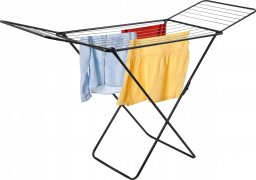
Or just clothes lines (but usually people have some backup in case it rains).
I've never seen people use powered dryers for clothes. And we get our share of rain, and in the winter it gets to -20C sometimes.
How about you hang your clothes indoors when it's raining inside? I've been doing that for years in a rainy country in a tiny studio apartment. No issues.
This can cause issues with damp depending on your home and the local weather.
Dehumidifiers are pretty affordable and warms up your room a little. Still doesn’t solve the fact you need to ventilate your home. If you can - isolate your drying to a non living space.
The water that was in your clothes and evaporated over 12 hours at night naturally is the same water that evaporates in 1 hour in the powered dryer.
If you have working ventillation you're fine either way. If not - you're not. In fact I'd expect worse problems if you evaporate that same water quicker, because there's less time for it to escape outside.
If you have working ventillation you're fine either way. If not - you're not. In fact I'd expect worse problems if you evaporate that same water quicker, because there's less time for it to escape outside.
Usually dryers are connected to dedicated ventilation out of the house, so the humidity doesn't transfer into your room directly. Otherwise, the laundry room would be a sauna.
Dryers typically are vented immediately outside via a dedicated tube and vent. That means that the air in the rest of the house never sees the moisture at all, so your whole-house ventilation system or dehumidifier doesn't need to work as hard.
Thanks, now that I think about it that makes sense :)
Some driers, especially in Europe, condense the water in to a tank that you empty manually in to a sink. This is useful if you don't have an easy way to vent it and also shows just how much water is coming out of your clothes (multiple liters per load, sometimes!)
If your room has already high humidity level water does evaporate really slow and the next day you get smelly clothes.
Still dependent on the overall climate. It's not necessarily about how much it rains, but how humid the air is. When I was in Virginia, it rained a lot, but the air clears up fairly quickly after rain.
In contrast, my grandmother lives in a village with such incredible rainy seasons, that this has been a pain point as perpetual as the rain itself. For a few months in summer, the air is so humid that even unused clothes have trouble stay dry. Condensation appears on the wall, and nothing ever dries, no matter where you hang them; indoors, outdoors, doesn't make a difference. Sometimes, they have no dry clothes for weeks during summer.
In contrast, my grandmother lives in a village with such incredible rainy seasons, that this has been a pain point as perpetual as the rain itself. For a few months in summer, the air is so humid that even unused clothes have trouble stay dry. Condensation appears on the wall, and nothing ever dries, no matter where you hang them; indoors, outdoors, doesn't make a difference. Sometimes, they have no dry clothes for weeks during summer.
It works just fine indoors.
We have clothes lines in our backyard and hang drying clothing is the bees knees. For one, dryers tend to ruin clothing. When I didn't know any better I'd dry black t-shirts on lowest heat setting and they're all washed out and didn't keep their color.
For some items like wool underwear and t-shirts I hang inside because sun bleaching can be a problem.
For some items like wool underwear and t-shirts I hang inside because sun bleaching can be a problem.
Sun bleaches black clothing too. Plus it’s essentially 2-3 extra steps. A good quality 2 in 1 washer/dryer in a bad climate/limited space is a perfect fit for busy people.
> The engineering part that's missing is related to re-introducing and improving the many awesome laundry line systems that used to be available.
I live in a desert, and my current place has a not-tiny yard, so I'm curious about this. Anyone got examples or pictures of laundry line systems they really like?
I live in a desert, and my current place has a not-tiny yard, so I'm curious about this. Anyone got examples or pictures of laundry line systems they really like?
One of the issues is that tossing your stuff in the dryer is fast and easy. Hanging clothes to dry is kind of tedious. It also tends to result in crinkly clothes (especially shirts and towels). But I am curious about these laundry line systems you mention!
Here's a great example of putting a bit of engineering into hanging clothes outdoors: https://99percentinvisible.org/article/hills-hoist-iconic-ro...
I've seen many great things in photos where laundry lines are strapped out between windows and across streets "ad hoc". But most of them were in photos. I think the "pulley" that carries the line and the line itself seem to be more durable than what my local building market sells... I can only get nylon lines and small pulleys, so I'm not happy with the projects I've done so far. The best lines I've found are the ones with metal wire inside.. the ones without metal in them break very quickly.
One that I would really like to have is a strong, durable multi-line rack that sits below a window. If possible, I'd like to be able to expand and contract it.
There's also a lot of ideas shared online for creative indoor solutions.
In general, Pinterest is the place to go.
Indoors: https://www.houzz.com.au/magazine/designs-for-living-10-dryi...
Regarding crinkly clothes: generally if you hang up a wet shirt to dry, it gets less crinkly than in a tumble drier. That's an old tip for reducing ironing efforts :)
Regarding "hard" towels etc: This one is really difficult, especially terrycloth and similar material that's supposed to be very soft can seem hard after air drying. You can try to add vinegar as a softener if your water is hard, I find that makes a good improvement. And you can generally rub clothes soft - I tried folding towels and give it a good rubbing, works well to soften them up. I would also remark that after using a soft towel once and drying it, the terrycloth also becomes hard :)
I've seen many great things in photos where laundry lines are strapped out between windows and across streets "ad hoc". But most of them were in photos. I think the "pulley" that carries the line and the line itself seem to be more durable than what my local building market sells... I can only get nylon lines and small pulleys, so I'm not happy with the projects I've done so far. The best lines I've found are the ones with metal wire inside.. the ones without metal in them break very quickly.
One that I would really like to have is a strong, durable multi-line rack that sits below a window. If possible, I'd like to be able to expand and contract it.
There's also a lot of ideas shared online for creative indoor solutions.
In general, Pinterest is the place to go.
Indoors: https://www.houzz.com.au/magazine/designs-for-living-10-dryi...
Regarding crinkly clothes: generally if you hang up a wet shirt to dry, it gets less crinkly than in a tumble drier. That's an old tip for reducing ironing efforts :)
Regarding "hard" towels etc: This one is really difficult, especially terrycloth and similar material that's supposed to be very soft can seem hard after air drying. You can try to add vinegar as a softener if your water is hard, I find that makes a good improvement. And you can generally rub clothes soft - I tried folding towels and give it a good rubbing, works well to soften them up. I would also remark that after using a soft towel once and drying it, the terrycloth also becomes hard :)
All good points, but definitely more time consuming than "throw in dryer, take out an hour later".
If you're even lazier you can get a combo washer/dryer. Not quite as effective as a separate dryer but it's nice to have dirty clothes go in and clean, dry clothes come out without a middle step.
If you're even lazier you can get a combo washer/dryer. Not quite as effective as a separate dryer but it's nice to have dirty clothes go in and clean, dry clothes come out without a middle step.
Cool hack and enjoyable read.
The smart plug idea is slick. I like the idea of decoupling the smart from the appliance. I'd much rather all my appliances be dumb.
In the US, you'd have to get a 240 volt smart plug. Are there any reputable ones?
For the laundry use case, I just set an alarm on my phone though...
The smart plug idea is slick. I like the idea of decoupling the smart from the appliance. I'd much rather all my appliances be dumb.
In the US, you'd have to get a 240 volt smart plug. Are there any reputable ones?
For the laundry use case, I just set an alarm on my phone though...
> In the US, you'd have to get a 240 volt smart plug
For the 75% that use electric. 25% use gas with 120V motor/control.
For the 75% that use electric. 25% use gas with 120V motor/control.
I got tired of my dryer being dumb.
I wonder if you could have done it like a motion sensor scheme.
If you consume 100watts, reset a countdown timer. So as home assistant polls the outlet, it should keep resetting the timer. If the timer expires, then notify that the dryer is done.
If you consume 100watts, reset a countdown timer. So as home assistant polls the outlet, it should keep resetting the timer. If the timer expires, then notify that the dryer is done.
That might be a smarter way to do it! Right now I have this thing where if we don't unload the dryer it does a sort of warming cycle every 20 minutes or so. And that triggers another alert. We don't mind because that just means we _should_ unload the dryer to stop it from consuming more power.
But I suppose the countdown approach would still trigger the same thing. I suppose if I didn't really want the extra alerts I should be monitoring the duration of power consumption and exclude the ones that are of a shorter duration.
I might try the countdown approach for something different and see what results I get. Thanks for the idea!
But I suppose the countdown approach would still trigger the same thing. I suppose if I didn't really want the extra alerts I should be monitoring the duration of power consumption and exclude the ones that are of a shorter duration.
I might try the countdown approach for something different and see what results I get. Thanks for the idea!
You're welcome! I installed home assistant about a month ago and have been really liking it ...
I was thinking of doing something similar to what you are dong but was trying to think of how to do it without the custom virtual device.
I was thinking of doing something similar to what you are dong but was trying to think of how to do it without the custom virtual device.
They do sell dryers and washers that can notify you. HN crowd probably doesn't like those because "OMG why does it need internet?".
They don't even cost that much compared to ones that aren't connected.
They don't even cost that much compared to ones that aren't connected.
We did look into such dryers as well but my girlfriend and I wanted to use our ecocheques and we also wanted a cheap dryer that just got the job done. The nearest smart dryer was at least a 100 euros more expensive.
And it ended up being a fun project for me ^.^
And it ended up being a fun project for me ^.^
Meh I just leave my shit in the dryer when it's done.
I picked up a simple Zigbee vibration sensor for less than 20$, taped it on top of the washer/dryer, and connected it to HomeAssistant using Zigbee2MQTT. After creating two automations to detect start/stop based on continuous vibrations over a few minutes, I had the notifications working the exact same way.