X says it is closing operations in Brazil due to judge's content orders(reuters.com)
reuters.com
X says it is closing operations in Brazil due to judge's content orders
https://www.reuters.com/technology/x-close-operations-brazil-effective-immediately-2024-08-17/
647 comments
From the same article:
> Brazil’s Supreme Court has drastically expanded its power to counter the antidemocratic stances of Mr. Bolsonaro and his supporters.
The title is a leading question. I can come up with different titles for the same article or topic, that could be leading somewhere else:
1. Brazil Top Court's Actions to Defend Democracy
2. A View On Moraes' Decisions In Face Of The Crisis Created By Bolsonaro
3. Brazil's Supreme Court Reaction After The Presidency Went Too Far
---
A legitimate question I have is:
What other institutions (or democratic tools) should have acted to halt the extremist anti-democratic movement lead by Bolsonaro?
(Not a trick question, an honest one given the crisis)
> Brazil’s Supreme Court has drastically expanded its power to counter the antidemocratic stances of Mr. Bolsonaro and his supporters.
The title is a leading question. I can come up with different titles for the same article or topic, that could be leading somewhere else:
1. Brazil Top Court's Actions to Defend Democracy
2. A View On Moraes' Decisions In Face Of The Crisis Created By Bolsonaro
3. Brazil's Supreme Court Reaction After The Presidency Went Too Far
---
A legitimate question I have is:
What other institutions (or democratic tools) should have acted to halt the extremist anti-democratic movement lead by Bolsonaro?
(Not a trick question, an honest one given the crisis)
> What other institutions (or democratic tools) should have acted to halt the extremist anti-democratic movement lead by Bolsonaro?
I am not familiar with Bolsonaro's movement, but censoring people under the guise of protecting democracy doesn't seem very democratic to me? At the very least, you have to admit here that there is a slippery slope where a good intentioned government or justice system could progressively get further away from these good intentions, and start using its power merely for the preservation of it?
It seems to me that censoring ideas that seem dangerous is far more dangerous than trying to correct them, and that a very high level of free speech is one of the most powerful antidotes against this slippery slope.
I am not familiar with Bolsonaro's movement, but censoring people under the guise of protecting democracy doesn't seem very democratic to me? At the very least, you have to admit here that there is a slippery slope where a good intentioned government or justice system could progressively get further away from these good intentions, and start using its power merely for the preservation of it?
It seems to me that censoring ideas that seem dangerous is far more dangerous than trying to correct them, and that a very high level of free speech is one of the most powerful antidotes against this slippery slope.
It seems that way to me too, but we have examples of high-censorship, high-freedom societies like Germany, and high-censorship, low-freedom societies like Singapore, and both report high levels of happiness.
The devil really is in the details.
The devil really is in the details.
>high-censorship, high-freedom societies like Germany
When the police storms your home (the wrong one at first, too) because you called a minister a dick on Twitter, that's not "high-freedom".
When the police storms your home (the wrong one at first, too) because you called a minister a dick on Twitter, that's not "high-freedom".
In my estimation, a country can have high censorship but also high ability for people to change the government (that’s what I call “freedom” here). So, in that sense, Germany is high-freedom because it can elect people to change the laws which enable censorship.
Unless those people want to vote for a banned popular party
Germany isn’t “high-freedom”.
Their people might be happy(though Germany seems to get more and more politically polarised every day), I wouldn’t know.
What's happiness got to do with it?
This is incorrect. Singapore is not a high censorship/low freedom society. You should visit countries before you trash them.
I guess “high censorship” is subjective, but you can’t protest without a police permit, media organizations are licensed by the government, certain foreign media have been effectively banned when when they made statements the government didn’t like, you can’t put on a play without script approval by the government, all movies are presented by the government, and libel laws have been used to bankrupt political opponents, forcing them out of government.
Seems pretty “high” censorship to me.
Seems pretty “high” censorship to me.
I have, and I found it much as Gibson did [0]
[0] https://www.wired.com/1993/04/gibson-2/
[0] https://www.wired.com/1993/04/gibson-2/
> Singapore is not a high censorship/low freedom society
Singapore constrains freedom quite substantially.
Singapore’s parliamentary political system has been dominated by the ruling People’s Action Party (PAP) and the family of current prime minister Lee Hsien Loong since 1959. The electoral and legal framework that the PAP has constructed allows for some political pluralism, but it constrains the growth of opposition parties and limits freedoms of expression, assembly, and association.
Deeper Analysis of Political Rights and Civil Liberties:
https://freedomhouse.org/country/singapore/freedom-world/202...
Singapore constrains freedom quite substantially.
Singapore’s parliamentary political system has been dominated by the ruling People’s Action Party (PAP) and the family of current prime minister Lee Hsien Loong since 1959. The electoral and legal framework that the PAP has constructed allows for some political pluralism, but it constrains the growth of opposition parties and limits freedoms of expression, assembly, and association.
Deeper Analysis of Political Rights and Civil Liberties:
https://freedomhouse.org/country/singapore/freedom-world/202...
> You should visit countries before you trash them.
I haven't visited North Korea either. That shouldn't stop anyone from opining on it.
I haven't visited North Korea either. That shouldn't stop anyone from opining on it.
this literally a perfect example. your idea of NK is based mostly on reporting that is biased, propaganda, etc. and here you are mocking people who doubt any of that. lol. im not saying NK is secretly good but i think you would discover a lot of things that you didnt know. especially regarding how things got the way they are.
> you would discover a lot of things
actually, no I wouldn't, because when a Westerner goes to NK, he or she is strictly controlled as to what they can see. In particular, no citizen will talk unguardedly to you because of their intense fear of the police.
If you think that's not true, why don't you tell us about your trip there (you did take one, didn't you?)
actually, no I wouldn't, because when a Westerner goes to NK, he or she is strictly controlled as to what they can see. In particular, no citizen will talk unguardedly to you because of their intense fear of the police.
If you think that's not true, why don't you tell us about your trip there (you did take one, didn't you?)
what a fool you are. take for example the markets. the markets in NK are a thriving fixture of everyday life. they are also completely illegal. people cross the border into china frequently. there is a huge underground in NK but people who only consume american propaganda only learn about the NK police. there is more to the picture.
> what a fool you are.
You still haven't told us whether you've been there or not.
As for the Western picture of it: it comes largely from NK citizens who've escaped. Call it "propaganda" if you like, but if it were false then there would be a net inflow of people who are as hip to reality as you think you are. Is there?
South Koreans would be trying to move IN if you were correct; after all, they're closer than anyone and they speak the language.
You still haven't told us whether you've been there or not.
As for the Western picture of it: it comes largely from NK citizens who've escaped. Call it "propaganda" if you like, but if it were false then there would be a net inflow of people who are as hip to reality as you think you are. Is there?
South Koreans would be trying to move IN if you were correct; after all, they're closer than anyone and they speak the language.
It tends to be accurate. If you want to read more, see Demick,
2009: “Nothing to Envy: Ordinary Lives in North Korea” [0]
[0] https://search.worldcat.org/title/918997255
[0] https://search.worldcat.org/title/918997255
There are lots of authors and journalists who either go there, or interview people who escaped. I think we learn a lot more from them than we would by taking a heavily curated tour of pre-screened sites.
i read that book a couple years ago. the broad strokes tend to be accurate but obviously people understand north korea as much as they understand italy based on Italian tropes.
Perhaps if NK wanted to be understood they'd allow tourists to come in and wander around and talk to the happy natives.
Just answer us this: is an NK citizen free to emigrate to some other country?
Just answer us this: is an NK citizen free to emigrate to some other country?
Its based on lights out satellite imagery.
It is low freedom if you're gay.
> there is a slippery slope where a good intentioned government or justice system could progressively get further away from these good intentions, and start using its power merely for the preservation of it?
That wasn't what happened.
It's not like we had a left leaning judge favouring a left leaning party, it's Moraes, a conservative technician fight an extreme right antidemocratic movement.
The question that needs to be answer is how far democracy is willing to go outside of democratic bounds to preserve itself. Because to expect a democratic government never to act undemocratically is to expect it to be replaced by a fascists regimen given time.
That wasn't what happened.
It's not like we had a left leaning judge favouring a left leaning party, it's Moraes, a conservative technician fight an extreme right antidemocratic movement.
The question that needs to be answer is how far democracy is willing to go outside of democratic bounds to preserve itself. Because to expect a democratic government never to act undemocratically is to expect it to be replaced by a fascists regimen given time.
> The question that needs to be answer is how far democracy is willing to go outside of democratic bounds to preserve itself.
To answer this question you first have to define what democracy is.
A decent definition is probably something like, a system of government in which policy is decided by having a public debate in which anyone can participate and then, after everyone has had a chance to say their piece, policy is chosen through voting.
From this you immediately run into potential problems. For example, suppose the majority is quite fond of the current leadership and wants to put them in power forever and stop holding elections. Is that democratic? It's the policy people are voting for. And yet, it would be the end of democracy, so the answer has to be no.
From this we discern that in order to have a democracy, there have to be certain things the government is never allowed to do, even if they're what the majority wants. You can't cancel elections, censor the opposition, throw people in jail without due process, etc. These types of things are inherently undemocratic, regardless of what the majority wants, because if the government does them you no longer have a democracy.
It should go without saying that the government can never do these things to "save democracy" because they are the very things that destroy it.
To answer this question you first have to define what democracy is.
A decent definition is probably something like, a system of government in which policy is decided by having a public debate in which anyone can participate and then, after everyone has had a chance to say their piece, policy is chosen through voting.
From this you immediately run into potential problems. For example, suppose the majority is quite fond of the current leadership and wants to put them in power forever and stop holding elections. Is that democratic? It's the policy people are voting for. And yet, it would be the end of democracy, so the answer has to be no.
From this we discern that in order to have a democracy, there have to be certain things the government is never allowed to do, even if they're what the majority wants. You can't cancel elections, censor the opposition, throw people in jail without due process, etc. These types of things are inherently undemocratic, regardless of what the majority wants, because if the government does them you no longer have a democracy.
It should go without saying that the government can never do these things to "save democracy" because they are the very things that destroy it.
Well, what you described is not quite “Democracy” but “Majority Rule”. Those are two different things
It's not clear what kind of distinction you're trying to draw or why it would be relevant. Some kind of representative democracy where policy is chosen by something more involved than a majority popular vote would still have to be just as forbidden from engaging in tyrannical activities that influence the public discourse or the mechanisms the populace uses to express their preferences.
Sure it is, no one is arguing against that. The process includes a constant check against the Constitution and its core values and whenever a conflict is found the law or act is just nullified.
See the Italian constitutional court as an example
See the Italian constitutional court as an example
The heart of the argument for the person advocating democracy here is centered on the idea that democracy, by its nature, must protect certain fundamental principles, even if those principles are threatened by a majority or by actions claimed to be in defense of democracy itself.
They emphasize (in good faith I might add) that certain actions, such as censoring the opposition, canceling elections, or jailing people without due process, are inherently undemocratic and would destroy democracy if allowed, regardless of the intentions behind them. The argument is that democracy must adhere to its own rules and principles, even in the face of threats, because violating those principles in the name of protecting democracy ultimately leads to its destruction.
You can’t “protect Democracy” by violating its core tenants.
I feel like your arguments are more whataboutism than substantive.
They emphasize (in good faith I might add) that certain actions, such as censoring the opposition, canceling elections, or jailing people without due process, are inherently undemocratic and would destroy democracy if allowed, regardless of the intentions behind them. The argument is that democracy must adhere to its own rules and principles, even in the face of threats, because violating those principles in the name of protecting democracy ultimately leads to its destruction.
You can’t “protect Democracy” by violating its core tenants.
I feel like your arguments are more whataboutism than substantive.
There are no core tenants of democracy other than majority rule. The actions you listed (with the exception of canceling elections) do not actually destroy the ability for the majority to rule. In fact, one common tactic of democratic states is to employ referendums for laws that infringe on the rights of a minority, thus shifting the moral blame onto the population when convenient.
No. If the majority wants to murder or deport all immigrants and seize their assets because “fuck ‘em”, there’s no way a Democracy can just shrug and call it “vox populi, vox dei”.
It might lose but it will have to put up a fight, legal or physical.
It might lose but it will have to put up a fight, legal or physical.
What is this “it” that might “lose”? A country is a homeland for a people. Democracy is an abstraction. “It” cannot fight or “lose” against the people of the nation. The people exist. Democracy is simply rule by a majority of those people.
To play by the rules is an implicit rule in any political/power system. There are consequences when a ruler practices tyranny.
> There are no core tenants of democracy other than majority rule.
Let's suppose you're right. We have a "democracy" that holds elections and whichever candidate gets the most votes wins, but there is no freedom of speech. Whoever is in office controls all the media, all private communications are monitored and lèse-majesté is a crime. Everything is a crime, in fact, and the law relies entirely on selective enforcement. By election day, opposition candidates with any chance of winning are always blood relatives of the incumbent. Deranged candidates with no chance of winning are ignored but independent candidates who start to gain any support are immediately executed for treason. Every year there is an election in which the people can choose between the incumbent, the incumbent's favored offspring (if any) and a selection of paste-eating loons who think Hitler is still alive, campaign on raising energy costs to help Hitler accelerate human extinction and never get any votes.
That isn't a democracy, it's the fig leaf dictatorships wear when they want to lie about being a democracy.
Let's suppose you're right. We have a "democracy" that holds elections and whichever candidate gets the most votes wins, but there is no freedom of speech. Whoever is in office controls all the media, all private communications are monitored and lèse-majesté is a crime. Everything is a crime, in fact, and the law relies entirely on selective enforcement. By election day, opposition candidates with any chance of winning are always blood relatives of the incumbent. Deranged candidates with no chance of winning are ignored but independent candidates who start to gain any support are immediately executed for treason. Every year there is an election in which the people can choose between the incumbent, the incumbent's favored offspring (if any) and a selection of paste-eating loons who think Hitler is still alive, campaign on raising energy costs to help Hitler accelerate human extinction and never get any votes.
That isn't a democracy, it's the fig leaf dictatorships wear when they want to lie about being a democracy.
If half the registered voters want to elect Adolf Hitler, is it acceptable for a democratic government to agree to ignore them? The Nazi party is banned in Germany. Is that good or bad?
I agree such a government is not acting democratically. However, it's better than the alternative. Don't we do democracy because it's usually good, and not for its own sake? Then if doing something nondemocratic is even better than doing something democratic, we should do the former.
I agree such a government is not acting democratically. However, it's better than the alternative. Don't we do democracy because it's usually good, and not for its own sake? Then if doing something nondemocratic is even better than doing something democratic, we should do the former.
If you set the precedent that the government can ignore the result of an election because the electee is bad, that's the very tool that a tyrannical government will use.
The first thing every dictator and tyrannical government does is stop or subvert the elections. There's still elections in Russia and China and North Korea.
The first thing every dictator and tyrannical government does is stop or subvert the elections. There's still elections in Russia and China and North Korea.
Dictators and tyrannical governments are perfectly able to make their own tools. Hitler didn't need to edit an existing law allowing the government to kill Nazis, to target Jews and gypsies. He didn't need an existing law giving chancellors unlimited powers. He simply wrote those laws he needed, then used them. If the government prior to his one had a law giving Nazis the death penalty, it could have saved a lot of lives.
No but he did need a population ready to accept the idea that a non democratic government is necessary.
> If half the registered voters want to elect Adolf Hitler, is it acceptable for a democratic government to agree to ignore them?
The candidate people voted for would enter office, but elected officials should not have the power to do the things Hitler did.
> The Nazi party is banned in Germany. Is that good or bad?
It's basically meaningless. If you ban the "Nazi party" and then someone comes and says they're a member of the Social Nationalists party which is totally different even though it shares a lot of the same policies, now you have to decide which policies are banned. And we're back to politicians are never allowed to censor their opponents etc.
The candidate people voted for would enter office, but elected officials should not have the power to do the things Hitler did.
> The Nazi party is banned in Germany. Is that good or bad?
It's basically meaningless. If you ban the "Nazi party" and then someone comes and says they're a member of the Social Nationalists party which is totally different even though it shares a lot of the same policies, now you have to decide which policies are banned. And we're back to politicians are never allowed to censor their opponents etc.
That's not remotely similar to any of the established definitions.
Those tends to be based on variants of democracy being "institutions that enable a peaceful transfer of power". This usually includes the so called democratic freedoms, overseeing journalists, and a non-politicized judicial system.
Every practicing democracy however includes some exceptions for law and intelligence services, as that is required to uphold the system in times of uprisings and uncertainty. Advocating genocide or revolting against the democratic institutions is not considered within the bounds of democracy anywhere.
Those tends to be based on variants of democracy being "institutions that enable a peaceful transfer of power". This usually includes the so called democratic freedoms, overseeing journalists, and a non-politicized judicial system.
Every practicing democracy however includes some exceptions for law and intelligence services, as that is required to uphold the system in times of uprisings and uncertainty. Advocating genocide or revolting against the democratic institutions is not considered within the bounds of democracy anywhere.
What do mean "not remotely similar"?
You don't offer an established definition, but you do list some things the government must not do, e.g. overseeing journalists, politicizing the judicial system. Those things could easily fall within GP's definition.
You don't offer an established definition, but you do list some things the government must not do, e.g. overseeing journalists, politicizing the judicial system. Those things could easily fall within GP's definition.
There is no established definition of democracy that defines it as a public discussion with a vote.
> Those tends to be based on variants of democracy being "institutions that enable a peaceful transfer of power". This usually includes the so called democratic freedoms, overseeing journalists, and a non-politicized judicial system.
You can pretty clearly have a democracy without a peaceful transfer of power. Suppose the state of California had entered open revolt after the 2016 election and the rebellion had to be put down by the military. You could hardly have called that a peaceful transfer of power even if the end result was that people voted and the winner took office. And the reverse can also be true; some aging dictator undemocratically chooses a successor who comes into power without bloodshed.
Also, it is not the role of governments to oversee journalists, it is the role of journalists to oversee governments.
> Every practicing democracy however includes some exceptions for law and intelligence services, as that is required to uphold the system in times of uprisings and uncertainty.
These things are not inherent requirements, they are the implements of tyranny. Notice that the US constitution doesn't have these exceptions written into it, they were read into it by authoritarians and cowards in times of weakness.
The day you find out if you have principles or just empty words is the day when following them is hard.
> Advocating genocide or revolting against the democratic institutions is not considered within the bounds of democracy anywhere.
You can advocate whatever you want, you're just never allowed to actually do it.
Think about it. A system of checks and balances that can stop them from doing it even after they're already in power is the only thing that matters. If you have that, they can say whatever they want. If you don't have that, censorship doesn't help, because they can gain power under false pretenses (politicians lie) and your system isn't configured to stop them once they do. Indeed, a censorship apparatus would even make it worse, because now they're the ones deciding what gets censored.
Censorship is always the tool of the villain because lies and bad ideas can be openly refuted but the only solution to a ban on the truth is to defeat the ban.
You can pretty clearly have a democracy without a peaceful transfer of power. Suppose the state of California had entered open revolt after the 2016 election and the rebellion had to be put down by the military. You could hardly have called that a peaceful transfer of power even if the end result was that people voted and the winner took office. And the reverse can also be true; some aging dictator undemocratically chooses a successor who comes into power without bloodshed.
Also, it is not the role of governments to oversee journalists, it is the role of journalists to oversee governments.
> Every practicing democracy however includes some exceptions for law and intelligence services, as that is required to uphold the system in times of uprisings and uncertainty.
These things are not inherent requirements, they are the implements of tyranny. Notice that the US constitution doesn't have these exceptions written into it, they were read into it by authoritarians and cowards in times of weakness.
The day you find out if you have principles or just empty words is the day when following them is hard.
> Advocating genocide or revolting against the democratic institutions is not considered within the bounds of democracy anywhere.
You can advocate whatever you want, you're just never allowed to actually do it.
Think about it. A system of checks and balances that can stop them from doing it even after they're already in power is the only thing that matters. If you have that, they can say whatever they want. If you don't have that, censorship doesn't help, because they can gain power under false pretenses (politicians lie) and your system isn't configured to stop them once they do. Indeed, a censorship apparatus would even make it worse, because now they're the ones deciding what gets censored.
Censorship is always the tool of the villain because lies and bad ideas can be openly refuted but the only solution to a ban on the truth is to defeat the ban.
You want a democratic government to have "undemocratic" guardrails, because otherwise you are ok with mob rule. Democracy without rules is pure and simple majority rule. You do not want this. Unless of course you are ok with slavery, going back hangings, etc. If that's the case, I rest my case.
You want democracy to be prevented from acting out on its passions by a balance of powers.
IN the brazil case, the state powers, and the brazilian voters are not preventing 1 judge from acting out his passion "to protect democracy". Ergo, this is the problem. The mob is granting him this power, when in fact it should be voters, via congress or even the office of the president which brings this loose cannon of a judge back within the powers given by the constitution of brazil.
In this case, brazil is behaving like a raw democracy. It is true majority rule. Laws apply as the majority sees fit.
Hope you don't end in the minority.
You want democracy to be prevented from acting out on its passions by a balance of powers.
IN the brazil case, the state powers, and the brazilian voters are not preventing 1 judge from acting out his passion "to protect democracy". Ergo, this is the problem. The mob is granting him this power, when in fact it should be voters, via congress or even the office of the president which brings this loose cannon of a judge back within the powers given by the constitution of brazil.
In this case, brazil is behaving like a raw democracy. It is true majority rule. Laws apply as the majority sees fit.
Hope you don't end in the minority.
> You do not want this. Unless of course you are ok with slavery, going back hangings, etc. If that's the case, I rest my case.
You can rest your case if you'd like but it's a loser.
Democracies got rid of those things that still exist today in undemocratic societies.
You can rest your case if you'd like but it's a loser.
Democracies got rid of those things that still exist today in undemocratic societies.
Nope, you’re spinning it.
The mob rule here is Bolsonaro’s, and in no functioning democracy are multiple Powers (legislative, governmental and judicial) collected into 1 hand.
If a judge goes out of control it’s another judge’s task to regain it, or an independent Judicial court.
The mob rule here is Bolsonaro’s, and in no functioning democracy are multiple Powers (legislative, governmental and judicial) collected into 1 hand.
If a judge goes out of control it’s another judge’s task to regain it, or an independent Judicial court.
The idea that another judge or an independent judicial body should intervene if a judge is overstepping is consistent with how a system of checks and balances should function in a Democracy and I think you are largely correct.
However, whether the judiciary in Brazil is actually overstepping or properly fulfilling its role is a matter of interpretation and context.
The broader and very much core question is whether the actions taken by the judiciary, such as censoring social media or jailing individuals without trial, are justified under the circumstances or if they themselves undermine democratic principles. This is the same basic issue I made my other comment about in your series of replies.
This is a nuanced issue that can be debated from different perspectives and much more of a subjective question, and it’s important to separate the issues.
However, whether the judiciary in Brazil is actually overstepping or properly fulfilling its role is a matter of interpretation and context.
The broader and very much core question is whether the actions taken by the judiciary, such as censoring social media or jailing individuals without trial, are justified under the circumstances or if they themselves undermine democratic principles. This is the same basic issue I made my other comment about in your series of replies.
This is a nuanced issue that can be debated from different perspectives and much more of a subjective question, and it’s important to separate the issues.
Thanks for explaining the distinction. In Italy we’ve had the same kind of polemic for 20 years from Berlusconi’s Right, claiming — whether preposterously or not is itself debatable, and fanned by Berlusconi’s media — that the Judiciary was corrupt, captured by the “CUmmunishti”, and the haters.
It’s interesting how it’s all playing out again.
It’s interesting how it’s all playing out again.
What are the nuances of "jailing individuals without trial"?
> The question that needs to be answer is how far democracy is willing to go outside of democratic bounds to preserve itself.
I would say it should not do that essentially ever? If so, what kinds of undemocractic behavior would be allowed and what isn't? You probably have a certain kind of behavior in mind that you want to allow when you pose this question. If so, why not legislate that behavior using the democratic process?
It seems to me that the argument that protecting democracy by undemocratic means is okay, is essentially the same argument that a benevolent dictator is superior to democracy. Both arguments give special power to a certain group or individual that others do not have, which can be used to go outside the system if things don't work out. First order this argument is plausible. But second order effects (there is no such thing as categorically benevolent, and characters change, especially when in power) will always ruin it.
Democracy is messy. And when the world changes, there are challenges that democracy has to overcome. We're in the middle of a few of those changes right now. But the mess in by design. I believe that if we give up on a very high democratic standard things will turn out for the worse. My one addition here would be that in my view democracy is necessary but not suffient to get to a prosperous society. It needs to go hand in hand with a common value system where there's fellowship between citizens and genuine respect for individual right and the law. If not, there's a risk that the majority will only cater to itself.
I would say it should not do that essentially ever? If so, what kinds of undemocractic behavior would be allowed and what isn't? You probably have a certain kind of behavior in mind that you want to allow when you pose this question. If so, why not legislate that behavior using the democratic process?
It seems to me that the argument that protecting democracy by undemocratic means is okay, is essentially the same argument that a benevolent dictator is superior to democracy. Both arguments give special power to a certain group or individual that others do not have, which can be used to go outside the system if things don't work out. First order this argument is plausible. But second order effects (there is no such thing as categorically benevolent, and characters change, especially when in power) will always ruin it.
Democracy is messy. And when the world changes, there are challenges that democracy has to overcome. We're in the middle of a few of those changes right now. But the mess in by design. I believe that if we give up on a very high democratic standard things will turn out for the worse. My one addition here would be that in my view democracy is necessary but not suffient to get to a prosperous society. It needs to go hand in hand with a common value system where there's fellowship between citizens and genuine respect for individual right and the law. If not, there's a risk that the majority will only cater to itself.
You cannot protect a democracy against anti-democratic forces through purely democratic means. Riots and political violence are an expression of speech and arresting the perpetrators takes away their democratic freedoms. Should an ideal democracy do nothing during such events?
> You cannot protect a democracy against anti-democratic forces through purely democratic means. Riots and political violence are an expression of speech and arresting the perpetrators takes away their democratic freedoms. Should an ideal democracy do nothing during such events?
In a democracy, policy has the ability to arrest perpetrators by force if they break the law. The key thing is that the law the perpetrators are breaking was approved democratically, and that there is due process by an independent judiciary. Democracy does not mean that there never is any violence.
In a democracy, policy has the ability to arrest perpetrators by force if they break the law. The key thing is that the law the perpetrators are breaking was approved democratically, and that there is due process by an independent judiciary. Democracy does not mean that there never is any violence.
In that case you get to the opposite problem. It is entirely possible to democratically legislate democracy away as long as your group holds power for long enough with a super-majority.
Yes, democracy is subject to a 51% attack, like blockchain stuff. Better than a 1% or 10% attack though. Some countries like the US have a constitution that can only be changed by a majority >> 50%, offering additional but still not full protection. This is why I mentioned it’s also desirable to have a common value system among the citizenry. In the end, a country has to be more than just laws and voting, and at some point people have to actually get along and make it work together.
Definitely agree there, a democracy cannot function without the majority making concessions to the minority. Concessions like not changing the law to keep themselves in power forever.
Why is it considered an "attack" if the majority wants or supports it? Sounds like it would be working as intended if the majority vote to do or change something.
This is why constitutions exist, and courts to prevent breaches of those constitutions. This is why judges are often appointed, especially top ones, so that a change in government does not mean all checks and bounds are immediately gone. This is also why many countries have multiple legislative houses, so that one election cannot give unlimited power to one legislative house.
Thus it takes longer to slide into an undemocratic state, and checks and bounds are slower to change than a simple election. In essence, laws passed in such democracies becomes the will of the people over decades, not one election.
If a democracy has a will to move towards undemocratic rule, and it takes decades to get there, then really the people have failed themselves.
Thus it takes longer to slide into an undemocratic state, and checks and bounds are slower to change than a simple election. In essence, laws passed in such democracies becomes the will of the people over decades, not one election.
If a democracy has a will to move towards undemocratic rule, and it takes decades to get there, then really the people have failed themselves.
I live in The Netherlands, we have do not have a constitutional court and we still have a monarchy. A proposal to amend the constitution requires a simple majority in both houses of Parliament after which you have to call a general election. The general election is the only opportunity for someone outside of Parliament to stop it.
After the general election the amendment has to be voted on by both houses of Parliament again and win by a super-majority. Thus it is technically possible to disband Parliament and return all power back to the King within a year without the courts having any power to stop it.
So in case Parliament suddenly decides we should go back to an absolute monarchy, then we're only one general election away from completely dismantling democracy.
After the general election the amendment has to be voted on by both houses of Parliament again and win by a super-majority. Thus it is technically possible to disband Parliament and return all power back to the King within a year without the courts having any power to stop it.
So in case Parliament suddenly decides we should go back to an absolute monarchy, then we're only one general election away from completely dismantling democracy.
[deleted]
Riots definitely aren't "expression of speech", that's nonsense.
How so? Could you elaborate?
Just to be clear, this is in no way intended as an endorsement of rioting.
Just to be clear, this is in no way intended as an endorsement of rioting.
Violence is not speech. Is punching a person in the face as having a conversation with him?
The term speech is very broadly defined in law. A purely physical act can be speech in a certain context. It does not have to literally involve an exchange of words.
Many protests may turn into riots, that does not suddenly mean that the people involved in the violence are no longer expressing an opinion.
Many protests may turn into riots, that does not suddenly mean that the people involved in the violence are no longer expressing an opinion.
The term speech is very broadly defined because there are a lot of ways to convey meaning. Some of them then become ambiguous and you have to resolve those ambiguities and that gets messy. But only the messy cases are messy. Riots characteristically aren't a messy case, they're violence in the same way that publishing a newspaper article is speech.
Moreover, if you mess up the messy cases then you should try to do better but society will probably survive, whereas if you censor in the cases that are pure speech or don't punish the actions that are pure violence, you're the baddies.
Moreover, if you mess up the messy cases then you should try to do better but society will probably survive, whereas if you censor in the cases that are pure speech or don't punish the actions that are pure violence, you're the baddies.
> Riots characteristically aren't a messy case
Riots are characteristically very much a messy case, because not everyone joins a protest with the same intentions. Some will join a protest intending a purely peaceful display of dissent, while others seek violent confrontation.
On top of that repressive regimes will routinely declare otherwise peaceful protests a riot at the first sign of violence. Sometimes there are even saboteurs within the protest that try and lure out violent incidents in an attempt to get the protest to be declared a riot.
Finding the right balance between allowing demonstrations and keeping the peace and order is one of the most challenging aspects of democracy.
Riots are characteristically very much a messy case, because not everyone joins a protest with the same intentions. Some will join a protest intending a purely peaceful display of dissent, while others seek violent confrontation.
On top of that repressive regimes will routinely declare otherwise peaceful protests a riot at the first sign of violence. Sometimes there are even saboteurs within the protest that try and lure out violent incidents in an attempt to get the protest to be declared a riot.
Finding the right balance between allowing demonstrations and keeping the peace and order is one of the most challenging aspects of democracy.
[deleted]
> It's not like we had a left leaning judge favouring a left leaning party
Why does this matter?
> The question that needs to be answer is how far democracy is willing to go outside of democratic bounds to preserve itself.
Democracy is not an being. When you act democratically, that's democracy. When you act undemocratically, that's against democracy. Acting democratically is when the justification for your rule comes from the desires of the people ruled. When you believe it's fine to silence (or officially harass, imprison or kill) people whose desires don't conform with yours, you are actively working against democracy.
The biggest scam of the centrist blob is convincing some (comfortable, middle-class) people that they're insiders who own democracy, so all of their anti-democratic behavior becomes democratic by definition.
Why does this matter?
> The question that needs to be answer is how far democracy is willing to go outside of democratic bounds to preserve itself.
Democracy is not an being. When you act democratically, that's democracy. When you act undemocratically, that's against democracy. Acting democratically is when the justification for your rule comes from the desires of the people ruled. When you believe it's fine to silence (or officially harass, imprison or kill) people whose desires don't conform with yours, you are actively working against democracy.
The biggest scam of the centrist blob is convincing some (comfortable, middle-class) people that they're insiders who own democracy, so all of their anti-democratic behavior becomes democratic by definition.
I don’t know if a well-designed democratic government needs to act undemocratically ever.
For example, in the US, the Supreme Court is able to expand its powers, but it can always be overridden by the legislative branch by design. The executive branch doesn’t even have to follow the Supreme Court’s rulings. And the legislative and executive can be replaced by citizens.
By design, the US Constitution basically has an infinite loop of checks and balances - there is always another institution that can override one institution without breaking any rules.
That said, the buck does stop, but it stops at the people. The problem is that people do need to be well-informed and vigilant to for the this scheme to work out, but to be honest, that is not a problem specifically with democracy — it’s just a general societal problem.
There have been recent Supreme Court rulings that many would say are disagreeable, but we’re not doing anything about it because a lot of citizens either support it or just don’t care. But if citizens did, we could easily undo those decisions using the rules set out by the Constitution. So the problem really lies more with the people than the system.
Now I’m not familiar with the Brazilian political system — who checks the Supreme Court there? I just know the US Constitution had a LOT of people working on it and they covered a lot of bases.
For example, in the US, the Supreme Court is able to expand its powers, but it can always be overridden by the legislative branch by design. The executive branch doesn’t even have to follow the Supreme Court’s rulings. And the legislative and executive can be replaced by citizens.
By design, the US Constitution basically has an infinite loop of checks and balances - there is always another institution that can override one institution without breaking any rules.
That said, the buck does stop, but it stops at the people. The problem is that people do need to be well-informed and vigilant to for the this scheme to work out, but to be honest, that is not a problem specifically with democracy — it’s just a general societal problem.
There have been recent Supreme Court rulings that many would say are disagreeable, but we’re not doing anything about it because a lot of citizens either support it or just don’t care. But if citizens did, we could easily undo those decisions using the rules set out by the Constitution. So the problem really lies more with the people than the system.
Now I’m not familiar with the Brazilian political system — who checks the Supreme Court there? I just know the US Constitution had a LOT of people working on it and they covered a lot of bases.
> I just know the US Constitution had a LOT of people working on it and they covered a lot of bases.
A lot of this is more fragile than you want it to be though.
For example, the US Constitution was set out to have a weak federal government and have the state governments handle all the things that didn't specifically need to be federal, and one of the biggest checks and balances for this was that federal legislation had to pass the Senate and federal Senators were elected by the state legislatures. The Senate was the states' representation in the federal government, that's what it was for. Then the 17th amendment took it away, which was immediately followed by a persistent massive expansion of federal power, because the thing that was meant to act as a check on it got deleted.
Sometimes the checks and balances need more checks and balances.
A lot of this is more fragile than you want it to be though.
For example, the US Constitution was set out to have a weak federal government and have the state governments handle all the things that didn't specifically need to be federal, and one of the biggest checks and balances for this was that federal legislation had to pass the Senate and federal Senators were elected by the state legislatures. The Senate was the states' representation in the federal government, that's what it was for. Then the 17th amendment took it away, which was immediately followed by a persistent massive expansion of federal power, because the thing that was meant to act as a check on it got deleted.
Sometimes the checks and balances need more checks and balances.
- who checks the Supreme Court there?
In theory, the Senate can check the Supreme Court by impeaching the judges, the problem is that the Supreme Court checks all the senators and congressmen, by being the only one who can prosecute them.
9 out of 11 Supreme Court judges were indicated by the Labor Party (Lula and Dilma) in the last 20 years, some closely related to Lula. They can do anything they want, without worrying about elections. The president of Brazil doesn't matter anymore, at least for the next couple of presidential elections.
In theory, the Senate can check the Supreme Court by impeaching the judges, the problem is that the Supreme Court checks all the senators and congressmen, by being the only one who can prosecute them.
9 out of 11 Supreme Court judges were indicated by the Labor Party (Lula and Dilma) in the last 20 years, some closely related to Lula. They can do anything they want, without worrying about elections. The president of Brazil doesn't matter anymore, at least for the next couple of presidential elections.
To add more
* if a senator commits a crime it can rest assured that the process will moth in a drawer until prescription as long as the senator doesn't go against the supreme court or its ministers personal interests.
* the supreme court (STF) also controls the electoral tribunal (TSE).
* if a senator commits a crime it can rest assured that the process will moth in a drawer until prescription as long as the senator doesn't go against the supreme court or its ministers personal interests.
* the supreme court (STF) also controls the electoral tribunal (TSE).
If it's outside democratic bounds, what is being preserved is not a democracy anymore. Why preserve it then? So it serves autocrats better? "We must become fascists so other fascists don't take over" is not a very convincing principle.
It makes no sense to destroy democracy in the name of defending it. To accept contrary opinions or beliefs at the same is doublethink, a symptom of political alienation. Beware that you might be the fascist. Given time Jesus will return our the Sun will die taking us along with it. Eventuality isn't an argument.
In this case it sounds like Moraes threatened to arrest Brazilian X employees if the company didn’t comply with its requests.
That is wildly outside democratic norms IMO. Not just the arrest of individual employers, but the threat of which coming directly from a sitting Supreme Court Justice.
That is wildly outside democratic norms IMO. Not just the arrest of individual employers, but the threat of which coming directly from a sitting Supreme Court Justice.
I think the point when people start saying "you have to do the reverse of X to preserve X" is the right time for them to look in the mirror and check not wearing clown getup
We are all wearing a clown getup (I am assuming you mean ideology by that). The most important thing is to be aware of that.
> The question that needs to be answer is how far democracy is willing to go outside of democratic bounds to preserve itself.
Leaving aside all inaccuracies that are unavoidable in political situations: Philosophy spent quite some time thinking about this: https://plato.stanford.edu/entries/dirty-hands/
Leaving aside all inaccuracies that are unavoidable in political situations: Philosophy spent quite some time thinking about this: https://plato.stanford.edu/entries/dirty-hands/
> It's not like we had a left leaning judge favouring a left leaning party, it's Moraes, a conservative technician fight an extreme right antidemocratic movement.
... Uhuh.
These are supreme court judges who openly and publicly showboat about being the ones personally responsible for defeating Bolsonaro. They literally said things like "mission given, mission accomplished" after the election was over. I saw news where one of them said he was proud to be partidarian. They've also said that Lula being elected was due to decisions of the supreme court.
And you would have us believe they did not favor Lula in any way whatsoever.
... Uhuh.
These are supreme court judges who openly and publicly showboat about being the ones personally responsible for defeating Bolsonaro. They literally said things like "mission given, mission accomplished" after the election was over. I saw news where one of them said he was proud to be partidarian. They've also said that Lula being elected was due to decisions of the supreme court.
And you would have us believe they did not favor Lula in any way whatsoever.
Censoring isn't the same as investigating the use of bots and fake news to spread rumors and lies for polítics gain and literal profit. The right tries to confuse people by mixing their crimes with free speech.
Investigating with the intent to suppress information you find objectionable is literally the definition of censorship. The reuters article makes it clear they intended to follow through legality be damned.
The justice just demanded information about the people behind a few accounts. That's more than fair of a justice system to ask and if a network thinks they are above a country's law they should definitely leave. The printscreens of the orders are nothing burgers.
Tweets side willingness to use violence for oolitical goals is a good indicator for how much popper applies. Storm the capitol once,shame on me..
> Censoring isn't the same as investigating the use of bots and fake news to spread rumors and lies for polítics gain and literal profit.
I don't understand this post. Censoring is when a government official issues orders to publishers requiring them not so publish things. Whatever else you're talking about here you're simply using as a rationalization for censorship.
You have to know that you're being dishonest when the subject is a judge ordering publishers to unpublish and silence people, and you immediately equivocate between that and "investigating," then accuse "the right" of trying to confuse "their crimes" and "free speech." You're literally doing that right now. You are somehow explaining away literal and explicit censorship orders (that no one is claiming don't exist) as "investigation" of "their crimes."
I don't understand this post. Censoring is when a government official issues orders to publishers requiring them not so publish things. Whatever else you're talking about here you're simply using as a rationalization for censorship.
You have to know that you're being dishonest when the subject is a judge ordering publishers to unpublish and silence people, and you immediately equivocate between that and "investigating," then accuse "the right" of trying to confuse "their crimes" and "free speech." You're literally doing that right now. You are somehow explaining away literal and explicit censorship orders (that no one is claiming don't exist) as "investigation" of "their crimes."
Someone making a profit publishing links that are fake but get lots of clicks or youtube lives isn't using their freedom of speech, they are criminals committing crimes for profit.
You're correct that censoring this wouldn't be considered censorship colloquially, but academically and in legal circles it absolutely is censorship.
In everyday language, when we say "censorship", we only mean the bad kind of censorship. On Hacker News and other places that discuss these topics more in-depth, many use the term more academically, leading to a neverending stream of confusion in the replies every time without fail.
Similar story for the term "democracy", which has a large number of meanings depending on who you're talking to. In this tree there's again people arguing about which specific examples are considered democratic without having even agreed on a common definition of the term.
In everyday language, when we say "censorship", we only mean the bad kind of censorship. On Hacker News and other places that discuss these topics more in-depth, many use the term more academically, leading to a neverending stream of confusion in the replies every time without fail.
Similar story for the term "democracy", which has a large number of meanings depending on who you're talking to. In this tree there's again people arguing about which specific examples are considered democratic without having even agreed on a common definition of the term.
What is the crime being committed? Lying? Is that a crime?
They’re literally using their freedom of speech. Not sure what else you would call it.
They’re literally using their freedom of speech. Not sure what else you would call it.
When you lie about something serious like saying that the judge in question was locked in jail or that the ex-president Bolsonaro approved a military intervention[0] while millions of people are pissed because their candidate lost an election, that's not just lying. The people telling the lies know it is not true but push it anyway. It is beyond that those people respond criminally for that.
0. https://i.em.com.br/Fpd82XCP-00L-3N2yGZxALIPPqA=/820x0/smart...
0. https://i.em.com.br/Fpd82XCP-00L-3N2yGZxALIPPqA=/820x0/smart...
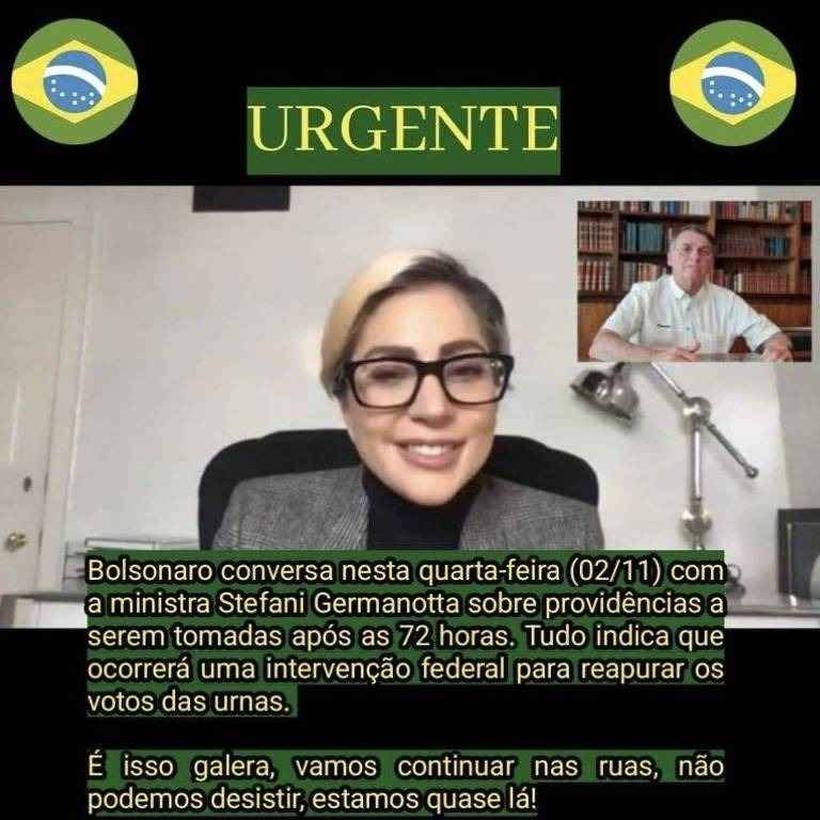
This is why I like the United States. The first rule is freedom of speech. I hate Trump and I hate the right, I think Trump should be jailed for at least a decade for his attempts to destroy American democracy (fake elector scheme, inaction on Jan 6, pressuring of legislators during Jan 6), but I'd be out there protesting with everyone else if Trump could be jailed simply for spreading falsehoods in general.
I think freedom of speech is kind of a bullshit concept at a philosophical level - I've become very blackpilled in that department - but at a legalistic level it's beyond the pale to me that someone could be imprisoned just for words barring very special circumstances.
The government should not be throwing people in prison for allegedly "spreading lies for personal or political gain" unless it already clearly falls under an existing crime (like fraud - getting someone to give you money under explicit false pretenses) or tort (like defamation - knowingly telling damaging falsehoods about someone else to harm them). Incitement to likely, imminent lawless action is also already covered.
I think freedom of speech is kind of a bullshit concept at a philosophical level - I've become very blackpilled in that department - but at a legalistic level it's beyond the pale to me that someone could be imprisoned just for words barring very special circumstances.
The government should not be throwing people in prison for allegedly "spreading lies for personal or political gain" unless it already clearly falls under an existing crime (like fraud - getting someone to give you money under explicit false pretenses) or tort (like defamation - knowingly telling damaging falsehoods about someone else to harm them). Incitement to likely, imminent lawless action is also already covered.
The US is a very odd choice to pick for free speech rights. It has had a terrible track record regarding free speech, especially throughout most of the 20th century.
Try advocating for communism from the 20s-80s or for the rights of black people in the 50s/60s/into-70s.
Or say the wrong criticism in the early 2000s after 9/11. At best you get surveillance, at worst you’re dealing with FISA.
We have not had any changes to the constitution to further protect speech, either.
Try advocating for communism from the 20s-80s or for the rights of black people in the 50s/60s/into-70s.
Or say the wrong criticism in the early 2000s after 9/11. At best you get surveillance, at worst you’re dealing with FISA.
We have not had any changes to the constitution to further protect speech, either.
None of those things landed people in jail. The US, from a law standpoint, has had the strongest free speech protections of almost any country in history.
The US has certainly had its problems, like widespread racism and the red scare, sure, but this is all relative to how other countries respond to speech with legal action.
The US has certainly had its problems, like widespread racism and the red scare, sure, but this is all relative to how other countries respond to speech with legal action.
Every single one of those things landed people in jail. Many people also got sent to prison under the Espionage Act just for publicly opposing conscription during the wars of the 20th century.
[deleted]
> None of those things landed people in jail.
Literally all of those things did.
- Equal rights activism https://calendar.eji.org/racial-injustice/feb/1
- Communism activism: https://en.wikipedia.org/wiki/Smith_Act_trials_of_Communist_...
And don't even get me started on Snowden and Assange exposing the tremendous (war + civilian) crimes of the US government and being silenced and persecuted for it.
> The US, from a law standpoint, has had the strongest free speech protections of almost any country in history.
Absolutely false. It's not even in top 10.
https://worldpopulationreview.com/country-rankings/countries...
Literally all of those things did.
- Equal rights activism https://calendar.eji.org/racial-injustice/feb/1
- Communism activism: https://en.wikipedia.org/wiki/Smith_Act_trials_of_Communist_...
And don't even get me started on Snowden and Assange exposing the tremendous (war + civilian) crimes of the US government and being silenced and persecuted for it.
> The US, from a law standpoint, has had the strongest free speech protections of almost any country in history.
Absolutely false. It's not even in top 10.
https://worldpopulationreview.com/country-rankings/countries...
>Absolutely false. It's not even in top 10. https://worldpopulationreview.com/country-rankings/countries...
You must be joking. Venezuela is 7th in the free speech index of that ranking.
Furthermore, you have 4 EU countries in the ranking, all higher vs USA. Those 4 EU countries are subject to ECHR, which has ruled freedom of speech does not apply :
- to protect the religious feelings of others [1]
- to restrict content that was tasteless [2]
- to say outrageous things [3]
Yet, all 3 examples above are constitutionally protected in USA. This sort of thing makes it very difficult to take the rest of your commentary at face value.
[1] https://globalfreedomofexpression.columbia.edu/cases/otto-pr...
[2] https://globalfreedomofexpression.columbia.edu/cases/leroy-v...
[3] https://en.wikipedia.org/wiki/Perin%C3%A7ek_v._Switzerland
You must be joking. Venezuela is 7th in the free speech index of that ranking.
Furthermore, you have 4 EU countries in the ranking, all higher vs USA. Those 4 EU countries are subject to ECHR, which has ruled freedom of speech does not apply :
- to protect the religious feelings of others [1]
- to restrict content that was tasteless [2]
- to say outrageous things [3]
Yet, all 3 examples above are constitutionally protected in USA. This sort of thing makes it very difficult to take the rest of your commentary at face value.
[1] https://globalfreedomofexpression.columbia.edu/cases/otto-pr...
[2] https://globalfreedomofexpression.columbia.edu/cases/leroy-v...
[3] https://en.wikipedia.org/wiki/Perin%C3%A7ek_v._Switzerland
The US does not guarantee these rights either.
“Free speech” is so ambiguously defined in the US that it’s effectively meaningless.
The US has had over two centuries of ambiguously defined “free speech” rights at many different levels, any of which could be taken away depending on what state you’re in, what federal circuit you’re in, or if you’re lucky, the Supreme Court or Congress.
So why do you consider yourself free when you do not know what defines free speech?
Quite frankly, anyone tuned into history beyond the basics ought to recall that even the initial leaders of the country did not believe in free speech — Thomas Jefferson had quite illiberal views on what a free press entailed.
For a modern example, providing abortion assistance is not free speech in the state of Texas.
“Free speech” is so ambiguously defined in the US that it’s effectively meaningless.
The US has had over two centuries of ambiguously defined “free speech” rights at many different levels, any of which could be taken away depending on what state you’re in, what federal circuit you’re in, or if you’re lucky, the Supreme Court or Congress.
So why do you consider yourself free when you do not know what defines free speech?
Quite frankly, anyone tuned into history beyond the basics ought to recall that even the initial leaders of the country did not believe in free speech — Thomas Jefferson had quite illiberal views on what a free press entailed.
For a modern example, providing abortion assistance is not free speech in the state of Texas.
> The government should not be throwing people in prison for allegedly "spreading lies for personal or political gain"
Many people don't know that the Soviet constitution guaranteed freedom of speech[1] (Article 125[1]), provided it was "in conformity with the interests of the working people, and in order to strengthen the socialist system"
Same goes for other socialist governments: the People's Republic of China (Article 35[2]), the Democratic People's Republic of Korea (Article 67[3]), the German Democratic Republic (aka East Germany, Article 9[4]), and so on.
Of course, the reality was and is lengthy imprisonment for "free speech" against the government or ruling class.
"Free speech, except for [exceptions that are nearly infinite in scope]" is a key feature of socialist governments, as is justifying the imprisonment of dissidents and undesirables as "fighting anti-democratic forces" and "preventing the spread of misinformation".
Moreover, socialist governments are very clear that they are democracies; it's often in the name (Democratic People's Republic of Korea), and also frequently appears in speeches, official documents, etc.
Their commitment to "democracy" isn't just words-on-paper, either! Voting is usually either mandatory or "strongly encouraged", although you can only vote for a Party-approved candidate, and the outcome of elections is basically pre-determined.
[1] https://www.departments.bucknell.edu/russian/const/36cons04....
[2] http://www.npc.gov.cn/zgrdw/englishnpc/Constitution/2007-11/...
[3] https://www.constituteproject.org/constitution/Peoples_Repub...
[4] https://www.cvce.eu/content/publication/1999/1/1/33cc8de2-3c...
Many people don't know that the Soviet constitution guaranteed freedom of speech[1] (Article 125[1]), provided it was "in conformity with the interests of the working people, and in order to strengthen the socialist system"
Same goes for other socialist governments: the People's Republic of China (Article 35[2]), the Democratic People's Republic of Korea (Article 67[3]), the German Democratic Republic (aka East Germany, Article 9[4]), and so on.
Of course, the reality was and is lengthy imprisonment for "free speech" against the government or ruling class.
"Free speech, except for [exceptions that are nearly infinite in scope]" is a key feature of socialist governments, as is justifying the imprisonment of dissidents and undesirables as "fighting anti-democratic forces" and "preventing the spread of misinformation".
Moreover, socialist governments are very clear that they are democracies; it's often in the name (Democratic People's Republic of Korea), and also frequently appears in speeches, official documents, etc.
Their commitment to "democracy" isn't just words-on-paper, either! Voting is usually either mandatory or "strongly encouraged", although you can only vote for a Party-approved candidate, and the outcome of elections is basically pre-determined.
[1] https://www.departments.bucknell.edu/russian/const/36cons04....
[2] http://www.npc.gov.cn/zgrdw/englishnpc/Constitution/2007-11/...
[3] https://www.constituteproject.org/constitution/Peoples_Repub...
[4] https://www.cvce.eu/content/publication/1999/1/1/33cc8de2-3c...
Well your question leads straight to the “Paradox of Intolerance”.
It’s indeed tricky, but the sorting criteria is: once in power, would these people club me to death, or let go of power if they lost a free election?
It’s indeed tricky, but the sorting criteria is: once in power, would these people club me to death, or let go of power if they lost a free election?
In the paradox of intolerance, Popper was writing about violence, not anti-establishment speech.
Known for his critical rationalism and vehement opposition to authoritarianism, Popper would probably be spinning in his grave if he knew that his essay is cited as a token every time someone is persecuted for posting the wrong kind of tweet.
Known for his critical rationalism and vehement opposition to authoritarianism, Popper would probably be spinning in his grave if he knew that his essay is cited as a token every time someone is persecuted for posting the wrong kind of tweet.
Not really, I’m afraid you’re shifting the goalposts.
I don’t think Popper would be so naive to just limit intolerance to physical violence (which is already ruled out by law, so why bother).
The intolerance is against anything intolerant that if given enough power will stamp out (violently) Democracy itself.
One just needs to look at Putin’s Russia to understand what he meant.
I don’t think Popper would be so naive to just limit intolerance to physical violence (which is already ruled out by law, so why bother).
The intolerance is against anything intolerant that if given enough power will stamp out (violently) Democracy itself.
One just needs to look at Putin’s Russia to understand what he meant.
it is not a paradox, but an antinomy.
the limits of democracy were clearly seen with covid19 and with the funding of ONG.
It must be tricky since I don't think you understood Popper at all.
Popper was completely in favor of free speech, and a completely open society, with no censorship except in the cases of actual violence:
"he is known for his vigorous defence of liberal democracy and the principles of social criticism that he believed made a flourishing open society possible" [1]
[1] https://en.wikipedia.org/wiki/Karl_popper#
Popper was completely in favor of free speech, and a completely open society, with no censorship except in the cases of actual violence:
"he is known for his vigorous defence of liberal democracy and the principles of social criticism that he believed made a flourishing open society possible" [1]
[1] https://en.wikipedia.org/wiki/Karl_popper#
“I don’t think you understood Popper at all.”
That’s an interesting way of debating.
I have to admit I’m tempted to grief for your insult but it’s too much of a good day to waste it
That’s an interesting way of debating.
I have to admit I’m tempted to grief for your insult but it’s too much of a good day to waste it
There’s also a slippery slope where good intentions of protecting “free speech” at all costs enable an anti-democratic authoritarian takeover or worse.
Not to say I know which this is, or a better way to balance things, but free speech absolutism over all other considerations is not always the right answer to protect free speech and democracy.
Not to say I know which this is, or a better way to balance things, but free speech absolutism over all other considerations is not always the right answer to protect free speech and democracy.
[deleted]
There's always a new excuse to take away peoples right or aggressively censor things. "This time is different" "It's just an exceptional situation" etc they say every time until the next time.
They’re taking your human rights away from you for your own good, my friend. They guide rails. Just don’t act out or say or think anything they don’t like and they won’t beat you because they love you.
You can't claim to be defending people's rights while also jailing people without trial.
Indeed, but no one is doing that.
In Brazil there's what we call "preventive custody". If you're caught committing a crime, and if there is a risk that you could jeopardize the investigations (by eliminating evidence, threatening or influencing witnesses, etc.), then you are held in custody until the investigation is concluded.
I don't believe you would find something very different going on in any other democratic country.
In Brazil there's what we call "preventive custody". If you're caught committing a crime, and if there is a risk that you could jeopardize the investigations (by eliminating evidence, threatening or influencing witnesses, etc.), then you are held in custody until the investigation is concluded.
I don't believe you would find something very different going on in any other democratic country.
In this scenario, are you actually charged with a crime? If not, that’s the literal definition of being jailed without trial.
Many (most?) democratic countries impose strict limits on how long you can be held without being charged. In the US, for example, you can only be held for 72 hours — at which point the police must either charge you or release you.
Many (most?) democratic countries impose strict limits on how long you can be held without being charged. In the US, for example, you can only be held for 72 hours — at which point the police must either charge you or release you.
Sure, you're actually charged with a crime. And the kind of limitations you talk about do apply.
Even in situations where you could be held in jail, there's a tendency to let you go unless it is impossible to prevent you from jeopardizing the investigations by any other means. For instance, if the only real worry is that you flee to another country, you might have your passport confiscated rather than being held in jail. Likewise, if the worry is that you can use your influence to make others do stuff for you (stuff that jeopardizes the ongoing investigations, I mean), then you might remain at home, under surveillance, and so on.
Even in situations where you could be held in jail, there's a tendency to let you go unless it is impossible to prevent you from jeopardizing the investigations by any other means. For instance, if the only real worry is that you flee to another country, you might have your passport confiscated rather than being held in jail. Likewise, if the worry is that you can use your influence to make others do stuff for you (stuff that jeopardizes the ongoing investigations, I mean), then you might remain at home, under surveillance, and so on.
If you’re charged with a crime why is it called preventetive custody?
Because there's an ongoing investigation/legal process and you need to prevent something bad from happening. Typical examples are: the risk of you running away to another country, the risk of you jeopardizing the investigation in any way (say, by threatening or harming key witnesses), the risk of you getting killed by accomplices who are on the run, and so on.
Because you haven’t been convicted? The way it should work is that authorities are only allowed to jail you before conviction under an extremely narrow set of circumstances, such as posing a credible risk to others.
aa_is_op(1)
gcbirzan(1)
What if the people being jailed are urgently trying to take away people's rights?
Also, what's supposed to happen to criminals before they are on trial? Normally they get jailed.
Also, what's supposed to happen to criminals before they are on trial? Normally they get jailed.
"All things are poison, and nothing is without poison; the dosage alone makes it so a thing is not a poison."
If you have to censor your opposition it's an admission they've made points you can't refute.
The solution is to bring some smarter people into your movement with better counterarguments. Often those counterarguments are going to have to include some minor concessions and soul searching. Maybe your side has gotten complacent and drifted in its beliefs away from the sensible. Maybe you're become equal but opposite to those you call awful.
I.e. produce new ideas that resonate better than theirs and they'll disappear like a fart in the wind.
The solution is to bring some smarter people into your movement with better counterarguments. Often those counterarguments are going to have to include some minor concessions and soul searching. Maybe your side has gotten complacent and drifted in its beliefs away from the sensible. Maybe you're become equal but opposite to those you call awful.
I.e. produce new ideas that resonate better than theirs and they'll disappear like a fart in the wind.
Being tolerant of absolutely everything in the name of tolerance is a trap, and it's bound to fall into an extreme state. That creates an asymmetric battle where one side can attack from every angle while the other is bound to a rigid set of well known rules.
In practice you can't maintain a viable situation with absolutes: absolute democracy doesn't work, absolute freedom of speech doesn't work. You need boundaries, and it also means intervening through alternative ways when your usual tools can't deal with a situation.
In practice you can't maintain a viable situation with absolutes: absolute democracy doesn't work, absolute freedom of speech doesn't work. You need boundaries, and it also means intervening through alternative ways when your usual tools can't deal with a situation.
Yep, that's how you get your next Enabling Act
No one is saying the court shouldnt defend democracy. We're saying that censorship is not the way to do that.
What we're facing here is a distinction between US and BR law (actually, US is the exception world wide, for Brazil law is closer to what you would find in Europe on this matter).
In Brazil, it's not a crime to say what you think. But it is a crime to falsely claim that someone has committed a crime. This is especially serious if you are influential on social media and your statement, even if false, is likely to generate dangerous reactions from your followers.
In Brazil, it's not a crime to say what you think. But it is a crime to falsely claim that someone has committed a crime. This is especially serious if you are influential on social media and your statement, even if false, is likely to generate dangerous reactions from your followers.
Im not speaking to the legality, but the morality of censorship. The times believes censorship is wrong, so they titled an article about censorship in a way that calls out the censors.
Most Brazilians agree that censorship is wrong. The problem is that "censorship" is a vague word.
We lived in an actual military dictatorship until 1985. A dictatorship that engaged in real hard prior-censorship. Music, news, and pieces of art were all subject to a military collegiate body that would decide what could and could not be published.
What's going on now is very, very different. Brazil, like most European countries, thinks that if you commit a crime through what you say, you can and must be held accountable. No one is being prevented from expressing their opinion.
We lived in an actual military dictatorship until 1985. A dictatorship that engaged in real hard prior-censorship. Music, news, and pieces of art were all subject to a military collegiate body that would decide what could and could not be published.
What's going on now is very, very different. Brazil, like most European countries, thinks that if you commit a crime through what you say, you can and must be held accountable. No one is being prevented from expressing their opinion.
> We lived in an actual military dictatorship until 1985. A dictatorship that engaged in real hard prior-censorship.
> What's going on now is very, very different.
In the months leading up to the elections, the judges censored a documentary about Bolsonaro before it was published. A priori censorship.
We are living in the exact same kind of authoritharian regime our parents lived through. The difference is our parents knew they were being oppressed.
> What's going on now is very, very different.
In the months leading up to the elections, the judges censored a documentary about Bolsonaro before it was published. A priori censorship.
We are living in the exact same kind of authoritharian regime our parents lived through. The difference is our parents knew they were being oppressed.
I believe this requires context:
1) The producers of the documentary in question are a politically active group and well-known supporters of Bolsonaro.
1.1) They are also known for producing (and earning money from) content that spread misinformation, conspiracy theories and the like.
1.2) They always could, and they still can, produce and disseminate this kind of morally questionable content without being disturbed. They were never subject to a priori censorship, for we are not living under a dictatorship anymore.
2) In 2018, during the presidential campaign, Bolsonaro was the victim of an attack (stabbed). The suspect was arrested red-handed.
2.2) After that, a thorough investigation was carried out by the federal police (our FBI, so to speak) that concluded the suspect had mental issues and acted alone. There was no one "behind" the attempt.
2.3) Bolsonaro's personal lawyers, who followed the investigations, saw no elements to question nor to require further investigation, and in the criminal sphere, that's the end of the story.
2.4) However, as we could all expect, Bolsonaro politically exploited his attack. Up to this day, he or his supporters occasionally claim or imply that "this politician" or "that organization" is behind the attack he suffered. None of these claims can be grounded in the investigations carried out by the Police, and he never presents any evidence, not even circumstantial ones, for any of these claims. Long story short: he won the 2018 elections.
2.5) However, in 2022 there was no ongoing investigation anymore. Therefore, if he wants to point the finger towards someone, he has to do it by ignoring the conclusion of the investigations.
3) In 2022, while trying to get reelected, 6 *days* (not months) before the elections, the producers of the documentary in question (whose name is "Who ordered Bolsonaro to be killed?"), tried to release it online. The obvious goal was to exploit the attack politically in order to help Bolsonaro's reelection.
3.1) During the elections, as in many European countries, Brazil has specific rules designed to prevent economic abuse and fight disinformation that could cause a harmful imbalance in the electoral contest. You can't, for instance, accuse your adversary (or people from his campaign) of committing a crime without evidence (specially if the crime in question is something like ordering a murder) a few days before the election in the hope that people in shock vote for you. However, political supporters and campaigners use lots of well-known techniques to try to bypass these rules. One of them is to present Campaign information in the form of a "documentary".
4) That's why the electoral authorities preempted the producers from releasing the material 6 days before the election day as they planned. It could be released freely the day after the elections. And it was. It is there for anyone to see since then. That's what happened. Nothing like the heavy prior-censorship to which every journalist, artist and citizen was subjected to during our military dictatorship a few decades ago.
I hope this helps those interested in understanding Brazil's recent turmoil.
1) The producers of the documentary in question are a politically active group and well-known supporters of Bolsonaro.
1.1) They are also known for producing (and earning money from) content that spread misinformation, conspiracy theories and the like.
1.2) They always could, and they still can, produce and disseminate this kind of morally questionable content without being disturbed. They were never subject to a priori censorship, for we are not living under a dictatorship anymore.
2) In 2018, during the presidential campaign, Bolsonaro was the victim of an attack (stabbed). The suspect was arrested red-handed.
2.2) After that, a thorough investigation was carried out by the federal police (our FBI, so to speak) that concluded the suspect had mental issues and acted alone. There was no one "behind" the attempt.
2.3) Bolsonaro's personal lawyers, who followed the investigations, saw no elements to question nor to require further investigation, and in the criminal sphere, that's the end of the story.
2.4) However, as we could all expect, Bolsonaro politically exploited his attack. Up to this day, he or his supporters occasionally claim or imply that "this politician" or "that organization" is behind the attack he suffered. None of these claims can be grounded in the investigations carried out by the Police, and he never presents any evidence, not even circumstantial ones, for any of these claims. Long story short: he won the 2018 elections.
2.5) However, in 2022 there was no ongoing investigation anymore. Therefore, if he wants to point the finger towards someone, he has to do it by ignoring the conclusion of the investigations.
3) In 2022, while trying to get reelected, 6 *days* (not months) before the elections, the producers of the documentary in question (whose name is "Who ordered Bolsonaro to be killed?"), tried to release it online. The obvious goal was to exploit the attack politically in order to help Bolsonaro's reelection.
3.1) During the elections, as in many European countries, Brazil has specific rules designed to prevent economic abuse and fight disinformation that could cause a harmful imbalance in the electoral contest. You can't, for instance, accuse your adversary (or people from his campaign) of committing a crime without evidence (specially if the crime in question is something like ordering a murder) a few days before the election in the hope that people in shock vote for you. However, political supporters and campaigners use lots of well-known techniques to try to bypass these rules. One of them is to present Campaign information in the form of a "documentary".
4) That's why the electoral authorities preempted the producers from releasing the material 6 days before the election day as they planned. It could be released freely the day after the elections. And it was. It is there for anyone to see since then. That's what happened. Nothing like the heavy prior-censorship to which every journalist, artist and citizen was subjected to during our military dictatorship a few decades ago.
I hope this helps those interested in understanding Brazil's recent turmoil.
You seem to think this is some kind of valid excuse for the judge-king's behavior. In fact it only makes it worse. You do realize that, in the course of prohibiting censorship, the constitution makes it a point to explicitly mention political censorship, right?
I couldn't care less what the goal of the documentary was. I witnessed these judges censor it and as far as I'm concerned censorship equals dictatorship. It's that simple. If they did it with political motivations, that only makes it worse.
And I don't care for the judge-king's censorship of "misinformation" either. I'll judge for myself, thank you very much. I don't need his "help" to determine right from wrong. He's been doing this ministry of truth thing for around half a decade already and it's seriously tiresome. This is the same guy who censored accusations of communism against Lula, a self-admitted socialist. Censored the people who associated him with his dictator friends, and then we had to watch him roll out the red carpet for the Venezuelan one.
I couldn't care less what the goal of the documentary was. I witnessed these judges censor it and as far as I'm concerned censorship equals dictatorship. It's that simple. If they did it with political motivations, that only makes it worse.
And I don't care for the judge-king's censorship of "misinformation" either. I'll judge for myself, thank you very much. I don't need his "help" to determine right from wrong. He's been doing this ministry of truth thing for around half a decade already and it's seriously tiresome. This is the same guy who censored accusations of communism against Lula, a self-admitted socialist. Censored the people who associated him with his dictator friends, and then we had to watch him roll out the red carpet for the Venezuelan one.
> I couldn't care less what the goal of the documentary was. (...) And I don't care for the judge-king's censorship of "misinformation" either. I'll judge for myself, thank you very much.
But the Brazilian constitution does care for both these things.
That's why it requires special care during the elections in order to prevent abuse. What's at stake is a principle you find in every liberal thinker since modern times, and that grounds most (if not all) democratic constitutions worldwide: If there's no fire in a crowded theater, one can't shout "Congressman X started a fire! Run!", incite people to leave in a hurry and later claim that "I was just manifesting my political opinion, people were free to ignore and judge the situation for themselves", as if you were not expecting their panic and the risks associated with crowds in panic. You're responsible for whatever ensues, and if this kind of behavior can be preempted, it must be. Or so thinks pretty much every democratic country in the world, not just Brazil.
If we judge by the rule you mention, this would be censorship. That would mean there's probably no country in the world that could be considered democratic (even the so called "absolute" US freedom of speech is something of a myth, for there are lots of decisions from the US Supreme Court that would be deemed "dictatorial" according to the criterion you present here).
Bottom line is: Brazil lives under the rule of a democratic constitution built after much fight against real dictatorship and real censorship, not the rule suggested by you here (which, again, absolutely no country in the world lives by). You're free to disagree with the basic liberal and democratic principles grounding the Brazilian constitution, but whenever you and the constitution disagree, bear in mind that it is the constitution's point of view that's going to prevail.
But the Brazilian constitution does care for both these things.
That's why it requires special care during the elections in order to prevent abuse. What's at stake is a principle you find in every liberal thinker since modern times, and that grounds most (if not all) democratic constitutions worldwide: If there's no fire in a crowded theater, one can't shout "Congressman X started a fire! Run!", incite people to leave in a hurry and later claim that "I was just manifesting my political opinion, people were free to ignore and judge the situation for themselves", as if you were not expecting their panic and the risks associated with crowds in panic. You're responsible for whatever ensues, and if this kind of behavior can be preempted, it must be. Or so thinks pretty much every democratic country in the world, not just Brazil.
If we judge by the rule you mention, this would be censorship. That would mean there's probably no country in the world that could be considered democratic (even the so called "absolute" US freedom of speech is something of a myth, for there are lots of decisions from the US Supreme Court that would be deemed "dictatorial" according to the criterion you present here).
Bottom line is: Brazil lives under the rule of a democratic constitution built after much fight against real dictatorship and real censorship, not the rule suggested by you here (which, again, absolutely no country in the world lives by). You're free to disagree with the basic liberal and democratic principles grounding the Brazilian constitution, but whenever you and the constitution disagree, bear in mind that it is the constitution's point of view that's going to prevail.
Where in the constitution does it say that you can engage in censorship of any kind, let alone political? Here's what it says, translated verbatim:
> Any and all censorship of political, ideological and artistic nature is prohibited.
That's what it literally says. It doesn't say you can maybe kinda sorta censor people if your cause is righteous enough. It doesn't say you can do it if it's fake news. So where is this disagreement you speak of? I can't seem to find it. I'm no lawyer but I've asked my lawyer friends and they couldn't find it either.
And nobody is shouting fire in a crowded theater. It's just some obviously biased documentary. Hilariously, that means it's of an artistic, ideological and political nature, all three of the categories explicitly singled out by the constitution. Whatever distorted logic they used to censor it must have been hierarchically inferior to the constitution, and therefore invalid.
I'm using the same logic that allowed US citizens to publish and export cryptography software by printing source code in a book. This is technology was literally export controlled for national security reasons. Cryptography has the power to defeat these judges, it has the power to defeat armies. There are few things in existence that are more subversive than democratized access to cryptography. And they used free speech to publish the source code. Their fight is a big reason why you're browsing this site with HTTPS enabled today. So don't compare distorted brazilian notions of free speech to american ones. They sure as hell have a lot more free speech than we do.
> Any and all censorship of political, ideological and artistic nature is prohibited.
That's what it literally says. It doesn't say you can maybe kinda sorta censor people if your cause is righteous enough. It doesn't say you can do it if it's fake news. So where is this disagreement you speak of? I can't seem to find it. I'm no lawyer but I've asked my lawyer friends and they couldn't find it either.
And nobody is shouting fire in a crowded theater. It's just some obviously biased documentary. Hilariously, that means it's of an artistic, ideological and political nature, all three of the categories explicitly singled out by the constitution. Whatever distorted logic they used to censor it must have been hierarchically inferior to the constitution, and therefore invalid.
I'm using the same logic that allowed US citizens to publish and export cryptography software by printing source code in a book. This is technology was literally export controlled for national security reasons. Cryptography has the power to defeat these judges, it has the power to defeat armies. There are few things in existence that are more subversive than democratized access to cryptography. And they used free speech to publish the source code. Their fight is a big reason why you're browsing this site with HTTPS enabled today. So don't compare distorted brazilian notions of free speech to american ones. They sure as hell have a lot more free speech than we do.
> Where in the constitution does it say that you can engage in censorship of any kind, let alone political?
Brazilian law does not consider preempting someone from shouting "fire" in a crowded theater a case of censorship. AFAIK, no democratic country would, for all recognize that freedom implies responsibility. Same goes for those trying to shout, without any evidence, "B's adversaries ordered his killing!" (or something similar) 6 days before the election day, even though they are trying to make it look like a "documentary".
> I'm using the same logic that allowed US citizens to publish and export cryptography software by printing source code in a book. This is technology was literally export controlled for national security reasons. (...) And they used free speech to publish the source code (...). So don't compare distorted brazilian notions of free speech to american ones. They sure as hell have a lot more free speech than we do.
Beautiful story. You should tell Snowden. Maybe he'll realize that he didn't need to go into exile in Russia.
Brazilian law does not consider preempting someone from shouting "fire" in a crowded theater a case of censorship. AFAIK, no democratic country would, for all recognize that freedom implies responsibility. Same goes for those trying to shout, without any evidence, "B's adversaries ordered his killing!" (or something similar) 6 days before the election day, even though they are trying to make it look like a "documentary".
> I'm using the same logic that allowed US citizens to publish and export cryptography software by printing source code in a book. This is technology was literally export controlled for national security reasons. (...) And they used free speech to publish the source code (...). So don't compare distorted brazilian notions of free speech to american ones. They sure as hell have a lot more free speech than we do.
Beautiful story. You should tell Snowden. Maybe he'll realize that he didn't need to go into exile in Russia.
[deleted]
There is a documentary about the stabbing made from a left-wing news blog that was also censured and a lot of people got mad.
I didn't know about it. If that's true, then count me among the ones who are offended by such censorship. I don't defend censorship of the left even when it's convenient for me.
> (If) you commit a crime through what you say, you can and must be held accountable. No one is being prevented from expressing their opinion.
Freedom from speech isn’t the “right” of the people to express opinions. Freedom of Speech is a an explicit restriction on what the government is allowed to do after you speak, and more precisely, in response to unpopular speech.
Freedom from speech isn’t the “right” of the people to express opinions. Freedom of Speech is a an explicit restriction on what the government is allowed to do after you speak, and more precisely, in response to unpopular speech.
Seems logically equivalent. If you have the right to express your opinions (no qualifier here, so they can be popular or not), that means no one can do anything to you (unless you commit a crime, of course). Perhaps one could argue that "speech" encompasses more than "opinion", but then the issue would become terminological.
Anyway, Brazil has freedom of speech in the very sense you've mentioned here. Unpopular speech is not a crime.
Anyway, Brazil has freedom of speech in the very sense you've mentioned here. Unpopular speech is not a crime.
So no country have freedom of speech? Because in the U.S a person can't say that they will kill someone... Pretty sure that's a crime, right?
I believe censorship in general to be wrong, but I feel the same way about lying and fraud. It's inarguable that some people lie for personal or political gain and then hide behind high-minded rhetoric about free speech. Hypocrisy is a real and often profitable phenomenon.
https://isps.yale.edu/research/publications/isps24-07
https://isps.yale.edu/research/publications/isps24-07
A better solution would to demand Tiktok to be sold to a local company. I mean, twitter.
I too think there should be no recourse for libel or copyright infringement, since censorship of those acts is immoral
Seems to have worked pretty well in Europe. Many countries here ban praise of past mistakes.
I personally don't allow anyone in my immediate family to say anything good about the Norman Conquest.
Harand Godwinsson still reigns in my heart.
Justice persecutors, that sit on the fence between the Judiciary and the Executive (but are nominally in the Judiciary) should be the ones starting those actions. The federal police should be the ones feeding information for them to act on.
On the case where Alexandre de Moraes is the victim, it should have been judged by a normal regional court, first by a judge and then by a panel of 3. In case it ever reaches his court, he should have sent it to somebody else (decided by a draw).
In no situation a court should be commanding a police investigation.
On the case where Alexandre de Moraes is the victim, it should have been judged by a normal regional court, first by a judge and then by a panel of 3. In case it ever reaches his court, he should have sent it to somebody else (decided by a draw).
In no situation a court should be commanding a police investigation.
Is this more in line with Brazil's legal tradition, or are you arguing this from within a different jurisdiction?
Brazil had a USA sponsored dictatorship, and because of this has a anti dictatorship constitution. The current Supreme Court is ignoring a lot that constitution, and they even admit it and claim there are valid reasons to act that way.
For example: it is illegal to enact lockdowns without following a specific procedure. During pandemic the Supreme Court said health is more important than laws and gave an order/command to the executive branch to ignore the law and do lockdowns. The president at time complained and was immediately accused of being "genocidal" and "antidemocratic" for his criticism of this decision.
For example: it is illegal to enact lockdowns without following a specific procedure. During pandemic the Supreme Court said health is more important than laws and gave an order/command to the executive branch to ignore the law and do lockdowns. The president at time complained and was immediately accused of being "genocidal" and "antidemocratic" for his criticism of this decision.
That's what the Law demands.
I don't personally agree with all of it.
I don't personally agree with all of it.
That doesn't really answer my question, I can't tell if you're posting from Brazil or some other country.
It's what the Brazilian Law says.
In theory, Bolsonaro's actions should have gotten him impeached a long time ago. However, congress was more than happy to keep a "weak" president in power, because it allowed them to grab more power from the executive branch. It's no surprise that the percentage of the budget allocated to "earmarks" ballooned during the Bolsonaro administration.
> What other institutions (or democratic tools) should have acted to halt the extremist anti-democratic movement lead by Bolsonaro?
I find the notion of fighting extremism with more extremism dubious. The legitimacy of the government derives from the consent of the people. If the people voted for Bolsonaro and are not opposing his actions, the judiciary will not be able to stop the slide, their extreme actions only give him fuel.
I find the notion of fighting extremism with more extremism dubious. The legitimacy of the government derives from the consent of the people. If the people voted for Bolsonaro and are not opposing his actions, the judiciary will not be able to stop the slide, their extreme actions only give him fuel.
“defend democracy” has become a rhetorical device unrelated to actually doing so. Expanding your power and censoring people is tyrannical no matter what spin you put on it. And tyrants always have a spin, no one ever says I’m looking to end democracy.
> What other institutions (or democratic tools) should have acted to halt the extremist anti-democratic movement lead by Bolsonaro?
To start, the fallacy here, is to assume there was indeed an "extremist anti-democratic movement led by Bolsonaro".
To start, the fallacy here, is to assume there was indeed an "extremist anti-democratic movement led by Bolsonaro".
> What other institutions (or democratic tools) should have acted to halt the extremist anti-democratic movement lead by Bolsonaro?
None.
There is no "anti-democratic" movement here. To be against democracy, you need to actually be living within a democracy. Unfortunately, Brazil is not a democracy. Brazil is a judiciary dictatorship.
These unelected judge-kings run this nation. They have been running it for years. They're basically gods here. Untouchable. Their powers have been expanding continuously. In the months leading up to the elections, it got to the point they started disregarding the brazilian constitution and engaging in blatant political censorship. And their power keeps expanding.
What's more anti-democratic than a bunch of unelected judges doing whatever they want? This is the real coup.
If Bolsonaro intended to do anything, it was in reaction to this sorry state of affairs, and I don't blame him for trying at all. I blame him for failing.
None.
There is no "anti-democratic" movement here. To be against democracy, you need to actually be living within a democracy. Unfortunately, Brazil is not a democracy. Brazil is a judiciary dictatorship.
These unelected judge-kings run this nation. They have been running it for years. They're basically gods here. Untouchable. Their powers have been expanding continuously. In the months leading up to the elections, it got to the point they started disregarding the brazilian constitution and engaging in blatant political censorship. And their power keeps expanding.
What's more anti-democratic than a bunch of unelected judges doing whatever they want? This is the real coup.
If Bolsonaro intended to do anything, it was in reaction to this sorry state of affairs, and I don't blame him for trying at all. I blame him for failing.
What extremist anti-democratic movement lead by Bolsonaro? The guy was president during pandemics with strong popular and military support. The facts are that he had the bread and the knife and yet no coup was attempted while he was in power.
Bolsonaro is a straw man used by the extreme left which currently is in power to justify an institutional authoritarian escalation. And this escalation was happening long before Bolsonaro.
Bolsonaro is a straw man used by the extreme left which currently is in power to justify an institutional authoritarian escalation. And this escalation was happening long before Bolsonaro.
This is a catch 22, because Bolsonaro team was using social media and fake news to move dumb masses towards their objective, pretty similar to Trump in the US.
The judge in question, with his despotic tendencies, was in an open war against Bolsonaro (started by Bolsonaro) and stretched the powers of the judiciary to bring Bolsonaro down.
Now, we have 2 wrongs here. But how one should react to all of this?
Looking in from outside, the judiciary in Brazil seems to have a lot of "hard power".
They do. Literal hard power. These guys have the pens which make federal police do their thing. I call them the judge-kings.
You know what's worse? Deep down, every brazilian knows it. Everyone here has always known this truth. Even before all this began. There's an old saying here: "doctors think they're gods, judges know it". Judges making arbitrary and monocratic decisions is a completely normalized thing here. We're witnessing in real time just how far their godlike powers stretch. We now know for a fact that judges have enough power to violate the brazilian constitution and get away with it.
Talking to actual brazilian lawyers is a surreal experience. Sometimes they'd sound confused while explaining a supreme court decision to me. They would say: "the supreme court was supposed to apply the constitution but they decided to legislate instead". Yeah, an actual lawyer told me that once. I was his student and I never forgot that lesson. The judges legislate in this country. If the judge-king doesn't like the law, he just doesn't apply it. If the law says the guy is innocent but the judge-king feels like punishing him, he gets punished.
"Judicial activism", they call it. Oh it's nothing, just a harmless euphemism for a silent coup that installed a dictatorship of the unelected judiciary. And even on HN my fellow brazilians will come and flag my posts to oblivion while insisting that I'm actually living in a democracy.
You know what's worse? Deep down, every brazilian knows it. Everyone here has always known this truth. Even before all this began. There's an old saying here: "doctors think they're gods, judges know it". Judges making arbitrary and monocratic decisions is a completely normalized thing here. We're witnessing in real time just how far their godlike powers stretch. We now know for a fact that judges have enough power to violate the brazilian constitution and get away with it.
Talking to actual brazilian lawyers is a surreal experience. Sometimes they'd sound confused while explaining a supreme court decision to me. They would say: "the supreme court was supposed to apply the constitution but they decided to legislate instead". Yeah, an actual lawyer told me that once. I was his student and I never forgot that lesson. The judges legislate in this country. If the judge-king doesn't like the law, he just doesn't apply it. If the law says the guy is innocent but the judge-king feels like punishing him, he gets punished.
"Judicial activism", they call it. Oh it's nothing, just a harmless euphemism for a silent coup that installed a dictatorship of the unelected judiciary. And even on HN my fellow brazilians will come and flag my posts to oblivion while insisting that I'm actually living in a democracy.
Some judiciaries are just better at remaining undetected...
They pretty much decide about anything they want to decide, it's that simple. It's not like "oh, we only judge constitutional matters", as it happens in serious countries. I really mean ANYTHING.
There is run of the mill lawsuits involving defamation that the court decided to judge out of the bat. The accuser is a mainstream journalist (mainstream media as a whole have been – essentially – acting as public relations of the court – similar to how they acted as public relations for Biden during the 2020 elections btw), the accused part being another brazilian journalist living abroad, called Allan dos Santos (Moraes personally hates the guy and failed to extradite him from the US countless times - USA authorities essentially answering "it's only words, this is covered by our first amendment").
And instead of this lawsuit following the normal procedure as any other defamation lawsuit in Brazil. Moraes decided to elevate this case to automatically judge it in the highest instance of the country. His excuse? “Oh, Dos Santos is investigated in other procedures here, so I think they are related". And this has been essentially their trick to investigate/trial anything they want.
They say it's related. Hell, the Brazilian Supreme Court decide to investigate Ellon Musk himself.
Sources:
https://www.metropoles.com/brasil/moraes-abre-inquerito-cont...
https://www1.folha.uol.com.br/poder/2024/03/eua-negam-extrad...
https://www.poder360.com.br/poder-justica/justica/moraes-abr...
There is run of the mill lawsuits involving defamation that the court decided to judge out of the bat. The accuser is a mainstream journalist (mainstream media as a whole have been – essentially – acting as public relations of the court – similar to how they acted as public relations for Biden during the 2020 elections btw), the accused part being another brazilian journalist living abroad, called Allan dos Santos (Moraes personally hates the guy and failed to extradite him from the US countless times - USA authorities essentially answering "it's only words, this is covered by our first amendment").
And instead of this lawsuit following the normal procedure as any other defamation lawsuit in Brazil. Moraes decided to elevate this case to automatically judge it in the highest instance of the country. His excuse? “Oh, Dos Santos is investigated in other procedures here, so I think they are related". And this has been essentially their trick to investigate/trial anything they want.
They say it's related. Hell, the Brazilian Supreme Court decide to investigate Ellon Musk himself.
Sources:
https://www.metropoles.com/brasil/moraes-abre-inquerito-cont...
https://www1.folha.uol.com.br/poder/2024/03/eua-negam-extrad...
https://www.poder360.com.br/poder-justica/justica/moraes-abr...
The judiciary system in Brazil is a little different than the US one. It does not make Brazil a dictatorship as many of Bolsonaro's supporters claim, nor does an article in NYTimes.
How can that be so? The article says this:
> In Brazil, the 11 justices and the attorneys who work for them issued 505,000 rulings over the past five years.
Can that really be right? That's an average of 276 rulings per day, or one ruling every five minutes around the clock 24/7/365 for five years straight.
If that claim is true then it's clear that the Brazilian Supreme Court is not like supreme courts anywhere else in the world. It must be normally issuing rulings written by people who aren't the justices themselves. And, it must be a truly massive organization to create so many rulings on so many topics. Seeing as it appears to answer to nobody, nor follow any normal judicial procedure (being both accuser and judge in one body), it would seem fair to describe that as a parallel government acting as a dictatorship. How else could you describe it? What checks on their power do they recognize?
> In Brazil, the 11 justices and the attorneys who work for them issued 505,000 rulings over the past five years.
Can that really be right? That's an average of 276 rulings per day, or one ruling every five minutes around the clock 24/7/365 for five years straight.
If that claim is true then it's clear that the Brazilian Supreme Court is not like supreme courts anywhere else in the world. It must be normally issuing rulings written by people who aren't the justices themselves. And, it must be a truly massive organization to create so many rulings on so many topics. Seeing as it appears to answer to nobody, nor follow any normal judicial procedure (being both accuser and judge in one body), it would seem fair to describe that as a parallel government acting as a dictatorship. How else could you describe it? What checks on their power do they recognize?
> Can that really be right? That's an average of 276 rulings per day
Yes. From the official website of the Supreme Court (STF - Supremo Tribunal Federal), real-time statistics:
65,173 rulings so far this year.
https://transparencia.stf.jus.br/extensions/decisoes/decisoe...
Yes. From the official website of the Supreme Court (STF - Supremo Tribunal Federal), real-time statistics:
65,173 rulings so far this year.
https://transparencia.stf.jus.br/extensions/decisoes/decisoe...
65173 rulings in 230 days by 11 people. That's 25.76 rulings per person per day if we ignore holidays and weekends.
They can't possibly read the cases, is this a kangaroo court?
They can't possibly read the cases, is this a kangaroo court?
Yes.
For example, one time the federal police arrested a corrupt banker (Daniel Dantas). Somehow the Supreme Court was in session literally 4:00 am to immediately make a ruling that the banker should be released...
Some of the current judges were literally lawyers of the current ruling party, there was even cases where they judged cases where they were themselves the lawyer in that case.
I could mention more things but that is an invitation to get arrested.
For example, one time the federal police arrested a corrupt banker (Daniel Dantas). Somehow the Supreme Court was in session literally 4:00 am to immediately make a ruling that the banker should be released...
Some of the current judges were literally lawyers of the current ruling party, there was even cases where they judged cases where they were themselves the lawyer in that case.
I could mention more things but that is an invitation to get arrested.
No. Each minister has ~40 judges - not counting other staffers, law clerks, specialists, chief of staff - under them
It's standard, legal and completely expected for the Justice to dispose a general "guidance", delegate all the work and approve the sentencing based on minutes
A lot of people posting here are clearly right-leaning Brazilian voters with a bone to pick.
It's standard, legal and completely expected for the Justice to dispose a general "guidance", delegate all the work and approve the sentencing based on minutes
A lot of people posting here are clearly right-leaning Brazilian voters with a bone to pick.
> Each minister has ~40 judges - not counting other staffers, law clerks, specialists, chief of staff - under them
Not true. Each minister can pick only 3 assistant judges. There are only 38 assistant judges for the whole Supreme Court.
From the Supreme Court's website. I combined auxiliary, instructor and substitute judges as assistant judges.
https://egesp-portal.stf.jus.br/forca_trabalho
Not true. Each minister can pick only 3 assistant judges. There are only 38 assistant judges for the whole Supreme Court.
From the Supreme Court's website. I combined auxiliary, instructor and substitute judges as assistant judges.
https://egesp-portal.stf.jus.br/forca_trabalho
You are right. They are "law clerks" only, I thought there were many more judges.
Doesn't change the fact that these are not decisons being hammered down on a whim by dictators that "didn't read" them
Doesn't change the fact that these are not decisons being hammered down on a whim by dictators that "didn't read" them
> It must be normally issuing rulings written by people who aren't the justices themselves.
It's right there in the text:
> the 11 justices and the attorneys who work for them issued 505,000 rulings
> it appears to answer to nobody, nor follow any normal judicial procedure (being both accuser and judge in one body)
That's not the case. The STF never accuses, they only judge. Accusations come from other institutions. The Supreme Court then orders investigations and act as judges.
> What checks on their power do they recognize?
Mostly the Parliament and the Senate, who can at any time pass new laws, including amendments to the Constitution.
It's right there in the text:
> the 11 justices and the attorneys who work for them issued 505,000 rulings
> it appears to answer to nobody, nor follow any normal judicial procedure (being both accuser and judge in one body)
That's not the case. The STF never accuses, they only judge. Accusations come from other institutions. The Supreme Court then orders investigations and act as judges.
> What checks on their power do they recognize?
Mostly the Parliament and the Senate, who can at any time pass new laws, including amendments to the Constitution.
> That's not the case. The STF never accuses, they only judge. Accusations come from other institutions. The Supreme Court then orders investigations and act as judges.
That's not true for some of the cases referred here though. For matters that the court deems related to attacks on the Supreme Court or democracy, Moraes can act essentially as both prosecutor and judge.
I'm not arguing if this is good or bad. Some people argue this is good, some that it is bad, but it is a fact.
That's not true for some of the cases referred here though. For matters that the court deems related to attacks on the Supreme Court or democracy, Moraes can act essentially as both prosecutor and judge.
I'm not arguing if this is good or bad. Some people argue this is good, some that it is bad, but it is a fact.
Not doubting you, I could certainly have missed something. Do you have references to which cases those are?
I ask because I haven’t heard of it. I have seen cases where arrests have been ordered pending investigation, but that’s a completely different matter.
I ask because I haven’t heard of it. I have seen cases where arrests have been ordered pending investigation, but that’s a completely different matter.
> Do you have references to which cases those are?
The most infamous case is the gigantic "fake news inquiry", which is still going:
https://www.estadao.com.br/politica/inquerito-das-fake-news-...
https://archive.is/FerHx
The most infamous case is the gigantic "fake news inquiry", which is still going:
https://www.estadao.com.br/politica/inquerito-das-fake-news-...
https://archive.is/FerHx
> It must be normally issuing rulings written by people who aren't the justices themselves
Correct. Each "Justice" is more like a full fledged law office. It's designed like that.
> Seeing as it appears to answer to nobody, nor follow any normal judicial procedure (being both accuser and judge in one body), it would seem fair to describe that as a parallel government acting as a dictatorship. How else could you describe it?
I could describe it fairly. It's the top authority in a 3-branch government consisting of a council of many members with varied and often opposing views. Quite obviously different than a "parallel government" and dictatorship by definition
But I'd be wasting my time arguing with you for your sake. You're not seriously asking in good faith. I'm replying for the benefit of other people who may see your misguided politicaly motivated concern trolling
Correct. Each "Justice" is more like a full fledged law office. It's designed like that.
> Seeing as it appears to answer to nobody, nor follow any normal judicial procedure (being both accuser and judge in one body), it would seem fair to describe that as a parallel government acting as a dictatorship. How else could you describe it?
I could describe it fairly. It's the top authority in a 3-branch government consisting of a council of many members with varied and often opposing views. Quite obviously different than a "parallel government" and dictatorship by definition
But I'd be wasting my time arguing with you for your sake. You're not seriously asking in good faith. I'm replying for the benefit of other people who may see your misguided politicaly motivated concern trolling
That's right, but that's because every judicial decision can go to Supreme Court. A random person got arrested because it stole a chicken? You can appeal up to Supreme Court.
Btw, there's "assistant judges" to help each of the 11 Justices here. The Justice is able to pick 3 of his choice.
Btw, there's "assistant judges" to help each of the 11 Justices here. The Justice is able to pick 3 of his choice.
Well it's not quite sentencing people to death for blasphemy, but you've got to walk before you run I guess.
Perhaps "failed state" just takes a while to bake.
Perhaps "failed state" just takes a while to bake.
At a quick glance the answer is yes. The power to silence speech the government speech the government deems fake is the power to silence speech the government doesn't agree with.
The answer to fake news are outlets that allow free speech against the fake news like we have in the united states. Unless billionaires buy them all up and prevent the actual facts from coming out of course.
You get sent to X jail for criticism of Musk on X. It happens on X itself.
In general, I agree with pulling out of a country that doesn’t exercise freedom of speech (as in criticism, not threats). But the hypocrisy is somewhat funny.
There’s probably better (for society) ways such as providing higher anonymity for criticism (not threats). But that seems like a nightmare overall.
In general, I agree with pulling out of a country that doesn’t exercise freedom of speech (as in criticism, not threats). But the hypocrisy is somewhat funny.
There’s probably better (for society) ways such as providing higher anonymity for criticism (not threats). But that seems like a nightmare overall.
For now there's important differences between "X jail" (ban/shadowban) and "actual jail", for example expensive phone calls and not being able to visit Canada.
None of this is unique to Brazil and happens in countries all over the world where X continues to operate.
Regarding takedown demands, Twitter used to publish transparency reports on who was making them, but they stopped after Musk took over.
https://transparency.x.com/en/reports/removal-requests
In the final report 97% of all takedowns were made by Japan, Russia, South Korea, Turkey, and India (from most to least). They also broke down the number of takedowns against verified journalists and news outlets, which was led by India (114 takedowns), Turkey (78), Russia (55), and Pakistan (48), and Brazil was down the list with 8. It would be nice to have a more recent version of this report to see which way the tides have shifted.
https://transparency.x.com/en/reports/removal-requests
In the final report 97% of all takedowns were made by Japan, Russia, South Korea, Turkey, and India (from most to least). They also broke down the number of takedowns against verified journalists and news outlets, which was led by India (114 takedowns), Turkey (78), Russia (55), and Pakistan (48), and Brazil was down the list with 8. It would be nice to have a more recent version of this report to see which way the tides have shifted.
Didn’t they just move that stuff here?
https://x.com/globalaffairs/status/1824819053061669244?s=46&...
https://x.com/globalaffairs/status/1824819053061669244?s=46&...
Do they post aggregate stats about takedowns there? It seems like they just post ad-hoc information, which leaves a lot of room for editorialization. For example going into great detail about the Brazil situation, while on the other hand posting this extremely vague statement in response to Pakistan blocking X and then never following up with any further context about what's going on there.
https://x.com/GlobalAffairs/status/1780676243538452680
Have they ramped up censorship in Pakistan to appease the government? Who knows, they're not telling.
https://x.com/GlobalAffairs/status/1780676243538452680
Have they ramped up censorship in Pakistan to appease the government? Who knows, they're not telling.
The Brazilian courts specifically asks that the takedowns must be done in secret. I believe we can assume they are not being accounted for in these statistics.
In the context here, a takedown request would be preferred. It would indicate the judge being willing to accept a takedown in lieu of putting the poster in prison.
trte9343r4(4)
This might be misleading. If old Twitter was preemptively taking down posts that certain American or European organizations wanted taken down, this wouldn't show in the transparency reports at all. If you used the platform before and now, it's very obvious that that was the case.
Hamuko(1)
[deleted]
Not surprising since the US is the only country in the world with freedom of speech.
Yes, but Brazil has the most natural wealth available to steal.
The specific Brazilian issues aside, it would be great if we coiuld shut down these platforms in the US!
Proprietary mis-information platforms aren't helping anyone except their over compensated ownership...
Proprietary mis-information platforms aren't helping anyone except their over compensated ownership...
A related article which I submitted to HN before the elections.
https://www.nytimes.com/2022/10/21/world/americas/brazil-onl...
Good comments from fellow brazilian HNers which provide the appropriate context:
https://news.ycombinator.com/item?id=39966382
https://news.ycombinator.com/item?id=36543423
https://www.nytimes.com/2022/10/21/world/americas/brazil-onl...
Good comments from fellow brazilian HNers which provide the appropriate context:
https://news.ycombinator.com/item?id=39966382
https://news.ycombinator.com/item?id=36543423
> Rumble has been blocked in Brazil for over a year, and WhatsApp and Telegram have been briefly blocked multiple times.
It's a near certainty those who are still operating are obeying censorship / takedown requests by the Brazilian government.
Elon Musk said the EU Commission tried to attack X: "It'd be too bad if you were to get big fines uh!? So take down any content we ask you to take down and in exchange we'll make sure you don't get those fines".
These are mafia tactics and it makes me ashamed to be an EU citizen.
This has nothing to do with democracy: it's its opposite. Dictatorship.
"Congress shall make no law ... abridging the freedom of speech..."
People, worldwide, are beginning to understand the importance of the first amendment. I do genuinely fear that very soon people in several countries (including mine) may learn the hard way what the lack of the second amendment leads to.
It's a near certainty those who are still operating are obeying censorship / takedown requests by the Brazilian government.
Elon Musk said the EU Commission tried to attack X: "It'd be too bad if you were to get big fines uh!? So take down any content we ask you to take down and in exchange we'll make sure you don't get those fines".
These are mafia tactics and it makes me ashamed to be an EU citizen.
This has nothing to do with democracy: it's its opposite. Dictatorship.
"Congress shall make no law ... abridging the freedom of speech..."
People, worldwide, are beginning to understand the importance of the first amendment. I do genuinely fear that very soon people in several countries (including mine) may learn the hard way what the lack of the second amendment leads to.
You're ashamed to be an EU citizen because the EU is asking X to take down posts instigating racial violence? Well, good riddance is all I can tell you...
Instigating is subjective. If you say ‘what is going on here?’ in the wrong tone of voice, authorities can say it’s instigation.
You can also instigate by saying "what is going on here?" in the wrong tone of voice.
/finger pistols
I don't think there's a lot of democracy in having some gazillionaire buy a social media platform and then interfere in the politics of other sovereign nations/continents.
As a EU citizen I hope we get rid of Twitter at some point and build a sovereign communications infrastructure and domestic firms abiding by our local laws, because that is what a democracy is about.
As a EU citizen I hope we get rid of Twitter at some point and build a sovereign communications infrastructure and domestic firms abiding by our local laws, because that is what a democracy is about.
But that’s happening everywhere on every social platform isn’t it? The very act of going along with censorship requests interferes with the politics of a nation by silencing opposition.
Not any more, most social media platforms nowadays seem to be capable of enforcing local laws. The act of following lawful takedown requests isn't political, it's literally just enforcing the law of the land, the bare minimum any foreign company has to do if it wants to do business anywhere.
There's obviously also no reason to assume this has anything to do with any opposition, Twitter can't even make sure anything that's posted on that site is even posted by people, let alone citizens of their respective jurisdictions.
Having Elon Musk on the one side and bots from a basement in Moscow on the other set your country's conversation is many things but certainly not democratic.
There's obviously also no reason to assume this has anything to do with any opposition, Twitter can't even make sure anything that's posted on that site is even posted by people, let alone citizens of their respective jurisdictions.
Having Elon Musk on the one side and bots from a basement in Moscow on the other set your country's conversation is many things but certainly not democratic.
You seem to envision a world in which one would have to physically travel outside the borders of your nation in order to hear what people outside the nation think. Do you also propose that foreign printed media be banned in your nation? What if a foreigner writes a letter to a citizen in your nation and attaches a clipping of a magazine article that criticizes your government? Should the letter be confiscated? Should all mail be opened and censored by your government? How would that be any different than life was in Soviet Russia and East Germany? Do you really propose regressing to that, now in the 21st century, after all the oppressive atrocities perpetrated in the 20th?
I don't, what kind of strawman is that? What I propose is that foreigners play by the same rules domestic citizens do, no more no less. When in Rome do as the Romans do is what I propose, so as long as foreign outlets abide by the laws and rules of the country they want to do business in they should be able to freely publish. But when they think that they don't need to do that because they're convinced the American first amendment somehow applies in Brazil or the European Union and that American businessmen get to make the rules instead of national governments then you show them where the door is, that is all.
“Interfere in the politics of other sovereign nations/continents”?
Europeans are choosing to use X. Nobody is forcing them.
And it seem odd to blame someone in another country for voicing their opinion.
It certainly isn’t Musks statement that causing social unrest. It just threw a twig on an already burning fire cause by government policy.
Europeans are choosing to use X. Nobody is forcing them.
And it seem odd to blame someone in another country for voicing their opinion.
It certainly isn’t Musks statement that causing social unrest. It just threw a twig on an already burning fire cause by government policy.
It's "only" the richest man in the world fanning the flames globally of his favourite wedge issues (which for some reason are all far right memes), great.
So you’re upset that people read Elon’s tweets?
“Fanning the flames”? You mean sharing his opinion?
Would it be ok if he wasn’t rich?
I don’t understand your point
“Fanning the flames”? You mean sharing his opinion?
Would it be ok if he wasn’t rich?
I don’t understand your point
> So you’re upset that people read Elon’s tweets?
Not really upset other people read them. Disappointed he doesn't have more constructive things to say to the people that do listen to him though.
> “Fanning the flames”? You mean sharing his opinion?
He can share his opinion, but there are ways do it that don't involve riling people up.
> Would it be ok if he wasn’t rich?
Yes, money is power. No one cares about me posting here, if it was Musk it would be (sadly) global news.
> I don’t understand your point
Musk is helping start the fire, he should be more responsible in his position of power.
Not really upset other people read them. Disappointed he doesn't have more constructive things to say to the people that do listen to him though.
> “Fanning the flames”? You mean sharing his opinion?
He can share his opinion, but there are ways do it that don't involve riling people up.
> Would it be ok if he wasn’t rich?
Yes, money is power. No one cares about me posting here, if it was Musk it would be (sadly) global news.
> I don’t understand your point
Musk is helping start the fire, he should be more responsible in his position of power.
That’s when you realize that rich people are just normal people with money.
There is no moral code that say they must act like rich people.
There is no moral code that say they must act like rich people.
[deleted]
2nd amendment protects the 1st. You either have both or neither.
It's hilarious that you think an armed rebellion in the US would stand even the smallest chance of success against the US military.
There already was a civil war in the US, and that's not how it happened. What's strange is that anyone thinks that a second one would be a matter of the US Army vs. the People, irrelevant to the States. It's a non-sequitur. Anyway, let us pray that it never comes to that, as much as our enemies would like it to. Imagine how giddy the CCP would be.
that's what most europeans and even americans said about the inbound UK army redcoats facing a few farmers rising in armed rebellion against the King.
The farmers stood no chance against the world's eminent superpower at the time, people said.
Yet here we are.
The farmers stood no chance against the world's eminent superpower at the time, people said.
Yet here we are.
the US military does poorly against guerrilla warfare my friend
[deleted]
And yet in the same breath we have people seriously claiming that the US government was >this< close to being overthrown by a bunch of unarmed boomers on January 6th.
> Media platform X said on Saturday it would close its operations in Brazil "effective immediately" due to what it called "censorship orders" from Brazilian judge Alexandre de Moraes.
Elon has complied with "censorship orders" from other countries[0][1] so what makes this one so different?
[0] https://www.vanityfair.com/news/2023/05/twitter-musk-censors...
[1] https://theintercept.com/2023/03/28/twitter-modi-india-punja...
Elon has complied with "censorship orders" from other countries[0][1] so what makes this one so different?
[0] https://www.vanityfair.com/news/2023/05/twitter-musk-censors...
[1] https://theintercept.com/2023/03/28/twitter-modi-india-punja...
It sounds like Musk didn't like the secrecy and lack of due process around it (not sure how accurate this is, but that's what he says).[0]
[0] https://x.com/elonmusk/status/1824839784852013125
[0] https://x.com/elonmusk/status/1824839784852013125
This is not a moralistic position. Brazil always has been a big market for Twitter and there were always significant resources invested by the company for legal compliance. This included dedicated cross functional teams. These teams no longer exist, since the owner thinks 90% of the people in the company were useless. Now they simply don’t have the ability to stay compliant and therefore run into the risk of being fined. They’re minimizing that risk.
Perhaps but that's just speculation and not supported by evidence.
That’s true, but there are some publicly available facts like Brazil’s content moderation team no longer exists.
https://www.rollingstone.com/politics/politics-news/elon-mus...
https://restofworld.org/2022/global-twitter-employees-layoff...
And the policy team:
https://www.theinformation.com/articles/twitter-has-a-new-wa...
We could all pretend that you’d be able to deal with operating in hundreds of countries with a bare bones team, or we could speculate that it’s hard & opens you up to many legal problems.
https://www.rollingstone.com/politics/politics-news/elon-mus...
https://restofworld.org/2022/global-twitter-employees-layoff...
And the policy team:
https://www.theinformation.com/articles/twitter-has-a-new-wa...
We could all pretend that you’d be able to deal with operating in hundreds of countries with a bare bones team, or we could speculate that it’s hard & opens you up to many legal problems.
I know that they're closing down their Brazil operations, that's literally the title of the article. The speculation I was referring to was your claim that they're really closing down because of financial considerations rather than their stated reason (e.g. unwillingness to comply with the judge's orders).
In TFA it says X told the court that they had failed to follow its orders previously because of operational deficiencies. GP is not really going out on a limb here.
The links I shared are from 2022/2023, long predating the current dispute. Financial considerations are most definitely at play.
That's speculation. You see how that's speculation, right?
Tagline for future HN comment annotation bot.
They could implement those teams again if they wanted to. It appears they don't want to do that.
It appears the solution is to fire people until the problem goes away. Musk’s favorite leadership strategy.
Weakness masquerading as strength. Anybody can fire, cancel, or cut to make a problem go away. It takes no strength or intelligence.
Do you work at X? I'm sure you wouldn't be speaking in such confident terms if you didn't have some inside knowledge. Are you meeting with Elon to discuss these things?
[deleted]
It doesn't sound like Musk did anything of value here. He just complies with dictators and fights democracies because dictators let him run wild while democratic countries will soon put him in jail for market manipulation, money laundering, fraud, labor law violations, environment pollution, and the rest.
You people really need to broaden your views about this guy.
You people really need to broaden your views about this guy.
He complied with other censorship orders like this from the same source in Brazil too.
In my impression, the relevant detail is that this one comes with monetary fines, that are expected to increase if he fails to comply again.
In my impression, the relevant detail is that this one comes with monetary fines, that are expected to increase if he fails to comply again.
"Last night, Alexandre de Moraes threatened our legal representative in Brazil with arrest" suggests a pretty clear difference in procedure here
(https://x.com/GlobalAffairs/status/1824819053061669244)
(https://x.com/GlobalAffairs/status/1824819053061669244)
Also, complied censorship requests can be applied per country in Twitter’s case. So, an account would seem closed in a country but visible to anyone outside. That applies to censored tweets the same way. I wonder what prevents that here.
> Also, complied censorship requests are applied per country in Twitter’s case.
Except that time a censorship request made by India was enforced worldwide, which I don't think was ever explained.
https://archive.is/BnUhm
Except that time a censorship request made by India was enforced worldwide, which I don't think was ever explained.
https://archive.is/BnUhm
Yes, can’t say Twitter has been principled or consistent about it.
This time he was ordered to censor something he likes a lot. He complies when asked to censor things he doesn't like.
So you are telling me, Musk is a fan of the Islamist regime in Turkey and its persecution of non-Islamists..
Somehow, I don't believe that.
Especially given that X also censors for India's anti-Islamic government..
Seems pretty obvious that ideological sympathies are not the deciding factor here, but the question wether an unwillingness to comply would lead to X being banned in the country in question.
Somehow, I don't believe that.
Especially given that X also censors for India's anti-Islamic government..
Seems pretty obvious that ideological sympathies are not the deciding factor here, but the question wether an unwillingness to comply would lead to X being banned in the country in question.
> So you are telling me, Musk is a fan of the Islamist regime in Turkey and its persecution of non-Islamists..
The former, absolutely. Your refusal to believe this seems to come from the idea that Musk has clear principles that he adheres to. He does not. His only concerns are money and power.
The former, absolutely. Your refusal to believe this seems to come from the idea that Musk has clear principles that he adheres to. He does not. His only concerns are money and power.
> His only concerns are money and power.
So why not stay in Brazil and get more money?
So why not stay in Brazil and get more money?
[deleted]
The obvious explanation being that the costs to comply are too great, the fines would be even worse. Therefore it's not worth it.
That and the robots on twitter are Legion and they are paying well with all those verified accounts, no way he is going to endanger those. So he would lose his bot money AND be on the line for more staff to update algorithms to handle the vitriol on twitter; thus it’s a no-brainer to leave Brazil until the government lightens up or a new regime comes into play
Given a lack of actual data, we can explain away anything.
It's not about islamism, it's about power. Musk has met Erdogan in person multiple times, and took his son to meet him when he came to the States. How many other heads of state did Musk take his son to meet?
Musk's whole schtick is quid pro quo and thin-skinism. He complains about Chinese EVs, then dashes on a jet to fly to China to meet Xi and scores a deal for Tesla -- no more whining about China. He publicly entertains Jewish conspiracy theories, claims he's pro peace in general, then gets on a jet to meet Netanyahu and the next thing you know he's clapping Netanyahu's speech in Congress.
His whole transition to his current persona can be traced to when is son announced their own transition and disowned him. His bumbling political outbursts are all self-serving garbage all the way down.
Musk's whole schtick is quid pro quo and thin-skinism. He complains about Chinese EVs, then dashes on a jet to fly to China to meet Xi and scores a deal for Tesla -- no more whining about China. He publicly entertains Jewish conspiracy theories, claims he's pro peace in general, then gets on a jet to meet Netanyahu and the next thing you know he's clapping Netanyahu's speech in Congress.
His whole transition to his current persona can be traced to when is son announced their own transition and disowned him. His bumbling political outbursts are all self-serving garbage all the way down.
[deleted]
All speculation.
I guess a day without bashing Musk is a day not lived hmm?
I guess a day without bashing Musk is a day not lived hmm?
Which part is speculation? I wasn't bashing his tech accomplishments fyi.
Turkey
2017: Elon Musk Meets Erdogan in Turkey, Turksat and SpaceX cooperation discussed.
https://apnews.com/article/cba761ce3c1c4e5a9e5485f03a632cda
Sep. 2023: Elon Musk takes son to meet Erdogan, who wants Tesla plant built in Turkey
https://fortune.com/2023/09/18/musk-son-meet-turkish-preside...
China
Jan. 2024: Elon Musk says Chinese EV firms will demolish rivals without trade barriers
https://www.reuters.com/business/autos-transportation/tesla-...
April 2024: Elon Musk flies to China, agrees to Tesla/Baidu cooperation
https://www.bloomberg.com/news/articles/2024-05-01/tesla-sea...
https://www.theregister.com/2024/05/01/tesla_map_backtrack_b...
May 2024: In about-face, Elon Musk opposes Chinese tariffs
https://www.reuters.com/business/autos-transportation/elon-m...
Israel
Nov 2023: Elon Musk visits Israel after antisemitism row, gets Starlink deal
https://www.bbc.com/news/technology-67544945
There does not seem to be official Tesla or SpaceX presence in Brazil, coincidentally. The only Tesla presence in South America seems to be in "lithium-rich" Chile.
Turkey
2017: Elon Musk Meets Erdogan in Turkey, Turksat and SpaceX cooperation discussed.
https://apnews.com/article/cba761ce3c1c4e5a9e5485f03a632cda
Sep. 2023: Elon Musk takes son to meet Erdogan, who wants Tesla plant built in Turkey
https://fortune.com/2023/09/18/musk-son-meet-turkish-preside...
China
Jan. 2024: Elon Musk says Chinese EV firms will demolish rivals without trade barriers
https://www.reuters.com/business/autos-transportation/tesla-...
April 2024: Elon Musk flies to China, agrees to Tesla/Baidu cooperation
https://www.bloomberg.com/news/articles/2024-05-01/tesla-sea...
https://www.theregister.com/2024/05/01/tesla_map_backtrack_b...
May 2024: In about-face, Elon Musk opposes Chinese tariffs
https://www.reuters.com/business/autos-transportation/elon-m...
Israel
Nov 2023: Elon Musk visits Israel after antisemitism row, gets Starlink deal
https://www.bbc.com/news/technology-67544945
There does not seem to be official Tesla or SpaceX presence in Brazil, coincidentally. The only Tesla presence in South America seems to be in "lithium-rich" Chile.
Musk has built amazing companies and can legitimately take credit for pushing the automotive industry towards EVs. But judging by his actions, in my book he's also a complete asshole. These two facts can co-exist.
I think he simply doesn’t care as that area of the world is far from his top 10 list of concerns, but he does always seem to be interested in Europe and the Americas
Musk recently personally donated cybertruck to effin' Kadyrov which was very thankful for it and promptly installed machine gun on it. A confirmed mass murderer and generally firmly in pool of the lowest human scum this planet has ever hosted. Lets be realistic for a while and not assign some stable high morals to mr musk.
Apart from his morality being flexible, his admiration for various murderous oppressors is famous at this point and his very obvious continuous mental issues only allow him to act in several modes. At the end, brilliant broken little boy with severe daddy issues and uber massive ego, stuff which he can never hope to fully tackle and it doesn't seem he is even trying to.
So, trying to map his responses to simple if x then y won't work like with normal balanced folks, he is too unstable and emotional for that.
Apart from his morality being flexible, his admiration for various murderous oppressors is famous at this point and his very obvious continuous mental issues only allow him to act in several modes. At the end, brilliant broken little boy with severe daddy issues and uber massive ego, stuff which he can never hope to fully tackle and it doesn't seem he is even trying to.
So, trying to map his responses to simple if x then y won't work like with normal balanced folks, he is too unstable and emotional for that.
> “Are you seriously so retarded that you think I donated a Cybertruck to a Russian general?” Musk wrote on X
Would such donation even be legal currently in the US? And AFAIK neither Tesla nor Musk ever donated a car before, for any reason or to anyone else in those 20+ years.
On the other hand, he is the largest private donator to Ukraine, via SpaceX and Starlink.
Would such donation even be legal currently in the US? And AFAIK neither Tesla nor Musk ever donated a car before, for any reason or to anyone else in those 20+ years.
On the other hand, he is the largest private donator to Ukraine, via SpaceX and Starlink.
If you believe that you'll believe anything. Like Beyonce coming to the DNC
Musk is not personally signing off on every take-down request. It's his "pet projects" that he amplifies to his acolytes on Twitter you need to look at.
> Seems pretty obvious that ideological sympathies are not the deciding factor here
It's not about left and right. It's about who's Putin-aligned and who isn't.
It's not about left and right. It's about who's Putin-aligned and who isn't.
[deleted]
Guessing the difference is that Brazil is currently controlled by a left-wing government and these censorship demands have a left-leaning bent to them, whereas India and Turkey have right-leaning governments and the censorship orders were to strengthen the right wing?
Musk has been increasingly open about using his ownership of Twitter as simply a tool to champion his own political ideals, and those ideals seem to skew pretty far right.
Musk has been increasingly open about using his ownership of Twitter as simply a tool to champion his own political ideals, and those ideals seem to skew pretty far right.
As for the Indian government, I would argue that it is still largely socialist (high direct and indirect taxes that translate to strong social spending in poorer parts of the society, and rural areas[1]), and is still considerably more to the left than much of the west.
I would concede that on social matters the government does lean conservative, and is not as liberal as one would expect, but in many ways, that is an indictment of current society, and a part of life, that I don't see changing in the near term (25 years or so).
The social fabric of a nation is intrinsic to it's continued stable existence. Mass upheaval in a short duration is dangerous for the continued improvement of welfare of the people. So, it can be argued that preventing mass change demographics is a part of the duties of the government. [2]
[1] See central government schemes like Jal Shakti, LPG subsidy, Urea Subsidy etc
[2] This is a subjective opinion, but imo mass immigration is dangerous, and recent examples in Europe do demonstrate the dangers of sudden changes in demographics. At the same time, diversity is important, and so is immigration by _skilled_ professionals, with the eventual transfer of skills (and technology) to native (for whatever value of native) people.
I would concede that on social matters the government does lean conservative, and is not as liberal as one would expect, but in many ways, that is an indictment of current society, and a part of life, that I don't see changing in the near term (25 years or so).
The social fabric of a nation is intrinsic to it's continued stable existence. Mass upheaval in a short duration is dangerous for the continued improvement of welfare of the people. So, it can be argued that preventing mass change demographics is a part of the duties of the government. [2]
[1] See central government schemes like Jal Shakti, LPG subsidy, Urea Subsidy etc
[2] This is a subjective opinion, but imo mass immigration is dangerous, and recent examples in Europe do demonstrate the dangers of sudden changes in demographics. At the same time, diversity is important, and so is immigration by _skilled_ professionals, with the eventual transfer of skills (and technology) to native (for whatever value of native) people.
Really, it’s that Musk likes authoritarians and nationalists and Modi’s government meets that test quite well. After all, Musk has no problem with high government spending if it’s spent on him.
Correct me if I am wrong, but there has been no investment/subsidy/sop given to musk by this government?
Modi and the BJP are avowed, proud ethnic nationalists, seeking to preserve and enforce their version of traditional religion.
Last I checked, being nationalist is not a bad thing?
If your government does not stand up for your country, who else will?
If your government does not stand up for your country, who else will?
Two things:
First, I said they were 'ethnic nationalists', which is not about a country but about an 'enthnicity', in this case Hindus. Inside their own country, they 'stand up for' Hindus ...
Second, that phrase, 'stand up for', misrepresents nationalism in the most serious way. Here's the Oxford English Dictionary's defintion of nationalism:
Advocacy of or support for the interests of one's own nation, esp. to the exclusion or detriment of the interests of other nations. Also: advocacy of or support for national independence or self-determination.
Whereas patriotism usually refers to a general sentiment, nationalism now usually refers to a specific ideology, esp. one expressed through political activism. In earlier use, however, the two appear to have been more or less interchangeable.
Nationalism includes discrmination against others, in Modi's case against Muslims and other non-Hindus. 'We're superior' inevitably leads to rationalizing harming others; it's been responsible for much of the worst of humanity - millions dead, over and over, including in India's post-colonial history. Allied leaders in WWII, including Churchill, though it was a leading cause of that war. We can already see violence and opression against Muslims in India - we can't wait to see if this time will be different.
That's why universal human rights is so essential. It says we stand not for ourselves, not for our superiority, but for our equality. It says people in India of every religion, and people elsewhere, have the same rights and are fundamentally equal in their value.
First, I said they were 'ethnic nationalists', which is not about a country but about an 'enthnicity', in this case Hindus. Inside their own country, they 'stand up for' Hindus ...
Second, that phrase, 'stand up for', misrepresents nationalism in the most serious way. Here's the Oxford English Dictionary's defintion of nationalism:
Advocacy of or support for the interests of one's own nation, esp. to the exclusion or detriment of the interests of other nations. Also: advocacy of or support for national independence or self-determination.
Whereas patriotism usually refers to a general sentiment, nationalism now usually refers to a specific ideology, esp. one expressed through political activism. In earlier use, however, the two appear to have been more or less interchangeable.
Nationalism includes discrmination against others, in Modi's case against Muslims and other non-Hindus. 'We're superior' inevitably leads to rationalizing harming others; it's been responsible for much of the worst of humanity - millions dead, over and over, including in India's post-colonial history. Allied leaders in WWII, including Churchill, though it was a leading cause of that war. We can already see violence and opression against Muslims in India - we can't wait to see if this time will be different.
That's why universal human rights is so essential. It says we stand not for ourselves, not for our superiority, but for our equality. It says people in India of every religion, and people elsewhere, have the same rights and are fundamentally equal in their value.
[deleted]
I assure you, that no Western right-winger likes the Islamist Erdogan.
I wish you were right, but you're not: https://www.thedailybeast.com/trump-praises-turkish-presiden..., https://edition.cnn.com/2019/11/13/politics/donald-trump-rec..., etc
Unless you’re gonna claim Donald Trump to be some kind of centrist, I can think of at least one.
Left and right are not the real dimensions here. It's pro-Putin and against Putin. Russia has long made a mockery of ideologies, and indirectly of those who would be easily manipulated to do its bidding under one pretext or another.
Yeah they do. He fits the idea of the authoritarian which they want to further. They may not agree with what he is doing, but they like the way he’s doing it.
misiti3780(1)
Erdogan is practically a socialist, government spending and inflation have ballooned under him. Pretty much the opposite of what Elon Musk advocates for.
Elon Musk, who's companies take plenty of government spending and incentives? Sounds like a socialist to me.
Government has had a 10x ROI with musk, that’s the purpose of govt investment.
As it does under most socialist ideas
"take plenty of government spending" is a funny way to say has plenty of contracts with the government to provide services...
And yeah, when incentives are available, why wouldnt he take them? It's the same way people who advocate for higher tax don't choose to donate more money to the government.
And yeah, when incentives are available, why wouldnt he take them? It's the same way people who advocate for higher tax don't choose to donate more money to the government.
Tesla has received over $2B in subsidies since 09, accepted $750M from New York for a SolarCity plant in Buffalo, SolarCity also received $500M in federal grants.
I could keep going but you get the idea. To be clear, I have no problem with him or any company accepting the money but this isn't "contracts with the government to provide services."
I could keep going but you get the idea. To be clear, I have no problem with him or any company accepting the money but this isn't "contracts with the government to provide services."
Might indeed not be in his self-interest, but yes. He talked about it in his discussion with Trump on X. Here's an article about it: https://www.nbc24.com/news/nation-world/elon-musk-pitches-co...
Elon has said he’s more of a centrist. So it’s always amusing to see the far left brand him as far right because he opposes their radical ideology.
"Watch what they do, not what they say" is a useful principle, here. There's no reason to take his attempt to self-label as a centrist at face value, but there's mountains of evidence that he seeks to amplify the right.
The previous regime of twitter censored accounts that are to the right, so when that's your idea of a normal, any change that allows all sides to share a platform could be interpreted to "amplify the right".
It isn't clear to me that accounts to the right were more or less likely to break platform rules. Has there been any analysis?
In 2019 Quillette claimed to have hard data that "Twitter Treats Conservatives More Harshly Than Liberals".[1]
Their data includes upstanding examples of Conservatism such as The American Nazi Party. I kid you not. There's a bunch of accounts in their set where you can have a reasonable discussion about where the limits should be, but tons of them are literal actual self-described Nazis. There's an overview at e.g. [2].
So yes, colour me sceptical on these types of claims.
[1]: https://quillette.com/2019/02/12/it-isnt-your-imagination-tw...
[2]: https://rationalwiki.org/wiki/Quillette#Banning_Neo-Nazis_is...
Their data includes upstanding examples of Conservatism such as The American Nazi Party. I kid you not. There's a bunch of accounts in their set where you can have a reasonable discussion about where the limits should be, but tons of them are literal actual self-described Nazis. There's an overview at e.g. [2].
So yes, colour me sceptical on these types of claims.
[1]: https://quillette.com/2019/02/12/it-isnt-your-imagination-tw...
[2]: https://rationalwiki.org/wiki/Quillette#Banning_Neo-Nazis_is...
This assertion is commonly made but never backed up with data, because it’s fiction. Elon Musk even gave full access to various people to try to find something to back that up and they found no evidence of anything like the alleged censorship campaign. Even Matt Taibi was reduced to tricks like pointing to the Biden campaign reporting tweets and hoping his readers were credulous enough not to see that those tweets were non-consensual nudity.
"North Korea says it's a democracy. So it's always amusing to see the far left brand it as a dictatorship because it opposes their radical ideology."
he's just a reactionary; he doesn't have any coherent principles beyond self interest and reacting to things
Sure, and the nazis were socialist
BadHumans(1)
He didn't agree with this one.
The future of this is that international companies need to pick a single jurisdiction, keep their servers and employees there, fight extradition requests, and leave it up to other countries to try to block their own citizens from access.
I always thought Gibson's concept of "data havens" was kind of silly; data doesn't care where it lives, why would it matter where it's physically located? But apparently he was a bit more prescient than I originally gave him credit for.
I always thought Gibson's concept of "data havens" was kind of silly; data doesn't care where it lives, why would it matter where it's physically located? But apparently he was a bit more prescient than I originally gave him credit for.
That philosophy will often fail if you need to handle payments or advertising or sale, etc. once you reach a certain scale.
Because consumers and advertising partners want to pay in the local currency, using local means of payment, which are often only available with a business bank account available only to locally registered businesses.
And then things like salespeople on the ground who can visit advertisers' offices, go to conventions, etc.
If you want to actually be a viable business in a particular country at a large scale, it often becomes impossible to avoid having to incorporate there and hire people locally, even if your actual product is entirely digital.
Because consumers and advertising partners want to pay in the local currency, using local means of payment, which are often only available with a business bank account available only to locally registered businesses.
And then things like salespeople on the ground who can visit advertisers' offices, go to conventions, etc.
If you want to actually be a viable business in a particular country at a large scale, it often becomes impossible to avoid having to incorporate there and hire people locally, even if your actual product is entirely digital.
It also doesn't help if your customers can neither legally pay you nor account your invoices as costs for the tax purposes.
Yeah, so that means, China is doing it right with Weibo and Douyin. It's Twitter and Instagram respectively but built top to bottom for full Chinese ideological, legal, and financial conformance. I used to think that's weird, but it could be where we're headed.
Countries can do more than just try to block network traffic. No legal presence in our jurisdiction, no business in our country.
It's much easier to block local advertisers' money going to such companies.
It's much easier to block local advertisers' money going to such companies.
I was thinking exactly at this. I think a block of ads would hurt even more X than a total-block of X.
If you block X, you block obviously ads, but you also block local traffic to the website.
If you just block ads, and the traffic continues, you are actually losing even more money.
Sure, Musk could just implement crypto on X, but I think it would still be very effective.
If you block X, you block obviously ads, but you also block local traffic to the website.
If you just block ads, and the traffic continues, you are actually losing even more money.
Sure, Musk could just implement crypto on X, but I think it would still be very effective.
Many jurisdictions, including EU, China, and others, require data on their citizens to be hosted locally.
But that only applies to companies that the EU has any kind of control over.
If you're in a hypothetical country that the EU has no relevant treaties with, the EU has no power over you. They might claim that EU laws are extraterritorial and affect everybody who dares to appear on the internet without blocking EU citizens, but that claim can't be enforced in such a country.
If you're in a hypothetical country that the EU has no relevant treaties with, the EU has no power over you. They might claim that EU laws are extraterritorial and affect everybody who dares to appear on the internet without blocking EU citizens, but that claim can't be enforced in such a country.
At what scale do I need to worry about this? If I make an app and don’t want to comply but I live in the US, do I open myself up to extradition if I have users in the EU?
You don’t worry. The best the EU can do is try (and likely fail) to block access to your application
The EU doesn't even have a continent-wide DNS-blocking system.
Most countries have their own, but they're mostly for copyright infringement, not GDPR violations.
Even that isn't universal, Poland's system only affects unregistered gambling websites for example, and I've seen quite a few ISPs that don't even bother enforcing it, even though they're legally supposed to do so.
There's nothing (except talking to your government) that the EU could realistically do at this time to block a website, and I genuinely don't know how receptive the US would be to these arguments.
The largest "hook" the EU has is that most companies that provide services to you, whether that'd be payment processors, hosting services or ad networks, (still) want to maintain good relations with them and don't want to burn bridges, and I don't believe it's beneath the European commission to put pressure on those to make your life difficult.
Most countries have their own, but they're mostly for copyright infringement, not GDPR violations.
Even that isn't universal, Poland's system only affects unregistered gambling websites for example, and I've seen quite a few ISPs that don't even bother enforcing it, even though they're legally supposed to do so.
There's nothing (except talking to your government) that the EU could realistically do at this time to block a website, and I genuinely don't know how receptive the US would be to these arguments.
The largest "hook" the EU has is that most companies that provide services to you, whether that'd be payment processors, hosting services or ad networks, (still) want to maintain good relations with them and don't want to burn bridges, and I don't believe it's beneath the European commission to put pressure on those to make your life difficult.
They will block you through DNS. For 99% of the users base, it’s generally enough.
For an app, get you kicked off the App Store.
If you app is in the App store or Google Play store, you'll have to care about the EU the moment you open your app to EU users. Not complying will either get you removed from the EU store or get your whole account banned, US included, depending on how bad the store owner feels about you.
If you take direct payments, you'll probably have a talk to your card acquirer on how they feel about EU clients and how you deal with them. They might decide to not do any business with you depending on that.
In these above examples, I think having wider scale actually helps negotiating better terms instead of getting kicked out at the first occasion.
If you take direct payments, you'll probably have a talk to your card acquirer on how they feel about EU clients and how you deal with them. They might decide to not do any business with you depending on that.
In these above examples, I think having wider scale actually helps negotiating better terms instead of getting kicked out at the first occasion.
In the EU? These are all civil matters, so the worst they can do is fine you and then try to get a US court to enforce it.
Sure the EU can; the EU can block any payments leaving the EU going toward a legally non-compliant entity (company, country, etc) if they wish.
Technically cryptocurrency could get around this.
As if any of the targeted users know how to use it.
[deleted]
Then it would be up to those countries to block traffic to said social media companies. This is what china already does.
Not just block traffic, but also any payments.
And that’s the way it *should* be.
When Steven Harper unilaterally attempted to empower private data to be offshored, it would have been an absolute nightmare.
North American security is bad enough as it is. Imagine handing all your health, credit card, government information over to a Nigerian prince just for free.
When Steven Harper unilaterally attempted to empower private data to be offshored, it would have been an absolute nightmare.
North American security is bad enough as it is. Imagine handing all your health, credit card, government information over to a Nigerian prince just for free.
what would happen if a US company, with US servers, ignored those requirements?
It would blocked in the EU.
Also the company could be asked to forbid EU customer to access the product. Wouldn’t be a big threat but it would prevent the company to do any futur business in Europe.
Tech savvy customer could still access the product but that is not a market as big as every EU potential customer.
Also the company could be asked to forbid EU customer to access the product. Wouldn’t be a big threat but it would prevent the company to do any futur business in Europe.
Tech savvy customer could still access the product but that is not a market as big as every EU potential customer.
I propose "Net Curtain" as the name for EU's version of the Great Firewall.
You truly believe the US wouldn't do the same?
BTW what's your take on US requiring US-based companies to provide data on foreign citizens if subpoenaed?
BTW what's your take on US requiring US-based companies to provide data on foreign citizens if subpoenaed?
The US does it through a private business (Cloudflare), so it's constitutional.
I'm desperately trying to figure out this response, and I can't.
Meanwhile: https://news.ycombinator.com/item?id=41280221
Meanwhile: https://news.ycombinator.com/item?id=41280221
The debate is what EU would do if foreign companies don't obey EU's laws.
The debate is not whether the US will do something draconian the EU is doing today.
The debate is not whether the US will do something draconian the EU is doing today.
What draconian laws does EU apply to foreign companies? Try to come up with examples of companies that don't have offices and legal and commercial presence in the EU.
BTW remind me what's your take on the US banning Huawei in the US?
BTW remind me what's your take on the US banning Huawei in the US?
Since when do they bother with subpoenas ? Or are you referring to the secret courts rubberstamping wiretapping after the fact ?
I used subpoena as an umbrella term, there are multiple ways to get that data.
E.g. here's Facebook's report: https://transparency.meta.com/reports/government-data-reques...
In July-January 2023 they received FISA requests targeting over 150 thousand foreign nationals
E.g. here's Facebook's report: https://transparency.meta.com/reports/government-data-reques...
In July-January 2023 they received FISA requests targeting over 150 thousand foreign nationals
Or it could cause the actual citizens of the EU to put a stop to the stupidity.
I will believe this when I hear about websites being blocked over missing cookie banners.
You need to lodge a complaint. It’s time consuming so almost nobody do it.
And generally, it came with a slap of the wrist, and the company put up the banner.
For a site to be blocked, it need repeatable, multiple and not correctibles infractions.
And generally, it came with a slap of the wrist, and the company put up the banner.
For a site to be blocked, it need repeatable, multiple and not correctibles infractions.
Has it ever happened, even once? Can you cite something? I'm genuinely curious. Also genuinely skeptical.
There has never been a case where it was escalated so far.
This. Each country have an administrative entity (in France, that’s CNIL, Commission National sur l’Informatique et les Libertés - National Commission on computer and liberties, roughly) in charge of this kind oh things. You can lodge a complaint to them and they will investigate and eventually, if needed (don’t think it was ever needed, they can bring the problem to a judge.
I have a very difficult time imaging that companies in China (or even the US) will even read a message in French, much less respond to it.
The EU does not require data to be hosted locally, though.
As far as I know, they do. That’s part of their consumer data protection act (didn’t remember the exact name).
Do you have any source for that ? it would n’a quite helpful, honestly.
Do you have any source for that ? it would n’a quite helpful, honestly.
The law you're thinking about is GDPR. It does allow to host data outside of the EU if the rights of the data subjects are not weakened.
Source: GDPR articles 44, 45, and 46.
Source: GDPR articles 44, 45, and 46.
The EU GDPR has requirements for processing (including storage) of personal data (much larger scope than US PII, but still nowhere near all data) in jurisdictions with legal adequacy for data protection.
It’s not quite data sovereignty like India’s regulations around payment transaction data but it does theoretically limit where you can store EU personal data.
You can find the current GDPR adequacy list at the EU’s EDPB site. https://commission.europa.eu/law/law-topic/data-protection/i...
It’s not quite data sovereignty like India’s regulations around payment transaction data but it does theoretically limit where you can store EU personal data.
You can find the current GDPR adequacy list at the EU’s EDPB site. https://commission.europa.eu/law/law-topic/data-protection/i...
I'm not sure about Chinese law, or any other law, but GDPR for sure does not require that. The fact that the US is not an option doesn't mean you cannot store data in any other country, just that the safe harbour and then the privacy shield were considered inadequate. For example, storing personal data in the UK is just fine.
I don't disagree with keeping staff within safe regions. There are some issues surrounding that, as some regions require local representation.
Modern services, including Twitter, have the ability to geofence content/compliance policy to specific regions. Search, Social Media, Maps and News are examples of typical services which engage such techniques. So there's not a lot of reason why Twitter couldn't comply here, since they already have already demonstrated this capability.
Twitter's non-compliance will likely just end up with a ban.
Modern services, including Twitter, have the ability to geofence content/compliance policy to specific regions. Search, Social Media, Maps and News are examples of typical services which engage such techniques. So there's not a lot of reason why Twitter couldn't comply here, since they already have already demonstrated this capability.
Twitter's non-compliance will likely just end up with a ban.
The future is actually the opposite: platforms putting servers in every country the operate in and having slightly different rules according to each country
This, I am quite certain, is not the longterm endgame. For small countries with mostly-similar regulatory regimes, sure. For large countries with authoritarian leadership like China, they're not going to tolerate companies publishing "nation of Taiwan" stories anywhere.
The future could be the opposite of the opposite also. Governments which want to operate in the physical realm as well as the web realm, could pay fees to the private company, so as the government of said country and it's citizens not be banned from the platform. The fees could be rephrased as taxes.
That's fine until you want to conduct business, such as accepting advertising, hiring employees, or even taking direct to consumer subscription payments, in a country.
The premise that "data" and "cyberspace" somehow transcend the physical and legal universe was always naive on the part of cypherpunks.
Initially the internet was a chaotic place where anything was accepted. This stopped around the early to mid 90s. Then the pendulum swinged the other way and governments started imposing more and more restrictions - from copyright, to actual information filters and now trying to dictate international companies what their citizen are allowed to see. Like any pendulum, it will likely swing the other direction soon.
Some things are pendulums, some things are ratchets. Generally, expansions of government power don't get reversed.
[deleted]
I'm not sure it's a pendulum. Some (many? most?) things don't swing back. Many changes are effectively irreversible.
It's not like fat-->skinny-->fat-->skinny ties, where there's zero friction for the pendulum.
The only way the net is going back to the old ways is if the governments of the world stop caring (good luck with that) or if end-user decentralization tools make a quantum leap in adoption, but even then I think you're more likely to see governments cracking down on that rather than just not caring.
It's not like fat-->skinny-->fat-->skinny ties, where there's zero friction for the pendulum.
The only way the net is going back to the old ways is if the governments of the world stop caring (good luck with that) or if end-user decentralization tools make a quantum leap in adoption, but even then I think you're more likely to see governments cracking down on that rather than just not caring.
I doubt that even what you said is enough hence the cookie banners everywhere and back in the day US blocking for gambling sites etc.
Only if you don't care about doing any business in those countries, which, I'll enlighten you, you do.
Because someone can pull the plug or drive an axe through it, that's why we care.
X was being fined for not taking down certain account linked with allegedly criminal (as in anti-democratic) content.
While seemingly noble, some of these accounts were from people not living in Brazil, and supposedly being read by people also not living there. So there's the question of if an American corporation should censor the (one-way?) communication between, say, two US residents at the request of a foreign government.
The court should have issued a more reasonable request of restricting those accounts to be reached by accounts based in Brazil, which should restrict the judge's decision to his jurisdiction.
While seemingly noble, some of these accounts were from people not living in Brazil, and supposedly being read by people also not living there. So there's the question of if an American corporation should censor the (one-way?) communication between, say, two US residents at the request of a foreign government.
The court should have issued a more reasonable request of restricting those accounts to be reached by accounts based in Brazil, which should restrict the judge's decision to his jurisdiction.
> The court should
Why? This seems to have been very effective in both accomplishing the court’s goals in this case, and improving life in Brazil a bit in general.
Why? This seems to have been very effective in both accomplishing the court’s goals in this case, and improving life in Brazil a bit in general.
So, Estonia should be able to block anyone in the world that says anything about Estonia with low sentiment, for example?
If they so wish, Estonia is a sovereign country, they can block any company they want; they just need to pass a law to say so (provided of course it doesn't conflict with other laws they have).
No, Estonia in this example requires people in the USA to not talk about Estonia negatively amongst themselves.
They cannot forbid it. But they can rhetorically pass a law asking any website to moderate these talks. And block these site on its territory if it doesn’t comply.
Practically, this would never happen, Estonia is too small of an actor.
But if the EU decided to pass a law in this sense (would not happen, too many people implicated in an EU law writing), this would have more weight.
Practically, this would never happen, Estonia is too small of an actor.
But if the EU decided to pass a law in this sense (would not happen, too many people implicated in an EU law writing), this would have more weight.
Yep. Just as Musk's buddies Xi and Putin block twitter. So can Estonia.
You are completely missing the point. Putin and Xi cannot block Twitter in America. They cannot prevent two Americans living in the US from talking to each other negatively about Russia.
Elon is not blocking Brazilian internet traffic to X. He is removing their assets from the country physically, from the article it looks like that means divesting of legal resources
quote > X claims Moraes secretly threatened one of its legal representatives in the South American country with arrest if it did not comply with legal orders to take down some content from its platform. Brazil's Supreme Court, where Moraes has a seat, did not immediately respond to a request for comment.
> The X service remains available to the people of Brazil, billionaire Elon Musk's platform said on Saturday.
quote > X claims Moraes secretly threatened one of its legal representatives in the South American country with arrest if it did not comply with legal orders to take down some content from its platform. Brazil's Supreme Court, where Moraes has a seat, did not immediately respond to a request for comment.
> The X service remains available to the people of Brazil, billionaire Elon Musk's platform said on Saturday.
> improving life in Brazil a bit in general
My life is not at all improved by this nonsense.
My life is not at all improved by this nonsense.
It’s only some government censorship that Twitter objects to.
https://www.washingtonpost.com/world/2023/11/08/india-twitte...
https://www.bbc.com/news/technology-65609123
Musk is not a free speech absolutist: he puts his thumb on the scales to promote the speech he likes while cheerfully suppressing that which he does not.
https://www.washingtonpost.com/world/2023/11/08/india-twitte...
https://www.bbc.com/news/technology-65609123
Musk is not a free speech absolutist: he puts his thumb on the scales to promote the speech he likes while cheerfully suppressing that which he does not.
2nd article is opinion by wikipedia founder, one of the most censored and astroturfed websites there is
I'm glad X was taken private so they can do stuff like this without worrying about the effects on the public market. It's been too easy to push through censorship on social media platforms, I'm glad at least one has the strength to push back.
Doesn’t X censor usage of the word “cisgender”?
Do a search for it and find out. (The answer is no)
Same. But I somehow doubt that Elon paid a premium of 1000% for Twitter for free speech.
Its more likely that after he scared away all the advertisers, him doubling down as "champion of free speech" was the only face saving act
If you think about it, paying $50 billion dollars and then within two years ending up with a company worth 95% less isn't very smart.
Sure Elon might be a centi-billionaire but a lot of it comes from Tesla which also is struggling.
For the little guys, his loss is a gain for us all. I especially love that he openly supports Trump
Its more likely that after he scared away all the advertisers, him doubling down as "champion of free speech" was the only face saving act
If you think about it, paying $50 billion dollars and then within two years ending up with a company worth 95% less isn't very smart.
Sure Elon might be a centi-billionaire but a lot of it comes from Tesla which also is struggling.
For the little guys, his loss is a gain for us all. I especially love that he openly supports Trump
Primary source: https://x.com/GlobalAffairs/status/1824819053061669244
cynical part of m says X is doing this to reduce operating costs as revenue is down significantly rough 95% since Twitter went private and advertisers pulled out
X premium revenue has been disappointing. Elon paid $50 billion for a company worth less than 5 billion today and its ad revenue is dropping not increasing,
X premium revenue has been disappointing. Elon paid $50 billion for a company worth less than 5 billion today and its ad revenue is dropping not increasing,
When reading the article, you see that the threat seems to come after X failed to comply with legal order to block some accounts.
[deleted]
When there’s nothing left to do, one does what’s needed, especially to protect the Brazilian employees from being caught in the middle.
He huffs and puffs about democracies blocking single accounts, but is quite content when Xi blocks twitter in it's entirety.
What would you have him do in that case? Maybe load a starship with tungsten and drop it on Xi?
It seems most people here would rather he did nothing
Xitter is full of spam and fake news.
Elon decided to take the company in this direction where everything is fair game. Things just got worse.
If Xitter isn't going to up their game the legal system has to jump in and do it for them. It's not going to be pretty.
Now Elon is taking their ball home. Closing the offices, firing hundreds, burning bridges.
It's a power move where everyone loses but his ego.
Elon decided to take the company in this direction where everything is fair game. Things just got worse.
If Xitter isn't going to up their game the legal system has to jump in and do it for them. It's not going to be pretty.
Now Elon is taking their ball home. Closing the offices, firing hundreds, burning bridges.
It's a power move where everyone loses but his ego.
> Things just got worse.
I hated twitter 5 years ago, and I hate twitter today. People act as if Elon's presence changed anything. From an outside point of view, it changed nothing, the site never had any value to begin with.
It's original existential proposition was: "Artists can now talk to fans directly instead of going through third party media companies."
It really has done a _fantastic_ job with that. It was never possible that it could effectively do more. Unsurprisingly, the people who need this media exposure, are the most devoted to pretending that it could be, as it would mean their time spent there is not just naval gazing but somehow "social activism."
It's typical lazy American politick.
I hated twitter 5 years ago, and I hate twitter today. People act as if Elon's presence changed anything. From an outside point of view, it changed nothing, the site never had any value to begin with.
It's original existential proposition was: "Artists can now talk to fans directly instead of going through third party media companies."
It really has done a _fantastic_ job with that. It was never possible that it could effectively do more. Unsurprisingly, the people who need this media exposure, are the most devoted to pretending that it could be, as it would mean their time spent there is not just naval gazing but somehow "social activism."
It's typical lazy American politick.
> Things just got worse
I quite like twitter now. I wasn't enough of a user five years ago to judge if it's better or worse.
Even the 'free speech' stuff is not so bad. The mainstream media can be a bit prone to blocking things at times.
I quite like twitter now. I wasn't enough of a user five years ago to judge if it's better or worse.
Even the 'free speech' stuff is not so bad. The mainstream media can be a bit prone to blocking things at times.
>Now Elon is taking their ball home. Closing the offices, firing hundreds, burning bridges.
Google did the same thing for China in the 2000s. Should they be castigated for the same reason? How are the circumstances different aside from "google is good and musk/x is bad?"
Google did the same thing for China in the 2000s. Should they be castigated for the same reason? How are the circumstances different aside from "google is good and musk/x is bad?"
They are both entitled to their decision. And I certainly wouldn't blame either X or Google for leaving in that situation. Even though I disagree with you it's the same circumstances.
What I'm saying is that everyone loses when that happens.
What I'm saying is that everyone loses when that happens.
Nobody in Brazil loses with one badly managed social network leaving the country, it is not as if we don't have other 100 better tools to communicate than the tar pit Xitter is
Google won quite handsomely by shutting down in China. Remember that this was 2018, shortly before the social justice movement reached its fever pitch. At the time, Google employees would have burned the place down over project Dragonfly.
As for Chinese customers, I believe their tech giants are competitive regarding Google search. But if the Chinsese tech giants werent competitive at least the Chinese consumers would be shielded from Google's monopolistic abuse ;)
As for Chinese customers, I believe their tech giants are competitive regarding Google search. But if the Chinsese tech giants werent competitive at least the Chinese consumers would be shielded from Google's monopolistic abuse ;)
> How are the circumstances different aside from "google is good and musk/x is bad?"
You forgot to mention the Chinese government literally hacked google. https://googleblog.blogspot.com/2010/01/new-approach-to-chin...
You forgot to mention the Chinese government literally hacked google. https://googleblog.blogspot.com/2010/01/new-approach-to-chin...
Opinion here basically seems to depend on whether a "fascism!!" fascist regime or a "democracy!!" fascist regime is doing the censorship. Brazil is run by a "democracy!!" fascist regime so any government overreach there is good. China is run by a "fascism!!" fascist regime so government overreach there is bad.
If Elon and X thinks they cannot in good faith comply with the laws of a country in which X operate, they are right to leave it.
I personnaly see the attacks against the judiciary of Brazil more troublesome that this move.
I personnaly see the attacks against the judiciary of Brazil more troublesome that this move.
I'm guessing you're not a huge proponent of free speech?
Community Notes seems to be highly effective at combatting misinformation, at least of the most popular tweets.
Community Notes seems to be highly effective at combatting misinformation, at least of the most popular tweets.
> Community Notes seems to be highly effective at combatting misinformation, at least of the most popular tweets.
It doesn't, millions of people see it before community notes show up. Musk is sharing fake news himself[1]. This is dangerous, this impacts people emotions and their actions.
1. https://www.politico.eu/article/elon-musk-share-fake-news-uk...
It doesn't, millions of people see it before community notes show up. Musk is sharing fake news himself[1]. This is dangerous, this impacts people emotions and their actions.
1. https://www.politico.eu/article/elon-musk-share-fake-news-uk...
So what do you propose? We can't just shut off the Internet?
Well you bin the biggest shitheads on the site and make it hard for them to make new accounts. It’s probably impossible to fix but he’s clearly not trying to fix it at all
It’s 2024 and we’re all quite “online” people who are aware how Elon is operating Twitter. Let’s not feign ignorance here.
It’s 2024 and we’re all quite “online” people who are aware how Elon is operating Twitter. Let’s not feign ignorance here.
Who decides who the shitheads are? Do you expect people to self organize, or maybe the US government just gets to choose who to silence again?
[deleted]
smcl(1)
I still remember when Elon was threatening to change how the block function works and how he got a community note saying that Apple's App Store rules would prohibit it, even though they said nothing about it.
Good stuff.
Good stuff.
> I'm guessing you're not a huge proponent of free speech?
Is Musk such a proponent? His professed absolutist views have been shown to be a lie and farce many times over
Is Musk such a proponent? His professed absolutist views have been shown to be a lie and farce many times over
Eh, better than Jack Dorsey, and almost certainly better than the government of Brazil and the UK.
He’s made “cisgender” a banned word, c’mon
If you ban slurs against minorities you should ban slurs against majorities. And, yes, c**ender is a slur. It's only ever used by its opponents and in a negative context.
> And, yes, c*ender is a slur. It's only ever used by its opponents and in a negative context.
What on earth... "Cisgender" is as much of a slur as "cislunar" or "cisalpine". And who are "its opponents"? The opponents of being cisgender? Are you trying to suggest that trans people are against the existence of cis people? Have you considered spending less time on Twitter?
What on earth... "Cisgender" is as much of a slur as "cislunar" or "cisalpine". And who are "its opponents"? The opponents of being cisgender? Are you trying to suggest that trans people are against the existence of cis people? Have you considered spending less time on Twitter?
It's used as an insult it to make fun of people over on TikTok sometimes. It's typically just harmless in-group banter not directly aimed at someone, but it occasionally leaks over to "the other side" and people get mad.
Just because you randomly use as aster*sks doesn't make the world a slur.
No, it's not used only in negative contexts.
No, it's not used only in negative contexts.
I don't think he did. I just tweeted with the word and it's getting views and some engagement
update: my tweets using "cis" and "cisgender" both got slightly more views and engagement than my usual posts.
ya, he/she preferred it when the nypost couldnt share a real article about hunter biden's laptop. I honestly cant believe people want to live in a world where anything (beyond the obvious illegal content like child porn, slander etc) is censored. If you dont like, it ignore it.
IshKebab(4)
Please clearly define what you mean when you say "free speech." It's an overloaded term that confuses people every time I see it in this context.
I don't support the artificial broadcast/amplification of content that is hateful, bigoted, misinformation, etc to thousands or millions of people that otherwise wouldn't see it, were it not for an algorithm that picks it up due to it generating more eyeballs to sell advertisements to.
If we, as a society, can manage to muster the courage to regulate social media algorithms, then we can start talking broadly about free speech rights. Until then, people who want to post vile garbage should be banned permanently and forever from participating in social media sites that use unregulated and opaque algorithms. They are, of course, still free to post whatever they want on their own sites, blogs, or on social media that doesn't make use of opaque algorithms (e.g. some Fediverse sites).
I don't support the artificial broadcast/amplification of content that is hateful, bigoted, misinformation, etc to thousands or millions of people that otherwise wouldn't see it, were it not for an algorithm that picks it up due to it generating more eyeballs to sell advertisements to.
If we, as a society, can manage to muster the courage to regulate social media algorithms, then we can start talking broadly about free speech rights. Until then, people who want to post vile garbage should be banned permanently and forever from participating in social media sites that use unregulated and opaque algorithms. They are, of course, still free to post whatever they want on their own sites, blogs, or on social media that doesn't make use of opaque algorithms (e.g. some Fediverse sites).
I mean it in the context of being able to criticize the US government and its officials. I think that's what most from the US think is why free speech is so important.
Hate speech is a slippery slope that I'm not knowledgeable enough in to speak to more in depth.
Hate speech is a slippery slope that I'm not knowledgeable enough in to speak to more in depth.
Who is preventing someone from criticizing the US government? Maybe I’m dense but I don’t understand what that has to do with anything being discussed here.
Also, once again, even if you’re banned from saying something on social media, no free speech rights (in any sense of the term) are lost. You are free to say it elsewhere via a mechanism that does not give you automatic free reach.
Also, once again, even if you’re banned from saying something on social media, no free speech rights (in any sense of the term) are lost. You are free to say it elsewhere via a mechanism that does not give you automatic free reach.
The context of the whole conversation is related to the Brazilian government silencing it's opponents:
> Brazil’s Supreme Court has drastically expanded its power to counter the antidemocratic stances of Mr. Bolsonaro and his supporters.
https://archive.is/plQFT
Being allowed to criticize our government (and any government) is precisely the "free speech" Americans hold dear. Brazil doesn't seem to find that to be of value, hence the comment I made in response to someone saying X should comply with the government of Brazil: "I'm guessing you're not a huge proponent of free speech".
> Brazil’s Supreme Court has drastically expanded its power to counter the antidemocratic stances of Mr. Bolsonaro and his supporters.
https://archive.is/plQFT
Being allowed to criticize our government (and any government) is precisely the "free speech" Americans hold dear. Brazil doesn't seem to find that to be of value, hence the comment I made in response to someone saying X should comply with the government of Brazil: "I'm guessing you're not a huge proponent of free speech".
So you were talking about the ability for people to criticize the Brazilian government, not the US government as you stated. Brazil is not the US and free speech protections there are not the same as they are in the US.
Regardless, I don’t believe the removal of content from one washed-up spammy social media site constitutes an infringement of free speech, in any sense of the term.
Regardless, I don’t believe the removal of content from one washed-up spammy social media site constitutes an infringement of free speech, in any sense of the term.
No, I'm talking about the free speech values pioneered by the first amendment of the US. Constitution, and that these values are notable especially because we can criticize our government (and any) freely.
The commenter I originally replied to was suggesting that the Brazilian government's self appointed power to silence it's oppressors is acceptable.
The context of the original article is that X is leaving Brazil because the people there that work for X are at risk of being arrested and jailed for what people are saying about the Brazilian government and officials.
If you stand up for a government that silences it's opposition I'm going to believe you don't support even the most basic core tenets of free speech (as set forth in the first amendment of the US Constitution).
The commenter I originally replied to was suggesting that the Brazilian government's self appointed power to silence it's oppressors is acceptable.
The context of the original article is that X is leaving Brazil because the people there that work for X are at risk of being arrested and jailed for what people are saying about the Brazilian government and officials.
If you stand up for a government that silences it's opposition I'm going to believe you don't support even the most basic core tenets of free speech (as set forth in the first amendment of the US Constitution).
All americans are going to be censored on TikTok by the government tho.
Ah, that was last month. Kamala loves TikTok now that she's learned she can use it as a propaganda machine while China slowly molds the youth of America. /sarcasm
Oh, so your enemies using social networks is a propaganda machine? What a bastion of free speech.
EDIT: Yes, I saw your misuse of /sarcasm, which only reinforced your disdain for TikTok, China, Kamala Harris and free speech.
EDIT: Yes, I saw your misuse of /sarcasm, which only reinforced your disdain for TikTok, China, Kamala Harris and free speech.
You might be confusing me with someone else.
I can't tell if you didn't see my sarcasm tag, or if you just don't know what sarcasm is.
They’re tenets, not tenants, and I don’t think you understand what I’m saying at all so I hope you have a good day.
Edited to add: For the record, I support Twitter’s move to leave Brazil. Also, you’re welcome to believe whatever incorrect things you want about me.
Edited to add: For the record, I support Twitter’s move to leave Brazil. Also, you’re welcome to believe whatever incorrect things you want about me.
Sorry, I'm on my phone using voice dictation and didn't proof read thoroughly enough. Fixed the typo. Thanks.
I didn't reply to this:
> I don’t believe the removal of content from one washed-up spammy social media site constitutes an infringement of free speech, in any sense of the term.
because you're making a generalization on the broader topic. But in this case the government of Brazil believes that what is said on a washed up spammy social media site is problematic to the continuation of their power, and it's willing to jail those who not only say these things, but also those who allow it to be said.
I think it seems like the government here disagrees with you. Do you not agree, or am I still missing your point?
I didn't reply to this:
> I don’t believe the removal of content from one washed-up spammy social media site constitutes an infringement of free speech, in any sense of the term.
because you're making a generalization on the broader topic. But in this case the government of Brazil believes that what is said on a washed up spammy social media site is problematic to the continuation of their power, and it's willing to jail those who not only say these things, but also those who allow it to be said.
I think it seems like the government here disagrees with you. Do you not agree, or am I still missing your point?
energy123(2)
All right, I have a suggestion.
In the modern day, nobody should be able to be put in jail without a jury.
The amount of times people go to jail based on somebody just literally, waking up on the wrong side of the bed is a lot higher than you’d think.
For example studies show that the time of day your sentencing occurs is a factor on your punishment.
The problem with letting judges throw people in jail for any reason is simple:
I watched a sniper movie. The young junior sniper who had never killed asked the older experienced guy what it feels like.
He said at first he felt awful. But as he killed more, he said “what’s even worse is I don’t even feel anything at all”
When you have people who are allowed to imprison humans and they do it regularly, they will inevitably lose the same feeling that a regular citizen goes thru. You should feel something very deeply because you are about to do something very big.
So I recommend reform such that only a jury who doesn’t have experience imprisoning people have the ability to do it.
In the modern day, nobody should be able to be put in jail without a jury.
The amount of times people go to jail based on somebody just literally, waking up on the wrong side of the bed is a lot higher than you’d think.
For example studies show that the time of day your sentencing occurs is a factor on your punishment.
The problem with letting judges throw people in jail for any reason is simple:
I watched a sniper movie. The young junior sniper who had never killed asked the older experienced guy what it feels like.
He said at first he felt awful. But as he killed more, he said “what’s even worse is I don’t even feel anything at all”
When you have people who are allowed to imprison humans and they do it regularly, they will inevitably lose the same feeling that a regular citizen goes thru. You should feel something very deeply because you are about to do something very big.
So I recommend reform such that only a jury who doesn’t have experience imprisoning people have the ability to do it.
Be aware that the brazilian tech-literate tend to have far-right opinions, and as such like to think that there is a dictatorship because they're not able to voice opinions defending violence or discrimination openly.
Not surprising. Shit happens in Brazil, and it's a lot different than it is in North America. I wouldn't have believed it myself (as a Canadian) if I had not lived here for almost two years. It's like a labrynthine system filled with corruption and the unwritten rules that make anything very difficult down here unless you are a master of those rules, or the jeitinho brasileiro...
Basically, even in daily life, anything that you KNOW is easy in North America is a real pain in the ass down here.
Basically, even in daily life, anything that you KNOW is easy in North America is a real pain in the ass down here.
> Not surprising. Shit happens in Brazil, and it's a lot different than it is in North America.
Yeah. Brazil should follow he US lead and demand nationalization of Twitter.
Yeah. Brazil should follow he US lead and demand nationalization of Twitter.
Brazil is essentially living under a judicial dictatorship for the last 5 years or so. The media and press have been looking the other way (as well as actively helping in the persecution) because they didn't like the people being persecuted, so they were fine with the whole thing.
Extraordinary claims require extraordinary evidence. I don’t see how a government elected by the people can be considered a dictatorship. This also applies to Bolsonaro’s government as well. Just because you don’t agree with the ruling party doesn’t make it a dictatorship.
It's true, judges in Brazil are like gods.
I worked for a (large, powerful) company where our Brazilian compliance people were 100% outside of Brazil to reduce the risk of them being thrown in jail because a judge wasn't getting answers fast enough.
Not sure if those judges are elected but it doesn't really matter.
I worked for a (large, powerful) company where our Brazilian compliance people were 100% outside of Brazil to reduce the risk of them being thrown in jail because a judge wasn't getting answers fast enough.
Not sure if those judges are elected but it doesn't really matter.
You should expand on that more if it's actually unreasonable.. because what you wrote sounds exactly the same as the US. The court can issue legal subpoenas, and if they aren't complied with by the deadline specified, the court has the right to enforce those orders, which can include jail time. That's an important tool for the rule of law and an independent judiciary.
I'm not sure of the exact details but companies aren't afraid to have their paralegal live in the US.
As a matter of fact. I think it would be highly unusual for any corporate official, let alone a low-level case handler, to be at risk here.
As a matter of fact. I think it would be highly unusual for any corporate official, let alone a low-level case handler, to be at risk here.
The difference is that in Brazil, the judges very frequently do not act on good faith and are basically easy to buy.
You might have been told that but there is no way jail is the first thing a judge will issue. First comes an order, then fines, lots of them. A company will only get anyone arrested if they willingly ignore judicial decisions for a very long time. The only path I see for a company deciding to keep their "compliance" department away from the country would be if they're not planning on complying at all. Judges have a lot of power but they're still bound by process.
Brazil is a conservative leaning country with neoliberal aspirations that looks up to the US (florida specially) like the paradise on earth. Judges are friendly to business and it takes a lot to piss them off if you're part of the circle (rich). These examples from twitter are a niche where the company is caught between the politics of the supreme court and what it sees as threats (some times correctly, sometimes too much and dangerously overbearing).
Supreme court judges are not elected, they are appointed by the president. As a tradition during the years where the current party was in power before Bolsonaro the court itself made a list of candidates that they voted for and the president was asked to pick from the top three (as a request, not binding), Lula and Dilma always picked the top candidate to avoid any showing of interference. President Temer picked the second choice and Bolsonaro picked someone outside the list (twice) and that tradition will likely die down because of it, Lula already picked from outside the list too now.
Another fact people seem to ignore/disregard, the Brazilian STF cannot just issue orders without a request from the prosecution or lower courts. An example where Judges exert the god like power is on lower courts where the prosecution aligns politically with a judge and work together like they did on the Lula trial and ended up overthrown by the supreme court for it. If they do it for someone less popular, they get away with it.
Brazil is a conservative leaning country with neoliberal aspirations that looks up to the US (florida specially) like the paradise on earth. Judges are friendly to business and it takes a lot to piss them off if you're part of the circle (rich). These examples from twitter are a niche where the company is caught between the politics of the supreme court and what it sees as threats (some times correctly, sometimes too much and dangerously overbearing).
Supreme court judges are not elected, they are appointed by the president. As a tradition during the years where the current party was in power before Bolsonaro the court itself made a list of candidates that they voted for and the president was asked to pick from the top three (as a request, not binding), Lula and Dilma always picked the top candidate to avoid any showing of interference. President Temer picked the second choice and Bolsonaro picked someone outside the list (twice) and that tradition will likely die down because of it, Lula already picked from outside the list too now.
Another fact people seem to ignore/disregard, the Brazilian STF cannot just issue orders without a request from the prosecution or lower courts. An example where Judges exert the god like power is on lower courts where the prosecution aligns politically with a judge and work together like they did on the Lula trial and ended up overthrown by the supreme court for it. If they do it for someone less popular, they get away with it.
You can vote your way into a dictatorship, but you cannot vote your way out.
True, but given the fact that Brazil has in recent years voted the left in, then the right, and now the left again it doesn't strike me that a dictatorship has been established.
Thats why the original poster said " judicial dictatorship" and not "Executive dictatorship".
The judicial branch, not the presidency, is the issue in brazil.
The judicial branch, not the presidency, is the issue in brazil.
Can you quote any analysis (even your own if it's peer reviewed) of how there is systemic illegal behaviour by the judicial branch in Brazil?
> of how there is systemic illegal behaviour
I didn't say anything about illegality.
Dictatorships can be perfectly legal. Especially if a court says so.
And, given the fact that this is about the judicial branch taking dictatorial actions, almost by definition anything that they decide or choose to do would be legal (As the judicial branch is the one that decides in the first place if its legal or not!)
I didn't say anything about illegality.
Dictatorships can be perfectly legal. Especially if a court says so.
And, given the fact that this is about the judicial branch taking dictatorial actions, almost by definition anything that they decide or choose to do would be legal (As the judicial branch is the one that decides in the first place if its legal or not!)
But judges can only interpret the law (legally), they can't author the law. If they are taking dictatorial action that implies executive action, which is not within their remit in most countries (even including most non democracies). If a court issues an order it is up the the executive to enforce that order (for example an arrest warrant). So then to your argument, it would have to be more than the judicial branch in order to be dictatorial, it would also require at a minimum non opposition from the executive, or more likely cooperation.
And so, where is the evidence? Even 3 high impact examples would suffice as a starting point.
[EDIT]; typo fix
And so, where is the evidence? Even 3 high impact examples would suffice as a starting point.
[EDIT]; typo fix
Either the people are suddenly that fickle, or the results are being manipulated, and Hacker News of all places should understand the problem with modern electronic voting systems that require highly competent IT and MIS people to manage and secure. People who we know do not often work for the government.
Keep in mind that in practice in Brazil, the elected party does not have the same kind of control that the elected party has in Canada, U.S. or Australia.
[deleted]
Usually you can't, but not always: https://en.wikipedia.org/wiki/1988_Chilean_presidential_refe...
That's only because the then dictator didn't want to dictate anymore.
Teknomancer(1)
> I don’t see how a government elected by the people can be considered a dictatorship.
Have you read any history?
Have you read any history?
I did. And rare were the autocrats government which came in power from a non-rigged, open election.
Two exemple which are frequently used as exemple are Italy and Germany in the 1930´s but neither Hitler nor Mussolini came in power through the election, but by strong arming the power in place, and after that (at least for Germany) use the excuse of rigged election to validate their power.
Two exemple which are frequently used as exemple are Italy and Germany in the 1930´s but neither Hitler nor Mussolini came in power through the election, but by strong arming the power in place, and after that (at least for Germany) use the excuse of rigged election to validate their power.
Hitler and Allende both gained power legitimately.
They both abused that power afterwards to become dictators.
They both abused that power afterwards to become dictators.
In a typical retelling of Chilean 9/11 there indeed was a guy who abused his power to become a dictator, but that was not Allende.
It seems that the story you have is different from the one I have. Could you tell yours?
It seems that the story you have is different from the one I have. Could you tell yours?
I think you mean legally. And yes, yes, Hitler came to power legally. Doesn’t mean it came to power through some elections, which was my point.
And calling Alende a dictator need some Shutzpah. On this point, I think we would have to stop at the « agree to disagree » level.
And calling Alende a dictator need some Shutzpah. On this point, I think we would have to stop at the « agree to disagree » level.
Bukele is a large hole in your argument.
First, I never said than a dictator never came to power through fair and healthy election. Just that it is rare, much rarer than a lot people think.
Second, I would say that the jury is still in debat for Bukele. Yes, it’s re-election is anti-constituai but he seems to still have the support of the population, as the election seemed to be fair and healthy.
But I agree that his legal shenningans to allow for his re-election don’t bode well for the future. Let’s wait and see.
Second, I would say that the jury is still in debat for Bukele. Yes, it’s re-election is anti-constituai but he seems to still have the support of the population, as the election seemed to be fair and healthy.
But I agree that his legal shenningans to allow for his re-election don’t bode well for the future. Let’s wait and see.
> I don’t see how a government elected by the people can be considered a dictatorship.
You're a couple votes from becoming a dictatorship in any democracy, by definition: 1) amend constitution or equivalent to allow the vote, 2) vote in the dictator, 3) there is no step 3.
You're a couple votes from becoming a dictatorship in any democracy, by definition: 1) amend constitution or equivalent to allow the vote, 2) vote in the dictator, 3) there is no step 3.
You forgot all the votes you need to win to be able to cast your first vote. It’s not easy part, at least in a more-or-less healthy democracy.
In France, for exemple, you need first to have majority in both chambers (Senate and parliament) to validate the content of the modification. Then you need to have of 3/5 of parliament OR the majority in a referendum for apr roving the modification and putting it in the constitution.
And for almost every healthy constitutional democracy, it the same order of difficulty.
In France, for exemple, you need first to have majority in both chambers (Senate and parliament) to validate the content of the modification. Then you need to have of 3/5 of parliament OR the majority in a referendum for apr roving the modification and putting it in the constitution.
And for almost every healthy constitutional democracy, it the same order of difficulty.
You speak as if institutions didn't exist.
> I don’t see how a government elected by the people can be considered a dictatorship
That's not how it works
That's not how it works
for me that’s exactly how it’s work. For a government to be a dictatorship, you need a dictator. And one key element which define a person as a dictator is that his word is law, that’s in the name. doesn’t seem to be the case in Brazil right now.
The second key element, which more implied in the modern definition of dictator, is that it stay in position of power against the will of the majority of it’s country inhabitants. Against, doesn’t seem to be the case in Brazil right now.
I would welcome any elements which would invalidate my (quite incomplete, I recon) perception of the situation.
I would welcome any elements which would invalidate my (quite incomplete, I recon) perception of the situation.
> for me that’s exactly how it’s work.
For history it isn't. Read up on the fall of Wiemar Germany.
For history it isn't. Read up on the fall of Wiemar Germany.
I did. And Hitler was never elected in a position of power. He strong armed the weimar republic to be named in chancellor, and only after that he held some referendum to validate his decision.
Also, when he is named chancellor, it’s been a while since the democratic value of weimar were hurting. Paul Von Hindenburg started as soon as 1930 to govern through executive act, ignoring and/or strong arming the Reichstag. Not really what I would call a healthy democratic government.
Also, Hitler was named as chancellor through a plot of the current weimar government to avoid calling new elections, like the laws said they must.
Also, when he is named chancellor, it’s been a while since the democratic value of weimar were hurting. Paul Von Hindenburg started as soon as 1930 to govern through executive act, ignoring and/or strong arming the Reichstag. Not really what I would call a healthy democratic government.
Also, Hitler was named as chancellor through a plot of the current weimar government to avoid calling new elections, like the laws said they must.
The last point is incorrect - as you yourself note, Hinderburg had the power as symbolic head of state to declare who was to form a government. Therefore, although the Nazis won more votes than anyone else in 1932(the Nazis won 232 to the SDP's 133 seats), conservatives and the SPD blocked it.
Thats exactly how it works. See russa, turkey, hungary now. Germany in 1930s.
Brazil's Supreme Court is not "a government elected by the people".
> Extraordinary claims require extraordinary evidence. I don’t see how a government elected by the people can be considered a dictatorship.
Just to add my two cents, even though it's not a link to documents with proof, but Brazil is a tightly controlled country with very little that is democratic. Yeah there are elections but politics do NOT operate here the same way they do in North America. You've got a lot of corrupt government and even if you elect someone else, they can do very little to make it more democratic.
For the record, I'm Canadian, and I've been living in Brazil for almost two years. When you actually experience it, you feel you are under a system that acts a lot like a dictatorship...or at least something VERY far away from democracy.
Just to add my two cents, even though it's not a link to documents with proof, but Brazil is a tightly controlled country with very little that is democratic. Yeah there are elections but politics do NOT operate here the same way they do in North America. You've got a lot of corrupt government and even if you elect someone else, they can do very little to make it more democratic.
For the record, I'm Canadian, and I've been living in Brazil for almost two years. When you actually experience it, you feel you are under a system that acts a lot like a dictatorship...or at least something VERY far away from democracy.
The Brazilian Supreme Court, like most judicial bodies, is not elected by the people.
You know that the case for most occidental democracies which doesn’t follow the anglo-saxon model ?
The "Anglo-Saxon model" does not involve an elected Supreme Court.
The Supreme Court of the United Kingdom is not directly elected. Nor is the Supreme Court of the United States. Nor the Supreme Court of Canada. Nor the High Court of Australia. Nor the Supreme Court of New Zealand.
The US is unusual in having an elected judiciary at the state and local levels (only in some states, however) – but not at the national/federal level. However, this is not the "Anglo-Saxon model" since none of the other major Anglosphere countries do that.
The Supreme Court of the United Kingdom is not directly elected. Nor is the Supreme Court of the United States. Nor the Supreme Court of Canada. Nor the High Court of Australia. Nor the Supreme Court of New Zealand.
The US is unusual in having an elected judiciary at the state and local levels (only in some states, however) – but not at the national/federal level. However, this is not the "Anglo-Saxon model" since none of the other major Anglosphere countries do that.
Thanks for the clarification.
>I don’t see how a government elected by the people can be considered a dictatorship
Seems dictators get voted into power more often than not...
Seems dictators get voted into power more often than not...
> I don’t see how a government elected by the people can be considered a dictatorship.
The people elected Adolf Hitler, who promptly changed the law to prevent himself being unelected.
The people elected Adolf Hitler, who promptly changed the law to prevent himself being unelected.
No. That’s factually false.
Hitler was named chancellor of the weimar republic by the government. Not elected as such.
And it was part of a plot from the weimar government to be able to continue to work without casting new elections, as asked by the laws.
Hitler was named chancellor of the weimar republic by the government. Not elected as such.
And it was part of a plot from the weimar government to be able to continue to work without casting new elections, as asked by the laws.
He was a member of their parliament.
Didn’t find any source on that. He ran for presidential mandate in 1932 and lost against Hindeburg. But never won an election for the Reichstag.
But I agree that, if it he had run, he would have win, as the NSDAP was the leading party in Reichstag at the time.
But I agree that, if it he had run, he would have win, as the NSDAP was the leading party in Reichstag at the time.
https://en.wikipedia.org/wiki/Reichstag_(Nazi_Germany)
says
> Finally, there were 855 deputies; Adolf Hitler was No. 433, elected to the Reichstag constituency 24 Upper Bavaria – Swabia.
says
> Finally, there were 855 deputies; Adolf Hitler was No. 433, elected to the Reichstag constituency 24 Upper Bavaria – Swabia.
That would mean it happened under Jair Bolsonaro
It did. Their excuse (both the court itself as well as the media trying to justify the court's actions) was/is something among the lines of "Oh, Bolsonaro would establish a dictatorship [an hypothetical that never happen, Bolsonaro unlike the Supreme Court, never crossed a red line], so we will instead establish our actual dictatorship to prevent his dictatorship".
And here we are in 2024, Bolsonaro is not president anymore, the elections (organized by people who pretty much opposed Bolsonaro btw...) are over, but the Supreme Court is still arresting people. They are still having trials were the court is the accuser, the "victim", and the judge – all in the same figure. They are still ordering profiles on social media to be blocked. They are still trying to arrest journalists abroad. They are still sentencing protesters, or at best rioters, to 17 years in prison because they broke some stuff – they accuse those random people without any real power, random common people, to have threaten the rule of law.
It's bad.
And here we are in 2024, Bolsonaro is not president anymore, the elections (organized by people who pretty much opposed Bolsonaro btw...) are over, but the Supreme Court is still arresting people. They are still having trials were the court is the accuser, the "victim", and the judge – all in the same figure. They are still ordering profiles on social media to be blocked. They are still trying to arrest journalists abroad. They are still sentencing protesters, or at best rioters, to 17 years in prison because they broke some stuff – they accuse those random people without any real power, random common people, to have threaten the rule of law.
It's bad.
> Bolsonaro unlike the Supreme Court, never crossed a red line
Crossing the line and failing is not the same as "never crossing the line".
Anyway, Bolsonaro was quite supportive of that same structure. Because he wanted the money-flow that came with it (previously illegal flow, but since 2021, well, it's up to be seen). Just like Lula, and Dilma, and Temer...
Crossing the line and failing is not the same as "never crossing the line".
Anyway, Bolsonaro was quite supportive of that same structure. Because he wanted the money-flow that came with it (previously illegal flow, but since 2021, well, it's up to be seen). Just like Lula, and Dilma, and Temer...
> And here we are in 2024, Bolsonaro is not president anymore, the elections (organized by people who pretty much opposed Bolsonaro btw...) are over
Crimes committed 2 years ago don't prescribe this fast, Bolsonaro will probably go to jail still.
Crimes committed 2 years ago don't prescribe this fast, Bolsonaro will probably go to jail still.
Are we just going to ignore all the people that were camping in front of military barracks? The manifesto that was going around in the Army, in support of a coup to prevent Lula from taking power? How the US government, thanks to Biden, pressured generals in Brazil to uphold democracy (which means if Trump was president, there might have been a successful coup?).
We have the documents. We have the witnesses. Don't play disingenuous games and try to gaslight us that it is all in our heads. Alexandre de Moraes will go down in Brazilian history as a men who did everything to keep Brazil a democracy.
We have the documents. We have the witnesses. Don't play disingenuous games and try to gaslight us that it is all in our heads. Alexandre de Moraes will go down in Brazilian history as a men who did everything to keep Brazil a democracy.
Then why does Moraes need to censor people on Twitter? If the argument is ironclad, shouldn't it be able to defend itself from speech?
One look at the photos of Bolsonaro eating the Florida KFC immediately after the elections would tell you immediately that he never had the "it" to be a dictator, especially one that would need to actually do the regime change(and not simply inherit like Maduro).
Not the full story. You are omitting the fact that Bolsonaro made several allegations of voter fraud on social media, and Brazil had their own version of January 6th after he lost (what you called "at best rioters"). These decisions are a response to those events, but your post paints him as a blameless victim.
It sounds very misleading to frame those responsible for storming into the Congress on January 8th, while attempting to "stop the steal" that the elections supposedly were, as simply "at best rioters, to 17 years in prison because they broke some stuff".
This would only sense if you also believe the rioters of 6th of January that stormed the capital also "just" broke some stuff.
Otherwise, this argument is just not okay.
This would only sense if you also believe the rioters of 6th of January that stormed the capital also "just" broke some stuff.
Otherwise, this argument is just not okay.
The President is part of the executive branch, not the judicial branch.
This is what the far right in Brazil wants you to believe, but it's not true. It's especially not true in regards to X, as they have repeatedly ignored judicial decisions that are very similar to those by European courts (ie, remove illegal content).
Well, one of the people calling out this insanity is Glenn Greenwald. How can he be "the far right in Brazil", when his reporting on Lava Jato is one of the main reasons Lula is not in jail any longer?
I admire Glenn, he did a great job reporting on Snowden revelations and the Vaza-Jato scandal in Brazil. I believe his stand is principled, but he appears to have the shortcoming of often trying to apply concepts from the US legal and institutional framework to places where it simply doesn't apply, like trying to fit square pegs to round holes. This sent him into a wild goose chase in this case.
Greenwald is an odd one, I'll give you that. He seems to see this issue from a libertarian perspective. He would also say that Germany banning Nazi speech is censorship, for example. It's worth nothing that his last professional occupation was being a stooge in a far right show.
> He would also say that Germany banning Nazi speech is censorship, for example.
Are you suggesting it is not? If you don't think it is censorship then how do you define censorship?
Are you suggesting it is not? If you don't think it is censorship then how do you define censorship?
How do you know that they’re similar? As the source article describes, the court has not published the orders they’re asking Twitter to enforce, and they don’t seem to be available at all to the public.
A huge chunk of them were made public: https://apnews.com/article/brazil-twitter-elon-musk-x-censor...
To the people disagreeing with my parent statement, could you find one non far right affiliated legal scholar who would say those orders are illegal?
To the people disagreeing with my parent statement, could you find one non far right affiliated legal scholar who would say those orders are illegal?
What's illegal in Brazil isn't illegal elsewhere. Their requests would impact people far outside their own jurisdiction.
...how is that different to EU court rulings? Take your comment, and swap out "Brazil" with the name of any other country, and absolutely nothing changes.
The seemingly unlimited[1] power of the Judiciary is showing its ugly head in many countries: Brazil, the US, Israel and many others. We take it as God-given word, but it's worth remembering that the theory of the separation of the Judiciary from the other powers came from the head of a single man, and maybe he was mistaken. There's no reason for judicial review, despite the name, be in the hands of the Judiciary and not Congress or other elected body. If laws are unclear, let those with the power to change it to determine its meaning and improve the wording.
[1] Frankly, I believe this is Godel's loophole
[1] Frankly, I believe this is Godel's loophole
The Brazilian Constitution doesn't even assign to the Judiciary unlimited power. All of it is legally subjected to the Congress.
But it doesn't matter, the power is there anyway.
But it doesn't matter, the power is there anyway.
This is neither here nor there but does anyone know what content/account(s) was ordered “censored”?
life threats to the judge, harassment of surpreme court family members, fake stories about relationships with mafia. All of them links with adsense ad monetization on youtube, obviously.
Strong first amendment-like system solves all these questions. Not complicated
Tiktok case proved you are wrong.
In what way?
The government is limiting the freedom of speech of all Americans in one go. "You can say whatever you want" but only on the vetted apps is not freedom of speech.
It's not going to pass muster. At least it wouldn't in a "strong first amendment like system"
I don't really use X, but I still have an account because it's just more convenient to view stuff with an account, and for better or worse, sometimes I want to view what people are saying. Typically I don't really bother flagging stuff, but recently I flagged two posts which seemed very obviously beyond the pale to me:
"Zelensky is an expert on false flags (he is jewish, obviously) like Bucha" [1]
"Still think it's because they are "Muslim"? Wake up. Same story in every continent on global Earth. Southern equatorial dark skins have a higher demographic percentage of low IQ and low impulse control future criminals. It's not worth mixing. https://t.co/D0lQuEUV8L" [2] (context here is the competitive racism riots in Britain last week, which makes it even worse IMO)
Both flags were denied.
Now, I don't really know about this specific disagreement or if blocking those accounts is reasonable or not, the story doesn't really have enough specifics on that. "Spreading fake news and hate messages" from governments can be used over-zealously or even in bad faith, but if the platform also doesn't do anything about naked unambiguous racism and antisemitism, then we clearly can't trust X on this either.
[1]: https://x.com/WWIII_Affairs/status/1810377249126035535
[2]: https://x.com/TruthForgeX/status/1820184515190665543
"Zelensky is an expert on false flags (he is jewish, obviously) like Bucha" [1]
"Still think it's because they are "Muslim"? Wake up. Same story in every continent on global Earth. Southern equatorial dark skins have a higher demographic percentage of low IQ and low impulse control future criminals. It's not worth mixing. https://t.co/D0lQuEUV8L" [2] (context here is the competitive racism riots in Britain last week, which makes it even worse IMO)
Both flags were denied.
Now, I don't really know about this specific disagreement or if blocking those accounts is reasonable or not, the story doesn't really have enough specifics on that. "Spreading fake news and hate messages" from governments can be used over-zealously or even in bad faith, but if the platform also doesn't do anything about naked unambiguous racism and antisemitism, then we clearly can't trust X on this either.
[1]: https://x.com/WWIII_Affairs/status/1810377249126035535
[2]: https://x.com/TruthForgeX/status/1820184515190665543
The platform is absolutely overrun with bots and extreme racism and sexism (as well as extremely racist/sexist bots). It’s a complete tire fire, advertisers are pulling out en-masse because they don’t want to be associated with this cesspool, non-bot users are fleeing, the company is outright tanking.
Musk bought it for $44 billion in October 2022. Over the first 13 months under Musk, we saw X internal memos marking themselves down to $19 billion, then Fidelity marked down their investment to a level implying a $15-16 billion valuation, then in November 2023 they marked it down again to $12.5 billion. All signs point to it losing even more value since.
I’d be surprised if X doesn’t declare bankruptcy within the next few years, Musk has rapidly taken it from social media giant to poor man’s 4chan.
Musk bought it for $44 billion in October 2022. Over the first 13 months under Musk, we saw X internal memos marking themselves down to $19 billion, then Fidelity marked down their investment to a level implying a $15-16 billion valuation, then in November 2023 they marked it down again to $12.5 billion. All signs point to it losing even more value since.
I’d be surprised if X doesn’t declare bankruptcy within the next few years, Musk has rapidly taken it from social media giant to poor man’s 4chan.
no it's not. I'm a power user, I don't have some tremendous amount of bots as followers and I have made very out-of-reach friends and acquaintances on twitter. I get paid an okayish sum each month for posting on the platform and the most serious issue which was fixed earlier this year was the ***-in-bio spam.
Everything works betters since Elon, the site runs better! - All the people who keep repeating the 'cesspool' argument don't use the service. It was a cesspool it's entire life. People say any website that doesn't agree with them 100% of the time is a cesspool. Reddit, Insta, Tiktok, etc: Cesspools for people who can't spend time online with people that disagree with them.
I make $1k+ a month posting the same stuff I posted for free. I love the site more than ever, and I don't agree with Elon politically. and no i'm not a bot yaddah yaddah i really cannot get over how often people yap the same doom and gloom, commentators said the site was going down when he fired everyone - it works even better!
Everything works betters since Elon, the site runs better! - All the people who keep repeating the 'cesspool' argument don't use the service. It was a cesspool it's entire life. People say any website that doesn't agree with them 100% of the time is a cesspool. Reddit, Insta, Tiktok, etc: Cesspools for people who can't spend time online with people that disagree with them.
I make $1k+ a month posting the same stuff I posted for free. I love the site more than ever, and I don't agree with Elon politically. and no i'm not a bot yaddah yaddah i really cannot get over how often people yap the same doom and gloom, commentators said the site was going down when he fired everyone - it works even better!
It was already a "poor man's (?) 4chan" long before Musk : it's baked in in its structure : platform + algorithmic selection of messages to show + short limits on numbers of characters per message.
Free speech includes things that are offensive to your sensibilities. There's a lot of this unhinged stuff on X - no question - but IMO I've seen so much more good, critical discussion come out of the Elon takeover that I'm firmly in the camp that says it was a net good.
> Free speech includes things that are offensive to your sensibilities.
Obviously, and that's okay, but if you want to have a discussion platform then you need to deal with the worst of it one way or the other. Otherwise it's just going to regress to the nastiest. No normal person wants to casually engage with people like this, so when you let them free they will turn any thread into a toxic flamefest.
When push comes to shove, very few people are 100% free speech absolutions. That would include people just replying "fuck off you moron", "kill yourself n--er", "gas the Jews", etc. etc. on every post. The internet makes it very easy for slightly unhinged people to spend a lot of time posting these types of things hundreds or thousands of times per day. So stuff like "free speech includes things that are offensive to your sensibilities" is just a discussion stopper truism.
My post from a few years ago applies here: https://www.arp242.net/censorship.html
Obviously, and that's okay, but if you want to have a discussion platform then you need to deal with the worst of it one way or the other. Otherwise it's just going to regress to the nastiest. No normal person wants to casually engage with people like this, so when you let them free they will turn any thread into a toxic flamefest.
When push comes to shove, very few people are 100% free speech absolutions. That would include people just replying "fuck off you moron", "kill yourself n--er", "gas the Jews", etc. etc. on every post. The internet makes it very easy for slightly unhinged people to spend a lot of time posting these types of things hundreds or thousands of times per day. So stuff like "free speech includes things that are offensive to your sensibilities" is just a discussion stopper truism.
My post from a few years ago applies here: https://www.arp242.net/censorship.html
X has already mentioned what they do in this regard. Posts that are excessively vulgar/crude/etc get shadowbanned. But it's the post, not the account. So if the guy wants to run around saying dumb stuff, it'll be seen by basically nobody besides those that follow him or otherwise actively seek it out. But if he decides to start acting like a normal person again, then his posts would work similarly to anybody else's.
You curate your own feed. Mute people that you think post low quality/toxic stuff, and follow people you think post high quality stuff. It's simple.
I don't buy that this works. Platform-level feedback loops can overwhelm personal feedback loops. When the global system is overwhelmed by noise, the quality of your feed decreases. Not to mention that a lot of people don't curate their feed and they get ques on how social interaction is from horrible places on the internet. I think asking for things to sort themselves is wishful thinking.
What exactly do you think justifies censoring either of those examples you gave?
This is the sort of rot you want to get rid of if you want a platform not to descend into 4chan. There is plenty of scope to criticise anything you like in society in a way that isn't just provoking hate. There are riots on the streets because of posts like this!!
peterfirefly(2)
I think X/Twitter gives you a real taste of hate, which I personally prefer to [choose or not to] watch rather than hypocrisy. It is also a good source for studying street cultures around the world. If I were an American, I would be more concerned, for example, about weapons and fentanyl.
It's interesting that Musk is willing to throw away money: The ~$40B he spent on Twitter (though he did try to back out), the destruction he's wrought on Twitter/X's revenue by trolling and by censoring (journalists, etc., including by blocking, reducing their reach, and suing them), by pushing his far right social agenda (including by allowing hate and violence on Twitter/X), by suing major business partners, and now by abandoning a major market.
Does any other businessperson behave this way? And the things he advocates are absurd; they have no value to Twitter/X or to society.
Does any other businessperson behave this way? And the things he advocates are absurd; they have no value to Twitter/X or to society.
Brazilian here. I find it very bad when someone from another country criticizes our Supreme Court, especially when it seems driven by ideological motivations. As others have pointed out, similar situations occur in other countries without bring Elon's comments
Brazil doesn't have an equivalent to the U.S. First Amendment, and that's not necessarily a problem. Our legal framework reflects our historical and cultural context. Why he feel the need to impose his vision of what's best for Brazil, without fully taking account our legal and social nuances?
Brazil doesn't have an equivalent to the U.S. First Amendment, and that's not necessarily a problem. Our legal framework reflects our historical and cultural context. Why he feel the need to impose his vision of what's best for Brazil, without fully taking account our legal and social nuances?
> Brazil doesn't have an equivalent to the U.S. First Amendment, and that's not necessarily a problem.
That's an interesting perspective. The way I read our first amendment, it seems that the rights granted therein are a prerequisite for a free society.
If Brazil's leaders are unwilling to allow a speech platform go uncensored, why not ban X? Should X have to comply with every country's censorship requests? Elon alleged that Moraes requested private user information as well. Should X hand over any and all user data that governments ask for?
That's an interesting perspective. The way I read our first amendment, it seems that the rights granted therein are a prerequisite for a free society.
If Brazil's leaders are unwilling to allow a speech platform go uncensored, why not ban X? Should X have to comply with every country's censorship requests? Elon alleged that Moraes requested private user information as well. Should X hand over any and all user data that governments ask for?
> If Brazil's leaders are unwilling to allow a speech platform go uncensored, why not ban X?
Because it’s not black and white
> Should X have to comply with every country's censorship requests?
X must comply with the laws of every country it’s operate. If it cannot, or not willing to do it, it must leave it. That’s exactly what Elon have done
> Elon alleged that Moraes requested private user information as well. Should X hand over any and all user data that governments ask for ?
If it’s done legally, yes.
This take is quite bizarre, honestly, given how personal data protection laws are subpar in the US. Even from the government (remember patriot act).
Because it’s not black and white
> Should X have to comply with every country's censorship requests?
X must comply with the laws of every country it’s operate. If it cannot, or not willing to do it, it must leave it. That’s exactly what Elon have done
> Elon alleged that Moraes requested private user information as well. Should X hand over any and all user data that governments ask for ?
If it’s done legally, yes.
This take is quite bizarre, honestly, given how personal data protection laws are subpar in the US. Even from the government (remember patriot act).
I'm being critical of laws that allow governments to censor and invade privacy of their citizens. "If it's legal then it's okay" is a non-existent standard. By the same logic one would support stoning homosexuals to death in Iran (it's done legally!).
Additionally, do you think I'm in favor of the Patriot Act? Does its existence invalidate any belief I hold that privacy is important? Being subject to unjust laws motivates my beliefs, not undermines them.
Additionally, do you think I'm in favor of the Patriot Act? Does its existence invalidate any belief I hold that privacy is important? Being subject to unjust laws motivates my beliefs, not undermines them.
If it's legal then you must comply to stay in the country is not the same as "if it's legal it's okay."
Other countries like Australia rely on common law and statutory law.
Some of the orders were not just to prevent people in Brazil from viewing certain things, but to take down content and ban users globally. The court also wanted Twitter to provide personal information of overseas accounts.
The UN declaration of human rights speaks to free expression being fundamental to human flourishing. As an American, I'm not terribly inclined to accept cultural relativism when it comes to censorship. Governments banning political speech they dislike is always and everywhere tyrannical.
I don't think it's comments they dislike. I think it's accounts spreading fake news and feeding a narrative of 'current government bad' to impose what they think is the right way. I mean, there are limits, and they're being imposed by the force of law
It doesn't work that way. Any ability to ban "fake news" immediately becomes a vehicle for banning inconvenient news. It's part of human nature. I don't have to list the dozens recent examples of "fake" news turning out to be true. There's a reason that Orwell's censorship body was called the "ministry of truth".
Governments shouldn't touch censorship for the same reason alcoholics shouldn't touch booze.
Governments shouldn't touch censorship for the same reason alcoholics shouldn't touch booze.
Except it already does. Post CSAM or the latest Disney movie and see how long that lasts.
It's a series of bytes, just like your comment. Don't forget, money by corporations qualifies as speech.
It's a series of bytes, just like your comment. Don't forget, money by corporations qualifies as speech.
There should be a line drawn in the sand. When it is crossed, something should happen to preserve the well-being of everybody
“Free speech” has limits. Spreading lies about people with the purpose of undermining someone’s reputation is defamation, which is a crime in the US.
In Brazil, it happens that lying about the democratic process with the intent of getting people to not vote or to get people to support your fascist coup is also a crime.
The Supreme Court ordered X to ban people who commit these crimes and subpoenaed it to reveal their identities so they can be arrested. Subpoenas happen all the time in the US.
Complying isn’t the problem here though. Twitter complies with similar requests all the time. The problem is that Twitter is failing to comply in time and is being hit with ever-increasing fines for it.
Musk could hire more people to deal with it or pay the fines, but he decided that firing everyone and leaving the country would be cheaper.
In Brazil, it happens that lying about the democratic process with the intent of getting people to not vote or to get people to support your fascist coup is also a crime.
The Supreme Court ordered X to ban people who commit these crimes and subpoenaed it to reveal their identities so they can be arrested. Subpoenas happen all the time in the US.
Complying isn’t the problem here though. Twitter complies with similar requests all the time. The problem is that Twitter is failing to comply in time and is being hit with ever-increasing fines for it.
Musk could hire more people to deal with it or pay the fines, but he decided that firing everyone and leaving the country would be cheaper.
Unless of course that speech also incites lawlessness or is actually otherwise unlawful.
Your rights end where my nose begins, etc.
Your rights end where my nose begins, etc.
Plenty of Germans are fine with banning public praise of Nazis. You are free to spew the boring old pablum, but most people in the world aren't absolutist like you.
Besides, "political speech" isn't as easy to nail down as you seem to think it is. Child porn is political speech if I want it to be so you're opposed to banning child porn. Good to know.
Besides, "political speech" isn't as easy to nail down as you seem to think it is. Child porn is political speech if I want it to be so you're opposed to banning child porn. Good to know.
So what you mean is that the nationality of a person makes it better or worse for them to criticize Brazil’s Supreme Court? It does not matter.
If people are driven by different ideologies, well this is just how it is.
I’m not saying Musk is right, but I want him to be able to criticize freely “our Supreme Court”, and also for him to be able to do with his business as he wishes. His vision might as well be for the best according to himself, who can decide if something is good or bad?
If people are driven by different ideologies, well this is just how it is.
I’m not saying Musk is right, but I want him to be able to criticize freely “our Supreme Court”, and also for him to be able to do with his business as he wishes. His vision might as well be for the best according to himself, who can decide if something is good or bad?
[deleted]
X is now 4chan to faces of death as i just was scrolling through and saw CTV security footage a guy suckering punch a guy .. the victim got up.. hurried out the door then turned around a point blank shot his assailant and it was gruesome. Ive never something like that and was fine with not seeing such before. Yet X is a trainwreck I am drawn ever more to especially with Grok 2 images.
click under the video and choose 'not interested'.
you wouldn't have liked the internet in 2000s. there were isis beheading videos to stumble upon randomly.
you wouldn't have liked the internet in 2000s. there were isis beheading videos to stumble upon randomly.
> you wouldn't have liked the internet in 2000s. there were isis beheading videos to stumble upon randomly.
What are you trying to say? That this was somehow a good thing?
And you can say "you wouldn't have liked «something in the past», there was «something worse than today» going on!" on pretty much anything.
What are you trying to say? That this was somehow a good thing?
And you can say "you wouldn't have liked «something in the past», there was «something worse than today» going on!" on pretty much anything.
Any expansion of government power is wrong.
X for Xandão
[deleted]
> X, owned by billionaire Elon Musk, claims Moraes secretly threatened one of the company's legal representatives in the South American country with arrest if it did not comply with legal orders to take down some content from its platform.
I agree with this decision. If it was my staff a judge was bullying and threatening, I’d close up shop too. It paints a very bad picture for the ethics of the country. Brazil should be ashamed to have a person like this presiding over matters of law.
I agree with this decision. If it was my staff a judge was bullying and threatening, I’d close up shop too. It paints a very bad picture for the ethics of the country. Brazil should be ashamed to have a person like this presiding over matters of law.
Many of us are ashamed. Myself included.
[deleted]
xyst(2)
BORA BRASIL!!!!
As a Brazilian, I must say, great day!
No, no it is not.
Are you Brazilian?
I am brazilian. I don't celebrate this guy's actions. And I'm not alone.
> "To protect the safety of our staff, we have made the decision to close our operation in Brazil, effective immediately," X said.
Would they also fire said staff because they have now ceased operations in Brazil?
Hopefully not. Still, I’d like to see a follow up, confirming that this action indeed benefited the employees, as they claim.
Would they also fire said staff because they have now ceased operations in Brazil?
Hopefully not. Still, I’d like to see a follow up, confirming that this action indeed benefited the employees, as they claim.
Tbh, sometime I wish the same would happen in whole europe.
This platform is out of control. It's threatening democracy if it keeps on publishing fake news en mass with no control whatsoever. Let the platform die, it was a good time. But it's time for sth. new that keeps society intact.
"To Defend Democracy, Is Brazil’s Top Court Going Too Far?"
https://www.nytimes.com/2022/09/26/world/americas/bolsonaro-...
https://archive.is/plQFT
It covers the judge at the center of the current issue: "Mr. Moraes has jailed five people without a trial for posts on social media that he said attacked Brazil’s institutions. He has also ordered social networks to remove thousands of posts and videos with little room for appeal. And this year, 10 of the court’s 11 justices sentenced a congressman to nearly nine years in prison for making what they said were threats against them in a livestream."
Rumble has been blocked in Brazil for over a year, and WhatsApp and Telegram have been briefly blocked multiple times.