The Economics of Skyscraper Height(buildingtheskyline.org)
buildingtheskyline.org
The Economics of Skyscraper Height
https://buildingtheskyline.org/economics-of-skyscraper-height-series/
77 comments
Looks like I'd just lose money on this one because of NYC.
Isn't the more accurate way of saying this 'My argument is wrong'?
Isn't the more accurate way of saying this 'My argument is wrong'?
I like my style of writing and I'll probably stick to it. I think it's more enjoyable.
But if it's not clear for any reason, here we go: I was wrong.
But if it's not clear for any reason, here we go: I was wrong.
I'm not really commenting on your style, just that the operative thing is the wrongness, not the existence of New York, that's all.
Haha, I thought it was quite clear that the statement was an amusing way to say "NYC proves the wrongness" but your feedback is welcome. Thank you.
??? NYC is full of skyscrapers.
It may not have 'ultra high' buildings, but those exist for different reasons and the economics are different.
SF has earthquakes and a shifty foundation which is material.
It may not have 'ultra high' buildings, but those exist for different reasons and the economics are different.
SF has earthquakes and a shifty foundation which is material.
> SF has earthquakes and a shifty foundation which is material.
Maybe I am misunderstanding your post? Skyscrapers are possible in SF. The Salesforce tower is 1,070 feet tall. They did have to go down 300 feet to anchor to bedrock, though.
Maybe I am misunderstanding your post? Skyscrapers are possible in SF. The Salesforce tower is 1,070 feet tall. They did have to go down 300 feet to anchor to bedrock, though.
Right, my claim is that NYC will not get many more tall towers. It's settling down into a state where there will be few more.
I believe your hypothesis is not entirely correct. 9 of the 10 tallest buildings in NYC are to be completed between 2000 and 2021.
https://en.wikipedia.org/wiki/List_of_tallest_buildings_in_N...
In Europe, if you exclude Russia from the top 20 tallest buildings, the UK (2), Germany (2) and Spain (2) have the tallest buildings, with the UK and Spain buildings built in the 2000s.
https://en.wikipedia.org/wiki/List_of_tallest_buildings_in_E...
https://en.wikipedia.org/wiki/List_of_tallest_buildings_in_N...
In Europe, if you exclude Russia from the top 20 tallest buildings, the UK (2), Germany (2) and Spain (2) have the tallest buildings, with the UK and Spain buildings built in the 2000s.
https://en.wikipedia.org/wiki/List_of_tallest_buildings_in_E...
Welp! Thank you! Boy am I glad no one fleeced me on the bet, eh?
You have a refreshing way of accepting when you are wrong, it is a joy to witness on these here pipes.
New York City has built 50 new skyscrapers in the last 5 years.[1] Including 432 Park Avenue, taller than the Empire State Building. It's an apartment building. Modeled after a trash can.
[1] https://en.wikipedia.org/wiki/List_of_tallest_buildings_in_N...
[1] https://en.wikipedia.org/wiki/List_of_tallest_buildings_in_N...
I like 432 Park Ave! It looks very cool, in my opinion, like a rendering error. The 50 new skyscrapers does directly falsify my idea, though. Let me quickly edit so I don't get taken for a ride on the bet.
Only a small part of nyc has skyscrapers.
It may no longer be true, but it used to be that one could map the underlying geology via the bioturbation, observing the skyline: the part of Manhattan with skyscrapers was the part with near-surface bedrock.
The right explanation for New York might be that what the "already wealthy people who choose to live in New York the way it is" already expressed their preference, and it's for a city full of skyscrapers.
The theory makes some sense if you have a wealthy city that's remained stubbornly low-rise (Paris?). But if you love NYC you probably like the skyscrapers, rather than viewing them as a necessary evil.
The theory makes some sense if you have a wealthy city that's remained stubbornly low-rise (Paris?). But if you love NYC you probably like the skyscrapers, rather than viewing them as a necessary evil.
Empire State Building for example, was built in 1930 and finished a year or so later. NYC predates the nimby movement but not the industrial revolution.
> The reason why we won't have NYC or SF looking like Star Trek¹ is that the people are already wealthy and they chose to live here in the way it is so the people who would want Star Trek SF won't come to present-day SF to make it into Star Trek SF
I'm not so sure about this -- the people who've moved to SF in the last 10 years have absolutely changed SF, and did not move to SF because they liked the way it is; they moved here because of work.
I'm not so sure about this -- the people who've moved to SF in the last 10 years have absolutely changed SF, and did not move to SF because they liked the way it is; they moved here because of work.
That's a bad bet to take, if only because of black swan events. If an earthquake or something decimates SF, it'll have a much higher chance of being rebuilt differently.
Well, what you're saying is it's a bad bet to make. But that's what makes bets interesting. So, interested on taking the other side?
If I'm not mistaken, even in Star Trek (at least Enterprise) Marin County has still been NIMBYed and has basically no development.
I think we see a slowdown in creating of "iconic" buildings in the US because of reasons like this - not just NIMBYism but because there's less need to replace stuff that's already built - but I think you overlook a couple things (in addition to the ongoing construction in NY discussed below):
1) A lot of what makes up Manhattan or SF today won't last forever. Cramming new stuff in is hitting points of diminishing returns. But as those buildings get more and more aged and/or obsolete, there's gonna be a higher need that doesn't exist today.
2) The Star Trek time frame is really long! NIMBY's a hundred or two hundred years from now will probably have very different tolerances for what they'd be willing to see created.
1) A lot of what makes up Manhattan or SF today won't last forever. Cramming new stuff in is hitting points of diminishing returns. But as those buildings get more and more aged and/or obsolete, there's gonna be a higher need that doesn't exist today.
2) The Star Trek time frame is really long! NIMBY's a hundred or two hundred years from now will probably have very different tolerances for what they'd be willing to see created.
> All new skyscrapers will come only in high-growth places, not high-wealth places. IMHO that's because high-wealth places will settle down to generalized universal veto and stagnation.
How would we reconcile that prediction with Billionaires Row in Manhattan that was a high-wealth place but not a high-growth place that has built a number of residential skyscrapers recently. What's changed from the example that disproves your hypothesis to the near future?
How would we reconcile that prediction with Billionaires Row in Manhattan that was a high-wealth place but not a high-growth place that has built a number of residential skyscrapers recently. What's changed from the example that disproves your hypothesis to the near future?
We would reconcile it by saying that the hypothesis as it stands is falsified. HAHA
This has to be the most tortured definition of a histogram: "Now imagine that you were a giant and could “harvest” all the world’ skyscrapers and put them into a jumbo pile—like a child might make a pile of sticks of various lengths. Now in our little game, we pick up each skyscraper (stick) and measure its height. Then we place it in one of several bins or buckets. The first bucket will contain buildings that range from 150 to 199 meters. The second contains buildings 200 to 248 and so on. The last bucket ranges from 788 to 836 meters, and which contains the Burj Khalifa at 0.828 km tall."
The commercial real estate collapse we are just at the beginning of will definitely limit skyscraper height.
See Pinterest paying $100mm to break their lease in a new development in SF.
See AOC limiting new AMZN business, major banks distributing their work force in NYC.
See Pinterest paying $100mm to break their lease in a new development in SF.
See AOC limiting new AMZN business, major banks distributing their work force in NYC.
Im curious to know why this would be downvoted. Everyone has spent the last 6 months talking about the end of offices and “work from home”. Can someone elaborate?
My hypothesis is that the whole work from home will fizzle out pretty quickly for most people, with the exception of a few tech companies.
Anecdotally, my company did a survey (10k+ employees) and the vast majority didn't want full-time work from home in perpetuity.
I think it works well for some industries and functions, but it's an absolute cluster for others. Add in the inevitable "COL adjustment" for people who live in LCOL areas, it will be a few percentage of employees who make a permanent change.
Once Covid is a thing of the past, we'll see the vast majority of people return to work in an office - likely with a lot more "work from home" flexibility, but still an expectation that they are in the office for some percentage of their work week.
Just my 2 cents. I could be entirely wrong.
Anecdotally, my company did a survey (10k+ employees) and the vast majority didn't want full-time work from home in perpetuity.
I think it works well for some industries and functions, but it's an absolute cluster for others. Add in the inevitable "COL adjustment" for people who live in LCOL areas, it will be a few percentage of employees who make a permanent change.
Once Covid is a thing of the past, we'll see the vast majority of people return to work in an office - likely with a lot more "work from home" flexibility, but still an expectation that they are in the office for some percentage of their work week.
Just my 2 cents. I could be entirely wrong.
Siemens just announced that they are expecting all employees to shift to 50% home office. I think they have about 380.000 employees, of course that is just one example but I think a broader shift is happening, not a 100% remote shift.
One of the big four Australian banks is planing to have halve their CBD real estate in Australia in the next few years.
This is because they have found WFH to be so successful.
This is because they have found WFH to be so successful.
> This is because they have found WFH to be so successful.
I am honestly somewhat wary of this. It seems like execs saw the dollar signs flashing and are starting this, yet we barely have any data on this affects levels of productivity. It hasn't been that long for them to get that data.
I am honestly somewhat wary of this. It seems like execs saw the dollar signs flashing and are starting this, yet we barely have any data on this affects levels of productivity. It hasn't been that long for them to get that data.
I agree. For one thing, relationships that were built in-person, around the watercooler and physically present lunches, are different than relationships which started out online and zoom-only.
I've had remote-only jobs and jobs where I went into an office every day, and I have many more pleasant memories and longer-lasting relationships from the jobs which had an onsite component.
I've had remote-only jobs and jobs where I went into an office every day, and I have many more pleasant memories and longer-lasting relationships from the jobs which had an onsite component.
My guess is it was due to the AOC part. Any mention of a politician by name in the US brings forth emotional responses and the responses to her in particular, pro or con, tend to be extra emotional.
I didn’t downvote but I’d also guess it’s not just the mention of a name but 1) it’s kind of hyperbolic to say AOC did that, (she must be extreme powerful indeed!), 2) it doesn’t seem congruent with the point of the comment about the commercial real estate collapse which is not something driven by a representative from Queens but driven by a pandemic and increasing realization by businesses that it’s cheaper to put their workforces elsewhere or in their homes.
Vegas isn't mentioned anywhere in the article (which focuses on NYC) but it seems particularly relevant. Why do I suspect that, had more effort gone into computing the "economic height" of some Vegas hotels and condos, they would have been built smaller -- or not all all (Fontainebleu/The Drew, I'm looking at you. Resorts World is in this bucket, too.)
>> Contrary to popular belief, most skyscrapers have a strong economic rational.
I doubt there is a popular belief that says "tall skyscrapers do not have an economic rational". Really weird starting point to make this article
I doubt there is a popular belief that says "tall skyscrapers do not have an economic rational". Really weird starting point to make this article
Can't say how popular this belief is, but I've heard it before.
Yep, also should be “rationale” rather than “rational”.
lol yeah it seems like good fodder for /r/imaginarygatekeeping, which catalogs refutations of stereotypes that no one actually makes.
And then covid comes along and says
>How are you going to get elevators up beyond 5 floors and social distance?
>How are you going to get elevators up beyond 5 floors and social distance?
Ask the folks from Taipei, I suppose. Since they've solved this one.
Masks and well-designed ventilation systems seem like a reasonable approach.
Btw, there are reasonable arguments that density was not the primary driving factor for Covid in NYC.
see: https://chpcny.org/density-and-covid-19/
Btw, there are reasonable arguments that density was not the primary driving factor for Covid in NYC.
see: https://chpcny.org/density-and-covid-19/
My apartment building has ~50 residential floors (each floor holding ~7 units) and 4 elevators. Each elevator is sufficiently large enough to let two unrelated groups be in the elevator while maintaining 6 feet.
Something like 60% of the time I'm by myself and 20% of the time I can maintain reasonable distance. Furthermore, <1 minute of exposure is unlikely to spread covid.
Something like 60% of the time I'm by myself and 20% of the time I can maintain reasonable distance. Furthermore, <1 minute of exposure is unlikely to spread covid.
I think much of the "popular belief" against skyscrapers is unknowingly influenced by reactionary thinkers of the 20th century's second half.
The shrillest thinking but/thus the most influential is this moronic idea of phallus symbols. According to which, they are a power tool for the patriachy, which albeit being so powerful the patriachy is simoultaniously so immature that it can't refrain from playing with its genitalia in public.
The fact that this phallus idiocy is virtually non-rebuked in academia and still considered established, tells you about the influence on popular belief the reactionaries have had.
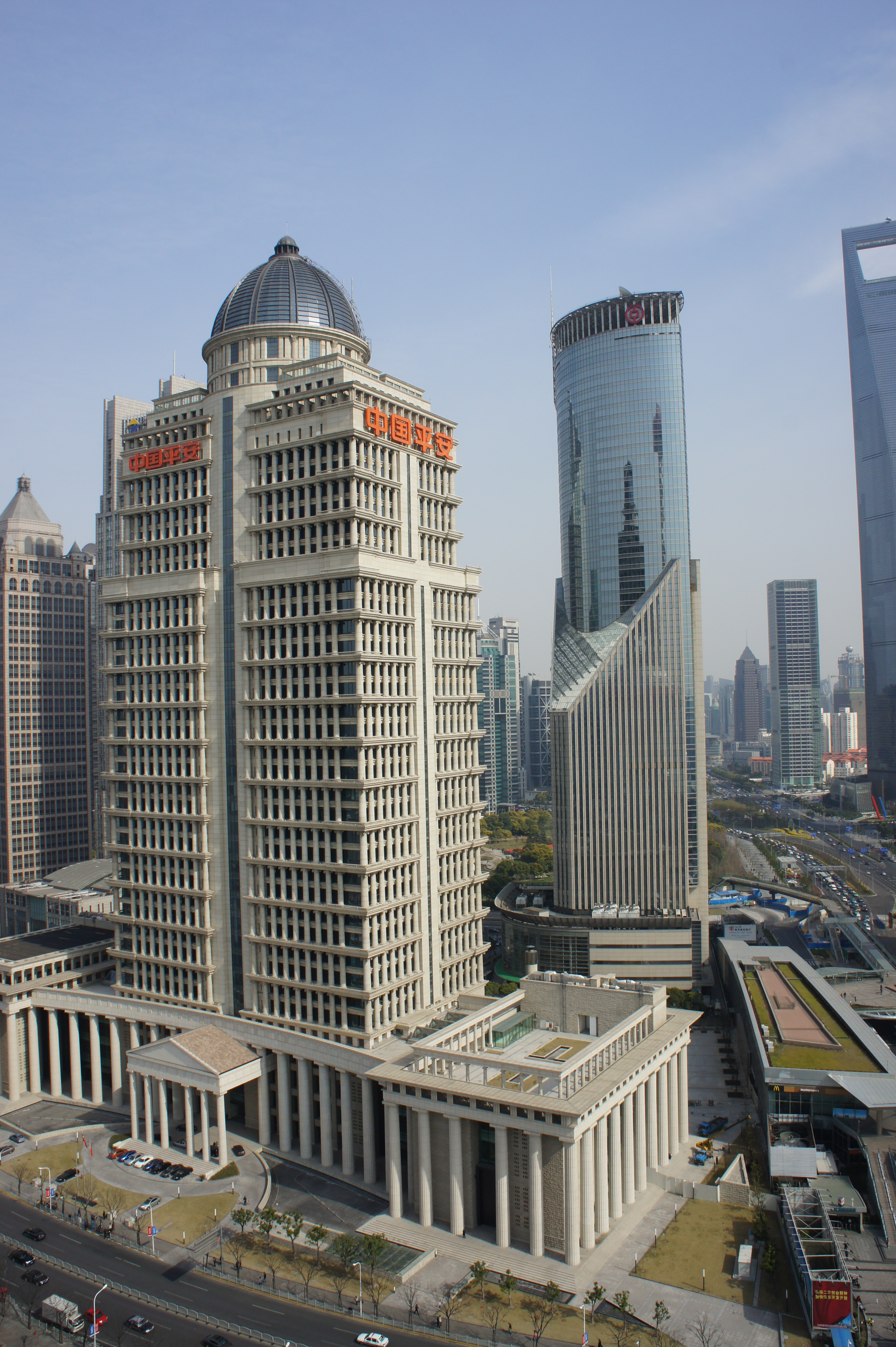
On the contrary, skyscrapers are a sign of a culture's virtousness. Which is why dictators (and also immature policy makers [1]) throughout modern history try to emulate the skylines of these cities [2], but never achieve it [3]. Their artificial skylines either look like an experiment gone bad [4, 5], consist of only a few (one) tall buildings [6] or are confined to some "new business district" on the outskirts of their capital [7, 8].
There are other moronic reactionary, influential, ideas like the one of "clouding" ("Verschattung"), according to which because of skyscrapers we're either dying from Vitamin D deficiency or because of sadness because we can't see our monuments anymore. This is ignoring the fact that a 2 story building is already enough to cast a shadow upon you, thus in most old towns you were already unable to see any landmarks and already were "clouded" (in warmer areas even intentionally).
On the contrary, while most skyscrapers will look functional, many achieve a democratization of identity, in that they enable more people see their city's icons.
[1] https://de.wikipedia.org/wiki/Wikingturm
[2] https://en.wikipedia.org/wiki/Seven_Sisters_(Moscow)
[3] https://en.wikipedia.org/wiki/Ryugyong_Hotel
[4] https://en.wikipedia.org/wiki/Oriental_Pearl_Tower
[5] http://www.globalpostmark.com/wp-content/uploads/2011/03/201...
[6] https://en.wikipedia.org/wiki/Nabemba_Tower
[7] https://en.wikipedia.org/wiki/Moscow_City_(businnes_center)
[8] https://en.wikipedia.org/wiki/Nur-Sultan
The shrillest thinking but/thus the most influential is this moronic idea of phallus symbols. According to which, they are a power tool for the patriachy, which albeit being so powerful the patriachy is simoultaniously so immature that it can't refrain from playing with its genitalia in public.
The fact that this phallus idiocy is virtually non-rebuked in academia and still considered established, tells you about the influence on popular belief the reactionaries have had.
On the contrary, skyscrapers are a sign of a culture's virtousness. Which is why dictators (and also immature policy makers [1]) throughout modern history try to emulate the skylines of these cities [2], but never achieve it [3]. Their artificial skylines either look like an experiment gone bad [4, 5], consist of only a few (one) tall buildings [6] or are confined to some "new business district" on the outskirts of their capital [7, 8].
There are other moronic reactionary, influential, ideas like the one of "clouding" ("Verschattung"), according to which because of skyscrapers we're either dying from Vitamin D deficiency or because of sadness because we can't see our monuments anymore. This is ignoring the fact that a 2 story building is already enough to cast a shadow upon you, thus in most old towns you were already unable to see any landmarks and already were "clouded" (in warmer areas even intentionally).
On the contrary, while most skyscrapers will look functional, many achieve a democratization of identity, in that they enable more people see their city's icons.
[1] https://de.wikipedia.org/wiki/Wikingturm
[2] https://en.wikipedia.org/wiki/Seven_Sisters_(Moscow)
[3] https://en.wikipedia.org/wiki/Ryugyong_Hotel
[4] https://en.wikipedia.org/wiki/Oriental_Pearl_Tower
[5] http://www.globalpostmark.com/wp-content/uploads/2011/03/201...
[6] https://en.wikipedia.org/wiki/Nabemba_Tower
[7] https://en.wikipedia.org/wiki/Moscow_City_(businnes_center)
[8] https://en.wikipedia.org/wiki/Nur-Sultan
TIL "yonic architecture" is a productive image search term.
    Not sure if parametricist cat pics
         =.=
are any improvement on Sphynx picsIf humans are to minimize impact on the rest of the ecosystem I don't see how that is compatible with NO SKYCRAPERS. In long run I think it will make sense both economically and in reducing human footprint on earth[0].
Making high density living bearable and even desirable that's the art we need (and millenia of urbanization has been about) to master.
[0] I'm aware that dense cities are not automatically more sustainable. But I suspect is easier to achieve sustainability due to proximity.
Making high density living bearable and even desirable that's the art we need (and millenia of urbanization has been about) to master.
[0] I'm aware that dense cities are not automatically more sustainable. But I suspect is easier to achieve sustainability due to proximity.
Many places are fine with 3-5 story buildings and row houses for those who insist on single family housing (nothing wrong with that). From what I have heard about SF and the bay area it's mostly detached single family units with very large lot sizes.
I understand the benefits of single family units and a private outdoor space but I feel like there are diminishing returns. It's probably possible to retain more than 75% the value of a single family unit while doubling density.
I understand the benefits of single family units and a private outdoor space but I feel like there are diminishing returns. It's probably possible to retain more than 75% the value of a single family unit while doubling density.
The ecological problem with skyscrapers is that they're inherently energy-intensive. If you live in the 5th floor you can either walk the entire thing (which is still reasonable-ish), or take a lift 5 floors down and another 5 back up.
If you live on the 50th floor, you have to travel a total of 100 floors every day. You're taking the lift, and taking 10x the energy to do so. Also, IIRC skyscrapers need machine-powered air ventilation which also takes power.
Of course, the real killer might be the embodied energy - a 1-story flat can have a lot less embodied energy than an equivalent-sized 100-story skyscraper, simply because you can build the flat out of low-embodied-energy mud brick, whereas the skyscraper is necessarily high-strength steel with reinforced concrete anchoring underground.
*
But I think we're getting tunnel-vision. This is a social problem, perhaps it has a social solution.
The important question here is: why are some plots of land so much more valuable to live on, than others?
Perhaps if instead of spending money on building more skyscrapers, we instead spent it on decentralising, more people would be able to live in bumfuck-nowhere and that would reduce demand for existing skyscrapers without a ton of energy-expensive construction. There are plenty of rapidly emptying small towns around, after all.
IMO silicon valley is public enemy #1 here - surely the IT industry is more suited to remote working and doesn't need some of the (AFAICT) most expensive housing in the entire US. That really suggests to me that there's a ripe juicy social problem that would dribble out a ton of benefits when bitten into.
If you live on the 50th floor, you have to travel a total of 100 floors every day. You're taking the lift, and taking 10x the energy to do so. Also, IIRC skyscrapers need machine-powered air ventilation which also takes power.
Of course, the real killer might be the embodied energy - a 1-story flat can have a lot less embodied energy than an equivalent-sized 100-story skyscraper, simply because you can build the flat out of low-embodied-energy mud brick, whereas the skyscraper is necessarily high-strength steel with reinforced concrete anchoring underground.
*
But I think we're getting tunnel-vision. This is a social problem, perhaps it has a social solution.
The important question here is: why are some plots of land so much more valuable to live on, than others?
Perhaps if instead of spending money on building more skyscrapers, we instead spent it on decentralising, more people would be able to live in bumfuck-nowhere and that would reduce demand for existing skyscrapers without a ton of energy-expensive construction. There are plenty of rapidly emptying small towns around, after all.
IMO silicon valley is public enemy #1 here - surely the IT industry is more suited to remote working and doesn't need some of the (AFAICT) most expensive housing in the entire US. That really suggests to me that there's a ripe juicy social problem that would dribble out a ton of benefits when bitten into.
Lifts are really quite efficient especially as they are normally designed with a counterweight so that the main energy usage is lifting extra weight (i.e. you). Descending doesn't require added energy (in a simplistic model) as it's using gravity to do the work.
To do the maths:
* It takes 10 joules to lift 1kg 1m
* If we assume each floor is 4m, then 200m needs to be lifted daily
* If we assume a 100Kg human then our daily commute requirements are 200,000 Joules -- (200 * 100 * 10).
To put this number into other terms that's about 56 Watt Hours - the energy required to run a decent laptop for an hour.
Gasoline has ~ 31,500,000 Joules per litre in it it. If we were 10% efficient at using that energy we would need 0.06l of it (0.02 US Gallons).
To do the maths:
* It takes 10 joules to lift 1kg 1m
* If we assume each floor is 4m, then 200m needs to be lifted daily
* If we assume a 100Kg human then our daily commute requirements are 200,000 Joules -- (200 * 100 * 10).
To put this number into other terms that's about 56 Watt Hours - the energy required to run a decent laptop for an hour.
Gasoline has ~ 31,500,000 Joules per litre in it it. If we were 10% efficient at using that energy we would need 0.06l of it (0.02 US Gallons).
You're forgetting that a 200m elevator ride is less energy intensive than commuting e.g. 10km by car.
I think you're right and it's also important to note that high density cities do not necessarily have to be cities full of skyscrapers. Old cities with narrow streets between short buildings can be very dense. American cities tend to put huge 4+ lane roads everywhere, and require setbacks on buildings, and this has a big impact on density and the distance you have to walk to get anywhere, but if you are accustomed to that, you hardly notice it. It's possible to build sustainable density on the "human scale".
I have lived in south China (extreme high rise and skyscrapers), a global city in Europe (mid rise) and south America (a sprawling mid rise city with lots of cars). I'd say the south Asia felt much more human scale due to easy access to parks, untouched hills and nature in general.
South American sprawl was the worst in terms of easy access to 'nature'.
So I guess it depends what you consider human scale.
South American sprawl was the worst in terms of easy access to 'nature'.
So I guess it depends what you consider human scale.
Personally my ideal living space would be a huge highrise built on top of a grocery store and a transit station and next to a park. But many people are just so opposed to this kind of urbanism that I think it's always worth bringing up alternatives. I lived in a flat European city too and loved it.
Having a lot of space between buildings is actually necessary if you're going to have 50 story buildings for reasons of light and fresh air. But not everything has to be Manhattan. We could get appreciable increases in density merely by rezoning a lot of single-family housing to allow for five and ten story buildings, which don't require that level of offsets.
I'm aware that dense cities are not automatically more sustainable.
Seems like you're under-selling density here.
A dense city may not be automatically sustainable but it seems logical that denseness would be necessary to create a much more sustainable city than today.
Oppositely, there is degree of sprawl is almost automatically unsustainable, in ecological and economic terms.
Seems like you're under-selling density here.
A dense city may not be automatically sustainable but it seems logical that denseness would be necessary to create a much more sustainable city than today.
Oppositely, there is degree of sprawl is almost automatically unsustainable, in ecological and economic terms.
> Oppositely, there is degree of sprawl is almost automatically unsustainable, in ecological and economic terms.
Is it? Or only if we want to keep living the way we do? I assume if we all became vegan polycultural subsistence farmers it would be more sustainable but we would be more spread out.
Is it? Or only if we want to keep living the way we do? I assume if we all became vegan polycultural subsistence farmers it would be more sustainable but we would be more spread out.
High density does not automatically imply skyscrapers.
Paris, or Siena, or many other examples achieve very high density, with buildings that are 3-4 floors high.
Paris, or Siena, or many other examples achieve very high density, with buildings that are 3-4 floors high.
There is dense, and then there is dense.
Paris may be the former, but it is no Manhattan or Chicago DT.
Paris may be the former, but it is no Manhattan or Chicago DT.
New York is more than just Manhattan. The average density of the 20 arrondissements is higher than the 5 boroughs.
Brooklyn has more people than Manhattan. The tenements are long gone, Manhattan is increasingly a museum of rich people these days.
there is degree of sprawl is almost automatically unsustainable
I'm not sure we'd ever reach that point in the developed world. Populations have already peaked (it's only going up because of immigration) and sprawl is self-limiting because who wants to do a 4 hour daily commute?
I'm not sure we'd ever reach that point in the developed world. Populations have already peaked (it's only going up because of immigration) and sprawl is self-limiting because who wants to do a 4 hour daily commute?
...sprawl is self-limiting because who wants to do a 4 hour daily commute?
Not in the larger scheme of things. People move to suburb X before grid lock and have a one hour commute. Enough people move there that the commute is suddenly two and a half hours or more. But people keep moving to the area because the houses exist, the land is still relatively cheap and so-forth. The bottom may even fall out of the market but the place exists, someone will buy the houses. Exurbs can easily become suburban ghettos like Antioch or Modesto.
But naturally, it's not just the commute part the closes in on exurbs. Cost of services is higher and once the places become less-than-upper-middle-class, they don't have a tax base to pay for expensive services, they become less desirable than urban ghettos.
Not in the larger scheme of things. People move to suburb X before grid lock and have a one hour commute. Enough people move there that the commute is suddenly two and a half hours or more. But people keep moving to the area because the houses exist, the land is still relatively cheap and so-forth. The bottom may even fall out of the market but the place exists, someone will buy the houses. Exurbs can easily become suburban ghettos like Antioch or Modesto.
But naturally, it's not just the commute part the closes in on exurbs. Cost of services is higher and once the places become less-than-upper-middle-class, they don't have a tax base to pay for expensive services, they become less desirable than urban ghettos.
I think he is referring to collateral sprawl. Meaning, that density could be assumed to relatively increase property values and increase demand for support infrastructure. Businesses and people seek out low-priced space within the region. So, a high density area will spur unintended sprawl which might lead to other issues.
But businesses seeking out low cost areas is probably unavoidable.
You could build a super dense city, but a limited population is going to want to live there - people with kids, etc.
Unless you’re willing to force them to live in a city, some people are going to seek out low cost areas and be a source of employees for the companies doing the same.
You could build a super dense city, but a limited population is going to want to live there - people with kids, etc.
Unless you’re willing to force them to live in a city, some people are going to seek out low cost areas and be a source of employees for the companies doing the same.
> sprawl is self-limiting because who wants to do a 4 hour daily commute?
Ironically, an increase in remote work would probably exacerbate sprawl.
Ironically, an increase in remote work would probably exacerbate sprawl.
>Making high density living bearable and even desirable that's the art we need
I think a lot of this could be solved with a couple of improvements to building codes:
1) require far stronger noise dampening, equivalent to that of detached homes. That is, regular day-to-day life should not register at all - including e.g. watching a movie with the sound system turned up (including bass). There should also be almost no tolerance for vertically travelling noise, you should be able to stomp around or drag furniture without disturbing your downstairs neighbour.
2) Force arrangement of shared interior walls such that your bedroom will never be adjacent to the neighbours living room, so that if noise does leak through it should not be able to disturb anyone's sleep. This should also affect the routing of water pipes and such, so that water flow and pipe knocking does not intrude.
3) The above points should be enforced by random sample testing of some proportion (somewhere in the range of 15-30%) of the buildings apartments before it is certified for occupancy. As in, testers would randomly select two adjacent apartments, set up loud music in one and measure the noise bleed-through in the other to see if it's within tolerances.
Basically, there will always be a subset of the population of a high density building who are selfish jackasses. Construction should be changed to reflect the fact that people are unreasonable and compensate for it, instead of turning it into an externality e.g. making everyone install carpets in their apartments to reduce floor noise. I don't want to be aware of my neighbours existence outside of seeing them in shared hallways.
I think a lot of this could be solved with a couple of improvements to building codes:
1) require far stronger noise dampening, equivalent to that of detached homes. That is, regular day-to-day life should not register at all - including e.g. watching a movie with the sound system turned up (including bass). There should also be almost no tolerance for vertically travelling noise, you should be able to stomp around or drag furniture without disturbing your downstairs neighbour.
2) Force arrangement of shared interior walls such that your bedroom will never be adjacent to the neighbours living room, so that if noise does leak through it should not be able to disturb anyone's sleep. This should also affect the routing of water pipes and such, so that water flow and pipe knocking does not intrude.
3) The above points should be enforced by random sample testing of some proportion (somewhere in the range of 15-30%) of the buildings apartments before it is certified for occupancy. As in, testers would randomly select two adjacent apartments, set up loud music in one and measure the noise bleed-through in the other to see if it's within tolerances.
Basically, there will always be a subset of the population of a high density building who are selfish jackasses. Construction should be changed to reflect the fact that people are unreasonable and compensate for it, instead of turning it into an externality e.g. making everyone install carpets in their apartments to reduce floor noise. I don't want to be aware of my neighbours existence outside of seeing them in shared hallways.
> Force arrangement of shared interior walls such that your bedroom will never be adjacent to the neighbours living room, so that if noise does leak through it should not be able to disturb anyone's...
I have to confess, based on similar situations I've been in, that I wasn't sure until I got to the end of that sentence whether it would be "sleep" or "TV watching".
I have to confess, based on similar situations I've been in, that I wasn't sure until I got to the end of that sentence whether it would be "sleep" or "TV watching".
I live in a 5 story apartment building and I sometimes wonder if I'm the only person in the building.
I think it would be cheaper to modernize noise control bylaws. Abating noise from modern home theater setups would take concrete walls on the order of a foot thick, which would add to housing costs considerably.
Surely you want gaps with spongier material between slabs of rock to thwart sound waves, rather than thicker rock.
Layered assemblies (e.g. drywall/fiberglass/drywall) work best for stopping mid-range and high-pitched sounds, but for stopping low frequency noise (e.g. home theater bass) the only solution is mass and a lot of it.
The reason why we won't have NYC or SF looking like Star Trek¹ is that the people are already wealthy and they chose to live here in the way it is so the people who would want Star Trek SF won't come to present-day SF to make it into Star Trek SF. Star Trek SF may be some unassuming town in America or (more likely) one of the emerging economies: maybe East Asia, but maybe if African nations capture their demographic dividend (unlikely IMHO) maybe them.
¹ I will have someone LongBets this on my behalf if someone wants to take the other side. San Francisco will never be like Star Trek's hyper-developed San Francisco. Willing to nail down specifics too.
EDIT: Maybe I should make an exception for high-wealth places with dictators/monarchs. There they can bypass any normal human process.
EDIT 2: No bets. Bets are off. Looks like I'd just lose money on this one because of NYC.