... on a website owned by the VC that invested in the developer.
I believe that the ideas in the blog post are novel enough and should spark curiosity and interesting discussions. Also I submitted this last week, someone must have hand-picked and given it another chance because it's a good fit for HN.
Sorry about that! Performance is really important to me, I just didn't get around to configuring CDN caching and optimizing the assets. All the HN traffic hitting our server also didn't help.
You can just start a new branch in parallel if you don't need to build on top of the foundation. But if you are happy with the foundation and the next feature requires it, you can also continue working on something else. Jujutsu's automatic change propagation to children can also help if you need to adjust the foundation. For me work is mostly continues, like a flow.
This looks awesome! I remember the Mitchell tweet, it was like a week ago? I'm super impressed how much functionality you managed to push out so fast. Crazy times.
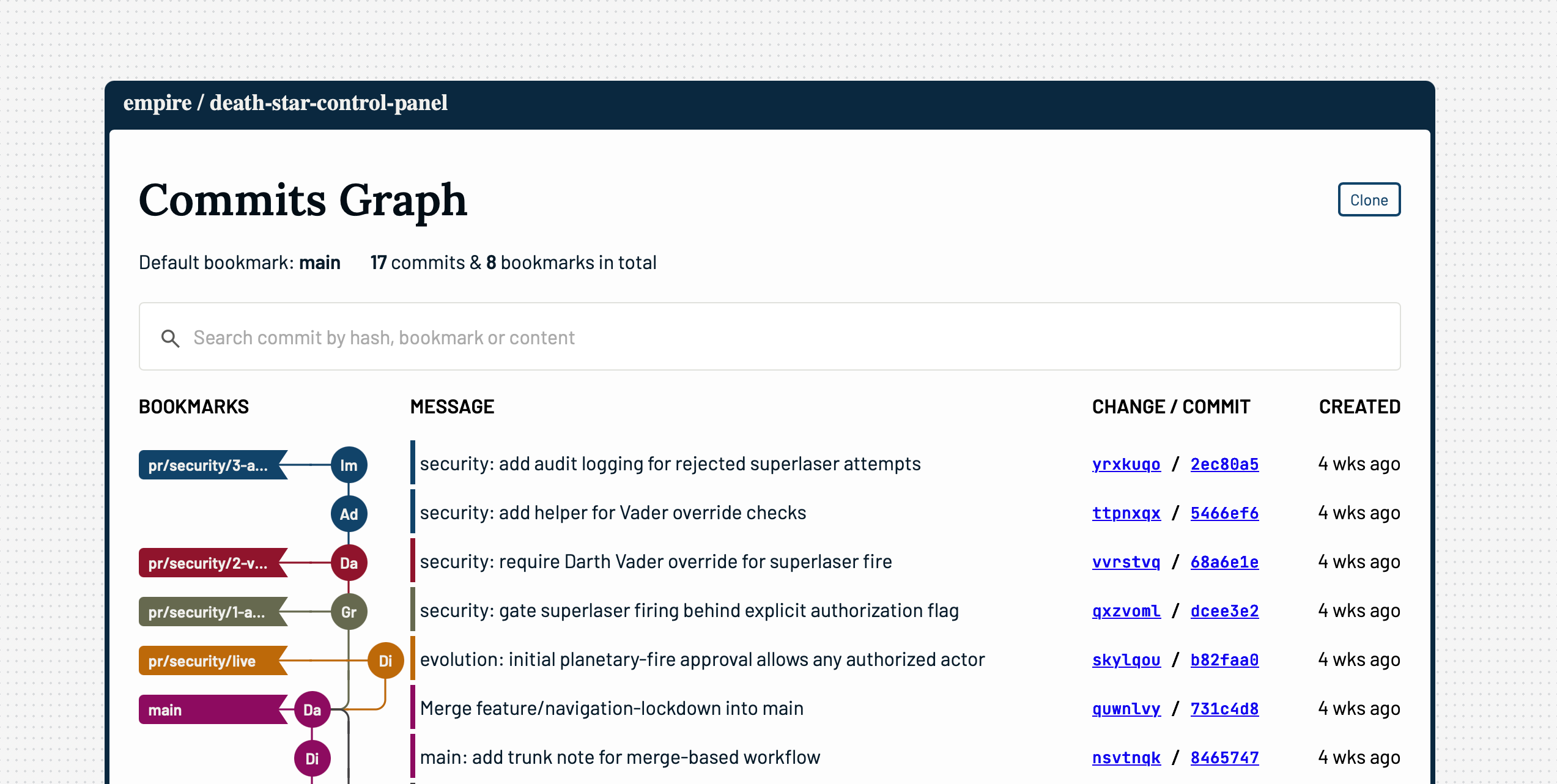
And I very much agree with Mitchell that the repository page needs improvement. If it's a public repository I'm exploring, I scroll always down through the files to see the README. If it's a repository I'm maintaining I'm either clicking on commits, PRs or issues. All this information should be right there on the first page! Most of the realestate is occupied by the file view, something I never cared about.
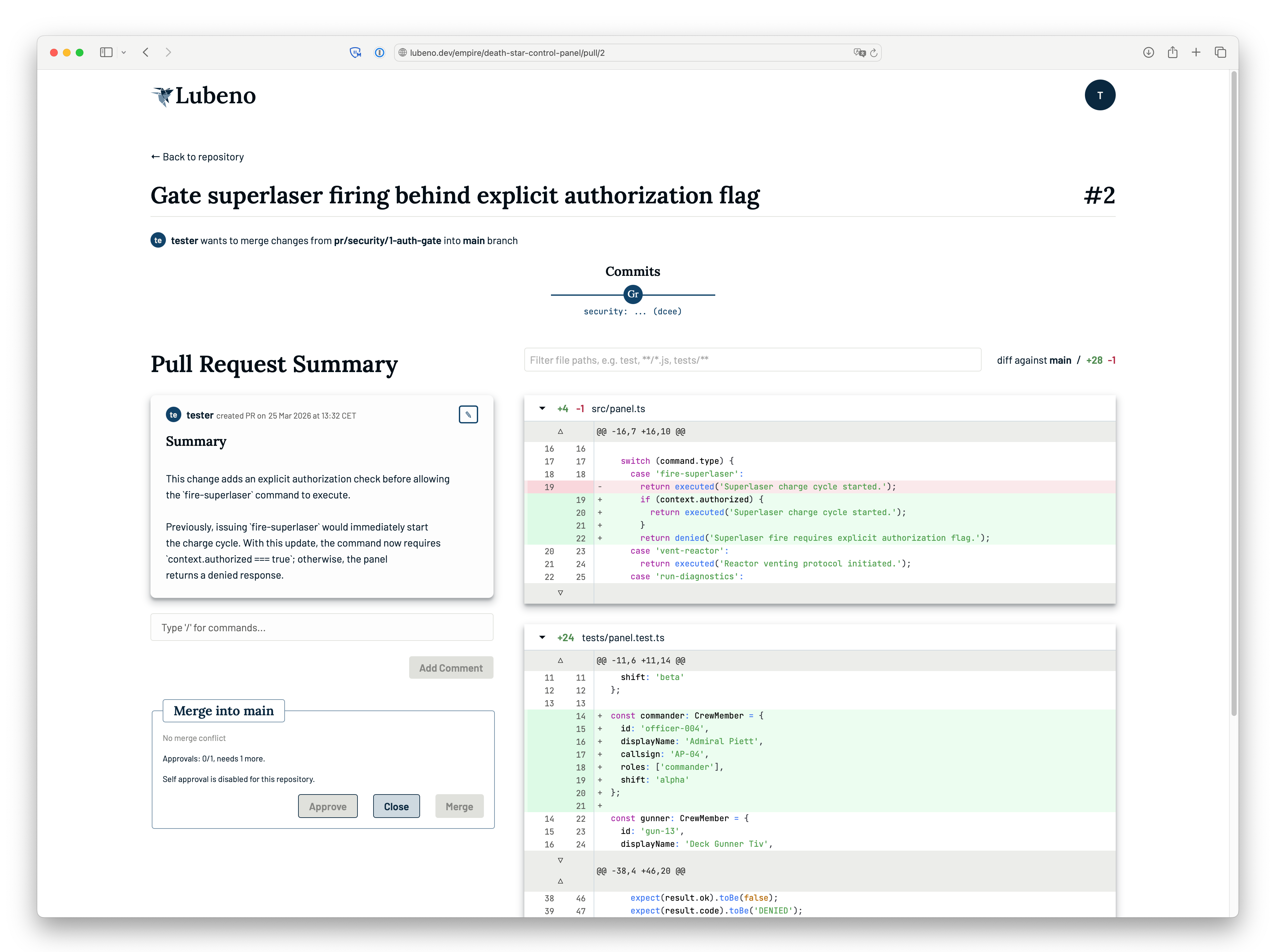
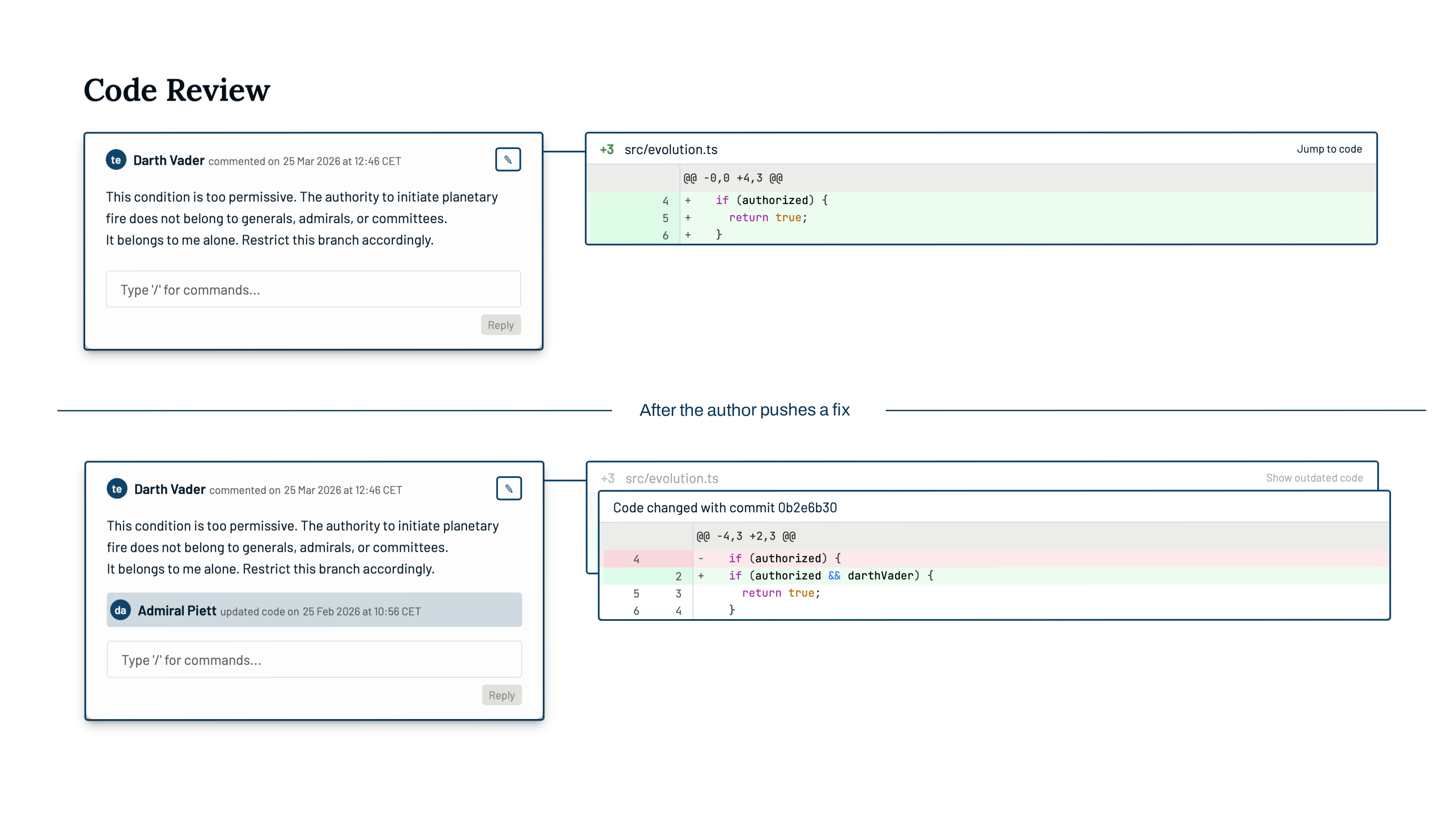
I have also been working on improving the experience for myself with https://lubeno.dev, and have been thinking for the last year how GitHub can be improved. I started specifically with Pull Requests, borrowing some ideas from other platforms, like stacked PRs. One feature that I'm very proud of is the possibility to see an interdiff when someone changes the code I commented on. You can instantly tell if the issue was addressed instead of getting an <outdated> tag on the comment and hunting down the latest changes. Would really love to see more innovation when it comes to forges. It looks like GitHub set the standard 20 years ago and everything else is a 1:1 copy of it.
The point I was trying to make is that the way our brain works is deeply connected to language and words, including how fast and how accurate you perceive colors [0][1]. And interacting with an LLM could have unexpected side effects on it, because we were never before exposed to "statistically generated language" in such amounts.
There is a lot of research on how words/language influences what we think, and even what we can observe, like the Sapir-Whorf hypothesis. If in a langauge there is one word for 2 different colors, speakers of it are unable to see the difference between the colors.
I have a suspicion that extensive use of LLMs can result in damage to your brain. That's why we are seeing so many mental health issues surfacing up, and we are getting a bunch of blog posts about "an agentic coding psychosis".
It could be that llms go from bicycles for the brain to smoking for the brain, once we figure out the long term effects of it.
It still kinda sucks though. You can make it work, but you can also easily end up wasting a huge amount of time trying to make it do something that it's just incapable of. And it's impossible to know upfront if it will work. It's more like gambling.
I personally think we have reached some kind of local maximum. I work 8 hours per day with claude code, so I'm very much aware of even subtle changes in the model. Taking into account how much money was thrown at it, I can't see much progress in the last few model iterations. Only the "benchmarks" are improving, but the results I'm getting are not. If I care about some work, I almost never use AI. I also watch a lot of people streaming online to pick up new workflows and often they say something like "I don't care much about the UI, so I let it just do its thing". I think this tells you more about the current state of AI for coding than anything else. Far from _not sucking_ territory.
I have noticed the same trend with my parents. The people that were insisting that I was spending too much time as a child in front of the computer and should get out, are now retired and permanently glued to their phones.
Hi! I have been using Fastmail for the last 2 years and love it!
I don't use the web interface much, instead I use Apple's Mail.app. My only issue is that external email accounts (gmail) take some time to be fetched periodically. When I open the web interface and click on the tag, it instantly pulls the new mail in from the external account, but if I fetch in the Mail.app, it doesn't refresh the external accounts. So, for things that have a very short time period (confirmation codes), I still end up needing to open the web interface. I wonder if this would still be the case with the new desktop app?
I will take some time to set it up over the next days and try it out!