During the pandemic when everyone was working remotely, I heard countless stories of terrible bosses who were exploiting their employees. That inspired me to make Resignation Letter.
Resignation Letter is a psychological horror short film about a burned-out employee who is trying to cope with her abusive boss, while trying to find the courage to quit her job. Things begin to get complicated when her boss threatens her own survival.
It's a little over 6 minutes, but it took me over 6 months to get this done. I have written, directed, and produced this film by myself, operating behind the camera while directing, as well as editing the project, from its visual effects to its sound effects.
While this project may seem like a moderate-budget short film with a crew, I shot in every location through favors from friends and family, investing only in minimal film gear, building custom dolly tracks and other gadgets, and doing the manual and creative labor myself.
Making movies is probably the hardest thing I've ever done, but it has one of the biggest emotional rewards I've ever experienced.
This is my first real short film, but it won't be the last one.
I've been using Davinci Resolve for almost three years and I can't emphasize enough how great this product is.
IMO, it's miles away from Adobe Premiere. Not only because of its color grading capabilities, but I just find it way more intuitive than Premiere.
And let's not forget that you also get Fusion, which is incredibly more powerful than Adobe After Effects.
You can basically do all the post-production work in one single tool. Even though Fairlight (the built-in DAW) isn't as powerful as Pro Tools, you can get most of the audio work done within Davinci Resolve.
It's just crazy to think that you can get this much for $300. Or in my case, for free when buying a Blackmagic camera.
For those of you asking in the email, I'm working on two genres: (1) Crime/horror. It's basically it's a scene from a feature script I'm writing. The feature is a crime / thriller film, but this specific scene I'm turning into a short leans more towards the horror genre. And (2) Heist film. I'll produce this one after this first one. It's a bit more ambitious so if anyone wants to collaborate on this one it'd be great to start working as soon as possible.
Also if anyone wants to collaborate on the production process on set, I'll be filming these in Madrid, Spain.
Probably not the place to post this, but I'm directing and producing a couple of short films and it'd be great to find people who want to help in any aspect of the post-production process: musicians, designers, VFX/3D artists...
If anyone is interested in knowing more about this, please reach me out to [email protected]
You're absolutely right. The thing is that they have access to way better technology--and they're not shy about it. I'm not just talking about their live facial recognition. But also their access to Cleaview AI's database (https://metro.co.uk/2020/02/28/met-police-used-controversial...)
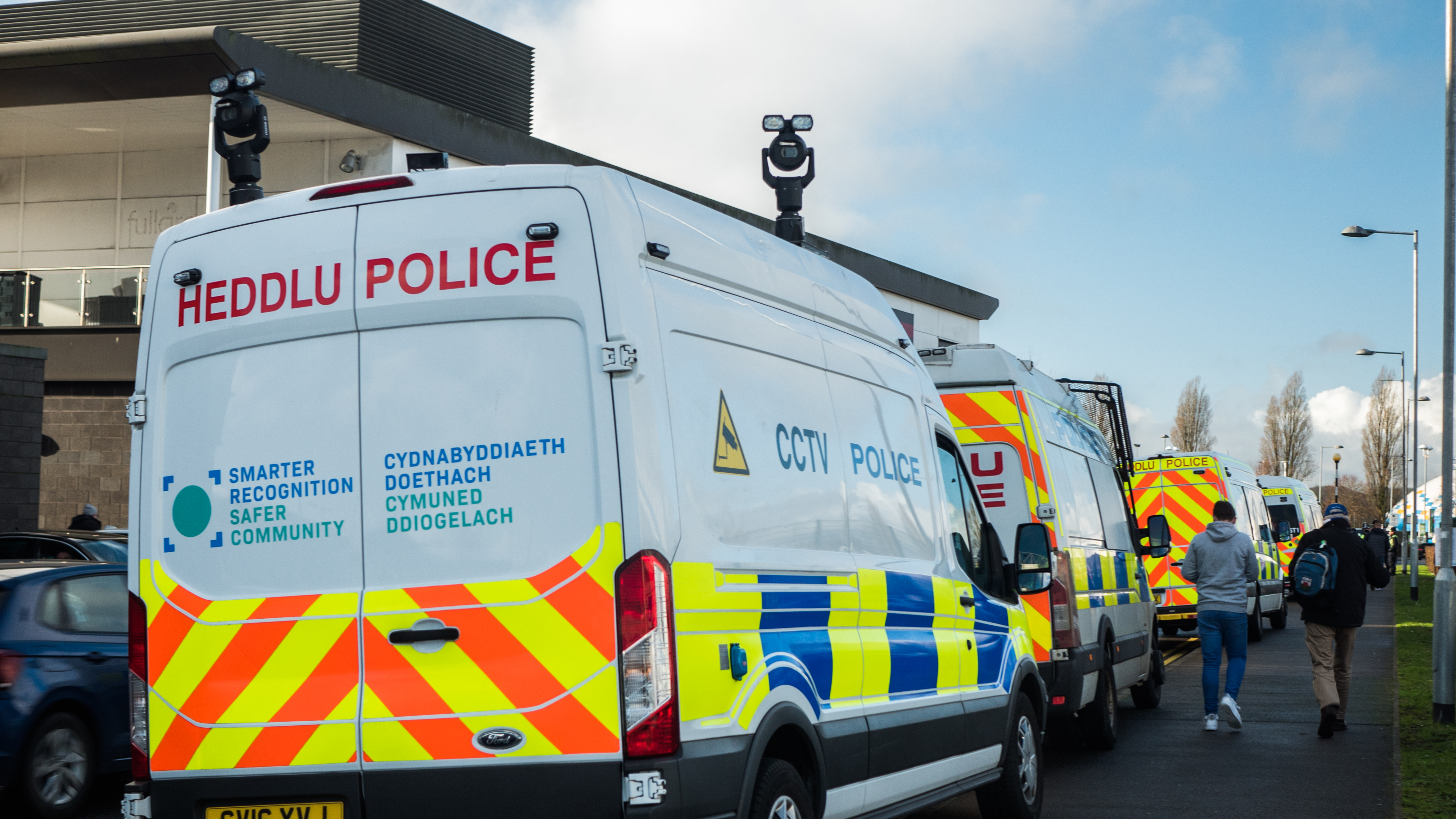
I’ve just released a short film (free) about the UK’s surveillance state and the live facial recognition deployments by UK police forces, where thousands have been scanned without consent, and many have been racially profiled.
During 2019 and 2020 I witnessed several live facial recognition deployments by the Metropolitan police and South Wales police. And I was able to capture first hand the behind the scenes of what the police do during these deployments.
The first thing I noticed in these deployment is how the UK police forces target certain people—especially racial minorities. Which is extremely worrying. But after you deeply analyze their modus operandi, the threat of their surveillance goes much further than the already grave threat of racial profiling: it is the beginning of a state of surveillance and a roll-back on human rights and fundamental freedoms.
In this short film I show you the behind the scenes of what the police do during live facial recognition operational deployments. And I give you a sneak a peak of where the UK is heading with its surveillance state. And maybe this video will serve as an example of other countries that are also walking down this road.
You can watch the full short film here: bmstudios.org/uk-surveillance-state/
I’m Borja Moya, a filmmaker and privacy activist based in London. I’ve just released a short film about the UK’s surveillance state and the live facial recognition deployments by UK police forces, where thousands have been scanned without consent, and many have been racially profiled.
During 2019 and 2020 I witnessed several live facial recognition deployments by the Metropolitan police and South Wales police. And I was able to capture first hand the behind the scenes of what the police do during these deployments.
The first thing I noticed in these deployment is how the UK police forces target certain people—especially racial minorities. Which is extremely worrying. But after you deeply analyze their modus operandi, the threat of their surveillance goes much further than the already grave threat of racial profiling: it is the beginning of a state of surveillance and a roll-back on human rights and fundamental freedoms.
In this short film I show you the behind the scenes of what the police do during live facial recognition operational deployments. And I give you a sneak a peak of where the UK is heading with its surveillance state. And maybe this video will serve as an example of other countries that are also walking down this road.
(Please, let me know your thoughts about this film)
The problem I have with these sort of initiatives is that they don't solve the real problem. Here's the thing: I want to own some of my data, but I don't want to own most of it, because it shouldn't be collected in the first place.
Solid and other alike work in theory, but in practice I have some serious doubts. I believe that instead of owning your data is far much better to camouflage or destroy your data before it gets out there.
For less than 50 deployments in the small Cardiff City? That's a lot of dough. They were simple tests. Now in London it's going to be fully operational on a daily basis.
Either way, the major concern is how the UK is building a dangerous surveillance state. I mean, I live in London and I can't go around without being watched. And that's just on the streets.
There are a lot of things going on that I find interesting. But one that has caught my attention is the realization that surveillance is a profitable business.
Live facial recognition deployments cost a lot of money. Just in Cardiff alone the police spent 3 million pounds in this technology. And they have more than 25 police officers and with brand new iPads surveilling people in real time. (I was there.)
Imagine how much money they're going to spend in London now. So besides the obvious human rights related questions, the other not so obvious one is: Who is getting these contracts? Where is that money going?
Big Brother Watch, the UK campaign group fighting facial recognition has opened a petition to stop the deployment of live facial recognition by the Met Police:
I moved recently to London and one of the things that I find surprising is that surveillance is seen as normal. In fact, last Sunday there was a facial recognition deployment in Cardiff during the football match. There was a group of fans concerned about this technology--they were being targeted after all. But a lot of people just saw this as normal.
The thing is that you can't make a point in two paragraphs. You can state something, but it leaves room for all sorts of interpretations.
I cover all these points in the book. But just to be clear this isn't just about China as the bad guy--the US is in the same direction.
I agree on your point about that in the past democracies ended up winning. But today we're seeing that the technological disruption is killing the very essence that makes democratic society democratic. The fact is that liberal democracies have to evolve or Data Dictatorships are going to take over.
Resignation Letter is a psychological horror short film about a burned-out employee who is trying to cope with her abusive boss, while trying to find the courage to quit her job. Things begin to get complicated when her boss threatens her own survival.
It's a little over 6 minutes, but it took me over 6 months to get this done. I have written, directed, and produced this film by myself, operating behind the camera while directing, as well as editing the project, from its visual effects to its sound effects.
While this project may seem like a moderate-budget short film with a crew, I shot in every location through favors from friends and family, investing only in minimal film gear, building custom dolly tracks and other gadgets, and doing the manual and creative labor myself.
Making movies is probably the hardest thing I've ever done, but it has one of the biggest emotional rewards I've ever experienced.
This is my first real short film, but it won't be the last one.
Hope you enjoy it!