How true is 'Speed Enforced by Aircraft' Sign? (2016)(kqed.org)
kqed.org
How true is 'Speed Enforced by Aircraft' Sign? (2016)
https://www.kqed.org/news/10953748/how-much-truth-is-there-to-those-speed-enforced-by-aircraft-signs
191 comments
The ticket didn't even pay for the helicopter fuel and the cost of manpower, while zero people were non consensually endangered.
How could we rephrase speeding laws so they make sense, instead of this black and white stupidity ?
How could we rephrase speeding laws so they make sense, instead of this black and white stupidity ?
I think having fines be a major funding source distracts from the purpose of the enforcement. They’re supposed to be there for public safety, not for making sure there’s a Christmas bonus.
There are countries where traffic fines are based as a percent of salary rather than flat rates. That way the rich are equally incentivized to obey the laws.
That being said I’ve always felt frustrated by speeding tickets. Everyone goes 5-10 over the limit at all times so it makes a system where cops can basically pull over everyone and give them a ticket at will.
It seems like if it’s a limit, it should be an actual sensible number and be an actual limit. Instead of this kafkaesque system where everyone can be deemed guilty at will.
Likewise I feel other behaviors like tailgating and aggressive driving aren’t enforced and (imho) cause more accidents.
There are countries where traffic fines are based as a percent of salary rather than flat rates. That way the rich are equally incentivized to obey the laws.
That being said I’ve always felt frustrated by speeding tickets. Everyone goes 5-10 over the limit at all times so it makes a system where cops can basically pull over everyone and give them a ticket at will.
It seems like if it’s a limit, it should be an actual sensible number and be an actual limit. Instead of this kafkaesque system where everyone can be deemed guilty at will.
Likewise I feel other behaviors like tailgating and aggressive driving aren’t enforced and (imho) cause more accidents.
Yesterday I was driving and noticed that Google Maps shows user-reported speed traps nowadays. It was fairly accurate and warned me of 2-3 speed traps during my trip. It triggered a thought for me of "wouldn't police departments fight to keep this information out of our hands?" and then I thought of the compelling reason "if the goal of enforcement is to get people to make the roads safer, then this little speed trap warning is actually much more effective at getting that behavior out of me, since I started slowing down a few miles before the trap."
> That being said I’ve always felt frustrated by speeding tickets. Everyone goes 5-10 over the limit at all times so it makes a system where cops can basically pull over everyone and give them a ticket at will.
In some countries such deviations aren't punished. Either they simply don't have a fine/points for going 5-10kmph above the speed limit, or have a relative window depending on the speed. The error of the measuring device might also be considered. And until recently most cars had a builtin "error" in the speed reading of up to 10% mainly to account for slight differences in tire wear and to remove any legal liability from the manufacturer in case of false readings. These days I've seen plenty of cars being spot on because they use GPS to measure so that changes that "buffer". So going 5 over limit usually means a bit more.
Too much flexibility for the police officer isn't great, I agree. It incentivizes abuse of power. The case above isn't one of those though.
In some countries such deviations aren't punished. Either they simply don't have a fine/points for going 5-10kmph above the speed limit, or have a relative window depending on the speed. The error of the measuring device might also be considered. And until recently most cars had a builtin "error" in the speed reading of up to 10% mainly to account for slight differences in tire wear and to remove any legal liability from the manufacturer in case of false readings. These days I've seen plenty of cars being spot on because they use GPS to measure so that changes that "buffer". So going 5 over limit usually means a bit more.
Too much flexibility for the police officer isn't great, I agree. It incentivizes abuse of power. The case above isn't one of those though.
> That being said I’ve always felt frustrated by speeding tickets. Everyone goes 5-10 over the limit at all times so it makes a system where cops can basically pull over everyone and give them a ticket at will.
California has a requirement that speed limits be set based on a speed survey, except for like school zones and highways posted at 65 or more.
That doesn't help much if you get a ticket for 70 in a 65 when prevailing traffic was doing 75, but at least it prevents some abuses.
But speeding probably get attention because it's objective. Harder to testify about tailgating distance, because there's no printout from the speedgun.
California has a requirement that speed limits be set based on a speed survey, except for like school zones and highways posted at 65 or more.
That doesn't help much if you get a ticket for 70 in a 65 when prevailing traffic was doing 75, but at least it prevents some abuses.
But speeding probably get attention because it's objective. Harder to testify about tailgating distance, because there's no printout from the speedgun.
Some EU countries have speed-controlled lights. So if one person goes over the limit it holds everyone up for a couple of minutes.
There are no tickets or fines, just chagrin. It works surprisingly well.
There are no tickets or fines, just chagrin. It works surprisingly well.
I'm not aware of lights like that in the US but we do have places where the stoplights are timed to a few mph below the speed limit. If you drive 38, you'll hit every green light. If you drive 45, you get to stop at red lights while the car going 38 catches up.
Some people insist on going 50 anyway and I swear some people think that if they go 80 they'll also get the green lights. :)
Some people insist on going 50 anyway and I swear some people think that if they go 80 they'll also get the green lights. :)
If there are multiple red-green cycles per 38mph interval, the 80-goers would be right! ;) (eg. you launch from the first light, the next light ahead goes green, red, green before you get through)
Speed limits are 100% political. They aren’t based on engineering. You always have cops saying “speed was a factor in this collision” and “everyone just needs to slow down to be safe.” But the reality is that accidents don’t happen from high speed, they happen from a high standard deviation among speed of individual cars on the road. Having a speed limit well below what the road can safely be driven at creates that high standard deviation as some people drive to the road while others drive to the limit.
The collective insanity that we as a society have around setting sensible maximum speeds for roads is one of my bigggest pet peeves.
The collective insanity that we as a society have around setting sensible maximum speeds for roads is one of my bigggest pet peeves.
> a high standard deviation among speed of individual cars on the road
so in a world without speed limits, people can individually decide what speed a road "feels like". in a world with speed limits, people can still do that but there's a sign stating a preferred speed for the road and an (admittedly flawed) enforcement mechanism.
I really can't fathom how the former leads to less "deviation" than the latter.
so in a world without speed limits, people can individually decide what speed a road "feels like". in a world with speed limits, people can still do that but there's a sign stating a preferred speed for the road and an (admittedly flawed) enforcement mechanism.
I really can't fathom how the former leads to less "deviation" than the latter.
not agreeing with post you responded to, but you're misrepresenting them.
my understanding of the post is that he proposes speed limits should not be set so low as to increase the deviation between people following the speed limit and following their intuition i.e. they should approach average intuitive speed of the drivers using the road.
my understanding of the post is that he proposes speed limits should not be set so low as to increase the deviation between people following the speed limit and following their intuition i.e. they should approach average intuitive speed of the drivers using the road.
We do seem to end up with a ratchet effect though. My town sets speed limits at the 85th percentile of speeds based on traffic surveys. Say the limit starts at 30. Most drivers assume a buffer before there will be enforcement, so they start driving 35. Next time the city studies that road, they raise the limit to 35 and drivers start going 40. Rinse. repeat.
Eventually, you end up like our main road through town where the limit is 45, the state limit for that type of surface street. Many drivers are happy to go 50 but the area has built up and also gets a lot of drivers unfamiliar with the area and those drivers go 30. It's a real mess and there are multiple crashes daily but I don't think the speed limit will ever be lowered. I think I've only seen the speed limit lowered on one road in the almost 20 years I've lived here. They only change in one direction.
Eventually, you end up like our main road through town where the limit is 45, the state limit for that type of surface street. Many drivers are happy to go 50 but the area has built up and also gets a lot of drivers unfamiliar with the area and those drivers go 30. It's a real mess and there are multiple crashes daily but I don't think the speed limit will ever be lowered. I think I've only seen the speed limit lowered on one road in the almost 20 years I've lived here. They only change in one direction.
Leaving aside the simple physics of more kinetic energy making those 'standard deviations' clearly more serious for all involved, we clearly don't want high speed traffic in environments with pedestrians and cyclists. So while the Autobahn may not be a nonstop catastrophe, I would think it's clear that speed limits on non-freeways are far from "100% political".
>I would think it's clear that speed limits on non-freeways are far from "100% political".
This depends on the locale, and what you consider "political". For example, in NYC it is entirely "political/financial. For some time now the city-wide speed limit has been set at 25 mph, with thousands of speed cameras that automatically ticket people. While on some streets this may be reasonable, it is certainly not reasonable city-wide (which includes all the outer boroughs of Queens, Brooklyn, Staten Island and the Bronx). In her annual address this month, Governor Hochul announced that the city-wide speed limit will be lowered even further, below 25 mph! This means that at the maximum legal speed, your car will be passed by bikes, mopeds and even fast runners. This is clearly not a safety issue, thought some will argue it is "safer" (and it would be safer still if the speed limit was 0, nobody would ever die from an auto accident!). It a combination of a money-making scam and a political ploy to curry favor from the small (but politically powerful) group of New Yorkers who want to eliminate cars all together.
This depends on the locale, and what you consider "political". For example, in NYC it is entirely "political/financial. For some time now the city-wide speed limit has been set at 25 mph, with thousands of speed cameras that automatically ticket people. While on some streets this may be reasonable, it is certainly not reasonable city-wide (which includes all the outer boroughs of Queens, Brooklyn, Staten Island and the Bronx). In her annual address this month, Governor Hochul announced that the city-wide speed limit will be lowered even further, below 25 mph! This means that at the maximum legal speed, your car will be passed by bikes, mopeds and even fast runners. This is clearly not a safety issue, thought some will argue it is "safer" (and it would be safer still if the speed limit was 0, nobody would ever die from an auto accident!). It a combination of a money-making scam and a political ploy to curry favor from the small (but politically powerful) group of New Yorkers who want to eliminate cars all together.
To be clear, a huge majority of crashes happen at the interface points between multiple traffic streams. Higher speeds in that situation is absolutely both an exacerbating factor in the likelihood of a crash (by increasing the stopping distance) and the severity of the crash when it happens.
The ticket is to design roads such that people naturally drive at safer speeds. The collective insanity is that we as a society allow engineers to pretend that features intended to speed up traffic are a safety mechanism.
The ticket is to design roads such that people naturally drive at safer speeds. The collective insanity is that we as a society allow engineers to pretend that features intended to speed up traffic are a safety mechanism.
There's no alternative here. You're asking for a law where a driver gets to interpret the situation and decide whether a traffic law should apply to them or not. That's just unenforceable, imagine trivial court cases hinging on whether a "reasonable person" would drive a certain speed. Plus, most drivers think they're a better and safer driver than they really are. Do you really trust them to correctly assess the risk, not just to themselves but to others? I certainly don't.
These rules have to be black and white! Do triple digit (mph) speeds on a highway? Get an expensive ticket, even if the highway wasn't busy.
These rules have to be black and white! Do triple digit (mph) speeds on a highway? Get an expensive ticket, even if the highway wasn't busy.
> imagine trivial court cases hinging on whether a "reasonable person" would drive a certain speed.
Why is this dystopian? It's literally the point of courts to apply judgment.
Why is this dystopian? It's literally the point of courts to apply judgment.
A bright line doesn't only make it clear what's illegal - it also makes it clear what's legal.
With a less clear law, how would you know if your speed was legal?
I think I'm a reasonable person and while sober, well-rested and attentive on an empty freeway at sunset on a road drying after 0.1 inch of rainfall in the preceding hour with no other cars in view driving eastbound at 70 mph would be reasonable.
But what if a cop is having a bad day, or has a quota to hit, or doesn't like my bumper sticker, and decides the legal limit is 65 mph because the setting sun might be dazzling in my rear view mirror?
And if I don't want the cost and inconvenience of going to court, should I go at 60 mph instead, just in case?
The reality is the courts are very slow and very expensive for decisions that are being made millions of times per day.
With a less clear law, how would you know if your speed was legal?
I think I'm a reasonable person and while sober, well-rested and attentive on an empty freeway at sunset on a road drying after 0.1 inch of rainfall in the preceding hour with no other cars in view driving eastbound at 70 mph would be reasonable.
But what if a cop is having a bad day, or has a quota to hit, or doesn't like my bumper sticker, and decides the legal limit is 65 mph because the setting sun might be dazzling in my rear view mirror?
And if I don't want the cost and inconvenience of going to court, should I go at 60 mph instead, just in case?
The reality is the courts are very slow and very expensive for decisions that are being made millions of times per day.
> A bright line doesn't only make it clear what's illegal - it also makes it clear what's legal.
But doing the speed limit is not always legal. It depends on the conditions. If the sunset is dazzling, the speed limit might not be safe for conditions, so you could be ticketed for violating the basic speed law. Or if there's heavy rain or snow or what have you.
But doing the speed limit is not always legal. It depends on the conditions. If the sunset is dazzling, the speed limit might not be safe for conditions, so you could be ticketed for violating the basic speed law. Or if there's heavy rain or snow or what have you.
It's possible to break the law and not be penalized for it.
>But what if a cop is having a bad day, or has a quota to hit, or doesn't like my bumper sticker, and decides the legal limit is 65 mph because the setting sun might be dazzling in my rear view mirror?
You would take it to court like you do now and fight the assessment.
>And if I don't want the cost and inconvenience of going to court, should I go at 60 mph instead, just in case?
Yes, no different than today
>But what if a cop is having a bad day, or has a quota to hit, or doesn't like my bumper sticker, and decides the legal limit is 65 mph because the setting sun might be dazzling in my rear view mirror?
You would take it to court like you do now and fight the assessment.
>And if I don't want the cost and inconvenience of going to court, should I go at 60 mph instead, just in case?
Yes, no different than today
It's not dystopian, but it raises the standard of evidence beyond what is feasible to support. With simple limits, you can say "I clocked you at 80 on a 65mph road" and that's evidence enough. You'd need far more evidence and deliberation to enforce the rule "you went faster than a reasonable person should".
Black and white thought process is what leads to things like minimum/mandatory sentencing which having a lot of criticism
https://www.brennancenter.org/our-work/analysis-opinion/end-...
>imagine trivial court cases hinging on whether a "reasonable person" would drive a certain speed
That's exactly how they cite things like reckless driving
https://www.brennancenter.org/our-work/analysis-opinion/end-...
>imagine trivial court cases hinging on whether a "reasonable person" would drive a certain speed
That's exactly how they cite things like reckless driving
All of that, plus discretionary enforcement is incredibly conducive to all of the bad -isms.
The current reality we live in where pretty much all traffic is technically speeding unless there's something preventing it (weather, congestion, whatever) has no less discretionary enforcement than ye olden days where there were no nominal speed limits on many stretches of rural highway.
It’s worse today because there is always a law you are violating. Cops often decide who to stop first, and then what the reason was.
At least in the olden days it was a subjective matter and acknowledged as such. Today we have objective laws that we all objectively break, and discretionary enforcement.
At least in the olden days it was a subjective matter and acknowledged as such. Today we have objective laws that we all objectively break, and discretionary enforcement.
Simply remove speed limits on suitable roads, as in Germany.
In a country where the first responders, hospitals, etc. are obligated to provide expensive services and care for victims of motor vehicle accidents - regardless of their ability to pay - there is the moral and public policy issue of "My high-speed fun, somebody else's high taxes and medical bills".
Yet, all the research seems to indicate that speeding reduces the occurrence of accidents, it just increases their severity when they do occur (more fatalities). The primary cause of accidents is inattentiveness (usually someone on their phone) and after that alcohol-related accidents. Speeding is not a primary cause, only a proximate cause of the accident, something else caused the accident, speed is only blamed because it exacerbates the result.
I'd guess that the research you mention was focused on fairly narrow ranges of speed, road conditions, speeds of the other motorists, etc.
Vs. user everly related that his father was doing well over 100MPH. Even ignoring all other factors, the duration of inattentiveness needed to cause an accident, at extreme speeds, is far lower than at legal speeds.
Vs. user everly related that his father was doing well over 100MPH. Even ignoring all other factors, the duration of inattentiveness needed to cause an accident, at extreme speeds, is far lower than at legal speeds.
Apropos of anything else, in many parts of the US, doing that speed, particularly on a motorbike, is almost reckless even for the sole reason of ... have you seen our infrastructure budgets? We're not known for our high quality roads. A single pothole at those speeds is launching you over the handlebars.
> The ticket didn't even pay for the helicopter fuel and the cost of manpower, while zero people were non consensually endangered.
We don't decide to prosecute people based on profitability, thankfully.
We don't decide to prosecute people based on profitability, thankfully.
I think the more objectionable part of the comment is the assessment that nobody was endangered because the accident didn't materialize. "Empty road" is a mitigating circumstance, which is probably why the officer was nice. But it's certainly not a guarantee, the potential danger was there and the law was applied.
The law aims to discourage the behavior because someone who's riding a motorcycle at well over 100mph on a "remote and desolate" public road is likely to start riding too fast on less desolate roads too.
The law aims to discourage the behavior because someone who's riding a motorcycle at well over 100mph on a "remote and desolate" public road is likely to start riding too fast on less desolate roads too.
> The law aims to discourage the behavior because someone who's riding a motorcycle at well over 100mph on a "remote and desolate" public road is likely to start riding too fast on less desolate roads too
This doesn't track at all.
Everyone speeds up on empty roads. Not everyone speeds and weaves in traffic.
Driving very fast in a more or less straight line is not very dangerous, especially when no other cars are around.
This doesn't track at all.
Everyone speeds up on empty roads. Not everyone speeds and weaves in traffic.
Driving very fast in a more or less straight line is not very dangerous, especially when no other cars are around.
> Everyone speeds up on empty roads. Not everyone speeds and weaves in traffic.
Don't defend a point by plucking figures out of thin air and applying your subjective interpretation as a conclusion. Here we're not talking "everyone goes 5 over the limit" but rather double the limit. I've also heard "everyone drinks and drives" being used to justify the same kind of recklessness. But "everyone" might have half a watered down beer. Some will have a whole bottle of hard liquor. "But it's fine, at this hour the roads are empty".
> especially when no other cars are around.
Until there are. This is quite literally how accidents happen, people get used to following their own rules, based on assumed numbers and their safety, and it works a lot of times until it doesn't. Nobody goes out and says "today I want to speed until I kill a family of 5". They just go out and do what they always do, go past any limit, because it worked so far.
But this is not Schrodinger's cat, to assume that all behavior is the same until someone gets hurt and only then can we classify it as dangerous.
And finally remember that ideally a government would also try to protect you from your own recklessness because otherwise they either lose a member of society (you die) or they gain a weight around its neck (you live to be a burden).
Don't defend a point by plucking figures out of thin air and applying your subjective interpretation as a conclusion. Here we're not talking "everyone goes 5 over the limit" but rather double the limit. I've also heard "everyone drinks and drives" being used to justify the same kind of recklessness. But "everyone" might have half a watered down beer. Some will have a whole bottle of hard liquor. "But it's fine, at this hour the roads are empty".
> especially when no other cars are around.
Until there are. This is quite literally how accidents happen, people get used to following their own rules, based on assumed numbers and their safety, and it works a lot of times until it doesn't. Nobody goes out and says "today I want to speed until I kill a family of 5". They just go out and do what they always do, go past any limit, because it worked so far.
But this is not Schrodinger's cat, to assume that all behavior is the same until someone gets hurt and only then can we classify it as dangerous.
And finally remember that ideally a government would also try to protect you from your own recklessness because otherwise they either lose a member of society (you die) or they gain a weight around its neck (you live to be a burden).
People mostly drive based on their comfort on the road. Have you ever been behind someone on a single lane road who is going slow but when the road widens to two lanes and you try to pass, they suddenly speed up?
It's (usually) not because they are trying to race you or they're being an asshole. It's because the wider two lane road is usually more comfortable to speed up on so they do. And chances are they don't realize they are doing it. It's very easy to adjust 10 km/h without even realizing.
Look at it this way. A drivers comfort is based on their own skill level, their vehicles capabilities, the road conditions, the weather, and the traffic around them.
It takes actual effort to go slower than you are comfortable driving. It makes you more likely to make mistakes when you are having to force yourself to drive slower than you are comfortable with, just to be under a speed limit.
The problem drivers are the ones who overestimate parts of their comfort. They overestimate their skill (maybe they're drunk or just stupid), maybe they think their car should handle like a sports car when it isn't one, maybe they think the road isn't as slippery as it is.
Those people wind up feeling more comfortable than they should and therefore drive much faster or more recklessly than they should.
Anyways, feel free to disregard everything I am saying as being plucked from thin air. Have a great day!
It's (usually) not because they are trying to race you or they're being an asshole. It's because the wider two lane road is usually more comfortable to speed up on so they do. And chances are they don't realize they are doing it. It's very easy to adjust 10 km/h without even realizing.
Look at it this way. A drivers comfort is based on their own skill level, their vehicles capabilities, the road conditions, the weather, and the traffic around them.
It takes actual effort to go slower than you are comfortable driving. It makes you more likely to make mistakes when you are having to force yourself to drive slower than you are comfortable with, just to be under a speed limit.
The problem drivers are the ones who overestimate parts of their comfort. They overestimate their skill (maybe they're drunk or just stupid), maybe they think their car should handle like a sports car when it isn't one, maybe they think the road isn't as slippery as it is.
Those people wind up feeling more comfortable than they should and therefore drive much faster or more recklessly than they should.
Anyways, feel free to disregard everything I am saying as being plucked from thin air. Have a great day!
> The problem drivers are the ones who overestimate parts of their comfort.
This. The problem with justifying excessive speed on an empty road is the fact that a road can be empty, until it isn't. The speeding driver has now given away all of their buffer that might allow them to avoid a collision. In most cases the collision still won't occur but when it does it will almost certainly be fatal to someone.
This. The problem with justifying excessive speed on an empty road is the fact that a road can be empty, until it isn't. The speeding driver has now given away all of their buffer that might allow them to avoid a collision. In most cases the collision still won't occur but when it does it will almost certainly be fatal to someone.
> The problem with justifying excessive speed on an empty road
The problem is that automated enforcement catches everyone regardless if it's 5 km/h over or 100.
I'm not ok getting fines for going 5 over so you can prevent one guy a year going 100 over.
The problem is that automated enforcement catches everyone regardless if it's 5 km/h over or 100.
I'm not ok getting fines for going 5 over so you can prevent one guy a year going 100 over.
The fine will almost certainly be different for the guy going 100.
If they catch everyone going even 5 km/h over, I suspect people will fairly rapidly adjust their driving speeds.
If they catch everyone going even 5 km/h over, I suspect people will fairly rapidly adjust their driving speeds.
> Everyone speeds up on empty roads.
No? That is just not true. My mother for example would _never_ speed up. Thats just an argument you made out of your mind.
> Driving very fast in a more or less straight line is not very dangerous
This is also not true at all. Especially on a bike going to fast with no experience could end up very badly.
No? That is just not true. My mother for example would _never_ speed up. Thats just an argument you made out of your mind.
> Driving very fast in a more or less straight line is not very dangerous
This is also not true at all. Especially on a bike going to fast with no experience could end up very badly.
In other countries there are fixed cameras, which can even be programmed to have some grey area (do they trip at x+2, 1.1x, ...?). These can probably pay for themselves and then some if placed correctly. They're conspicuously absent from the US.
There are still traffic ticket cameras in some parts of the US(Washington DC), but in many places they are challenged legally: e.g. https://www.click2houston.com/news/local/2020/04/08/ask-2-wh...
Specifically, here's a list of areas that implement some form of automated traffic law enforcement. However, many of these may simply be red light cameras.
https://www.iihs.org/topics/speed/speed-camera-communities
https://www.iihs.org/topics/speed/speed-camera-communities
They are like that here in New Zealand, though the grey zone is going away slowly but surely.
There is also a new evil on the horizon, average speed cameras. Snap a photo at point A on a long road and see how long it takes to get to point B. If too quick, it generates a ticket. The UK ha them.
There is also a new evil on the horizon, average speed cameras. Snap a photo at point A on a long road and see how long it takes to get to point B. If too quick, it generates a ticket. The UK ha them.
Quite a few other European countries as well.
It's popular in Italy and the difference in speeds on highways that have it compared to those that don't is significant.
Personally I like average speed cameras. Everyone is going roughly the same speed, so there's much less tailgating.
You definitely don't have people zipping past you going 200km/h+ when you're trying to overtake a truck limited to 80km/h.
It's popular in Italy and the difference in speeds on highways that have it compared to those that don't is significant.
Personally I like average speed cameras. Everyone is going roughly the same speed, so there's much less tailgating.
You definitely don't have people zipping past you going 200km/h+ when you're trying to overtake a truck limited to 80km/h.
I heard there's often a group of people stopped right before the second camera having a smoke break and watching their phones, waiting for their average speed to drop to the legal limit. Or was someone pulling my leg?
That sounds like someone pulling your leg. If you have to stop and wait, you may as well just go slower and smoke in the car.
Maybe some kind of street racing club would do that, sure. Or if there's a nice rest stop before the second camera, I guess you can speed to get there. But I can't imagine significant numbers of regular people doing it; too much hassle.
Maybe some kind of street racing club would do that, sure. Or if there's a nice rest stop before the second camera, I guess you can speed to get there. But I can't imagine significant numbers of regular people doing it; too much hassle.
Definitely. AFAIK There are few opportunities to stop between sections, unless for emergencies.
I've seen people stop under viaducts because sometimes there's some additional space there, but it's a rare occurrence considering that it will land you a ticket as well.
I've seen people stop under viaducts because sometimes there's some additional space there, but it's a rare occurrence considering that it will land you a ticket as well.
Can’t speak for all euro countries, but I like their approach in trying to actually identify to fine the actual driver and penalize their license. Because it’s about safety, not revenue.
US and Canada… it’s just a ticket in the mail and as long as it’s paid, it effectively disappears.
Lots of blah blah about why they can’t do things the euro way. I love “privacy” as the excuse. You’re driving on a road with windows and how is it an issue if the car owner gets a picture of who was driving their car?
US and Canada… it’s just a ticket in the mail and as long as it’s paid, it effectively disappears.
Lots of blah blah about why they can’t do things the euro way. I love “privacy” as the excuse. You’re driving on a road with windows and how is it an issue if the car owner gets a picture of who was driving their car?
We now have avg speed cameras in Australia on most long distance freeways.
That's fine in cities, but in the US we have countless roads that stretch for hundreds of miles through remote locations far from developed areas. The cost to install, maintain, and power these hypothetical cameras along just one of these roads could easily stretch into the tens of millions with expensive upkeep as well. It's just not tenable.
These kinds of automated enforcement are absolutely dystopian.
Imagine describing almost anything other than speed limits and suggesting automated camera based enforcement.
Drop a food wrapper on the ground? instant fine. Jaywalk? Instant fine.
If we can't be bothered to enforce our rules in person, the problem is with the rules not the methods of enforcement.
Imagine describing almost anything other than speed limits and suggesting automated camera based enforcement.
Drop a food wrapper on the ground? instant fine. Jaywalk? Instant fine.
If we can't be bothered to enforce our rules in person, the problem is with the rules not the methods of enforcement.
You could instead drive at or below posted speed limits, and stop at traffic signals. Then you wouldn't have to worry about this "dystopia"! And the result is that you'd be a safer driver too.
This is ridiculous whataboutism. We're not discussing robocop sending you to jail for dropping a banana peel. It's simply automatic enforcement of safety rules for operating your licensed, registered, private machinery in public spaces.
This is ridiculous whataboutism. We're not discussing robocop sending you to jail for dropping a banana peel. It's simply automatic enforcement of safety rules for operating your licensed, registered, private machinery in public spaces.
There are speed cameras and cameras at traffic lights and stop signs in the US. I've received at least one camera ticket, and my wife has received one.
Douglas Maurer, at the time a computer science professor at George Washington University, once set the text of the Montgomery County, Maryland, standard camera ticket to music. The song was called "Forty Bucks", after the then cost.
Douglas Maurer, at the time a computer science professor at George Washington University, once set the text of the Montgomery County, Maryland, standard camera ticket to music. The song was called "Forty Bucks", after the then cost.
Mostly abolish them and make the guilty party in an accident cover everyone's expenses. In severe cases suspend their DL for a decade. People have those things called common sense, tradition, individual responsibility, and experience. We should rely on them much more.
We all know that in CA you drive at the speed limit +5. +10 is actually fine too frequently outside HWY 1 so to speak. Once in a while I see people doing what looks like 85 mph and I question their judgement. But if they stay in the same lane I'm OK with it.
The really dangerous things to be punished for are suddenly crossing 4 lanes for an exit and driving in the left lane slower than the car right behind you.
We all know that in CA you drive at the speed limit +5. +10 is actually fine too frequently outside HWY 1 so to speak. Once in a while I see people doing what looks like 85 mph and I question their judgement. But if they stay in the same lane I'm OK with it.
The really dangerous things to be punished for are suddenly crossing 4 lanes for an exit and driving in the left lane slower than the car right behind you.
It’s possible this expensive operation ensnares not just the ”innocent” risky drivers but a number of even more dangerous criminals who are driving like they stole it because they actually did steal it or worse.
Affirmative consent from other drivers using the road, pedestrians/cyclists in the roadway, and passengers and children in the car isn’t always practical for each episode of risky driving behavior.
It’s probably enjoyable for some folks, but driving like Vin Diesel (even in the desert) makes me feel selfish and negligent which harshes on my buzz. Therefore it’s not a wise use of my resources.
It cost a lot to make that air/land traffic stop, so I think the fine is probably a bargain!
Affirmative consent from other drivers using the road, pedestrians/cyclists in the roadway, and passengers and children in the car isn’t always practical for each episode of risky driving behavior.
It’s probably enjoyable for some folks, but driving like Vin Diesel (even in the desert) makes me feel selfish and negligent which harshes on my buzz. Therefore it’s not a wise use of my resources.
It cost a lot to make that air/land traffic stop, so I think the fine is probably a bargain!
> How could we rephrase speeding laws so they make sense, instead of this black and white stupidity ?
Ironic considering the lack of nuance in your first sentence. You seem to think that if the guy had wrecked his bike because he was speeding that he would just blink out of existence with no cost to society at all. Do you really think that the only negative externality from speeding is a risk of physically harming somebody? Or are you saying that preventing physical harm to others is the only reason for laws to exist?
Ironic considering the lack of nuance in your first sentence. You seem to think that if the guy had wrecked his bike because he was speeding that he would just blink out of existence with no cost to society at all. Do you really think that the only negative externality from speeding is a risk of physically harming somebody? Or are you saying that preventing physical harm to others is the only reason for laws to exist?
So we should stop doing any activity that puts us in harm's way ?
Hiking ? Hiking rescue costs are crazy. Not allowed to go in nature, you get a fine. Any high intensity physical activity where you could hurt yourself ? Basketball, martial arts, all banned ?
What is this, the tyranny of the overcautious couch potato ? :)
Hiking ? Hiking rescue costs are crazy. Not allowed to go in nature, you get a fine. Any high intensity physical activity where you could hurt yourself ? Basketball, martial arts, all banned ?
What is this, the tyranny of the overcautious couch potato ? :)
Always gotta remember the people who have to scrape your body off the ground don't work for free
> while zero people were non consensually endangered.
because someone is still going to have to scrape your remains off the road after the guardrail you hit decapitated you and degloved your face.
because someone is still going to have to scrape your remains off the road after the guardrail you hit decapitated you and degloved your face.
I guess they were spending the fuel cost and heli from a different budget?
I have also received a speeding ticket clocked by aircraft, driving across a long empty stretch of highway in the daytime with perfect weather and visibility. I was going 20 mph over the posted limit, nothing outrageous or daredevil-ish about it, simply trying to make better time on a very long road trip. I understand this is primarily a revenue stream for law enforcement, but as far as my situation may have affected public safety (the spirit of the law, not the letter), I call BS.
No chance the ticket revenue from that operation covered its costs.
It’s an excuse to air out the toys, not a revenue stream.
It’s an excuse to air out the toys, not a revenue stream.
I received an airplane ticket in California back in early 90's.
It was the case then, I don't know now, that if there were multiple officers involved in the citation that they both had to show up in court, or the ticket was dismissed.
I had heard through a family member that the pilots never showed in court. So I did and it was quickly dismissed.
It was the case then, I don't know now, that if there were multiple officers involved in the citation that they both had to show up in court, or the ticket was dismissed.
I had heard through a family member that the pilots never showed in court. So I did and it was quickly dismissed.
My buddy got a ticket like this in PA in the 90s. Speed calculated by an airplane with a stopwatch and markings on the road. Came around a curve and a state trooper was in the right lane pointing out which cars needed to pull over. About 8 motorcycle cops were ready with their ticket books.
We lived 400 miles away and were definitely going above 90mph, so he ended up paying the ticket rather than traveling back to fight it.
We lived 400 miles away and were definitely going above 90mph, so he ended up paying the ticket rather than traveling back to fight it.
I wish I would have thought of this when I got one in Florida 10 years or so ago.
I earned myself a ticket years ago, driving along the interstate. Dumb kid driving way too fast. Had a radar detector too, so the "confirmation" from the hidden cop under an overpass didn't match the plane's reading. They "split the difference" and still gave me a nice sized ticket that was tough to pay for.
My grandfather summed it up pretty solidly: "No matter how fast you go, you can't outrun radio".
My grandfather summed it up pretty solidly: "No matter how fast you go, you can't outrun radio".
That last phrase I remember as, “You might outrun the motor cop, but you ain’t outrunnin’ the Motorola!”
Which is why the last bank robbery I know of in my city involved an old Iveco truck carrying a radio jammer (the local paper said it was some crazy EMP thing at first). I'll see if I can find the article.
First time travelling to California ages ago, I had to try how fast this rental car went on a Hwy in the desert (close to Death Valley) with not a soul around. Downhill it went quite well. Then towards me on the right just a few meters about ground an airplane was coming towards me. WTH? It took me a while to realize that this must have been law enforcement. I went mostly by the rules afterwards and didn't receive a ticket.
Another time, many years later, I got carried away a bit on my m/c near Mojave. It didn't take long for a cruiser to follow me and flash his lights. After stopping the cop called in his mic ("I got him"), presumably to a helicopter in the air. Don't recall, whether I got a ticket then (over the years I got more stern warnings than tickets).
Not long ago, going on Hwy 25 there's a long straight stretch between two hills where it's really tempting to go flat out as there is (or used to be) very little if any traffic. Shortly thereafter a single engine air plane was approaching me left of the road at very low altitude. I was actually wondering whether it would clear the trees in its path, until I realized that he meant for me to slow down ;-}
Now I have a Prius and no such worries.
Another time, many years later, I got carried away a bit on my m/c near Mojave. It didn't take long for a cruiser to follow me and flash his lights. After stopping the cop called in his mic ("I got him"), presumably to a helicopter in the air. Don't recall, whether I got a ticket then (over the years I got more stern warnings than tickets).
Not long ago, going on Hwy 25 there's a long straight stretch between two hills where it's really tempting to go flat out as there is (or used to be) very little if any traffic. Shortly thereafter a single engine air plane was approaching me left of the road at very low altitude. I was actually wondering whether it would clear the trees in its path, until I realized that he meant for me to slow down ;-}
Now I have a Prius and no such worries.
At the beginning of the article, I thought the process were ridiculously inefficient. But it turns out they are quite aware of the economics. The approach reminded me of the Panopticon: If you do not have the resources to observe everyone, you make everyone know you could be observing them, right now.
[1] https://en.wikipedia.org/wiki/Panopticon
[1] https://en.wikipedia.org/wiki/Panopticon
It's interesting that no one on a tech board mentioned that a drone can now do this 24 hours a day, for basically free, and it would take a very short time to write an AI that watches an object crossing two markers on the road and puts time stamps on them.
I am actually glad this isn't there, even though I don't speed, but it's ironic to see people talking about cost.
Example articles below. There are at least 10s of systems that can do this from different cheap airborne carriers and watch a huge swath of land (36 square miles from one host), track movement, and record it all at high resolution 24/7:
https://en.wikipedia.org/wiki/Gorgon_Stare
https://en.wikipedia.org/wiki/ARGUS-IS
I am actually glad this isn't there, even though I don't speed, but it's ironic to see people talking about cost.
Example articles below. There are at least 10s of systems that can do this from different cheap airborne carriers and watch a huge swath of land (36 square miles from one host), track movement, and record it all at high resolution 24/7:
https://en.wikipedia.org/wiki/Gorgon_Stare
https://en.wikipedia.org/wiki/ARGUS-IS
Many years ago, there was a court case here in the US over a fine for excessive average speed over a distance.
In the end, the case was decided on behalf of the driver, because the police couldn't prove that the car had not been picked up by a helicopter and moved at high speed through the air, and then put back down on the ground near the other end.
I think some laws are going to have to be passed here in the US to make it feasible to use average speed systems.
Which I think is actually a good thing. IMO, the police, or whatever system is issuing tickets, should have a minimum necessary amount of information they can prove in court, before they can issue those kinds of tickets.
In the end, the case was decided on behalf of the driver, because the police couldn't prove that the car had not been picked up by a helicopter and moved at high speed through the air, and then put back down on the ground near the other end.
I think some laws are going to have to be passed here in the US to make it feasible to use average speed systems.
Which I think is actually a good thing. IMO, the police, or whatever system is issuing tickets, should have a minimum necessary amount of information they can prove in court, before they can issue those kinds of tickets.
In norway they have this system identifying cars several different points along major roads. The longest stretch is about 15 miles. Then they take the average speed you need and ticket based on that.
https://www.vegvesen.no/fag/fokusomrader/trafikksikkerhet/au... (In Norwegian)
https://www.vegvesen.no/fag/fokusomrader/trafikksikkerhet/au... (In Norwegian)
What I find coolest are the speed enforcing traffic lights in lots of villages in Portugal.
Your speed gets measured at the town limit and if you go above there is a traffic light in a few hundred meters guaranteed to go red. If you stay below, it will not light up.
Much better system than the constant speed bumps like they have in Mexico or Ghana.
Your speed gets measured at the town limit and if you go above there is a traffic light in a few hundred meters guaranteed to go red. If you stay below, it will not light up.
Much better system than the constant speed bumps like they have in Mexico or Ghana.
How do those lights work if there are multiple cars on the road?
If any is above limit all will get red light and presumably some peer pressure might apply for the offender.
How do you "peer pressure" another driver?
Umm you are not driving much?
There's like 50 shades of 'pressure' in traffic, to name just a few:
- staring angrily
- shaking fist
- various gestures involving middle finger
- shouting
- using the horn liberally
- flashing high beams
- driving really close to you
- bumping into you
- blocking you
- smash your window with something
- draw a gun
- fist fight
- etc etc
Some people also feel embarrassment by making others wait because something obvious you did.
There's like 50 shades of 'pressure' in traffic, to name just a few:
- staring angrily
- shaking fist
- various gestures involving middle finger
- shouting
- using the horn liberally
- flashing high beams
- driving really close to you
- bumping into you
- blocking you
- smash your window with something
- draw a gun
- fist fight
- etc etc
Some people also feel embarrassment by making others wait because something obvious you did.
Average? Great great place to stop for gas so you can drive as you fast as you want
If you feel confident in your calculations, sure. I've seen the same argument in average speed zones in UK - "in theory" if there's heavy traffic and you go slower than 70mph for a good while, when the traffic clears up you should be able to go much faster and not get a ticket, right? Well, it's not so simple, because the "average" calculation can be done over small stretches instead of the whole big stretch(so if there are 12 cameras on the stretch, the average might be taken from the first 4, then next 4 then next 4 - so it's not so easy to avoid being charged for speeding). The easiest way around it is to....just not speed.
If you're going to go through that kind of trouble, you might as well just register your car in a different country and ignore the cameras.
At least if your car is registered in a European Union country, you will still get a ticket. It takes some days, but eventually it will appear in your mailbox at home.
You could get away with simply not paying, as collection would be too much of a hassle. But they'll note your plates and the next time you're back into Norway and your plate gets scanned, they might visit you right on the spot to collect your debts.
You could get away with simply not paying, as collection would be too much of a hassle. But they'll note your plates and the next time you're back into Norway and your plate gets scanned, they might visit you right on the spot to collect your debts.
Yup, that kind of thing can happen. Many years ago I was in Norway with a friend, and a truck cut a corner on the road and scraped the side of my friends car. The truck driver refused any responsibility (evidently because we were tourists, and he knew we weren't gonna stay in Norway to drive claims against him), but we took pictures and all the details etc.
Insurance paid for the repairs to the car, and apparently the insurance company arranged for an outstanding warrant on the truck/driver, and several years later my friend got a notice from the insurance company that the truck driver had been detained upon entering Finland and forced to pay.
Insurance paid for the repairs to the car, and apparently the insurance company arranged for an outstanding warrant on the truck/driver, and several years later my friend got a notice from the insurance company that the truck driver had been detained upon entering Finland and forced to pay.
The big thing here is that the driver was identified, you got his details.
Same thing does not really happen with camera-issued fines, even if technically feasible given a good quality picture of the drivers face.
Same thing does not really happen with camera-issued fines, even if technically feasible given a good quality picture of the drivers face.
In the UK and I assume much of Europe, the registered keeper of the car gets the ticket, they have to identifty the driver. If they refuse to identify the driver then they get a separate punishment which is about the same as the speeding ticket.
UK doesn't even send driver identification letters to keepers of foreign registered vehicles due to jurisdictional issues. They just sell the data to a private company that sends intimidating TV licensing-esque letters (but not actual invoices!) in the hopes of getting paid.
>If they refuse to identify the driver then they get a separate punishment which is about the same as the speeding ticket.
This doesn't work unless the keeper is UK based.
>If they refuse to identify the driver then they get a separate punishment which is about the same as the speeding ticket.
This doesn't work unless the keeper is UK based.
When my wife and I were living in Brussels, Belgium but I was working for a Dutch consulting company in Veldhoven, Netherlands, on one occasion I got caught by a speed trap outside of Antwerp.
The Antwerp police had to send the ticket to the Netherlands, because that's where the car was registered. Which took some time to go through the political process.
But the car was a lease, so the police had to re-send the ticket to the company I was working for. Which took some more time.
Then the company pointed out that I lived in Brussels, so the police had to re-send the ticket again. Which took even more time.
I finally got the ticket more than a year after the event, and I went down to the local police station to find out what I had to do.
The local Brussels police took the ticket and looked it up in their systems, and finally told me that the ticket was expired and had not been sent to me in time (there is apparently a one year grace period), and so I didn't need to do anything at all.
The Antwerp police had to send the ticket to the Netherlands, because that's where the car was registered. Which took some time to go through the political process.
But the car was a lease, so the police had to re-send the ticket to the company I was working for. Which took some more time.
Then the company pointed out that I lived in Brussels, so the police had to re-send the ticket again. Which took even more time.
I finally got the ticket more than a year after the event, and I went down to the local police station to find out what I had to do.
The local Brussels police took the ticket and looked it up in their systems, and finally told me that the ticket was expired and had not been sent to me in time (there is apparently a one year grace period), and so I didn't need to do anything at all.
And at many points in that process the company which received the fine could've replied with "It's not our problem to help foreign law enforcement figure out who was driving"
Dutch LE doesn't have any tools to compel entities outside of their jurisdiction to provide such data.
Dutch LE doesn't have any tools to compel entities outside of their jurisdiction to provide such data.
The magic solution to this is to have the car owned by some legal entity which is not the driver. Fines might arrive, but you can wipe your ass with them.
There might be fines associated with the plates, but fines are the responsibility of the driver and not the owner. Even if the cops were able to ID as you the driver in those previous incidents, they would not be able to seize the car (not that this would generally be possible without an extensive legal process anyway).
And FWIW in the case of Norway, you will never get stopped for having unpaid fines.
There might be fines associated with the plates, but fines are the responsibility of the driver and not the owner. Even if the cops were able to ID as you the driver in those previous incidents, they would not be able to seize the car (not that this would generally be possible without an extensive legal process anyway).
And FWIW in the case of Norway, you will never get stopped for having unpaid fines.
We have some in france, mostly on highways with lots of tunnels.
Feel free to stop on the emergency lane or in a tunnel, I'm sure the ticket will be as bad if not worse.
Feel free to stop on the emergency lane or in a tunnel, I'm sure the ticket will be as bad if not worse.
> Andrews starts his stopwatch when he flies over one [marker] and stops it when he hits the next. He knows the helicopter's ground speed. And, since he's flying the same speed or slower than the car below, he can tell if the car is speeding.
Seems odd to do that and not just time the car passing the markers.
Seems odd to do that and not just time the car passing the markers.
Timing a car between markers isn't admissible evidence of speeding under California law. https://www.shouselaw.com/ca/defense/vehicle-code/40801/
That explains it, thank you. I guess the reason for not using GPS or other instruments for ground speed is also legislation?
That one doesn't make any sense to me. The helicopter would certainly have ground speed via GPS. I don't get how you couldn't use that. A car can use its speedometer.
I remember seeing a laser pod on the wing of a CHP airplane and talking to them about it, but it was a long time ago and I couldn't confirm it more than finding pictures that show the pod (but maybe it's a camera).
Based on my experiences involving journalism and aviation, it is extremely possible that the author incorrectly described what the pilot was doing.
I remember seeing a laser pod on the wing of a CHP airplane and talking to them about it, but it was a long time ago and I couldn't confirm it more than finding pictures that show the pod (but maybe it's a camera).
Based on my experiences involving journalism and aviation, it is extremely possible that the author incorrectly described what the pilot was doing.
This is a classic application of the mean value theorem. Because your position is a differentiable function, you must, at some point, have been going your average speed over a window of time, and you can be ticketed accordingly.
It's interesting to me that Fastrak transponders (electronic toll tags in the Bay Area) in express lanes aren't used to automatically generate tickets given the same understanding.
It's interesting to me that Fastrak transponders (electronic toll tags in the Bay Area) in express lanes aren't used to automatically generate tickets given the same understanding.
If tickets were regularly given out in this way I think it would lead to even worse driving behavior. Sometimes I find myself going 10mph over the speed limit because that is the rate that traffic is going. If I knew that there was some MVT ticketing checkpoint coming up, I might be inclined to suddenly slow way down, stop, pull over, or otherwise freak out.
The data could be used to generate and mail warning tickets to the registered owner of the vehicle, in cases of egregious/reckless mean or a pattern of high speed trips.
Whatever that magic “bad” number is could be derived from crunching one or more of their massive data sets on tolls, driver history, violations, traffic volume, crashes with injuries, etc.
It could be combined with data from a radar camera at the toll reader to verify the license plate for the transponder account, and identify the owner who is nominally responsible.
In some cases where a family/friend is using someone else’s car to drive at highly excessive speeds over multiple trips, the vehicle owner is not aware and may like very much to know!
I don’t see how using transponder data in that way is any more or less Orwellian than speed cameras or redlight cameras. In my US city these levy actual, cumulative $100+ fines on the car’s owner.
These are “non-moving” violations, so the only impact on driving privileges is from failure to pay the fine.
Whatever that magic “bad” number is could be derived from crunching one or more of their massive data sets on tolls, driver history, violations, traffic volume, crashes with injuries, etc.
It could be combined with data from a radar camera at the toll reader to verify the license plate for the transponder account, and identify the owner who is nominally responsible.
In some cases where a family/friend is using someone else’s car to drive at highly excessive speeds over multiple trips, the vehicle owner is not aware and may like very much to know!
I don’t see how using transponder data in that way is any more or less Orwellian than speed cameras or redlight cameras. In my US city these levy actual, cumulative $100+ fines on the car’s owner.
These are “non-moving” violations, so the only impact on driving privileges is from failure to pay the fine.
That's exactly what this sort of enforcement avoids: You're averaging across multiple transponders, so unlike a cop with a LIDAR gun taking a single reading (where people do already suddenly slow down) you'd need to consistently not speed across every single one you pass.
In some areas there are several transponders less than a mile apart, so unless you plan on slamming your brakes every few thousand feet you're better off just not speeding
-
I'm someone who chronically speeds, but I'm also for blanket highway speed enforcement. Right now speeding seems to be about what you can get away with in a really frustrating way: If can learn the right speed traps, or you can chat a cop the right way, or your car even looks a certain way, you can get away with some ridiculous things.
Blanket enforcement wouldn't necessarily be regressive either: Regardless of how many tickets you can afford, eventually points stack up and you lose your license
In some areas there are several transponders less than a mile apart, so unless you plan on slamming your brakes every few thousand feet you're better off just not speeding
-
I'm someone who chronically speeds, but I'm also for blanket highway speed enforcement. Right now speeding seems to be about what you can get away with in a really frustrating way: If can learn the right speed traps, or you can chat a cop the right way, or your car even looks a certain way, you can get away with some ridiculous things.
Blanket enforcement wouldn't necessarily be regressive either: Regardless of how many tickets you can afford, eventually points stack up and you lose your license
> It's interesting to me that Fastrak transponders (electronic toll tags in the Bay Area) in express lanes aren't used to automatically generate tickets given the same understanding.
This would be the best imaginable way to generate a legion of single issue voters leading to an election day apocalypse for the people who implemented such an idea.
This would be the best imaginable way to generate a legion of single issue voters leading to an election day apocalypse for the people who implemented such an idea.
It's interesting how many laws need to be selectively enforced because consistent enforcement would enrage people.
"Average Speed Check" cameras are widely used in Britain, mostly on motorways. They are always well signed, and they are very effective at reducing speed.
At first, they were used in construction areas, which was probably acceptable to most people. I rarely drive there, so I'm not sure how much they've spread.
https://en.wikipedia.org/wiki/SPECS_(speed_camera)
At first, they were used in construction areas, which was probably acceptable to most people. I rarely drive there, so I'm not sure how much they've spread.
https://en.wikipedia.org/wiki/SPECS_(speed_camera)
Fastrak: they would fight it tooth and nail, of course. It's against their economic interest to force a ticket on their customers.
Considering the revenue incentive behind express lanes, this is likely the reason. The most salesworthy point of buying your way into that lane is so you can go faster than the flow of traffic. Capping that at the speed limit is the same as capping the marginal utility.
That said, I use the lanes regularly on my motorcycle, and I've witnessed triple-digit speeds (estimated, as I would never violate the law so egregiously) from vehicles in those lanes. At some point, license plate readers and toll tags tell a tale of recklessly high speed.
That said, I use the lanes regularly on my motorcycle, and I've witnessed triple-digit speeds (estimated, as I would never violate the law so egregiously) from vehicles in those lanes. At some point, license plate readers and toll tags tell a tale of recklessly high speed.
You mean the Department of Transportation that administers Fastrak (and also the CHP), the individual toll agencies, or the contractors that do various aspects of administration like billing and customer service?
At least some of them do have a positive interest in traffic enforcement beyond tolls.
At least some of them do have a positive interest in traffic enforcement beyond tolls.
Allegedly due to the cost of it and the fact that it is now a bit of an archaic practice relative to radar guns the planes are kept in flight the bare minimum amount of time needed to legally keep the signs up because the idea is still pretty damn intimidating.
Ever since I was a kid I've imagined the "enforcement" is done with a strafing pass. Kind of like Judge Dredd piloting an A-10.
I always thought it was an odd turn of phrase; at most, you might have your speed detected by aircraft. "Enforced" always conjured up a picture of speed demons being strafed from above until they slowed down; maybe it's just me?
Yeah, there’s a very old meme that’s a photo of one of those signs with an attack helicopter lurking behind it.
I flew out of Sonoma Skypark, near Napa County Airport mentioned in the article. A few times the CHP Cessna 206s landed there. Here's an article on them: https://www.planeandpilotmag.com/article/chips-in-the-sky/
Virginia still has all of their highway signs to let you know that it's enforced by aircraft. A report came out in 2018 that stated they were no longer using that method of enforcement primarily due to the cost of the program.
Wasn't it Virginia that was also hauling people off to jail for doing anything in excess of 20 mph over the limit?
Just about any state in the U. S. could haul you off for 20mph over the limit. I'm not going to look up every state, but I'm aware of several where 20 over is "reckless driving", which can put you in the back of the patrol car while your vehicle gets towed away.
According to a journalist [1]
> Reckless driving is not a traffic citation, it’s a criminal charge, and a Class One misdemeanor at that. That means it’s the highest level of misdemeanor you can be charged with in Virginia, right below a felony. The maximum penalty for a reckless driving conviction is a $2,500 fine, a six month driver’s license suspension, and up to a year in jail.
> See what I mean when I told you it’s serious? They hand it out like it’s Halloween candy, too. You drive 20 mph over the limit, it’s reckless driving. They even charge you with it for failing to properly signal, or when you’re found to be at fault in a car wreck. I’ve heard of some cases where people get 30 days in jail if they speed over 100 mph.
> Other Class One misdemeanors in Virginia include animal cruelty, sexual battery, and aiming a firearm at someone.
Ordinarily I'd editorialize but in this case I don't see the need.
[1] https://jalopnik.com/never-speed-in-virginia-lessons-from-my...
> Reckless driving is not a traffic citation, it’s a criminal charge, and a Class One misdemeanor at that. That means it’s the highest level of misdemeanor you can be charged with in Virginia, right below a felony. The maximum penalty for a reckless driving conviction is a $2,500 fine, a six month driver’s license suspension, and up to a year in jail.
> See what I mean when I told you it’s serious? They hand it out like it’s Halloween candy, too. You drive 20 mph over the limit, it’s reckless driving. They even charge you with it for failing to properly signal, or when you’re found to be at fault in a car wreck. I’ve heard of some cases where people get 30 days in jail if they speed over 100 mph.
> Other Class One misdemeanors in Virginia include animal cruelty, sexual battery, and aiming a firearm at someone.
Ordinarily I'd editorialize but in this case I don't see the need.
[1] https://jalopnik.com/never-speed-in-virginia-lessons-from-my...
Yes, Virginia is one of several states that considers 20mph over the limit as "reckless driving", as I stated above. There is nothing special about Virginia for this particular scenario, except that they might be more vigorous in its enforcement (like VA is for a lot of other laws that they have in common with other states).
I've never received a ticket from an aircraft but we did have CHP in an airplane in the late 70's and early 80's in California. He had a CB radio and would respond to the truckers calling out looking for cops. Winnebago-Bob would reply they are clear. The truckers would speed and several highway patrol would pull all of them over. A bunch of us put a stop to it because his speed trap was on the bottom of a hill on 101 and was risking a jack-knife accident. We all complained to the California Highway Patrol Commissioner and it stopped.
In 1995 we got a ticket on the highway in nowhere eastern Washington. The officer said we had been clocked from an airplane. So… at least back then it was a real thing.
Maybe they lied.
Well the CHP still has fixed wings registered to them. Ex N137HP https://registry.faa.gov/AircraftInquiry/Search/NNumberResul...
You can track them on ADSBExchange: https://globe.adsbexchange.com/?icao=a095ef
And they were in the air yesterday with flight paths along major freeways in the SF Bay Area: https://imgur.com/a/u5hbfAK
Does that mean conclusively they are doing speed checks? No, but they have the capability. Does the CHP have a lot of these planes? Not that I can find records of, probably few and far between for a state as populous as California... but the treat is real.
You can track them on ADSBExchange: https://globe.adsbexchange.com/?icao=a095ef
And they were in the air yesterday with flight paths along major freeways in the SF Bay Area: https://imgur.com/a/u5hbfAK
Does that mean conclusively they are doing speed checks? No, but they have the capability. Does the CHP have a lot of these planes? Not that I can find records of, probably few and far between for a state as populous as California... but the treat is real.
>Drones capable of monitoring traffic would be even less cost-effective than helicopters, he said, and a drone wouldn't be able to med-evac anyone.
Certainly the med-evac point is valid, but I bet you could come up with a basic traffic monitoring system using an off the shelf Drone today for a fraction of the cost of a helicopter, fuel, and pilot.
Certainly the med-evac point is valid, but I bet you could come up with a basic traffic monitoring system using an off the shelf Drone today for a fraction of the cost of a helicopter, fuel, and pilot.
A helicopter operated by law enforcement will not be staffed or equipped for providing medical services or evac. Life-Flight helicopters are equipped with a huge amount of medical gear and staffed by medical personnel.
A sheriff's helicopter providing evac: https://www.youtube.com/watch?v=dckKcpqSgDs
OP said medical services and evac, not simply “evac”.
Read his statement as “medical services” and “medical evac”.
Of course a helicopter can do a generic evacuation. That just means picking up a passenger..
Read his statement as “medical services” and “medical evac”.
Of course a helicopter can do a generic evacuation. That just means picking up a passenger..
You might want to...reread TFA. Perhaps you missed the last few paragraphs the first time around.
“The chairs and equipment are quickly pulled out and rearranged, and a boy -- conscious and without any obvious major injuries -- is strapped to a stretcher across the floor of the helicopter. I wedge myself back behind the pilot's seat and within 25 minutes from when the call came in, we've delivered him to the roof of the John Muir Medical Center in Walnut Creek.”
An absolutely outrageous misuse of resources for a patient who did not need air evac. These flights aren’t cheap and the patient and family are billed. This isn’t one of those ignore and it will go away kind of medical bills either - it will be a charge from the city for $10,000+ and will absolutely go to collections.
There isn’t a trained air medic on board nor is there appropriate medical equipment to handle a patient who needs emergency life saving care and rapid delivery to a trauma 1 hospital. In other words, a patient who qualifies for emergency air evacuation.
Strapping a stable and visibly uninjured patient to a gurney and flying to the hospital isn’t helpful, it’s idiotic. We already have enough bullshit trauma 1 activations. There’s no need for more, much less ones delivered by bored traffic pilots.
An absolutely outrageous misuse of resources for a patient who did not need air evac. These flights aren’t cheap and the patient and family are billed. This isn’t one of those ignore and it will go away kind of medical bills either - it will be a charge from the city for $10,000+ and will absolutely go to collections.
There isn’t a trained air medic on board nor is there appropriate medical equipment to handle a patient who needs emergency life saving care and rapid delivery to a trauma 1 hospital. In other words, a patient who qualifies for emergency air evacuation.
Strapping a stable and visibly uninjured patient to a gurney and flying to the hospital isn’t helpful, it’s idiotic. We already have enough bullshit trauma 1 activations. There’s no need for more, much less ones delivered by bored traffic pilots.
> We already have enough bullshit trauma 1 activations.
What is a trauma 1 activation? I get what it's meant to sound like, but that's not a phrase I've heard in 12 years as a paramedic (but that will no doubt vary around the country). In this area it's Code 3 (i.e. critical) Trauma, and has nothing to do with the Trauma designator of the target hospital.
As for bullshit activations, in most places, this is done by a tool often signed off by the state under medical direction: https://doh.wa.gov/sites/default/files/legacy/Documents/Pubs...
One of the reasons to do this is to try to remove "emotional" considerations, and stick to objective criteria. Another similar thing is for Airlift pilots, where they are deliberately not given patient information when they are determining whether to fly. They are told pick up point and destination only. This is to avoid, "We really shouldn't have flown, but it was a toddler with significant burns, so we took a chance on it" type situations.
What is a trauma 1 activation? I get what it's meant to sound like, but that's not a phrase I've heard in 12 years as a paramedic (but that will no doubt vary around the country). In this area it's Code 3 (i.e. critical) Trauma, and has nothing to do with the Trauma designator of the target hospital.
As for bullshit activations, in most places, this is done by a tool often signed off by the state under medical direction: https://doh.wa.gov/sites/default/files/legacy/Documents/Pubs...
One of the reasons to do this is to try to remove "emotional" considerations, and stick to objective criteria. Another similar thing is for Airlift pilots, where they are deliberately not given patient information when they are determining whether to fly. They are told pick up point and destination only. This is to avoid, "We really shouldn't have flown, but it was a toddler with significant burns, so we took a chance on it" type situations.
> But then a call comes in over the radio...med-evac requested...
Thankfully, the police officers received a call for help and responded to it. It's not too hard to imagine what would happen if a person had internal trauma and an unskilled observer said "nah, you look fine." We quite literally could have riots over a cop letting a person die like that.
Thankfully, the police officers received a call for help and responded to it. It's not too hard to imagine what would happen if a person had internal trauma and an unskilled observer said "nah, you look fine." We quite literally could have riots over a cop letting a person die like that.
That’s not the way triage works. There should be a regular ground based EMT or other trained first responder on the scene to assess the patient and determine if an air evacuation to a level 1 hospital is necessary. If deemed necessary then the judicious use of this expensive resource can be performed.
An untrained person unprofessionally assessing a patient in the field and then asking for an air evacuation should not happen. At bare minimum the first responder should be trained in performing a trauma survey and checking vital signs. However, there must be situations in which evacuations such as this example are performed inappropriately. Once an evacuation is requested it’s dutifully performed, inappropriate or not.
The example in the article is one such case. A non-medical helicopter without proper equipment for life threatening injuries was used. And as you said, if this person had internal injuries and destabilized during flight - what would they have done? Could they place an IV or do intraosseus access, give a fluid bolus, provide Epinephrine/vasopressors, or protect airway and intubate? Can they perform CPR?
This evacuation was purely a ride and not properly staffed or equipped for a patient with life threatening injuries or for a patient at risk of destabilizing. The pilot shouldn’t have taken the patient nor should the air evac been requested.
An untrained person unprofessionally assessing a patient in the field and then asking for an air evacuation should not happen. At bare minimum the first responder should be trained in performing a trauma survey and checking vital signs. However, there must be situations in which evacuations such as this example are performed inappropriately. Once an evacuation is requested it’s dutifully performed, inappropriate or not.
The example in the article is one such case. A non-medical helicopter without proper equipment for life threatening injuries was used. And as you said, if this person had internal injuries and destabilized during flight - what would they have done? Could they place an IV or do intraosseus access, give a fluid bolus, provide Epinephrine/vasopressors, or protect airway and intubate? Can they perform CPR?
This evacuation was purely a ride and not properly staffed or equipped for a patient with life threatening injuries or for a patient at risk of destabilizing. The pilot shouldn’t have taken the patient nor should the air evac been requested.
This definitely sounds like a failure in the system in your area. Here (PNW) any first responder (but not LE) can _request_ airlift. Specifically in my county:
> Any field provider may request air transport via [our 911 dispatch]. An ALS (Advanced Life Support/paramedic) upgrade is required. Transport necessity and destination shall be determined by the ALS provider in consultation with the medical control physician on duty.
"if this person had internal injuries and destabilized during flight"
Well, in that case, bluntly, the choice of transport probably isn't the biggest concern. Secondarily, our protocols also discuss transportation by ground to a lower tier facility that's close to provide some stabilization before air transport to an appropriate facility.
> Any field provider may request air transport via [our 911 dispatch]. An ALS (Advanced Life Support/paramedic) upgrade is required. Transport necessity and destination shall be determined by the ALS provider in consultation with the medical control physician on duty.
"if this person had internal injuries and destabilized during flight"
Well, in that case, bluntly, the choice of transport probably isn't the biggest concern. Secondarily, our protocols also discuss transportation by ground to a lower tier facility that's close to provide some stabilization before air transport to an appropriate facility.
I’m also in PNW and we agree - a trained first responder or EMT can request air medivac. Once approved it sets in motion a system that will deliver the patient (unless the patient refuses in the end).
Also destabilization during air medivac is not uncommon, choice of transport does therefore matter. The flight nurse is very capable and able to perform immediate life saving procedures during flight. Medivac flights aren’t just helicopter rides, there’s active treatment going on. And in the case of a patient who is stable but could deteriorate there is the potential for immediate response.
Also destabilization during air medivac is not uncommon, choice of transport does therefore matter. The flight nurse is very capable and able to perform immediate life saving procedures during flight. Medivac flights aren’t just helicopter rides, there’s active treatment going on. And in the case of a patient who is stable but could deteriorate there is the potential for immediate response.
I wasn't arguing that it was a good idea, only that it took place in contrast to OP's claims.
Maryland employs state patrol helicopters staffed with paramedics.
Over on the west coast, less so (I work as a ground paramedic in the PNW).
Over on the west coast, less so (I work as a ground paramedic in the PNW).
Cameras are much cheaper than drones.
That being said, local law enforcement agencies absolutely use drones. Perhaps not for traffic enforcement, but for general surveillance, especially during events with large crowds.
That being said, local law enforcement agencies absolutely use drones. Perhaps not for traffic enforcement, but for general surveillance, especially during events with large crowds.
Quite dystopian if you ask me. Is it not enough that there are police officers and speed traps on the ground, now you have to fear to be watched from the skies all day as well?
Could be worse. Western Europe is full of average speed cameras, speed cameras and cops hiding behind all sorts of constructions where all they do is take a photo and send the registrar of the car the ticket with no way of facing your accuser. All you can do is pay the ticket. It's you vs the machine. Didn't drive the car and don't know who did? Tough luck.
I'm sure in most countries you can choose to take the fine or fight it in court.
How often do you not know whose driving your car?
How often do you not know whose driving your car?
You can take it to court and then what? The judge just slams you with the photo (for which you need to pay if you want it as part of your defense).
Speeding tickets in Belgium are part of the government budget. That on its own should make you think about why they make it so hard to defend yourself.
And a picture of a license plate proves just that. The plate was there. I shouldn't have to keep record who drove my car. Especially not 4 weeks ago when the letter gets to my mailbox. Nor should I be required to rat out others.
Speeding tickets in Belgium are part of the government budget. That on its own should make you think about why they make it so hard to defend yourself.
And a picture of a license plate proves just that. The plate was there. I shouldn't have to keep record who drove my car. Especially not 4 weeks ago when the letter gets to my mailbox. Nor should I be required to rat out others.
In the UK, knowing who was driving is the responsibility of the owner: https://www.westyorkshire.police.uk/ask-the-police/question/...
Dystopian is the day that Apple sells your location information to the local police force and you just get a speeding ticket in the mail every time you drive 1mph over the speed limit. (Is there a statute of limitations on speeding tickets? They can get you for your entire driving career with a mere SQL query!)
Speaking of dystopias, I'm surprised that they don't issue speeding tickets based on the time that EZ-PASS sees your transponder in various locations. They must imagine too much backlash, or tacitly endorse some speeding already. (I've never seen someone get a ticket for going 60 in a 55, though I'm sure it must happen.)
Speaking of dystopias, I'm surprised that they don't issue speeding tickets based on the time that EZ-PASS sees your transponder in various locations. They must imagine too much backlash, or tacitly endorse some speeding already. (I've never seen someone get a ticket for going 60 in a 55, though I'm sure it must happen.)
> Dystopian is the day that Apple sells your location information to the local police force and you just get a speeding ticket in the mail every time you drive 1mph over the speed limit
Something like this happened with TomTom several years ago: https://www.npr.org/sections/thetwo-way/2011/04/28/135809709...
Something like this happened with TomTom several years ago: https://www.npr.org/sections/thetwo-way/2011/04/28/135809709...
Considering the defacto speed of 80 on a road that is limited to 65 dominates the whole of New Jersey I think there would be so many people caught in that net they wouldn't be able to properly prosecute it.
As usual, it's all about money. If they used Ez-Pass data (remember, Ez-Pass is a private company) to issue speeding tickets, then no one would get an Ez-Pass and they'd have to go back to toll booths. The system only works because drivers believe that Ez-Pass data is only used for toll collection and nothing more. If they used it to hand out 3mph-over tickets, everyone would stop using it.
I've always wondered about why that hasn't been implemented with EZ-PASS too. My assumption is politicians don't want it because they all like to speed, and it's easier to tell a cop who they are instead of fighting a digital ticket.
> I'm surprised that they don't issue speeding tickets based on the time that EZ-PASS sees your transponder in various locations.
They don't want to do this. Toll systems are set up as private corporations (often with government money) so that they can operate for-profit, and are a tacit "Speeding Pass". E.g. usually there is no enforcement in toll lanes / toll roads for speed limits compared to standard roads. They do this very specifically as an enticement for people to pay in order to get to their destination faster, that is the entire USP (unique selling proposition) to a toll road.
If they started using toll data to automatically enforce speed limits, it would immediately making tolling impossible/unsustainable, and nobody would use transponder systems. There's already issues with people cheating tolls using various methods to obscure their license plate for systems which support license plate tolling.
They don't want to do this. Toll systems are set up as private corporations (often with government money) so that they can operate for-profit, and are a tacit "Speeding Pass". E.g. usually there is no enforcement in toll lanes / toll roads for speed limits compared to standard roads. They do this very specifically as an enticement for people to pay in order to get to their destination faster, that is the entire USP (unique selling proposition) to a toll road.
If they started using toll data to automatically enforce speed limits, it would immediately making tolling impossible/unsustainable, and nobody would use transponder systems. There's already issues with people cheating tolls using various methods to obscure their license plate for systems which support license plate tolling.
Backlash indeed. Americans would flip their shit. No more EZ-PASS!
In this case you are operating your licensed, registered, several thousand lb machinery on roads subsidized and maintained by public money, at great risk to other road users (and yourself). Is it so dystopian that there's the chance you'd be monitored for the purpose of enforcing safety regulations?
Pretty much any effort to constantly monitor everyone's behavior at all times is dystopian, yeah.
Safety regulations are just the justification for why it's necessary.
The income from fines is the real reason it's done.
Safety regulations are just the justification for why it's necessary.
The income from fines is the real reason it's done.
> Pretty much any effort to constantly monitor everyone's behavior at all times is dystopian, yeah.
You say "at all times" but like I said, this surveillance is limited to the times when you are operating your privately owned heavy machinery on public roads (which have posted signs regarding aircraft).
> The income from fines is the real reason it's done.
The article even explicitly says that the economics of aircraft doesn't work out for tickets. It's not about revenue, nor evil gov't surveillance. It's about public safety.
You say "at all times" but like I said, this surveillance is limited to the times when you are operating your privately owned heavy machinery on public roads (which have posted signs regarding aircraft).
> The income from fines is the real reason it's done.
The article even explicitly says that the economics of aircraft doesn't work out for tickets. It's not about revenue, nor evil gov't surveillance. It's about public safety.
Quite dystopian to protect people outside the car from the outcomes of the car's driver negligence.
The US is rather free of speed cameras in comparison. I know they have them in some states, but I've traveled around quite a bit and not seen any place that's monitored by speed cameras. In Europe they're quite common from my understanding, at least in the UK I've heard that's the case.
The dystopian part is that they only do it enough to make a buck, not often enough to affect safety and definitely not often enough for their to be political will to make the speed limits reflect reality.
It's like the state equivalent of a corporation screwing some fraction of the people it does business with out of a few bucks knowing that suing doesn't make sense and they're under the threshold for a lucrative class action.
It's like the state equivalent of a corporation screwing some fraction of the people it does business with out of a few bucks knowing that suing doesn't make sense and they're under the threshold for a lucrative class action.
I fear being killed by a dangerous driver. Whose fear is more rational?
Speeding != dangerous driver.
I speed, effectively every day, just as do most other people, because many roads still have a speed limit of 55mph from the 1960s and the expected (and safe, partly because of this) speed on these roads is 70-80mph.
Dangerous drivers are the MANY people I see every day who are on their phones, not looking at the road, with bad lane-keeping practices, who change lanes without using blinkers, or make erratic and sudden movements.
Dangerous drivers are the MANY people I see every day who tailgate and then pass aggressively via weaving between lanes, passing on the right.
Dangerous drivers are the MANY people I see every day who camp in the left lane while going significantly below the expected average speed for the lane, causing some people to feel it necessary to pass them on the right and obstructing the flow of traffic.
Speeding probably isn't good, but it's not even in the top 5 things I would be most concerned about on public roadways in the US from a safety perspective.
As a passenger or another driver on the roadway, I'd much rather be surrounded by attentive drivers with both hands on the wheel who are speeding than inattentive drivers with one hand on the wheel and the other on their phone watching a Tik Tok video and texting their friends while cruise control is set.
I speed, effectively every day, just as do most other people, because many roads still have a speed limit of 55mph from the 1960s and the expected (and safe, partly because of this) speed on these roads is 70-80mph.
Dangerous drivers are the MANY people I see every day who are on their phones, not looking at the road, with bad lane-keeping practices, who change lanes without using blinkers, or make erratic and sudden movements.
Dangerous drivers are the MANY people I see every day who tailgate and then pass aggressively via weaving between lanes, passing on the right.
Dangerous drivers are the MANY people I see every day who camp in the left lane while going significantly below the expected average speed for the lane, causing some people to feel it necessary to pass them on the right and obstructing the flow of traffic.
Speeding probably isn't good, but it's not even in the top 5 things I would be most concerned about on public roadways in the US from a safety perspective.
As a passenger or another driver on the roadway, I'd much rather be surrounded by attentive drivers with both hands on the wheel who are speeding than inattentive drivers with one hand on the wheel and the other on their phone watching a Tik Tok video and texting their friends while cruise control is set.
I'd rather be sharing public spaces with drivers not speeding and not on their phones. It's not one or the other.
From a quick googling speed is listed as a factor in 29% of fatal accidents. Plus if you're already breaking one driving law, chances are you're breaking several more.
From a quick googling speed is listed as a factor in 29% of fatal accidents. Plus if you're already breaking one driving law, chances are you're breaking several more.
You can stay within the given limit and fear nothing though.
The limits that municipalities deliberately set lower than the road can handle so people are more tempted to speed because they feel safe doing so.
This isn't some conspiracy theory. Governments all over use speed fines as part of their budget, it is absolutely within reason to think that they also set up the rules in such a way as to get the outcome they want.
This isn't some conspiracy theory. Governments all over use speed fines as part of their budget, it is absolutely within reason to think that they also set up the rules in such a way as to get the outcome they want.
Going the limit when prevailing traffic speed is 15-25 over the limit is not exactly safe. If it were we wouldn't have minimum speed statutes.
They can already get probable cause from a helicopter pass.
The solution to speed problems is to increase the speed limits on roads. Cars today are way better than 20 years ago and can handle 80mph with easy.
The cars are better but not so the drivers of these cars. The laws of physics, meanwhile, stay the same.
In my part of the UK there is a growing trend of cars 'flipping over' all by themselves despite the considerable 'skill' of the driver and the 'quality' of the car.
Something doesn't add up?
In my part of the UK there is a growing trend of cars 'flipping over' all by themselves despite the considerable 'skill' of the driver and the 'quality' of the car.
Something doesn't add up?
Yet people are still the same. Increasing speed on some road may make sense. But it’s not a solution to all speed problems.
Speed is rarely the only factor in a fatal crash. Alcohol and drugs are the more pertinent issues. Aside from that, pedestrians are 1/6 of all fatalities, as are motorcycles. Most remaining fatalities are single vehicle accidents. Hard collisions with solid objects, ejections from vehicles and bodies of water are fairly common modes. The rear seat in vehicles is noticeably less safe than the front seats. The time of day in some states shows massive swings in the rate of fatalities, and not always correlated with rush hour traffic patterns. The state you are in also seems to be a large factor, and again, not correlated with overall population density.
There's a huge number of data points, and speed does seem like a relatively unimportant one. If you do want to have an impact there, then I suspect that simply redesigning your roads with good considerations for pedestrians would be a better use of your budget.
There's a huge number of data points, and speed does seem like a relatively unimportant one. If you do want to have an impact there, then I suspect that simply redesigning your roads with good considerations for pedestrians would be a better use of your budget.
Everyday you can see the affect that speed has where cars are driving far too close together at speeds where a collision will occur before the driver has mentally registered a need to apply the breaks.
[deleted]
With our current pollution and energy issues you probably don't want that
https://hackaday.com/wp-content/uploads/2021/03/autodrag-gra...
https://hackaday.com/wp-content/uploads/2021/03/autodrag-gra...
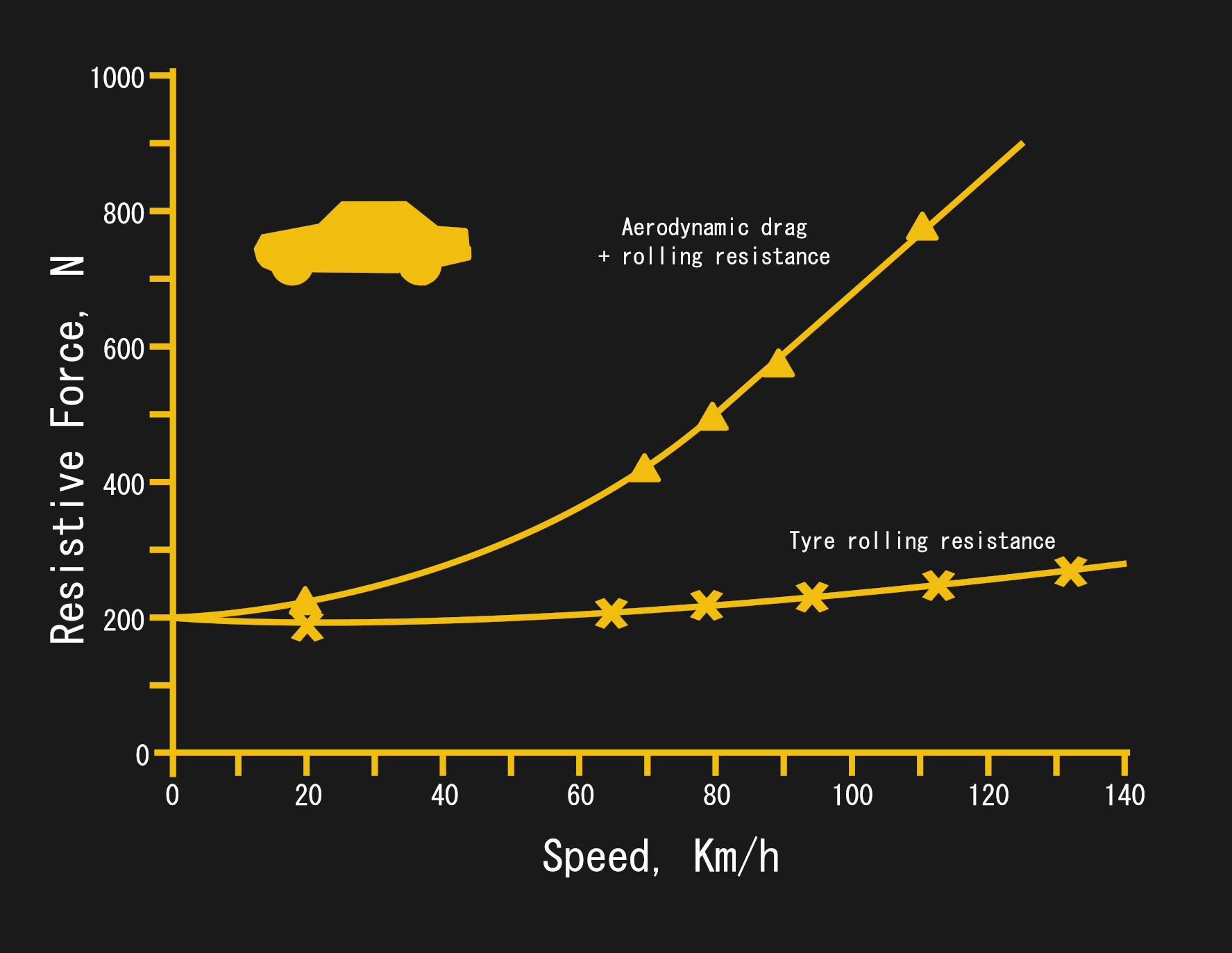
The biggest danger isn't keeping the car on the road, it's people's inability to avoid hitting other objects (cars, people, animals, etc...).
Speeding on the Lake Pontchartrain Causeway, the longest contiguous bridge in the world, can have dire consequences for you and other motorists, especially in bad weather. So yes, they have Speed Enforced by Aircraft signs up, and sometimes you can see the police planes as you cross.
I did get a ticket like that in the eighties, i still have it. It was with a rented corvette at 9 o clock in the morning. I had to go straight to court to pay the fine. I was on my way back from San Jose to Los Angeles. One of the weirdest experiences in my life.
My wife swears these are fake because she's never seen anyone pulled over by a plane
I love her so much
I love her so much
It was probably truer many years ago, like getting pulled over for dark window tint was true then but largely ignored now. The laws haven’t changed. We just have a new cohort generation of law enforcement officers with different interests, like we have baby boomers, genZ, genX, millennial cops.
Speed limits don't make sense tbh. They should notify drivers of the design speed for a section of the road, but it shouldn't be treated as a hard limit. Whether a driver is a danger to others or not is a subjective call, we should let police officers make that call, without defining strict criteria. Sometimes a car going at 110 in a 100 is perfectly safe, and another going 50 is extremely dangerous.
I live in Germany and regularly travel to neighbouring countries by car. The lack of speed limits on some sections of the German Autobahn makes traveling through that country seriously exhausting. While you just keep on keeping on on non-German highways driving on a German Autobahn section without tempo limit can feel like entering a war.
The typical makeup of a three-lane section of German Autobahn is:
- Right: trucks, very slow vehicles - Middle: people who go at reasonable speeds (~130 to 160 km/h depending on the terrain) - Left: people who disregard the physics of air resistance and blast without limits
This is the ideal, but not what you will encounter on the road. Whenever a truck overtakes another you have to beeak down or use the leftmost lane and make sure the cars that approach from behind with a potential delta of 100+ km/h don't crush you to death. Generally this leads to many stressful and dangerous situations.
Speed limits make sense because they make driving safer by deceeasing the possible speed delta between vehicles who share a road.
The typical makeup of a three-lane section of German Autobahn is:
- Right: trucks, very slow vehicles - Middle: people who go at reasonable speeds (~130 to 160 km/h depending on the terrain) - Left: people who disregard the physics of air resistance and blast without limits
This is the ideal, but not what you will encounter on the road. Whenever a truck overtakes another you have to beeak down or use the leftmost lane and make sure the cars that approach from behind with a potential delta of 100+ km/h don't crush you to death. Generally this leads to many stressful and dangerous situations.
Speed limits make sense because they make driving safer by deceeasing the possible speed delta between vehicles who share a road.
>Left: people who disregard the physics of air resistance and blast without limits
Left: some guy in a X5 driving steady 150km/h, not reacting to getting flashed and immediately accelerating if you try to pass on the right.
Somehow, as soon as you get out of Germany this stops happening. In France and Benelux you get to comfortably cruise at 250km/h and everyone just moves out of the way.
German autobahns are not exhausting because of the lack of speed limits, they're exhausting because of the Germans.
Left: some guy in a X5 driving steady 150km/h, not reacting to getting flashed and immediately accelerating if you try to pass on the right.
Somehow, as soon as you get out of Germany this stops happening. In France and Benelux you get to comfortably cruise at 250km/h and everyone just moves out of the way.
German autobahns are not exhausting because of the lack of speed limits, they're exhausting because of the Germans.
Are you trolling? Where in France are you allowed to go 250km/h?
>Are you trolling?
No?
> Where in France are you allowed to go 250km/h?
Nowhere, but like most EU countries there is nothing stopping you from going 250km/h. It's extremely unlikely that you'll encounter cops who'd bother to chase you, especially while using Waze and the likes.
Besides, how often do you see German registered cars driving the speed limit in France? Foreign registered cars are pretty much always speeding.
No?
> Where in France are you allowed to go 250km/h?
Nowhere, but like most EU countries there is nothing stopping you from going 250km/h. It's extremely unlikely that you'll encounter cops who'd bother to chase you, especially while using Waze and the likes.
Besides, how often do you see German registered cars driving the speed limit in France? Foreign registered cars are pretty much always speeding.
ohgodplsno(1)
Leaving hazy judgement calls up to the police for enforcement, at least in the US, has not fared particularly well for non-white people. See, for example, the history of enforcement of "jaywalking", a "crime" which was recently decriminalized in California for precisely that reason. So I wouldn't advocate for a system where we just "let police officers make that call" regarding whether a driver is going at a safe speed. At least not in the US.
And "design speed" may be an interesting or useful thing to think about for roads that are far away from houses or business, like highways. But if you're near those things then it suddenly matters a lot less whether the speed is safe for the driver, and a lot more whether it's safe for the other important road users: pedestrians and bicyclists/other micro-mobility users. In those cases, speed limits absolutely make sense. And bizarrely, at least in the bay area, it seems like those are areas where speed enforcement (and other traffic enforcement) are practically non-existent.
So I have to disagree. I know you're talking about highways, but even there I'd rather have something closer to an objective standard being enforced, rather than the simple will of the police.
And "design speed" may be an interesting or useful thing to think about for roads that are far away from houses or business, like highways. But if you're near those things then it suddenly matters a lot less whether the speed is safe for the driver, and a lot more whether it's safe for the other important road users: pedestrians and bicyclists/other micro-mobility users. In those cases, speed limits absolutely make sense. And bizarrely, at least in the bay area, it seems like those are areas where speed enforcement (and other traffic enforcement) are practically non-existent.
So I have to disagree. I know you're talking about highways, but even there I'd rather have something closer to an objective standard being enforced, rather than the simple will of the police.
> ...has not fared particularly well for non-white people...
I (old white male) have not yet had problems. But certainly I know white people who have - best-guess because they were young, or female, or "looked too rich or too poor" for the area in which they were driving. And from second-hand accounts, a fair number of police officers have "law unto themselves" pet theories about what sorts of people they should target for tough enforcement, or let off with a warning.
I (old white male) have not yet had problems. But certainly I know white people who have - best-guess because they were young, or female, or "looked too rich or too poor" for the area in which they were driving. And from second-hand accounts, a fair number of police officers have "law unto themselves" pet theories about what sorts of people they should target for tough enforcement, or let off with a warning.
True, I didn't mean to imply that race was the only factor for unfair enforcement. Just one well-documented example. All the more reason not to add more subjective criteria for enforcement.
> Leaving hazy judgement calls up to the police for enforcement, at least in the US, has not fared particularly well for non-white people. See, for example, the history of enforcement of "jaywalking", a "crime" which was recently decriminalized in California for precisely that reason
You will notice that this wasn't solved by setting up enforcement cameras on every street that ticket all jaywalkers equally.
You will notice that this wasn't solved by setting up enforcement cameras on every street that ticket all jaywalkers equally.
Yeah, it was decriminalized because jaywalking was a crime invented by the auto industry and there's no real harm in it, provided that a person crosses a street when it is safe to do so (this is part of the new law, it's still illegal to cross when you cause a risk of crash).
On the other hand, traffic rules protect public safety. Even and automated enforcement (provided that there's no entrapment for revenue, something that is dangerous and does happen with, e.g. red light cameras) causes people to have safer driving habits. After all, driving is not a right, it's a privilege to operate heavy, dangerous machinery in public. Drivers should be held to a high standard of safety.
On the other hand, traffic rules protect public safety. Even and automated enforcement (provided that there's no entrapment for revenue, something that is dangerous and does happen with, e.g. red light cameras) causes people to have safer driving habits. After all, driving is not a right, it's a privilege to operate heavy, dangerous machinery in public. Drivers should be held to a high standard of safety.
> On the other hand, traffic rules protect public safety
The stats show that society is the safest it's ever been.
At some point we are going to realize that allowing more and more surveillance and automated enforcement into our lives in the interest of public safety is really giving diminishing returns on actual safety, but tons of returns on authoritarianism.
Yes, I'm aware that car crashes are still one of the leading causes of death, and therefore one of the least safe activities you can do.
Personally I think the solution is better public transit and such. Fewer cars on the road means fewer low skilled or wildly reckless drivers too.
The stats show that society is the safest it's ever been.
At some point we are going to realize that allowing more and more surveillance and automated enforcement into our lives in the interest of public safety is really giving diminishing returns on actual safety, but tons of returns on authoritarianism.
Yes, I'm aware that car crashes are still one of the leading causes of death, and therefore one of the least safe activities you can do.
Personally I think the solution is better public transit and such. Fewer cars on the road means fewer low skilled or wildly reckless drivers too.
For someone doing 50 in a 100mph zone in the US, you can get a ticket for that currently. In most states the minimum speed limit is usually between 10-15mph under, unless otherwise posted.
Vague criteria are a recipe for abuse by corrupt cops and a feeding ground for lawyers. I'm all for looking at individual cases, but where possible, strict and simple rules that everybody can understand are best. This applies to traffic rules as much as it does to tax law and other things.
very unsafe situation when 50% drive 100 and the rest are doing 50.
somebody has to adjust. speed fans usually are not the ones to compromise, so everybody drives around 100.
people get used to 100, some groups starts pushing for 110, and this keeps up based on safety feeling of speed lovers.
somebody has to adjust. speed fans usually are not the ones to compromise, so everybody drives around 100.
people get used to 100, some groups starts pushing for 110, and this keeps up based on safety feeling of speed lovers.
Approaching civilization, he had slowed to a reasonable speed of his own accord and was surprised to be pulled over by a highway patrolman, who proceeded to greet him by name and revealed that a helicopter had been trailing him and retrieved his registration detail from above. The officer was relatively friendly about the whole thing but he received a costly ticket.